



Lida Group Sets New Standard in Durable Steel Construction for Environmental Friendly Metal House
2026-Jun-24 17:45:38
By Admin
1. Introduction: A New Era of Standardized Green Modular Construction
The global construction industry is undergoing a pivotal paradigm shift, moving beyond basic energy-saving renovations toward standardized, full-lifecycle sustainable development. As climate change awareness rises and international carbon neutrality regulations become increasingly stringent, traditional modular metal buildings are facing widespread industry criticism for inconsistent quality, insufficient structural durability, and fragmented green performance. For decades, conventional metal houses have been regarded as temporary, low-grade structures that prioritize low cost and rapid assembly over long-term safety and ecological sustainability. Most mainstream metal building products lack unified industrial technical standards, resulting in uneven material quality, rough construction processes, short service lifespans, and unavoidable secondary pollution during renovation and demolition.
In response to the long-standing industry chaos and technical bottlenecks in green metal building construction, Lida Group, a globally recognized leader in steel structure engineering and modular green construction, has officially set a new industrial benchmark. By redefining durable steel construction standards and upgrading the full set of technical specifications for environmental friendly metal houses, Lida Group bridges the historic gap between structural durability and eco-friendly performance that has troubled the modular construction sector for years. With decades of engineering experience, independent technological research and development, and strict international quality control systems, the company has formulated a standardized, replicable, and high-performance steel construction system for green metal houses. This article systematically elaborates on Lida Group’s new industrial standards, core technological innovations, full-cycle environmental advantages, practical engineering performance, and far-reaching industry influence, demonstrating how the enterprise leads the high-quality upgrading of global green modular construction.
2. Traditional Industry Limitations: Why New Construction Standards Are Urgently Needed
The global environmental friendly metal house market has expanded rapidly in recent years, yet the absence of unified and rigorous construction standards has led to prominent industry drawbacks, restricting the healthy and sustainable development of the entire sector. Most small and medium-sized manufacturers adopt simplified production and construction modes, resulting in widespread product defects that weaken public recognition of green metal buildings and hinder their large-scale application in permanent construction projects.
First, disordered material standards lead to insufficient structural durability. Traditional metal house manufacturers widely adopt low-strength thin galvanized steel with inconsistent thickness and alloy ratios. Without unified material inspection standards, ordinary steel frames are prone to oxidation, rust, and structural deformation within 10 to 15 years of use. The lack of standardized anti-corrosion and anti-aging treatment processes further shortens building service life, requiring frequent maintenance, component replacement, and overall reconstruction. Such short-cycle construction generates massive construction waste and additional carbon emissions, completely offsetting the inherent green advantages of metal buildings.
Second, non-standard construction processes cause unstable overall building performance. The traditional metal building industry lacks unified structural design specifications, assembly standards, and node sealing technologies. Random keel spacing, irregular bolt connection processes, and rough on-site assembly lead to poor structural stability, weak wind and earthquake resistance, and common hidden dangers such as water leakage and air permeability. These quality defects make traditional metal houses unable to meet permanent building safety standards, limiting their application to temporary construction scenarios.
Third, fragmented green design fails to form full-cycle sustainability. Most traditional metal houses only achieve superficial environmental protection through recyclable steel materials, without standardized energy-saving design, non-toxic material matching, and waste recycling specifications. The single green attribute cannot support long-term low-carbon operation, resulting in low comprehensive sustainability and poor market competitiveness. In this context, the establishment of unified, high-standard, and durable steel construction specifications for environmental friendly metal houses has become an inevitable trend for industrial upgrading.
3. Lida Group’s New Industrial Standard: Core System of Durable Steel Construction
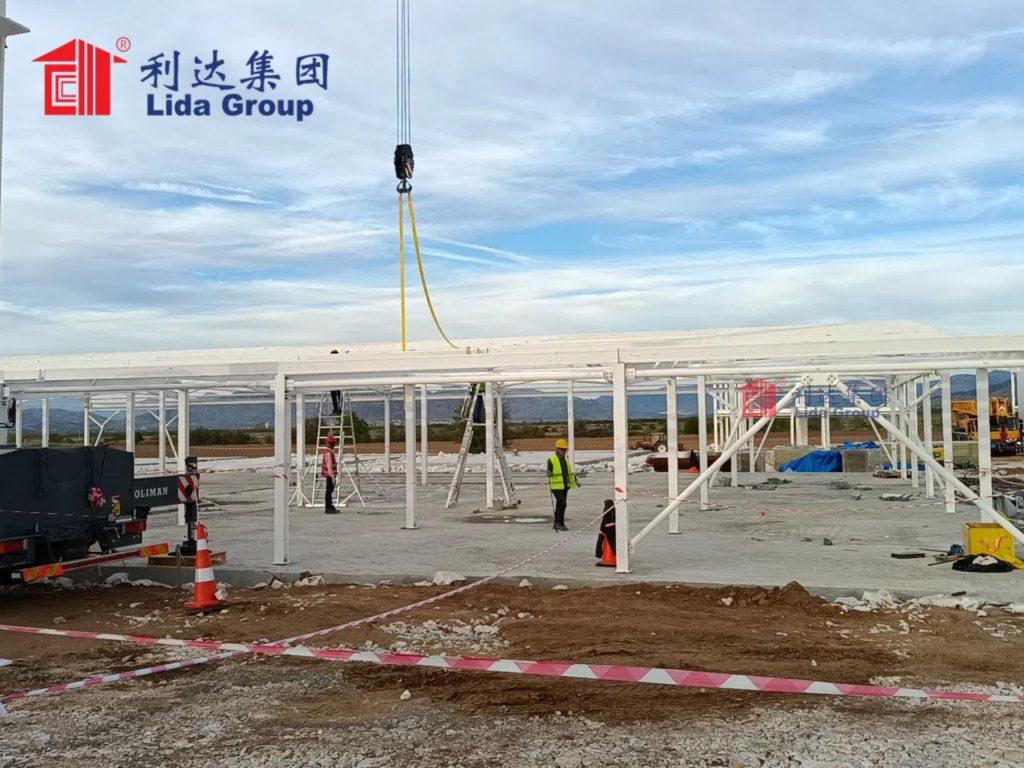
Lida Group’s new industrial standard for environmental friendly metal houses is a systematic and comprehensive technical system covering material selection, structural design, protective treatment, prefabricated construction, and quality inspection. Breaking the loose and low-standard industrial conventions, Lida Group aligns all technical indicators with international permanent building standards such as ISO quality management system, EN steel structure execution specifications, and LEED green building certification requirements, creating a standardized durable steel construction system that integrates safety, durability, and environmental friendliness.
3.1 Standardized High-Grade Steel Material Benchmark
Lida Group takes the lead in formulating unified high-standard material selection specifications for green metal houses, completely abandoning the low-quality steel materials prevalent in the industry. The company stipulates that all main load-bearing frames of environmental friendly metal houses must adopt G550 grade hot-dip aluminum-zinc alloy steel with a yield strength of 550MPa, forming a unified material quality benchmark for the industry. The standardized aluminum-zinc-silicon alloy ratio ensures uniform density and stability of the steel surface protective film, providing consistent anti-ultraviolet, anti-corrosion, and anti-oxidation performance in various global climatic environments.
In terms of green material standards, Lida Group specifies that more than 92% of structural steel components must adopt high-purity recycled steel that meets international environmental certification standards. This standardized material rule reduces building embodied carbon by nearly 50% compared with traditional virgin steel materials, unifying the low-carbon material benchmark for green metal houses. All steel raw materials undergo strict factory inspection in accordance with ASTM industrial standards to eliminate unqualified materials, ensuring consistent structural strength and durability of each batch of products.
3.2 Unified Finite Element Structural Design Specifications
To solve the problem of irregular structural design in the industry, Lida Group establishes unified finite element simulation structural design standards for durable steel construction. The company stipulates fixed keel spacing of 400mm to 600mm for all metal house frames, matching the load-bearing requirements of international permanent residential and public buildings. All frame structures adopt integrated high-strength bolt connection standards, replacing the random welding process of traditional manufacturers, realizing overall stress balance and uniform load dispersion of the steel frame.
Under this unified design standard, Lida Group’s environmental friendly metal houses achieve consistent extreme weather resistance, stably resisting magnitude 8 earthquakes and level 12 strong typhoons. The standardized structural mechanical design eliminates individual product performance differences in the industry, ensuring that every metal house has long-term dimensional stability, no deformation, no loosening, and no structural fatigue, laying a solid structural foundation for permanent green buildings.
3.3 Standardized Three-Layer Eco-Friendly Protection Process
Aiming at the inconsistent anti-aging and anti-corrosion processes in the traditional industry, Lida Group formulates a unified three-layer composite green protection process standard for steel structures. The first layer is a standardized 85μm hot-dip galvanized anti-rust treatment to isolate air and moisture; the second layer is a 60μm formaldehyde-free environmentally friendly epoxy primer to enhance coating adhesion and oxidation resistance; the third layer is a 40μm high-weather-resistance polyester topcoat to resist ultraviolet radiation and acid rain erosion.
This unified protection process standard ensures that all Lida Group’s metal houses achieve a stable service life of more than 50 years in conventional environments and over 40 years in harsh coastal and industrial environments, three times the service life of traditional non-standard metal houses. The whole process is non-toxic and pollution-free, unifying the long-term durability and ecological safety standards of green metal buildings, and filling the industry’s gap in standardized anti-aging protection technology.
3.4 Full-Process Prefabricated Construction Standard System
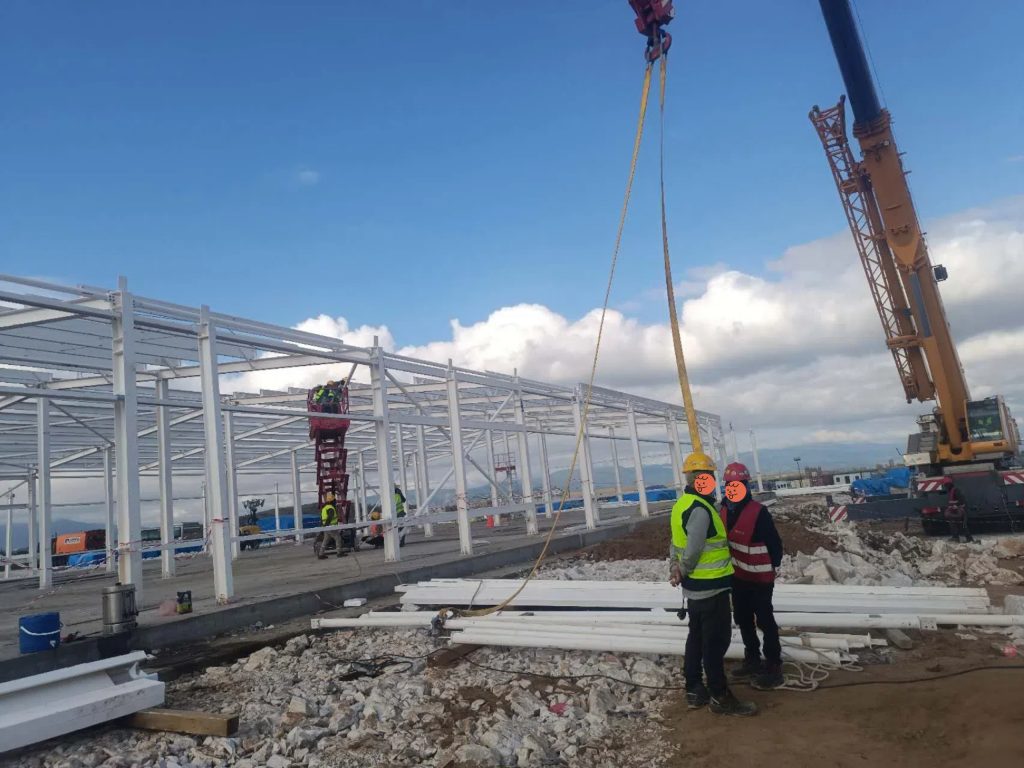
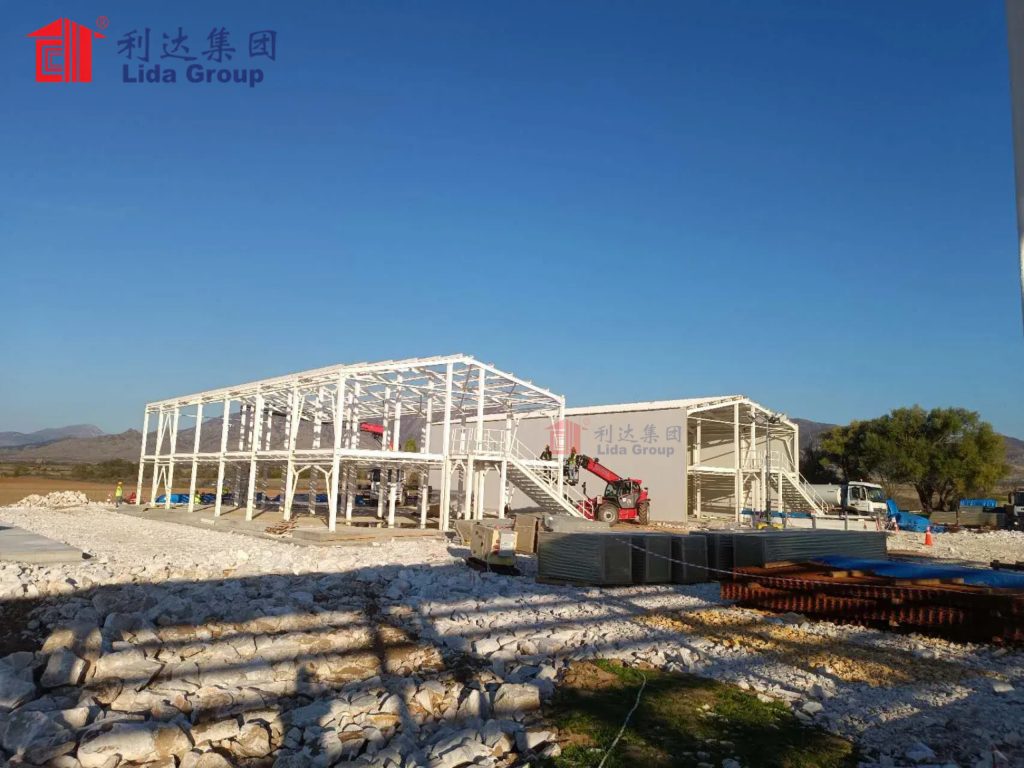
Lida Group establishes a complete set of industrialized prefabricated construction standards for durable steel green houses, covering factory precision processing, standardized component inspection, and on-site dry assembly specifications. All steel components are produced in intelligent factories in accordance with unified size standards and process flows, achieving zero error in assembly accuracy and zero material waste. On-site construction completely abandons traditional wet operations and implements unified dry assembly processes, eliminating construction dust, sewage, and noise pollution.
The standardized construction system shortens the project cycle by more than 60% compared with traditional construction modes, unifies project quality and construction efficiency standards, and avoids quality instability caused by manual operation differences. This refined and standardized construction management mode has become a new industry model for green modular building construction.
4. Core Advantages of Lida’s New Standard: Perfect Integration of Durability and Environmental Protection
Lida Group’s newly established durable steel construction standards fundamentally solve the industry’s long-standing contradiction between structural durability and ecological environmental protection. While achieving ultra-long service life and stable structural performance, the standardized system fully retains and optimizes full-cycle green advantages, realizing the dual upgrading of building quality and sustainable performance.
4.1 Standardized Circular Economy Realizes Zero Waste Development
All steel structures of Lida Group’s environmental friendly metal houses adopt unified modular detachable design standards. The standardized component size and connection mode enable all steel frames to be completely disassembled, recycled, and reused without deformation or damage after the end of service life. Compared with traditional non-standard metal houses that cannot be reused and produce massive demolition waste, Lida’s standardized products achieve 100% steel recycling and zero construction waste discharge.
This unified circular utilization standard maximizes the resource value of steel materials, reduces global mineral resource exploitation and industrial carbon emissions, and practices the core concept of circular economy. It provides a standardized replicable model for the sustainable development of the global modular construction industry.
4.2 Low-Carbon Construction Standards Reduce Full-Cycle Carbon Footprint
Lida Group’s unified durable steel construction standards greatly reduce the embodied carbon of buildings throughout the construction phase. The standardized lightweight steel structure design reduces building self-weight and foundation construction investment, cutting construction water consumption by 39%, solid waste discharge by 51%, and comprehensive carbon emissions by 15% compared with traditional concrete buildings. All supporting materials such as thermal insulation layers and wall panels are selected in accordance with unified international green certification standards, ensuring formaldehyde-free, non-toxic, and pollution-free construction and use processes.
The standardized energy-saving design optimizes the building’s thermal insulation and natural ventilation system, reducing daily operational energy consumption by 35% to 45% compared with traditional houses. Combined with the ultra-long service life of standardized durable steel structures, the buildings avoid repeated construction and renovation, realizing full-cycle low-carbon sustainable operation.
4.3 Low-Maintenance Durability Standard Reduces Long-Term Costs
Different from traditional non-standard metal houses that require frequent maintenance and renovation, Lida Group’s unified durable steel construction standard ensures ultra-low maintenance performance throughout the building lifecycle. The standardized anti-corrosion and anti-aging treatment enables the steel frame to maintain stable performance for decades without structural repair and component replacement. Only simple daily cleaning and cosmetic maintenance are required, greatly reducing long-term operational costs and resource waste.
This low-maintenance durability standard not only improves the economic benefits of green metal houses but also avoids secondary carbon emissions and environmental pollution caused by long-term building maintenance, further consolidating the full-cycle sustainable advantages of standardized green buildings.
5. Practical Application Value of the New Industrial Standard
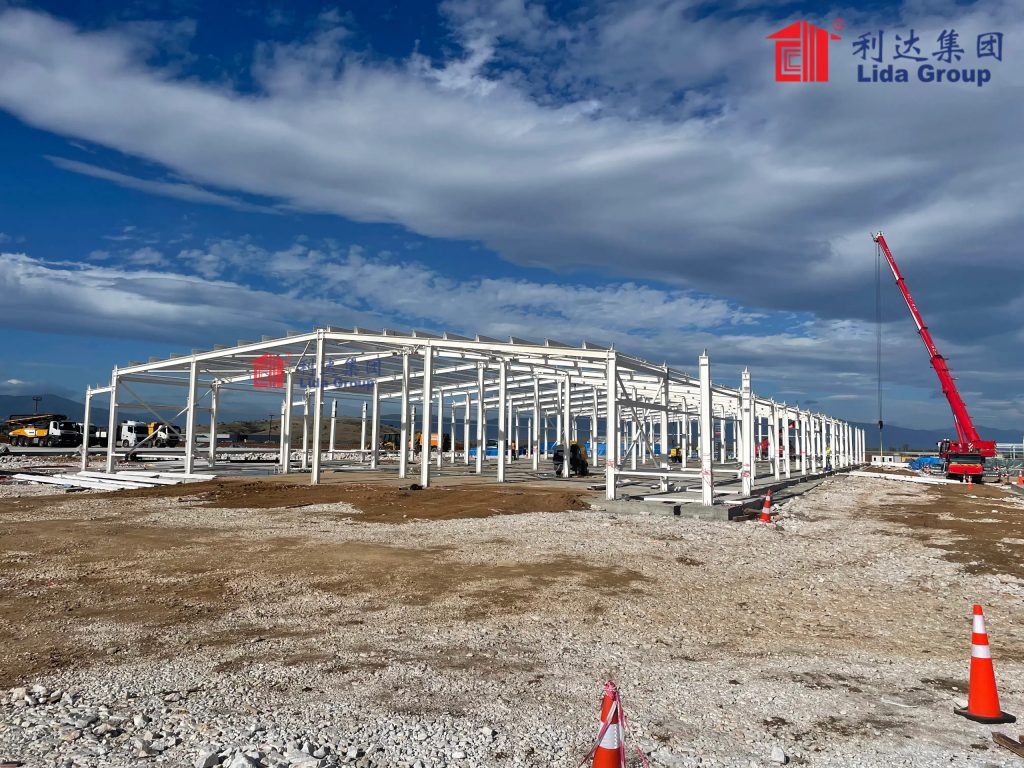
Lida Group’s new durable steel construction standard has broken the market stereotype that metal houses are only temporary low-grade facilities. With unified high-quality standards, the upgraded environmental friendly metal houses fully meet the construction requirements of permanent green buildings and are widely applied in diversified scenarios worldwide, bringing comprehensive ecological, economic, and social value.
5.1 Standardized Permanent Green Residential Construction
In residential construction scenarios, Lida’s standardized durable steel metal houses meet international permanent residential safety and environmental protection standards. The unified structural stability, healthy non-toxic materials, and efficient energy-saving design create a long-term comfortable and low-carbon living environment. Diverse personalized design based on unified basic standards can adapt to rural green residences, suburban eco-villas, and scenic homestays, providing standardized high-quality green residential solutions for global users.
5.2 High-Standard Green Industrial and Commercial Facilities
For industrial workshops, warehouse storage, and commercial office buildings, Lida’s unified steel construction standards ensure large-span, high-load, and corrosion-resistant structural performance. The standardized product quality adapts to long-term high-intensity industrial production and commercial operation, with stable energy-saving and environmental protection effects. It helps enterprises build standardized green industrial parks and low-carbon commercial spaces, meeting international environmental protection assessment and carbon emission reduction requirements.
5.3 Standardized Public Ecological Infrastructure
In public service facilities such as community service centers, rural public stations, and scenic ecological supporting buildings, Lida’s unified construction standards ensure rapid assembly, zero construction pollution, and decades of stable operation. The standardized low-impact construction mode protects the original ecological environment, while the ultra-long service life avoids repeated government investment and resource waste, providing reliable standardized public green infrastructure solutions for urban and rural ecological construction.
6. Industrial Leading Significance and Future Development Prospects
Lida Group’s establishment of durable steel construction standards for environmental friendly metal houses marks the formal entry of the global modular green building industry into the era of standardized high-quality development. For a long time, the lack of unified technical standards has led to uneven product quality, chaotic market competition, and restricted industrial upgrading. Lida Group’s systematic standard system fills the industrial blank, clarifies the technical benchmarks for material selection, structural design, protective treatment, and construction process of green metal houses, and guides the industry to bid farewell to extensive low-quality development.
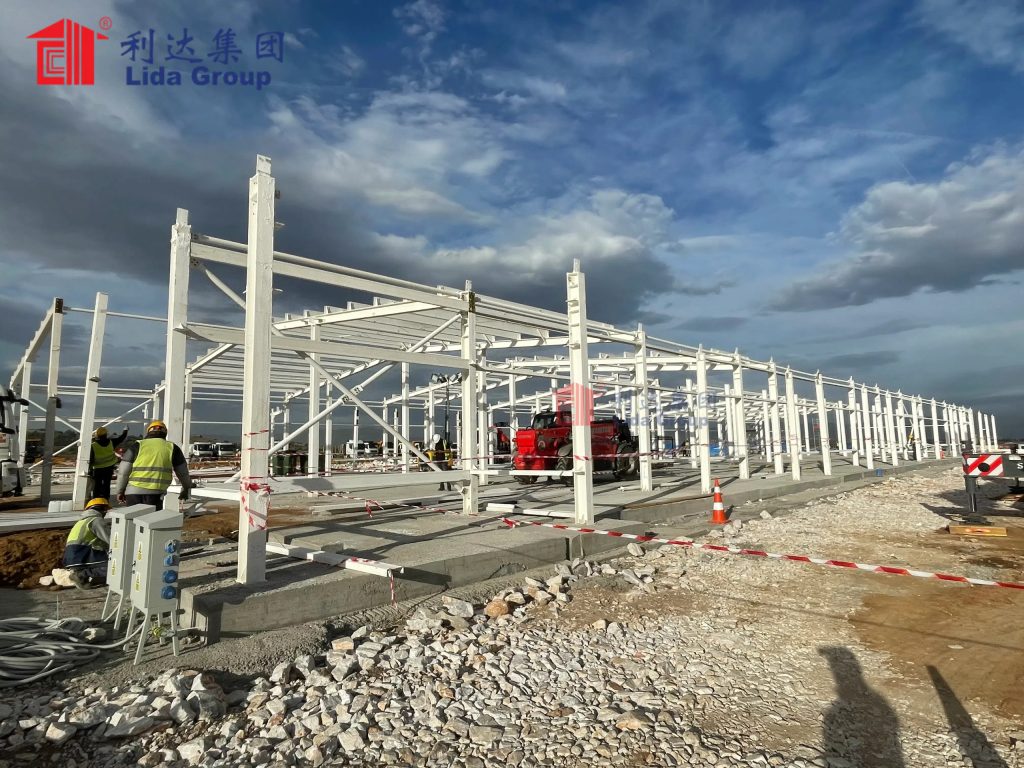
As a global industry benchmark, Lida Group’s standardized durable steel construction technology has been widely recognized and promoted in more than 100 countries and regions. The standardized product system has stable quality, excellent sustainable performance, and high cost performance, setting a credible industry model for global green modular construction. Against the background of global carbon neutrality goals and accelerated green urbanization, this standardized sustainable building model has broad promotion prospects and will effectively drive the overall upgrading of the global construction industry.
In the future, Lida Group will continue to optimize and upgrade the durable steel construction standard system, combine intelligent manufacturing technology and low-carbon innovation concepts, further improve the energy-saving efficiency, structural stability, and personalized design level of standardized green metal houses, and continuously lead the high-quality development of the global modular green building industry.
7. Conclusion
In summary, Lida Group successfully sets a new industrial standard for durable steel construction of environmental friendly metal houses through systematic technological innovation and standardized system optimization. Facing the long-standing problems of non-standard materials, disordered design, rough construction, and unbalanced durability and environmental protection in the traditional metal building industry, Lida Group establishes a complete set of unified technical specifications covering the entire industrial chain from material selection, structural design, protective treatment to prefabricated construction.
This new standard completely solves the industry’s core pain points, enabling green metal houses to achieve ultra-long service life, stable structural safety, low-maintenance operation, and full-cycle low-carbon sustainability. It breaks the market limitation that metal houses can only be used as temporary buildings and realizes the upgrading of modular metal buildings from low-grade temporary facilities to high-standard permanent green buildings. While improving product quality and practical value, Lida Group’s standardized system also guides the standardized, standardized, and sustainable development of the global modular construction industry.
With the continuous advancement of global green construction and carbon neutrality strategies, standardized durable steel structure green metal houses will become the mainstream of the construction industry. Adhering to the concept of quality empowerment and green innovation, Lida Group will continue to lead industrial technological progress and standard iteration, contribute more standardized, high-quality, and eco-friendly building solutions to global sustainable urban construction, and promote the long-term healthy development of the global green construction industry.
Related news
-
Green Housing Solution: Environmental Friendly Metal House with Steel Structure Building Design
2026-06-24 17:34:09
-
Lida Group Engineers Durable Steel Construction for Environmental Friendly Metal House Solutions
2026-06-24 16:53:02
-
Steel Structure Building Meets Sustainability in Lida Group's Environmental Friendly Metal House
2026-06-24 16:41:27
contact us
- Tel: +86-532-88966982
- Whatsapp: +86-13793209022
- E-mail: sales@lidajituan.com
