



Lida Group Engineers Durable Steel Construction for Environmental Friendly Metal House Solutions
2026-Jun-24 16:53:02
By Admin
1. Introduction: Engineered Durability Redefines Eco-Friendly Metal Housing
The global construction industry is undergoing a decisive shift from superficial green decoration to engineered sustainable construction. For decades, environmental friendly metal houses have gained popularity for their recyclable materials, fast assembly, and low on-site pollution. However, most conventional metal building solutions suffer from a critical industry flaw: ecological design is often compromised by insufficient structural durability. Mass-market metal houses rely on thin, low-grade steel and simplified construction techniques, leading to rust, structural loosening, deformation, and performance attenuation within 10 to 15 years of operation. Short building lifespans trigger frequent renovation, repeated resource consumption, and secondary carbon emissions, ultimately offsetting the core environmental benefits of metal architecture.
As a professional engineering manufacturer and construction solution provider with over 30 years of steel structure R&D and practical project experience, Lida Group has redefined the standards of green metal housing. Instead of pursuing low-cost lightweight construction, the company focuses on engineering-driven durability optimization, independently developing a full set of precision durable steel construction systems tailored for environmental friendly metal houses. Through material engineering upgrading, mechanical structural simulation, multi-layer anti-aging engineering treatment, and standardized modular construction management, Lida Group successfully launches high-stability, long-life, and zero-pollution metal house solutions. These engineered products perfectly integrate permanent structural durability and full-cycle ecological sustainability, solving the long-standing contradiction between green performance and building lifespan in the modular construction industry. This article comprehensively elaborates on Lida Group’s engineering logic, core technical highlights, environmental value, practical application advantages, and industrial innovation significance of durable steel construction for eco-friendly metal houses, providing in-depth insights into engineered sustainable building solutions.
2. Industry Pain Points: The Technical Defects of Traditional Green Metal House Engineering
Traditional environmental friendly metal houses are positioned as green modular buildings, yet their backward engineering design and rough construction technology restrict their large-scale promotion in permanent sustainable projects. Most traditional manufacturers regard metal houses as temporary facilities, adopting simplified engineering standards that prioritize construction speed and cost control over long-term structural stability and ecological continuity.
In terms of structural engineering defects, conventional metal houses adopt ordinary low-strength galvanized steel with single-layer anti-rust treatment and non-optimized frame structures. The steel frame lacks scientific mechanical stress distribution design, resulting in weak wind resistance, poor seismic performance, and low structural toughness. In humid, coastal, high-temperature, and industrial environments, steel components corrode rapidly, causing local structural damage, wall cracking, and overall frame loosening. The average effective service life of traditional products is only 10 to 15 years, requiring frequent maintenance, component replacement, and overall reconstruction, which generates massive construction waste and additional carbon emissions.
In terms of green engineering defects, the short service life of traditional metal houses completely weakens their sustainable value. Frequent demolition and reconstruction consume extra mineral resources and mechanical energy, forming a vicious cycle of “green construction followed by repeated resource waste”. In addition, the backward thermal insulation and sealing engineering design of traditional metal houses leads to high operational energy consumption, failing to meet the long-term low-carbon operation standards of modern green buildings. These engineering deficiencies make traditional metal houses unable to support long-term sustainable living and construction.
3. Core Engineering System: Lida Group’s Custom Durable Steel Construction Technology
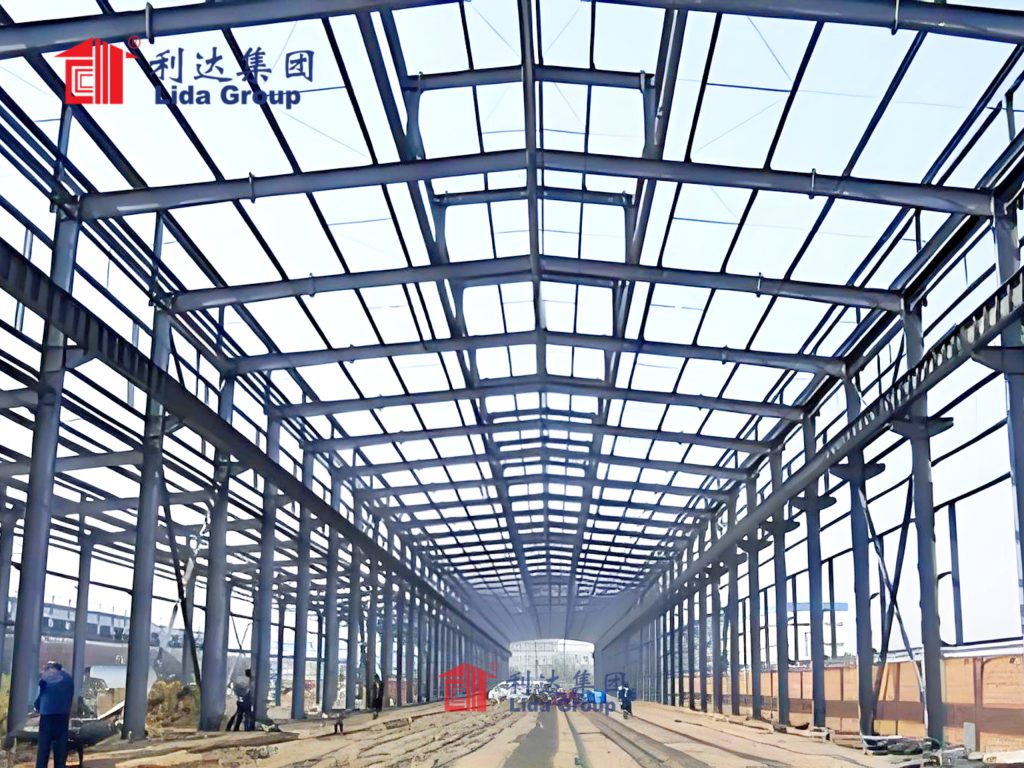
To completely eliminate the durability loopholes of traditional green metal houses, Lida Group has built a systematic durable steel construction engineering system through years of mechanical research, material testing, and engineering verification. This professional engineering system covers high-performance material customization, finite element structural optimization, multi-layer protective engineering, and refined standardized construction, comprehensively upgrading the structural stability and service life of environmental friendly metal houses while retaining all inherent green advantages.
3.1 Material Engineering: High-Grade Custom Durable Steel Configuration
Material performance is the fundamental guarantee of building durability. Lida Group’s engineering team completely abandons ordinary thin galvanized steel used in traditional metal houses and selects customized high-performance alloy steel as the core structural material. The main load-bearing frame adopts G550 grade hot-dip aluminum-zinc steel with a yield strength of 550MPa. The scientific alloy ratio of 55% aluminum, 43.4% zinc, and 1.6% silicon forms a dense, scratch-resistant, and anti-oxidation protective film on the steel surface, which effectively resists ultraviolet aging, acid-base corrosion, salt-fog erosion, and atmospheric oxidation.
To adapt to complex global climatic conditions, Lida Group implements differentiated material engineering matching. Coastal high-salt fog areas adopt high-purity weathering steel to resist marine corrosion; high-temperature arid regions use thermally stabilized steel to avoid structural thermal deformation; industrial pollution areas are equipped with nano-composite coated steel to enhance chemical corrosion resistance. More than 92% of the steel components adopt high-purity recycled steel, which meets international green material standards while maintaining ultra-high structural strength and durability. All steel raw materials pass ISO quality certification and ASTM industrial standards, with stable mechanical properties and no structural fatigue after long-term use.
3.2 Structural Engineering: Finite Element Simulation Mechanical Optimization Design
Lida Group’s professional structural engineering team adopts advanced finite element simulation analysis technology to conduct overall mechanical optimization for metal house frames, solving the problems of unreasonable stress distribution and weak local bearing capacity of traditional simple steel structures. The steel keel spacing is strictly controlled at 400mm to 600mm in accordance with international permanent building engineering specifications. The integral frame adopts high-strength bolt connection and overall tension fixing technology, forming an integrated stress-bearing system that can evenly disperse external wind pressure, seismic force, snow load, and temperature stress.
This optimized structural engineering design greatly improves the building’s extreme weather resistance and long-term stability. The engineered metal houses can resist magnitude 8 earthquakes and level 12 strong typhoons, with excellent structural ductility and impact resistance. Unlike traditional metal houses that are prone to shaking, deformation, and loosening after long-term use, Lida Group’s structurally optimized frames maintain permanent dimensional stability, without warping, shrinking, or aging deformation caused by seasonal changes and long-term load pressure, laying a solid structural foundation for decades of safe use.
3.3 Protection Engineering: Three-Layer Eco-Friendly Anti-Corrosion and Anti-Aging System
Steel corrosion and aging are the primary causes of shortened building lifespan. Lida Group’s engineering team innovatively develops a three-layer non-toxic green composite protection engineering process to build an all-round closed protective barrier for steel structures. The first layer is 85μm hot-dip galvanized anti-rust treatment, which completely isolates the steel matrix from air and moisture to prevent basic oxidation and rust; the second layer is 60μm formaldehyde-free environmentally friendly epoxy primer, which enhances coating adhesion and structural anti-oxidation performance without releasing harmful substances; the third layer is 40μm high-weather-resistance polyester topcoat, which resists ultraviolet radiation, acid rain erosion, and long-term atmospheric aging.
Different from the single-layer superficial anti-rust treatment of traditional metal houses, this multi-layer composite protection engineering achieves long-term stable protection. Professional environmental testing and global engineering verification prove that Lida Group’s eco-friendly metal houses have a stable service life of more than 50 years in conventional atmospheric environments and over 40 years in harsh coastal and industrial environments, three times the service cycle of ordinary green metal houses. The entire protection system is non-toxic and pollution-free, fully compatible with the ecological positioning of green buildings.
3.4 Construction Engineering: Full-Process Standardized Prefabricated Assembly
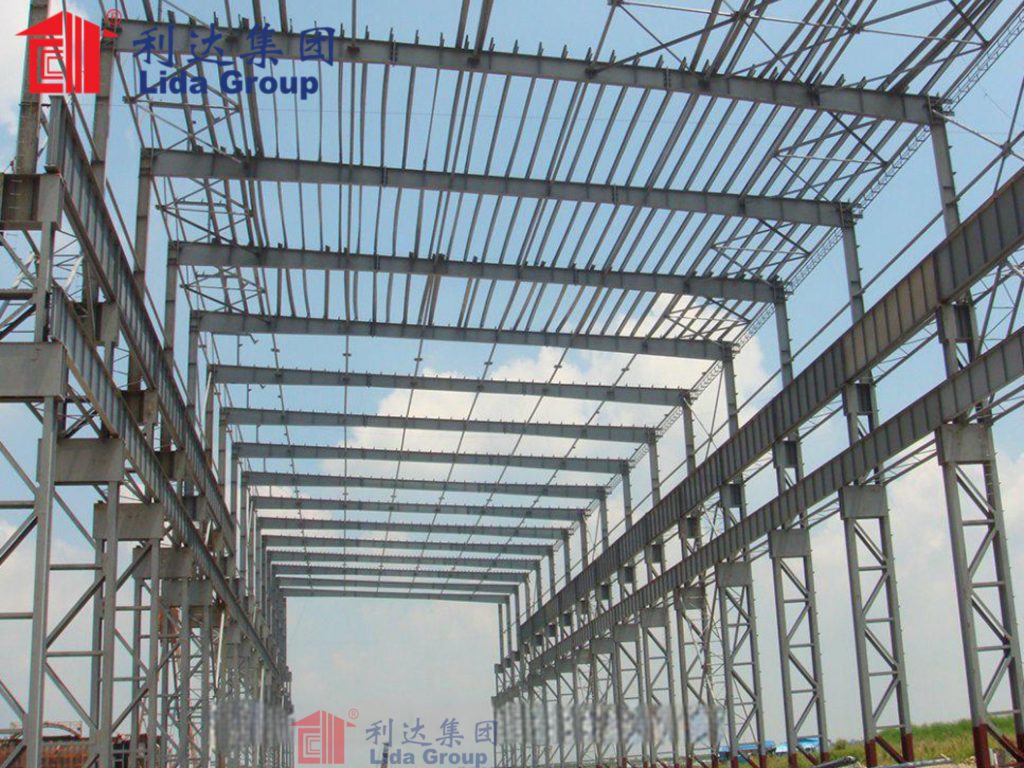
Lida Group integrates industrial engineering concepts into the entire construction process of metal houses, adopting full factory prefabrication and standardized refined assembly construction. All steel frame components, wall keels, and roof structures are precisely cut, welded, polished, and inspected in intelligent automated factories, with zero error in component size and assembly accuracy, completely eliminating rough processing and random assembly defects of traditional metal buildings.
On-site construction completely abandons traditional wet operations such as cement mixing and brick laying, adopting pure dry assembly technology. The standardized construction process ensures tight and firm connection of all structural nodes, effectively preventing later structural loosening, water leakage, and air leakage hidden dangers. This engineering mode not only improves the overall structural tightness and waterproof performance of the building but also reduces construction cycle by more than 60%, cutting construction energy consumption and pollution emissions fundamentally.
4. Full-Cycle Environmental Advantages of Engineered Durable Metal House Solutions
Empowered by Lida Group’s professional durable steel construction engineering system, the upgraded environmental friendly metal houses realize comprehensive green upgrading in material application, construction process, operational energy saving, and end-of-life recycling, forming a complete closed-loop sustainable development system that balances engineering durability and ecological environmental protection.
4.1 Circular Engineering: 100% Detachable and Recyclable Steel Structure
Lida Group’s modular steel structure engineering design realizes complete disassembly and secondary utilization of all building components. Different from traditional concrete buildings that produce massive unrecyclable waste after demolition, Lida’s durable steel components can be completely disassembled without deformation or damage due to high structural stability. After the end of the building’s service life or land functional adjustment, all steel frames can be recycled, remolded, and reused for new construction projects, achieving zero construction waste discharge.
This circular engineering mode maximizes the sustainable value of steel materials. The high recycling rate of structural steel reduces the exploitation of virgin mineral resources and cuts steel smelting carbon emissions by nearly 50%, effectively alleviating global resource scarcity and industrial carbon pressure. It fully practices the circular economy concept of reduction, reuse, and recycling, realizing true engineering-level green sustainability.
4.2 Low-Carbon Engineering: Zero-Pollution Construction and Low Embodied Carbon
The industrialized prefabricated engineering mode fundamentally changes the high-pollution and high-energy-consumption defects of traditional building construction. All component processing is completed in closed intelligent factories, avoiding on-site material loss, dust pollution, and sewage discharge. The lightweight steel structure design reduces building self-weight and foundation construction investment, cutting construction water consumption by 39%, solid waste discharge by 51%, and comprehensive carbon emissions by 15% compared with traditional concrete buildings of the same area.
All supporting materials matched with the steel structure, including formaldehyde-free thermal insulation layers, non-toxic waterproof coatings, and eco-friendly wall panels, pass international LEED green building certification. No harmful substances are released during construction and long-term use, ensuring ecological safety of the construction site and healthy indoor air quality, realizing full-process low-carbon and pollution-free green engineering construction.
4.3 Energy-Saving Engineering: Long-Term Low-Carbon Operational Performance
Based on the durable steel frame structure, Lida Group’s engineering team optimizes the building’s thermal insulation, heat preservation, and natural ventilation system. The composite wall and roof structure equipped with high-density environmental protection thermal insulation materials forms an efficient constant-temperature protection layer, which can isolate external high-temperature heat radiation in summer and prevent indoor heat loss in winter, significantly reducing the use frequency of air conditioning and heating equipment.
Practical engineering monitoring data shows that Lida Group’s engineered durable metal houses reduce daily operational energy consumption by 35% to 45% compared with traditional brick-concrete buildings. Combined with the 40 to 50-year ultra-long stable service life, the buildings avoid repeated construction and renovation, greatly reducing the full-cycle carbon footprint and realizing long-term low-carbon sustainable operation.
5. Multi-Dimensional Practical Value of Engineered Green Metal House Solutions
Lida Group’s durable steel construction engineering system endows environmental friendly metal houses with comprehensive practical value, breaking the stereotype that green modular buildings are only suitable for temporary use. The integrated advantages of structural safety, long-term durability, ecological environmental protection, and economic efficiency enable the products to adapt to diversified permanent construction scenarios worldwide, bringing ecological, economic, and social sustainable benefits.
5.1 Permanent Green Residential Solutions
The engineered metal houses have stable structural performance, comfortable living environment, and diverse personalized design styles, fully meeting the standards of permanent residential buildings. The flexible steel structure layout realizes free indoor space segmentation, adapting to different family living needs. The healthy and non-toxic material configuration and efficient energy-saving design create a low-carbon and comfortable living space. The products are widely used in rural green residential renovation, suburban eco-villas, and scenic homestay projects, providing high-quality sustainable residential solutions for modern families.
5.2 High-Standard Green Industrial and Commercial Solutions
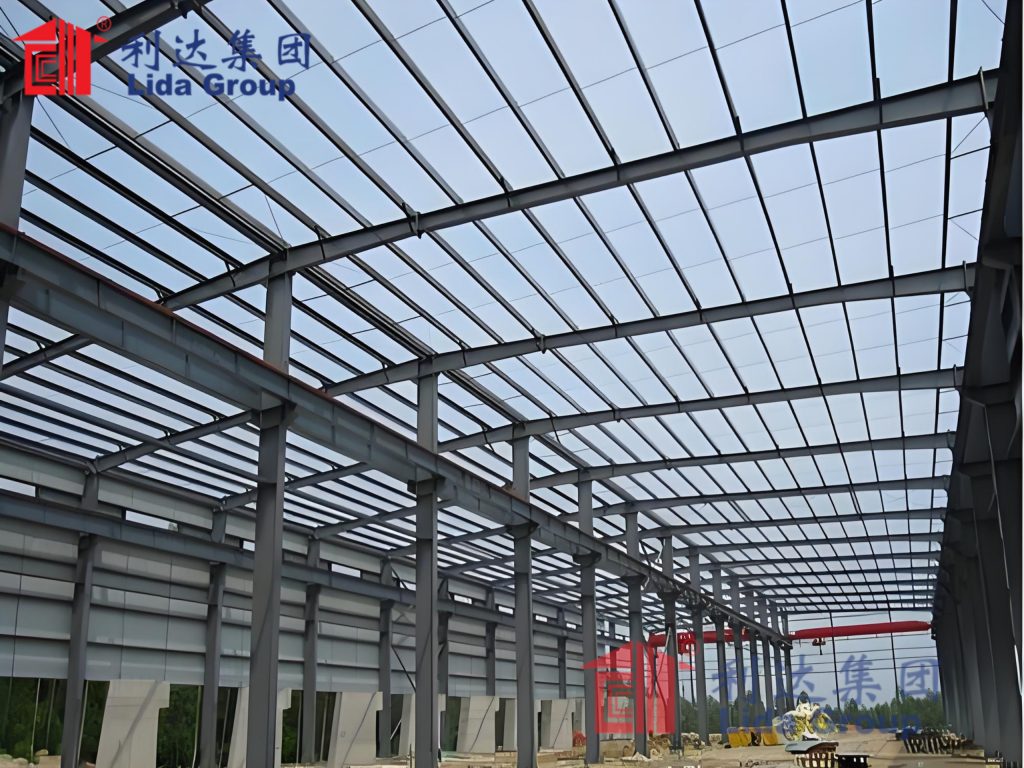
For industrial workshops, warehouse storage, and commercial office buildings, Lida Group’s durable steel structure exerts unique advantages of large span, high load-bearing, and corrosion resistance. The engineered structure can adapt to long-term high-intensity industrial production and commercial operation, with extremely low later maintenance costs. The excellent energy-saving and environmental protection performance helps enterprises reduce operational carbon emissions, meet green industrial assessment standards, and build standardized low-carbon industrial parks and commercial spaces.
5.3 Long-Term Public Ecological Infrastructure Solutions
In rural public service stations, community activity centers, and ecological scenic area supporting facilities, Lida Group’s metal house solutions realize rapid green construction and decades of stable operation. The low-impact construction mode will not damage the original ecological landscape, and the ultra-long service life avoids repeated government investment and resource waste. It provides reliable long-term sustainable support for rural revitalization and ecological scenic area construction.

6. Industrial Innovation and Competitive Value
Lida Group’s engineering innovation of combining durable steel construction with green metal houses has set a new benchmark for the global modular green building industry. For a long time, the industry has formed a fixed cognition that green metal buildings are short-lived temporary facilities. Lida Group’s systematic engineering optimization perfectly solves the core contradiction between environmental protection and durability, breaking the market stereotype of low-grade metal buildings.
In terms of economic value, although high-standard durable steel engineering slightly increases upfront investment, the ultra-long service life and ultra-low maintenance cost reduce the full-cycle comprehensive cost by more than 40% compared with traditional metal houses. The modular prefabricated construction mode maintains the advantages of short cycle and low on-site cost, enabling users to obtain high-quality permanent green building solutions with lower long-term comprehensive expenditure.
At present, Lida Group’s engineered durable environmental friendly metal house solutions have been successfully exported to more than 100 countries and regions worldwide, participating in various local green infrastructure construction projects, and winning wide recognition for stable engineering quality, excellent ecological performance, and high cost performance.
7. Conclusion
In summary, Lida Group’s professional durable steel construction engineering system is the core support for creating high-quality environmental friendly metal house solutions. Through high-grade durable steel material engineering, finite element structural mechanical optimization, multi-layer green anti-aging protection engineering, and full-process standardized construction engineering, Lida Group completely solves the durability and lifespan defects of traditional green metal buildings. The engineered products perfectly retain the full-cycle ecological advantages of high recyclability, low-carbon construction, zero-pollution operation, and energy-saving emission reduction, while achieving revolutionary breakthroughs in structural stability, weather resistance, and long-term service life.
This innovative engineering model realizes the organic unity of building durability and ecological sustainability, enabling metal houses to upgrade from temporary makeshift facilities to high-standard permanent green buildings. It covers diversified application scenarios such as residential living, industrial production, commercial operation, and public infrastructure, bringing long-term ecological protection and economic savings to global users. Meanwhile, it fills the technical gap in the balanced development of green performance and structural durability in the modular construction industry, leading the industrial transformation from extensive temporary construction to intensive permanent green development.
In the future, with the continuous advancement of global carbon neutrality strategies and the in-depth popularization of green building concepts, engineered durable and eco-friendly steel structure metal houses will become the mainstream trend of the global construction industry. Lida Group will continue to deepen engineering technological innovation and product iteration, further optimize the comprehensive performance of durable steel construction systems, and contribute continuous professional strength to the high-quality development of global green low-carbon construction and sustainable urban ecological development.
Related news
-
Steel Structure Building Meets Sustainability in Lida Group's Environmental Friendly Metal House
2026-06-24 16:41:27
-
Discover Sustainable Living with Environmental Friendly Metal House and Durable Steel Construction
2026-06-24 16:29:49
-
Lida Group's Durable Steel Construction Creates Long-Lasting Environmental Friendly Metal House
2026-06-24 16:11:17
contact us
- Tel: +86-532-88966982
- Whatsapp: +86-13793209022
- E-mail: sales@lidajituan.com
