



Steel Structure Building Meets Sustainability in Lida Group’s Environmental Friendly Metal House
2026-Jun-24 16:41:27
By Admin
1. Introduction: The Perfect Fusion of Steel Structure Technology and Green Sustainability
The global construction industry is undergoing a profound low-carbon transformation, with sustainable development becoming the core benchmark for evaluating modern building quality. Traditional construction methods relying on concrete, brick, and solid wood have long been criticized for high resource consumption, massive carbon emissions, excessive construction waste, and poor recyclability. According to industry statistical data, conventional building construction accounts for nearly 40% of global annual energy consumption and 35% of total carbon emissions, posing a severe challenge to global ecological governance and carbon neutrality goals. In this context, steel structure buildings have emerged as a core carrier of sustainable construction by virtue of their high efficiency, low carbon emission, recyclability, and long durability, gradually replacing traditional building systems and leading the new trend of green architectural development.
As a globally authoritative enterprise specializing in steel structure R&D, manufacturing, and modular green building construction, Lida Group deeply integrates advanced steel structure building technology with full-cycle sustainable design concepts, launching a series of high-quality environmental friendly metal houses. Different from ordinary metal buildings that simply use steel materials but lack systematic sustainable optimization, Lida Group’s products realize the organic integration of professional steel structure mechanical performance, durable construction technology, and ecological environmental protection design. This article systematically explores how Lida Group’s mature steel structure building system empowers sustainable metal houses, analyzes the technical integration logic, core green advantages, structural performance highlights, practical application value, and industrial innovation significance, and fully demonstrates the unique charm of steel structure buildings in enabling modern low-carbon and sustainable architecture.
2. Inherent Connection: Why Steel Structure Is the Core Carrier of Building Sustainability
Sustainable building design focuses on full lifecycle ecological balance, covering low material consumption, low pollution emission, long service life, high resource recycling rate, and low operational energy consumption. Among all mainstream building structural systems, steel structure is the only structural form that can fully meet all dimensional sustainable standards, with inherent natural advantages that traditional concrete and wood structures cannot match.
First, steel structures have outstanding resource-saving characteristics. Structural steel features an ultra-high strength-to-weight ratio, delivering 5 to 10 times the load-bearing capacity of concrete with the same volume. It effectively reduces the total consumption of building materials and lowers foundation bearing requirements, minimizing land excavation and ecological damage during construction. Second, steel boasts unparalleled recyclability. As verified by the World Steel Association, the recycling rate of building structural steel reaches 98%, and recycled steel retains the same strength and performance as virgin steel, saving 60% of production energy and reducing 17% of carbon emissions compared with new steel smelting. Third, steel structure construction realizes low-pollution and low-energy industrialized production, cutting construction waste by 51% and dust emission by 59% compared with traditional wet construction, fully conforming to circular economy and green development principles.
Lida Group accurately grasps the inherent sustainable attributes of steel structures, and takes professional steel structure building systems as the core framework of environmental friendly metal houses. Through targeted structural optimization and ecological upgrading, the company maximizes the sustainable potential of steel materials, realizing the perfect encounter between high-performance steel structure buildings and modern green sustainability.
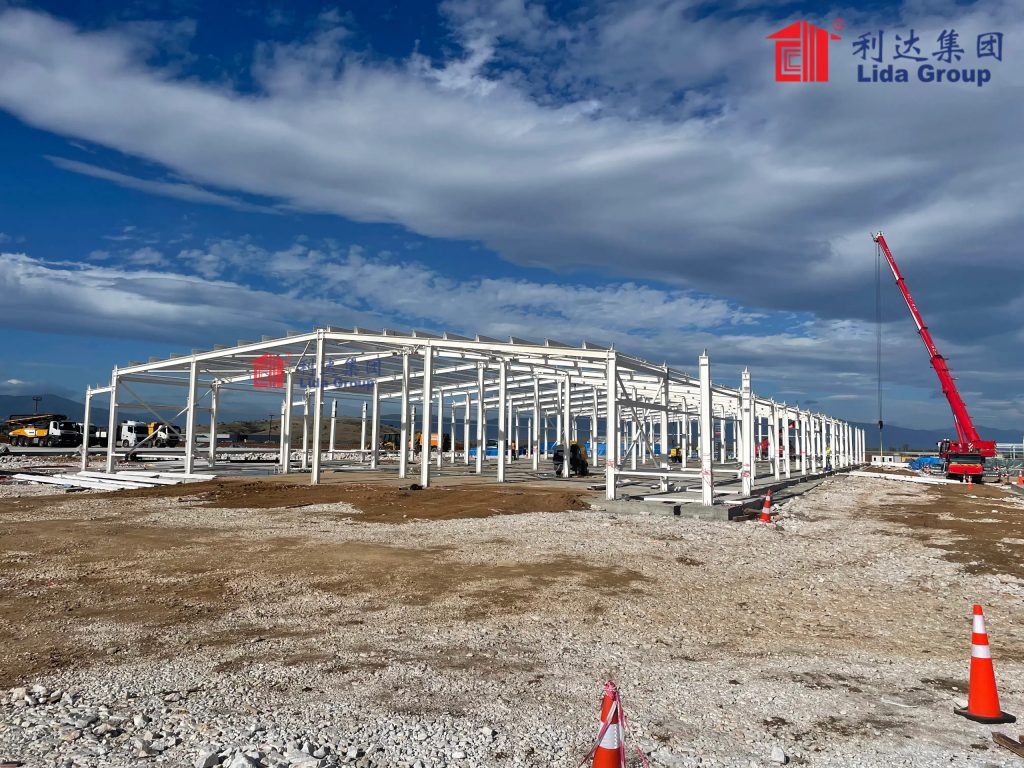
3. Lida Group’s Professional Steel Structure System: Technical Foundation of Sustainable Metal Houses
Lida Group’s environmental friendly metal houses achieve excellent sustainable performance, relying on the enterprise’s decades of accumulated mature steel structure building technology. Different from the simple and crude steel frame design of ordinary metal buildings, Lida Group’s standardized steel structure system integrates material innovation, mechanical optimization, and modular customization, forming a high-efficiency, stable, and eco-friendly building framework that supports full-cycle sustainable operation of metal houses.
3.1 High-Quality Sustainable Steel Material Configuration
Material selection is the primary link of sustainable steel structure construction. Lida Group abandons low-strength, low-recycling ordinary galvanized steel widely used in the industry, and adopts high-grade eco-friendly steel materials as the main structural components of metal houses. The main load-bearing frame uses G550 hot-dip aluminum-zinc alloy steel with a yield strength of 550MPa, featuring high strength, light weight, and excellent weather resistance. The unique aluminum-zinc-silicon alloy coating forms a dense protective layer on the steel surface, resisting ultraviolet aging, acid-base corrosion, and salt-fog erosion, ensuring long-term structural stability and avoiding frequent material replacement caused by aging damage.
In terms of green material application, more than 92% of the steel components of Lida Group’s metal houses adopt high-purity recycled steel. The use of recycled steel greatly reduces the exploitation of virgin mineral resources and the energy consumption of steel smelting, effectively reducing the embodied carbon of buildings. All steel materials pass ISO quality certification and ASTM international industrial standards, with stable mechanical properties and no performance attenuation after recycling and reuse, realizing the integration of high durability and high sustainability of building materials.
3.2 Optimized Mechanical Structural Design for Long-Term Sustainable Stability
To make the steel structure better adapt to the long-term sustainable operation needs of metal houses, Lida Group adopts advanced finite element simulation analysis technology to optimize the overall mechanical structure of the building. The steel keel spacing is strictly controlled at 400mm to 600mm in accordance with international permanent green building standards. Combined with high-strength bolt integral connection technology, the steel frame forms an integrated stress-bearing system, which can evenly disperse external wind pressure, seismic force, snow load, and other external impacts.
This optimized steel structure design greatly improves the building’s safety and durability, enabling the metal house to resist magnitude 8 earthquakes and level 12 strong typhoons. The excellent structural ductility and dimensional stability avoid deformation, loosening, and damage caused by long-term environmental changes and load pressure. The ultra-long stable service life effectively avoids resource waste and carbon emissions caused by frequent building reconstruction, laying a solid structural foundation for long-term sustainable development of the building.
3.3 Modular Prefabricated Steel Structure Construction Mode
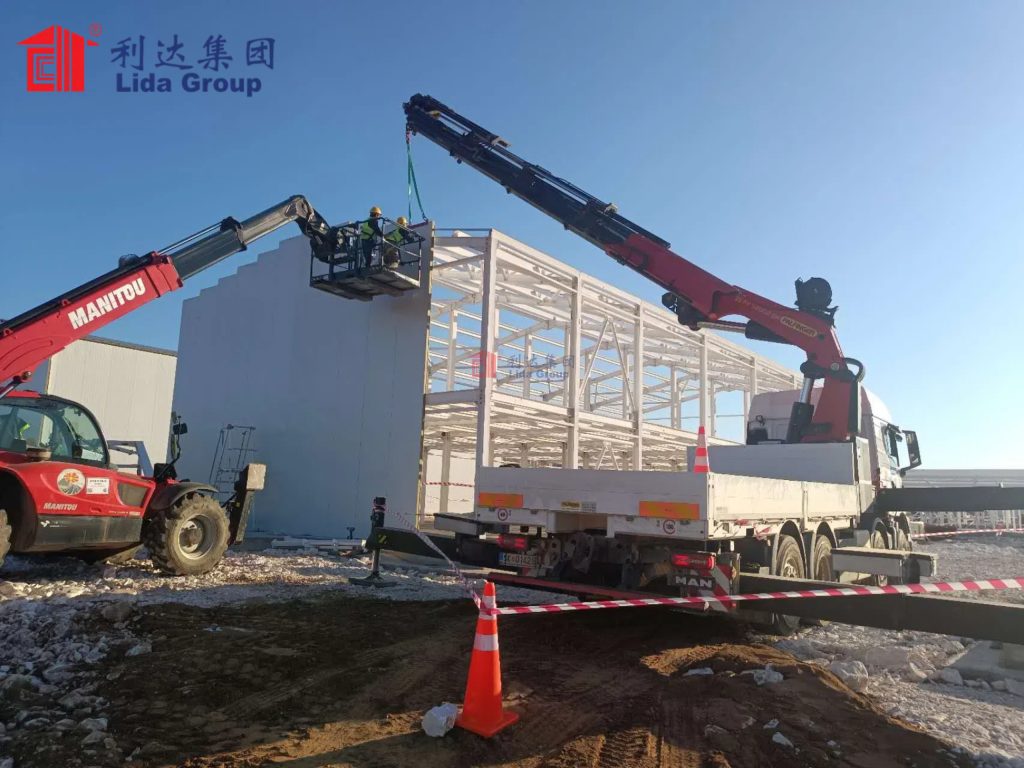
Lida Group’s steel structure building system adopts fully industrialized factory prefabrication and on-site dry assembly construction mode, which is a key breakthrough for realizing sustainable construction of metal houses. All steel frame components, wall keels, and roof structures are precisely cut, welded, and assembled in intelligent standardized factories. The automated production process realizes precise material calculation, zero excess material waste, and stable product quality, effectively reducing construction waste and resource consumption.
The on-site assembly construction completely abandons the traditional wet operation mode of cement mixing and brick laying, eliminating construction dust, sewage discharge, and noise pollution. The construction cycle is shortened by more than 60% compared with traditional buildings, greatly reducing the energy consumption of on-site mechanical equipment and labor input. This low-carbon, efficient, and pollution-free construction mode minimizes the ecological impact of the building construction stage and realizes green and sustainable construction.
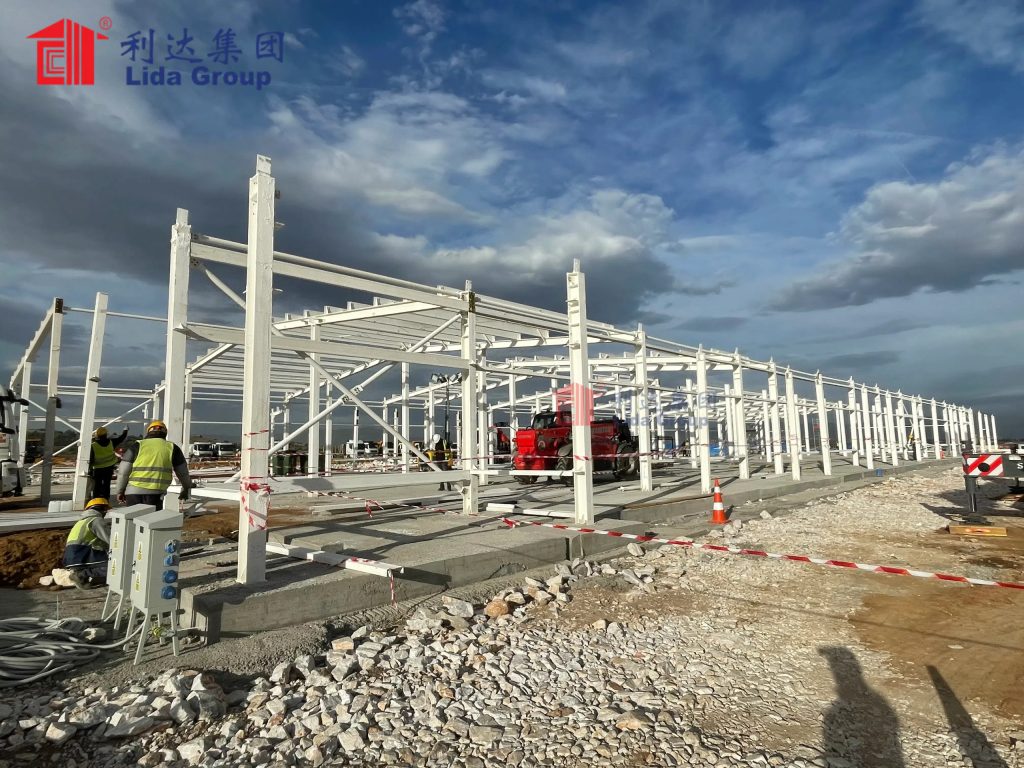
4. Deep Integration of Steel Structure and Sustainability: Core Green Advantages of Lida’s Metal Houses
Empowered by professional steel structure building technology, Lida Group’s environmental friendly metal houses realize comprehensive sustainable upgrading in material application, construction process, operational energy saving, and end-of-life recycling, forming a full-cycle closed-loop green development system that cannot be matched by traditional buildings and ordinary metal buildings.
4.1 Circular Economy: 100% Detachable and Recyclable Steel Structure
The modular steel structure design of Lida Group’s metal houses realizes complete disassembly and secondary utilization of all components. Different from traditional concrete buildings that are difficult to recycle and produce massive waste after demolition, Lida’s steel components can be completely disassembled without damage or deformation due to high structural durability. After the end of the building’s service life or the adjustment of land functional planning, all steel frames can be recycled, remolded, and reused for new building projects, achieving zero construction waste discharge.
This circular utilization mode maximizes the sustainable value of steel structures. The high recycling rate of steel materials reduces the demand for virgin steel production, cuts industrial carbon emissions, and alleviates the pressure of global resource scarcity. It fully practices the circular economy concept of “reduction, reuse, and recycling” and realizes true sustainable architectural development.
4.2 Low Embodied Carbon: Green Optimization in the Construction Stage
The lightweight and high-efficiency characteristics of Lida Group’s steel structure greatly reduce the embodied carbon of metal houses. Compared with concrete buildings of the same area, Lida’s steel structure metal houses reduce production and construction energy consumption by 12%, water consumption by 39%, carbon dioxide emissions by 15%, and solid waste discharge by 51%. The factory prefabrication mode avoids on-site material loss and energy waste, while the low-weight structure reduces foundation construction investment and resource consumption.
In addition, all supporting materials matched with the steel structure, including formaldehyde-free thermal insulation cotton, non-toxic waterproof coatings, and eco-friendly color steel plates, are green and environmentally friendly products that pass international LEED green building certification. No harmful substances are released during construction and use, ensuring ecological safety of the construction site and healthy indoor living environment, and realizing full-process low-carbon and pollution-free construction.
4.3 Energy-Saving Operation: Long-Term Low-Carbon Sustainable Use
Lida Group further optimizes the sustainable performance of steel structure buildings through ecological supporting design. Based on the stable steel frame structure, the metal house is equipped with high-efficiency thermal insulation, heat preservation, and natural ventilation systems. The composite wall and roof structure effectively isolate external heat radiation and prevent indoor temperature loss, greatly reducing the use frequency of air conditioning, heating, and other electrical equipment.
Practical engineering data shows that Lida Group’s steel structure environmental friendly metal houses reduce daily operational energy consumption by 35% to 45% compared with traditional brick-concrete buildings. Combined with the 40 to 50-year ultra-long service life of durable steel structures, the buildings avoid repeated construction and renovation, greatly reduce the full-cycle carbon footprint, and realize long-term low-carbon sustainable operation.
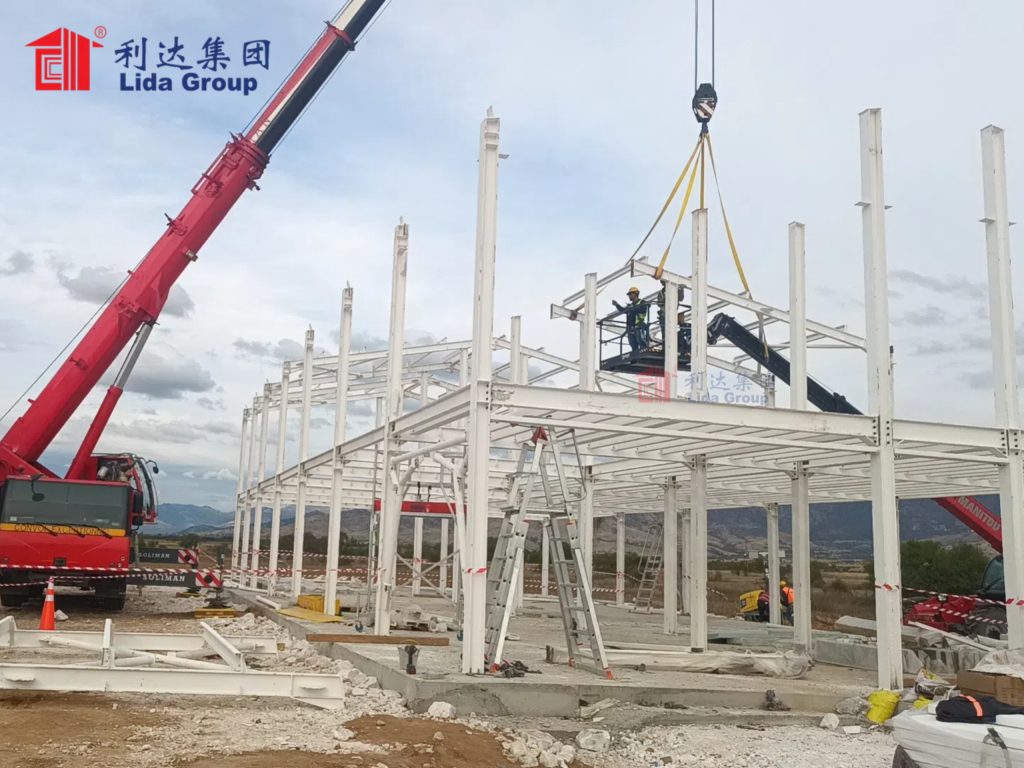
5. Durable Steel Construction: Guarantee for Sustained Green Performance
Sustainable architecture requires not only green design but also long-term stable ecological performance. Short-lived buildings will inevitably cause repeated resource consumption and carbon emissions, offsetting the initial green advantages. On the basis of advanced steel structure systems, Lida Group matches high-standard durable steel construction technology to ensure that the sustainable performance of metal houses can be stably exerted for decades.
5.1 Multi-Layer Anti-Corrosion and Anti-Aging Protection Technology
Steel corrosion and aging are the main factors leading to performance degradation and shortened service life of metal buildings. Lida Group innovatively adopts a three-layer eco-friendly composite protection process for steel structures, including hot-dip galvanized anti-rust layer, formaldehyde-free epoxy primer layer, and high-weather-resistance polyester topcoat layer. The closed protective barrier completely isolates the steel matrix from air, moisture, and ultraviolet radiation, effectively resisting corrosion and aging in various harsh environments.
This durable construction technology enables Lida’s metal houses to maintain stable structural and green performance for more than 50 years in conventional environments and more than 40 years in harsh coastal and industrial environments. The ultra-long service life avoids frequent building renewal, ensures the continuous and stable play of energy-saving and emission-reduction effects, and realizes long-term sustainable ecological benefits.
5.2 Low-Maintenance Sustainable Operational Performance
Lida Group’s durable steel structure has natural advantages of anti-mildew, anti-termite, anti-deformation, and anti-cracking. Different from wooden buildings that are prone to decay and concrete buildings that are easy to crack and peel, Lida’s steel structure metal houses have almost no structural maintenance needs during long-term operation. Only regular simple cleaning and minor cosmetic maintenance are required, avoiding secondary resource waste and carbon emissions caused by building renovation.
The low-maintenance performance further optimizes the full-cycle sustainability of metal houses, reducing long-term operational costs and ecological pressure, and making green building benefits more durable and stable.
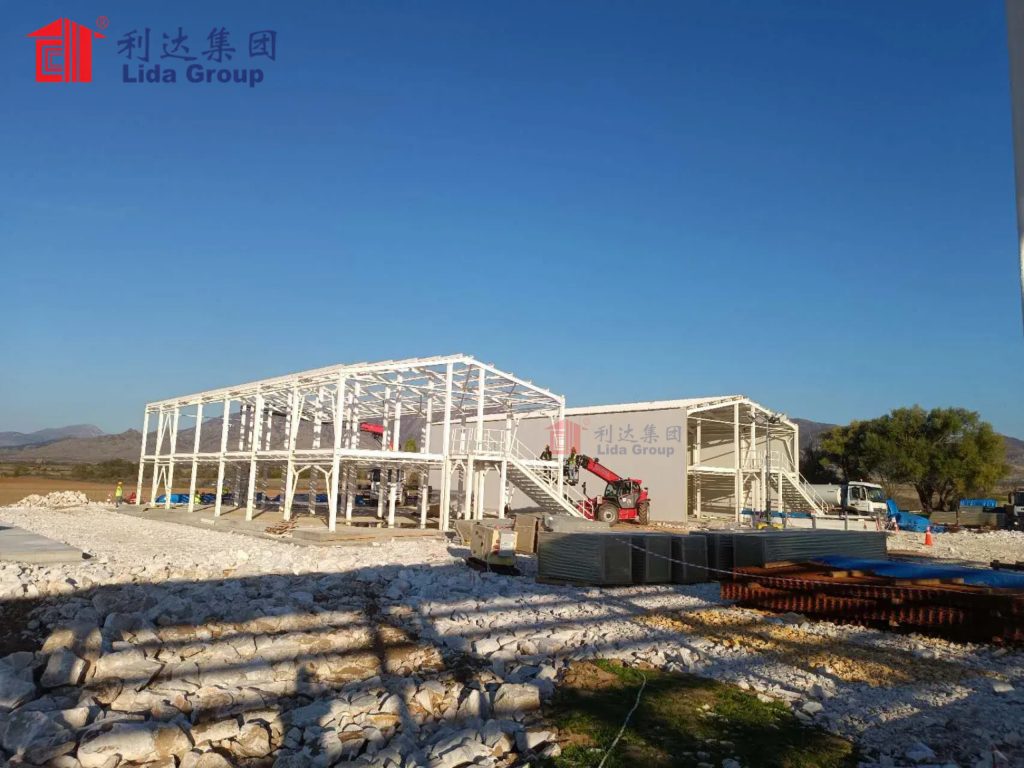
6. Practical Application and Comprehensive Sustainable Value
With the deep integration of steel structure building technology and sustainable design concepts, Lida Group’s environmental friendly metal houses have broken the limitations of traditional temporary metal buildings and achieved wide application in multiple green construction scenarios worldwide, bringing comprehensive ecological, economic, and social sustainable value.
6.1 Ecological Residential Construction
In green residential projects, Lida’s steel structure metal houses combine structural stability, living comfort, and ecological sustainability. The flexible steel structure layout meets personalized residential design needs, while the energy-saving and environmentally friendly configuration creates a healthy low-carbon living space. The products are widely used in rural green house renovation, suburban eco-villas, and scenic homestay projects, providing sustainable residential solutions for modern people.
6.2 Green Industrial and Commercial Buildings
For industrial workshops, warehouse storage, and commercial office buildings, the large-span, high-load, and corrosion-resistant advantages of steel structures are fully exerted. Lida’s metal houses adapt to long-term high-intensity use, with low operational energy consumption and low maintenance costs, helping enterprises build green factories and low-carbon commercial spaces, and meeting the sustainable development assessment requirements of modern industrial and commercial projects.
6.3 Public Ecological Supporting Facilities
In rural public service stations, community facilities, and ecological scenic area supporting buildings, Lida’s steel structure metal houses realize rapid green construction and long-term stable use. The low-impact construction mode protects the original ecological environment, and the ultra-long service life avoids repeated government investment and resource waste, providing reliable sustainable support for public infrastructure construction.
7. Industrial Leading Significance
Lida Group’s innovative model of integrating steel structure buildings with sustainable design has set a new benchmark for the global modular green building industry. It solves the industry’s common pain point that traditional metal buildings have green attributes but insufficient durability and poor sustainability, and breaks the market stereotype that steel structure metal houses are only temporary low-grade buildings.
This technical integration model promotes the transformation of the construction industry from extensive high-consumption development to intensive low-carbon sustainable development, and provides a replicable and promotable full-cycle green building solution for global architectural upgrading. While expanding the application boundary of steel structure sustainable buildings, Lida Group also leads the industry to pay attention to the full lifecycle ecological value of buildings, effectively promoting the progress of global green construction technology.
8. Conclusion
In summary, the perfect combination of advanced steel structure building technology and sustainable design concepts is the core competitiveness of Lida Group’s environmental friendly metal houses. Steel structure, as the most sustainable building structural system, provides high-strength, lightweight, recyclable, and low-carbon technical support for metal houses, realizing revolutionary breakthroughs in building material utilization, construction mode, and operational energy conservation. Matched with Lida Group’s high-standard durable steel construction technology, the metal house achieves ultra-long service life and low-maintenance performance, ensuring the long-term stable exertion of all green and sustainable advantages.
This innovative building model perfectly integrates structural safety, ecological environmental protection, resource recycling, and economic practicability, solving the contradiction between building durability and green sustainability that has plagued the construction industry for a long time. It not only provides high-quality low-carbon sustainable building solutions for residential, industrial, commercial, and public infrastructure fields, but also effectively reduces global construction carbon emissions and resource waste, boosting the high-quality development of the green construction industry.
In the future, with the continuous advancement of global carbon neutrality strategies and the popularization of sustainable building concepts, steel structure green metal houses will surely become the mainstream form of modern construction. Lida Group will continue to deepen the integration of steel structure technology and sustainable design, continuously optimize product performance, and contribute more professional strength to the innovation and popularization of global green and low-carbon buildings.
Related news
-
Discover Sustainable Living with Environmental Friendly Metal House and Durable Steel Construction
2026-06-24 16:29:49
-
Lida Group's Durable Steel Construction Creates Long-Lasting Environmental Friendly Metal House
2026-06-24 16:11:17
-
Environmental Friendly Metal House Now Featuring Durable Steel Construction by Lida Group
2026-06-24 14:45:01
contact us
- Tel: +86-532-88966982
- Whatsapp: +86-13793209022
- E-mail: sales@lidajituan.com
