



Lida Group Introduces Modular Container House for Rapid Workforce Housing Solutions
2026-Jun-29 14:08:46
By Admin
1. Introduction: The Global Crisis of Temporary Workforce Housing
In the era of rapid global infrastructure expansion, industrial construction, and emergency disaster response, the demand for efficient, affordable, and reliable workforce housing has reached an unprecedented peak. Across construction sites, mining bases, remote energy projects, seasonal agricultural zones, and post-disaster reconstruction areas, enterprises and project operators have long been plagued by the bottlenecks of traditional temporary accommodation solutions. Conventional on-site dormitories, brick-built temporary houses, and makeshift tents suffer from inherent flaws including slow construction speed, high material waste, poor structural safety, insufficient living comfort, and non-reusability, which seriously restrict project progress and affect workforce stability.
Large-scale engineering projects often require hundreds or even thousands of workers to settle in remote or underdeveloped areas within a short period. Traditional housing construction involves complicated procedures such as foundation laying, on-site pouring, and decoration, which usually take weeks or even months to complete. This long construction cycle easily leads to delayed worker accommodation, increased project idle time, and elevated overall operating costs. In addition, traditional temporary buildings are poorly adaptable to extreme weather conditions such as strong winds, heavy rains, and low temperatures, bringing potential safety hazards to workers’ daily lives. After the project ends, most temporary buildings cannot be disassembled and reused, resulting in massive construction waste and environmental pollution, which runs counter to the global green and low-carbon development trend.
Against this industry backdrop, Lida Group, a globally renowned leader in integrated modular and prefabricated building solutions with more than 30 years of industry experience, officially launches its upgraded modular container house series tailored for rapid workforce housing needs. Rooted in independent technological research and development and rich engineering practice, this new product line thoroughly solves the pain points of traditional temporary accommodation, integrating rapid deployment, structural safety, living comfort, environmental sustainability, and flexible reusability into one solution. It provides standardized, customized, and scalable housing support for various mobile and temporary workforce scenarios, marking a new milestone in the global modular workforce housing industry.
2. Overview of Lida Group’s Modular Container House Innovation
Founded in 1993, Lida Group has evolved from a regional construction enterprise into a global comprehensive modular building solution provider. After decades of development, the group has built 6 professional container production lines and 8 large-scale steel structure manufacturing bases, holding more than 60 independent technical patents in the field of prefabricated buildings and modular structures. With a global business layout covering more than 100 countries and regions, Lida Group has accumulated rich experience in customized housing solutions for large-scale engineering camps, remote construction projects, and emergency rescue scenarios, forming a complete industrial chain integrating R&D, production, sales, transportation, on-site installation, and after-sales service.
The newly launched modular container house for workforce housing is a targeted innovative product developed by Lida Group based on in-depth market demand research. Different from ordinary container houses on the market that focus only on basic shelter functions, Lida’s new product takes “rapid construction, safe residence, comfortable living, and green circulation” as the core design concept. It adopts an advanced factory prefabrication and on-site assembly modular model, realizing the standardized production of all building components in the factory and efficient splicing and combination on the construction site. The product covers multiple series including flat-packed container houses, movable integrated container houses, and multi-story combined container camps, which can flexibly adapt to the accommodation needs of different scales from small teams of dozens of people to large workforces of thousands of people.
In terms of product positioning, Lida Group’s modular container house is not only a simple temporary residence but a systematic workforce housing solution. It can independently form a complete functional camp including accommodation dormitories, office rooms, canteens, bathrooms, storage rooms, and security rooms. All functional modules are highly standardized and can be freely combined and adjusted according to project scale, site conditions, and living standards, perfectly meeting the diversified housing needs of industrial construction, energy mining, road and bridge engineering, emergency disaster relief, and seasonal labor projects.
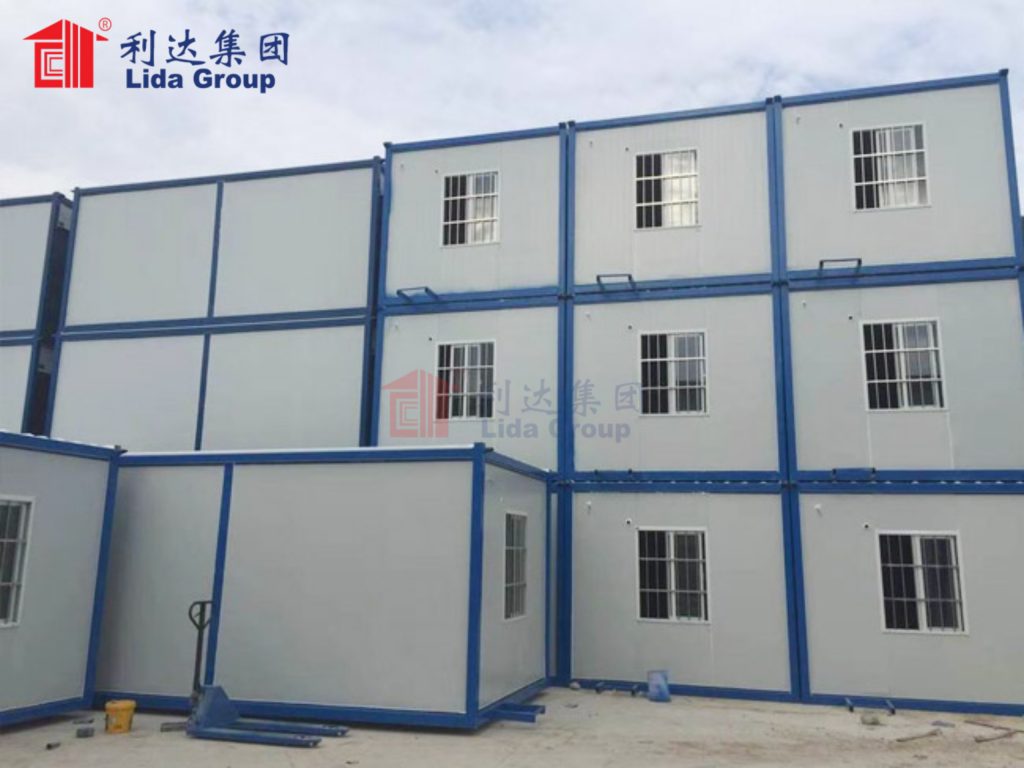
3. Core Technical Advantages of Rapid Deployment
The most prominent competitive advantage of Lida Group’s modular container house lies in its ultra-high deployment efficiency, which completely subverts the slow construction mode of traditional temporary buildings. Relying on mature modular prefabrication technology and optimized structural design, the product realizes the integration of internal decoration, electrical wiring, and water supply and drainage systems in the factory. All components are produced in standardized sizes, with precise matching and strong interchangeability, eliminating the need for complex on-site construction operations such as welding, painting, and wall finishing.
The flat-packed structural design is a key technical highlight of the product. After standardized factory production, the container house components are folded and packed in a flat state, which greatly reduces transportation volume and logistics costs. Compared with traditional integrated container houses that occupy large transportation space, Lida’s flat-packed containers can save more than 60% of transportation space, making long-distance cross-border transportation and remote mountain road transportation more convenient. After being transported to the project site, the assembly operation is extremely simple: only two professional workers are required to complete the unfolding, fixing, and overall assembly of a single container house module in about 18 minutes. For large-scale workforce housing projects with hundreds of accommodation units, Lida Group can complete the assembly and delivery of the main camp within 7 days, a speed that is impossible for traditional temporary building construction.
In addition, Lida Group applies BIM (Building Information Modeling) digital technology to the whole process of product design and camp planning. Through 3D digital modeling, the technical team can simulate the site layout, module combination, and pipeline layout of the housing camp in advance, accurately optimize the construction plan, avoid on-site adjustment and rework, and further improve the overall deployment efficiency. At the same time, the product is equipped with a standardized quick-connect water and electricity interface, which can complete the docking of water supply, power supply, and network systems in a short time, realizing immediate occupancy after assembly and fundamentally solving the problem of long waiting periods for traditional housing completion and acceptance.
4. Optimized Structural Design and Safety Performance
Workforce housing safety is the primary concern of project operators and workers. Lida Group adheres to strict international building safety standards in the design and production of modular container houses, focusing on improving structural stability, wind resistance, earthquake resistance, and weather resistance. The main frame of the container house is made of high-strength hot-dip galvanized steel structure, which has excellent compression resistance, impact resistance, and corrosion resistance. The steel frame undergoes professional welding and anti-rust treatment, with a service life of more than 15 years under normal use conditions, far exceeding the service life of traditional temporary color steel plate houses.
In terms of structural safety parameters, the product is professionally tested to resist magnitude 8 earthquakes and level 12 strong winds, and can adapt to extreme weather environments such as high temperature, severe cold, sandstorms, and heavy rainfall in different regions of the world. The wall and roof adopt high-density fireproof and thermal insulation color steel sandwich panels, which have excellent fire resistance, heat insulation, and heat preservation performance. The fireproof rating reaches the international A-level standard, effectively preventing fire hazards in dense staff accommodation areas. At the same time, the interior materials are all environmentally friendly and flame-retardant, with no harmful gas volatilization, ensuring the living health and safety of workers.
The overall structural design also takes into account the safety details of daily use. The house is equipped with anti-slip floorboards, anti-collision corner protection, safe anti-theft doors and windows, and standardized emergency lighting systems. For multi-story combined container camps, Lida Group specially designs reinforced load-bearing structures, safe staircases, and protective railings to ensure the structural stability and pedestrian safety of multi-layer buildings. In addition, the product is equipped with a complete drainage system and lightning protection device, which can effectively avoid water accumulation and lightning strike risks in rainy and thunderstorm weather, providing all-round safety protection for workforce accommodation.
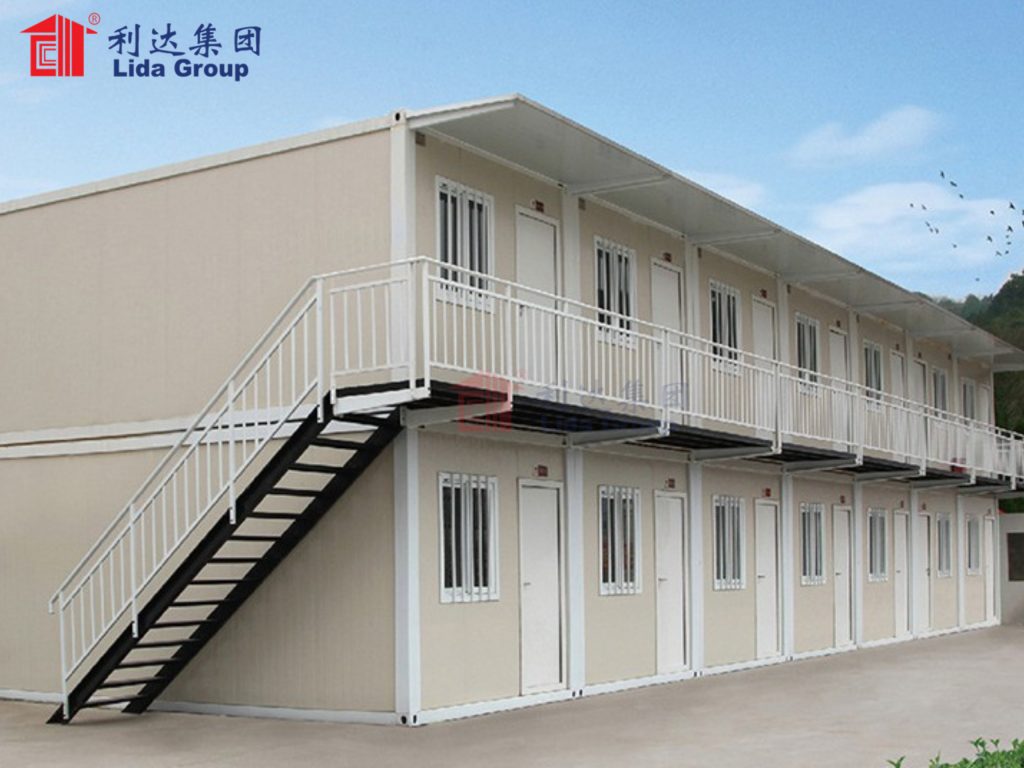
5. Humanized Interior Design and Living Comfort
While ensuring rapid deployment and structural safety, Lida Group abandons the rough and crude design of traditional temporary accommodation and focuses on improving the living comfort of container houses, creating a warm and functional living space for front-line workers. The product fully optimizes the internal space layout, with a reasonable house height and space utilization rate, avoiding the cramped and depressing feeling of ordinary temporary houses. According to different usage needs, it can be flexibly designed into single rooms, double rooms, 4-8 person dormitories, and family rooms, meeting the diversified accommodation needs of ordinary workers, project management personnel, and technical teams.
All interior spaces are pre-decorated in the factory, with smooth and environmentally friendly wall surfaces, flat and wear-resistant floors, and clean and tidy ceiling designs. Each accommodation unit is equipped with complete living supporting facilities, including comfortable beds, storage wardrobes, writing desks, and independent storage spaces, enabling workers to have independent rest and office areas. The room is equipped with professional thermal insulation and sound insulation layers, which can effectively isolate external noise and adjust indoor temperature. In hot summer, it can block external high temperature to keep the room cool; in cold winter, it can lock indoor heat to achieve heat preservation, greatly improving the living experience in extreme seasons.
In terms of supporting functional facilities, the modular camp can be equipped with centralized canteens, independent bathrooms, hot water supply systems, laundry rooms, activity rooms, and toilet areas according to customer needs. All public areas adopt standardized and clean design, with reasonable functional zoning and smooth traffic lines, meeting the daily life and leisure needs of workers. At the same time, Lida Group supports personalized customized design. For special project scenarios such as long-term overseas engineering camps and high-standard industrial parks, the product can be upgraded with smart lighting, air conditioning systems, network monitoring, and intelligent access control systems, realizing the intelligent and high-quality operation of workforce housing camps.
6. Environmental Sustainability and Economic Benefits
In the context of global advocacy of green construction and sustainable development, Lida Group’s modular container house has significant environmental advantages compared with traditional temporary buildings. The product adopts a fully prefabricated modular production mode, with all components produced in the factory in a standardized manner. There is no dust pollution, noise pollution, and construction waste emission during on-site assembly, which effectively reduces the environmental impact of project construction. Different from traditional brick and color steel temporary houses that are disposable and difficult to recycle, Lida’s container house can be completely disassembled, transported, and reused after the completion of the project, with a reuse rate of more than 90%.
A single set of modular container houses can be repeatedly deployed in multiple different project scenarios, greatly reducing the consumption of construction materials and the generation of construction waste, and effectively reducing the carbon emission of temporary housing construction. At the same time, the product adopts energy-saving and environmentally friendly materials throughout the whole process, with low energy consumption in production and use. The thermal insulation and energy-saving design can reduce the energy consumption of indoor air conditioning and heating, realizing energy conservation and emission reduction in the whole life cycle of the building.
In terms of economic benefits, Lida Group’s modular container house can effectively reduce the comprehensive housing cost of enterprises. Although the one-time procurement cost is slightly different from that of traditional simple temporary houses, its reusable characteristic greatly reduces the repeated construction cost of multiple projects. In addition, the ultra-fast deployment speed shortens the project preparation cycle, reduces the idle cost of engineering equipment and personnel, and improves the overall project operation efficiency. The product has low daily maintenance costs and a long service life, avoiding frequent maintenance and replacement problems of traditional temporary buildings. For large-scale long-term engineering projects and multi-project iterative construction enterprises, the long-term cost performance advantage is extremely prominent.
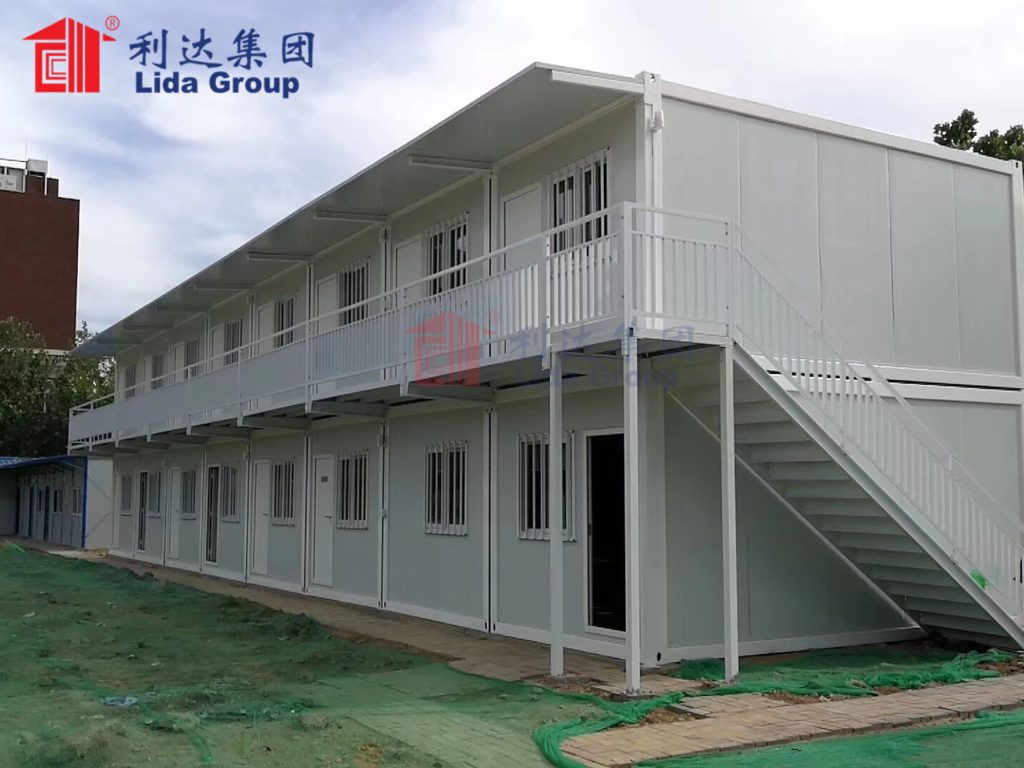
7. Diverse Application Scenarios and Global Practical Cases
Lida Group’s modular container house workforce housing solution has strong scenario adaptability and can meet the housing needs of almost all mobile and temporary workforce scenarios. In the field of infrastructure construction such as highway, railway, bridge, and water conservancy projects, the product can quickly build large-scale construction camps to solve the centralized accommodation problem of construction workers in remote and uninhabited areas. In energy and mining projects such as oil fields, gas fields, and mines, the product’s high wind resistance, earthquake resistance, and corrosion resistance can adapt to harsh wild working environments and provide stable long-term accommodation support for mining and energy operation teams.
In emergency disaster relief and public emergency scenarios, the rapid deployment advantage of modular container houses is fully reflected. In post-earthquake, post-flood, and post-typhoon reconstruction work, Lida Group’s products can be quickly transported to the disaster area to build temporary resettlement camps, solving the accommodation problem of rescue workers and displaced persons in the shortest time. Compared with traditional disaster relief tents, container houses have better safety, comfort, and weather resistance, which can provide long-term stable resettlement support for disaster areas.
In addition, the product is also widely used in seasonal agricultural labor accommodation, large-scale event support camps, industrial park temporary staff dormitories, and field scientific research and exploration bases. Up to now, Lida Group’s modular container housing solutions have been successfully applied in thousands of engineering projects around the world. For example, in the cross-border infrastructure project in Southeast Asia, Lida Group completed the construction of a 2,000-person workforce accommodation camp within 10 days, ensuring the smooth progress of the project; in the desert energy project in the Middle East, the high-temperature resistant and wind-resistant customized container house successfully adapted to the extreme desert environment and provided stable housing support for the project team for three consecutive years; in domestic post-disaster reconstruction projects, the rapid assembled modular camp completed emergency resettlement construction in 5 days, winning high recognition from government departments and customers.
8. Comprehensive After-Sales Service and Customization Capabilities
In addition to high-quality products, Lida Group provides customers with a full-cycle one-stop service system, covering pre-sales customization design, in-sales standardized production and transportation, and after-sales installation guidance and maintenance. In the pre-sales stage, the professional technical team conducts on-site investigation according to the customer’s project scale, site terrain, climatic conditions, and functional needs, formulates personalized camp planning schemes and product customization solutions, and adjusts the module combination, functional configuration, and supporting facilities according to customer requirements to ensure that the product fully matches the actual project needs.
In the production and transportation stage, Lida Group implements strict quality management system standards, conducts multi-layer quality inspection on product materials, structural welding, and finished product performance to ensure zero defective products leaving the factory. Relying on mature global logistics channels, the group can realize safe and fast transportation of products to various project sites around the world. For large-scale orders, the group arranges special production lines and logistics teams to ensure delivery efficiency and meet the urgent deployment needs of customers’ projects.
In the after-sales stage, Lida Group provides free on-site installation guidance and technical training services. Professional engineers go to the project site to guide workers in assembly and debugging, and teach daily maintenance skills. The group has established a global after-sales service network, providing 24-hour online technical support and rapid on-site maintenance services. In case of product failure or component damage, the after-sales team can respond quickly to solve the problem and ensure the normal use of the workforce housing camp. At the same time, the group provides product recycling and secondary transformation services, realizing the full-life cycle management of products and further improving the economic and environmental value of the products.
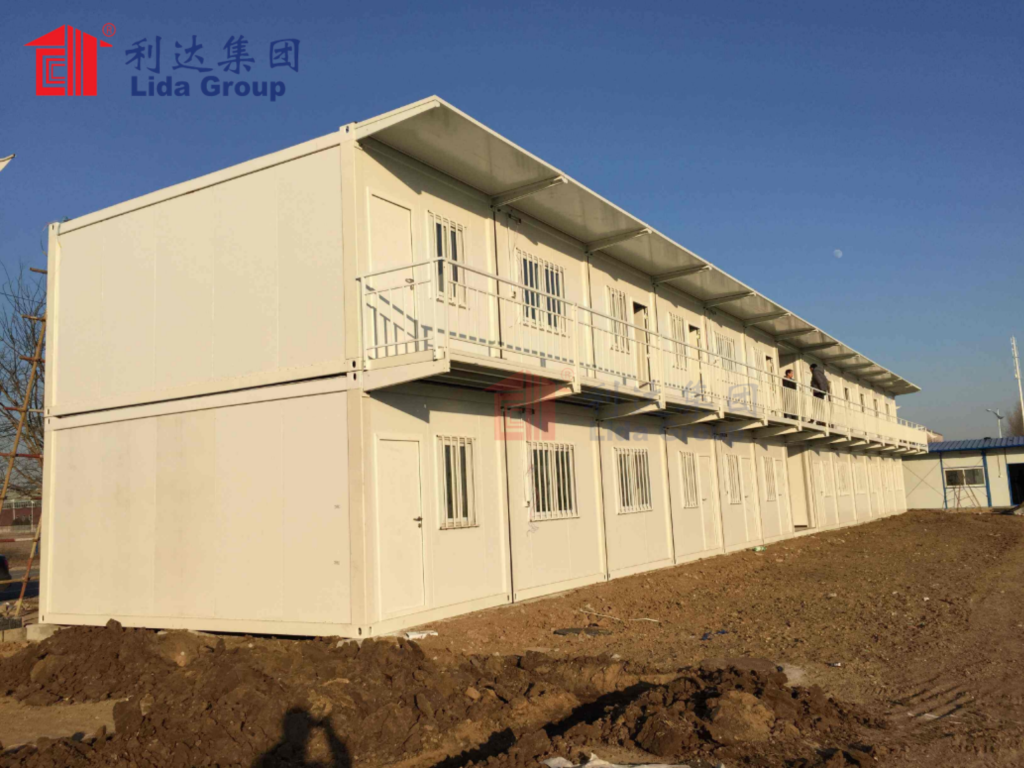
9. Conclusion
With the continuous acceleration of global infrastructure construction and the increasing frequency of emergency public events, the market demand for rapid, safe, green, and economical workforce housing solutions will continue to grow. Traditional temporary accommodation models have been unable to adapt to the efficient and high-quality development needs of modern engineering projects, and the modular container house represented by Lida Group has become the mainstream development trend of the industry by virtue of its unparalleled comprehensive advantages.
Lida Group’s newly launched modular container house for rapid workforce housing solutions perfectly integrates rapid deployment, structural safety, living comfort, environmental protection and energy saving, and flexible reusability. It solves many pain points such as slow construction, poor safety, high cost, and low reuse rate of traditional temporary housing, and provides reliable, efficient, and economical housing support for various engineering construction, emergency rescue, and mobile workforce scenarios. Supported by strong technical R&D strength, rich engineering experience, perfect product system, and comprehensive after-sales service, Lida Group has broken the industry’s inherent cognition of temporary accommodation and redefined the standard of modern workforce housing.
In the future, Lida Group will continue to focus on technological innovation and product upgrading in the field of modular buildings, continuously optimize product performance and functional configuration, expand more diversified application scenarios, and provide more high-quality, intelligent, and green modular housing solutions for global customers. Committed to promoting the iterative upgrading of the global modular construction industry, Lida Group will help the efficient and green development of global engineering construction and public emergency support undertakings.
Related news
-
Lida Group Sets New Standard in Durable Steel Construction for Environmental Friendly Metal House
2026-06-24 17:45:38
-
Green Housing Solution: Environmental Friendly Metal House with Steel Structure Building Design
2026-06-24 17:34:09
-
Lida Group Engineers Durable Steel Construction for Environmental Friendly Metal House Solutions
2026-06-24 16:53:02
contact us
- Tel: +86-532-88966982
- Whatsapp: +86-13793209022
- E-mail: sales@lidajituan.com
