



**Introduction**
Across the globe, industries are pushing deeper into remote frontiers—from the diamond mines of Siberia and the copper belts of Chile to the oil fields of the Middle East and the hydropower sites of Southeast Asia. In these unforgiving environments, where roads are unpaved, temperatures swing to extremes, and the nearest supply chain is thousands of kilometers away, the ability to house a workforce quickly and reliably is not merely a logistical convenience—it is a strategic imperative that can make the difference between project success and catastrophic delay. Every month spent waiting for conventional camp construction represents millions in idle capital, deferred revenue, and competitive disadvantage.
Lida Group, a global leader in modular construction since 1993, has responded to this urgent demand with a major expansion of its production capacity for mobile modular container houses. With a track record of more than 5,000 projects across 152 countries and a portfolio that includes container houses, flat-pack housing units, steel structure buildings, and integrated camp systems, the company is scaling up its manufacturing operations to meet the surging global need for workforce housing that can be deployed rapidly, relocated seamlessly, and operate reliably in the world’s most hostile environments. This article explores the production expansion, the engineering innovations that enable mobility and durability in extreme conditions, the range of applications from Arctic mining to tropical construction, the economic benefits that drive accelerating adoption, and the sustainability advantages of circular, relocatable building systems.
**Chapter 1: Manufacturing Scale—From Production Lines to Global Deployment**
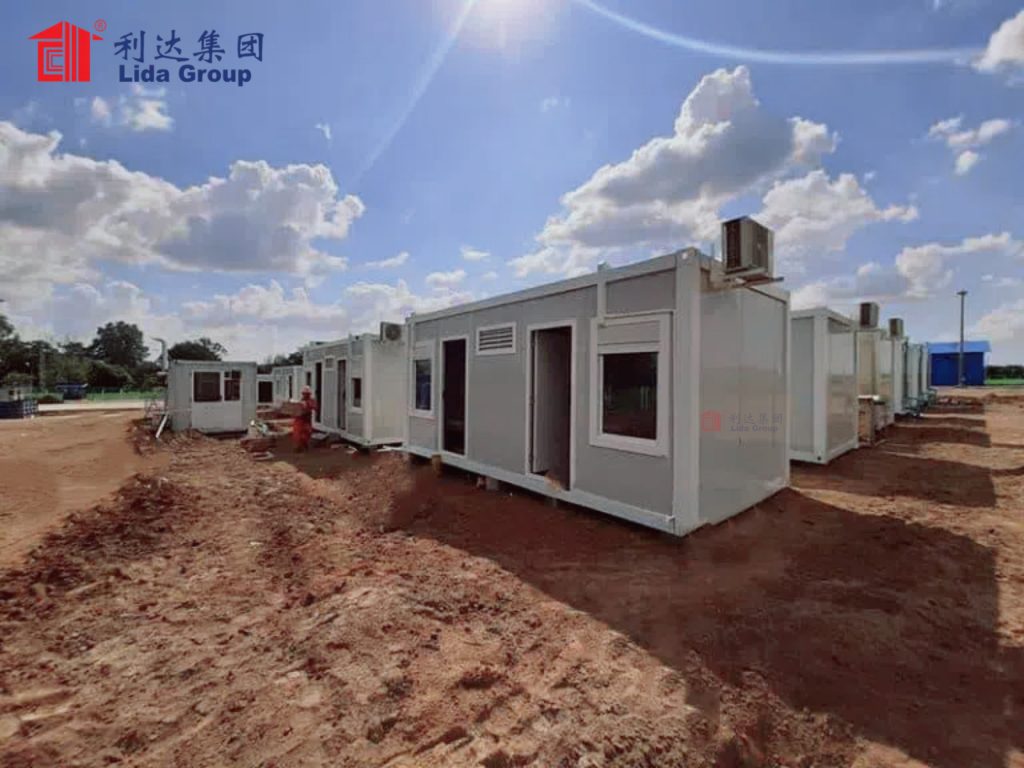
At the heart of Lida Group’s expanded production capacity are state-of-the-art manufacturing facilities featuring 6 specialized container modular house production lines and 8 steel structure production lines that represent the pinnacle of industrial efficiency and precision engineering [8†L39-L41]. These advanced centers utilize robotic welding systems that achieve tolerances within 0.2 millimeters—finer than a human hair—ensuring perfect structural integrity for transportation and assembly anywhere in the world [8†L42-L44]. Automated coating applications provide uniform corrosion protection exceeding 300 microns, essential for withstanding harsh environmental conditions from coastal salt spray to industrial atmospheres [8†L44-L46].
Computer-controlled cutting and drilling guarantee component interchangeability across global projects, enabling rapid replacement and expansion without custom fabrication [8†L47-L49]. This manufacturing discipline allows Lida Group to produce complete container house packages that can be shipped to site and assembled with remarkable speed, reducing installation timelines by up to 70% compared to traditional construction methods while maintaining consistently high quality standards across all projects [8†L51-L53]. The quality assurance framework operates under strict ISO and CE certification requirements, employing non-destructive testing methods including ultrasonic weld inspection and magnetic particle testing to verify structural integrity before products leave factories [8†L54-L58].
The expanded capacity translates into tangible output: the facilities can manufacture up to 500 container house units per month, alongside 100,000 square meters of prefabricated houses and 50,000 square meters of pre-engineered steel structures [0†L8-L10][4†L8-L13]. This scale ensures that whether a client needs a single modular house or a massive container building for thousands of workers, Lida Group can meet the deadline regardless of geographic location [0†L17-L19].
**Chapter 2: Engineering Mobility—The Flat-Pack Revolution**
The mobile modular container house is fundamentally different from static construction. Every component is engineered for transportability, ease of assembly, and reusability across multiple deployment cycles.
**2.1 The Flat-Pack Advantage**
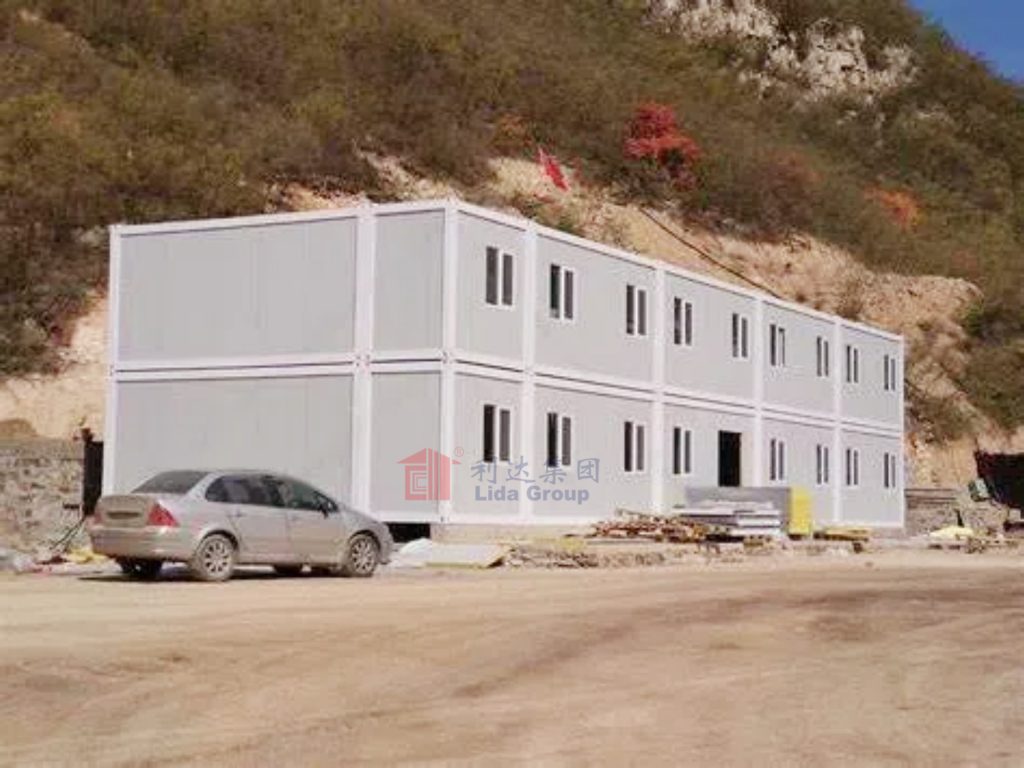
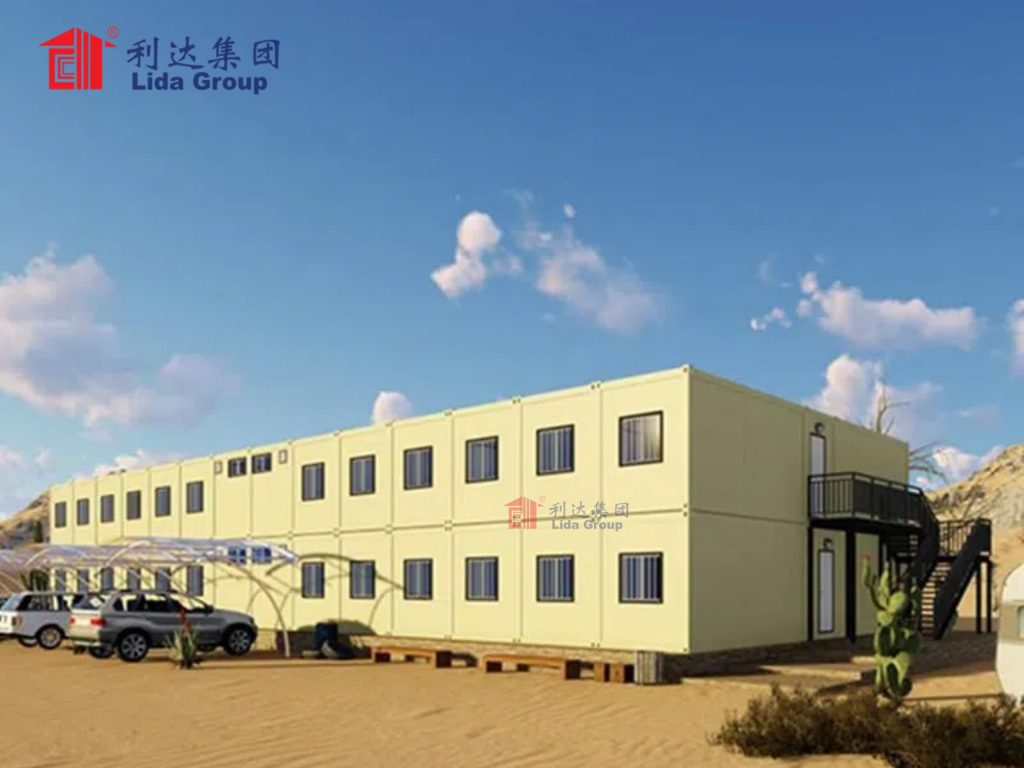
Lida Group’s flat-pack container homes are ideally suited for construction sites, mining camps, and drilling operations, where they can be turned into offices, living accommodations, changing rooms, and toilet facilities [2†L33-L38]. The units arrive as disassembled components—wall panels, floor cassettes, roof sections, and structural frames—that nestle into compact bundles. Four flat-packed cabins can be stacked together to fit into a single 20-foot sea-transport container, reducing shipping volume by up to 75% compared to fully assembled volumetric modules [14†L16-L18]. This efficiency slashes freight costs and enables easy access to remote or infrastructure-poor locations where oversized loads would be impossible.
In the Eastern Europe modular camp housing project, prefabricated modules were manufactured in just 25 days, shipped in flat-pack form inside a 40-foot high-cube container, and each unit was assembled by a six-person crew on-site in only 8 hours [10†L8-L10]. The bolt-connected steel frames reduced on-site welding—cutting labor costs by 40%—and the entire construction achieved 30% faster completion compared to traditional methods while maintaining thermal performance across extreme temperatures from -45°C to 50°C [10†L10-L12].
**2.2 Helicopter-Transportable Units**
For remote projects in roadless locations—such as mountain peaks, islands, or permafrost regions—Lida Group has developed helicopter-transportable 20-foot modular house units with boltless screw foundations that can be installed in just 90 minutes, establishing functional bases within eight hours of arrival [11†L55-L57]. This capability transforms exploration camps from multi-month construction projects into single-shift deployments, enabling immediate workforce accommodation in areas previously considered inaccessible.
**2.3 Arctic-Grade Engineering**
In Siberia’s Udachny diamond mine, where temperatures plunge to -52°C—cold enough to freeze hydraulic fluid into sludge and turn conventional steel brittle as glass—Lida Group’s engineered container house complex maintains habitable conditions while neighboring structures succumb to polar brutality [11†L10-L15]. The engineering begins with metallurgical innovation: nickel-enriched S355J2W steel maintains Charpy V-notch impact resistance above 100J at -60°C, verified through cryogenic testing simulating decades of polar winters [11†L34-L36]. Cryogenic welding protocols control hydrogen diffusion to prevent cold cracking in joints, while slotted connection systems accommodate thermal contraction without stress fractures [11†L36-L38].
Composite wall systems integrate aerogel-enhanced panels achieving R-50 values within 200mm profiles, creating thermal breaks that reduce heat loss by 63% compared to conventional builds [11†L38-L41]. Triple-glazed windows with suspended low-e films and krypton gas fills achieve U-values of 0.62 W/m²K, while magnetic gasket systems create hermetic seals against wind-driven snow infiltration [11†L41-L43]. For applications in Russia’s Yamal Peninsula where temperatures drop to -50°C and traditional construction grinds to a halt, Lida Group deploys cold-adapted steel (nickel-alloyed steel compliant with ASTM A333 Grade 6), magnetic alignment guides for precise placement through blizzards, and exothermic welding connectors that self-heat to fuse pipes at -40°C without external power [17†L40-L46].
**2.4 Offshore Logistics Innovations**
For offshore oil projects that face crippling delays when ports lack heavy-lift cranes, Lida Group has engineered self-floating container buildings with ballast tanks towable by tugboats, helideck integration for Chinook helicopter landings, and subsea towing kits guided by underwater drones [17†L32-L37]. On Shell’s Mars B Project in the Gulf of Mexico, 46 Lida office containers were airlifted directly onto platforms via Sikorsky S-64 Skycranes, saving 317 days compared to waiting for barge-mounted cranes [17†L37-L40].
**Chapter 3: Real-World Validation—Projects Across Continents**
The expanded production capacity is driven by unprecedented global demand, validated by successful deployments across the world’s most challenging environments.
**3.1 Siberian Diamond Mine—Arctic Resilience**
At Siberia’s Udachny diamond mine, where permafrost degradation causes differential settlement of foundations measured in centimeters monthly and corrosive dust penetrates electrical systems, Lida Group’s engineered container house complex operates continuously despite polar brutality [11†L22-L29]. The construction achieves the seemingly impossible: maintaining habitable conditions while neighboring structures collapse under thermal stress [11†L11-L15]. Field reliability is ensured by robotic welding in climate-controlled factories that achieves 0.1mm tolerances—unattainable in Arctic winds—creating components with 99.97% interchangeability across global projects [11†L45-L47].
**3.2 Eastern European Mountain Camp—Rapid Deployment**
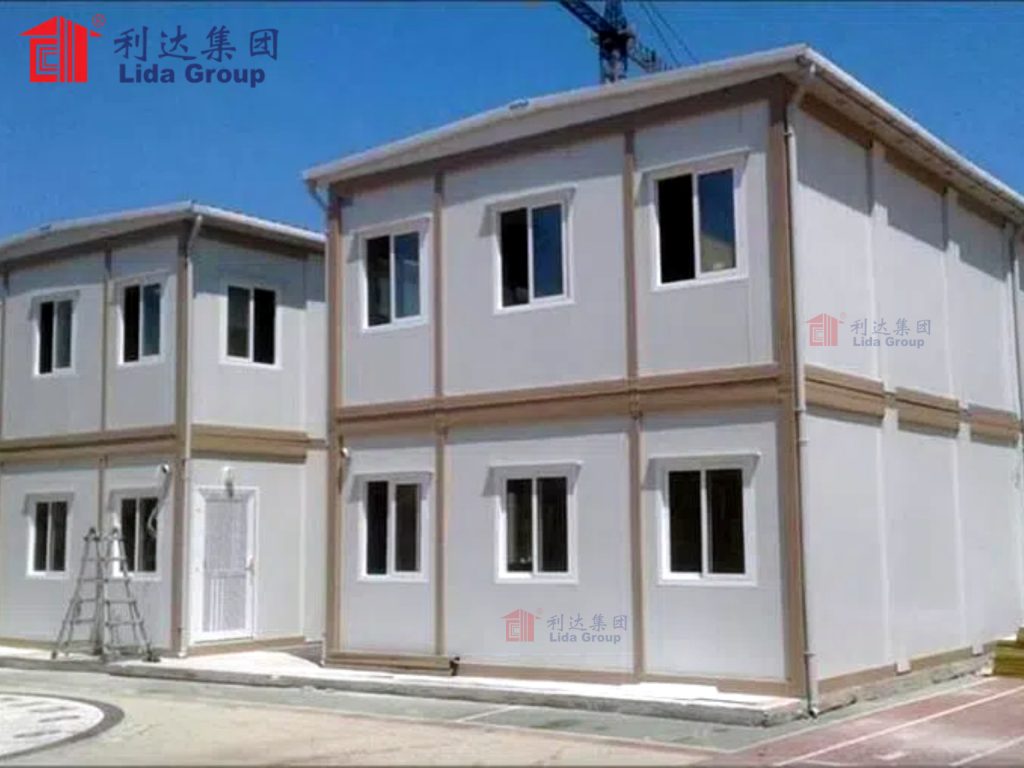
In a remote mountainous region of Eastern Europe, Lida Group completed a modular camp housing project facing severe winter conditions: -20°C temperatures, blizzards, tight construction windows, and strict environmental regulations [10†L5-L6]. The solution combined steel frame structures for communal areas (8-grade earthquake resistance, 1.5 kN/m² wind load) with EPS and rock wool sandwich panels (75–150mm thickness) for accommodations, supporting thermal performance from -45°C to 50°C [10†L6-L8]. Prefabricated modules were produced in 25 days, shipped flat-packed, and assembled by six workers per unit in 8 hours [10†L8-L10]. Bolt-connected steel frames reduced on-site welding and cut labor costs by 40%, while recyclable galvanized steel and zero-waste prefabrication minimized environmental impact [10†L10-L11]. The project achieved 30% faster completion than traditional methods, with client feedback noting: “The modular design allowed us to scale the camp seasonally, and the thermal performance exceeded expectations” [10†L11-L12].
**3.3 Congolese Cobalt Belt—Accelerated Mobilization**
In exploration scenarios where mineral prices fluctuate weekly and every day of delay costs millions, Lida Group’s engineered rapid deployment methodology delivered a fully operational 150-person mining accommodation complex in just 17 days, compressing typical construction timelines by 60-75% and transforming time-to-production from a constraint into a competitive advantage [17†L39-L40][15†L10-L14]. When Rio Tinto needed to mobilize 3,000 workers for its Oyu Tolgoi underground expansion in Mongolia’s Gobi Desert, conventional construction would have delayed production by 18 months—instead, deploying a Lida Group prefabricated camp mobilized crews 60% faster while slashing capital costs by $120 million, reflecting a fundamental industry shift where 83% of Tier 1 miners now mandate prefab house solutions for greenfield projects [15†L10-L17].
**3.4 Southeast Asian Large-Scale Installation**
In a major Southeast Asian project, Lida Group completed the on-site installation of 150 container housing units shipped in flat-pack form and assembled on a large site designated for temporary accommodations [12†L24-L30]. The units were equipped with insulation materials, energy-efficient lighting, and double-glazed windows to reduce environmental impact and operational costs, demonstrating the company’s ability to deploy at scale in tropical climates. The modular design enabled faster installation timelines and cost efficiency throughout the project .
**3.5 City Apartment Hotel Project—Commercial Application**
Leveraging the same flat-pack and stackable design principles used in remote camps, Lida Group completed a container house apartment hotel project using 33 modular container units, prefabricated off-site and assembled on location. Each unit was customized with specific color schemes and a secondary roof added to enhance weather resistance, with an expected service life exceeding 25 years under proper maintenance .
**Chapter 4: Supply Chain Resilience and Global Reach**
Lida Group’s expanded production capacity is backed by a logistics network designed for global resilience, with manufacturing strategically positioned to serve markets across six continents.
**4.1 Smart Supply Chain Management**
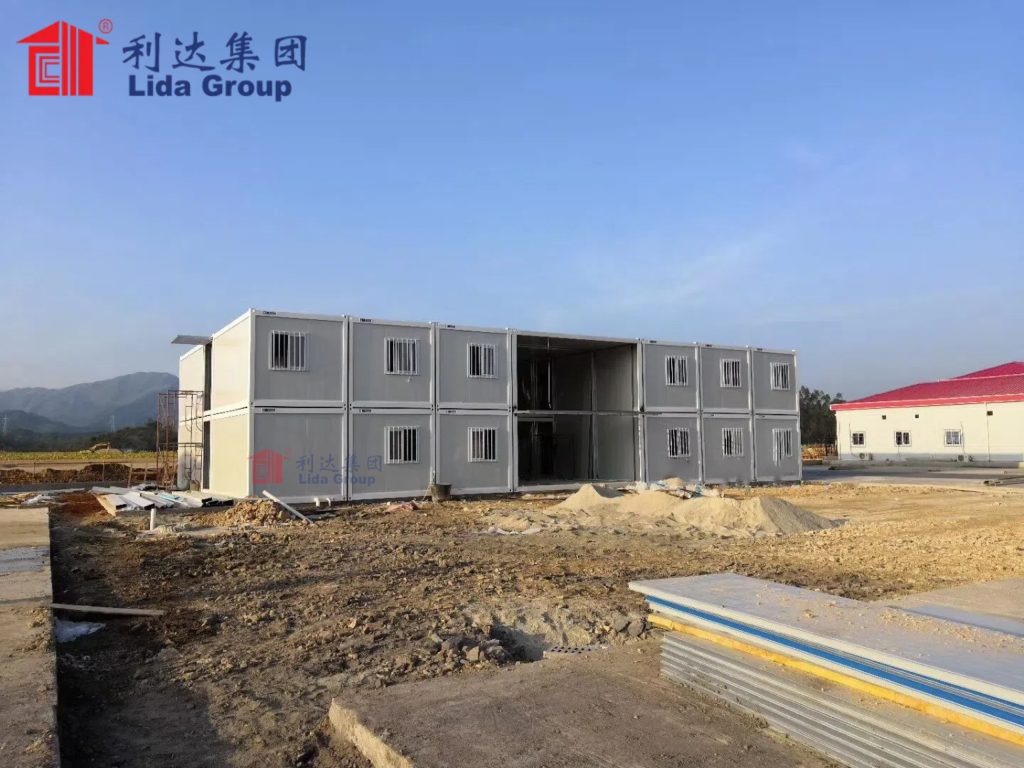
Using digital twin technology to design every building in 3D—simulating production, shipping, and installation before a single component is made—Lida controls every aspect of component manufacturing across its 8 steel structure production lines and 6 container modular house production lines . This centralized production approach reduces dependence on local supply chains, eliminating the risk of schedule disruptions when local lumberyards run out of materials or concrete plants face shortages. When a 2025 cyclone shut down India’s Chennai Port, Lida Group redirected camp house modules for a mining client to Mumbai Port—adding just 3 days to the timeline, compared to the 6-week delay a traditional build would have faced .
**4.2 Standardized Components for True Interchangeability**
Every steel beam, panel, and joint is manufactured to the same ISO 9001 standards, whether destined for a warehouse in Canada or a workshop in Brazil . This consistency was critical for a global food brand that needed 5 identical plants across Africa: Lida’s centralized production ensured each plant met the brand’s strict food-safety requirements despite varying local construction conditions.
**4.3 Global Service Infrastructure**
More than 320 energy sector projects and a presence spanning 152 countries have established Lida Group as the preferred modular construction partner for mission-critical applications. The company maintains overseas branch offices in Saudi Arabia, Qatar, Indonesia, and Chile, providing local support for projects from desert oil fields to Andean copper mines . From PetroChina pipelines crisscrossing Xinjiang to high-speed rail yards across East Africa, Lida-supplied workshops and site offices accommodate thousands coordinating mega-projects.
**Chapter 5: Reusability and Circular Economy**
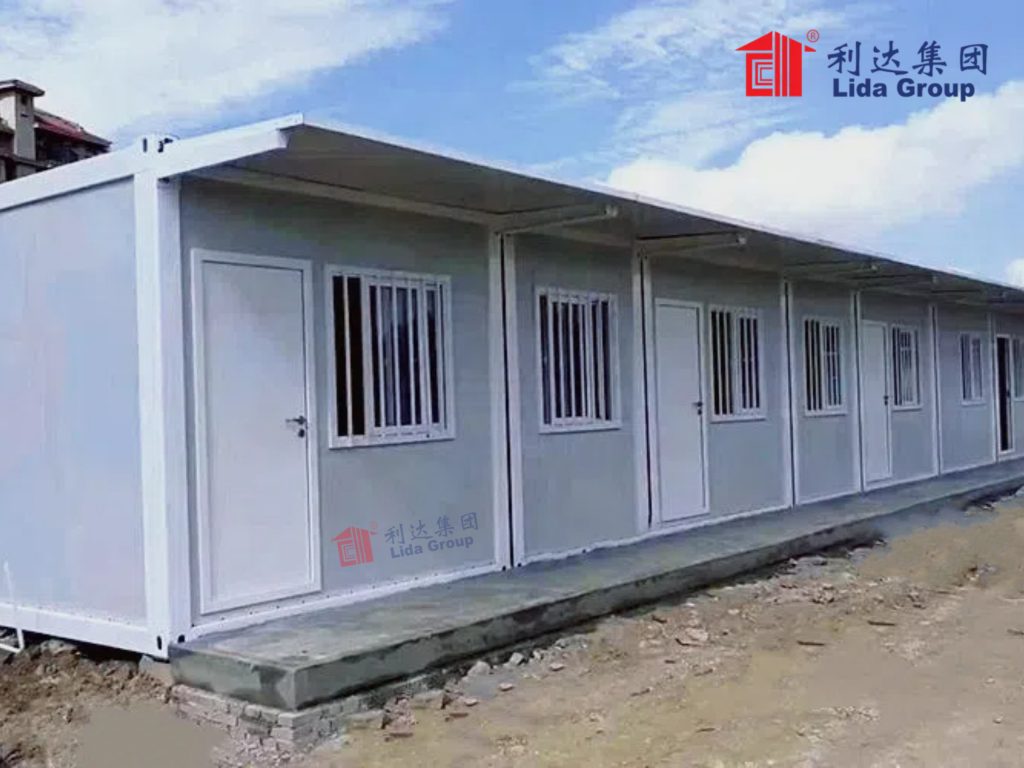
Unlike conventional site-built camps that are demolished and landfilled at project conclusion—a complete loss of invested capital—Lida Group’s mobile modular container houses are designed for multiple cycles of use.
**5.1 Multiple Deployment Cycles**
The bolt-together steel frame construction enables units to be assembled, disassembled, and relocated more than six times without loss of structural integrity [9†L20-L22]. Demountable structures redeploy between endeavors, reducing environmental footprints and stretching capital investments across multiple project phases. In the oil and gas sector, rotational schedules reuse robust but lightweight container complexes sustainably—reducing the need for new manufacturing with each project [16†L20-L23].
**5.2 Material Recovery**
At end of their long service life (up to 20 years of low-maintenance operation, as documented in the Eastern Europe project), components are recoverable: steel frames are 100% recyclable, with 99% steel recovery rates; insulation materials such as EPS, rock wool, and polyurethane can be reprocessed into new products; and aluminum window frames and trim are readily recyclable.
**Chapter 6: Applications Across Industries**
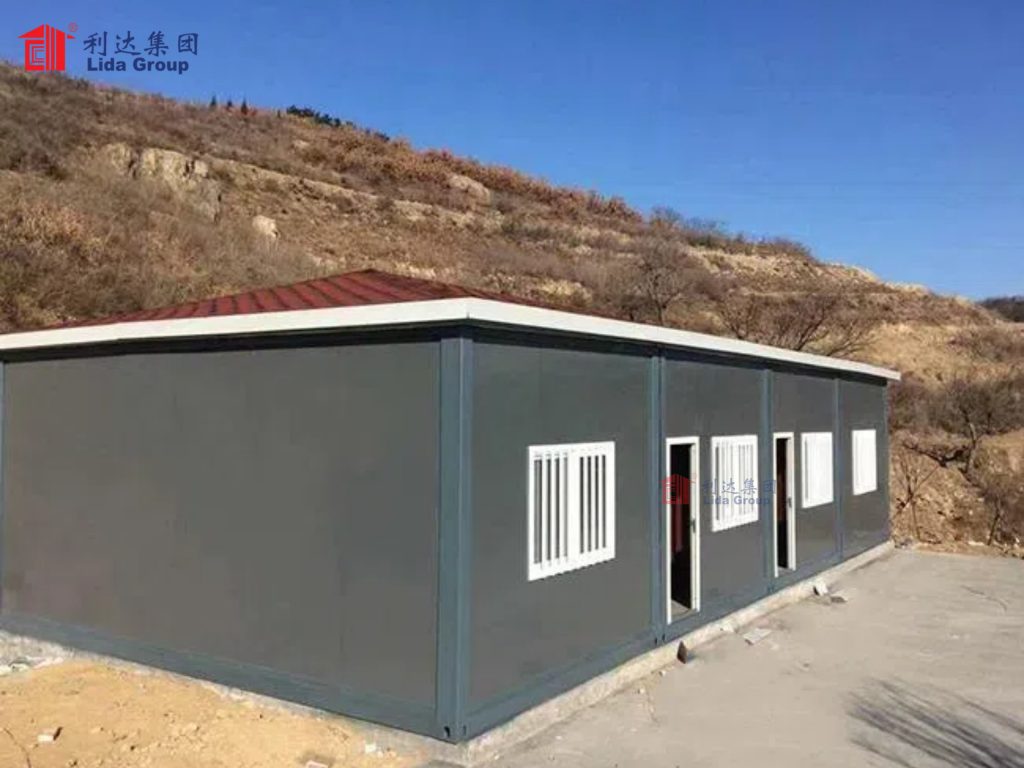
The expanded production capacity serves a diverse range of applications, each with unique requirements addressed by Lida Group’s modular container house systems.
**6.1 Mining and Exploration**
Vast mining camps distribute workers proximal to drill sites and port facilities efficiently, while stackable units furnish living quarters with amenities exceeding expectations for construction-fatigued laborers [16†L15-L18]. In Australia’s Outback heat, insulated envelopes retain comfortable interiors for rest after long shifts underground [16†L22-L23]. For exploration projects where mobility is paramount, Lida’s helicopter-transportable units establish bases in roadless locations within eight hours [11†L55-L57].
**6.2 Oil and Gas Fields**
With daily operational costs in the energy sector exceeding $1 million, delays in camp setup directly erode profits [17†L10-L11]. Lida Group’s 320+ energy sector projects demonstrate the value proposition: Chevon’s Permian Basin Expansion deployed 220 modular house units in 82 days versus the industry average of 196 days, saving $11.4 million in delayed production [17†L27-L30]. Offshore facilities utilize self-floating modules that bypass port bottlenecks and helideck integration for direct platform delivery [17†L32-L40].
**6.3 Construction Site Camps and Infrastructure Projects**
For massive infrastructure developments worldwide, Lida’s standard container footprints empower nimble scaling up or down according to schedules, without wasted space or time [16†L31-L32]. From PetroChina pipelines to high-speed rail yards across East Africa, Lida-supplied workshops and site offices accommodate thousands coordinating mega-projects [16†L28-L30].
**6.4 Urban Micro-Housing**
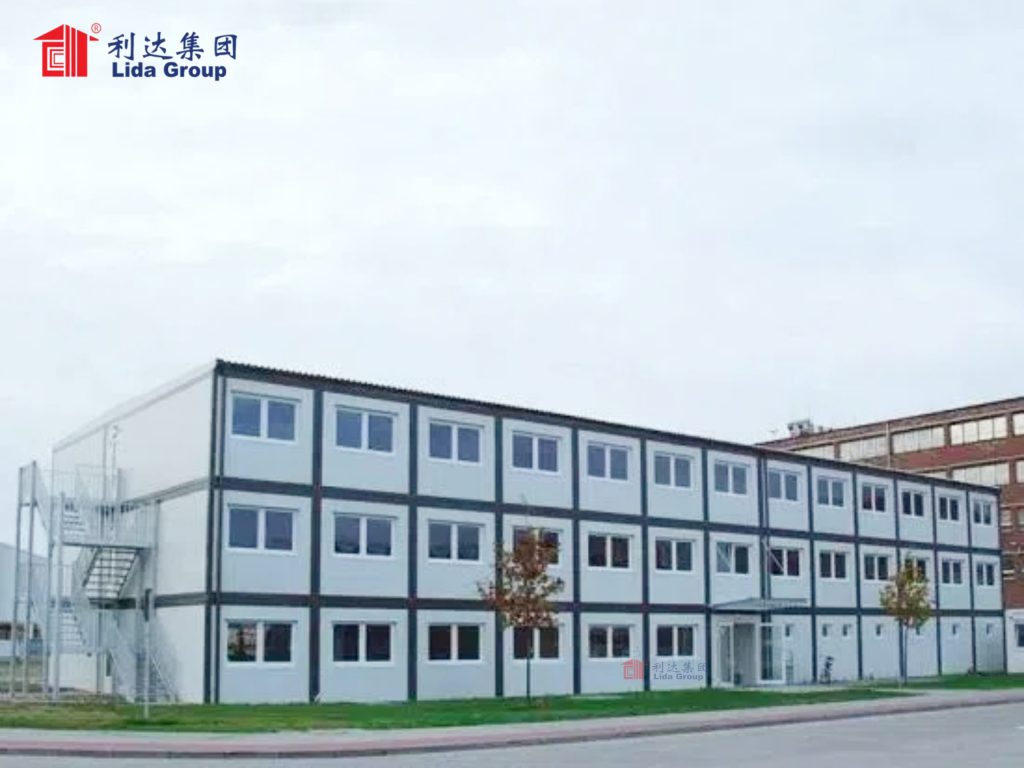
The same stackable container house units used in remote camps are finding increasing application in dense urban environments: a 20-foot container house can be transformed into a cozy studio apartment with a bedroom nook, small kitchen, and bathroom—all within 16 square meters [13†L34-L37]. Units are stackable, allowing developers to build vertical micro-housing communities without expensive foundations [13†L37-L38]. In 2024, Lida Group completed a 30-unit micro-housing project in a major European city in just 12 weeks—compared to 6-8 months for traditional construction [13†L42-L45].
**6.5 Natural Disaster Recovery**
When flooding or earthquakes displace populations, rapidly deployable accommodation from Lida Group relieves suffering [16†L37-L39]. After Typhoon Rai hit the Philippines in 2024, Lida Group delivered 200 camp house modules in just 30 days—half the time of conventional construction [5†L15-L17]. Steel-framed refugee camps mobilize communities through reconstruction, with modules transitioning permanently following disasters, showcasing modular building’s resilience [16†L40-L41][16†L39-L41].
**Chapter 7: Sustainability and ESG Alignment**
The expanded production of mobile modular container houses supports environmental, social, and governance (ESG) objectives across the full project lifecycle.
**7.1 Energy Efficiency in Remote Operations**
The superior insulation of sandwich panel construction—with 75mm fiberglass walls and 100mm polyurethane roofs—reduces heating and cooling energy consumption by an estimated 30-50% compared to conventional construction [15†L47-L49][10†L11-L12]. For remote sites reliant on diesel generators, these savings translate directly into reduced fuel consumption, lower carbon emissions, and significant operational cost reductions.
**7.2 Solar Integration**
Lida Group’s container houses are “solar-ready”—roof structures feature pre-engineered attachment points for photovoltaic arrays, allowing easy integration without field modifications [10†L11-L12]. Solar-integrated roofing can offset 35% or more of camp energy consumption, helping major operators achieve Scope 3 emissions reduction targets [15†L48-L49].
**7.3 Water and Waste Management**
Rainwater harvesting systems and greywater recycling cut freshwater demand and reduce water trucking by up to 65% [14†L21-L22]. The zero-waste prefabrication process in Eastern Europe demonstrated that recyclable galvanized steel and pre-engineered components could minimize environmental impact while meeting stringent EU green building standards [10†L10-L12].
**7.4 Lowering Scope 3 Emissions**
For mining giants facing regulatory pressure to reduce Scope 3 emissions by 50% by 2030, mobile modular container houses provide a decarbonization pathway [15†L22-L23]. By replacing energy-intensive concrete camps with steel structures that are pre-fabricated, energy-efficient, and reusable, operators can achieve meaningful carbon reductions without compromising operational capacity.
**Chapter 8: Economic Calculus—Why Mining and Energy Giants Are Switching**
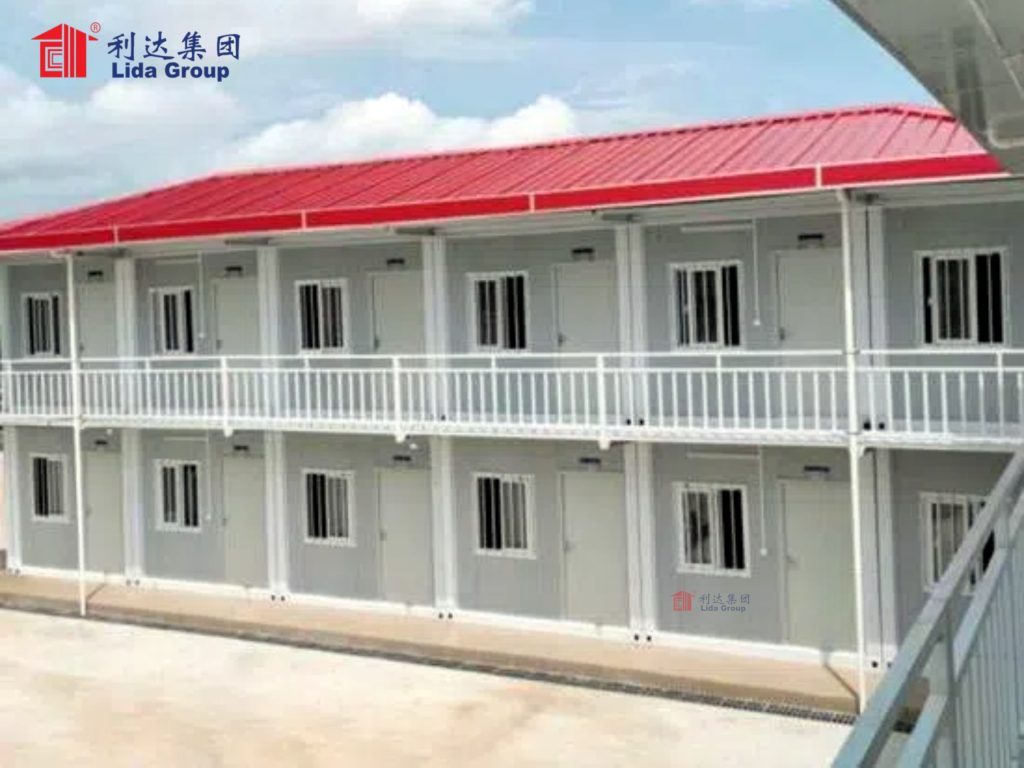
The accelerated adoption of Lida Group’s mobile modular container houses is driven by compelling economics that extend well beyond initial purchase price.
**8.1 Total Cost of Ownership**
Prefab building solutions deliver 42% lower total cost of ownership over 10 years, driven by four factors: reduced capital expenditure (62% less), faster time to production (60% faster mobilization), lower operating costs (35% reduction), and extended asset life (reusable across multiple projects) [15†L42-L43]. When Glencore upgraded to Lida’s premium modular houses in Ghana, technician retention increased by 32% through noise-reduced sleeping pods, individual climate control zones, high-speed Starlink connectivity, and air quality monitoring systems [15†L44-L47].
**8.2 Factory-Parallelized Timelines**
Unlike traditional construction, where sequential operations delay completion, Lida’s approach runs critical workflows in parallel: while site teams install foundations, climate-controlled factories simultaneously assemble complete volumetric modules. BHP reduced its South Flank camp construction from 22 months to 9 using this parallel approach—unlocking iron ore revenues 13 months early [15†L28-L32].
**8.3 Logistics Optimization**
Flat-pack components maximize shipping density: 52% more units per convoy compared to traditional modules, with 37% fewer customs clearance events and components designed to fit narrow access roads with 2.1m width clearance [15†L32-L35]. At Codelco’s Quebrada Blanca Phase 2 mine, optimized transport avoided 1,200 truck trips—saving $7.2 million in fuel costs and reducing carbon emissions by 2,800 tons CO₂e .
**Conclusion**
Lida Group’s expansion of mobile modular container house production represents a watershed moment for remote project execution. By scaling its 6 specialized container house production lines and 8 steel structure lines, the company is delivering the manufacturing capacity, engineering innovation, and global logistics infrastructure that industries have urgently needed.
The numbers speak for themselves: 500 units monthly—a 100-bed camp built in 19 days. Our Arctic-grade steel resists -60°C temperatures. Nickle-enriched S355J2W steel maintains impact resistance above 100J at -60°C. Aerogel panels achieve R-50 values within 200mm profiles, reducing heat loss by 63%. Robotic tolerances of 0.2 millimeters ensure structural integrity across decades and hemispheres. Heli-transportable modules deploy in 90 minutes to roadless sites. The economics have already compelled 83% of Tier 1 miners to mandate prefab solutions for their greenfield projects.
Real-world validation across continents confirms this capability: Siberian diamond mines where structures withstand -52°C polar winds while permafrost destabilizes concrete foundations. Eastern European mountains where flat-pack camps rise in 25 days of production and assemble into 3‑4 week full operations. Congolese cobalt belts where exploration camps deploy in 17 days rather than months. Chevon’s Permian Basin where 500‑person camps open 4 months sooner, saving $11.4 million. The evidence is verified across more than 5,000 projects.
For project managers and operations directors facing the high‑stakes challenges of remote workforce housing, the message is unequivocal: the wait is over. Lida Group’s expanded mobile modular container house production delivers the speed to meet the most punishing schedules, the durability to withstand the world’s most extreme environments, the flexibility to be relocated and redeployed across multiple project cycles, and the sustainability to meet tightening environmental regulations. These are not promises for tomorrow—they are capabilities available today, from the global leader in modular remote accommodation, scaling up to power the projects that build our world.
Related news
-
Hot Selling Container House Combines Durability and Speed with Lida Group’s Design
2026-04-27 15:28:46
-
Discover the Benefits of Prefabricated Container Worker Accommodation from Lida Group
2026-04-27 15:20:51
-
Hot Selling Container House by Lida Group Meets Global Demand for Affordable Housing
2026-04-27 15:00:46
contact us
- Tel: +86-532-88966982
- Whatsapp: +86-13793209022
- E-mail: sales@lidajituan.com
