



In today’s fast‑moving global economy, the construction and industrial sectors are under constant pressure to deliver projects faster, more efficiently, and with greater resilience. From remote mining camps and oil field bases to emergency housing and urban micro‑communities, the demand for workforce accommodation that can be deployed rapidly without sacrificing long‑term reliability has soared. The global container homes market, valued at nearly $69 billion in 2024, is projected to exceed $108 billion by 2032, driven by urbanization, housing shortages, and the urgent need for sustainable building solutions.
At the heart of this revolution stands Lida Group. Founded in 1993, Lida Group has grown into one of China’s most powerful integrated building engineering enterprises, with a product portfolio encompassing container houses, flat‑pack housing units, steel structure buildings, and modular labor camps. The company’s products have been delivered to more than 152 countries, supported by ISO9001, ISO14001, ISO45001, and CE (EN1090) certifications, as well as rigorous third‑party inspections from SGS, TUV, and BV . Among its many offerings, Lida’s hot‑selling container house stands out not merely as a factory‑built commodity, but as a carefully engineered system that masterfully balances two traditionally conflicting attributes: exceptional durability and breathtaking speed of deployment.
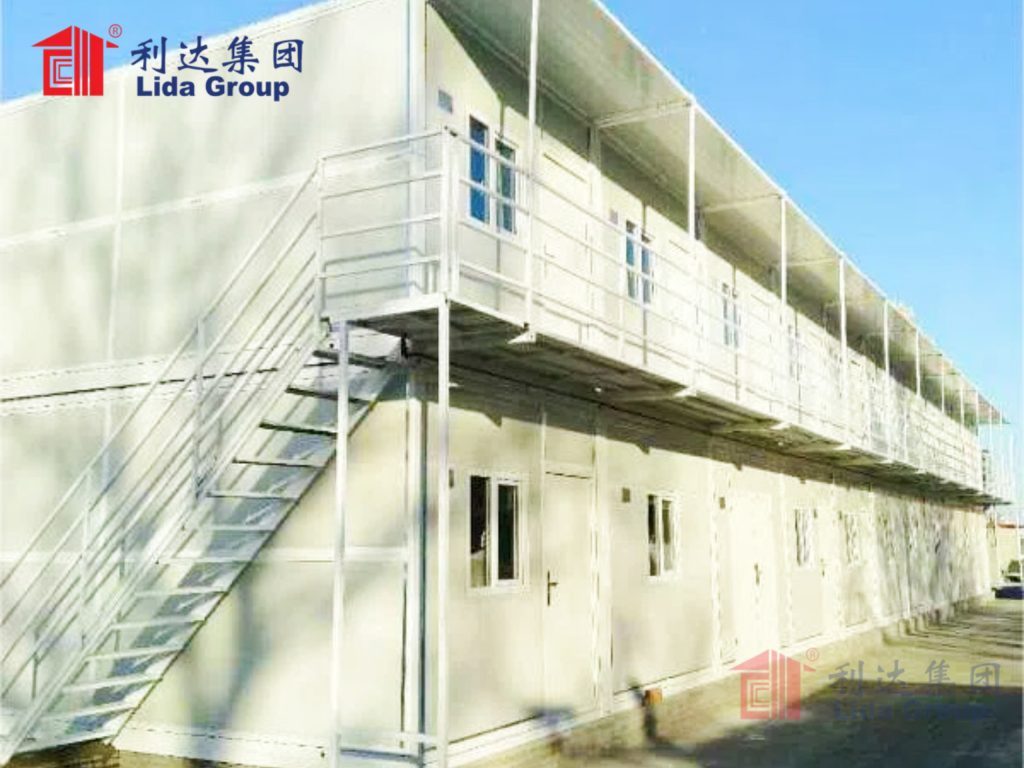
**Chapter 1 – The Design Philosophy: Why Durability and Speed Are Not Trade‑offs**
Traditionally, the building industry has treated durability and speed as opposing forces. A structure built to last decades typically requires extensive on‑site work, long curing times, and heavy materials. Conversely, a quickly erected building is often assumed to be flimsy, poorly insulated, and short‑lived. Lida Group’s design philosophy shatters this false dichotomy by shifting the vast majority of construction work from chaotic job sites to controlled factory environments, where precision engineering and advanced materials enable both formidable structural integrity and rapid assembly.
The core insight is simple: prefabrication allows for parallel processing. While site preparation proceeds on location, Lida’s factories mass‑produce standardized container house components with robotic precision. Using state‑of‑the‑art computer numerically controlled (CNC) machinery, factory processes precision‑cut, bend, and weld standardized building panels, wall frames, floor cassettes, and custom connector brackets from meticulously engineered digital designs within strict tolerances [16†L21-L25]. Intricate piping, wiring harnesses, and fixtures are fully integrated offline before choreographed on‑site assembly with minimal field labor [16†L26-L28].
At the same time, Lida selects high‑strength, corrosion‑resistant steel and multi‑layer sandwich panel insulation that can withstand earthquakes, high winds, and extreme temperatures. The result is a container house that can be transported flat‑pack to any corner of the globe, assembled in a matter of days, and then stand reliably for 20 years or more. This deliberate integration of material science, manufacturing precision, and logistical intelligence makes Lida’s container house a truly hot‑selling product.
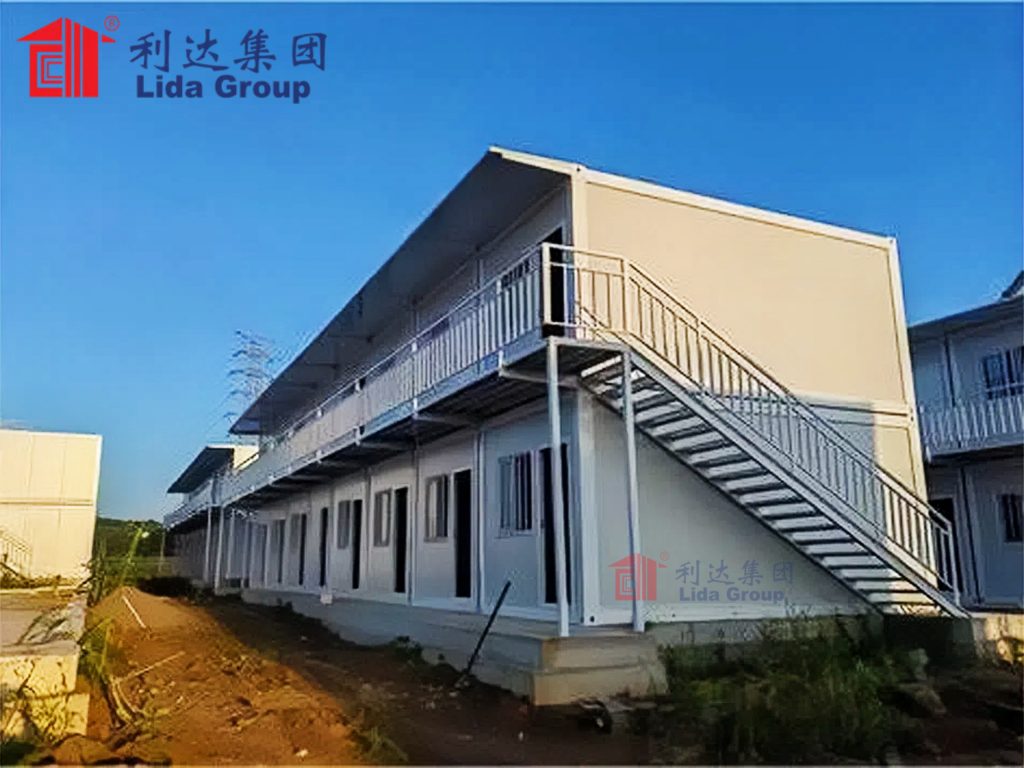
**Chapter 2 – Engineered Durability: Built to Withstand the World’s Toughest Environments**
Durability is not a single attribute but a holistic outcome of smart material choices, robust structural design, and meticulous corrosion protection. Lida Group’s container house is engineered to thrive in environments where conventional buildings fail.
**2.1 High‑Strength Steel Framework**
The container house is constructed from a cold‑rolled galvanized steel frame, using Q235B grade steel for the main structure. Cold‑formed steel delivers an exceptional strength‑to‑weight ratio, allowing the unit to carry substantial loads while remaining light enough for efficient transport. The corner pillars are made of cold‑rolled steel with a thickness of at least 3 mm, and the connections between pillars and the main frame use hexagon socket head bolts rated grade 8.8 [8†L36-L39]. This bolted connection system not only ensures structural integrity but also allows the building to be disassembled and relocated multiple times without damage.
The structural specifications meet or exceed international standards:
– Floor live load: 2.0 KN/m², sufficient for residential and commercial occupancy [8†L17-L19].
– Roof live load: 0.5 KN/m², accommodating snow accumulation and maintenance access [8†L18-L19].
– Wind load resistance: 0.6 KN/m², equivalent to approximately 120 mph wind speeds [8†L18-L19].
– Earthquake resistance: Grade 8 on the seismic intensity scale [8†L19-L20].
– Stacking capacity: Up to three stories.
These parameters make Lida’s container houses suitable for seismically active regions, hurricane zones, and areas with heavy snowfall. The steel frame also provides inherent fire resistance, and the insulation layers are rated Grade A non‑flammable.
**2.2 Advanced Sandwich Panel Construction**
The thermal and structural heart of the building is the 75 mm thick fiberglass sandwich panel used for the walls. These panels consist of three layers:
– An exterior 0.4 mm corrugated aluminum‑zinc color steel sheet, with a PE finishing coat and an aluminum‑zinc thickness of at least 40 g/m² [8†L20-L24].
– An insulation core of 75 mm fiberglass with a density of at least 50 kg/m³, classified as Grade A non‑flammable [8†L23-L24].
– An interior flat 0.4 mm aluminum‑zinc color steel sheet that provides a clean, finished surface.
For the roof, the system is even more generous: a 40‑foot container unit uses 0.4‑0.5 mm aluminum‑zinc color steel roof panels with a 360° full‑connection design, overlaid with 100 mm fiberglass insulation with aluminum foil (density 14 kg/m³, also Grade A fire‑proof) [8†L27-L34]. The ceiling is finished with V‑170 type 0.5 mm aluminum‑zinc color steel sheet. This continuous insulation layer eliminates thermal bridging, a common weakness in metal‑framed buildings. With outdoor temperatures at 0°C, indoor temperatures remain above 17°C without excessive heating; with outdoor temperatures at 30°C, interiors stay around 21°C.
**2.3 Comprehensive Corrosion Protection**
All exposed steel components are protected with a multi‑layer coating system: an epoxy primer (20‑40 μm) followed by a polyurethane finishing coat (40‑50 μm), achieving total film thickness exceeding 80 μm. Galvanized components have a zinc layer exceeding 10 μm (≥80 g/m²), providing sacrificial protection even if the coating is scratched. This combination makes the container house resistant to rust in coastal and industrial environments, ensuring a service life of 15‑20 years with minimal maintenance.
**2.4 Proven Durability in Harsh Real‑World Conditions**
Lida Group’s technical claims are validated by extreme deployments. In a remote mountainous region of Eastern Europe, the company built a modular camp housing project featuring steel frame structures with 8‑grade earthquake resistance and wind load resistance of 1.5 kN/m² . Container units used EPS and rock wool sandwich panels from 75 mm to 150 mm thickness, supporting thermal performance across a staggering temperature range of -45°C to 50°C . The bolt‑connected steel frames reduced on‑site welding and cut labor costs by 40%, while the galvanized steel and zero‑waste prefabrication ensured a 15‑year low‑maintenance lifespan . Client feedback highlighted that “the thermal performance exceeded expectations.”
In Southeast Asia, Lida Group completed a 150‑unit container housing project using flat‑pack units equipped with insulation materials, energy‑efficient lighting, and double‑glazed windows, all designed for long‑term use in tropical climates. The company states that these structures, given proper maintenance, have an expected service life exceeding 25 years.
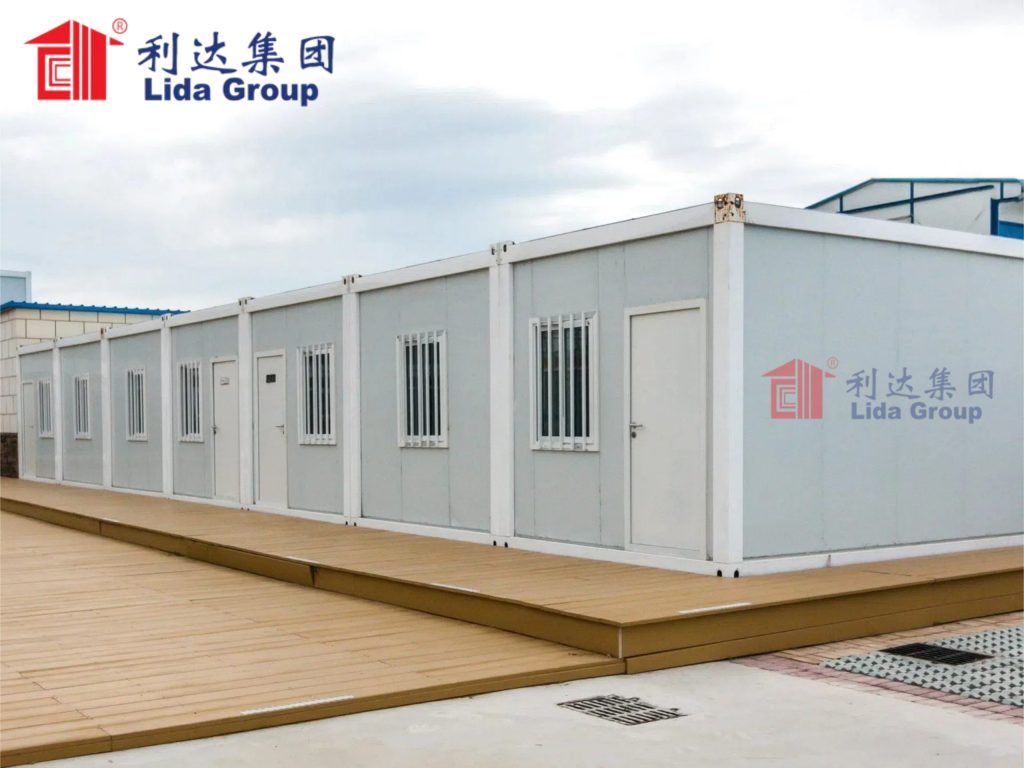
**Chapter 3 – Speed of Deployment: From Factory to Occupancy in Days**
If durability is the container house’s long‑term payoff, rapid deployment is its immediate game‑changing advantage. Lida Group has systematically engineered every step of the supply chain and assembly process to minimize on‑site construction time, without compromising safety or reliability.
**3.1 The Flat‑Pack Logistics Revolution**
Lida’s flat‑pack container house is designed for hyper‑efficient transport. The building arrives as a kit of components: pre‑assembled wall panels, floor cassettes, roof sections, and structural frames that nestle into a compact bundle. A standard 20‑foot shipping container can carry components for multiple housing units, and four flat‑packed cabins can be stacked together to fit into a single 20‑foot sea‑transport container [14†L16-L18]. This reduces shipping volume by up to 75% compared to fully assembled volumetric modules, slashing freight costs and enabling easy access to remote or infrastructure‑poor locations.
Each container house weighs approximately 4,000 kg and meets standard ISO container dimensions (20 ft: 6055 mm × 2435 mm × 2896 mm; 40 ft: 12,192 mm × 2435 mm × 2896 mm), allowing seamless integration with global freight networks [8†L15-L17][20†L32-L34].
**3.2 Parallel Production and Site Preparation**
Time savings begin with parallel processing. While the container house components are being manufactured in the factory, on‑site crews simultaneously install simple foundations such as screw piles or compacted gravel pads. No weeks‑long concrete curing is required—screw piles can be installed in hours. This parallel work stream eliminates the sequential dependency that plagues traditional construction, compressing the critical path from months to days.
**3.3 Lightning‑Fast On‑Site Assembly**
Once the flat‑pack components arrive, the assembly process is astonishingly rapid. The structural system is based on three modular parts: the roofing frame (2.5 mm cold‑formed steel), corner columns (3 mm cold‑rolled Q235B steel), and the floor frame (3.5 mm cold‑formed steel) [17†L22-L26]. These components are designed like a steel‑frame construction set, interlocking with high‑tensile bolts rather than welds. In practice, a team of 3‑4 skilled workers requires only 4 hours to assemble **one** 20‑foot flat‑pack unit [9†L3-L5].
For larger projects, the speed scales impressively. In the Eastern European mountain project, prefabricated modules were manufactured in just 25 days, shipped in flat‑pack form, and then each unit was assembled by a 6‑person crew in 8 hours—giving a complete 50‑unit camp in 3‑4 weeks [12†L8-L10]. The entire project was completed 30% faster than traditional methods, demonstrating that flat‑pack container houses can meet the most demanding project schedules.
**3.4 “Plug‑and‑Play” Utility Integration**
Speed also comes from factory‑pre‑installed utilities. Water pipes, electrical wiring, and data cables are concealed within the sandwich panels during manufacturing. On‑site, workers only need to connect color‑coded quick‑connects for power, water, and sewage, using basic tools. An industrial socket is fixed in an explosion‑proof box at the top beam of the short side, with a main power plug for inter‑container connections [8†L33-L36]. Even the HVAC systems are designed for rapid hookup, allowing a multi‑unit camp to be commissioned in a matter of days after the last unit is placed.
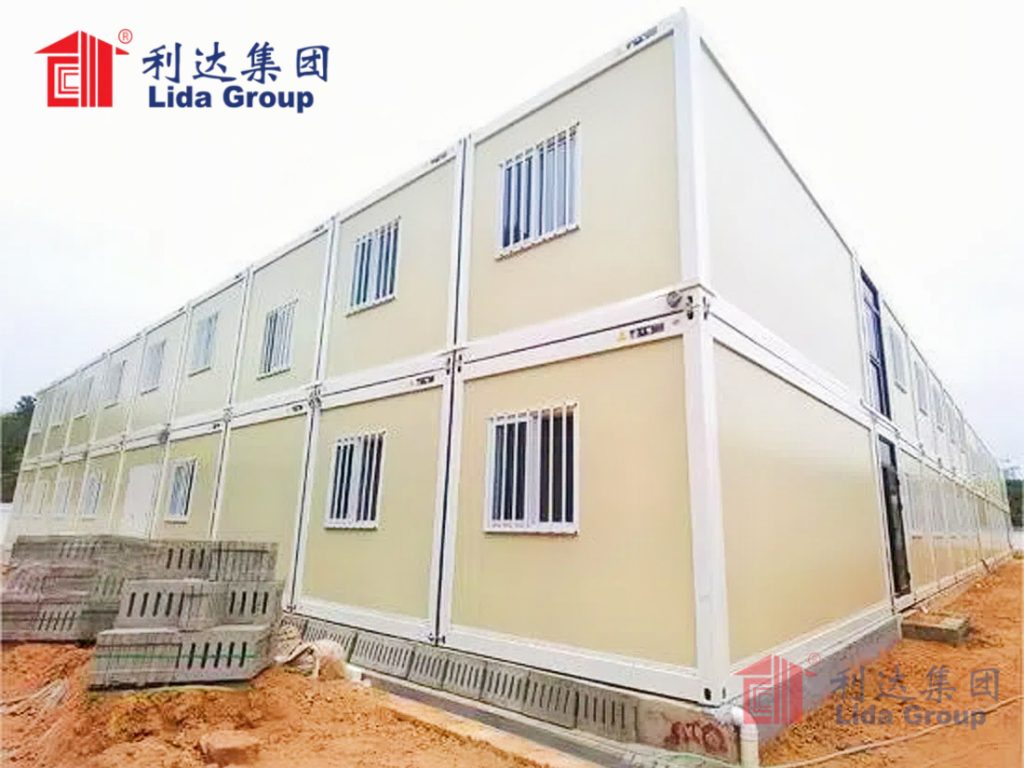
**Chapter 4 – Reusability and Flexible Configuration: Built for Multiple Lives**
Another dimension of Lida’s engineering wisdom is that the hot‑selling container house is designed not only to last, but also to be reused. The steel frame and bolted connections allow the building to be disassembled cleanly and reassembled at a new location, with documented ability to be assembled and disassembled more than six times without loss of structural integrity [9†L2-L3]. This reusability is a cornerstone of the product’s sustainability and economic value.
**4.1 Modular Flexibility**
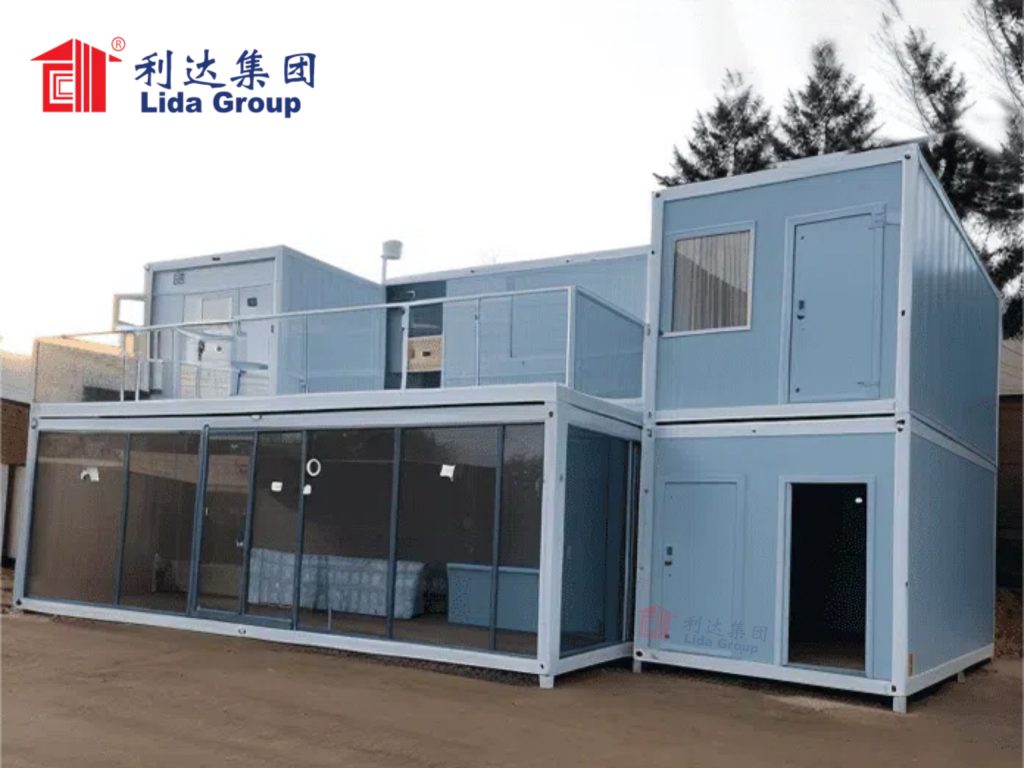
With a single container house as the basic unit, the system can be combined horizontally or vertically like building blocks, able to be stacked up to three stories and arranged in countless configurations [11†L6-L7][17†L26-L29]. The flat‑pack units can also serve as standalone studios, linked to form multi‑room apartments, or integrated into larger camp complexes with dining halls, medical clinics, recreation centers, and administration buildings. In a single Southeast Asian project, Lida Group delivered 150 container housing units on a large site, all connected and equipped with insulation, double‑glazed windows, and energy‑efficient lighting [7†L21-L27].
**4.2 Long‑Term Economic Life**
Despite being relocatable, the container house does not sacrifice longevity. The standard specification lists a design life span of up to 20 years, with floor live load of 2.0 KN/m², roof live load of 0.5 KN/m², wind load resistance of 0.6 KN/m², and Grade 8 earthquake resistance [8†L17-L20]. For high‑specification models using enhanced anti‑corrosion coatings, the lifespan can extend to 25 years or more. Lida’s Southeast Asian apartment hotel, built from 33 modular container units, is expected to serve long‑term with proper maintenance [7†L11-L20].
**Chapter 5 – Applications Across Industries: Why It’s a Hot Seller**
The combination of durability and speed makes Lida’s container house instantly valuable across a wide spectrum of industries.
**5.1 Construction and Mining Camps**
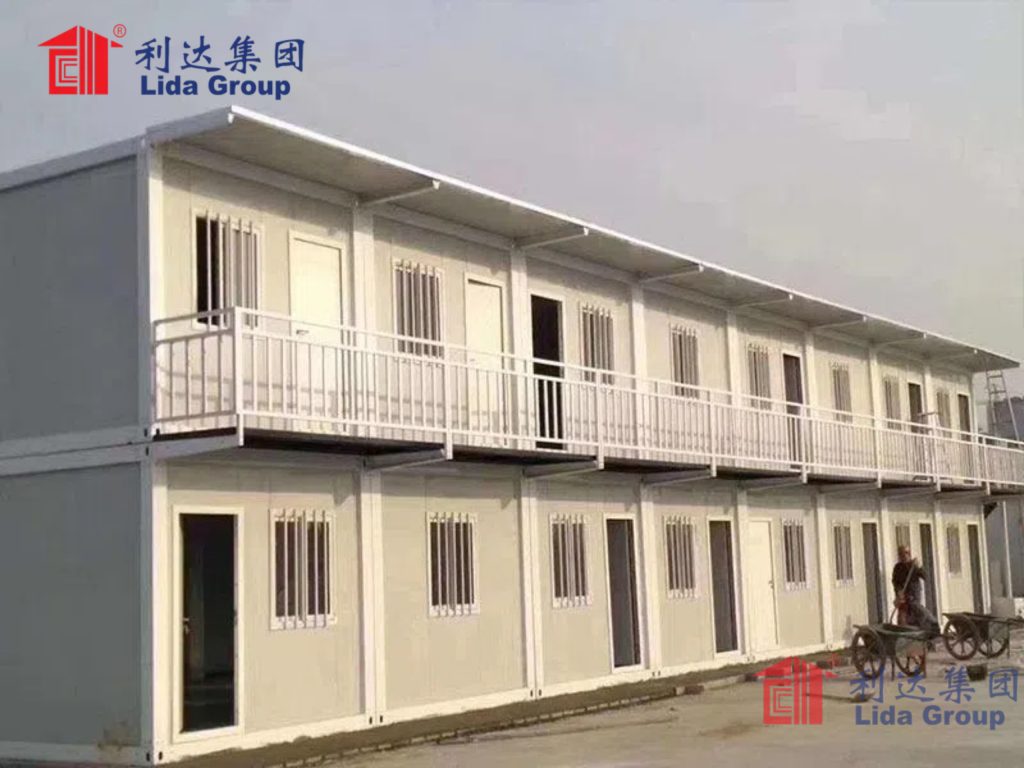
For remote mining operations and infrastructure projects, the ability to deploy a complete workforce camp in weeks rather than months can accelerate production by an entire season. Lida’s modular camps include all necessary facilities: accommodation buildings, kitchen and dining buildings, clinic buildings (medical centers), administration offices, site offices, laundry buildings, camp warehouses, recreation buildings, prayer rooms, markets (shops), and washing rooms and shower rooms [17†L31-L34]. The units are explosion‑proof for oil and gas fields and can be equipped with positive‑pressure ventilation systems to exclude dust.
**5.2 Disaster Relief and Emergency Housing**
When natural disasters strike, time is measured in hours, not months. Lida’s flat‑pack container houses can be stockpiled in strategic depots, then air‑lifted or trucked to the affected area and assembled by local crews with minimal training. The buildings provide safe, weather‑resistant, and dignified shelter far superior to tents, and after the emergency passes, the same units can be relocated to serve new purposes such as schools or clinics.
**5.3 Commercial and Hospitality Uses**
The aesthetic flexibility of Lida’s container houses makes them increasingly popular for pop‑up shops, site offices, exhibition kiosks, and even boutique hotels. The exterior can be customized with wood‑grain finishes, curtain walls, or stone‑effect panels, while interiors can be fitted with drywall, tile, and designer fixtures. In Southeast Asia, Lida completed a 33‑unit container house apartment hotel project with private bathrooms, shared amenities, and customized color schemes [7†L10-L18]. A secondary roof was added to enhance weather resistance, proving that these buildings can be both beautiful and functional.
**Chapter 6 – Sustainability: A Circular Economy Champion**
The hot‑selling container house also stands out for its environmental credentials. It is made almost entirely of natural materials and is nearly 100% recyclable [5†L9-L11][18†L12-L15]. The use of steel, the world’s most recycled material, and recyclable insulation cores means that when a building finally reaches the end of its service life, its components can be returned to the manufacturing loop rather than sent to a landfill.
The energy efficiency of the building—thanks to the high R‑value of the sandwich panels—reduces heating and cooling demands by an estimated 30‑50% compared to traditional construction, which is a critical advantage for remote camps that rely on expensive diesel generators. Moreover, Lida’s roofs are “solar‑ready,” with pre‑engineered attachment points that allow simple integration of photovoltaic panels, helping camps move toward net‑zero energy operation.
**Conclusion**
Lida Group’s hot‑selling container house is far more than a shipping container with windows. It is a deliberately engineered system that masterfully unites high‑durability steel framing, advanced sandwich panel insulation, and reusability with a flat‑pack logistical design that enables deployment at unprecedented speed.
From its high‑strength, cold‑formed galvanized steel frame with Grade 8 earthquake resistance and 0.6 KN/m² wind load capacity, to its 75 mm fiberglass walls and 100 mm insulated roof that maintain comfort from -45°C to +50°C, the building is built for decades of service in the world’s most demanding environments. Yet thanks to parallel factory‑site work, compact shipping, and bolt‑together assembly, the same building can be erected by a small team in just 4‑8 hours per unit—transforming a process that once consumed months into one that takes days.
Real‑world projects, from a 150‑unit tropical camp in Southeast Asia to a mountain‑side camp in Eastern Europe facing -20°C winters, validate Lida’s claims. These container houses withstand extreme climates, cut construction waste, reduce labor costs, and maintain comfortable living conditions year after year. Moreover, their reusability and near‑total recyclability make them a model of circular economy construction—a feature that resonates powerfully with today’s ESG‑conscious investors and project managers.
In a world where every day of delay costs millions, where worker retention depends on quality housing, and where sustainability is no longer optional, the Lida Group container house delivers a rare combination: it is as durable as a permanent structure, as agile as a temporary shelter, and as sustainable as a green building. That is why it has become one of the hottest‑selling products in the global modular construction industry—and why it will continue to set the standard for years to come.
Related news
-
Lida Group Delivers Mobile Modular Container House for Construction Site Labor Camps
2026-04-27 15:14:46
-
Discover the Benefits of Prefabricated Container Worker Accommodation from Lida Group
2026-04-27 15:20:51
-
Hot Selling Container House by Lida Group Meets Global Demand for Affordable Housing
2026-04-27 15:00:46
contact us
- Tel: +86-532-88966982
- Whatsapp: +86-13793209022
- E-mail: sales@lidajituan.com
