



Hot Selling Container House by Lida Group Meets Global Demand for Affordable Housing
2026-Apr-27 15:00:46
By Admin
The global affordable housing crisis has evolved into a widespread structural social and economic challenge affecting nearly every developed and developing region worldwide. According to official statistics from the United Nations Human Settlements Programme, more than 2.8 billion people currently live in substandard housing conditions, while nearly one billion residents reside in informal settlements and slum areas. With rapid urbanization, continuous population growth, rising land prices, and increasing construction material costs, global housing shortages continue to expand at an alarming rate. Relevant industry forecasts indicate that the world needs to build nearly 96,000 new affordable housing units every day to meet growing residential demands, otherwise more than 3 billion people will lack adequate and qualified housing by 2030. Traditional brick-and-mortar residential construction faces multiple bottlenecks including lengthy construction cycles, high investment thresholds, heavy resource consumption, and rigid design modes, making it difficult to quickly fill the global affordable housing supply gap.
Against this backdrop, prefabricated container houses have become a disruptive and practical solution to global affordable housing shortages. Featuring low construction costs, rapid deployment, flexible modular design, excellent structural durability, and green recyclability, modern container residential buildings break the limitations of traditional housing construction. As a world-leading manufacturer and solution provider of modular prefabricated buildings, Lida Group’s hot-selling container houses have gained widespread global market recognition. Tailored for mass affordable residential scenarios, emergency resettlement housing, low-income community construction, and remote residential support projects, Lida Group’s container houses balance low economic input, stable structural safety, basic living comfort, and long-term service value, perfectly catering to the surging global market demand for high-quality and budget-friendly affordable housing.
Boasting more than 30 years of professional modular building R&D and engineering experience, successful project delivery across 152 countries, and mature industrialized production systems, Lida Group deeply understands the core demands of global affordable housing projects: low cost, fast delivery, stable quality, strong environmental adaptability, and convenient later maintenance. Different from generic low-cost container houses that sacrifice quality for lower prices, Lida Group’s hot-selling container residential products adhere to a balanced development strategy of cost control and quality upgrading. Through standardized mass production, structural optimization, humanized functional configuration, and strict quality inspection systems, the enterprise delivers cost-effective, reliable, and livable modular housing solutions, gradually becoming the preferred product for global government affordable housing projects, public welfare resettlement programs, and commercial low-rent residential construction.
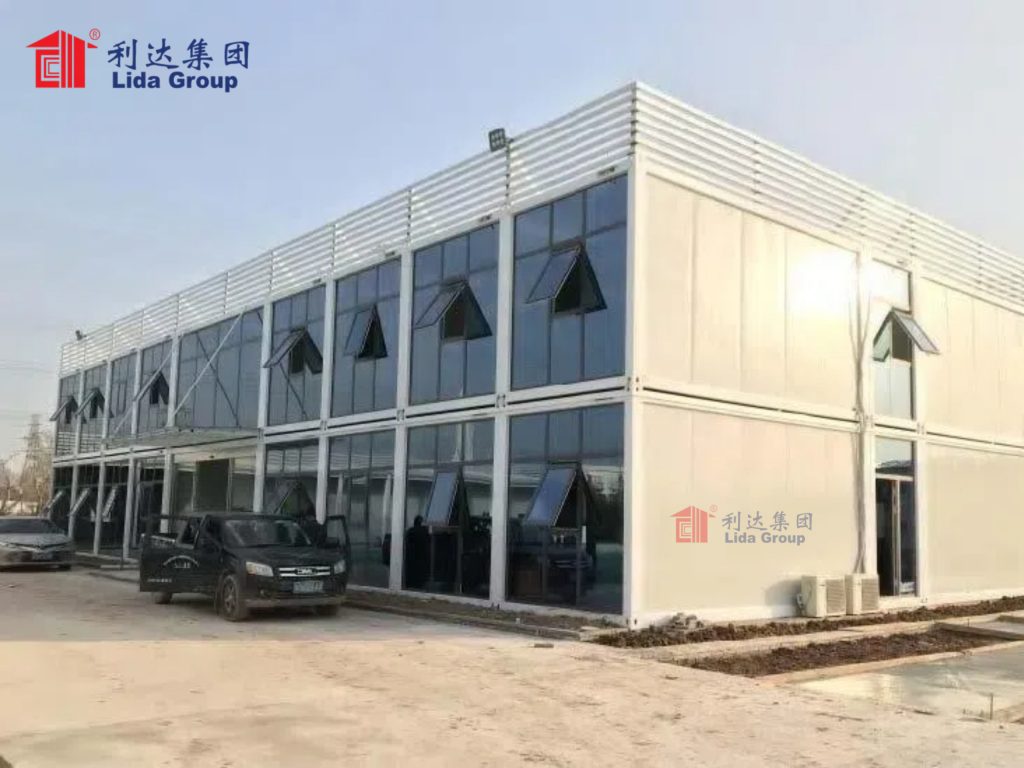
1. Global Shortage and Construction Dilemmas of Traditional Affordable Housing
Affordable housing refers to standardized, safe, and livable residential facilities with low construction costs, low rental thresholds, and stable quality, designed to solve the housing difficulties of low-income groups, floating populations, field workers, and disaster-affected resettlement groups. In recent years, global urban expansion and population migration have continuously pushed up housing demand, while traditional construction modes severely restrict the efficient supply of affordable housing, forming a prominent market supply and demand imbalance.
First, traditional permanent residential construction has extremely high comprehensive costs. Brick-concrete and steel-concrete integrated buildings require large-scale land acquisition, foundation reinforcement, massive raw material investment, and long-term manual construction. Rising global prices of cement, steel, and building accessories further increase the unit construction cost of affordable housing. For governments and social welfare institutions with limited budgets, large-scale investment in traditional permanent affordable housing brings huge fiscal pressure, resulting in slow project progress and insufficient housing supply.
Second, traditional affordable housing projects have lengthy construction cycles and low response efficiency. A complete traditional residential community requires foundation construction, main structure pouring, enclosure decoration, and supporting facility installation, with a construction cycle often lasting one to three years. For emergency resettlement after natural disasters, rapid urban population resettlement, and temporary community housing supplementation, traditional construction modes cannot achieve rapid housing supply, failing to solve urgent residential demands in a timely manner.
Third, traditional fixed affordable housing has poor flexibility and low resource utilization. Most government-built public welfare houses adopt fixed unified layouts and fixed construction locations. Once urban planning is adjusted or population mobility changes, fixed residential buildings are prone to resource idleness and waste. Meanwhile, fixed buildings cannot be disassembled and migrated, resulting in one-time investment and no reusable asset value, further increasing the long-term operating cost of public housing projects.
In addition, many low-budget traditional affordable housing projects cut construction standards to control costs, leading to widespread quality problems including wall cracking, water seepage, poor thermal insulation, and insufficient structural stability. Substandard residential quality not only reduces residents’ living experience but also brings potential structural safety hazards, failing to meet the basic living guarantee standards of modern social public welfare housing. These multiple dilemmas of traditional housing construction create a huge market gap for high-quality, low-cost, flexible, and fast-deployable modular container houses.
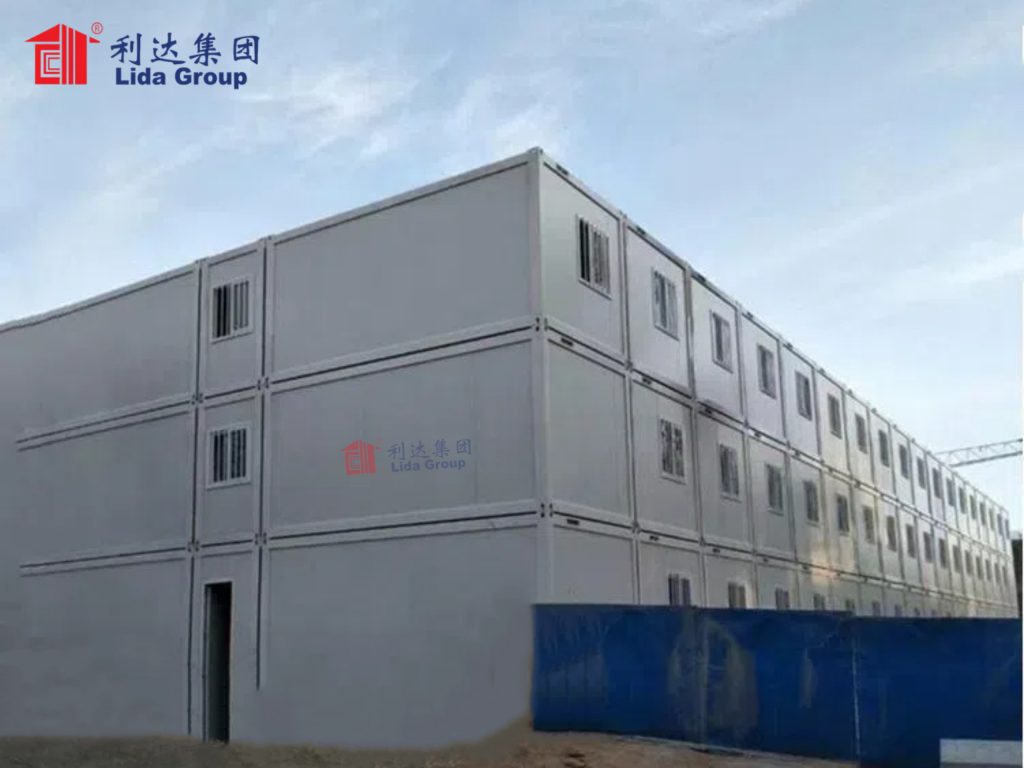
2. Core Advantages of Lida Group’s Hot-Selling Container Houses for Affordable Housing
Targeting the multiple pain points of global affordable housing construction, Lida Group’s hot-selling container houses carry out systematic optimization and upgrading in cost control, construction efficiency, structural safety, livable configuration, and flexible deployment. Relying on standardized industrial mass production, mature modular assembly technology, and scenario-based customized design, the products fully adapt to the construction requirements of global public welfare affordable housing, emergency resettlement housing, and community low-rent housing, becoming the mainstream solution to fill the global affordable housing gap.
2.1 Superior Cost Performance Reduces Public Housing Investment Pressure
Cost controllability is the core demand of affordable housing construction. Lida Group’s container houses realize full-process cost optimization through industrialized factory prefabrication and standardized modular design. Unlike traditional buildings that require a large number of on-site construction workers, mechanical equipment, and auxiliary materials, more than 90% of the production and assembly work of Lida’s container houses is completed in automated factories. Mass standardized production effectively reduces unit production costs, while modular assembly greatly saves on-site labor costs, construction waste losses, and long-term maintenance costs.
Compared with traditional brick-concrete affordable housing, Lida Group’s container residential solutions reduce comprehensive construction investment by more than 40%. Meanwhile, the detachable and migratable modular structure enables repeated disassembly, transportation, and reuse of housing units. For phased urban resettlement projects and temporary public housing supplementation projects, reusable container houses avoid repeated construction investment, greatly reducing the fiscal pressure of long-term public housing construction and operation for governments and social institutions. While controlling costs strictly, Lida Group never sacrifices product safety and basic living configuration, ensuring that low-cost housing products meet international residential safety standards and basic livable requirements.
2.2 Ultra-Fast Deployment Solves Urgent Housing Supply Demands
Many global regions face sudden and urgent affordable housing demands, including post-disaster resident resettlement, rapid urban floating population housing supplementation, and temporary community reconstruction. Traditional construction cycles are too long to respond to sudden residential shortages. Lida Group’s hot-selling container houses achieve industry-leading rapid deployment capabilities based on mature prefabricated modular technology.
All container house units are fully prefabricated in factories, with complete structural frameworks, wall and ceiling systems, internal power distribution circuits, ventilation facilities, and basic decoration. After being transported to the project site, the finished units only need simple bolt fixing and ground positioning to be put into use without on-site welding, concrete pouring, and long curing procedures. A single residential unit can be deployed within several hours, and a large-scale affordable housing community composed of hundreds of units can be completed within one week. This ultra-fast construction mode greatly shortens the housing supply cycle, effectively solving the problem of delayed supply of emergency and short-term supplementary affordable housing worldwide.
2.3 Reliable Structural Safety and Strong Environmental Adaptability
Low-cost affordable housing must still meet strict structural safety standards to protect residents’ personal and property safety. Lida Group’s hot-selling container houses adopt high-strength galvanized steel frame structures with integrated welding molding, forming stable integral load-bearing systems. The optimized steel frame has excellent seismic resistance, wind resistance, compression resistance, and structural toughness, capable of resisting Magnitude 8 earthquakes and Level 12 strong winds, fully complying with international residential building safety codes and public housing construction specifications.
All steel components undergo multi-layer anti-corrosion, rust-proof, and weather-resistant treatments including hot-dip galvanizing and electrostatic spraying. The composite protective layer effectively resists coastal salt spray erosion, desert ultraviolet aging, alpine frost damage, and rainy season moisture corrosion. Whether applied to tropical high-temperature and high-humidity areas, temperate monsoon regions, or arid desert marginal cities, Lida’s container houses can maintain stable structural performance for a long time. With a service life of more than 15 years and support for multiple disassembly and migration cycles, the products avoid common quality problems such as structural deformation, rust damage, and wall water seepage of ordinary low-cost temporary housing, ensuring long-term safe residence for low-income groups and resettled residents.
2.4 Humanized Basic Livable Configuration and Flexible Customization
Different from rough and poorly equipped generic low-cost container houses, Lida Group’s hot-selling residential container houses complete standardized humanized configuration while controlling costs. Standard units are equipped with fireproof thermal insulation wall panels, waterproof and moisture-proof floors, anti-theft insulated doors and windows, integrated LED lighting, ventilation systems, and standardized power distribution systems. The high-efficiency thermal insulation and sound insulation structure effectively isolates external temperature changes and environmental noise, preventing indoor condensation and wall mildew, and creating dry, quiet, and comfortable basic living spaces.
To adapt to diversified affordable housing scenarios, Lida Group supports flexible personalized configuration and combined layout design. According to community planning demands, single residential units can be freely combined and stacked to form complete residential clusters with supporting public facilities including public toilets, shower rooms, canteens, activity rooms, and management offices. Enterprises and government institutions can appropriately upgrade supporting facilities according to budget standards and resident needs, realizing seamless adaptation from basic emergency resettlement housing to long-term community affordable housing.
2.5 Green and Low-Carbon to Meet Sustainable Public Housing Standards
Modern global affordable housing construction is not only limited to solving basic residential problems but also needs to meet green, energy-saving, and sustainable social development requirements. Traditional brick-concrete public housing generates massive construction waste, consumes large amounts of mineral resources, and produces high carbon emissions during construction and operation, which is inconsistent with global low-carbon construction policies.
Lida Group’s container houses adopt recyclable steel structural materials with a recycling rate of over 95%. All structural components can be completely disassembled, recycled, and reused, generating almost no construction waste after project completion. The factory prefabrication and modular assembly mode realizes zero dust, sewage, and noise pollution on the construction site, minimizing ecological damage to the community construction environment. Meanwhile, high-efficiency thermal insulation enclosure materials reduce residential heating and cooling energy consumption, lowering the long-term carbon emission of public housing communities. The green and low-carbon construction mode enables Lida’s container affordable housing to meet the green building assessment standards of various countries, helping government public welfare housing projects obtain environmental certification and social recognition.
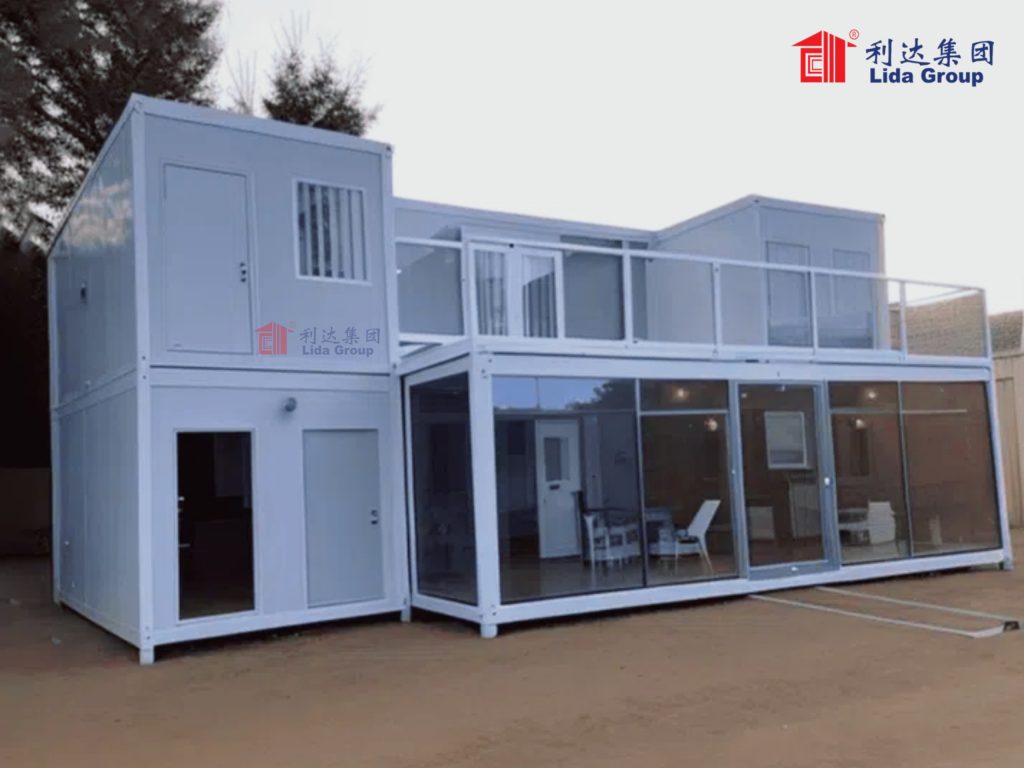
3. Diversified Application Scenarios of Lida’s Container Affordable Housing
Thanks to its low cost, rapid deployment, safe quality, and flexible layout advantages, Lida Group’s hot-selling container houses are widely used in diversified global affordable housing scenarios, covering emergency resettlement housing, urban low-income public rental housing, floating population staff dormitory communities, and post-disaster reconstruction residential projects, effectively alleviating local housing supply pressure.
In urban public welfare housing projects, many emerging cities face rapid population inflow and insufficient affordable housing stock. Governments need low-cost, fast-built, and standardized supplementary residential facilities. Lida Group’s modular container houses can quickly build large-scale standardized public rental communities, complete with supporting living and service facilities, providing stable and safe low-rent housing for urban low-income families and new migrant workers. The neat and unified community layout and humanized living configuration effectively improve the living conditions of urban vulnerable groups and optimize urban public service supporting systems.
In post-disaster emergency resettlement scenarios, sudden natural disasters often destroy a large number of residential buildings, leaving local residents homeless and requiring rapid construction of temporary resettlement housing. Traditional housing construction cycles are too long to meet emergency resettlement needs. Lida Group’s container houses can be deployed on a large scale within a short time, providing safe, warm, and standardized temporary residential spaces for disaster-affected residents. After local post-disaster permanent housing reconstruction is completed, the container units can be disassembled and reused in other public housing projects, avoiding resource waste and maximizing the utilization rate of public welfare resources.
In industrial park and enterprise staff residential supporting projects, a large number of front-line workers lack stable and standardized collective dormitories. Lida Group’s container dormitory communities can be quickly built around industrial parks, solving the collective accommodation problem of floating workers, improving employee living welfare, stabilizing enterprise teams, and simultaneously supplementing urban affordable housing supply channels. These diversified practical application scenarios fully verify the strong universality and practical value of Lida Group’s hot-selling container houses in global affordable housing construction.

4. Global Market Verification and Industry Influence
Driven by the global affordable housing shortage, Lida Group’s container residential products have achieved hot sales worldwide and have been successfully applied in numerous public housing projects across Asia, Africa, Europe, and Oceania. A large number of completed projects have verified that Lida’s container houses can effectively solve local low-cost housing supply problems with stable product quality and excellent cost performance.
In public housing reconstruction projects in Southeast Asian countries, local urbanization speed is fast, grassroots housing demand is huge, and government public welfare construction budgets are limited. Local governments adopt Lida Group’s modular container houses to build large-scale low-cost residential communities. The projects are completed quickly with low comprehensive investment and stable residential quality, effectively alleviating the local grassroots housing shortage and obtaining high recognition from government departments and residents.
In African remote urban resettlement projects, regional economic development is relatively backward, infrastructure is insufficient, and traditional housing construction conditions are poor. Lida Group’s container houses have low foundation requirements and strong terrain adaptability, capable of stable deployment in complex terrain environments. The low maintenance cost and durable structural performance reduce the long-term operating pressure of local public housing projects, providing long-term stable residential guarantees for local residents.
With excellent market performance and social value, Lida Group’s hot-selling container houses not only create practical housing solutions for global grassroots groups but also drive the transformation and upgrading of the global affordable housing construction industry. Breaking the fixed mode of high investment and long cycle of traditional public housing, Lida Group popularizes low-cost, efficient, green, and reusable modular housing construction concepts, guiding the global public welfare housing industry to develop toward refined, economical, and sustainable high-quality development.
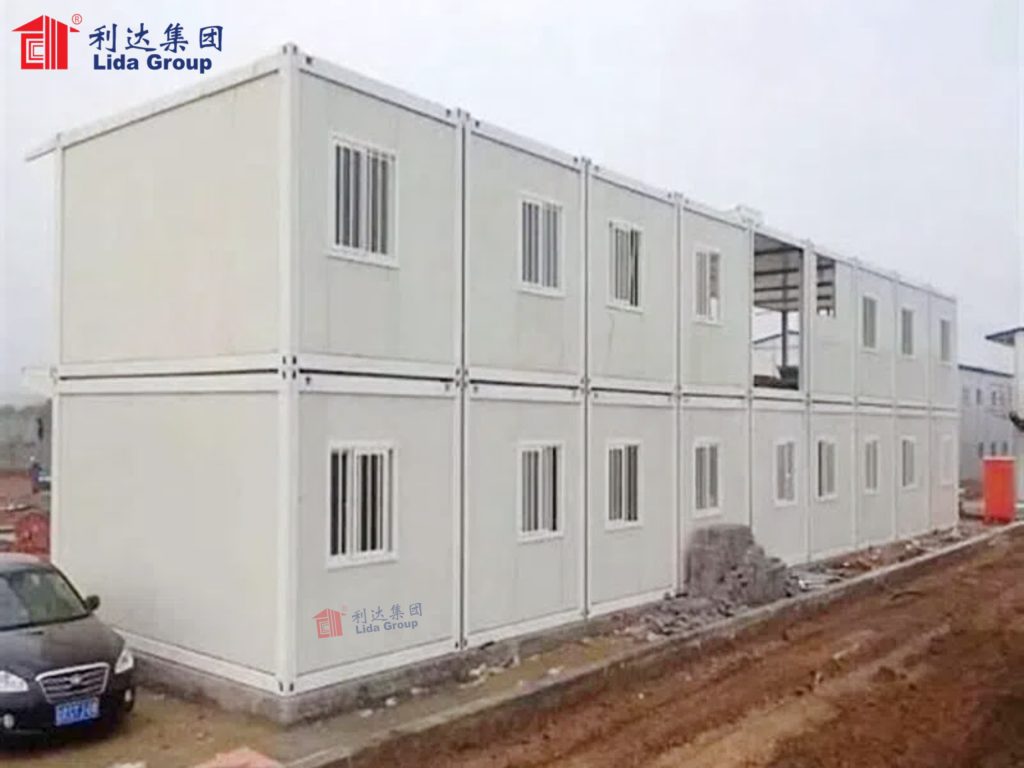
5. Conclusion
The global affordable housing crisis is a long-term social problem restricting urban stable development and people’s livelihood improvement. Traditional brick-concrete residential construction modes face multiple bottlenecks including high investment costs, lengthy construction cycles, poor flexibility, serious resource waste, and unstable quality, which cannot quickly and efficiently fill the growing global affordable housing supply gap. It is urgent to rely on innovative modular building technologies to optimize public housing construction modes.
As a hot-selling mainstream modular residential product worldwide, Lida Group’s container houses thoroughly solve various pain points of traditional affordable housing construction. Through superior full-lifecycle cost performance, ultra-fast on-site deployment capability, reliable structural safety and durability, humanized livable configuration, and green low-carbon sustainable advantages, the product perfectly meets the core requirements of modern public affordable housing including low budget, fast supply, safe residence, comfortable living, and cyclic reuse. Widely applicable to urban public rental communities, post-disaster emergency resettlement, industrial staff accommodation, and regional resettlement reconstruction projects, Lida’s container housing solutions have been fully verified by global cross-regional engineering practices and market feedback.
In the future, with the continuous intensification of global urban population growth and housing resource shortages, the market demand for efficient, low-cost, and sustainable affordable housing will continue to rise. Lida Group will continue to optimize container house structural design and functional configuration, upgrade product intelligence and livable standards on the premise of maintaining superior cost performance, and launch more diversified modular public housing solutions. Committed to helping global governments and social institutions alleviate housing pressure, improve grassroots people’s livelihood security, and promote the high-quality, green, and sustainable development of the global affordable housing industry, Lida Group will continue to consolidate its leading position in the global modular public welfare housing sector.
Related news
-
Prefabricated Container Worker Accommodation Now Available from Lida Group
2026-04-27 14:55:09
-
Lida Group Launches Mobile Modular Container House for Flexible Workforce Housing
2026-04-27 14:35:51
-
Lida Group's Metal Frame Construction Delivers Lasting Value in Every High Quality House
2026-04-27 14:31:19
contact us
- Tel: +86-532-88966982
- Whatsapp: +86-13793209022
- E-mail: sales@lidajituan.com
