



**Introduction**
In the demanding world of large-scale infrastructure and resource development, time is the most unforgiving variable. For project managers overseeing pipeline installations that cross continents, highway extensions that advance kilometer by kilometer, and mining operations that push deeper into remote frontiers, the ability to house workforces where and when they are needed is not merely a logistical challenge—it is a critical determinant of project success. Traditional static camps, with their months-long construction timelines and immovable foundations, are fundamentally mismatched to the dynamic nature of modern construction projects. Every day spent waiting for accommodation to be built is a day of delayed production, escalating costs, and competitive disadvantage.
Lida Group, a global leader in modular construction with over three decades of experience, has engineered a transformative solution to this challenge: the mobile modular container house for construction site labor camps. Since its founding in 1993, Lida Group has grown into one of China’s largest integrated building engineering enterprises, with a presence spanning 152 countries and more than 5,000 completed projects. The company’s mobile modular container houses are not merely portable buildings; they are purpose‑engineered systems designed for the unique demands of construction sites—enabling camps to advance alongside crews, deploy in days rather than months, and maintain uncompromising quality in the world’s most challenging environments.
This article explores how Lida Group delivers mobile modular container house solutions for construction site labor camps. We will examine the mobility challenges inherent to construction projects, the engineering innovations that enable rapid deployment and relocation, the technical specifications that ensure durability across multiple moves, the real‑world projects that validate this approach, and the economic and sustainability benefits of mobile workforce housing.
**Chapter 1: The Mobility Challenge in Construction Projects**
Construction projects face unique workforce housing constraints that static camps exacerbate. When a pipeline advances 23 kilometers monthly, crews require housing that relocates without demolition and reconstruction. When a highway extension pushes through mountainous terrain, concrete foundations become impossible obstacles. When projects operate in protected ecosystems, permanent structures are prohibited. When extreme weather strikes remote regions, conventional builds grind to a halt. And when skilled labor shortages demand premium accommodations, the ability to retain talent hinges on the quality of living conditions—which mobile camps must deliver despite their transience.
Traditional mining camp constructions cripple project economics: waiting 12‑18 months for basic accommodations while capital hemorrhages, battling logistics nightmares transporting bulky materials along treacherous access roads, and watching weather sabotage schedules. In exploration scenarios where mineral prices fluctuate weekly and every day of delay costs millions, the ability to establish functional bases rapidly becomes a strategic imperative. Standard shipping container units, typically 2.4 meters wide, often exceed narrow track widths or tunnel clearances on remote access roads, requiring expensive road widening or helicopter lifts—driving costs skyward and timelines out.
Lida Group’s mobile modular house solutions transform these constraints into advantages through purpose‑built mobility systems engineered specifically for construction logistics.
**Chapter 2: Engineering Mobility from the Ground Up**
**2.1 Optimized Transport Geometry**
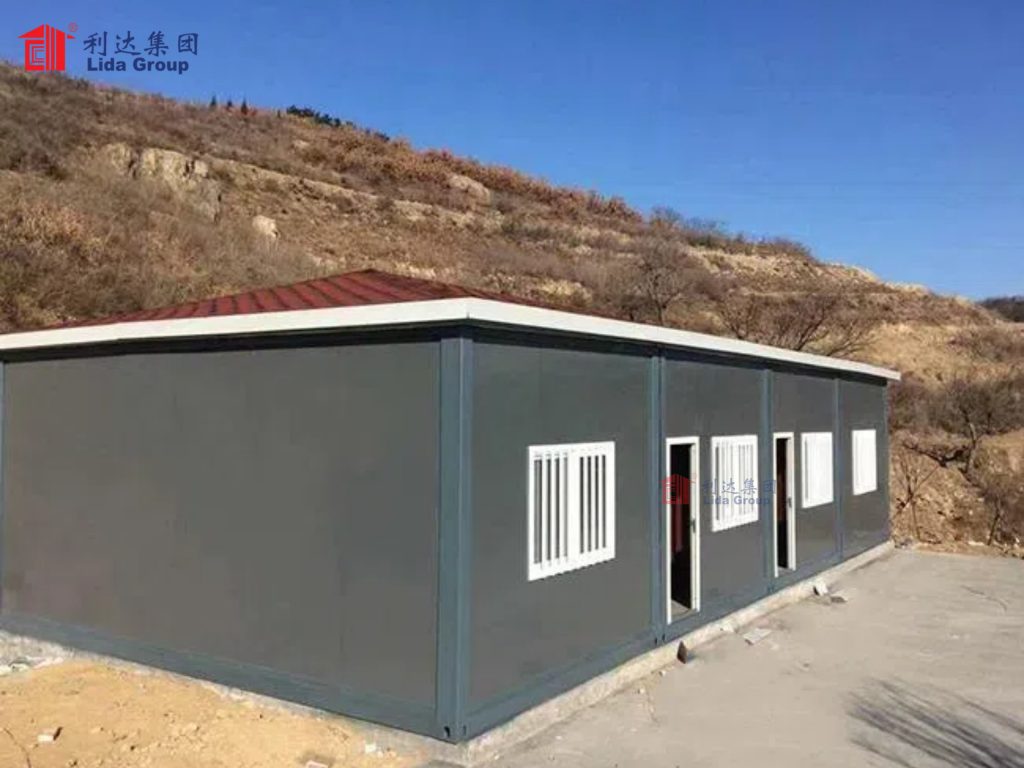
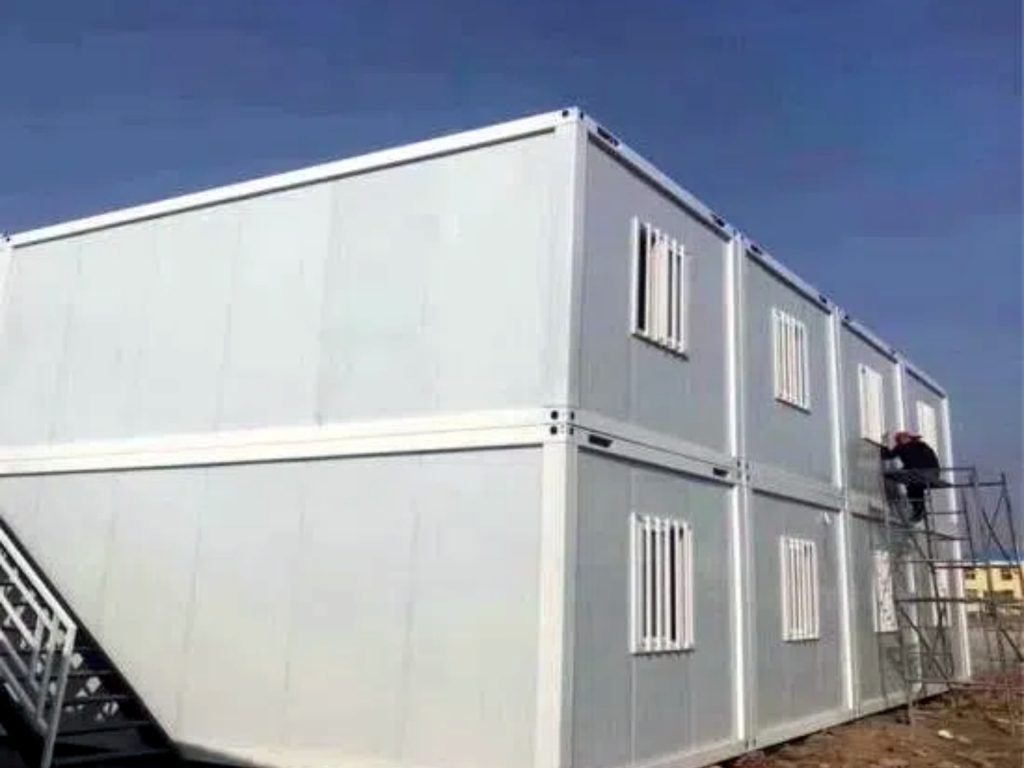
The foundation of Lida Group’s mobile solution lies in flat‑pack container technology. Traditional container units ship as fully assembled volumetric boxes, consuming substantial space and imposing dimensional constraints that restrict access to remote sites. Lida’s flat‑pack systems ship as compact bundles of wall panels, roofing sections, floor cassettes, and structural frames, with unit widths under 2.0 meters—narrow enough to traverse mountain roads and tunnel clearances without costly modifications. A single truck carries components equivalent to two to three traditional container units, dramatically reducing transport requirements and logistics complexity.
For locations accessible only by air, helicopter‑transportable 20‑foot modular units with boltless screw foundations can be deployed in 90 minutes, establishing functional bases in roadless locations within eight hours. This transport versatility ensures that Lida’s mobile camps can reach virtually any construction site on Earth, regardless of terrain or infrastructure limitations.
**2.2 Factory Fortified Components**
Critical to mobile modular house success is manufacturing precision. Within climate‑controlled factories, robotic welders fabricate structural frames with 0.2mm tolerances—precision impossible on windswept sites. CNC machines cut composite wall panels integrating aerogel insulation achieving R‑40 values, while automated coating systems apply uniform 300µm zinc‑aluminum protection resistant to abrasive dust. This manufacturing discipline produces container building components with 98% interchangeability, allowing any unit to slot into any position across global projects, and eliminates weather delays and quality variations that plague site‑built alternatives, compressing production timelines by 60%.
**2.3 Simultaneous Assembly and Foundation**
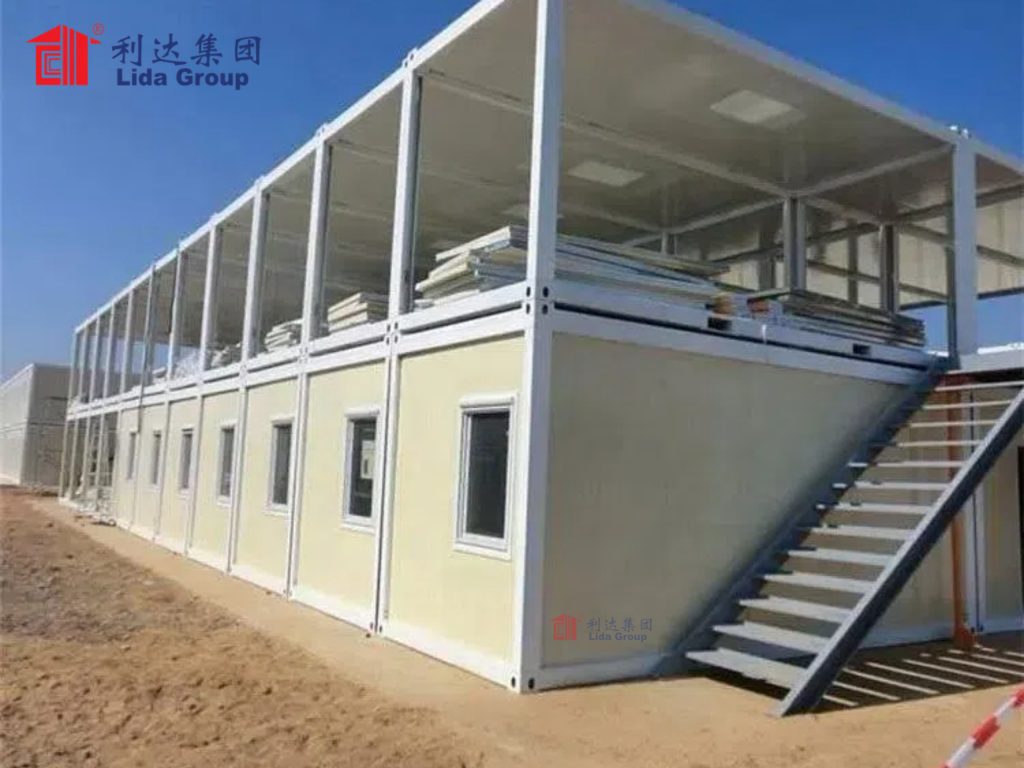
The true speed advantage of mobile modular construction emerges from parallel processing. While flat packs ship, ground crews install rapid foundations: screw piles, drilled piers, or compacted gravel pads. No weeks of concrete curing are required—screw piles can be installed in 90 minutes. Laser‑guided alignment systems position units within ±3mm accuracy. Bolt‑together connections eliminate welding requirements, allowing installation by small teams with basic tools, no specialized welders needed.
The record speaks for itself: a 200‑bed camp was operational 19 hours after convoy arrival. A fully operational 150‑person mining accommodation complex materialized in 17 days.
**2.4 Leapfrog Deployment Methodology**
For pipeline and linear infrastructure projects, Lida has pioneered “leapfrog” deployment—a method where crews occupy a new section while the previous camp demobilizes, with units sized for right‑of‑way transport without special permits. On the Keystone XL project, this approach reduced crew transfer time by 78%, enabling crews to spend more time working and less time commuting.
When a pipeline progresses 23 kilometers monthly, the camp housing simply leapfrogs ahead, maintaining productivity where traditional static camps would strand workers miles from active zones.
**Chapter 3: Technical Specifications for Mobile Durability**
Mobility demands durability. Units that relocate frequently must withstand the rigors of repeated disassembly, transport, and reassembly without degradation.
**3.1 Structural Framework**
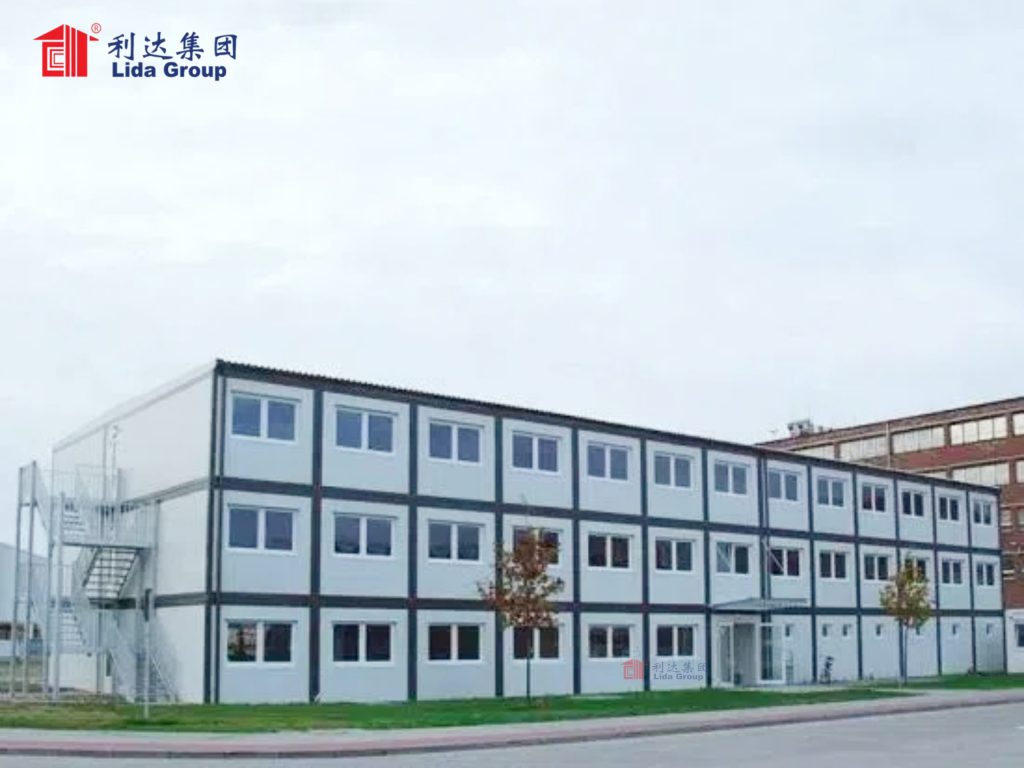
All mobile modular units utilize cold‑rolled galvanized steel frames constructed from Q235B grade steel, renowned for its tensile strength and durability. Corner pillars employ cold‑rolled steel with 3mm thickness, and pillar‑to‑main‑frame connections utilize hexagon socket head bolts of grade 8.8 strength. This bolted connection system enables units to be assembled, disassembled, and relocated more than six times without loss of structural integrity—far exceeding the lifecycle of typical construction projects.
Structural parameters meet rigorous international standards: floor live load of 2.0 KN/m², roof live load of 0.5 KN/m², wind load resistance of 0.6 KN/m² (120‑150 mph), and earthquake resistance rated at Grade 8.
**3.2 Composite Wall and Roof Systems**
The 75mm fiberglass sandwich wall panels incorporate exterior corrugated 0.4mm aluminum‑zinc color steel sheet, fiberglass insulation layer with density ≥50kg/m³ (Grade A non‑flammable), and interior flat 0.4mm aluminum‑zinc color steel sheet. Roof systems utilize 100mm fiberglass insulation with aluminum foil, delivering enhanced thermal protection where heat gain and loss are greatest. Thermal conductivity is K=0.442 W/(m·K), maintaining comfortable interior temperatures across extreme climate conditions.
For Arctic applications, nickel‑enriched S355J2W steel maintains Charpy V‑notch impact resistance above 100J at -60°C, while aerogel‑enhanced composite wall panels achieve R‑50 values within 200mm profiles, reducing heat loss by 63% compared to conventional builds. Triple‑glazed windows with suspended low‑e films and krypton gas fills achieve U‑values of 0.62 W/m²K.
**3.3 Corrosion Protection**
All steel components receive multi‑layer protection: epoxy primer (20‑40 μm thickness) followed by polyurethane finishing coat (40‑50 μm thickness), with total film thickness exceeding 80 μm. Galvanized components feature a zinc layer exceeding 10 μm (≥80g/m²), providing sacrificial protection that prevents rust formation even when coatings are scratched.
**3.4 Plug‑and‑Play Utility Integration**
Mobile camps require rapid utility hookups. Lida’s units feature pre‑tested MEP systems activating in under four hours. Color‑coded quick‑connects for power, water, and data enable intuitive connection by local crews, eliminating the need for specialized electricians or plumbers at each relocation. For mining applications in hazardous environments, electrical systems utilize intrinsically safe circuits limiting energy below 0.025mJ, eliminating spark generation, with industrial sockets fixed in explosion‑proof boxes.
**Chapter 4: Real‑World Validation—Mobile Camps in Action**
The effectiveness of Lida Group’s mobile modular container houses is validated through successful deployment across diverse global projects.
**4.1 Trans‑Anatolian Pipeline, Turkey**
Near the Trans‑Anatomic Pipeline’s final stretch through Turkish highlands, Lida Group’s mobile camp container complex advanced daily—deploying fully functional accommodations where traditional constructions would require months of disruptive groundwork. As the pipeline progressed 23 kilometers monthly, the camp housing leapfrogged ahead, maintaining productivity while reducing crew transfer time by 78%. The integrated medical unit handled altitude sickness cases on‑site, while circadian‑optimized sleeping modules reduced fatigue‑related errors by 37%.
**4.2 Congolese Cobalt Belt, Africa**
In the Congolese cobalt belt, where exploration licenses demand immediate camp occupancy and mineral prices fluctuate weekly, Lida Group’s engineered rapid deployment methodology delivered a fully operational 150‑person mining accommodation complex in just 17 days. This acceleration compressed typical construction timelines by 60‑75%, transforming time‑to‑production from constraint into competitive advantage.
Eighty camp container units crossed 1,200 kilometers of African terrain in 72 hours. Bolt‑together connections, requiring no welding, enabled field assembly by local crews. Laser‑guided alignment systems achieved ±3mm positioning, and color‑coded utility quick‑connects slashed commissioning time.
**4.3 Chilean Copper Mine Explosion‑Proof Complex**
In Chilean copper mines, where explosive dust coats every surface and seismic vibrations compromise conventional structures, Lida Group’s engineered container house complex operates unscathed. Lida’s explosion‑proof camp container systems neutralize hazards that shutter traditional facilities through multi‑layered defense engineering: blast‑resistant framing incorporates 8mm AR450 steel reinforcement at critical stress points, Kevlar‑infused wall cavities stop projectiles, and positive‑pressure ventilation maintains 30Pa differentials excluding contaminants.
**4.4 Siberian Diamond Mine, Russia**
At Siberia’s Udachny diamond mine, where winds rip across the tundra at -52°C, Lida Group’s engineered container house complex stands defiant—maintaining habitable conditions while neighboring structures succumb to polar brutality. Nickel‑enriched S355J2W steel maintains impact resistance below -60°C, cryogenic welding protocols prevent cold cracking, and slotted connection systems accommodate thermal contraction without stress fractures. Triple‑glazed windows with magnetic gasket systems create hermetic seals against wind‑driven snow infiltration.
**4.5 Southeast Asian Large‑Scale Installation**
In a Southeast Asian country, Lida Group completed the on‑site installation of 150 container housing units as part of a major MTZ project. These prefabricated units were shipped in flat‑pack form and assembled on a large site designated for temporary accommodations. The units were equipped with insulation materials, energy‑efficient lighting, and double‑glazed windows to reduce environmental impact and operational costs. The modular design enabled faster installation timelines and cost efficiency throughout the project.
**4.6 Qingdao Huangdao Container Hospital Station, China**
During the pandemic, Lida Group partnered with China Construction Eighth Engineering Bureau to deliver the Qingdao Huangdao Container Hospital Station—a 36,000‑square‑meter facility including 1,000 isolation container rooms and 126 staff dormitories, along with function halls, catering buildings, and a reception center. From start to delivery, the project took just 12 days—demonstrating the ultimate capability of flat‑pack modular systems to meet emergency deployment timelines. The project encompassed 726 prefab houses, including 574 isolated container rooms, over 620 sets of integrated sanitary ware, more than 3,000 square meters of concrete work, 636 air conditioners, and 632 televisions.
**4.7 Urban Highway Extension, Manhattan**
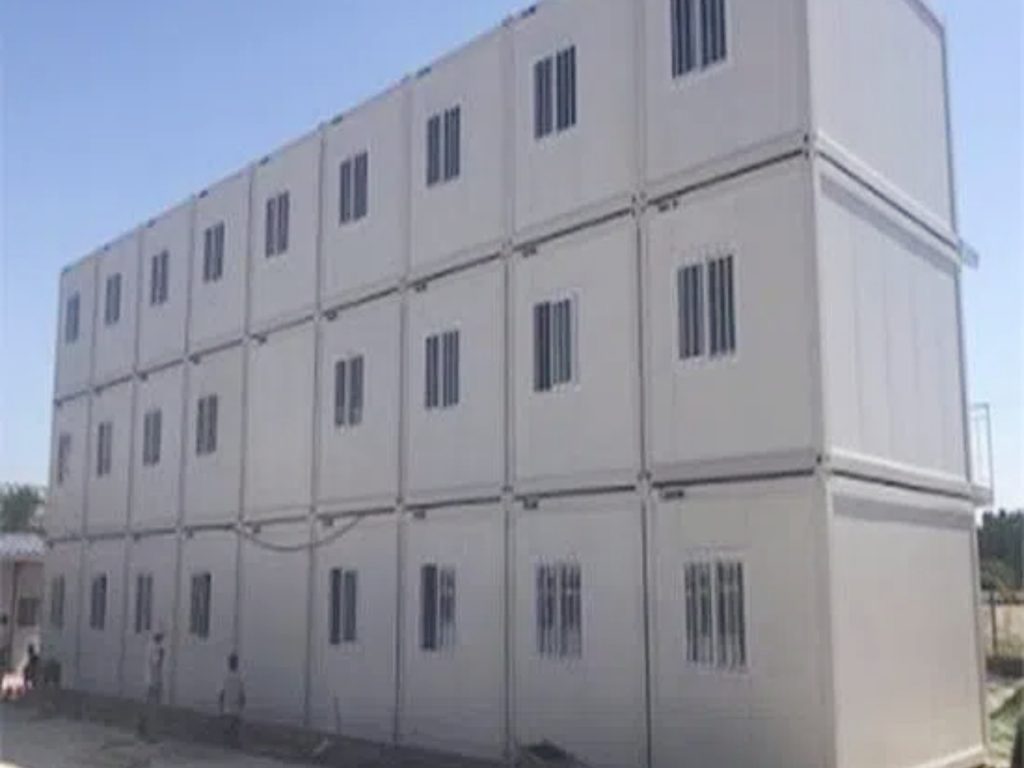
In a constrained urban environment, Lida’s mobile units demonstrated their versatility. Stackable configurations fit tight lots, isolated foundations near pile driving provided vibration control, and architectural facades matched local aesthetics. Positive‑pressure filtration maintained interior air quality despite construction dust, resulting in zero respiratory incidents during the project.
**Chapter 5: Economic Benefits of Mobile Workforce Housing**
The mobility of Lida Group’s modular container houses delivers compelling economic advantages.
**5.1 Accelerated Time‑to‑Production**
Every week saved in camp deployment is a week of earlier project commencement and revenue generation. In a mine producing $10 million in monthly revenue, a 12‑month construction timeline vs. a 2‑month deployment translates to $70‑80 million in accelerated revenue. Flat‑pack container technology has demonstrated the ability to slash camp build times by 50% or more compared to traditional methods.
**5.2 Reduced Capital Requirements**
Phased deployment allows operators to invest in accommodation capacity precisely as workforce numbers increase, avoiding the capital waste of constructing full capacity before it is needed. Lida Group’s methodology reduced working capital requirements by 63% on recent projects.
**5.3 Lower Construction and Operating Costs**
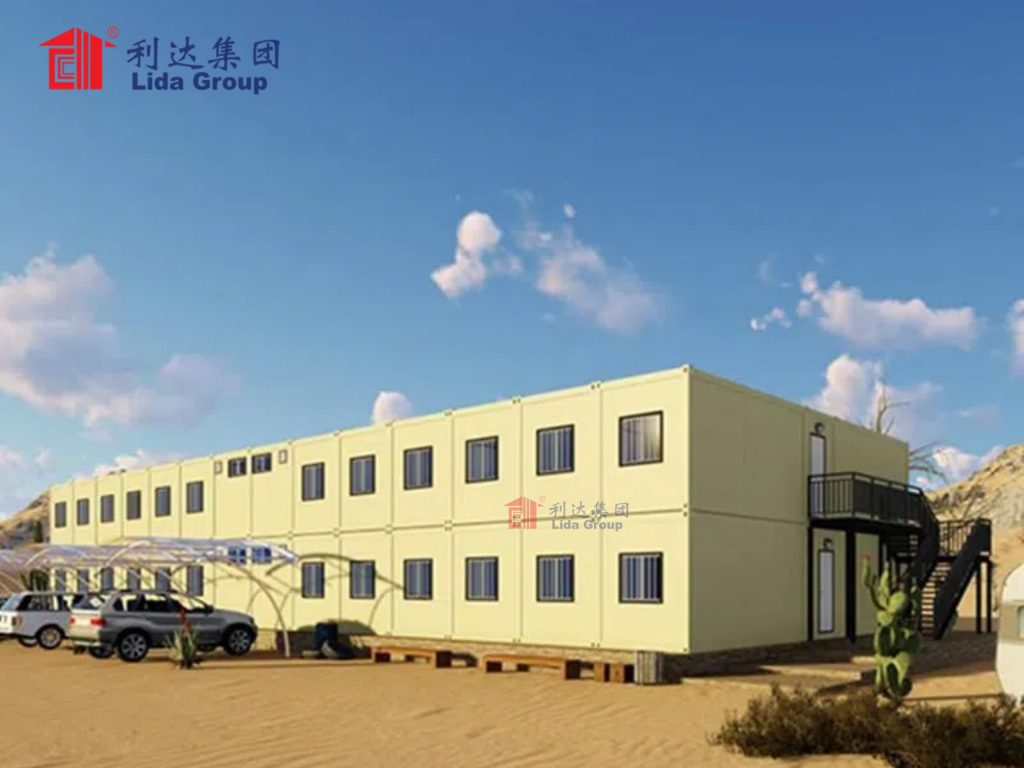
Factory prefabrication eliminates expensive on‑site rework and weather delays. In the Saudi Aramco gas project, 800 relocatable container house units reduced build costs by 44% compared to traditional housing while delivering superior thermal performance in desert conditions. For remote sites reliant on diesel generators, the high insulation values of Lida’s units reduce heating and cooling fuel consumption by 30‑50%, directly lowering operating costs.
**5.4 Asset Utilization and Resale Value**
Unlike site‑built camps that are demolished at project conclusion, mobile modular units retain significant asset value. They can be relocated to subsequent projects, sold to other operators, or repurposed for alternative uses. Units are designed for more than six assembly‑disassembly cycles without loss of structural integrity.
**Chapter 6: Sustainability and Safety in Mobile Camps**
**6.1 Circular Economy Principles**
Lida’s mobile container houses align with circular economy principles. Units are made of natural materials and are almost 100% recyclable. Material utilization rates exceed 95%—reducing construction waste by 70‑80% compared to traditional methods. The ability to relocate and reuse units across multiple projects keeps materials in service for decades rather than sending them to landfill after a single project.
**6.2 Energy Efficiency**
The superior insulation values of Lida’s sandwich panel units reduce operational carbon emissions by 30‑50% compared to conventional camps. For Arctic projects, aerogel‑enhanced panels achieving R‑50 values reduce heat loss by 63%, dramatically lowering fuel consumption in extreme cold.
**6.3 Worker Welfare and Retention**
The quality of Lida’s mobile accommodation directly impacts workforce retention. Premium facilities have been proven to reduce turnover by 41%. Workers who rest well and live in safe, comfortable conditions are more productive, safer, and less likely to seek employment elsewhere.
**6.4 Safety Innovations**
Lida’s commitment to safety is embedded in every mobile unit. Explosion‑proof designs for mining applications utilize fully fire‑rated materials achieving A‑grade non‑flammable insulation, Kevlar‑infused wall cavities that stop projectiles, and automatic FM‑200 suppression triggered by thermal sensors, maintaining structural integrity for 180 minutes at 1200°C. For dust‑prone environments, positive‑pressure ventilation systems maintain slight positive air pressure inside units, preventing dust infiltration, and HEPA filtration removes particulates, protecting respiratory health.
**Chapter 7: The Future of Mobile Modular Construction**
Lida Group continues to push the boundaries of mobile workforce housing, with emerging technologies now in deployment. Drone‑assisted component positioning accelerates assembly in challenging terrain. AI‑optimized logistics routing reduces transport times and costs. Phase‑change material thermal regulation further enhances energy efficiency. Self‑climbing installation platforms are under development for high‑rise camp configurations. Hydro‑carbon compatible designs incorporate leak detection networks and explosion‑ventilated mechanical rooms, ensuring mobile camps remain safe and efficient regardless of energy source.
**Conclusion**
Lida Group’s delivery of mobile modular container houses for construction site labor camps represents a fundamental advancement in workforce housing technology—one that addresses the unique mobility challenges of modern construction projects through engineered mobility, rapid deployment, and uncompromising quality. By shifting the majority of building work to controlled factory environments, optimizing transport geometry for remote access, and pioneering leapfrog deployment methodologies, Lida Group has created mobile camp solutions that advance alongside crews, adapt to changing site conditions, and maintain exceptional performance across multiple relocation cycles.
The mobility advantages are transformative. Flat‑pack component widths under 2.0 meters enable transport along narrow mountain roads and through tunnel clearances without costly modifications. Helicopter‑transportable units establish functional bases in roadless locations within eight hours. Leapfrog deployment on pipeline projects has reduced crew transfer time by 78%, keeping workers in active zones and productivity high. A 200‑bed camp can be operational 19 hours after convoy arrival—the power to deploy facilities during a single shift rather than across seasons.
The economic benefits are compelling. Camp build times are slashed by 50% or more, accelerating time‑to‑production by months or even years. Phased deployment aligns capital expenditure with workforce needs, reducing working capital requirements by 63%. Asset utilization across multiple project cycles maximizes return on investment and lowers per‑project capital costs.
Real‑world validation across continents—from the Turkish highlands to the Congolese cobalt belt, from Chilean copper mines to Siberian diamond mines—confirms the effectiveness of Lida Group’s mobile modular approach. These projects demonstrate that mobile workforce housing is not only achievable but operationally superior to static alternatives.
For project managers, operations directors, and organizational leaders facing the challenges of construction site workforce accommodation, the message is clear: Lida Group’s mobile modular container houses offer a proven solution that moves with your project—deploying where and when you need them, relocating as your worksite advances, and delivering the quality, comfort, and safety that modern workforces demand. They transform workforce housing from a project constraint into a strategic asset—enabling construction projects to proceed without delay, workers to live with dignity, and organizations to achieve their objectives in the world’s most challenging environments.
Related news
-
Hot Selling Container House by Lida Group Meets Global Demand for Affordable Housing
2026-04-27 15:00:46
-
Prefabricated Container Worker Accommodation Now Available from Lida Group
2026-04-27 14:55:09
-
Lida Group Launches Mobile Modular Container House for Flexible Workforce Housing
2026-04-27 14:35:51
contact us
- Tel: +86-532-88966982
- Whatsapp: +86-13793209022
- E-mail: sales@lidajituan.com
