



In today’s fast‑paced global economy, industries such as construction, mining, oil and gas, and infrastructure development frequently rely on a mobile workforce deployed to remote and challenging locations. The ability to provide safe, comfortable, and efficient housing for these workers is not merely a logistical detail – it is a critical factor that directly influences project timelines, worker retention, safety records, and ultimately the profitability of an operation. Traditional accommodation solutions, however, have consistently failed to meet the demands of modern projects, plagued by extended construction times, high costs, poor living conditions, and significant environmental footprints.
Lida Group, a world‑class integrated building engineering enterprise founded in 1993 and headquartered in Qingdao, Shandong Province, has emerged as a global leader in addressing these challenges. With a presence spanning more than 150 countries and regions, over 5,000 completed projects, and a comprehensive portfolio encompassing container houses, flat‑pack housing units, steel structure buildings, and modular camp systems, Lida Group has redefined what is possible in workforce housing. This article explores the extensive benefits of Lida Group’s prefabricated container worker accommodation, demonstrating how its engineered solutions deliver unparalleled advantages in rapid deployment, structural durability, thermal comfort, sustainability, cost effectiveness, and global service support.
**Chapter 1 – The Problem with Traditional Workforce Housing**
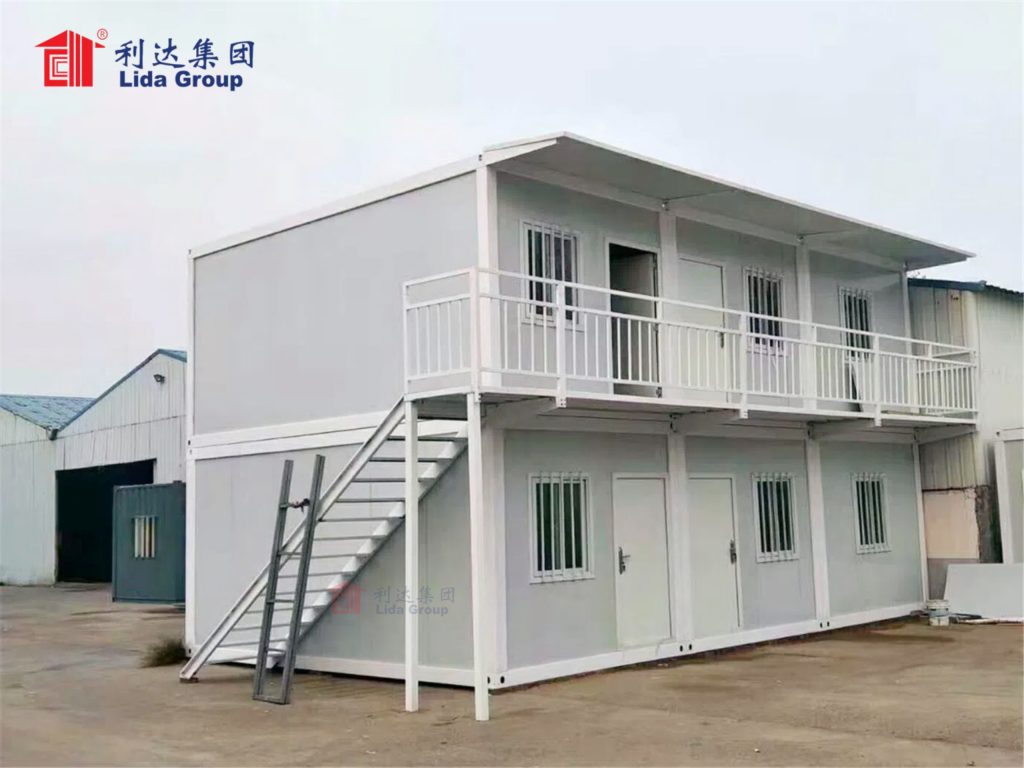
For decades, the standard approach to housing remote workforces has been rooted in conventional on‑site construction methods. Whether for a mining camp in the Atacama Desert, an oil‑and‑gas facility in the Middle East, or a hydroelectric project in a remote mountain range, project managers have been forced to accept the same recurring pain points.
**1.1 Extended Timelines and Cost Overruns**
Traditional on‑site construction of workforce accommodation is a sequential, weather‑dependent process that routinely takes 12 to 18 months – and often longer – to complete. One industry analysis found that logistics gridlock, sequential trade stacking, reliance on scarce on‑site labor, and weather vulnerability cause typical camp projects to run 50% or more over budget. For a mining operation losing millions in delayed production, this timeline tax is not just frustrating – it can be catastrophic.
**1.2 Poor Living Conditions and Worker Turnover**
Conventional labour camps have a well‑earned reputation for substandard living conditions, including overcrowded dormitories, shared and poorly maintained sanitation facilities, inadequate thermal insulation, limited recreational amenities, and poor indoor air quality. In an era of intensifying “talent wars”, skilled geologists, engineers, and technicians increasingly reject remote postings that offer subpar housing, leading to turnover rates that cripple projects and drive up recruitment costs.
**1.3 Operational Rigidity and Environmental Damage**
Traditional camps are typically built as permanent structures that cannot be easily expanded, contracted, or relocated as workforce needs shift. Moreover, conventional building methods generate enormous waste – industry estimates suggest 20‑30% of materials are discarded – and leave permanent scars on sensitive landscapes, conflicting with modern environmental, social, and governance (ESG) requirements.

**Chapter 2 – The Lida Group Advantage – Engineered for a Better Way**
Lida Group’s prefabricated container accommodation systems are built on a fundamentally different philosophy: shift the majority of construction work from chaotic job sites into controlled factory environments, where precision, quality, and speed are the norms.
**2.1 Factory Precision and Quality Assurance**
Lida Group operates multiple state‑of‑the‑art production lines in its facilities in Weifang, Qingdao, and Shouguang. Within these climate‑controlled factories, robotic welders assemble structural frames with tolerances of just 0.2mm – a degree of precision impossible to achieve on a windswept site. CNC machines cut insulation panels to exact specifications, eliminating the thermal bridging points that plague field installations. Automated coating systems apply uniform 300µm zinc‑aluminium protection, resistant to abrasive dust and corrosion.
This manufacturing discipline produces component parts with 98% interchangeability, meaning any unit can seamlessly slot into any position across a project – or even across projects located on different continents. Critically, it also eliminates the weather delays and quality variations that routinely derail site‑built alternatives, compressing production timelines by a full 60%.
**2.2 Uncompromising Quality – Certifications and Standards**
Quality is not simply a promise at Lida Group; it is a verifiable fact supported by a comprehensive portfolio of international certifications. The company holds ISO9001 for quality management, ISO14001 for environmental management, ISO45001 for occupational health and safety, and European Union EN1090 (CE) certification for structural steel components. Furthermore, Lida Group has successfully passed rigorous third‑party inspections by SGS, TUV, and BV, and it holds a Second Class Qualification for Steel Structure Professional Construction Contracting and a General Contracting Qualification of Construction Engineering within China.
**2.3 Product Portfolio – Solutions for Every Need**
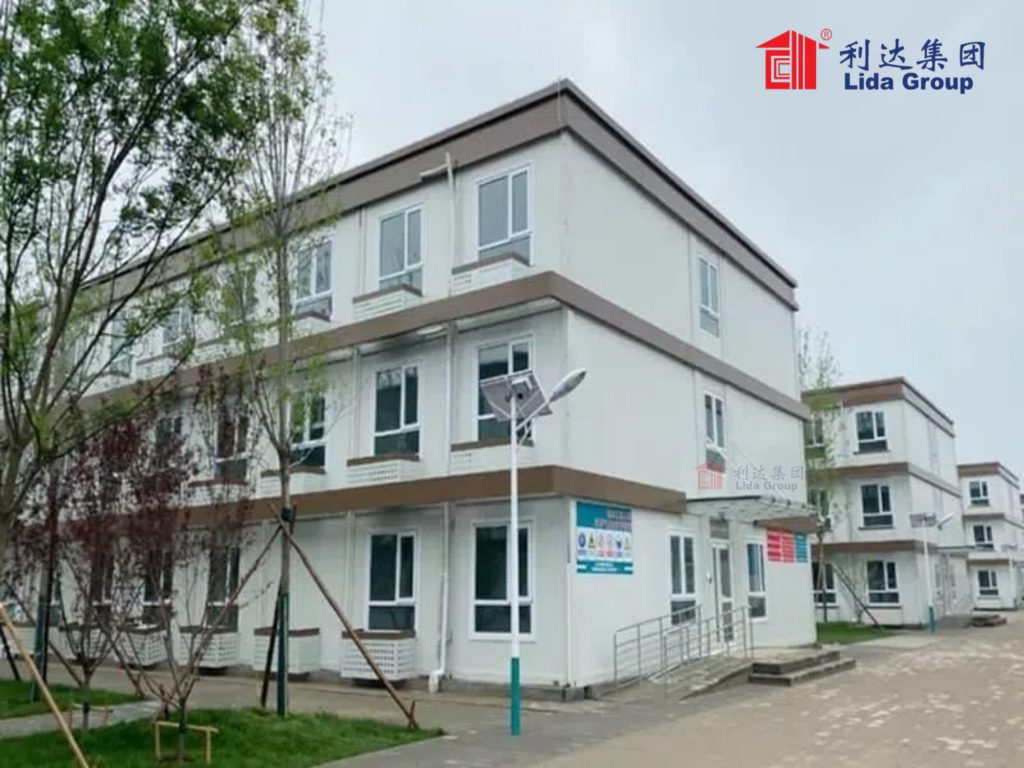
Lida Group offers a comprehensive range of products, including the Durable Modular Container Dormitory Series, Residential Container Homes, Office Container Buildings, Expandable Container Homes, Flat‑Pack Container Homes, and Modular Shipping Container Homes. This suite of solutions can be mixed and matched to create everything from single‑occupancy remote worker dormitories to multi‑storey camp complexes serving thousands of people.
**Chapter 3 – Rapid Deployment – From Months to Weeks**
One of the most tangible benefits of Lida Group’s container accommodation is the dramatic compression of project timelines.
**3.1 Factory Production and Site Work in Parallel**
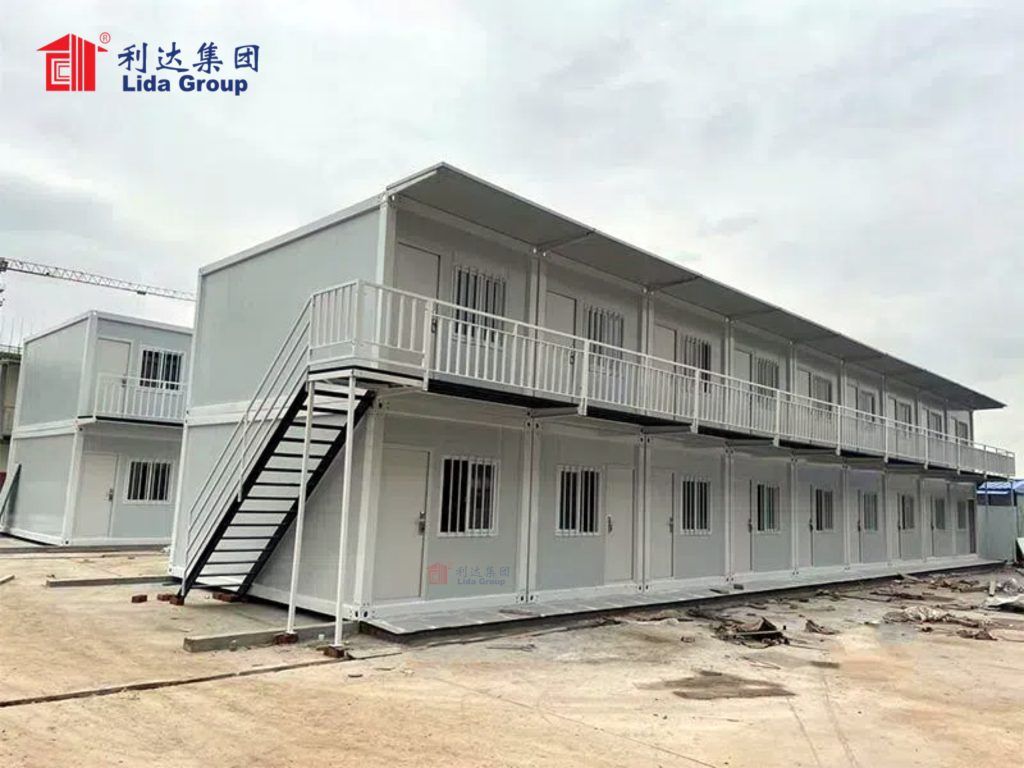
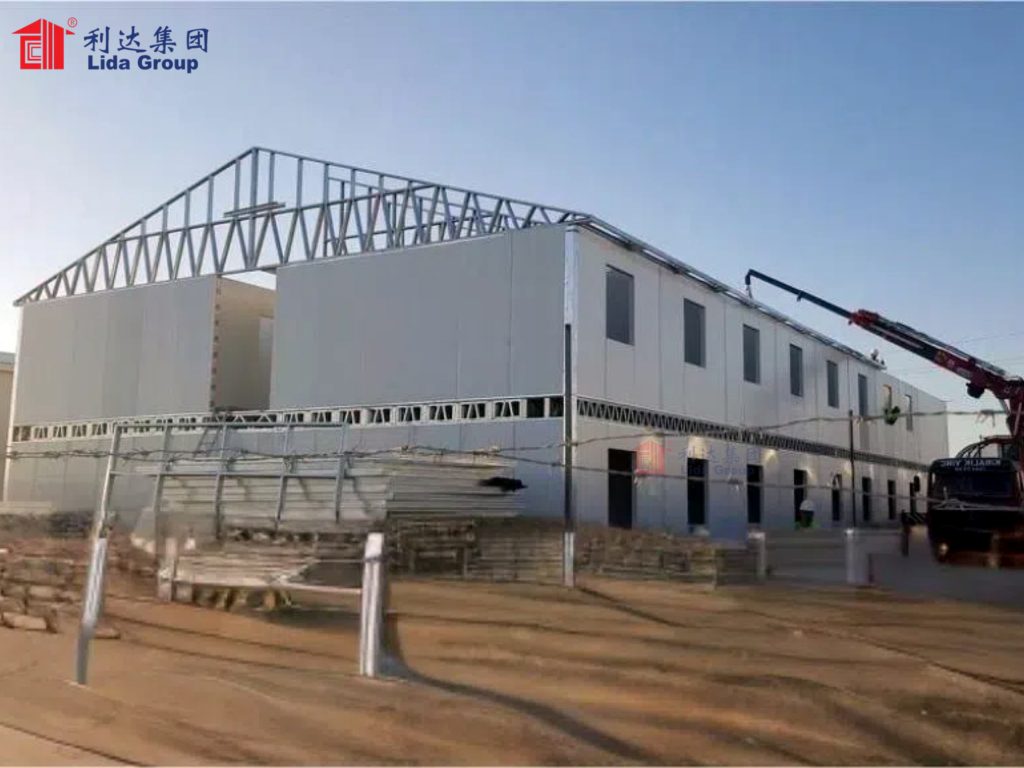
While traditional projects waste months waiting for foundations to cure before framing can begin, Lida Group’s approach runs critical workflows in parallel. Site crews can immediately begin screw‑pile foundation installation (which requires no concrete curing), while factory production lines simultaneously assemble complete volumetric modules complete with pre‑installed electrical, plumbing, and mechanical systems. This “parallel universe” methodology has been documented to compress project schedules by more than 90 days.
**3.2 Accelerated On‑Site Assembly**
When Lida Group’s flat‑pack modules arrive on site, the assembly process is engineered for pure speed. Laser‑guided alignment systems position units with ±3mm accuracy, while colour‑coded utility quick‑connects slash commissioning time from weeks to hours. Bolt‑together connections eliminate the need for certified welders, allowing local labourers to assemble complex facilities with only basic tools. This approach has enabled Lida Group to deploy a full 200‑bed mining camp – including medical clinics and recreation facilities – in just 19 days, a task that would have required 11 months using traditional methods.
**3.3 Real‑World Results**
The numbers speak for themselves. A major Australian mining expansion used Lida Group’s flat‑pack units to add 200 accommodation modules in just 21 days, enabling production to accelerate by three full months and generating millions in additional revenue. In the oil and gas sector, Lida Group has consistently reduced camp setup times by 50% compared to industry averages. For an Asian digital bank needing an 85,000‑square‑foot regional headquarters, Lida Group delivered the entire 3‑story hybrid office container system in 9.5 months – versus a traditional estimate of 28 months – saving tens of millions in financing and opportunity costs.
**Chapter 4 – Supporting Worker Welfare and Retention**
Forward‑thinking organisations increasingly recognise that accommodation quality is not a luxury but a strategic investment directly linked to worker satisfaction, safety, and retention.
**4.1 Private, Comfortable Living Spaces**
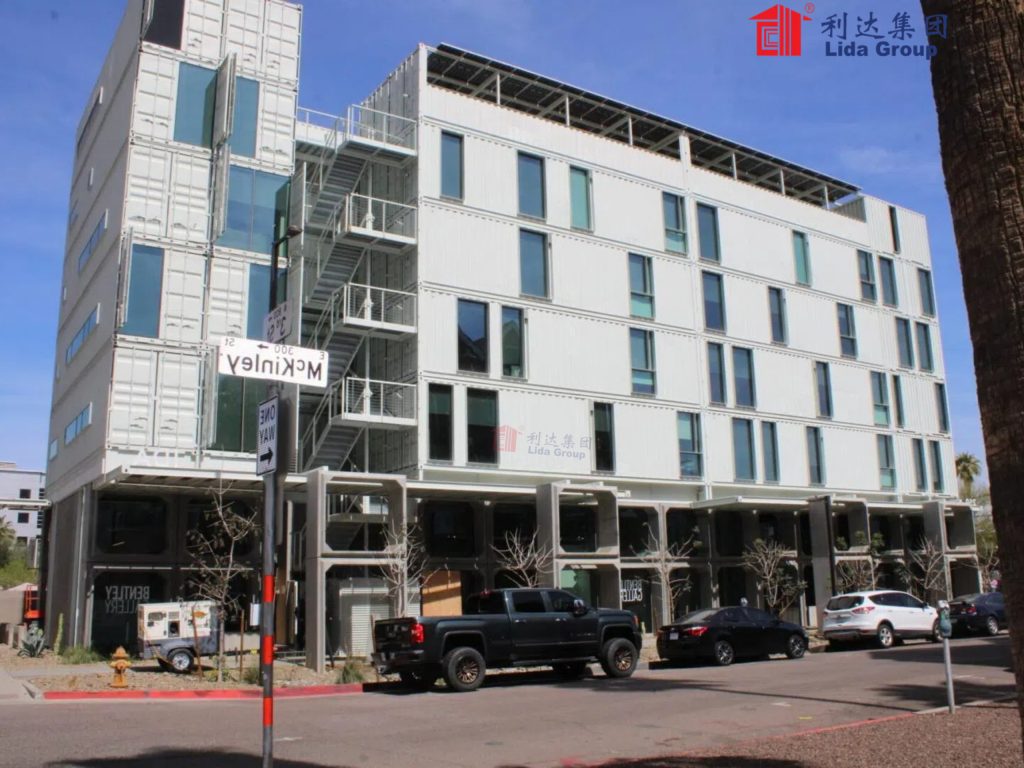
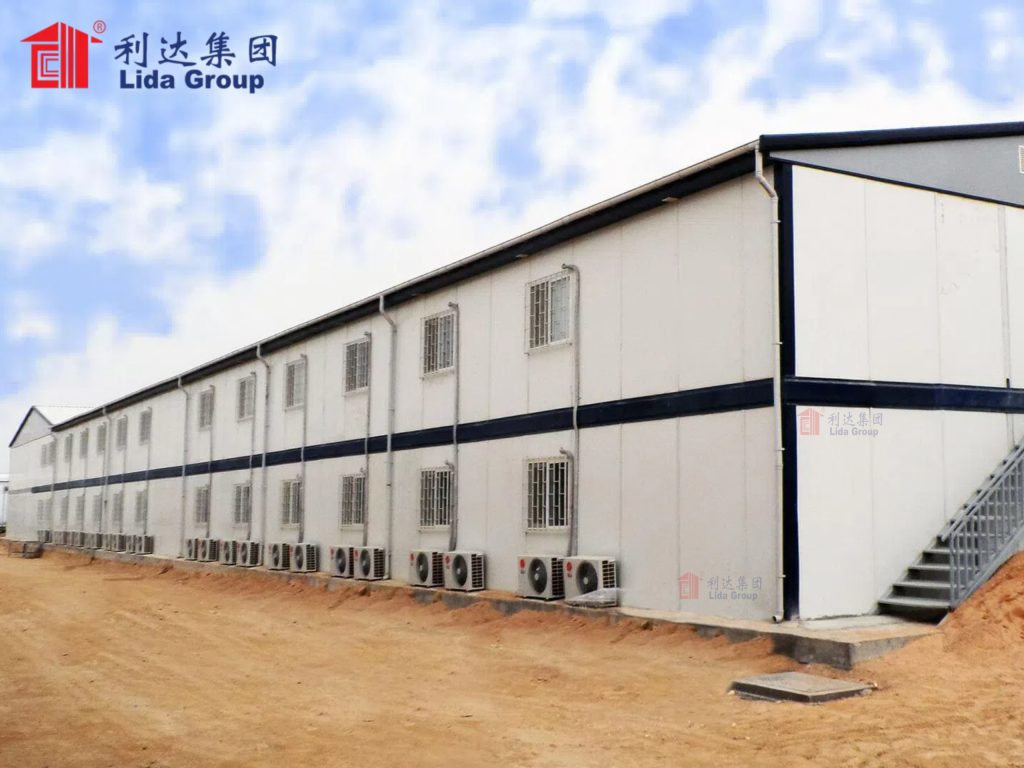
Lida Group’s standard 20‑foot unit (approximately 16 square metres) provides a complete private living space, including a comfortable sleeping area with a quality mattress, ample storage for personal belongings, a quiet workspace, and a private bathroom with shower, toilet, and sink. For higher‑density requirements, two‑person units with bunk beds are available, while supervisors and long‑term personnel can enjoy larger units or expandable configurations.
**4.2 Superior Thermal and Acoustic Comfort**
The foundation of occupant comfort is a thermally stable environment. Lida Group’s units are constructed with advanced 75mm fibre‑glass sandwich wall panels (density ≥50kg/m³, Grade A fire‑proof) and 100mm roof insulation with an aluminium foil thermal barrier. This continuous insulation system eliminates the thermal bridging that plagues conventional structures. Field testing has demonstrated that with outdoor temperatures at 0°C, indoor temperatures remain above 17°C without excessive heating equipment; with outdoor temperatures reaching 30°C, interiors stay around a comfortable 21°C. The combination of steel mass and dense insulation also creates an effective acoustic barrier, shielding workers from the noise of heavy machinery and industrial operations.
**4.3 Amenities That Build Community**
The new standard in workforce housing extends far beyond individual sleeping quarters. Lida Group’s camp solutions can be customised to include commercial‑grade dining modules equipped with industrial kitchens and walk‑in refrigeration, recreation rooms with televisions and gaming equipment, fitness centres, on‑site laundry facilities, and fully equipped medical clinics with examination and telemedicine capabilities. In a Zambian copper mining deployment, these improved housing conditions reduced worker turnover by 41% and cut illness‑related downtime by 63%. For operations battling chronic labour shortages, this level of retention improvement directly translates into higher productivity and lower recruitment costs.
**Chapter 5 – Sustainability – Building for a Greener Future**
Lida Group’s container accommodation systems are engineered not only for people but also for the planet, helping organisations meet increasingly stringent ESG targets.
**5.1 Material Efficiency and Waste Reduction**
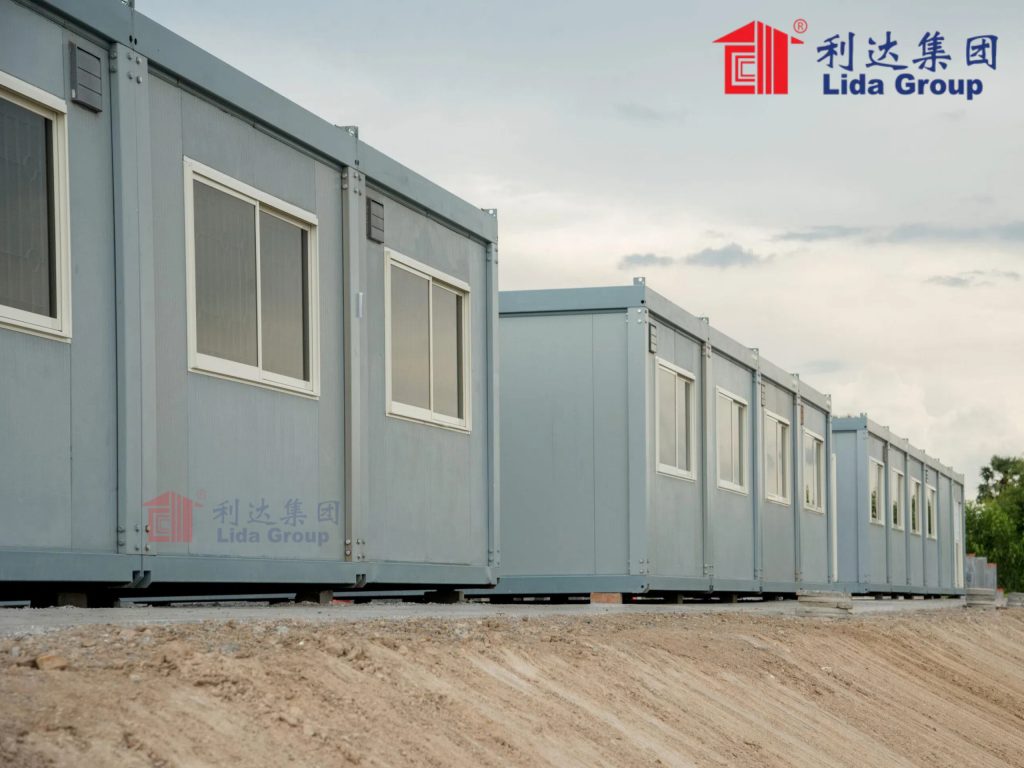
Factory prefabrication achieves material utilisation rates exceeding 95%, compared to just 70‑80% for traditional site‑built construction. Scrap steel, insulation offcuts, and packaging materials are captured and recycled at the factory rather than being consigned to a landfill. In Lida’s landmark West Africa market complex, this approach resulted in a 40% reduction in construction waste and embodied emissions 35% lower than industry standards.
**5.2 Energy Efficiency and Renewable Integration**
The superior insulation of Lida Group’s container accommodation reduces heating and cooling energy consumption by an estimated 30‑50% compared to conventional workforce housing. For remote sites that rely entirely on diesel generators, this reduction translates directly into lower fuel consumption, reduced carbon emissions, and significant operational cost savings. Lida Group’s systems are also “solar‑ready” – roof structures feature pre‑engineered attachment points and concealed conduits, allowing for easy integration of photovoltaic arrays and battery storage. In the West Africa market complex, solar‑thermal regulation contributed to extending the shelf life of harvested produce by up to 300%.
**5.3 Reusability and the Circular Economy**
Unlike site‑built accommodation that is demolished and landfilled at project completion, Lida Group’s bolt‑together container units are designed for multiple cycles of use. Industry documentation indicates that these units can be assembled, disassembled, and relocated more than six times without loss of structural integrity. When a decommissioned camp complex was recently disassembled and redeployed at a new site, 85% material reuse was achieved. At end of life, the steel frames are 100% recyclable, and the insulation cores can be processed into new products, creating a true circular economy.
**Chapter 6 – Economic Benefits – Superior Long‑Term Value**
Beyond the immediate advantages of speed and quality, Lida Group’s container accommodation delivers demonstrably superior total cost of ownership.
**6.1 Predictable Costing and Lower Insurance**
The factory‑controlled production environment eliminates the “surprise” cost overruns that are endemic to conventional construction. Clients receive fixed‑price contracts for materials, shipping, and installation, providing complete budget certainty. Furthermore, because Lida’s modular steel systems exhibit enhanced fire resistance (Grade A non‑flammable insulation) and have been engineered for high seismic and wind loads, insurers often offer lower premiums compared to coverage for traditional timber or masonry structures.
**6.2 Reduced Operating Costs**
As noted previously, the 30‑50% reduction in heating and cooling energy consumption directly lowers utility bills and fuel costs. Steel construction requires minimal ongoing maintenance – no termite treatments, no decaying wood, and no repeated repainting of exterior cladding. In the Saudi Aramco gas project, the use of Lida Group’s relocatable container house units reduced build costs by 44% compared to traditional housing alternatives.
**6.3 Asset Value Retention**
Perhaps the most underappreciated economic benefit is asset retention. While a site‑built camp has minimal residual value after a project concludes (and often a large demolition expense), Lida Group’s units retain significant value. They can be redeployed to subsequent project sites, leased to other operators, or sold into a thriving secondary market. This transforms what was once a sunk cost into a genuinely recoverable capital investment.
**Chapter 7 – Global Service and Support – A True Partnership**
Lida Group’s commitment to its clients extends far beyond supplying high‑quality products. The company offers a complete turnkey service that covers every stage of the project lifecycle, from initial consultation and needs assessment through custom design, factory production, global logistics, on‑site installation, and after‑sales support.
**7.1 Design and Engineering**
Lida’s team of engineers works closely with clients to develop customised camp designs that address specific workforce numbers, site conditions, local climate, and budget constraints. Using advanced 3D rendering and building information modelling (BIM) technology, clients can visualise their completed camp long before a single component is fabricated.
**7.2 Global Logistics**
With a footprint in more than 150 countries and dedicated overseas branch offices in strategic locations such as Saudi Arabia, Qatar, Indonesia, and Chile, Lida Group has built a sophisticated logistics network capable of delivering container house units to virtually any location on Earth. The company’s flat‑pack shipping technology maximises load efficiency – a single 40‑foot container can carry components for 200‑300 square metres of wall and roof area, reducing shipping volume by up to 70% compared to volumetric modules.
**7.3 On‑Site Installation and Commissioning**
Lida Group has been providing on‑site installation supervision since 2004, with experienced supervisors travelling to project sites to guide local crews through the assembly process. This ensures that every camp is assembled correctly, guaranteeing that all comfort and safety features function exactly as designed. For clients who prefer a fully hands‑off solution, Lida offers complete turnkey services, managing the entire project from ground breaking to final handover.
**7.4 After‑Sales Support**
Even after a camp is operational, Lida Group stands behind its work. The company provides comprehensive maintenance guidelines, readily available spare parts, and technical support for troubleshooting, ensuring that camps perform reliably over their entire service life.
**Chapter 8 – Real‑World Validation – A Proven Track Record**
The benefits of Lida Group’s prefabricated container worker accommodation are not theoretical claims – they are validated through hundreds of successful projects deployed across the world’s most demanding environments.
**8.1 Southeast Asian Container House Projects**
In a Southeast Asian country, Lida Group recently completed two major projects. The City Apartment Hotel Project used 33 modular container units, each prefabricated off‑site and assembled on location using a stackable modular design. The units were customised with bespoke colour schemes and secondary roofing for enhanced weather resistance, with an expected service life exceeding 25 years. In a separate MTZ project, Lida Group installed 150 container housing units shipped in flat‑pack form – each equipped with insulation materials, energy‑efficient lighting, and double‑glazed windows to reduce environmental impact and operational costs.
**8.2 Eastern European Mountain Camp**
In a remote mountainous region of Eastern Europe, Lida Group completed a modular camp housing project facing winter temperatures dropping to -20°C, heavy snowstorms, tight timelines, and strict environmental regulations. The solution utilised steel frame structures with Grade‑8 earthquake resistance and 1.5 kN/m² wind resistance. Sandwich panels with thicknesses from 75mm to 150mm (EPS and rock wool) supported thermal performance in temperatures ranging from -45°C to 50°C. Prefabricated modules were manufactured in just 25 days, shipped in standard 40‑foot containers, and assembled by a small crew. The project achieved 30% faster completion compared to traditional methods.
**8.3 Zambian Copperbelt Mining Camp – Quantifiable Results**
In Zambia’s Copperbelt mining region, Lida Group’s container apartments delivered measurable improvements that directly impacted project economics: worker turnover decreased by 41% and illness‑related downtime dropped by 63%. The installation of positive‑pressure ventilation systems successfully excluded copper dust particulates, while HEPA filtration contributed to a remarkable 37% reduction in respiratory incidents among the workforce.
**8.4 Qingdao Huangdao Container Hospital – Emergency Response**
During the global pandemic, Lida Group partnered with the China Construction Eighth Engineering Bureau to deliver the Qingdao Huangdao Container Hospital Station, a 36,000‑square‑metre facility encompassing 1,000 isolation container rooms and 126 staff dormitories, along with function halls, catering buildings, a reception centre, and supporting infrastructure. The entire project was delivered from start to completion in just 12 days, demonstrating the ultimate capability of Lida’s flat‑pack modular systems to meet emergency deployment timelines.
**8.5 Other Industry Deployments**
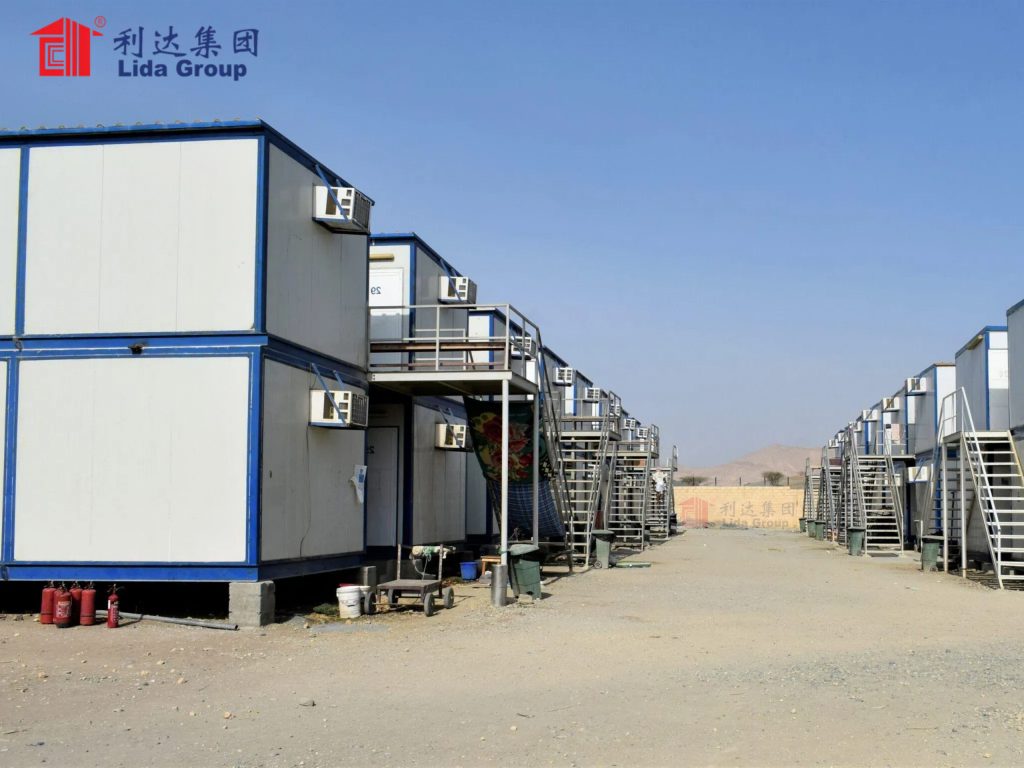
Further validating the company’s capabilities, Lida Group has deployed a 1,200‑person camp in the Canadian Arctic with -60°C wind‑load certification and a camp for a Saudi Aramco gas project where 800 relocatable container house units reduced build costs by 44% compared to traditional housing.
**Conclusion**
Prefabricated container worker accommodation from Lida Group represents a complete re‑imagining of what workforce housing can and should be – not a compromise to be endured, but an engineered asset that drives project success. The benefits of this approach are clear, comprehensive, and proven.
In terms of speed, Lida Group’s parallel processing, factory precision, and streamlined assembly methods compress project timelines by 70‑80% compared to traditional construction. A 100‑unit workforce camp that would consume 12‑18 months using conventional methods can be fully operational in just 4‑6 weeks. This acceleration translates directly into earlier project commencement, faster revenue generation, and a decisive competitive advantage.
In terms of quality, the company’s robust engineering sets a new standard. High‑strength galvanised steel frames provide structural integrity rated for magnitude 8 earthquakes and 150 mph winds. Multi‑layer sandwich panel insulation systems deliver thermal performance that maintains comfortable interior conditions across climates ranging from -45°C to +50°C. Private bathrooms, superior sanitation, quality dining facilities, and recreational amenities transform temporary camps into true communities, directly improving worker morale, retention, and safety.
In terms of sustainability, Lida Group’s approach demonstrates that environmental responsibility and operational performance are complementary goals. Material utilisation rates exceeding 95% slash construction waste by 70‑80%. Energy efficiency reduces heating and cooling consumption by 30‑50%, cutting fuel use and lowering operational carbon emissions. Reusable, relocatable container units align with circular economy principles, retaining value across multiple project cycles and avoiding the demolition waste that is the end‑of‑life reality for conventional camps.
In terms of economics, the value proposition is compelling. Predictable fixed‑price contracts eliminate the uncertainty of cost overruns. Reduced labour requirements, lower operating expenses, and dramatically shorter financing periods improve project returns. Asset retention ensures that investment in accommodation is not lost at project conclusion but can be redeployed, leased, or sold, providing a durable capital asset.
In terms of global support, Lida Group’s comprehensive turnkey services ensure seamless delivery. From initial design through factory production, global logistics, on‑site assembly, and after‑sales support, the company manages every stage of the project lifecycle, allowing clients to focus on their core objectives rather than the logistics of workforce housing.
For project managers, operations directors, and organisational leaders facing the persistent challenges of remote workforce accommodation, the message is unmistakable: Lida Group’s prefabricated container worker accommodation offers a proven, superior alternative to conventional methods. It delivers the speed to meet the most demanding project schedules, the durability to withstand the world’s harshest environments, the comfort to attract and retain skilled labour, and the sustainability to meet modern environmental standards.
The evidence is not theoretical – it has been validated across hundreds of projects on six continents, in the Canadian Arctic, the Chilean Atacama Desert, the Zambian Copperbelt, the mountains of Eastern Europe, and the tropical climates of Southeast Asia. These are not promises for the future. They are benefits available today, from Lida Group, the global leader in prefabricated container accommodation.
Related news
-
Lida Group Delivers Mobile Modular Container House for Construction Site Labor Camps
2026-04-27 15:14:46
-
Hot Selling Container House by Lida Group Meets Global Demand for Affordable Housing
2026-04-27 15:00:46
-
Prefabricated Container Worker Accommodation Now Available from Lida Group
2026-04-27 14:55:09
contact us
- Tel: +86-532-88966982
- Whatsapp: +86-13793209022
- E-mail: sales@lidajituan.com
