



Prefabricated Container Worker Accommodation Now Available from Lida Group
2026-Apr-27 14:55:09
By Admin
The global construction, mining, energy exploration, and infrastructure development industries rely heavily on mobile, efficient, and reliable temporary worker accommodation. Construction and field operation projects are typically located in remote undeveloped areas with incomplete supporting infrastructure, lacking standardized staff dormitories and living facilities. Traditional on-site temporary housing solutions, including makeshift tents, manually built brick temporary houses, and low-grade assembled board rooms, can no longer meet modern construction management standards. These conventional accommodation options suffer from prominent drawbacks such as poor structural safety, lengthy on-site construction cycles, weak environmental adaptability, low reusability, and harsh living conditions for workers. Substandard staff accommodation not only affects employees’ living comfort and physical health but also reduces team stability, lowers overall construction efficiency, and increases enterprise operational risks and comprehensive project costs.
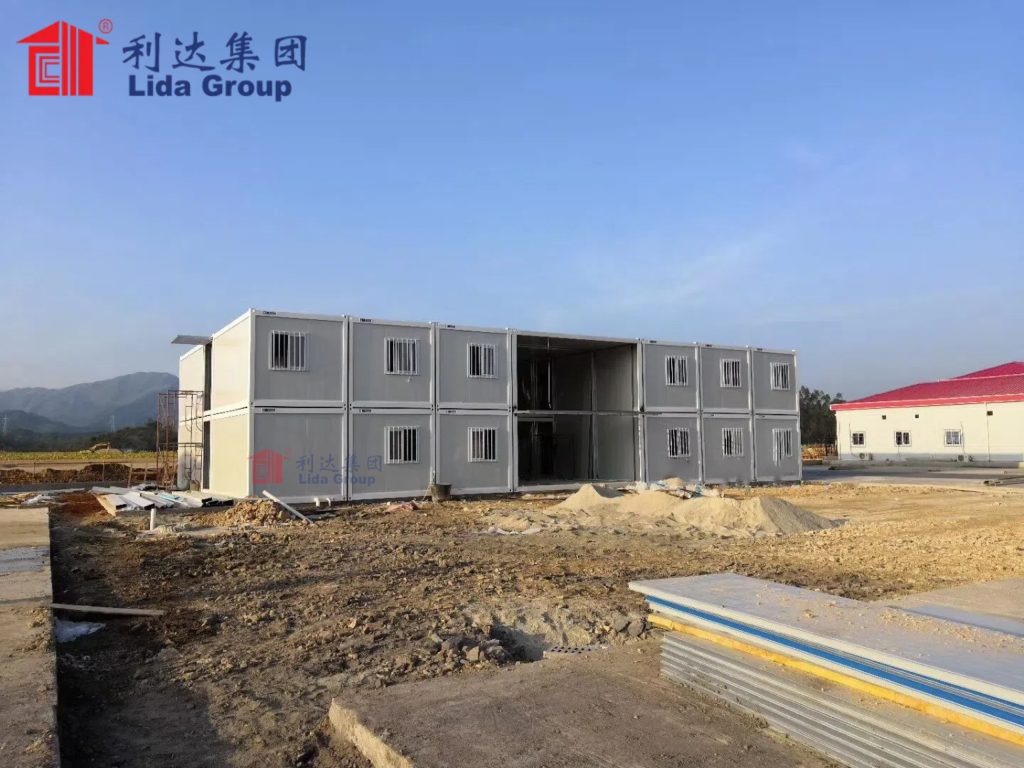
To address the widespread shortage of high-standard temporary staff housing in global engineering projects, Lida Group, a world-leading manufacturer and solution provider of modular prefabricated buildings, officially launches its upgraded prefabricated container worker accommodation series. Tailored exclusively for construction camps, remote field operation bases, mining sites, emergency engineering teams, and temporary project headquarters, Lida Group’s new prefabricated container worker accommodation integrates factory prefabrication, modular assembly, structural safety optimization, humanized living design, and green recyclable performance. It delivers ready-to-use, fully customizable, and repeatedly deployable staff housing solutions, helping global engineering enterprises standardize on-site camp management, improve worker welfare, control project costs, and achieve green and efficient project operation.
With over three decades of specialized modular building experience and successful project delivery across 152 countries, Lida Group possesses in-depth insights into the pain points of traditional worker accommodation. Unlike generic container housing products that only provide basic shelter functions, Lida Group’s prefabricated container worker accommodation adheres to the core design concepts of safety, practicality, comfort, flexibility, and sustainability. Every housing unit undergoes standardized industrial production, strict quality inspection, and scenario-based functional optimization. By unifying structural specifications, supporting complete living facilities, and realizing flexible disassembly and cross-project reuse, Lida Group sets new industrial standards for modern prefabricated worker accommodation, providing dependable temporary housing support for global engineering projects of all scales.
1. Limitations of Traditional On-Site Worker Accommodation
For decades, global engineering projects have relied on three mainstream temporary worker housing solutions: temporary tents, brick-built temporary dormitories, and low-end assembled board houses. All three traditional modes have inherent flaws in structural safety, construction efficiency, living comfort, economic efficiency, and environmental performance, restricting the standardized and refined management of modern construction projects.
Temporary tents are the most basic form of mobile worker accommodation, featuring low upfront costs and convenient transportation. However, tents lack rigid load-bearing structures and professional sealing systems, resulting in extremely poor environmental adaptability. In extreme weather conditions including strong winds, heavy rainfall, sandstorms, low-temperature frost, and high-temperature heat waves, tents cannot provide stable and safe living environments for construction workers. They are prone to collapse, water leakage, and air leakage, bringing potential safety hazards. In addition, tents have no fixed functional partitions, poor privacy, insufficient lighting and ventilation, and no professional thermal insulation and sound insulation design. Long-term residence in tents easily causes physical discomfort and affects worker mental status and work efficiency. Furthermore, disposable tents are easily damaged and cannot be reused multiple times, forcing enterprises to repeatedly purchase and replace housing equipment for different projects, resulting in continuous resource waste and additional operational costs.
Brick-built temporary dormitories solve the basic safety problems of tents but bring heavier operational burdens to engineering projects. Constructing brick temporary houses requires foundation excavation, raw material transportation, on-site masonry, plastering, and long curing periods, which consumes extensive labor resources and construction time. The slow construction speed cannot match the rapid deployment requirements of short-cycle emergency projects and temporary field operations. Most critically, brick temporary buildings are fixed permanent structures that cannot be disassembled, migrated, or reused. Upon project completion, these temporary dormitories must be demolished, generating massive construction waste, causing severe ecological damage to construction sites, and resulting in one-time investment losses with no residual asset value. Meanwhile, fixed brick buildings have rigid and unified interior layouts, unable to flexibly adjust accommodation capacity according to fluctuating worker numbers, leading to either idle housing resources or insufficient accommodation space.
Low-end assembled board houses and generic container houses improve structural stability and construction efficiency compared with tents and brick buildings, yet they still have obvious quality defects. Most entry-level products adopt thin low-strength steel frames, single anti-rust coatings, and inferior sandwich enclosure materials. Such simplified structures suffer from easy rusting, structural deformation, wall water seepage, internal condensation, mildew growth, and poor thermal insulation after short-term outdoor use. In terms of living configuration, generic products lack standardized supporting facilities, with rough interior finishing, poor sound insulation, and insufficient privacy, failing to meet modern worker welfare standards. Moreover, non-standard production processes lead to inconsistent component sizes and unstable connection performance. Generic container houses can only withstand limited disassembly times, with rapid performance attenuation after repeated migration, resulting in poor full-cycle cost performance and restricting long-term cyclic utilization for cross-regional continuous engineering projects.
2. Core Design and Production Advantages of Lida Group’s Prefabricated Container Worker Accommodation
Targeting the comprehensive defects of traditional worker accommodation, Lida Group carries out systematic upgrading and innovation in structural design, material selection, factory prefabrication, on-site assembly, and functional configuration. The newly launched prefabricated container worker accommodation realizes full industrial standardized production, perfectly balancing structural safety, rapid deployment, living comfort, flexible mobility, and green sustainability, fully adapting to complex and changeable engineering site scenarios.
2.1 High-Strength Galvanized Steel Frame Structure for Superior Safety
Structural safety is the primary guarantee of qualified worker accommodation. Lida Group’s prefabricated container worker accommodation adopts customized high-strength hot-dip galvanized steel frames, completely abandoning thin and low-strength steel materials used in generic products. The integrated welded steel frame forms an integral rigid load-bearing structure with excellent compressive resistance, tensile toughness, wind resistance, and seismic performance. Professional mechanical simulation tests verify that the optimized steel structure can withstand Level 12 strong winds and Magnitude 8 earthquakes, fully complying with international construction site safety specifications and global temporary building codes.
All steel components undergo multi-layer protective treatments including hot-dip galvanizing and electrostatic weather-resistant spraying. The composite anti-corrosion system effectively isolates salt spray erosion, ultraviolet aging, rainwater corrosion, and low-temperature frost damage in complex outdoor environments. Even after repeated disassembly, long-distance transportation, and cross-site migration, the steel frame structure remains free of deformation, rust, and structural loosening. With a stable service life of more than 15 years and support for over 15 cycles of disassembly and reassembly, Lida Group’s container housing far surpasses the durability and reusability of ordinary temporary housing products, providing long-term stable structural safety for worker accommodation camps.
2.2 Full Factory Prefabrication and Ultra-Fast On-Site Deployment
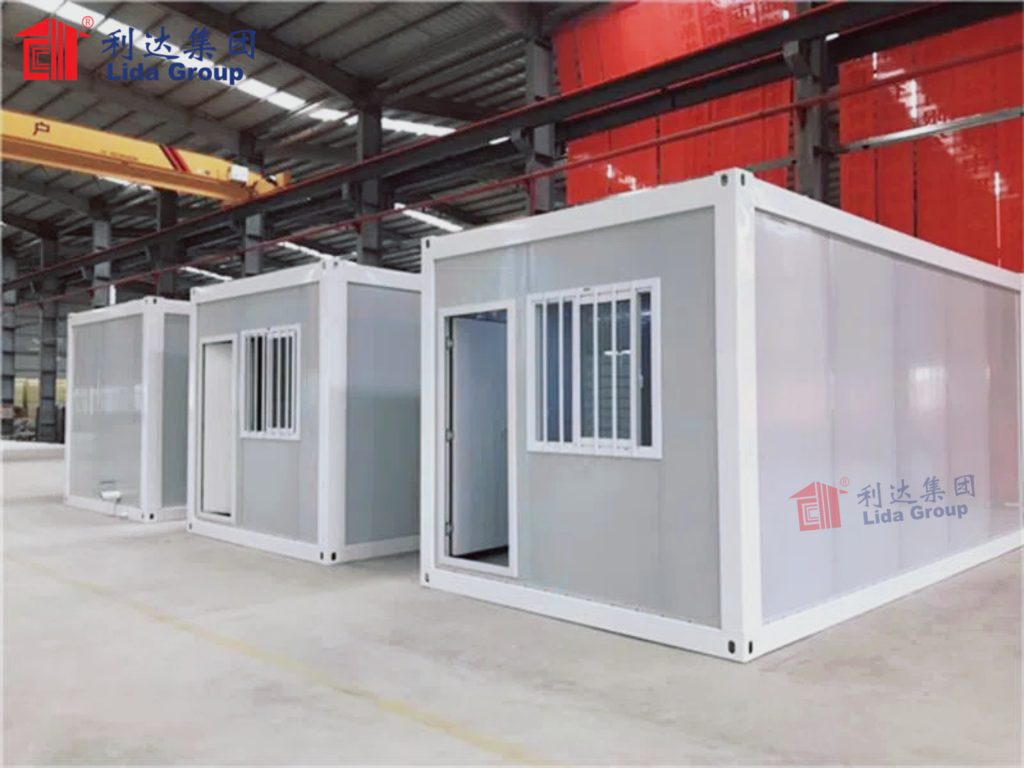
Lida Group’s prefabricated container worker accommodation adopts a fully factory prefabricated production mode. All structural frameworks, wall panels, ceiling systems, waterproof floors, internal power distribution circuits, lighting systems, and door and window components are completely processed, assembled, and inspected in intelligent automated factories. Unlike traditional temporary housing that requires extensive on-site wet construction and manual assembly, finished Lida container units are fully equipped before leaving the factory, achieving a plug-and-play housing solution.
After transportation to engineering sites, standard container worker dormitories only require simple ground positioning and bolt fixing without welding, painting, concrete pouring, or long curing procedures. A single independent accommodation unit can be fully deployed and put into use within two hours, and a complete large-scale worker camp composed of dozens of dormitory units, office units, and supporting functional units can be completed within three days. This efficient construction mode shortens the camp deployment cycle by more than 85% compared with traditional brick buildings and board houses, greatly accelerating project preliminary preparation progress and saving substantial on-site labor and mechanical leasing costs for engineering enterprises.
2.3 Humanized Upgraded Living Configuration
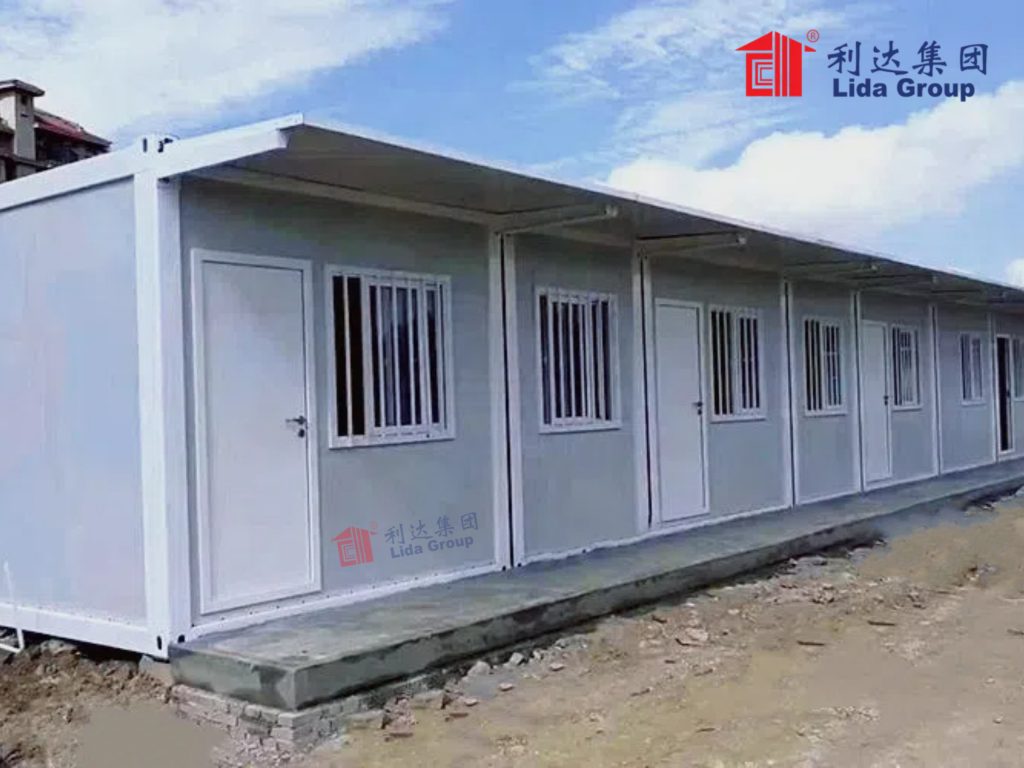
Focusing on improving worker living experience and on-site humanistic management, Lida Group comprehensively upgrades the internal functional configuration of prefabricated container accommodation. Standard units are equipped with A-grade fireproof thermal insulation sandwich wall panels, high-efficiency sound insulation materials, waterproof and moisture-proof floor systems, anti-theft insulated doors and windows, integrated LED lighting, ventilation systems, and standardized power distribution sockets. The optimized enclosure structure effectively isolates external high and low temperature changes and construction noise, prevents internal condensation and wall mildew, and maintains dry, quiet, and constant-temperature indoor living environments throughout the year.
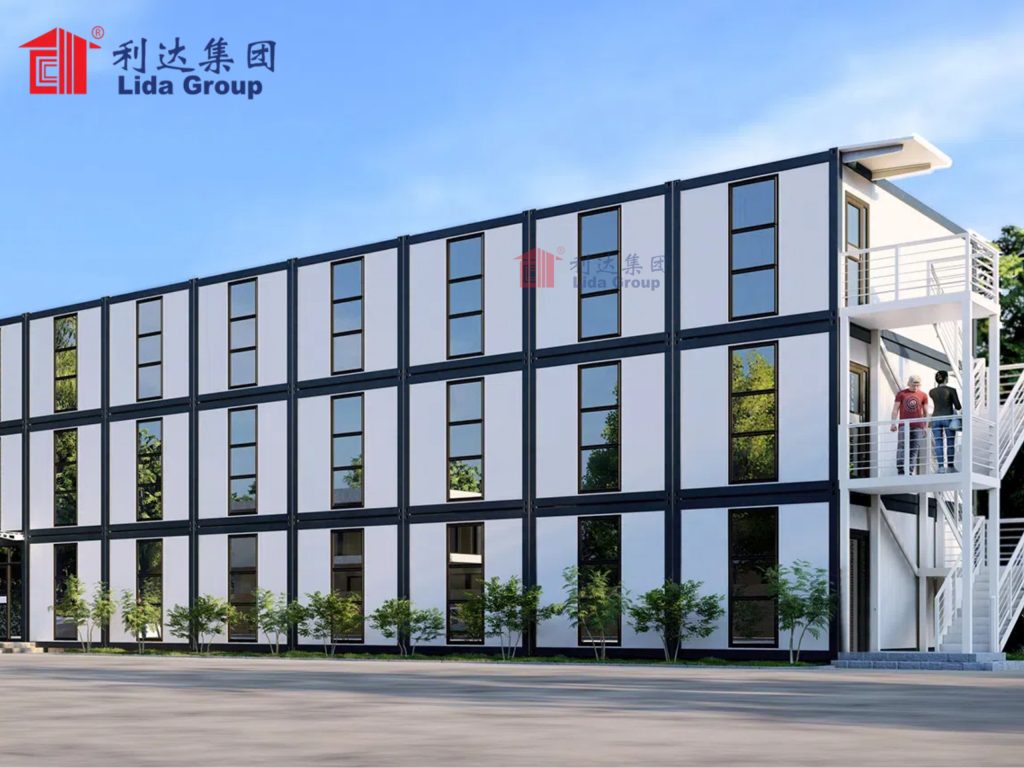
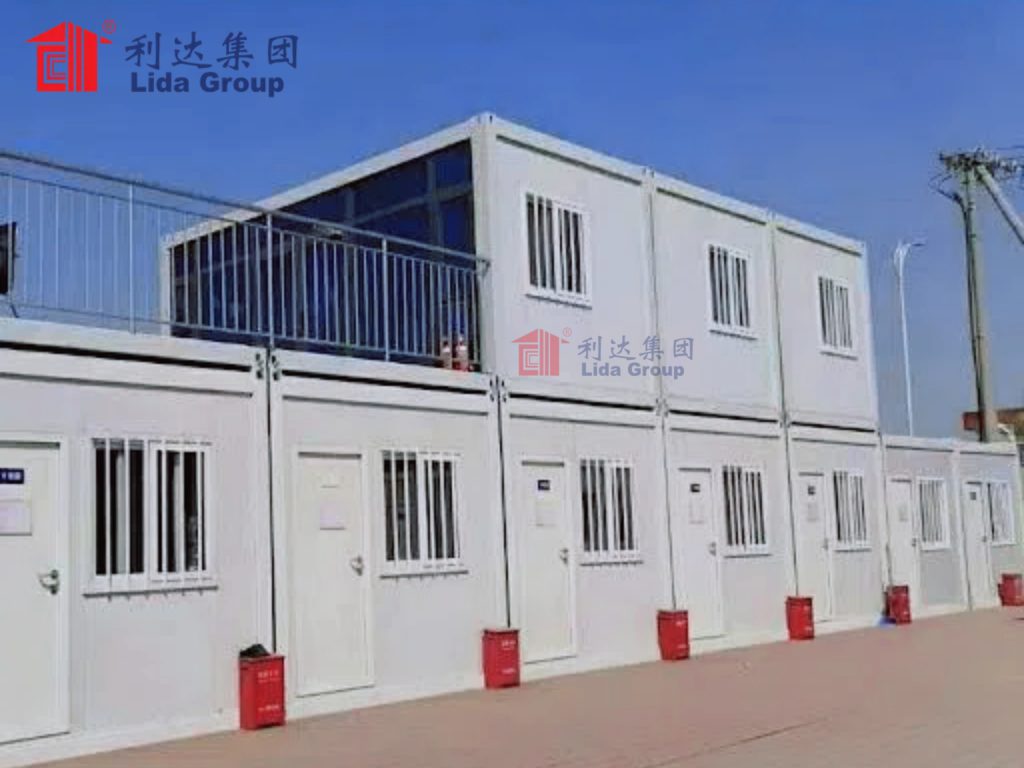
To meet diversified project management demands, Lida Group supports personalized customized configuration for container worker accommodation. Enterprises can choose to install air conditioning reserved interfaces, independent storage cabinets, toilet and shower integrated systems, fire alarm devices, and emergency lighting facilities according to project scale and management standards. Multiple container units can be freely combined and stacked to build integrated camp clusters including worker dormitories, on-site offices, meeting rooms, canteens, laundry rooms, and rest lounges. The humanized design effectively improves worker living comfort and privacy, enhances employee sense of belonging, and stabilizes project team cohesion.
2.4 Low-Disturbance Site Adaptation and Green Construction
Most engineering construction sites feature uneven terrain, limited construction space, and fragile ecological environments, putting forward strict requirements for the site adaptability and environmental friendliness of temporary worker accommodation. Lida Group’s prefabricated container housing adopts an integral lightweight structure with extremely low foundation requirements. Different from traditional temporary buildings that require reinforced concrete foundation treatment, Lida’s container units can be stably deployed on flat hardened ground, gravel ground, and simple temporary terraces, minimizing on-site earthwork excavation and vegetation damage.
The entire construction process produces zero on-site dust, sewage, and construction waste, avoiding ecological damage and environmental pollution during camp construction. All steel structural components achieve a recycling rate of over 95%. After project completion, container units can be completely disassembled, migrated, and reused for new projects, leaving almost no building residues on the original site. This zero-burden green construction mode fully complies with global green engineering standards and low-carbon construction policies, helping engineering enterprises reduce ecological pressure and meet sustainable development assessment requirements.
3. Comprehensive Competitive Advantages of Lida’s Prefabricated Container Worker Accommodation
Compared with all traditional temporary worker housing solutions, Lida Group’s newly launched prefabricated container accommodation forms multi-dimensional core advantages in flexible scalability, full-lifecycle cost performance, standardized safety management, scenario adaptability, and green sustainability, becoming the optimal temporary housing solution for modern engineering projects.
3.1 Flexible Scalability and Cross-Project Reusability
Engineering project scales and worker numbers often fluctuate dynamically with project progress, which requires temporary housing to have flexible adjustment capabilities. Lida Group’s standardized modular container units support free horizontal combination and two-layer stacked installation. Project managers can quickly expand dormitory quantities during project peak construction periods and disassemble redundant units during off-peak periods to avoid resource idleness and waste. For cross-regional chain engineering projects and long-term phased construction projects, container accommodation units can be repeatedly disassembled, transported, and redeployed across different construction sites, realizing cyclic cross-project reuse of housing resources. This highly flexible mobile deployment mode perfectly matches the mobile and iterative operation characteristics of modern infrastructure, mining, and emergency engineering projects.
3.2 Strict Fire Safety and Stable Quality Control
Fire safety is the most critical management indicator for construction site camps. Lida Group’s prefabricated container worker accommodation adopts A-grade non-combustible fireproof sandwich enclosure materials, fire-resistant power distribution systems, and insulated wiring designs, effectively blocking flame spread and avoiding fire hazards caused by short circuits and electrical overload. All products pass strict third-party fire safety tests and meet international construction site fire protection standards.
Every container unit undergoes factory non-destructive structural testing, waterproof testing, and safety performance verification before delivery. Standardized production processes and strict quality control systems eliminate unstable product quality caused by manual on-site construction errors. Long-term engineering verification proves that Lida’s container accommodation maintains stable structural performance, waterproof and fireproof capabilities, and living quality in high-temperature, high-humidity, severe cold, and sandstorm environments, effectively reducing on-site safety risks and camp maintenance hidden dangers.
3.3 Outstanding Full-Lifecycle Economic Value
Although the initial investment of Lida Group’s prefabricated container worker accommodation is slightly higher than disposable tents and low-end board houses, it delivers superior full-lifecycle cost advantages. The ultra-fast on-site assembly speed shortens project preparation cycles and reduces labor and equipment leasing expenses. The reusable modular design avoids repeated procurement and construction costs caused by one-time temporary housing abandonment. Meanwhile, the durable structural performance and high-quality enclosure materials greatly reduce daily maintenance, component replacement, and facility repair costs during camp operation.
For long-term multi-stage construction and cross-regional continuous projects, the cyclic utilization of Lida’s container housing can save more than 45% of comprehensive temporary accommodation costs compared with traditional housing modes. Additionally, standardized and neat container camps improve project on-site image and standardized management level, helping enterprises enhance project bidding competitiveness and brand value, bringing intangible long-term economic and brand benefits.
3.4 Diversified Scenario Universal Adaptability
Lida Group’s prefabricated container worker accommodation has extremely strong scenario universality, covering almost all temporary field staff housing scenarios. It is widely applicable to highway, railway, bridge, and urban building infrastructure construction camps, remote mining, oil, and gas field operation bases, post-disaster emergency rescue and reconstruction sites, large-scale sports events and exhibition engineering support camps, and field scientific research and exploration teams. Whether in coastal humid and windy areas, desert high-temperature sandstorm regions, or alpine low-temperature frozen areas, the customized container housing solutions can adapt to local climatic characteristics and terrain conditions, providing stable and standardized worker accommodation services for diverse complex engineering scenarios.
4. Global Engineering Application and Market Feedback
In a large-scale railway infrastructure project in Southeast Asia, the construction route spans mountains, wetlands, and coastal areas, with scattered construction points and frequent team migration. Traditional temporary housing cannot adapt to mobile construction needs and fails to meet local strict construction safety and environmental protection standards. The project adopted Lida Group’s prefabricated container worker accommodation to build standardized integrated camps. All dormitory and office units completed rapid deployment within one week. During the three-year project construction cycle, the container units were successfully migrated and reused multiple times, maintaining intact structural performance and stable indoor living conditions. The standardized camp environment effectively improved worker satisfaction and team stability, significantly reducing staff turnover and project operational costs.
In a remote open-pit mining project in Central Asia, the construction site is located in a desert marginal zone with strong ultraviolet radiation, extreme day-night temperature differences, and frequent sandstorms, posing severe challenges to temporary housing durability and comfort. Lida Group provided customized enhanced anti-sandstorm, anti-aging, and thermal insulation container worker accommodation. The optimized steel frame structure and multi-layer sealing system effectively resist external harsh weather interference. The humanized thermal insulation and ventilation design ensures warm indoor environments in winter and cool conditions in summer, solving the long-standing problems of dryness, cold, and harsh living conditions in remote mining camps. After years of continuous operation, the camp facilities require almost no maintenance, achieving stable and low-cost camp operation.
5. Industry Value and Future Development Trends
With the continuous expansion of global infrastructure construction scale and the continuous upgrading of engineering refined management standards, standardized, safe, comfortable, flexible, and green temporary worker accommodation has become an indispensable supporting part of modern engineering projects. Traditional extensive temporary housing modes with low safety, high energy consumption, poor comfort, and non-reusability are gradually being phased out by the market.
As a mature and innovative modular building solution, Lida Group’s prefabricated container worker accommodation subverts the backward construction mode of traditional temporary housing. It not only solves various industry pain points such as poor safety, slow deployment, difficult management, and serious resource waste but also promotes the standardized, humanized, and green upgrading of the global construction camp industry. For engineering enterprises, the product helps optimize project cost control, improve on-site management efficiency, and fulfill employee welfare and environmental social responsibilities. For the entire construction industry, it sets a replicable high-standard model for temporary worker accommodation construction, guiding the industry to develop toward industrialization, standardization, and sustainability.
In the future, with the continuous advancement of construction industrialization and global low-carbon building policies, prefabricated modular container housing will become the mainstream choice for global temporary worker accommodation. Lida Group will continue to iterate modular building technology, upgrade product safety and intelligent configuration, and launch more diversified, intelligent, and eco-friendly prefabricated accommodation solutions to meet the increasingly refined and multi-scenario housing needs of global engineering projects.
6. Conclusion
Traditional temporary worker accommodation solutions including tents, brick-built dormitories, and low-end assembled houses have long restricted the standardized construction and refined management of global engineering projects. Their inherent defects such as insufficient structural safety, lengthy construction cycles, poor worker living comfort, low reusability, high maintenance costs, and serious resource waste can no longer adapt to the fast-paced, high-standard, and sustainable operation requirements of modern construction enterprises.
By launching professional prefabricated container worker accommodation, Lida Group thoroughly solves the universal pain points of traditional on-site staff housing through high-strength steel frame structural optimization, full factory prefabrication, ultra-fast modular assembly, humanized functional upgrading, and green cyclic utilization design. The product integrates outstanding structural safety, rapid deployability, flexible scalability, superior full-lifecycle cost performance, diversified scenario adaptability, and eco-friendly advantages, comprehensively improving the construction quality, living comfort, and management standard of engineering worker camps. Verified by numerous cross-regional global engineering practices, Lida Group’s prefabricated container accommodation features stable quality, strong environmental adaptability, and remarkable comprehensive benefits.
As global engineering management standards and green construction requirements continue to improve, standardized modular prefabricated worker accommodation will replace traditional temporary housing and become the mainstream supporting facility for modern construction projects. Moving forward, Lida Group will continue to focus on technological innovation and product upgrading in the modular construction field, continuously optimizing prefabricated worker accommodation solutions. Committed to helping global engineering enterprises realize safer, more comfortable, more efficient, and greener on-site camp management, Lida Group will keep leading the high-quality and sustainable development of the global temporary workforce housing industry.
Related news
-
Lida Group Launches Mobile Modular Container House for Flexible Workforce Housing
2026-04-27 14:35:51
-
Lida Group's Metal Frame Construction Delivers Lasting Value in Every High Quality House
2026-04-27 14:31:19
-
Sustainable and Strong: Steel Structure Building for High Quality House by Lida Group
2026-04-27 14:14:47
contact us
- Tel: +86-532-88966982
- Whatsapp: +86-13793209022
- E-mail: sales@lidajituan.com
