



From Factory Offices to Field Rest Lounges: Turnkey Prefabricated Solutions by Lida Group
2026-Nov-05 17:11:49
By Admin
01 Introduction: The Fragmented Way Projects Buy Buildings
Most construction and industrial projects do not buy buildings from a single source. Offices come from one supplier, accommodation from another, welfare facilities from a third, and the utility structures that keep everything running from yet another. Each supplier works to its own standard, delivers on its own schedule, and requires its own maintenance regime. The result is a site that is functional but fragmented, where the operator spends considerable effort coordinating suppliers, reconciling specifications, and managing systems that were never designed to work together.
Lida Grouptakes a different approach. Rather than offering isolated products, it provides turnkey prefabricated solutions that cover the full range of a site’s needs, from factory-built offices to the rest lounges where workers recover between shifts. These units are designed as parts of one coherent system, built to consistent standards, and supplied as a single integrated package. This article explains what turnkey really means in practice, why it matters for projects that must move quickly and operate reliably, and how it changes the way an operator plans and runs a site.
02 What Turnkey Actually Delivers
The term turnkey is often used loosely, but in Lida’s case it describes a specific way of working. A turnkey solution means the supplier takes responsibility for the whole building, not just the structure. The unit is designed, manufactured, finished, and equipped in the factory so that it arrives at the site complete and ready to use, needing only to be positioned and connected to the site’s power, water, and waste services. The operator is not left to source fittings, coordinate trades, or manage the gaps between different suppliers.
This matters because the gaps are where projects lose time and money. When offices, accommodation, and welfare facilities come from separate vendors, the interfaces between them become the operator’s problem. Delivery schedules must be reconciled, specifications compared, and responsibility for defects divided between parties who were never asked to coordinate. A turnkey package removes those interfaces by design, because every unit is produced within the same system and to the same standard. The operator receives a set of buildings that already fit together, which simplifies planning, shortens the path to occupancy, and reduces the risk of discovering, late in the process, that one supplier’s product does not match another’s.
03 Factory Offices: Where the Site Is Managed From
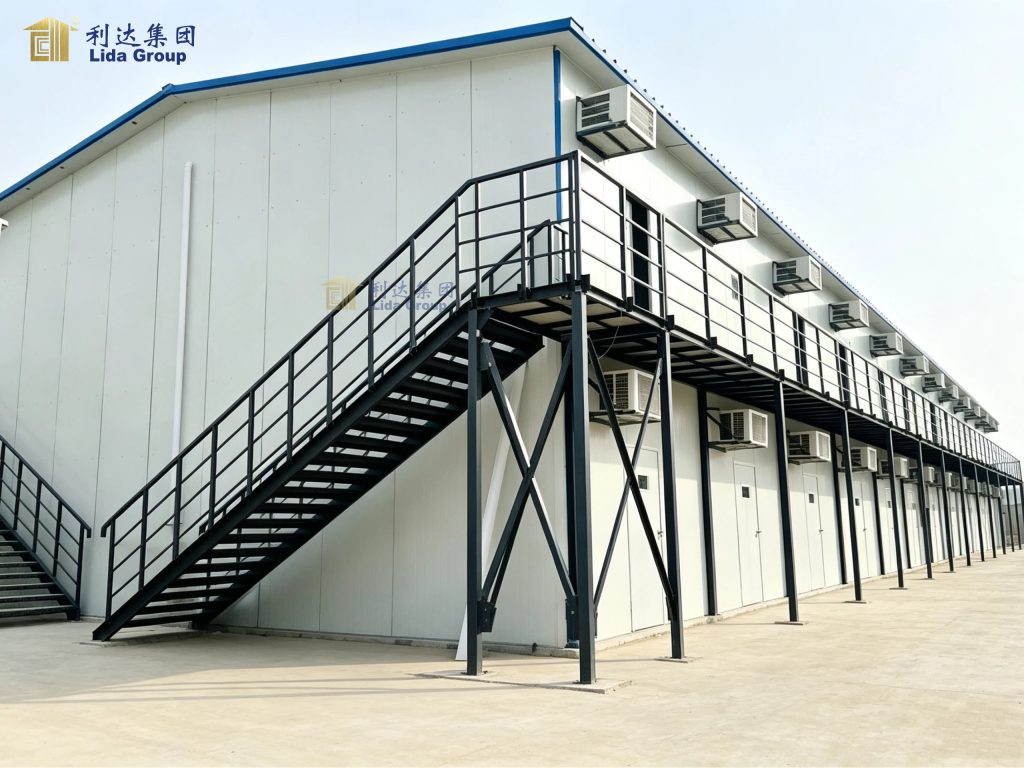
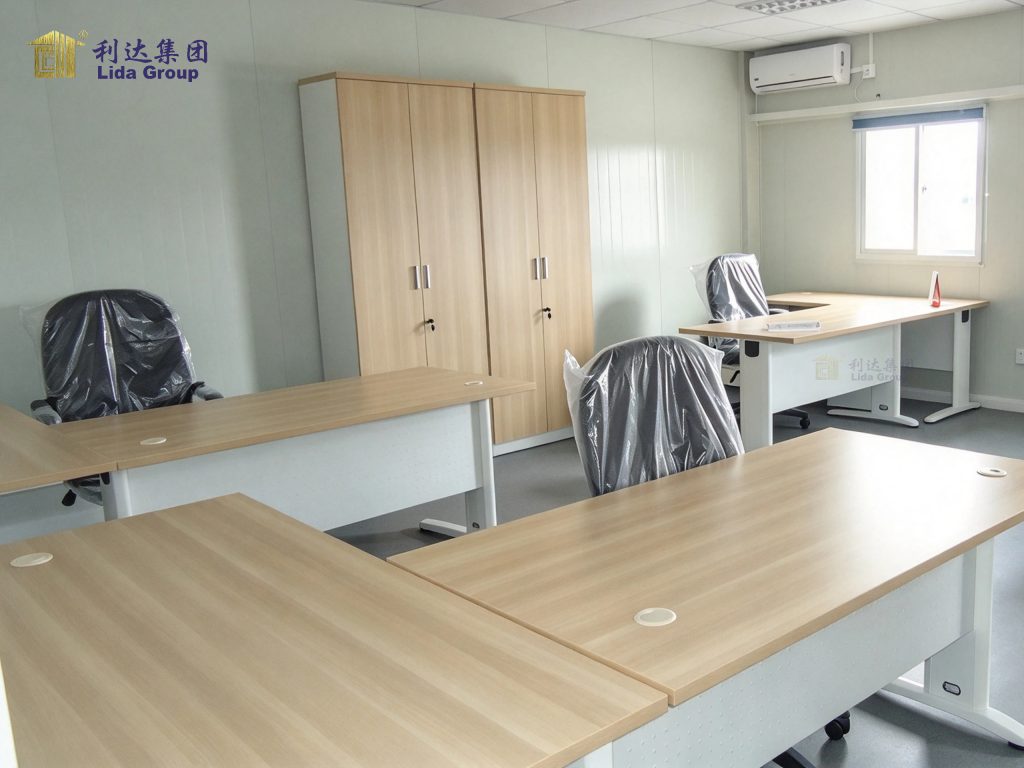
Every site needs a place from which it is managed, and a factory-built office serves that role well. Lida’s office units provide a proper working environment with the space, power, and connectivity that site management requires, from planning and procurement to safety oversight and client meetings. Because the unit is manufactured in a controlled environment, the interior arrives finished and consistent, with the layout, fittings, and services already in place rather than assembled piece by piece on site.
The advantage of a factory office is not only speed but reliability. Site offices are used hard and for long hours, and a unit built to a proven standard holds up better than one improvised on site. Drawings, permits, and records are kept in an environment that is protected from dust and weather, which matters when decisions depend on documents that must remain accurate and accessible. The same steel frame and weatherproof envelope that protect the building from the elements also protect the equipment and records inside, while insulation and ventilation keep the working environment comfortable through hot and cold seasons. For a project that depends on clear decisions and tight coordination, having a dependable office from the first weeks is more valuable than it might first appear.
04 Field Rest Lounges: Where the Workforce Recovers
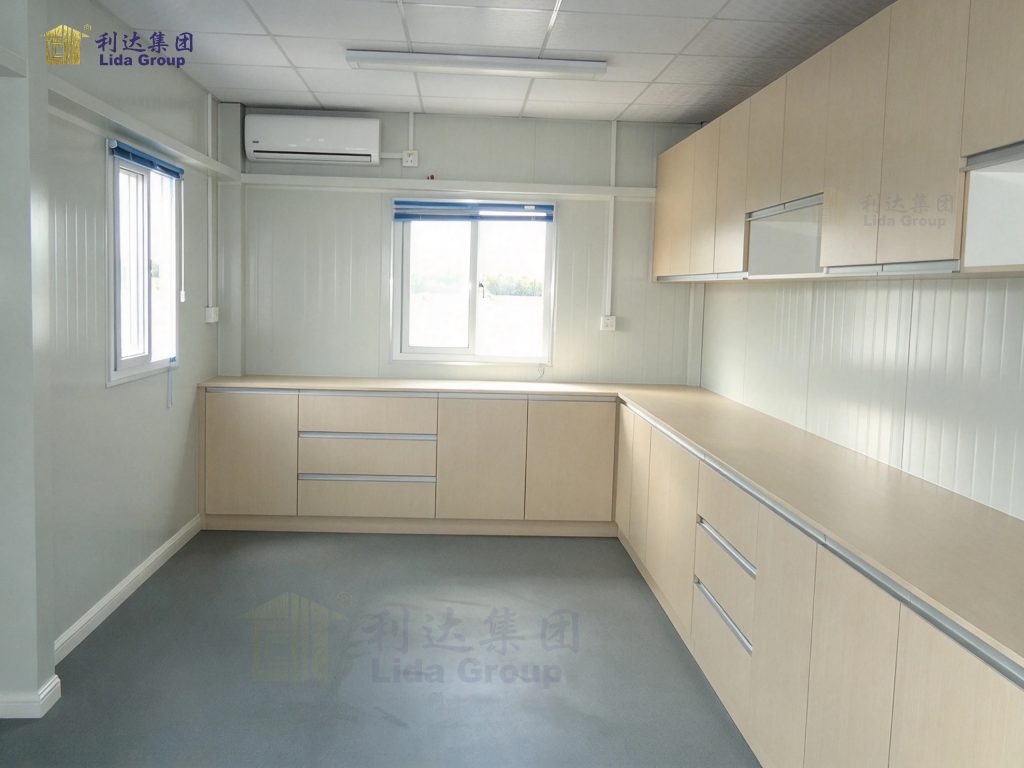
The rest lounge is an often overlooked part of a site, yet it plays a direct role in safety and productivity. Workers who spend long shifts in demanding conditions need somewhere to recover, and a properly designed rest space supports that recovery in ways a makeshift area cannot. Lida’s rest lounges are built as comfortable, climate-controlled units where workers can sit, cool down or warm up, and take a genuine break between tasks, with ventilation that keeps the air fresh and finishes that are easy to keep clean.
Treating the rest lounge as a designed facility rather than an afterthought reflects a practical understanding of site work. Fatigue and discomfort are contributors to accidents, and a space that allows people to recover properly reduces that risk while also improving how they perform when they return to the job. A well-planned lounge gives workers somewhere to sit away from the noise and dust of active work, and it signals to the workforce that their wellbeing is being taken seriously, which in turn supports retention on long projects. Because the unit is built to the same standard as the rest of the camp, it inherits the durability and weather resistance the site already relies on, so the space remains usable through the seasons rather than becoming uncomfortable exactly when conditions are hardest.
05 One Standard Across Every Unit
The real strength of a turnkey package is the consistency it brings. When offices, accommodation, welfare and utility units are all produced within the same system, they share materials, components, and service requirements, which means the site is simpler to plan, easier to operate, and more straightforward to maintain. A maintenance team learns one set of systems instead of several, spare parts are common across the site, and the operator’s technical documentation describes a single coherent product family rather than a collection of unrelated buildings.
Consistency also supports expansion. A site that grows can add units from the same range and know that they will match what is already there, in performance as well as appearance. A new rest lounge or an additional office block inherits the standard the site was built to, so the camp does not gradually become a patchwork of different generations of building. This matters more than it first seems, because a camp typically evolves over several years, and the accumulation of small inconsistencies is precisely what makes older sites difficult to manage. For projects that run for years and change shape along the way, this uniformity is a quiet but significant advantage.
06 Speed From Factory to Field
Turnkey prefabrication is fast, and that speed is one of its clearest benefits. Because the units are manufactured off site, the building work happens in parallel with whatever preparation is needed at the project location, rather than in sequence after it. When the units arrive, they are positioned, secured, and connected to services, and the site can begin using them within days rather than waiting months for conventional construction to finish.
For a project under schedule pressure, this changes the economics. Site offices can be operating while groundworks continue, accommodation can be occupied as the workforce arrives, and welfare facilities can be available before the site reaches full activity. Each of these removes a link from the chain of dependencies that would otherwise hold the project back. The result is a project that does not lose weeks waiting for buildings it needs immediately. Speed also reduces the disruption of construction activity on a busy site, because the heavy work has already been done in the factory rather than in the middle of ongoing operations.
07 Built to Last and Built to Move
A turnkey solution must be durable, because the units will be used hard and, in many cases, reused. Lida builds its units around a structural steel frame chosen for its strength and longevity, engineered to handle wind and snow loads as well as the rough treatment of transport and installation. Steel does not rot, warp, or attract pests, and the weatherproof envelope protects the interior through years of service in demanding conditions. Factory fabrication reinforces this reliability, because every unit is produced under controlled conditions with checks at each stage.
Durability is especially valuable because prefabricated units can be moved. When a project ends or work shifts to a new location, the same units can be relocated rather than abandoned, carrying their value with them. This turns a site’s buildings from a one-time expense into a reusable asset that continues to earn back its cost, and it means the original investment continues to serve the operator across multiple projects. For companies that run several sites in sequence, this mobility is a practical and financial advantage that conventional construction cannot match.
08 A Simpler Way to Run a Site
Beyond the buildings themselves, a turnkey approach simplifies the operator’s work. Dealing with a single supplier for the full range of site facilities reduces the coordination burden that fragmented procurement creates, and it gives the operator one point of contact for delivery, support, and spares. Specifications are agreed once rather than negotiated separately with each vendor, and the schedule is planned as a whole rather than assembled from competing timelines.
This simplicity carries into operation. Because all units share the same systems, the site’s maintenance routine is unified, training is shorter, and troubleshooting is more predictable. When something needs attention, the operator is not left working out which supplier built which building and which standard applies, and there is no need to maintain separate stock of spare parts for each vendor. For a project manager already balancing schedule, safety, and cost, removing this layer of complexity is a genuine relief, and it is one of the less obvious but most useful benefits of buying a site’s facilities as one integrated package.
09 Conclusion: One Supplier, One System, One Standard
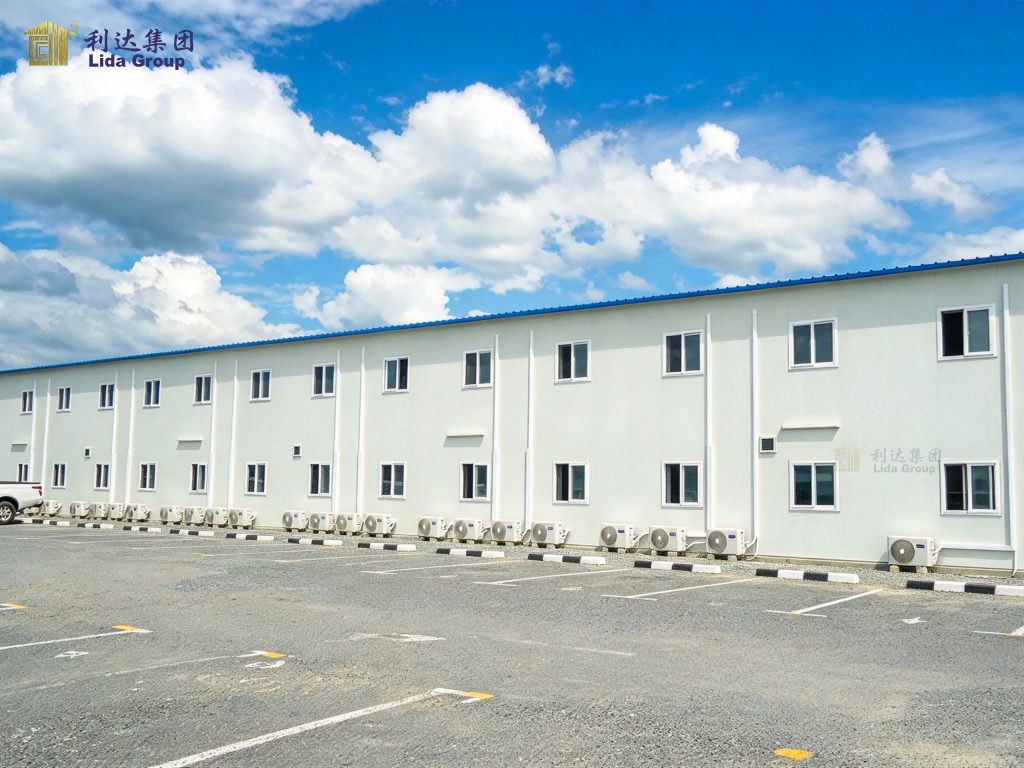
Lida Group’s turnkey prefabricated solutions bring the full range of site facilities, from factory offices to field rest lounges, into a single coherent system. The units are designed, manufactured, and equipped in the factory so they arrive complete and ready to use, and they are built to one consistent standard so that they work together rather than merely coexist. This approach shortens the path to occupancy, reduces the coordination burden on the operator, and produces a site that is simpler to run, easier to maintain, and more predictable to plan around.
The advantages extend across the life of the project. Durable construction and weatherproof design keep the buildings reliable through years of demanding use, while the ability to relocate units preserves their value when work moves on. For operators who must equip a site quickly and run it efficiently, a turnkey package offers more than a collection of buildings; it offers a unified foundation on which the whole operation can be organized. In the end, the value of Lida’s turnkey solution lies in removing fragmentation from the way a site is built, so that the operator can focus on the work rather than on coordinating the buildings around it.
Related news
-
All-in-One Site Infrastructure: Steel Warehouses, Field Dormitories & Rest Lounges
2026-10-29 16:33:47
-
Heavy-Duty Prefabricated Housing: Standardized Site Facilities for Energy Development Projects
2026-10-28 16:51:23
-
Scalable Logistics Warehouses: Optimizing Industrial Storage with Lida Steel Frame Systems
2026-10-27 15:31:40
contact us
- Tel: +86-532-88966982
- Whatsapp: +86-13793209022
- E-mail: sales@lidajituan.com
