



Maximum Mobility: The Advantages of Relocatable Container Offices in Dynamic Construction
2026-Nov-09 17:59:19
By Admin
01 Introduction: The Office That Has to Move
On a construction site, the office is rarely where it started. Work advances along the project, ground is handed over in phases, and the centre of activity shifts from one area to another as the structure rises. A site hut built in a fixed position may serve well in the first months and become inconvenient once the active zone has moved a few hundred metres away, leaving staff to walk further, carry documents further, and coordinate across a gap that grows with every stage of progress. The building stays; the work does not.
Lida Group’s relocatable container offices are designed around this reality. The office is not a permanent structure placed wherever space happens to exist at the start of the job, but a self-contained unit that can be lifted, transported, and reinstated close to where decisions are being made. This article sets out why mobility has become a defining advantage in modern construction, how a container office delivers it without compromising the working environment, and what a contractor gains by treating the site office as a movable asset rather than a fixed cost.
02 Why Site Offices Stay in the Wrong Place
The usual reason site offices end up badly located is that they are procured once and installed early, at a moment when the project’s geography is still uncertain. Foundations are poured, services are connected, and the building is fixed before anyone knows how the work will actually flow. Once that layout is set, moving the office becomes disruptive and expensive, so teams adapt to it instead, accepting longer walks, slower handovers, and a growing separation between the people coordinating the job and the people doing it.
This separation has a cost that rarely appears in a budget. Coordination slows because information travels further and less reliably, decisions are made with less direct knowledge of field conditions, and problems are noticed later than they might have been. On a large site, a few hundred metres can mean the difference between a supervisor seeing an issue as it forms and hearing about it at the end of the shift. Relocatable offices remove that constraint by allowing the administrative centre of the project to follow the physical centre of the work, however often it changes. What looks like a small logistical convenience turns out to shape the daily rhythm of the whole project, because it determines how quickly a question finds an answer and how soon a problem finds a decision.

03 What a Relocatable Office Actually Is
A Lida relocatable container office is a complete workspace built inside a steel-framed container shell. It arrives ready to use, with walls, floors, insulation, electrical distribution, lighting, and the necessary fittings already installed and tested in the factory. The structure is engineered for transport, with lifting points and reinforced corners that allow it to be handled by standard equipment, and its dimensions suit ordinary road transport, which means it can be moved between sites as well as within one. Nothing about the unit assumes a particular site, a particular climate, or a particular duration of use.
This completeness is central to the concept. A conventional site office is assembled from parts on location, and every relocation means dismantling and rebuilding, with the fabric, fittings, and services that made it work either damaged or abandoned in the process. Any savings from the original structure are quickly lost in the second assembly, and the third relocation is often enough to make the whole exercise uneconomic. A container office moves as a single tested object, so what left the previous position is what arrives at the next one. Nothing is lost in transit except the old location, which is what makes repeated relocation practical rather than merely possible.
04 Speed on Arrival and on Departure
The first advantage a contractor notices is time. A container office can be installed in a single day once the ground is prepared and the lifting equipment is on site, which means the administration of a project can begin almost as soon as the contract does. There is no construction sequence to wait for, no trades to coordinate, and no curing period before the space can be occupied. The unit is placed, connected, and put to work.
Departure is equally quick, and this matters more than it first appears. Demobilisation is usually compressed and expensive, with everything on site competing for the same cranes and transport at the same moment. An office that can be lifted and loaded without being dismantled, its contents secured and its services isolated in a controlled way, saves days at exactly the point when the project can least afford delay. The same speed applies to moves during the project, so a change of plan does not become a construction event in its own right but a routine logistical task. A contractor who can reposition the office within a day is free to reorganise the site around the work, rather than arranging the work around a building that cannot be shifted.
05 Built to Survive the Journey
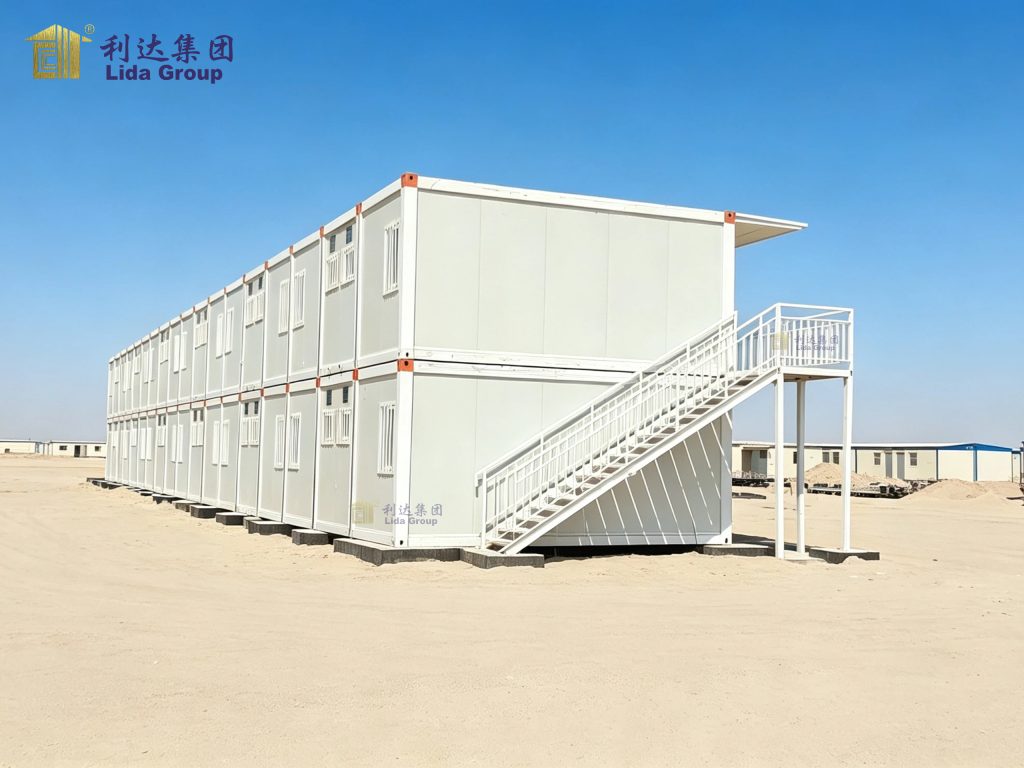
A movable building must be a robust one, because transport and repeated handling are demanding conditions. Lida builds the container shell around a structural steel frame selected for strength and dimensional stability, engineered to withstand lifting loads, stacking loads, and the vibration of road transport without distorting. The envelope is designed to remain sealed through the move, so that insulation stays intact, panels stay in place, and the interior arrives as dry and sound as it left.
Durability shows up over years rather than weeks. Steel does not rot, warp, or attract pests, and a properly finished envelope resists corrosion and water ingress even where weather is severe. Units can be reloaded and reinstated many times across a long project or a series of projects, and each relocation does not diminish the building’s performance. For a contractor planning to use the same offices on several contracts, this longevity is what turns a purchase into an asset with a working life measured in years rather than in one job.
06 A Working Environment, Not a Site Hut
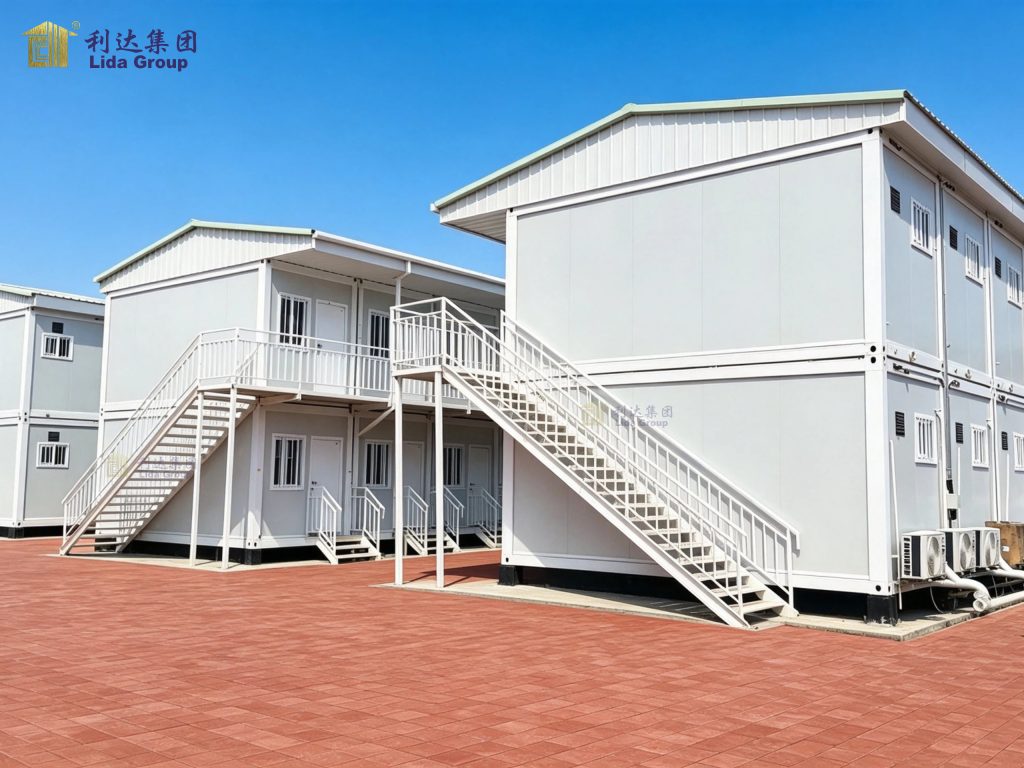
Mobility would mean little if the result were an uncomfortable place to work, and container offices are frequently misjudged as cramped and basic. A well-designed unit is none of these things. Inside, there is proper desk space, room for drawings and records, and clear circulation so that several people can work without obstructing each other. The layout can accommodate project management, document control, and meeting space within a coordinated arrangement rather than a single open room.
Comfort is engineered into the shell rather than added later. Insulation keeps interior temperatures stable through hot and cold seasons, climate equipment maintains a working environment in which people can concentrate, and ventilation keeps the air fresh in a confined space. Lighting is installed to a consistent standard, and power distribution supports computers, printers, and communications equipment without overloading the supply. Acoustic treatment reduces the noise that steel shells otherwise transmit, so that a meeting can take place beside a busy desk area without either being disturbed. The result is a genuine office that happens to be movable, which matters because the people who run a project are the people the project can least afford to have working in poor conditions.
07 Connectivity and Coordination
Modern site management depends on information, and a relocatable office must carry that capability with it. Units are prepared to receive voice and data services, with distribution that supports network equipment, terminals, and the devices used for reporting and coordination. When the office moves, the communications equipment moves with it, so that the administrative hub of the project is not re-established from nothing in a new location but simply reconnected.
This continuity has a direct effect on how a project is managed. Site meetings can be held where the work is, drawing reviews happen close to the structure being reviewed, and the people making decisions are within reach of the people carrying them out. Documentation does not have to travel between a distant office and the field, and the informal exchanges that resolve most problems on a construction site happen naturally because the parties are near one another. Mobility, in this sense, is not only about convenience but about the quality of coordination itself.
08 The Economics of a Movable Asset
Cost is where relocatable offices make their clearest case. A fixed site office is paid for once and used once, and its value ends when the project does. Its foundations, its connections, and its dismantling are all costs that produce nothing after the job is finished. A container office is bought once and used repeatedly, on this project and the next, and its value is realised across every contract it serves rather than written off at the end of the first. The comparison is not simply between two prices but between a cost that recurs and an investment that compounds.
Beyond purchase, the operating economics are favourable. Because the unit moves complete, relocation costs less than rebuilding, and because the unit is durable, the maintenance burden stays modest over a long working life. Contractors with a steady pipeline of work can hold a pool of offices and allocate them as projects begin, which keeps capital employed rather than idle and removes the recurring cost of procuring temporary accommodation for each new site. Over several years, the difference between owning a movable fleet and building anew each time is substantial and entirely predictable.
09 Conclusion: An Office That Follows the Work
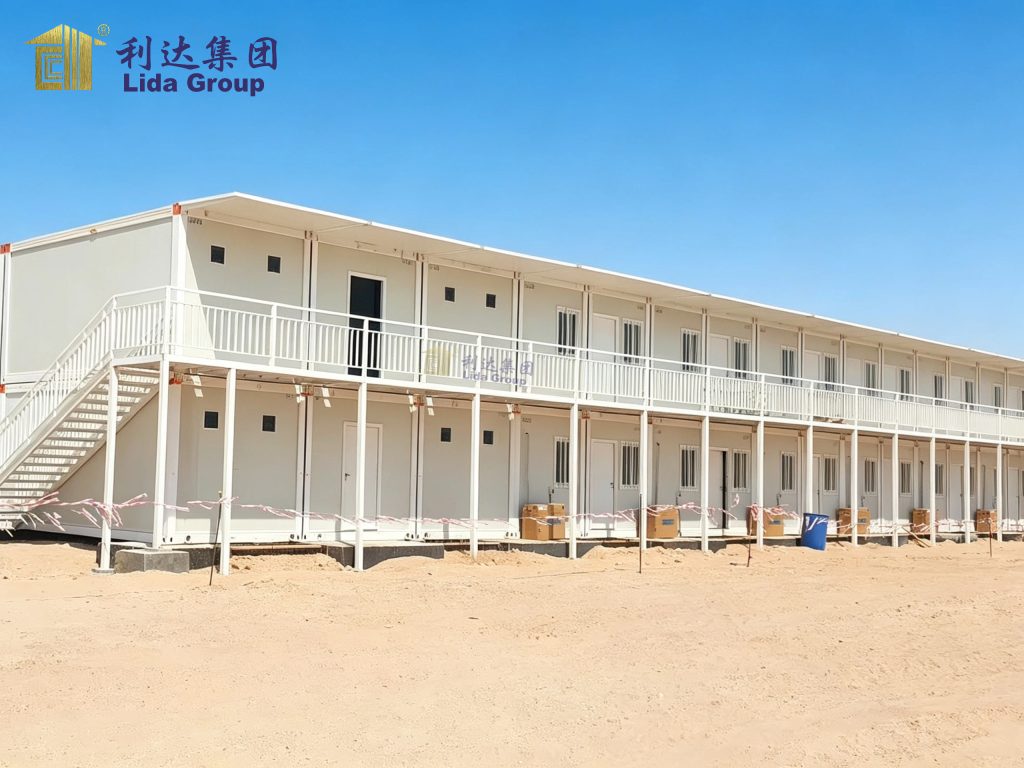
Relocatable container offices answer a problem that every dynamic construction project faces: the office must be where the work is, and the work never stays still. Lida’s units deliver that by combining a complete, tested workspace with a structure engineered for transport, so that the administrative centre of a project can be lifted and reinstated wherever it is most needed. They are quick to install and quick to remove, robust enough to be moved many times, comfortable enough to be worked in properly, and equipped to keep a project connected wherever they stand.
The wider advantage is a change in how a contractor thinks about site facilities. The office stops being a fixed cost tied to one location and becomes a movable asset that serves a whole pipeline of work. Capacity follows demand, capital stays employed, and the quality of coordination improves because decisions are made close to where they take effect. In a sector where programmes compress and sites shift constantly, that combination of practical mobility and dependable performance is not a marginal improvement but a structural one, and it is the reason relocatable container offices have become a standard part of serious construction planning.
Related news
contact us
- Tel: +86-532-88966982
- Whatsapp: +86-13793209022
- E-mail: sales@lidajituan.com
