



Introduction: A More Sustainable Approach to Remote Camp Infrastructure
Oil and mining projects are essential to global energy supply, industrial development, and infrastructure growth. However, many of these operations take place in remote locations where access to housing, utilities, transportation, and public services is limited. Establishing a functional camp in these environments requires careful planning, reliable building systems, and efficient use of available resources.
Traditional camp construction can involve extensive on-site work, significant material transportation, and considerable demand for labor and equipment. When project requirements change, expanding or adapting these facilities may create additional costs and construction challenges. At the same time, companies across the energy and mining industries are paying greater attention to environmental responsibility, resource efficiency, and the long-term impact of their operations.
Prefabricated container buildings offer an alternative approach to developing field housing and supporting facilities. By manufacturing building components in advance and assembling or installing them at the project site, companies can simplify certain construction activities and establish essential infrastructure more efficiently.
Lida Group provides prefabricated building solutions for industrial, commercial, and infrastructure applications. Its container-based building systems can be considered for worker accommodation, site offices, dining facilities, and other supporting spaces in remote oil and mining camps.
When combined with appropriate insulation, efficient utilities, durable materials, and thoughtful site planning, container-based facilities can contribute to more resource-conscious camp development. The goal is not simply to construct accommodation, but to create practical living and working environments that support operational needs while considering environmental performance throughout the building’s service life.
1. The Challenges of Building Oil and Mining Camps
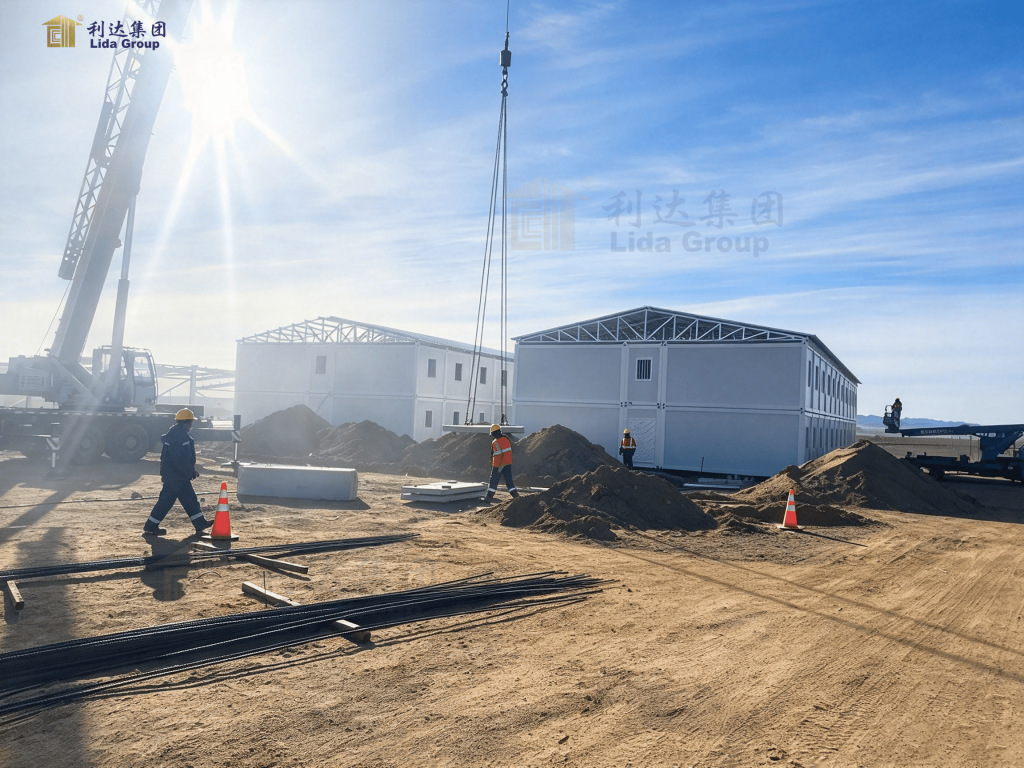
Remote oil and mining projects often operate under demanding conditions. Sites may be located in deserts, mountainous regions, forests, or areas with extreme temperature variations. Limited road access and long transportation distances can make the delivery of construction materials and equipment expensive and difficult to coordinate.
Workforce requirements also change throughout a project’s lifecycle. During early exploration or site preparation, only a small team may be required. As construction and installation activities accelerate, the workforce can increase significantly, creating a need for additional accommodation, offices, washrooms, and dining facilities.
Once a project enters its operational phase, the number of personnel may decrease, but facilities for maintenance teams and essential staff may still be necessary.
Traditional construction methods can make these transitions difficult to manage, particularly when buildings require extensive on-site work. Permanent structures may also be unsuitable for projects with limited operating periods or uncertain future requirements.
Environmental considerations add another layer of complexity. Remote camps require water, electricity, wastewater management, waste collection, and transportation. Poorly planned infrastructure can lead to unnecessary energy consumption, inefficient resource use, and avoidable environmental impacts.
A modern camp solution should therefore address several objectives together: providing suitable accommodation, responding to changing workforce requirements, maintaining reliable operation, and managing resource consumption responsibly.
Prefabricated container buildings can help address these challenges when they are appropriately designed and integrated into a wider site management strategy.
2. Eco-Friendly Container Buildings: Understanding the Concept
The term eco-friendly container buildings generally refers to building solutions designed to use resources more efficiently and reduce environmental impacts where practical. Environmental performance depends on the materials, insulation, manufacturing processes, transportation, energy systems, maintenance, and eventual reuse or disposal of the building.
A container-based building is not automatically sustainable simply because it is modular or manufactured in a factory. Its environmental value must be assessed across its intended service life.
2.1 Prefabrication and More Efficient Construction
Prefabrication allows many building components to be manufactured in a controlled factory environment before they are transported to the site. This can improve production consistency and reduce the amount of construction work required in remote locations.
Factory-based manufacturing also creates opportunities to organize material cutting, component assembly, and quality inspection more systematically. With appropriate planning, this can help reduce avoidable material waste and rework.
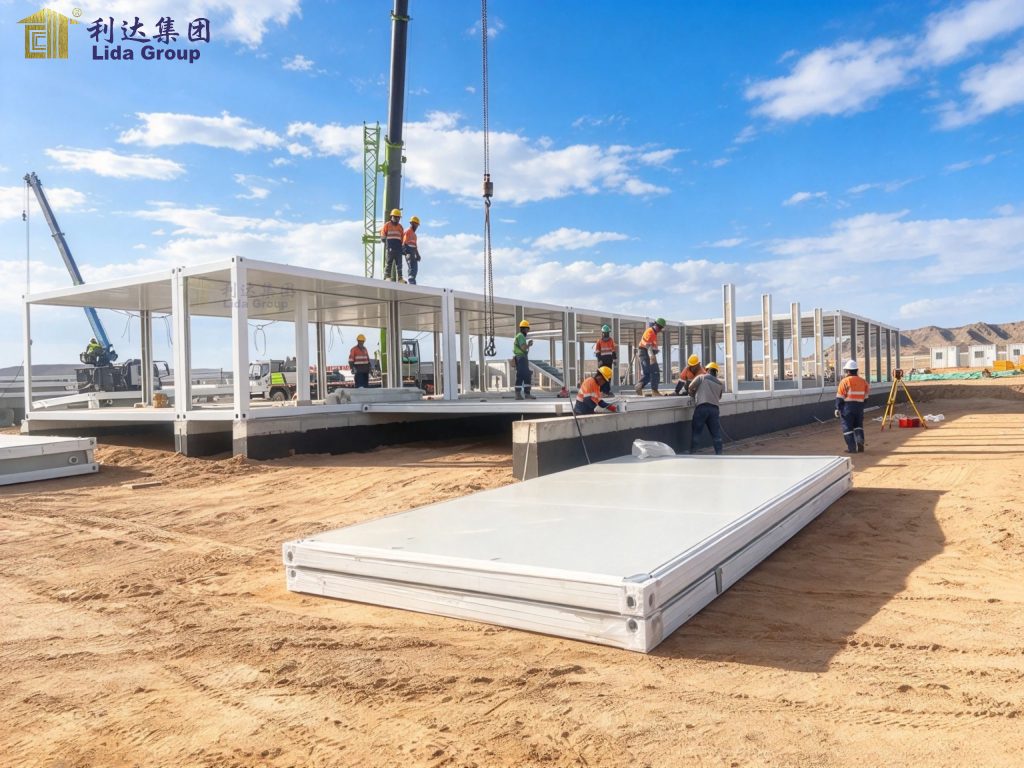
At the project site, prefabricated units can be positioned and connected according to the approved layout. This approach may reduce certain construction activities, although foundations, lifting operations, utility connections, and finishing work may still be required.
For remote oil and mining operations, reducing on-site construction complexity can be particularly valuable. It may limit the need to transport large quantities of loose building materials and reduce the amount of time construction teams must spend working in difficult environments.
The actual environmental benefits depend on the building system, production methods, transportation distance, and installation process. Nevertheless, prefabrication provides a useful foundation for more organized and resource-conscious camp development.
2.2 Modular Design and Potential Reuse
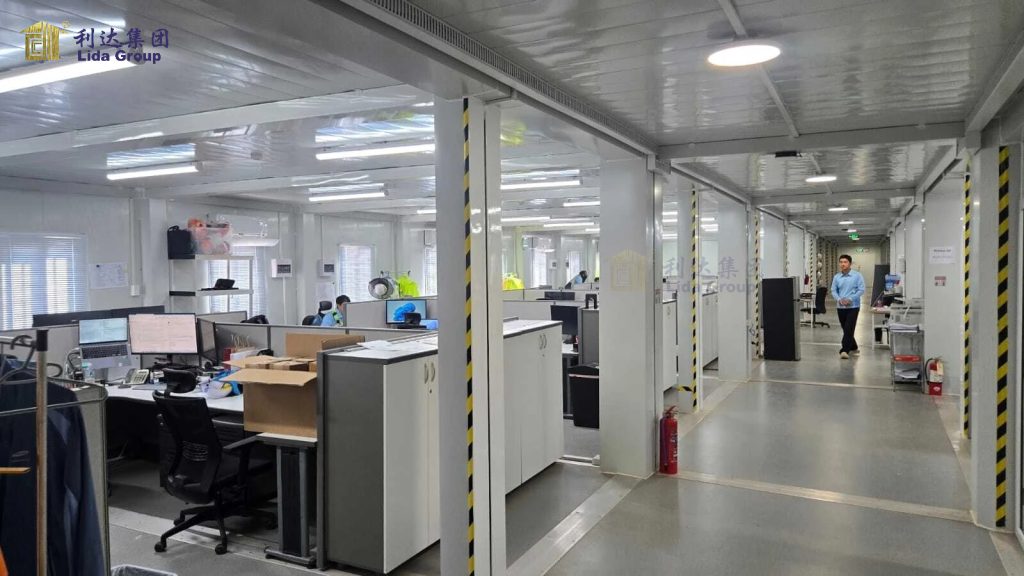
Modular construction allows facilities to be planned around defined building units and standardized components. Depending on the selected system, container buildings may be arranged individually or combined to create larger accommodation blocks, offices, dining areas, and shared facilities.
This flexibility can be useful when workforce numbers change or a project develops in stages. Rather than constructing an entirely new building for every requirement, project owners may be able to introduce additional units or adapt existing facilities.
Some systems can also be dismantled and relocated when the original project ends. Reuse can extend the useful life of a building and reduce demand for new materials, provided the building remains in suitable condition and transportation and reinstallation are practical.
However, not every container building is designed for repeated relocation. Connection details, foundations, structural configuration, and transportation requirements must be evaluated before a building is moved.
By considering future use during the initial design stage, project owners can make more informed decisions about flexibility, lifecycle costs, and potential resource savings.
3. Comfortable and Efficient Worker Accommodation
Sustainability must be considered alongside worker welfare. Oil and mining personnel often work long shifts in demanding conditions, making suitable accommodation an essential part of a well-managed camp.
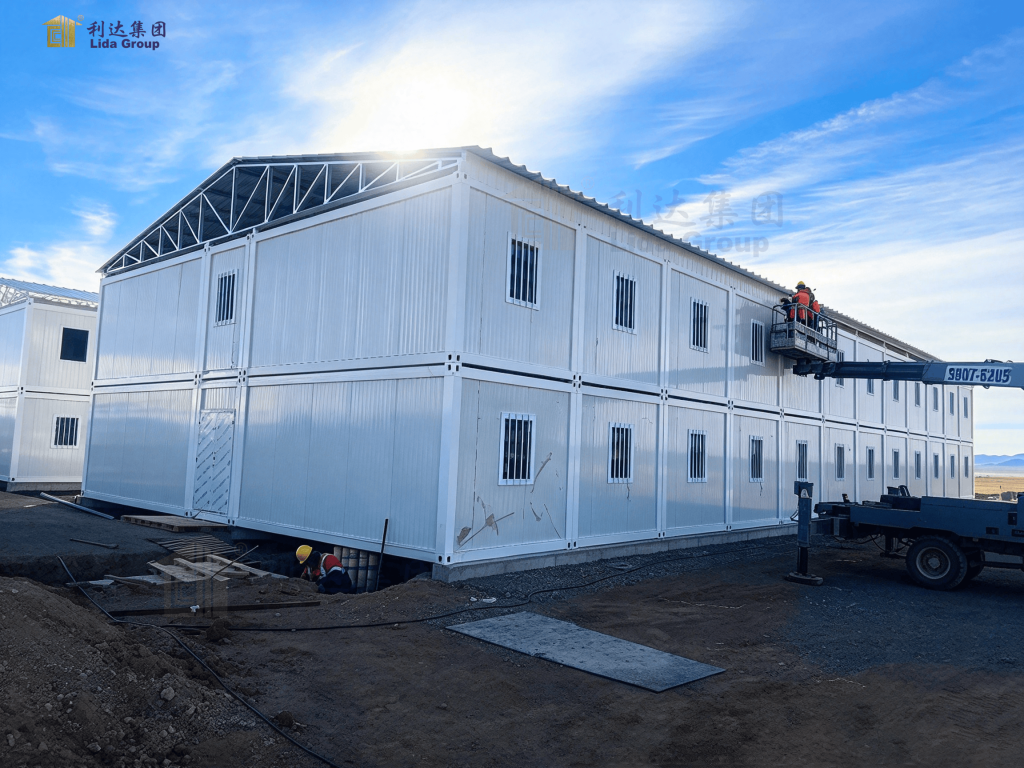
Container-based dormitories can provide practical sleeping areas, storage, washrooms, and shared facilities according to project requirements. For larger camps, accommodation units can be arranged alongside dining buildings, offices, laundry facilities, and common areas.
3.1 Thermal Insulation and Energy Efficiency
Heating and cooling can account for a significant portion of a camp’s energy demand, particularly in regions with extreme temperatures. The thermal performance of worker accommodation therefore has a direct influence on operating efficiency.
In hot climates, suitable wall and roof insulation can help reduce heat transfer from the outdoor environment. Shading, ventilation, and appropriately specified windows can further improve indoor conditions. Where air conditioning is required, an effective building envelope can help reduce cooling demand.
In cold climates, insulated panels, carefully sealed joints, suitable doors and windows, and properly designed heating systems help maintain comfortable indoor temperatures. Condensation control is also important because moisture can accumulate when warm indoor air comes into contact with cold surfaces.
The choice of insulation should reflect local climate conditions, occupancy levels, fire safety requirements, and applicable building regulations. Ventilation must also be adequate for the number of occupants and the intended use of the space.
Although insulation alone cannot guarantee low energy consumption, a well-designed building envelope can reduce unnecessary heat transfer and support more efficient operation.
3.2 Practical Layouts and Living Conditions
A comfortable camp should provide more than the minimum amount of sleeping space. Room arrangements, lighting, ventilation, privacy, and access to sanitation all influence the quality of daily life.
Container accommodation can be configured for different workforce sizes and operating schedules. Shared bedrooms may suit some project requirements, while individual rooms may be more appropriate for specific personnel or longer stays.
The wider camp layout should make it easy for workers to access washrooms, dining areas, drinking water, and other essential facilities. Residential areas should also be appropriately separated from noisy workshops, vehicle routes, and hazardous operational zones.
These considerations support worker welfare while helping camp managers organize daily activities more effectively.
4. Reducing Energy and Resource Consumption in Remote Camps
Energy and resource management are central to the environmental performance of remote field housing. In isolated locations, electricity and water may depend on local generation, transported fuel, or limited supply infrastructure. Efficient use of these resources can help reduce operating costs and logistical demands.
4.1 Efficient Heating, Cooling, and Lighting
Building insulation should be considered alongside the selection of heating, ventilation, and air conditioning systems. Equipment that is appropriately sized for the building can help avoid unnecessary energy consumption while maintaining suitable indoor conditions.
LED lighting can reduce electricity demand compared with less efficient lighting technologies. Occupancy sensors and controls may provide additional savings in areas that are not continuously used, such as storage rooms and certain shared spaces.
Where project conditions allow, renewable energy systems can complement conventional power supplies. Solar photovoltaic installations, for example, may contribute to electricity generation at suitable sites. Their effectiveness depends on solar conditions, available space, storage requirements, system design, and the camp’s energy demand.
Energy management should be based on actual operating patterns. Monitoring electricity consumption can help camp managers identify unnecessary loads and evaluate whether efficiency measures are delivering the expected results.
4.2 Responsible Water Use
Water can be a particularly valuable resource in remote desert and mining regions. Camp design should consider the availability of local water supplies, transportation requirements, sanitation needs, and the environmental conditions of the site.
Water-efficient fixtures can help reduce consumption without compromising hygiene. Regular inspection of plumbing systems can identify leaks before they result in significant losses.
Depending on local regulations and site conditions, wastewater treatment and reuse systems may also be considered. Treated wastewater may be suitable for certain non-potable applications where the treatment process, water quality, and intended use comply with applicable requirements.
Rainwater collection may provide another supplementary option in regions where rainfall is sufficient and collection systems are appropriate. However, it is unlikely to be a reliable primary water source in many arid environments.
Effective water management requires a site-specific plan that accounts for supply reliability, sanitation, treatment capacity, and environmental protection.
4.3 Waste Management and Material Efficiency
Remote camps can generate packaging waste, food waste, maintenance materials, and wastewater-related residues. Poor waste management can create environmental risks and increase the burden of transporting waste away from the site.
A well-planned camp should establish suitable collection points, separate waste streams where practical, and arrange regular removal or treatment according to local requirements.
Prefabrication may reduce certain types of on-site construction waste, but it does not eliminate waste generated during manufacturing, transportation, occupancy, or maintenance.
Selecting durable materials, maintaining building components, and reusing suitable equipment can help reduce unnecessary replacement. At the end of a building’s service life, recovery and recycling options should be evaluated according to the materials involved and the facilities available.
These measures work best when they are part of a broader environmental management plan rather than isolated actions.
5. Durable Building Systems for Harsh Field Conditions
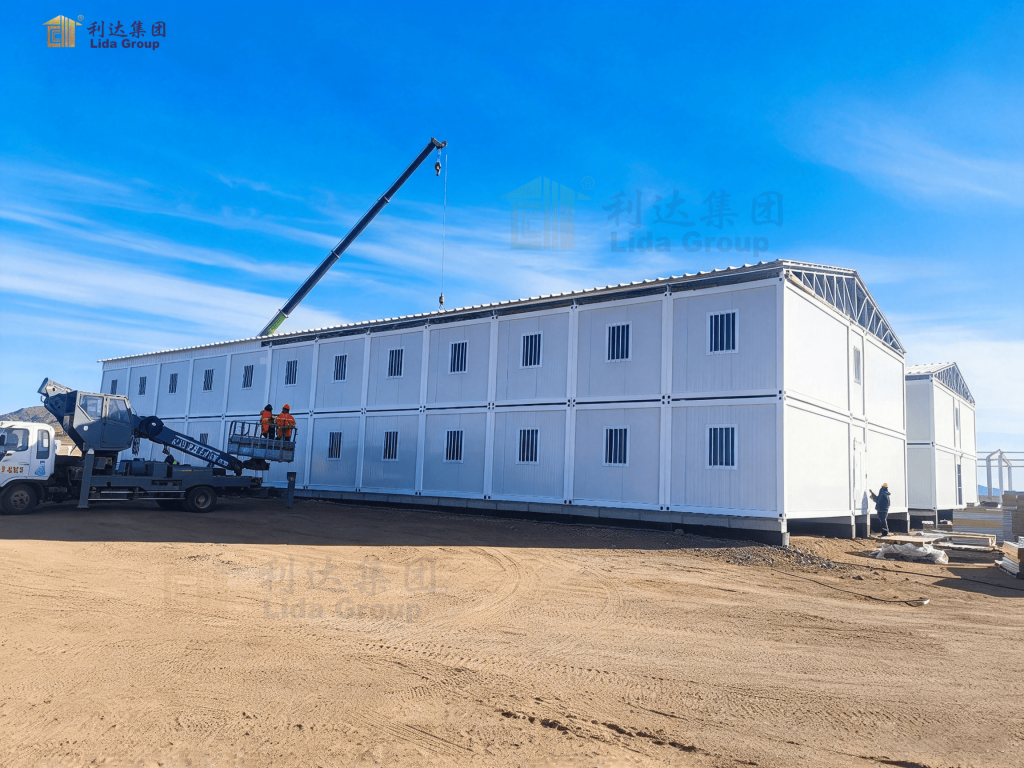
Oil and mining camps must remain functional despite environmental exposure and demanding daily use. Building durability is therefore an important part of sustainable design because premature deterioration can lead to additional repairs, replacement materials, and operational disruption.
Steel-framed and prefabricated panel systems can be suitable for a wide range of field applications when properly engineered and specified. Structural design should account for relevant wind loads, snow loads, seismic conditions, foundation requirements, and other site-specific factors.
Corrosion protection also requires attention. Humidity, saline air, industrial pollutants, and certain chemicals may affect exposed steel components. Protective coatings should be selected according to the expected exposure conditions, while drainage details and regular inspections help maintain performance.
In desert environments, dust accumulation and intense sunlight may influence maintenance requirements. In colder regions, insulation, condensation control, and the performance of exterior joints become particularly important.
Durability also depends on correct installation. Foundations, connections, anchoring arrangements, and utility penetrations must follow the approved design and applicable standards.
By selecting suitable materials and maintaining facilities throughout their intended service life, project owners can help reduce avoidable repairs and improve the overall value of their camp infrastructure.
6. Integrated Camp Planning for Better Operational Efficiency
A modern oil or mining camp is a coordinated system rather than a collection of individual buildings. Accommodation, offices, dining facilities, washrooms, storage areas, and security facilities must work together to support daily operations.
An integrated layout begins with an understanding of workforce size, movement patterns, operational hazards, and the location of essential services. Residential buildings should have convenient access to amenities while remaining appropriately separated from heavy equipment and hazardous work areas.
Roads and pedestrian routes should support safe movement, and emergency access must remain unobstructed. Drainage, lighting, waste collection, water supply, and electrical distribution should be planned across the entire site.
Lida Group’s prefabricated building solutions can be considered for different camp functions, including worker accommodation, offices, and other supporting facilities, depending on the agreed project scope.
Coordinating these buildings during the planning stage can help reduce conflicts between facilities and improve the organization of the site. It can also make future expansion easier when additional units can be incorporated into the existing layout and infrastructure.
An integrated approach helps project owners evaluate environmental performance, worker welfare, and operational efficiency together instead of treating each building as a separate investment.
7. Lifecycle Value: Looking Beyond Initial Construction Costs
The sustainability of a field housing solution should be assessed over its full service life. Initial purchase price is important, but transportation, installation, energy consumption, maintenance, and eventual disposal or reuse can also affect total cost.
Prefabricated buildings may reduce some on-site labor and material-handling requirements, although transport distances and lifting operations can influence the overall cost and environmental footprint.
Energy-efficient insulation and equipment may require a higher initial investment but can reduce operating expenses under suitable conditions. Durable finishes and regular maintenance can also help extend the useful life of building components.
Potential reuse is another consideration. If a building is designed for relocation and remains in good condition, it may be transferred to another project when the original operation ends. This can reduce the need for new facilities, although transportation, refurbishment, and reinstallation must be included in the evaluation.
Environmental claims should be supported by the actual building specification and operating data. For example, a container-based facility should not automatically be described as low-carbon, fully recyclable, or zero-waste without evidence.
A lifecycle assessment can help project owners compare different building options more objectively by considering material production, transportation, energy use, maintenance, and end-of-life management.
8. Why Choose Lida Group for Eco-Friendly Container Camp Solutions?
Selecting a supplier for remote field housing requires careful consideration of building performance, manufacturing quality, project coordination, and the requirements of the local environment.
Lida Group provides prefabricated building solutions for industrial, commercial, and infrastructure applications. Its container-based systems can be evaluated for oil and mining camps where worker accommodation, site offices, and supporting facilities are required.
The planning process should begin with a clear understanding of the project location, workforce capacity, climate, utility availability, expected service period, and applicable regulations. These factors help determine the appropriate building configuration, insulation, structural system, and internal layout.
For projects with environmental objectives, energy performance, water management, material durability, and potential reuse should be considered from the beginning. Clear technical specifications also help ensure that the selected solution aligns with operational needs and realistic performance expectations.
Transportation and installation require similar attention. Remote site access, delivery sequencing, foundation preparation, lifting equipment, and utility connections should be coordinated before the buildings are shipped.
Lida Group can help clients explore suitable prefabricated building configurations within the agreed technical and project scope. The most appropriate solution will depend on the specific requirements of each site, rather than a single standard configuration for every oil or mining operation.
By combining practical building design with thoughtful planning and responsible resource management, project owners can develop field facilities that support workforce needs and contribute to more efficient site operations.
Conclusion: Building More Sustainable Oil and Mining Camps
The development of remote oil and mining projects requires reliable accommodation and supporting infrastructure that can perform under challenging conditions. At the same time, project owners must consider energy consumption, water availability, material use, waste management, and the long-term cost of operating their facilities.
Prefabricated container buildings offer a flexible approach to establishing field housing and supporting facilities. Factory-based production can simplify certain construction activities, standardized components can improve consistency, and modular arrangements may allow facilities to expand or be reused when the building system and site conditions permit.
However, genuine sustainability depends on more than prefabrication. Appropriate insulation, durable materials, efficient utilities, responsible waste management, and effective maintenance are all essential to improving environmental performance throughout a building’s service life.
Lida Group provides prefabricated building solutions that can be considered for worker dormitories, site offices, and integrated camp facilities in oil, mining, and other industrial projects. By evaluating local conditions, workforce requirements, lifecycle costs, and environmental objectives, project owners can make more informed decisions about their field housing infrastructure.
From remote oil fields to demanding mining sites, Lida Group helps clients explore practical prefabricated container solutions designed to support comfortable accommodation, efficient operations, and more responsible resource use. With thoughtful planning and the right building specifications, field housing can become a valuable part of a more sustainable approach to remote project development.
Related news
-
Heavy-Duty Prefabricated Housing: Standardized Site Facilities for Energy Development Projects
2026-10-28 16:51:23
-
Scalable Logistics Warehouses: Optimizing Industrial Storage with Lida Steel Frame Systems
2026-10-27 15:31:40
-
Built for Remote Fields: Weather-Resistant Prefab Accommodations for Mining & Oil Operations
2026-10-22 16:18:12
contact us
- Tel: +86-532-88966982
- Whatsapp: +86-13793209022
- E-mail: sales@lidajituan.com
