



Eco-Friendly Sandwich Panel House Provides Comfortable Construction Site Worker Dormitory by Lida Group
2026-Apr-27 10:00:35
By Admin
The booming global construction industry generates massive demand for standardized temporary supporting facilities, among which construction site worker dormitories are indispensable basic infrastructure. The living environment of construction workers directly affects physical health, mental state, work efficiency and team stability, further influencing project construction progress and overall quality. For a long time, most traditional construction site dormitories adopt crude building materials and backward construction techniques. Wooden cabins, ordinary color steel houses and simple masonry temporary buildings are widely used, yet they expose prominent drawbacks including poor environmental performance, insufficient thermal insulation, weak weather resistance, single function and serious resource waste. Most traditional temporary buildings fail to balance environmental friendliness, living comfort, construction cost and structural durability, resulting in poor worker accommodation experience and frequent resource consumption and environmental pollution problems during construction and demolition.
With the global construction industry accelerating its transformation toward green development, low-carbon emission and refined management, temporary construction facilities are no longer regarded as disposable auxiliary projects. Construction enterprises and industry regulatory authorities have put forward higher requirements for the environmental protection performance, living comfort, structural safety and reusable value of worker dormitories. As a world-leading manufacturer and solution provider of modular green prefabricated buildings, Lida Group has long focused on the upgrading and innovation of temporary building materials and structures. Centering on market demand and industry pain points, Lida Group independently develops and optimizes eco-friendly sandwich panel materials and supporting modular building systems, applying mature sandwich panel house technology to construction site worker dormitory construction. This innovative solution thoroughly optimizes the comprehensive performance of temporary dormitories, perfectly balancing green environmental protection, comfortable living, low construction cost and long service life, and has become a new benchmark for modern construction site worker accommodation.
Eco-friendly sandwich panels are core functional building materials specially developed by Lida Group for temporary modular buildings. Different from ordinary building panels on the market with single performance and poor environmental adaptability, Lida Group’s customized sandwich panels adopt a three-layer composite structure, integrating galvanized steel outer plates, high-performance flame-retardant and thermal insulation core materials and anti-formaldehyde environmentally friendly inner plates. Through automated factory integrated production, the panels realize multiple excellent properties including energy saving, environmental protection, thermal insulation, sound insulation, fire resistance, waterproofing and mold prevention. When applied to worker dormitories, these eco-friendly sandwich panels completely subvert the crude design of traditional temporary buildings, effectively improving indoor living conditions for construction workers, reducing the environmental impact of temporary building construction, and helping construction enterprises achieve green construction, cost control and worker welfare upgrading simultaneously.
1. Deficiencies of Traditional Construction Site Worker Dormitories
To fully recognize the innovative value of Lida Group’s eco-friendly sandwich panel dormitories, it is essential to analyze the inherent deficiencies of traditional temporary worker dormitories. For decades, construction enterprises have prioritized low upfront costs and rapid construction progress for temporary facilities, ignoring long-term living quality, environmental protection benefits and reusable value. Most traditional dormitories have obvious defects in environmental performance, living comfort, structural safety and economic efficiency, restricting the standardized development of construction site management.
In terms of environmental protection, traditional temporary buildings cause serious resource waste and environmental pollution. Wooden dormitories consume a large amount of natural wood resources and are prone to rot and discard after short-term use. Ordinary color steel plate dormitories use low-quality adhesive and foam core materials containing formaldehyde and other harmful substances, which will volatilize toxic gases for a long time after installation, polluting indoor air and endangering workers’ physical health. In addition, most traditional temporary buildings are disposable structures. After the completion of construction projects, the buildings are directly demolished and scrapped, generating a large amount of construction waste that is difficult to recycle, causing continuous pressure on the ecological environment and failing to meet the global construction industry’s ESG green assessment standards.
In terms of living comfort, traditional dormitories have poor comprehensive functional performance. Ordinary color steel plates have single thermal insulation performance, failing to isolate external extreme temperatures effectively. In high-temperature summer, indoor temperature rises sharply, while in cold winter, indoor heat dissipates rapidly, resulting in sweltering and freezing living environments throughout the year. Meanwhile, traditional panel structures have weak sound insulation effects, unable to block external construction noise and outdoor wind noise, seriously affecting workers’ rest quality. Moreover, low-quality building panels are prone to water seepage, wall peeling and mold growth in humid and rainy environments, leading to damp and unsanitary indoor spaces and easily triggering respiratory and skin diseases among resident workers.
In terms of structural safety and economy, traditional dormitories have low structural stability and high comprehensive life-cycle costs. Ordinary temporary building panels have low structural strength, poor wind resistance and seismic performance, and cannot resist extreme weather such as strong winds, rainstorms and sandstorms, bringing potential safety hazards. In terms of cost, although traditional dormitories have low one-time construction investment, they require frequent maintenance, renovation and replacement. The disposable design leads to repeated construction investment for subsequent new projects, resulting in extremely high comprehensive operating costs for construction enterprises.
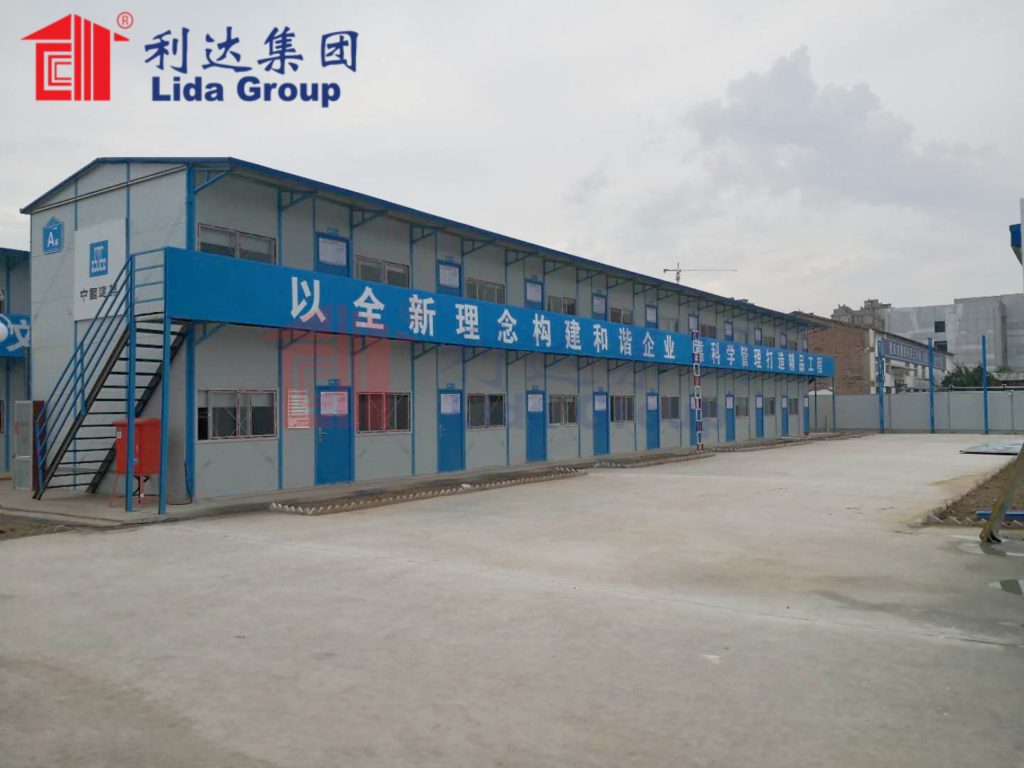
2. Structural Composition and Core Properties of Lida Group’s Eco-Friendly Sandwich Panels
Lida Group’s eco-friendly sandwich panel is a customized composite green building material independently developed for temporary worker dormitories. Adopting a mature three-layer sandwich composite structure, the panel takes high-strength galvanized steel plate as the outer protective layer, high-density flame-retardant rock wool or EPS as the middle core layer, and environmentally friendly color-coated steel plate as the inner decorative layer. All raw materials meet international environmental protection and building safety standards, free of formaldehyde, benzene and other volatile harmful substances. Through automated pressing, bonding and integral forming technology in standardized factories, the sandwich panel achieves perfect integration of multiple excellent performances, providing reliable material support for comfortable, safe and green worker dormitories.
2.1 Outer Galvanized Steel Protective Layer
The outer layer of the sandwich panel adopts high-grade hot-dip galvanized color steel plate with uniform and dense zinc coating. After special anti-corrosion, anti-oxidation and weather-resistant coating treatment, the steel plate has excellent external protection performance. It can effectively resist external impact, rainwater erosion, ultraviolet radiation and salt spray corrosion, avoiding wall fading, rusting and deformation caused by long-term outdoor exposure. Professional tests prove that the outer steel plate can adapt to extreme climates ranging from minus 40 degrees Celsius to 50 degrees Celsius, with stable physical properties and no aging failure within 25 years. This durable protective layer greatly improves the outdoor environmental adaptability of worker dormitories and reduces daily maintenance frequency and costs.
2.2 Middle Energy-Saving and Flame-Retardant Core Layer
The middle core layer is the key functional layer that determines the thermal insulation, sound insulation and fire resistance of sandwich panels. Lida Group selects high-density flame-retardant rock wool or environmentally friendly EPS foam as core materials according to different regional climate characteristics and project safety requirements. Rock wool core materials have excellent fireproof and flame-retardant performance, reaching international A1-level fire protection standard, which can effectively block flame spread and avoid fire safety hazards on construction sites. The porous internal structure of rock wool and EPS materials can form an effective air insulation layer, greatly reducing indoor and outdoor heat exchange. In summer, it blocks external high temperature from entering the room, and in winter, it locks indoor heat, realizing constant indoor temperature and reducing workers’ dependence on air conditioning and heating equipment. Meanwhile, the porous structure can absorb external noise waves, effectively isolating construction site noise and creating a quiet rest environment for workers.
2.3 Inner Environmentally Friendly Decorative Layer
Different from ordinary low-quality inner wall panels on the market, Lida Group’s sandwich panel inner layer adopts formaldehyde-free environmentally friendly color-coated steel plates with smooth and flat surfaces and anti-mold and antibacterial coatings. The material does not volatilize any harmful substances during long-term use, ensuring clean and safe indoor air quality and effectively protecting workers’ physical health. In addition, the inner wall panel has excellent anti-fouling performance, which can avoid wall contamination and mold growth in humid environments. The neat and uniform wall appearance optimizes the indoor living atmosphere, completely changing the crude and messy indoor environment of traditional worker dormitories.
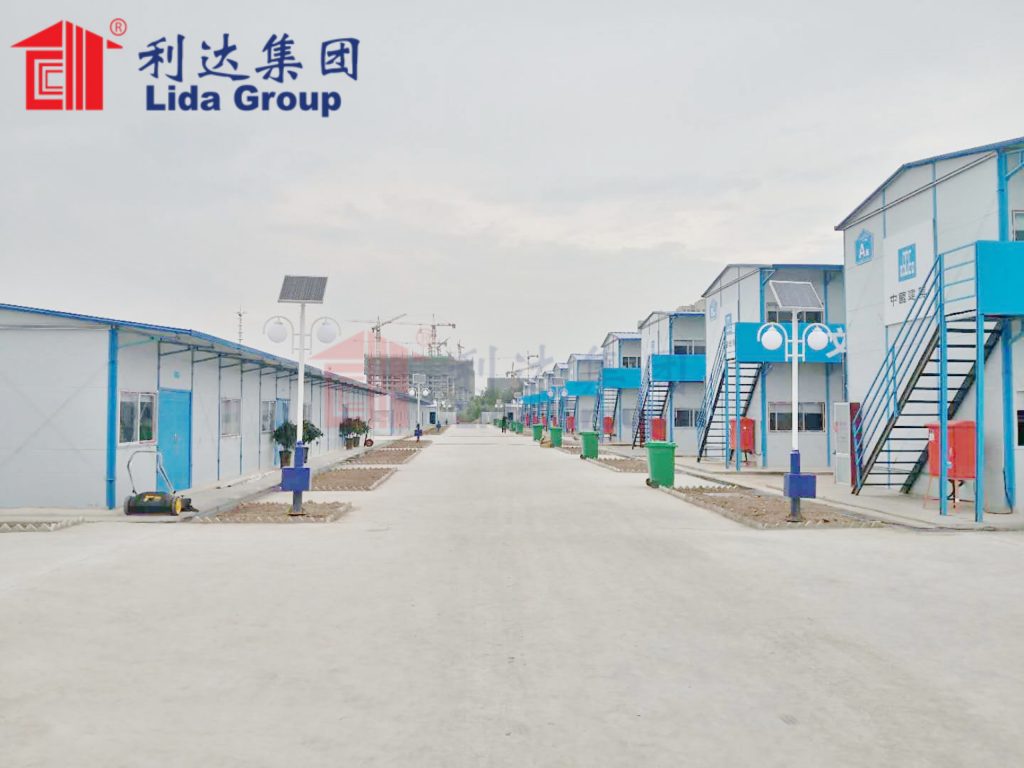
3. Comprehensive Advantages of Eco-Friendly Sandwich Panel Worker Dormitories
Supported by high-performance eco-friendly sandwich panel materials and matched modular assembly technology, Lida Group’s worker dormitories have achieved comprehensive upgrades in environmental protection performance, living comfort, structural safety, construction efficiency and economic benefits, solving multiple industry pain points of traditional temporary dormitories and bringing diversified value to construction enterprises and construction workers.
3.1 Superior Green and Low-Carbon Environmental Performance
Environmental protection is the core competitive advantage of Lida Group’s sandwich panel dormitories. All raw materials of the panels are environmentally friendly and non-toxic, complying with international green building material standards, with zero formaldehyde emission and no environmental pollution during use. Different from traditional disposable temporary buildings, Lida’s sandwich panels adopt modular detachable design. After the completion of construction projects, all intact panels can be disassembled, transported and reused in new projects, with extremely low material loss rate and nearly zero construction waste during disassembly and reconstruction. The factory centralized production mode avoids dust pollution, noise pollution and material waste caused by on-site cutting and processing of traditional building materials. In addition, the excellent thermal insulation performance of sandwich panels reduces the energy consumption of indoor temperature adjustment throughout the year, cutting building carbon emissions and helping construction enterprises meet global green construction and ESG assessment requirements.
3.2 Significant Improvement of Worker Living Comfort
Lida Group’s eco-friendly sandwich panels comprehensively optimize the indoor living environment from multiple dimensions such as temperature, noise, air quality and sanitary conditions. The efficient thermal insulation structure maintains stable indoor temperature all year round, avoiding extreme cold and heat and improving living comfort. The professional sound insulation structure can isolate more than 80% of external construction noise and outdoor wind noise, ensuring a quiet rest environment for workers after long working hours. The formaldehyde-free and anti-mold design keeps indoor air fresh and walls clean, effectively reducing the incidence of respiratory and skin diseases among workers. Combined with standardized dormitory layout, sufficient lighting and ventilation design and complete supporting sanitary facilities, the sandwich panel dormitories greatly improve workers’ sense of happiness and belonging, reduce enterprise personnel turnover, and stabilize construction teams.
3.3 Reliable Structural Safety and Strong Environmental Adaptability
Matched with Lida Group’s optimized galvanized steel frame structure, eco-friendly sandwich panels form an integral stable building system. The panel and steel frame are tightly connected through standardized fasteners, with good overall rigidity and strong wind resistance, seismic resistance and pressure resistance. Professional tests verify that the overall structure can resist level 12 strong winds and magnitude 8 earthquakes, adapting to complex and harsh construction site environments such as deserts, plateaus, coastal areas and mountainous regions. The panels have excellent waterproof, anti-corrosion and anti-aging performance, free of water seepage, rust and deformation after long-term outdoor use, effectively eliminating potential safety hazards of traditional dormitories and ensuring the personal safety of resident workers.
3.4 Efficient Construction and Excellent Economic Benefits
Lida Group’s sandwich panel dormitories adopt full modular prefabricated construction. All panels and supporting components are produced in automated factories and transported to the construction site for direct assembly, without on-site concrete pouring, painting and other wet operations. The construction efficiency is more than 50% higher than that of traditional temporary buildings, and a complete worker dormitory cluster can be completed in a short cycle, meeting the rapid accommodation demand of construction projects. In terms of comprehensive cost, standardized mass production reduces the unit cost of sandwich panels. The reusable design avoids repeated construction investment, and excellent anti-aging performance reduces daily maintenance costs by more than 60%. Calculated based on a 25-year service life, the comprehensive annual use cost of Lida’s sandwich panel dormitories is far lower than that of traditional disposable dormitories, effectively reducing the auxiliary operating costs of construction enterprises.

4. Practical Global Engineering Application Cases
Lida Group’s eco-friendly sandwich panel worker dormitories have been widely promoted and applied in global construction projects, covering infrastructure construction, municipal engineering, mining development, oil and gas engineering and other fields. A large number of practical engineering cases have fully verified the stability, environmental friendliness and comfort of the product.
In a large-scale municipal road renovation project in Southeast Asia, the construction site is located in an urban built-up area with strict local environmental protection policies and high requirements for construction noise control and green construction. Meanwhile, the local climate is hot and rainy all year round, putting forward high requirements for the waterproof performance, thermal insulation performance and environmental protection level of worker dormitories. The project team abandoned traditional ordinary color steel dormitories and chose Lida Group’s eco-friendly sandwich panel modular dormitories. The rock wool sandwich panels adopted by the project have excellent fire resistance, waterproofing and thermal insulation effects. During the 3-year project cycle, the dormitories maintained stable indoor temperature, effectively isolated urban noise and construction noise, and no wall mold or water seepage occurred. The formaldehyde-free environmentally friendly materials ensured healthy indoor air, greatly improving worker living comfort. After the project was completed, all dormitory panels were disassembled and reused in another suburban infrastructure project, saving nearly 35% of the enterprise’s temporary accommodation investment and helping the project successfully pass the local green construction assessment.
In an open-pit coal mining project in Central Asia, the construction site is located in a remote desert area with strong ultraviolet radiation, frequent sandstorms and large day and night temperature differences. Traditional temporary dormitories are prone to aging, fading, deformation and sand leakage, with poor living conditions and frequent maintenance. Lida Group provided customized eco-friendly sandwich panel dormitory solutions for the project. The outer steel plates of the panels were treated with enhanced weather resistance and anti-sand coating, and the high-density core materials optimized thermal insulation and dustproof performance. During the 5-year project cycle, the dormitories withstood long-term strong wind and sand erosion and extreme temperature changes without structural failure or performance attenuation. The quiet, constant-temperature and clean indoor environment effectively reduced worker fatigue, improved team stability, and significantly reduced worker turnover and project auxiliary costs.
5. Market Value and Industry Influence
With the continuous upgrading of global green construction standards and the increasing attention paid to construction worker welfare, traditional crude temporary dormitories can no longer meet the standardized development needs of the construction industry. Lida Group’s eco-friendly sandwich panel dormitories break through the performance limitations of traditional temporary building materials. By integrating environmental protection, comfort, safety and economy, they provide a standardized and mature solution for modern construction site worker accommodation.
For construction enterprises, this innovative product effectively reduces project auxiliary costs and resource waste, improves project green construction level and ESG assessment scores, and optimizes enterprise brand image. For construction workers, eco-friendly materials and optimized building performance create a safe, healthy and comfortable living environment, fully protecting workers’ legitimate rights and interests and improving worker well-being. For the entire construction industry, the popularization of Lida Group’s sandwich panel dormitories promotes the iterative upgrading of temporary building materials, accelerates the transformation of temporary construction facilities from disposable consumables to reusable green assets, and drives the overall standardized, green and humanized development of the global construction industry.
At present, Lida Group’s eco-friendly sandwich panel dormitory solutions have been exported to more than 120 countries and regions worldwide, widely recognized by international construction enterprises and engineering supervision institutions, and have gradually become the mainstream standard configuration for global construction site worker temporary accommodation.
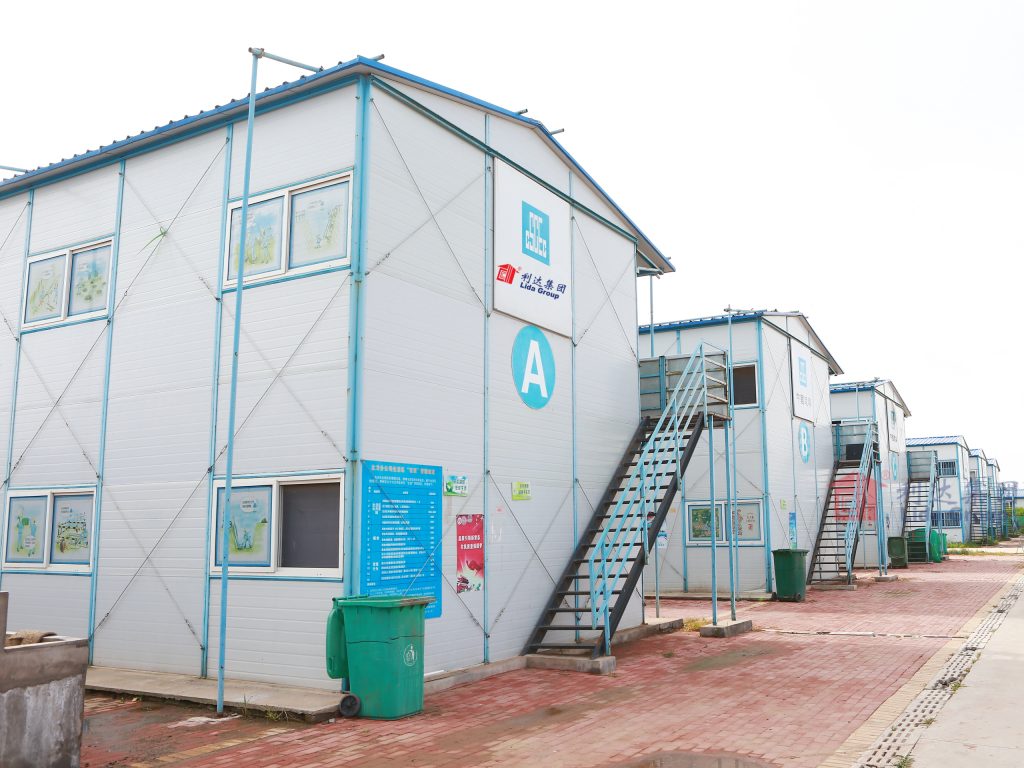
6. Conclusion
Traditional construction site worker dormitories have long restricted the green upgrading and refined management of the construction industry due to their non-environmental materials, poor living comfort, insufficient structural safety and high comprehensive cost. As a leading enterprise in the global modular green building industry, Lida Group relies on independent material research and development and innovative structural design to launch high-performance eco-friendly sandwich panel houses, which perfectly solve various pain points of traditional temporary worker accommodation.
Lida Group’s customized eco-friendly sandwich panels adopt a three-layer composite structure with formaldehyde-free, non-toxic and recyclable raw materials, featuring excellent environmental protection, thermal insulation, sound insulation, fire resistance and weather resistance. Combined with modular detachable assembly technology, the sandwich panel dormitories realize low-carbon construction, zero-pollution use and recyclable reuse, effectively reducing the carbon footprint of construction site temporary facilities. Meanwhile, the optimized thermal insulation and noise reduction performance comprehensively improves workers’ living comfort, stabilizes construction teams, guarantees project construction quality and progress, and creates considerable economic and social value for construction enterprises.
A large number of global engineering practices have verified that Lida Group’s eco-friendly sandwich panel worker dormitories have irreplaceable comprehensive advantages compared with traditional temporary buildings. They balance green environmental protection, humanized comfort, structural safety and economic efficiency, providing a reliable and replicable standardized solution for modern construction site worker accommodation. In the future, Lida Group will continue to increase investment in green building material research and development, continuously optimize the performance and intelligence level of sandwich panel products, further lead the upgrading of global temporary building standards, empower the high-quality sustainable development of the construction industry, and create safer, greener and more comfortable living environments for global construction workers.
Related news
-
Lida Group's Low-Cost Durable Building Technology Transforms Construction Site Worker Dormitory
2026-04-27 09:41:10
-
Achieve Green Workforce Housing with Eco-Friendly Sandwich Panel House and Worker Dormitory
2026-04-24 17:53:21
-
Lida Group Combines Affordability and Eco-Design in Construction Site Worker Dormitory
2026-04-24 17:37:08
contact us
- Tel: +86-532-88966982
- Whatsapp: +86-13793209022
- E-mail: sales@lidajituan.com
