



Rapid Deployment of Construction Site Worker Dormitory Using Lida Group’s Low-Cost Durable Building
2026-Apr-27 10:20:01
By Admin
The global construction industry is defined by tight project schedules, dynamic workforce scales, and complex on-site operational demands. Almost all infrastructure, municipal, mining, and engineering projects require complete temporary supporting facilities to accommodate on-site construction workers before formal construction commences. Worker dormitories serve as essential temporary infrastructure that guarantees workers’ daily rest, physical health, and team stability, directly determining whether construction projects can start on schedule and proceed steadily. However, traditional on-site dormitory construction has long been a bottleneck for project progress. Conventional brick-and-mortar buildings, wooden cabins, and simple painted steel temporary structures require lengthy on-site construction cycles, massive manual labor, and high material investment. Most traditional dormitories take two to three months to complete, which easily delays project initiation and generates additional time costs for construction enterprises.
Beyond slow deployment speed, traditional construction site dormitories also suffer from dual defects of high comprehensive cost and poor durability. Disposable temporary buildings cannot be reused after project completion, resulting in repeated construction investment and massive construction waste. Low-strength building materials are vulnerable to rain erosion, wind and sand impact, and ultraviolet aging under open-air site environments, leading to frequent structural failures and high daily maintenance expenses. In the context of modern construction’s pursuit of schedule optimization, cost control, green development, and refined management, the construction industry urgently needs innovative temporary building solutions that integrate rapid deployment, low cost, long durability, and flexible reuse. As a global pioneer in modular prefabricated buildings, Lida Group launches low-cost durable building systems specially customized for construction site worker dormitories, realizing ultra-fast on-site deployment while ensuring low life-cycle costs and stable structural durability, completely solving the schedule and cost pain points of traditional temporary accommodation construction.
Different from traditional building modes that rely on full on-site pouring and assembly, Lida Group’s low-cost durable building adopts a mature “factory prefabrication + rapid on-site assembly” modular construction model. All building modules, including steel frame structures, wall panels, roof systems, floors, and internal supporting facilities, are fully manufactured, assembled, and tested in standardized automated factories. After finished products are transported to construction sites, workers only need to complete positioning, hoisting, fixed connection, and basic water and electricity docking to put dormitories into use. This innovative deployment mode shortens the overall construction cycle by more than 60% compared with traditional processes. Combined with optimized lightweight high-strength materials and detachable reusable structural design, it achieves the perfect integration of rapid deployment, low construction cost, long service life, and flexible relocation, becoming the standard solution for modern construction site worker dormitory construction worldwide.
1. Bottlenecks of Traditional Dormitory Deployment and Construction
To fully reflect the innovative advantages of Lida Group’s low-cost durable building technology in rapid dormitory deployment, it is necessary to analyze the inherent bottlenecks of traditional temporary dormitory construction. For decades, constrained by backward building technologies and single structural designs, traditional construction site worker dormitories have prominent deficiencies in deployment efficiency, economic benefits, structural durability, and environmental adaptability, which restrict the standardized operation of construction projects.
In terms of deployment efficiency, traditional temporary buildings rely heavily on on-site wet construction and manual assembly. Brick-and-mortar dormitories require foundation pouring, brick laying, wall plastering, surface painting, and facility installation, involving multiple complex construction procedures and long curing cycles. Affected by outdoor weather such as rainfall, strong wind, and low temperature, on-site construction is often interrupted, further delaying project progress. Even ordinary color steel plate temporary cabins require manual cutting, welding, and on-site splicing, with a construction cycle of 30 to 90 days. Slow dormitory deployment leads to delayed worker settlement, resulting in postponed project commencement, idle construction equipment, and invisible economic losses for construction enterprises.
In terms of economic efficiency, traditional dormitory construction has low upfront cost transparency and extremely high comprehensive life-cycle costs. Traditional building processes require a large number of on-site construction workers, generating high labor costs. On-site cutting and processing cause serious material waste, raising unit material consumption costs. More importantly, most traditional temporary buildings adopt fixed non-detachable structures. After the completion of a single construction project, buildings can only be demolished and scrapped instead of being reused. Repeated construction for different projects brings continuous economic pressure to construction enterprises. In addition, low-quality building materials lead to poor structural durability. Traditional dormitories are prone to water leakage, wall cracking, steel rust, and mold growth after one to two years of use, requiring frequent maintenance and renovation.
In terms of flexibility and adaptability, traditional dormitories have fixed structural scales and poor scalability. Construction project teams often expand or shrink according to project progress stages, but traditional fixed dormitory buildings cannot adjust accommodation capacity flexibly. Excess dormitory space causes resource waste, while insufficient space affects worker settlement. Moreover, many construction projects are located in remote mountainous areas, desert regions, or coastal tidal flat zones with harsh terrain and limited construction conditions. Traditional complex construction processes cannot adapt to poor on-site environments, making it difficult to build qualified worker dormitories efficiently.
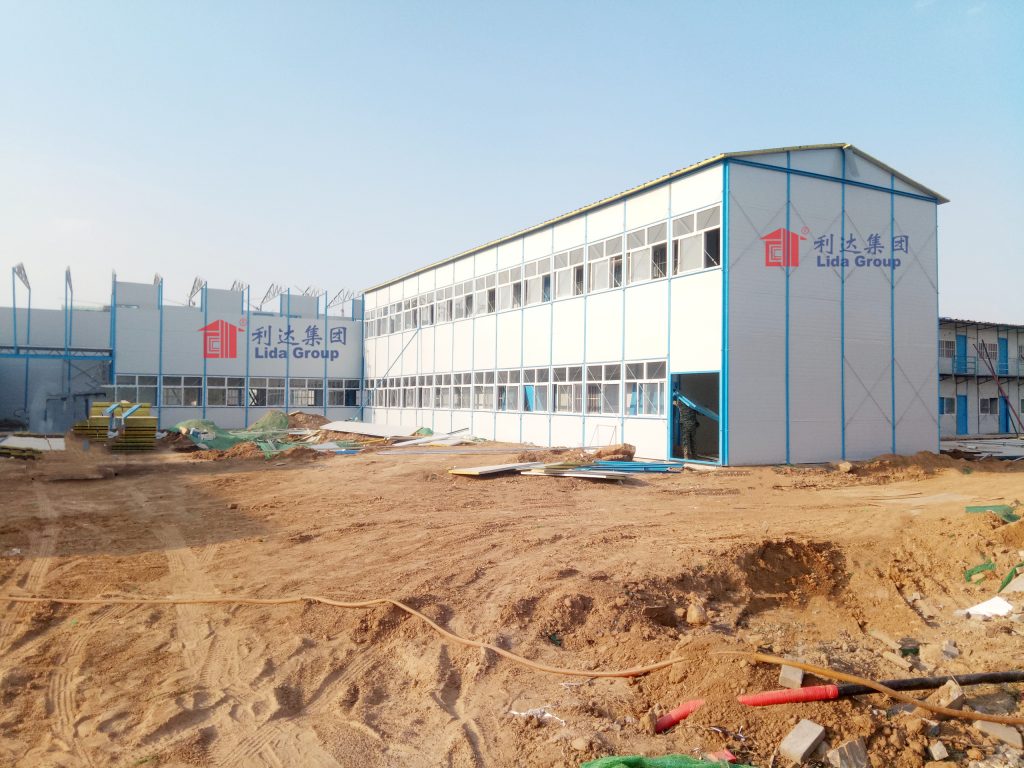
2. Core Technical Support for Rapid Deployment of Lida Group’s Low-Cost Durable Buildings
Lida Group’s ability to realize ultra-rapid deployment of worker dormitories without sacrificing cost control and structural durability stems from independently developed modular building systems and optimized building technologies. Centering on the core demands of fast delivery, low investment, long service life, and flexible reuse, Lida Group optimizes structural design, material selection, production processes, and assembly methods in an all-round way, forming a set of mature, stable, and replicable low-cost durable building technologies that support efficient deployment of worker dormitories under various complex construction site conditions.
2.1 Standardized Modular Prefabrication Technology
Standardized modular prefabrication is the core technology to realize rapid dormitory deployment. Lida Group unifies the dimensional standards, structural specifications, and connection modes of all dormitory components, including steel frames, wall panels, roof trusses, floors, doors, windows, and internal facilities. All standardized modules are mass-produced in automated factory production lines. Different from scattered on-site construction of traditional buildings, factory centralized production realizes parallel operation of component manufacturing, quality testing, and site foundation preparation. While construction teams tidy up the site and complete basic foundation treatment, factories finish the production and pre-assembly of all dormitory modules, greatly compressing the overall project cycle.
Each independent dormitory module is a fully finished integrated unit after factory production, with completed interior decoration, circuit wiring, water pipeline layout, and basic supporting facilities. After being transported to the construction site, modules do not need secondary processing, painting, or wet construction. Workers only need to complete hoisting, docking, and fixed installation. A standard single-layer dormitory unit can be fully installed and put into use within 24 hours, and a medium-sized dormitory cluster accommodating 200 workers can be completed within 7 to 10 days, which is far more efficient than traditional temporary building construction.
2.2 Lightweight High-Strength Durable Structural Design
To balance rapid assembly and long-term durability, Lida Group adopts optimized cold-formed hot-dip galvanized steel frame structures. Compared with heavy traditional steel structures, the lightweight steel frame reduces overall building weight by more than 30%, lowering hoisting difficulty and transportation costs and adapting to various complex terrain and limited construction conditions. All steel components undergo professional hot-dip galvanizing anti-corrosion treatment, with stable physical properties and strong resistance to oxidation, rust, rain erosion, and ultraviolet aging. The optimized stress structure verified by finite element analysis ensures that the lightweight frame has excellent wind resistance, seismic resistance, and pressure resistance.
Matching with the steel frame structure is Lida Group’s high-strength composite sandwich wall panels. The integrated panels integrate waterproof, thermal insulation, fireproof, and anti-aging functions. The integral forming process avoids loose assembly of multiple components of traditional walls, effectively improving overall structural stability. The combination of lightweight steel frames and composite panels ensures that the dormitory structure has a service life of more than 25 years, realizing long-term durable use while supporting rapid deployment.
2.3 Detachable Quick-Connection Assembly Technology
Traditional temporary buildings mostly adopt welding and fixed connection structures, which are difficult to disassemble and reuse. Lida Group innovates full quick-connection assembly design for dormitory modules. All component connections adopt standardized bolt fasteners and embedded docking structures without on-site welding, cutting, and painting operations. The simplified assembly process reduces on-site technical threshold and labor demand. Ordinary construction workers can complete module assembly after simple training, avoiding delays caused by insufficient professional technicians.
This detachable quick-connection design not only improves deployment speed but also realizes flexible disassembly, relocation, and secondary reuse of dormitories. After the completion of construction projects, all complete modules can be quickly disassembled, transported to new construction sites, and reassembled. The loss rate of secondary assembly components is lower than 5%, which fundamentally solves the disposable defect of traditional temporary buildings and greatly reduces the average use cost of worker dormitories throughout the life cycle.
2.4 Minimal Foundation Adaptation Technology
Most construction sites, especially remote engineering projects, have uneven terrain and poor foundation conditions, requiring complex foundation treatment for traditional buildings and consuming a lot of time and funds. Lida Group’s low-cost durable dormitories adopt lightweight overall structural design with low requirements for foundation bearing capacity. The buildings can adapt to flat cement ground, gravel ground, and compacted soil ground only through simple leveling and fixed support, without complex foundation pouring and long curing cycles. The minimal foundation treatment mode saves a large amount of foundation construction time and investment, further accelerating the overall deployment progress of worker dormitories and adapting to various harsh construction site environments.
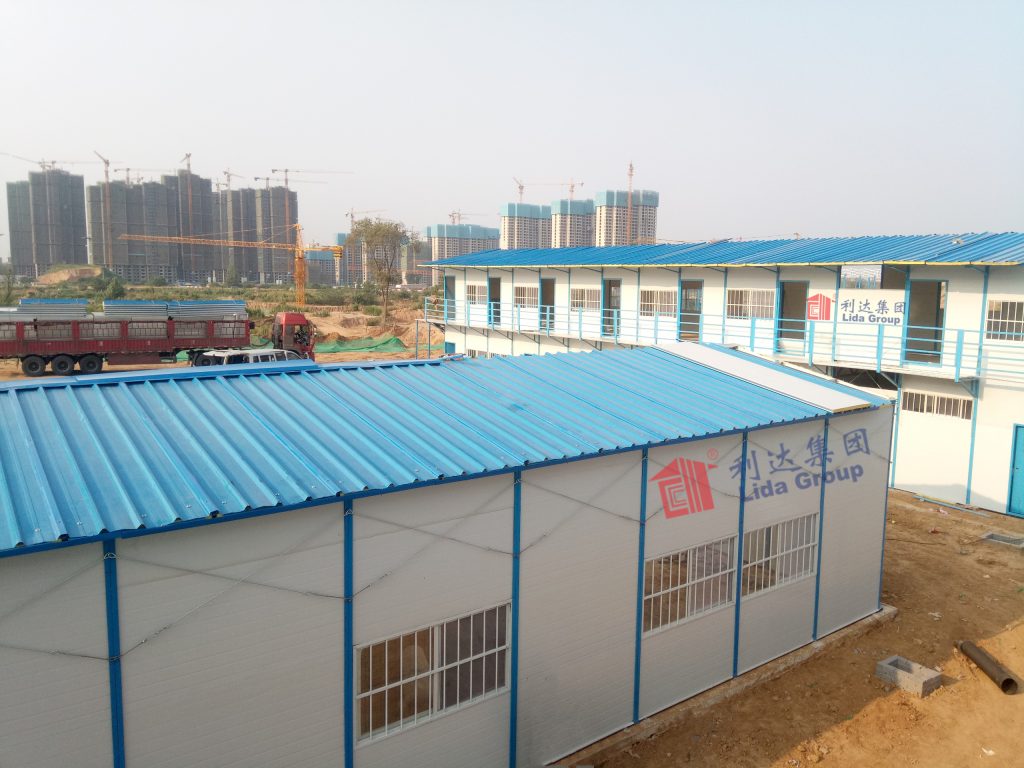
3. Comprehensive Core Advantages of Rapidly Deployable Low-Cost Durable Dormitories
Supported by the above series of innovative building technologies, Lida Group’s construction site worker dormitories form comprehensive competitive advantages in deployment efficiency, economic benefits, structural safety, environmental adaptability, and flexible scalability, effectively solving various pain points of traditional temporary accommodation and bringing multi-dimensional value to modern construction project management.
3.1 Ultra-Fast Deployment to Shorten Project Preparation Cycles
Deployment efficiency is the most prominent advantage of Lida Group’s modular dormitories. Compared with the 30-90 day construction cycle of traditional temporary dormitories, Lida’s dormitory clusters can be fully deployed and occupied within 7 to 15 days. The parallel operation of factory production and on-site foundation preparation maximizes time compression. The simplified quick-connection assembly process avoids the impact of bad weather and insufficient labor on construction progress. Fast worker settlement ensures that construction teams can enter the site and start work on schedule, eliminating idle costs of construction machinery and personnel, effectively shortening the overall project preparation cycle, and improving project operation efficiency for construction enterprises.
3.2 Full Life-Cycle Low-Cost Economic Advantages
Lida Group’s building technology realizes comprehensive cost control from upfront construction, transportation, and assembly to later maintenance and repeated use. Standardized mass factory production reduces unit material and production costs. The lightweight structure lowers transportation and hoisting expenses. The simplified assembly process cuts on-site labor investment by more than 40%. Compared with traditional qualified temporary dormitories, the upfront construction cost is reduced by 25% to 35%. In the later use stage, excellent anti-corrosion, waterproof, and anti-aging performance reduces annual maintenance and renovation costs by more than 60%. Most importantly, the reusable modular structure enables a single set of dormitory facilities to serve multiple construction projects. Calculated based on a 25-year service life, the average annual use cost is only one-third of that of traditional disposable dormitories, greatly optimizing the auxiliary operating costs of construction projects.
3.3 Stable Durability and High Safety Performance
Speed and cost reduction do not come at the expense of structural safety and durability. Lida Group’s low-cost durable dormitories strictly comply with international temporary building safety specifications. The hot-dip galvanized steel frame has stable bearing capacity, and the integrated composite wall panels have excellent fire resistance, waterproofing, and weather resistance. Professional tests verify that the overall structure can resist level 12 strong winds, magnitude 8 earthquakes, and extreme temperature environments ranging from minus 40 degrees Celsius to 50 degrees Celsius. It can stably adapt to harsh environments such as desert sandstorms, coastal salt spray erosion, and plateau low temperature, avoiding structural deformation, water leakage, rust, and other common failures of traditional dormitories, ensuring long-term safe operation and reliable worker accommodation safety.
3.4 Flexible Scalability and Strong On-Site Adaptability
Lida Group’s modular dormitories have flexible assembly and disassembly capabilities. Construction enterprises can freely increase or decrease dormitory modules according to project progress and dynamic changes in the number of workers, realizing flexible expansion and contraction of accommodation scale and avoiding resource waste caused by excessive construction or accommodation shortage caused by insufficient construction. Meanwhile, the minimal foundation requirements and lightweight structure enable the dormitories to be deployed in various complex terrains including mountainous areas, deserts, coastal zones, and urban compact construction sites, with far stronger environmental adaptability than traditional fixed temporary buildings.
3.5 Green Construction and Low Carbon Emission
The full modular assembly mode realizes green construction with almost zero on-site construction waste. All building components can be disassembled and reused, avoiding the environmental pollution and resource waste caused by demolition of traditional disposable dormitories. Factory centralized production reduces on-site dust and noise pollution. The high-efficiency thermal insulation structure reduces energy consumption for indoor temperature adjustment, lowering daily carbon emissions. While realizing rapid deployment and low-cost operation, the dormitories help construction enterprises meet ESG green assessment standards and promote the sustainable development of construction projects.
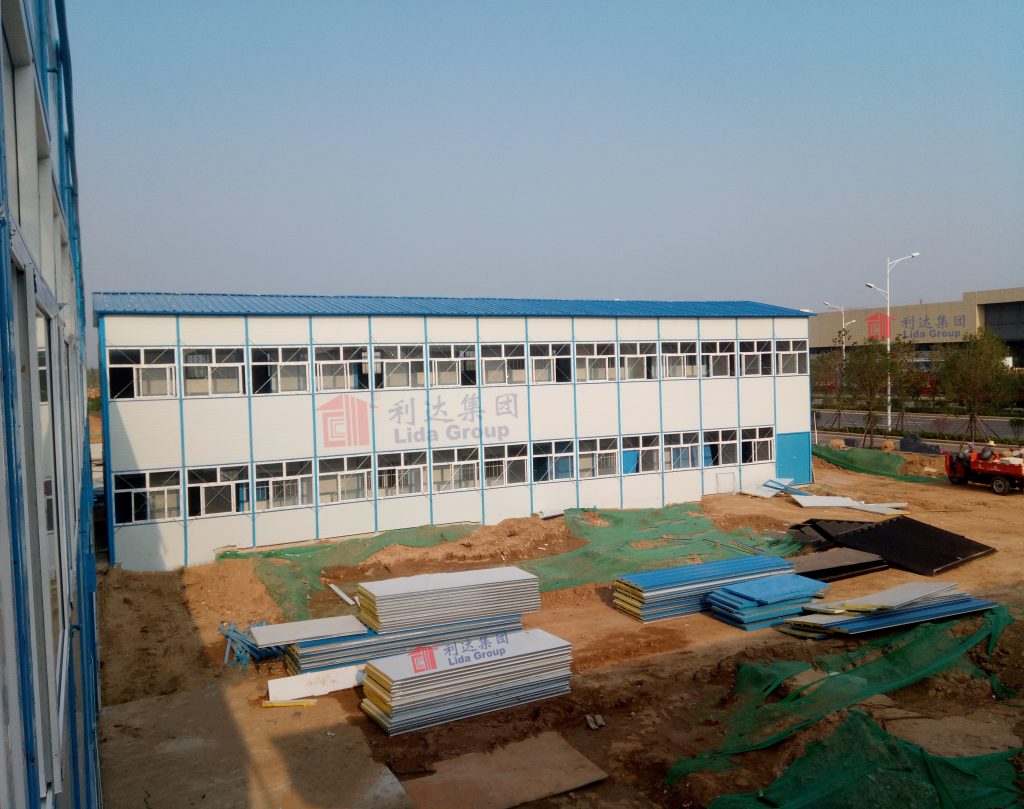
4. Global Engineering Application Cases
Lida Group’s rapidly deployable low-cost durable worker dormitories have been widely applied in global construction projects, covering infrastructure, municipal engineering, oil and gas development, mining construction, and other fields. A large number of practical engineering cases fully verify the reliability, efficiency, and economy of the building system.
In a cross-border railway infrastructure project in Southeast Asia, the project spans complex mountainous terrain with changeable weather and strict project schedule requirements. The construction team needed to complete the deployment of dormitories for 500 workers within two weeks to ensure timely project commencement. Traditional brick-and-mortar and color steel dormitories could not meet the tight schedule. The project finally adopted Lida Group’s low-cost durable modular dormitories. The factory completed the production and pre-testing of all dormitory modules in advance. After on-site transportation, professional workers completed assembly, water and electricity docking, and facility debugging within 12 days. The dormitories were officially put into use on schedule. During the four-year project cycle, the dormitories withstood frequent rainstorms and mountain winds without structural failure or water seepage. The maintenance cost was far lower than that of traditional temporary buildings. After project completion, all modules were disassembled and reused in a local highway renovation project, saving nearly 40% of the enterprise’s temporary accommodation investment.
In an oil and gas drilling project in the Middle East desert, the construction site is remote and barren, with frequent sandstorms, large day and night temperature differences, and extremely harsh construction conditions. The project required rapid deployment of stable and durable worker dormitories with low long-term maintenance costs. Lida Group provided customized modular dormitory solutions with enhanced anti-sand, anti-corrosion, and thermal insulation performance. All modules were quickly assembled on-site within 8 days, meeting the urgent accommodation needs of 350 construction workers. During the 3-year project cycle, the dormitories maintained stable structural performance under extreme desert weather, with almost no aging damage or equipment failure. The reusable design and low maintenance characteristics effectively reduced project auxiliary costs, while the excellent thermal insulation performance improved worker living comfort and stabilized the construction team.
5. Market Value and Industry Promotion Significance
With the accelerating pace of global infrastructure construction and the continuous standardization of construction site management, the market demand for efficient, economical, safe, and reusable temporary worker accommodation is growing rapidly. Traditional temporary building modes with slow deployment, high comprehensive cost, and poor durability can no longer adapt to the high-efficiency and refined development trend of the modern construction industry. Lida Group’s low-cost durable rapid deployment dormitory system breaks through the technical limitations of traditional temporary buildings, reshaping the construction mode and value system of construction site worker dormitories.
For construction enterprises, this innovative building solution solves the core pain points of slow dormitory deployment restricting project commencement, high repeated construction costs, and poor structural safety. It effectively shortens project preparation cycles, reduces comprehensive operating costs, stabilizes construction teams, and improves project comprehensive benefits and enterprise market competitiveness. For construction workers, the standardized, safe, and comfortable modular dormitory environment optimizes living conditions, protects physical health, and improves workers’ sense of belonging and work enthusiasm.
For the entire construction industry, the popularization of Lida Group’s technology promotes the transformation of temporary construction facilities from disposable consumables to reusable green assets. It standardizes the design, production, and assembly process of temporary buildings, drives the overall upgrading of the industry’s efficient construction, cost control, and green environmental protection level, and provides a mature and replicable innovative solution for global temporary building construction. At present, Lida Group’s rapidly deployable modular dormitory solutions have been exported to more than 120 countries and regions worldwide, becoming a mainstream standard configuration for global construction site worker accommodation.
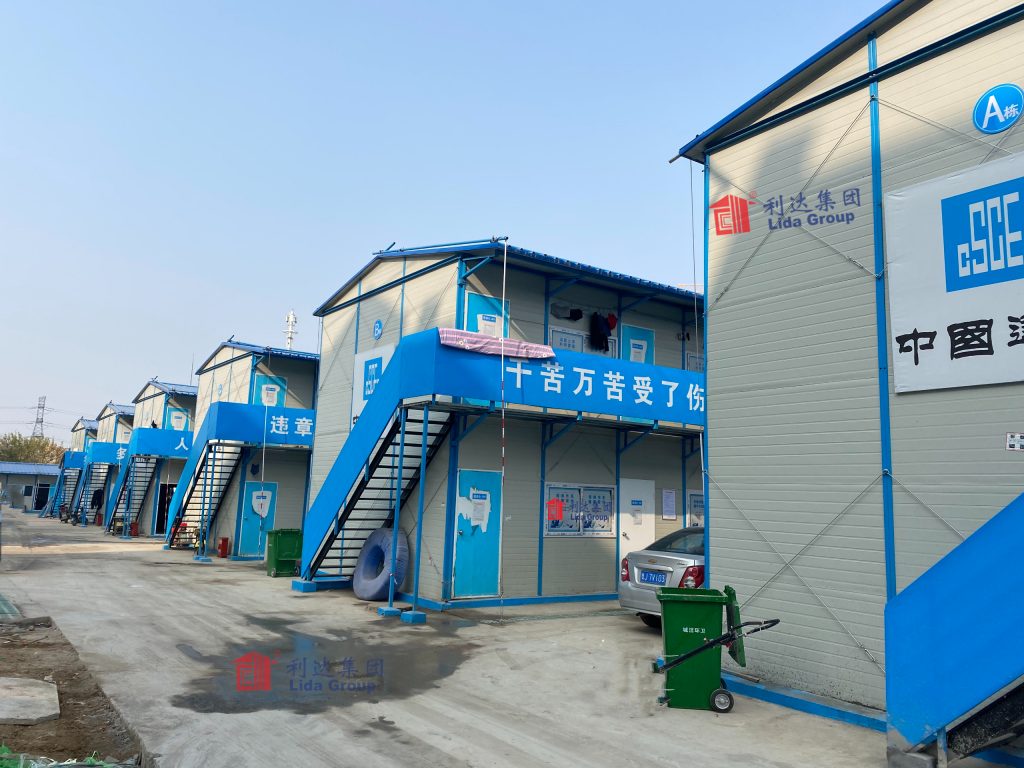
6. Conclusion
Traditional construction site worker dormitory construction faces long-standing bottlenecks including slow deployment speed, high comprehensive life-cycle cost, poor structural durability, weak environmental adaptability, and serious resource waste, which restrict the efficient progress and sustainable development of modern construction projects. As a global leading enterprise in modular green building research and development and manufacturing, Lida Group relies on standardized modular prefabrication, lightweight durable structure, detachable quick-connection assembly, and minimal foundation adaptation technology to launch low-cost durable building solutions for worker dormitories.
This innovative building system realizes ultra-fast on-site deployment, greatly shortening the preparation cycle of construction projects. At the same time, it achieves comprehensive cost reduction in the whole life cycle through reusable structural design and low maintenance performance. The optimized steel frame and composite panel structure ensure excellent structural safety and weather resistance, adapting to diverse harsh construction environments worldwide. In addition, the flexible scalable design and green low-carbon construction mode meet the refined management and sustainable development needs of modern construction enterprises, bringing substantial economic, social, and environmental value to the construction industry.
Verified by a large number of global engineering practices, Lida Group’s rapidly deployable low-cost durable worker dormitories have irreplaceable comprehensive advantages over traditional temporary buildings. They perfectly balance deployment efficiency, construction cost, structural durability, and green environmental protection, solving multiple industry pain points in one stop. In the future, Lida Group will continue to iterate and upgrade modular building technologies, further optimize the deployment efficiency, intelligence level, and comfort of temporary dormitories, continuously lead the standardized upgrading of global construction site temporary facilities, and empower the high-quality and efficient development of the global construction industry.
Related news
-
Lida Group's Low-Cost Durable Building Technology Transforms Construction Site Worker Dormitory
2026-04-27 09:41:10
-
Eco-Friendly Sandwich Panel House Provides Comfortable Construction Site Worker Dormitory by Lida Group
2026-04-27 10:00:35
-
Achieve Green Workforce Housing with Eco-Friendly Sandwich Panel House and Worker Dormitory
2026-04-24 17:53:21
contact us
- Tel: +86-532-88966982
- Whatsapp: +86-13793209022
- E-mail: sales@lidajituan.com
