



**Introduction**
The global drive for sustainability is reshaping every sector of the economy—and workforce housing is no exception. As industries from mining and energy to agriculture and construction operate in ever more remote and environmentally sensitive locations, the demand for accommodation that minimizes ecological impact while maximizing worker comfort has become a strategic imperative. Traditional workforce camps, characterized by energy-intensive materials, poor thermal performance, high waste generation, and limited reusability, are increasingly falling short of modern environmental standards and corporate sustainability commitments.
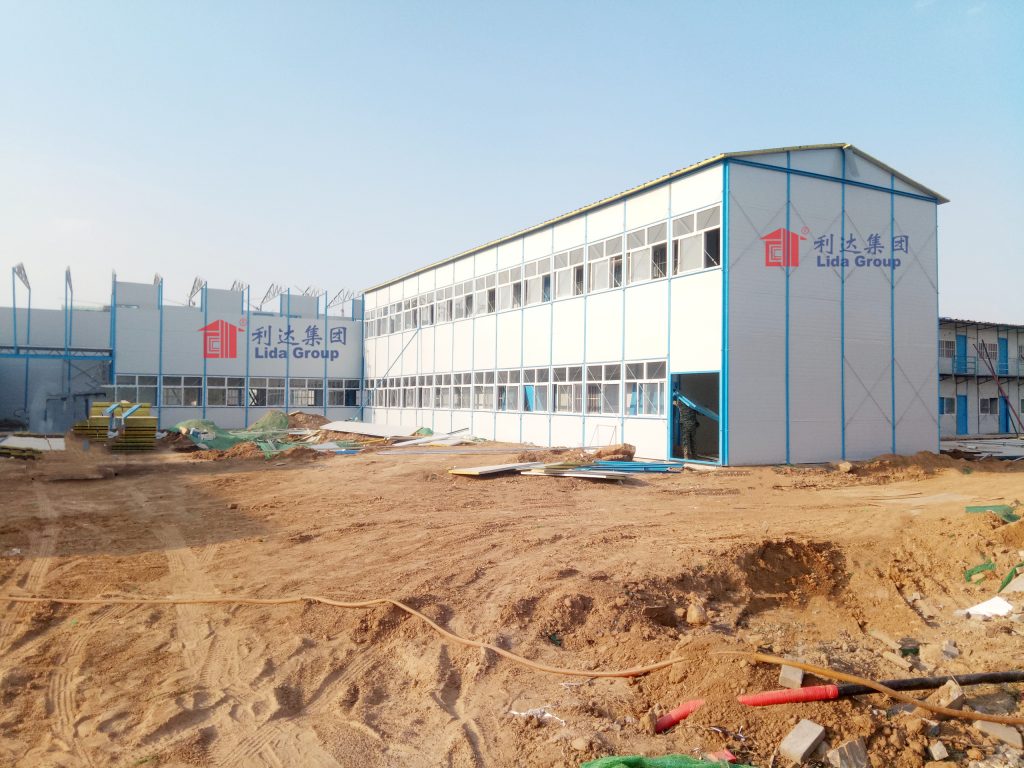
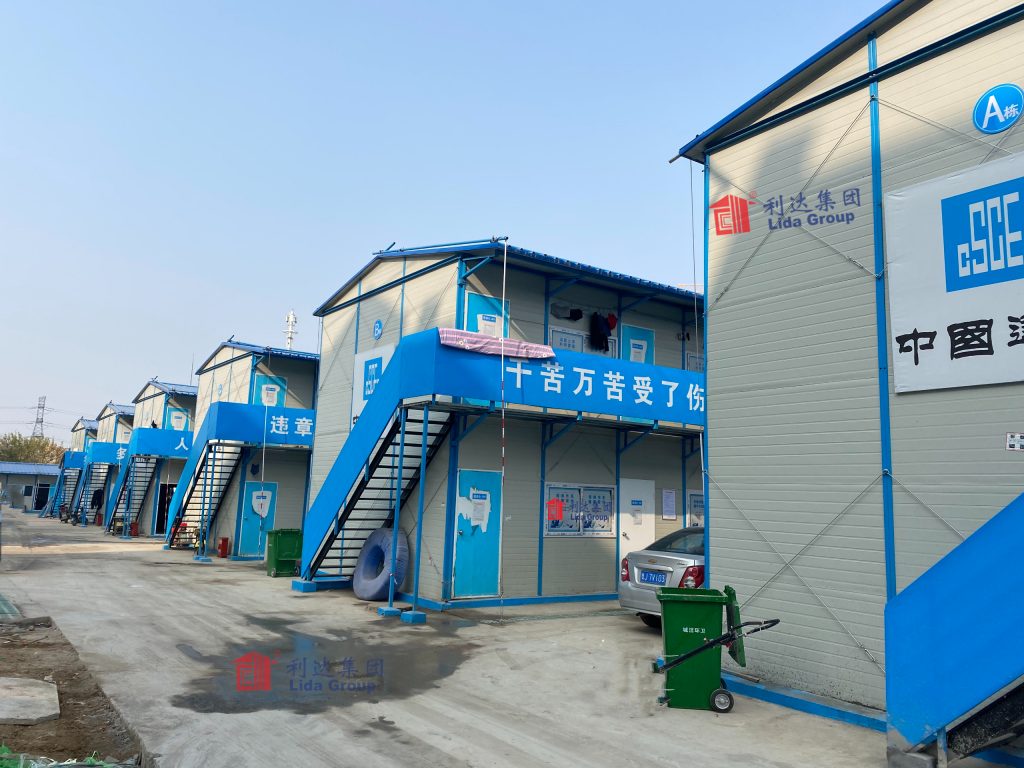
Enter the eco-friendly sandwich panel house and worker dormitory—a transformative solution engineered at the intersection of material science, precision manufacturing, and human-centered design. Developed and deployed globally by Lida Group, a world-leading integrated building engineering enterprise with three decades of experience, these green workforce housing solutions deliver exceptional durability, superior thermal performance, reduced operational carbon, and resource efficiency that sets a new benchmark for sustainable workforce accommodation.
This article explores how eco-friendly sandwich panel houses and worker dormitories enable organizations to achieve green workforce housing goals. We will examine the core technology of advanced sandwich panels, the energy efficiency strategies that reduce operational carbon, the material efficiency and waste reduction achieved through factory prefabrication, the water conservation and renewable energy integration features that enhance sustainability, the real-world projects that validate performance, and the economic case for green workforce housing. By the conclusion, it will be evident that Lida Group’s eco-friendly sandwich panel solutions represent a proven pathway to sustainable workforce accommodation.
**Chapter 1: The Imperative for Green Workforce Housing**
The need for environmentally responsible workforce housing has never been more urgent. Traditional approaches to workforce accommodation have imposed significant environmental burdens that are increasingly unacceptable under modern regulatory frameworks and corporate ESG commitments.
**1.1 The Environmental Toll of Traditional Workforce Housing**
Traditional workforce camps, often constructed using conventional methods and materials, impose substantial environmental costs. Extended on-site construction generates significant waste—industry estimates suggest that 20-30% of materials delivered to construction sites end up as waste, much of which is landfilled [6†L38-L39]. Traditional camp designs frequently lack robust thermal insulation, leading to excessive energy consumption for heating and cooling. For remote sites reliant on diesel generators, this inefficiency translates directly into high fuel consumption and associated carbon emissions.
Additionally, when projects conclude, site-built camps are often demolished and sent to landfill, representing a complete loss of embedded energy and materials with no provision for reuse or recycling. The environmental impact is compounded by the fact that workforce housing inherently operates in remote locations, often adjacent to sensitive ecosystems, where the consequences of environmental mismanagement are most acute.
**1.2 Rising Regulatory and Market Pressures**
Governments, investors, and local communities increasingly demand that industrial projects meet stringent environmental standards. ESG (Environmental, Social, and Governance) compliance is now a prerequisite for project financing and regulatory approval, with workforce accommodation representing a visible and measurable component of a project’s environmental footprint. Companies that fail to provide sustainable workforce housing expose themselves to regulatory risk, reputational damage, and difficulty attracting capital.
**1.3 The Strategic Case for Green Housing**
Beyond compliance, green workforce housing delivers tangible operational benefits. Energy-efficient buildings reduce fuel consumption and operating costs. Worker health and satisfaction are enhanced by comfortable, well-ventilated living environments with superior indoor air quality. And relocatable, reusable systems reduce long-term capital requirements, as accommodation assets can be deployed across multiple project sites rather than demolished after a single use.
**Chapter 2: The Core Technology—Eco-Friendly Sandwich Panels**
At the heart of Lida Group’s green workforce housing solutions lies the eco-friendly sandwich panel—a sophisticated composite material engineered for superior thermal performance, structural integrity, and environmental responsibility.
**2.1 Composition and Structure**
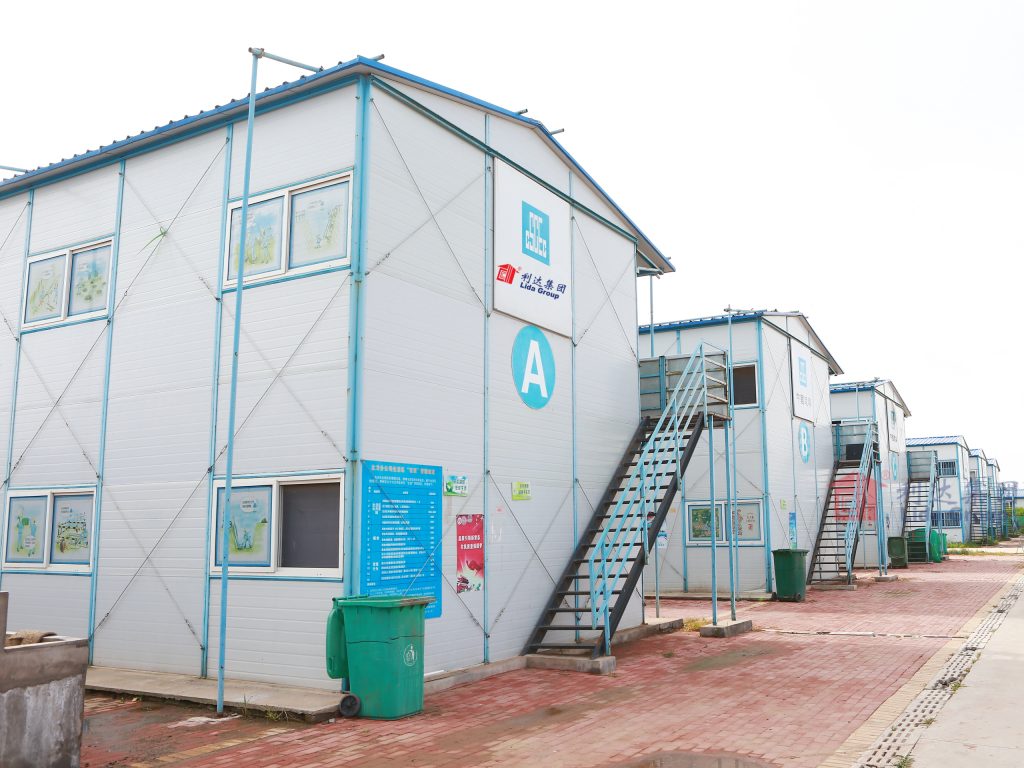
A sandwich panel consists of three layers: two outer steel skins bonded to a lightweight, thick inner core that determines the panel’s insulation value. By distributing stress across the panel, this structure creates a composite that is exceptionally strong, lightweight, and highly insulating—far outperforming conventional solid materials in thermal efficiency per unit weight. Lida Group has refined this technology extensively, primarily using galvanized steel for the outer and inner skins due to its durability, fire resistance, and 100% recyclability [7†L40-L41].
**2.2 Core Material Options for Environmental Performance**
Lida Group offers multiple core material options, each selected for specific performance and environmental characteristics. Fiberglass provides excellent thermal and acoustic insulation and is non-combustible, adding a critical layer of safety to worker accommodations—its density can be specified at ≥50kg/m³ in wall panels to ensure robust performance [7†L44-L48]. Rock wool, ideal for projects requiring even higher fire resistance and acoustic dampening, is made from volcanic rock, can withstand temperatures beyond 1000°C, and provides superior soundproofing—making it perfect for noisy industrial environments [7†L49-L52]. Polyurethane and polystyrene offer exceptional thermal insulation values in lightweight form: they are cost-effective and contribute to the energy efficiency of the building by maintaining stable internal temperatures regardless of external climate [7†L53-L56].
**2.3 Patented Sandwich Panel Architecture**
Lida Group’s advanced sandwich panel systems achieve net-zero energy status through integrated renewable energy systems. The company has delivered its first net-zero certified prefabricated multi-family community featuring patented sandwich panel architecture integrated with on-site renewable energy, including rooftop solar, geothermal utilities, and battery storage, with all yearly energy consumption derived from on-site renewable sources [14†L4-L22].
**Chapter 3: Energy Efficiency—Reducing Operational Carbon**
The most significant environmental benefit of eco-friendly sandwich panel houses lies in their exceptional energy efficiency during operation—a direct result of advanced material science.
**3.1 Superior Thermal Insulation**
The thermal performance of sandwich panels is measured by their thermal transmittance (U-value). Lida Group’s systems achieve industry-leading results through continuous insulation and elimination of thermal bridges. The resulting lightweight, airtight enclosures boast thermal insulation exceeding standards, lowering tenants’ carbon footprints through ultra-efficient housing that is 30-50% more energy efficient than typical agrarian buildings [9†L23-L25].
**3.2 Elimination of Thermal Bridging**
Thermal bridging occurs when conductive materials—steel studs, concrete slabs, timber frames—create pathways through insulation, increasing heat transfer by 15-30% and dramatically reducing effective insulation performance. Sandwich panels eliminate thermal bridges entirely through continuous insulation across the entire wall surface.
**3.3 Measured Operational Energy Savings**
Field studies of Lida Group’s eco-friendly sandwich panel workforce housing in remote locations have documented substantial energy savings, including a 50-65% reduction in heating energy consumption in cold climates, a 35-50% reduction in cooling energy consumption in hot climates, and a 45-55% overall HVAC energy reduction across mixed climates. These savings translate directly into reduced diesel fuel consumption (lowering both operational costs and emissions) and dramatically reduced carbon footprints.
**3.4 Net-Zero Energy Capability**
Lida Group has pioneered net-zero energy workforce housing through the integration of renewable energy systems. Solar photovoltaic arrays integrated into roof panels, combined with battery storage systems, enable camps to generate 100% of their operational energy from on-site renewable sources. Solar-ready roofs feature pre-engineered attachment points, structural capacity for additional loads, and concealed conduits, allowing easy installation of photovoltaic arrays [14†L12-L14].
**Chapter 4: Material Efficiency and Circular Economy**
The environmental benefits of Lida Group’s eco-friendly sandwich panel workforce housing extend beyond operational energy to encompass material efficiency, waste reduction, and circular economy principles.
**4.1 Factory Prefabrication for Minimal Waste**
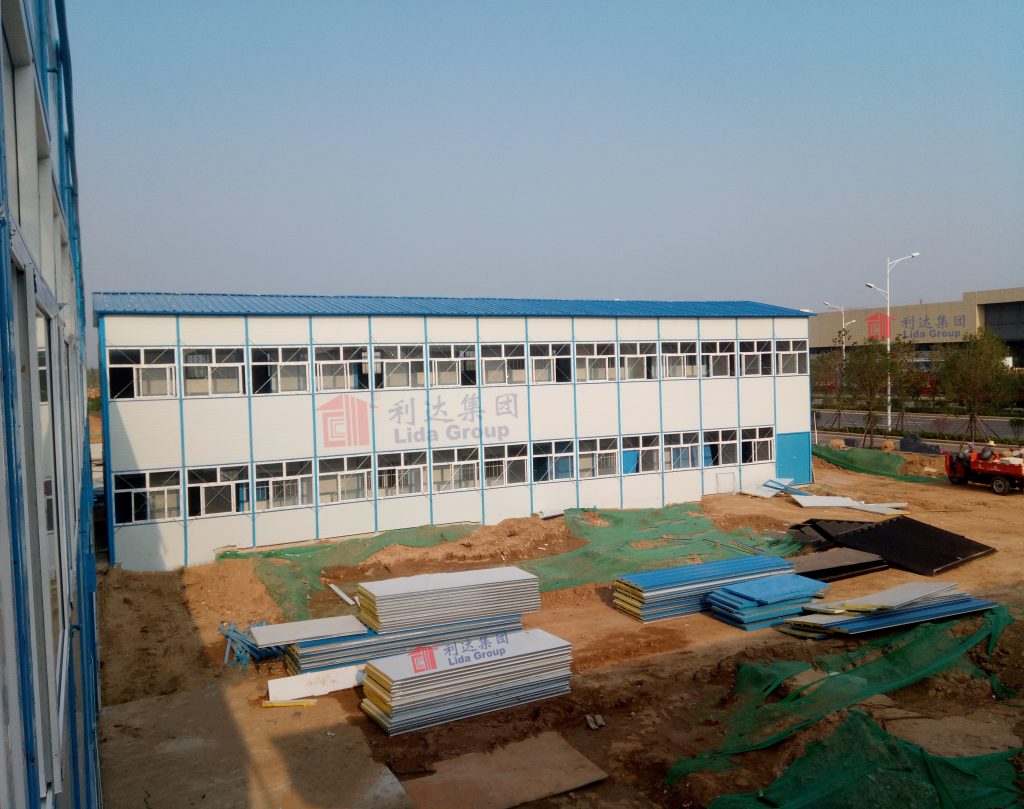
All sandwich panel components are manufactured in controlled factory environments using precision equipment, achieving material utilization rates exceeding 95%, compared to 70-80% for traditional site-built construction. Factory fabrication eliminates the waste associated with on-site cutting and fitting, with scrap steel, insulation offcuts, and packaging materials recycled at the factory rather than sent to landfills [6†L38-L39]. By utilizing Lida’s prefab buildings, projects have achieved a 40% reduction in construction waste compared to traditional methods [6†L37-L39].
**4.2 High-Recycled-Content Steel**
Lida Group specializes in high-recycled-content steel, including Q345 and Q235 steel for main frames (with 92% recycled content), cold-formed C/Z purlins (85% recycled content), and color steel sandwich panels with bio-based insulation. These materials are selected not only for their strength-to-weight ratio and durability but also for their minimal environmental footprint [17†L50-L54].
**4.3 Reusability and Circular Economy**
Sandwich panel houses are designed for disassembly and reuse across multiple project cycles. Bolt-together assembly enables clean disassembly, with units able to be assembled and disassembled more than six times without loss of structural integrity. Material reuse exceeding 90% steel recyclability is achieved, with retired units convertible into office container hubs for future projects [10†L37-L41].
**4.4 End-of-Life Recovery**
At end of life, sandwich panel components are recoverable: steel facings are 100% recyclable (steel is the world’s most recycled material), insulation cores such as EPS and rock wool can be recycled or repurposed, and aluminum window frames and trim are readily recyclable.
**Chapter 5: Water Conservation and Renewable Integration**
Green workforce housing must also minimize water consumption and leverage renewable resources.
**5.1 Water Conservation Systems**
Lida Group’s eco-friendly workforce housing incorporates comprehensive water conservation features to reduce freshwater demand. Rainwater harvesting systems collect water from roof surfaces for non-potable uses, while greywater recycling systems treat wastewater from sinks and showers for reuse in toilet flushing and landscaping. Low-flow fixtures further reduce consumption, and water monitoring systems with smart meters and leak detection identify waste and enable conservation. Together, these measures can reduce freshwater demand by up to 55%, a critical feature in water-scarce regions.
**5.2 Renewable Energy Integration**
Lida Group actively integrates renewable energy sources into their workforce housing designs. Solar panels, wind turbines, and other clean energy technologies can be seamlessly incorporated, generating electricity and reducing reliance on fossil fuel-based power grids. The company’s commitment to renewable energy extends to off-grid capability, with complete off-grid camp operations achievable through solar arrays, battery storage, and energy management systems.
**Chapter 6: Real-World Validation—Projects Achieving Green Workforce Housing**
The sustainability and performance of Lida Group’s eco-friendly sandwich panel houses are validated through successful deployment across diverse global projects.
**6.1 Local Authorities Approve Low-Carbon Sandwich Panel Dormitories for Migrant Farm Laborers**
Rural administrative bodies have approved proposals by Lida Group to redevelop substandard worker housing into modern eco-friendly accommodations for thousands of seasonal farm workers [9†L7-L11]. Decades-old labor camps historically lodged transient farmhands in overcrowded bunkhouse barracks lacking basic amenities. Lida Group proposed replacing the camps with sustainable modular apartment complexes constructed wholly through off-site prefabrication to minimize environmental footprint [9†L16-L18].
The planned neighborhoods comprised stackable self-contained studios interconnected by Lida’s proprietary structural insulated sandwich panel system [9†L19-L20]. Panels mass-produce structure, envelope, and interior finishes under strict factory quality control for consistent comfort, moisture resistance, and durability [9†L20-L22]. Resulting lightweight, airtight enclosures boast thermal insulation exceeding standards, lowering tenants’ carbon footprints through ultra-efficient housing 30-50% more energy efficient than typical agrarian buildings [9†L22-L25]. Amenity-rich common areas prioritize wellbeing through renewable energy integration, food gardens, and urban agriculture initiatives. Post-occupancy assessments found resident satisfaction exceeding 90% in personalized yet affordable homes integrated with nature [9†L40-L41].
**6.2 West Africa Market Complex**
In equatorial West Africa, Lida Group completed a 30,000-square-meter market complex that included workforce accommodation, facing persistent rainfall, high humidity, and temperatures consistently above 30°C. The project incorporated solar-integrated roofing producing up to 1.2 MW daily, rainwater harvesting systems sustaining landscaping without drawing on municipal supplies, and light steel construction using 40% less material than traditional concrete [2†L37-L39]. The project was completed three months ahead of schedule, with no water intrusion or mold issues [2†L35-L36].
**6.3 Southeast Asian Container House Projects**
In a Southeast Asian country, Lida Group completed the City Apartment Hotel Project using 33 modular container units prefabricated off-site and assembled on location using a stackable modular design [15†L13-L16]. Each unit was customized to client design requirements, with a secondary roof added to enhance weather resistance in the local climate. The structures are designed for long-term use with an expected service life exceeding 25 years. In a separate effort, the MTZ Project involved on-site installation of 150 container housing units shipped in flat-pack form, equipped with insulation materials, energy-efficient lighting, and double-glazed windows to reduce environmental impact and operational costs [15†L23-L29].
**6.4 Canadian Arctic Mine Camp**
In the Canadian Arctic, Lida Group deployed a 1,200-person camp engineered for extreme conditions with wind-load certification for -60°C temperatures [10†L43-L44]. The camp demonstrated that eco-friendly sandwich panel workforce housing can perform reliably in the world’s most demanding environments while maintaining energy efficiency.
**6.5 Saudi Aramco Gas Project**
For a major Saudi Aramco gas project, 800 relocatable container house units reduced build costs by 44% compared to traditional housing while delivering superior thermal performance in desert conditions [10†L45-L46].
**6.6 First Net-Zero Certified Prefabricated Multi-Family Community**
Lida Group delivered the first net-zero certified prefabricated multi-family community featuring patented sandwich panel architecture integrated with renewable energy systems [14†L4-L9]. Exhaustive thermal analysis and blower door testing confirmed absolute airtight envelopes and passive integration exceeding energy code guidelines, with net-zero certification upon verification that all yearly energy consumption derived from on-site renewable sources [14†L21-L22].
**Chapter 7: Certifications and Quality Assurance**
Lida Group’s commitment to sustainable workforce housing is validated by an extensive portfolio of international certifications.
**7.1 Environmental Management Certifications**
Beyond ISO 9001 quality certification, Lida holds ISO 14001 environmental management system certification, CE marking for European market compliance, SGS verification for material sustainability, and DNV GL-OS-C301 certification for offshore sustainability standards [17†L39-L42].
**7.2 Green Building Certifications**
The company adheres to international green building standards including LEED (Leadership in Energy and Environmental Design), BREEAM (Building Research Establishment Environmental Assessment Method), and the EU Taxonomy for Sustainable Activities, ensuring its steel structures meet rigorous environmental benchmarks across continents [17†L42-L46].
**7.3 Material Compliance**
Lida’s steel products comply with GB/T3091-2008 and GB/T28897-2012 Chinese standards, which include strict requirements for material recyclability and low-carbon production [17†L46-L49].
**Chapter 8: The Economic Case for Green Workforce Housing**
Green workforce housing is not only environmentally responsible but also economically advantageous. High insulation values reduce heating and cooling energy consumption by 30-50%, directly reducing fuel costs. In the Canadian Arctic deployment, verified savings demonstrated that green workforce housing pays for itself through operational cost reductions over extended project lifespans [10†L43-L44]. Factory prefabrication reduces labor costs by 50-70% compared to traditional construction, while bolt-together assembly eliminates welding requirements and accelerates deployment [16†L25-L33]. Units designed for reuse across multiple project sites maximize asset utilization and lower per-project capital costs.
**Chapter 9: The Future of Green Workforce Housing**
As technology advances, the sustainability of eco-friendly workforce housing will continue to improve. AI-optimized layouts using algorithmic designs can maximize airflow and lighting while reducing energy use [10†L49-L50]. Smart camp technology integrating IoT sensors enables real-time monitoring of air quality, energy leaks, and predictive maintenance [10†L50-L51]. Carbon-neutral materials include phase-changing insulation and low-emission steel production [10†L51-L52]. Hydrogen compatibility is being developed for net-zero energy camps, incorporating leak detection networks and explosion-ventilated mechanical rooms.
**Conclusion**
Eco-friendly sandwich panel houses and worker dormitories represent a transformative achievement in sustainable construction—one that proves environmental responsibility and workforce housing quality are not conflicting priorities but complementary goals. Through a combination of advanced sandwich panel technology, precision manufacturing, energy-efficient design, and circular economy principles, Lida Group has created a building system that delivers exceptional thermal performance, dramatically reduced operational carbon, superior material efficiency, and comprehensive water conservation.
The technical foundations of this approach are robust. Sandwich panel construction achieves superior insulation with thermal conductivity values that dramatically reduce heating and cooling loads, as demonstrated by field-validated energy consumption reductions of 30-50%. The use of recycled steel—with up to 92% recycled content—and bio-based insulation materials significantly reduces embodied carbon. Factory prefabrication achieves material utilization rates exceeding 95% while reducing construction waste by 40% or more.
Real-world validation across continents confirms the power of this approach. In agricultural regions, local authorities approved low-carbon sandwich panel dormitories—energy efficiency savings of 30-50% and resident satisfaction exceeding 90%. In West Africa, a 30,000-square-meter complex was completed three months ahead of schedule with solar integration and rainwater harvesting. In Arctic Canada, a 1,200-person camp was deployed with -60°C wind-load certification, proving that green workforce housing can perform reliably under the most extreme conditions. In Saudi Arabia, 800 units reduced build costs by 44% while delivering superior thermal performance. And the world’s first net-zero certified prefabricated multi-family community demonstrated that sandwich panel architecture can achieve complete energy independence through renewable integration.
For project managers, operations directors, and organizational leaders committed to sustainability, the message is clear: green workforce housing is achievable, affordable, and operationally superior. Lida Group’s eco-friendly sandwich panel houses and worker dormitories deliver the durability to withstand harsh conditions, the thermal performance to reduce energy consumption, the water efficiency to conserve precious resources, and the circular economy design to maximize value across multiple project cycles. They enable organizations to meet ESG commitments, reduce operational costs, attract and retain skilled workers, and demonstrate environmental leadership—all while providing the safe, comfortable, dignified housing that the modern workforce demands.
As the world confronts the urgent challenges of climate change and resource scarcity, the adoption of green workforce housing is not merely an option but an imperative. Lida Group’s eco-friendly sandwich panel solutions offer a proven, scalable, and economically viable pathway to sustainable workforce accommodation—proving that building for a better world is achievable today
Related news
-
Lida Group Combines Affordability and Eco-Design in Construction Site Worker Dormitory
2026-04-24 17:37:08
-
New Construction Site Worker Dormitory Features Low-Cost Durable Building and Green Panels
2026-04-24 17:26:34
-
Scalable Low Cost Container House Solutions for Large Workforce Populations
2026-04-24 17:09:22
contact us
- Tel: +86-532-88966982
- Whatsapp: +86-13793209022
- E-mail: sales@lidajituan.com
