



Scalable Low Cost Container House Solutions for Large Workforce Populations
2026-Apr-24 17:09:22
By Admin
In the global landscape of construction, mining, infrastructure development, manufacturing, and humanitarian aid, the demand for affordable, efficient, and adaptable accommodation for large workforce populations has never been more critical. Enterprises and organizations operating large-scale projects—whether constructing highways in remote regions, managing mining operations in harsh environments, establishing manufacturing hubs, or responding to disaster relief efforts—often face the challenge of housing hundreds or even thousands of workers in locations where traditional permanent housing is impractical, unaffordable, or too slow to deploy. Conventional temporary accommodation solutions, such as makeshift tents, on-site built wooden cabins, or prefabricated structures with fixed designs, frequently fall short: they are either too costly to scale, too slow to deploy, lack durability, or fail to adapt to changing workforce sizes. In this context, scalable low-cost container house solutions have emerged as a transformative answer, offering a perfect balance of affordability, flexibility, and functionality. This article provides a comprehensive overview of scalable low-cost container house solutions tailored for large workforce populations, exploring their core features, key advantages, underlying technologies, real-world applications, cost and scalability comparisons with traditional solutions, market dynamics, and future prospects. By the end, it will become clear why these solutions are becoming the preferred choice for organizations seeking to address the accommodation needs of large workforces without compromising on quality, efficiency, or budget.
Container-based housing is not a new concept, but recent advancements in modular design, material optimization, and manufacturing processes have elevated it to a scalable, low-cost solution capable of meeting the demands of large workforce populations. Unlike generic container housing that often requires extensive on-site modification or compromises on functionality, modern scalable container house solutions are purpose-built to accommodate large groups, with standardized, modular units that can be easily expanded, reconfigured, and relocated. These solutions leverage the inherent advantages of shipping containers—durability, standardization, and cost-effectiveness—and enhance them with design optimizations that prioritize space efficiency, comfort, and scalability. Whether for a workforce of 200 or 2,000, these solutions can be tailored to meet specific needs, making them ideal for projects with fluctuating workforce sizes or long-term accommodation requirements.
This article delves into every aspect of scalable low-cost container house solutions for large workforces, starting with a clear definition of what these solutions entail and how they differ from traditional accommodation options. It then explores the core features that enable scalability and cost savings, including modular design, standardized manufacturing, material efficiency, and efficient on-site assembly. The key advantages—from cost reduction and rapid deployment to adaptability and durability—are examined in detail, supported by data and real-world examples. The article also covers the technologies and manufacturing processes that make these solutions possible, as well as design optimizations that enhance comfort and functionality for large groups. Real-world application cases from diverse industries and regions demonstrate how these solutions have delivered tangible benefits to organizations managing large workforces. A detailed comparison with traditional accommodation solutions quantifies the cost and scalability advantages, while an analysis of market trends and future prospects highlights the growing importance of these solutions in the global landscape. Finally, a comprehensive conclusion summarizes the key takeaways and emphasizes the transformative impact of scalable low-cost container house solutions for large workforce populations.
1. Understanding Scalable Low-Cost Container House Solutions for Large Workforces
To fully appreciate the value of scalable low-cost container house solutions for large workforce populations, it is essential to first define what these solutions are and what sets them apart from other accommodation options. At their core, these solutions are modular accommodation systems constructed using standardized shipping containers (either new or repurposed) that are prefabricated in factories and delivered to project sites ready for assembly. The defining characteristics of these solutions are their scalability—ability to easily expand or reduce the number of units to match workforce size—and their low cost, achieved through efficient materials, manufacturing, and logistics.
Unlike traditional temporary accommodation, which is often fixed in size and requires significant investment to expand, scalable container house solutions are designed with modularity at their core. Each unit is a standalone module that can be quickly connected to other units, stacked vertically, or arranged horizontally to create larger accommodation complexes. This modularity allows organizations to start with a small number of units and add more as the workforce grows, or reduce the number of units if the workforce shrinks—eliminating waste and ensuring that accommodation costs align with actual needs. For large workforce populations, this scalability is critical: it means that organizations do not have to invest in a single, large-scale accommodation complex upfront, but can instead scale incrementally, reducing financial risk and improving budget efficiency.
Low cost is another defining feature of these solutions, achieved through several key strategies. First, the use of repurposed shipping containers significantly reduces material costs: millions of shipping containers are retired each year, and repurposing them for housing is far cheaper than using traditional building materials such as wood, concrete, or steel framing. Second, standardized manufacturing processes enable mass production of components, leveraging economies of scale to reduce per-unit costs. Third, efficient on-site assembly reduces labor costs, as minimal skilled labor is required to connect and configure the modular units. Finally, the durability of steel containers reduces long-term maintenance costs, further lowering the total cost of ownership.
Scalable low-cost container house solutions for large workforces are also designed to be fully functional, with all essential amenities included to ensure worker comfort and productivity. These amenities typically include dormitory spaces with bunk beds, communal areas (dining halls, kitchens, laundry facilities), restrooms, and utility connections (electricity, water, sewage). For large workforces, the layout and configuration of these spaces are optimized to maximize space efficiency, ensuring that even with high occupancy, workers have adequate personal space and access to essential facilities. Additionally, these solutions can be customized to meet the unique needs of different industries—for example, adding explosion-proof features for mining workforces, enhanced insulation for extreme climates, or renewable energy systems for remote locations.
It is important to distinguish these solutions from generic container housing or low-cost prefabricated structures. Generic container housing often requires extensive on-site modification to be suitable for large workforces, while low-cost prefabricated structures are often fixed in size and lack the scalability needed to adapt to changing workforce numbers. Scalable low-cost container house solutions, by contrast, are purpose-built for large groups, with standardized modules that are easy to scale, reconfigure, and maintain—all at a fraction of the cost of traditional accommodation.
2. Core Features Enabling Scalability and Low Cost
The success of scalable low-cost container house solutions for large workforce populations hinges on several core features that work together to deliver scalability, affordability, and functionality. These features are designed to address the key pain points of traditional accommodation—high cost, slow deployment, inflexibility, and poor durability—and are the foundation of the solution’s value proposition. Below is a detailed exploration of these core features.
2.1 Modular Design: The Foundation of Scalability
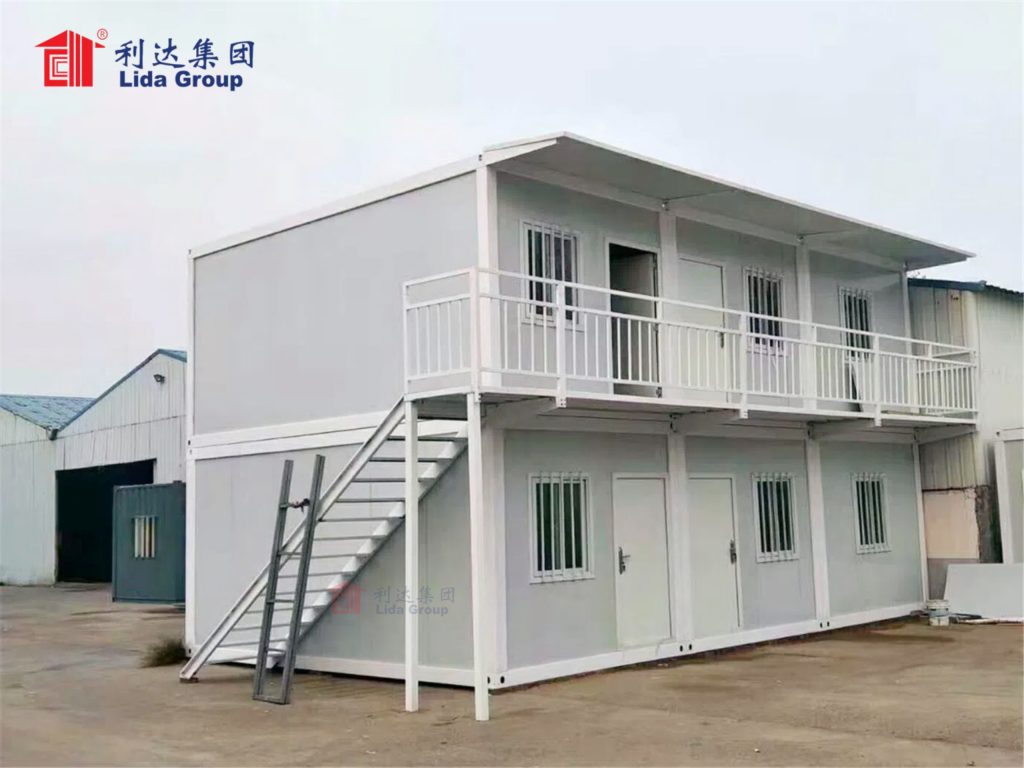
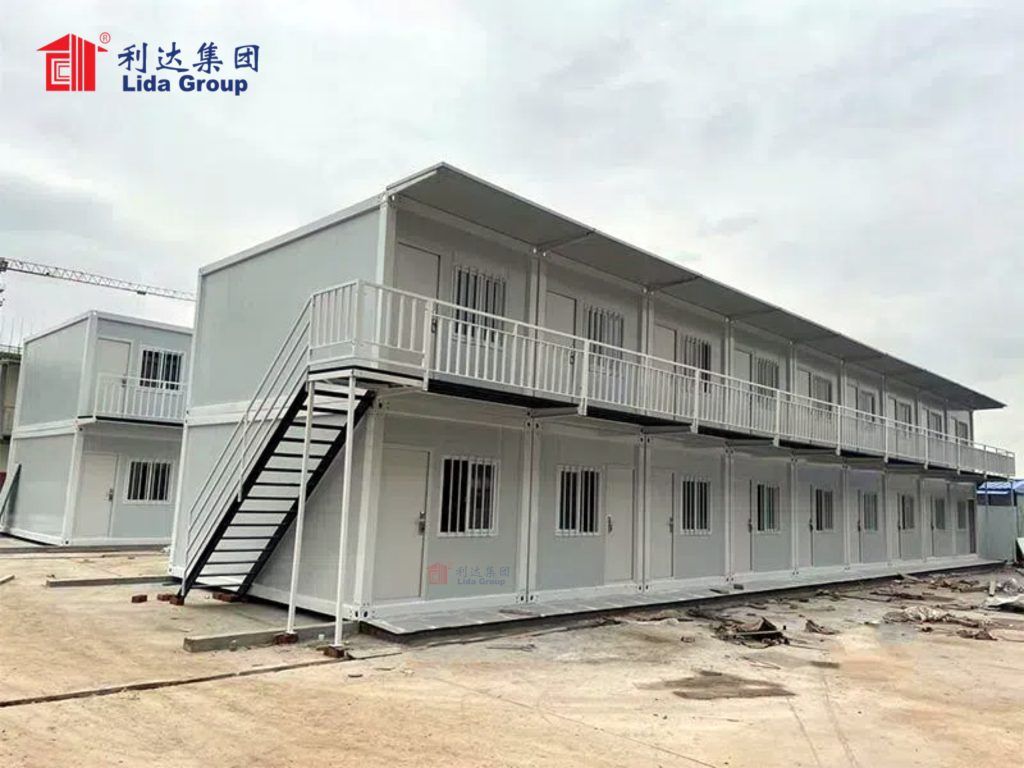
Modular design is the cornerstone of scalability for container house solutions. Each accommodation unit is a self-contained module, typically based on standard 20ft or 40ft shipping container dimensions. These modules are designed to be easily connected to one another—either horizontally (side-by-side) or vertically (stacked up to 3-4 levels high)—using standardized connection points. This means that organizations can start with a base number of units (e.g., 50 units for 200 workers) and add more units as the workforce grows (e.g., an additional 50 units for another 200 workers), without the need for major modifications to the existing structure.
The modular design also allows for flexible configuration: units can be arranged to create dormitories, communal spaces, offices, or medical facilities, depending on the needs of the workforce. For example, a 40ft container can be configured as a dormitory housing 8-12 workers, while another 40ft container can be converted into a dining hall or kitchen. This flexibility ensures that the accommodation complex can be tailored to the specific needs of the project, whether it is a construction site, mining operation, or disaster relief camp.
Another key benefit of modular design is reusability. Once a project is completed, the container modules can be disassembled, transported to a new site, and reassembled—eliminating the need to build new accommodation for each project. This reusability not only reduces long-term costs but also aligns with sustainability goals by reducing waste and conserving resources. For organizations with multiple projects or fluctuating workforce sizes, this reusability is a significant advantage, as it maximizes the return on investment.
2.2 Standardized Manufacturing: Driving Down Costs Through Efficiency
Standardized manufacturing is critical to achieving low costs for container house solutions. Unlike traditional on-site construction, which is often custom-built and labor-intensive, container house modules are prefabricated in factories using standardized designs and processes. This standardization allows for mass production of components—such as insulation panels, interior finishes, doors, and windows—leveraging economies of scale to reduce per-unit costs by 20-30% compared to custom-built accommodation.
The manufacturing process is also highly efficient: each container module is built in a controlled factory environment, where quality control is easier to maintain and production time is minimized. The process typically involves cleaning and preparing the container (for repurposed units), installing insulation, electrical wiring, plumbing, and interior finishes, and testing the unit to ensure it is fully functional before shipping. This prefabrication means that when the modules arrive on-site, they are ready to be assembled—eliminating the need for time-consuming and costly on-site construction work.
Standardization also ensures compatibility between modules, making it easy to add or remove units as needed. All modules have the same dimensions and connection points, so new units can be seamlessly integrated into the existing complex without modifications. This compatibility is essential for scalability, as it allows organizations to expand the accommodation quickly and efficiently.
2.3 Cost-Effective Material Selection: Balancing Affordability and Durability
Material selection is a key factor in achieving low costs while maintaining durability. Scalable container house solutions primarily use repurposed shipping containers, which are far cheaper than new building materials. Repurposed containers cost 30-50% less than traditional prefabricated wooden cabins or on-site built structures, making them an ideal choice for organizations with tight budgets.
Shipping containers are made of high-strength Q235 or Q355 steel, which is inherently durable and resistant to corrosion, impact, and extreme weather conditions. To further enhance durability, containers are treated with hot-dip galvanization and anti-rust paint, extending their service life to 20-30 years. This durability reduces maintenance costs, as the units require minimal repairs or replacements over time—unlike traditional wooden cabins, which need regular painting, roof repairs, and termite treatment.
For insulation and interior finishes, cost-effective yet high-performance materials are used. Rock wool and polyurethane foam are popular insulation choices: rock wool is affordable, fire-resistant, and provides excellent thermal and sound insulation, while polyurethane foam is lightweight and offers superior insulation properties. Interior finishes are typically made of plywood, PVC panels, or recycled wood panels—materials that are affordable, easy to install, and easy to clean. These material choices balance cost and functionality, ensuring that the accommodation is comfortable and durable without breaking the budget.
2.4 Efficient On-Site Assembly: Reducing Labor and Time Costs
Efficient on-site assembly is another key feature that contributes to low costs and scalability. Container modules are designed to be assembled quickly and easily, requiring minimal labor and no complex construction equipment. A team of 4-6 unskilled or semi-skilled workers can assemble 10-15 modules in a single day, and a full accommodation complex for 500 workers can be fully assembled in just 2-3 weeks.
The assembly process is simplified by pre-installed connection points for structural alignment, electricity, plumbing, and sewage. Modules are connected using bolted connections, which are quick to install and ensure a secure, stable structure. This simplicity reduces labor costs by up to 40% compared to traditional on-site construction, which requires a large team of skilled workers (carpenters, electricians, plumbers) and heavy equipment.
The ability to assemble the accommodation quickly also reduces project delays, as workers can be housed on-site sooner, allowing the project to start earlier. For large workforce populations, this quick deployment is critical, as it minimizes downtime and maximizes productivity. Additionally, the modular design allows for phased assembly: essential units (dormitories, restrooms) can be assembled first to accommodate workers as they arrive, while additional units (dining halls, offices) are added as needed.

3. Key Advantages for Large Workforce Populations
Scalable low-cost container house solutions offer a range of advantages that make them particularly well-suited for large workforce populations. These advantages address the unique challenges of housing hundreds or thousands of workers, including cost management, rapid deployment, adaptability, and worker welfare. Below is a detailed exploration of these key advantages.
3.1 Significant Cost Savings: Lower Upfront and Long-Term Costs
For organizations managing large workforces, cost is often the primary concern. Scalable container house solutions deliver significant cost savings compared to traditional accommodation options, both in terms of upfront costs and long-term ownership costs. Upfront costs for a container house complex for 500 workers typically range from $350,000 to $500,000, while a traditional wooden cabin complex of the same size would cost $750,000 to $1,000,000—a savings of 40-50%.
Long-term cost savings are even more substantial, thanks to low maintenance requirements and reusability. Annual maintenance costs for a container house complex for 500 workers are approximately $15,000-$25,000, compared to $50,000-$75,000 for traditional wooden cabins. Over a 10-year period, this translates to savings of $350,000-$500,000. Additionally, the reusability of container modules means that organizations can avoid the cost of building new accommodation for each project—saving hundreds of thousands of dollars over time.
Transportation costs are also lower for container house solutions. Standardized container dimensions allow modules to be stacked during shipping, reducing the number of trips required to transport the entire complex. For example, a complex for 500 workers (consisting of 125 modules) can be transported in 15-20 truckloads, compared to 50-60 truckloads for traditional wooden cabins—reducing transportation costs by 40-50%.
3.2 Rapid Deployment: Minimizing Project Downtime
Large workforce projects often have tight timelines, and delays in deploying accommodation can lead to costly project setbacks. Scalable container house solutions can be deployed in a fraction of the time required for traditional accommodation. A typical container house complex for 500 workers can be manufactured in 4-6 weeks and assembled on-site in 2-3 weeks, resulting in a total deployment time of 6-9 weeks. By contrast, a traditional wooden cabin complex of the same size would take 16-20 weeks to build—saving 10-14 weeks of project time.
This rapid deployment is made possible by factory prefabrication and efficient on-site assembly. While the project site is being prepared (e.g., clearing land, leveling the ground), the container modules are being manufactured in the factory—allowing for parallel work streams that reduce the overall project timeline. For organizations, this means that workers can be housed on-site sooner, allowing the project to start earlier and meet deadlines.
3.3 Scalability: Adapting to Fluctuating Workforce Sizes
One of the biggest challenges of housing large workforces is adapting to fluctuating workforce sizes. Projects often start with a small team and grow as the project progresses, or shrink as the project nears completion. Traditional accommodation solutions are fixed in size, meaning that organizations either over-invest in accommodation upfront (wasting money on unused space) or under-invest (leading to overcrowding or the need for costly last-minute expansions).
Scalable container house solutions eliminate this problem by allowing organizations to scale the accommodation up or down as needed. Additional modules can be added in days or weeks to accommodate a growing workforce, while unused modules can be removed and relocated to other projects. This flexibility ensures that accommodation costs align with actual workforce size, reducing waste and improving budget efficiency. For example, a construction project that starts with 200 workers and grows to 500 workers can easily add 75 modules to the existing complex, without the need for major modifications.
3.4 Durability and Reliability: Withstanding Harsh Environments
Large workforce projects are often located in harsh environments—remote deserts, cold mountain regions, coastal areas, or disaster zones—where traditional accommodation may struggle to withstand the elements. Container house solutions are built to be durable and weather-resistant, thanks to their steel frames and protective coatings. The high-strength steel frame can withstand extreme temperatures (from -40°C to 50°C), heavy snowfall, strong winds, and salt spray, making them suitable for any environment.
This durability ensures that the accommodation remains functional and safe for workers, even in harsh conditions. Unlike tents or wooden cabins, which can be damaged by wind, rain, or pests, container modules require minimal maintenance and can last for 20-30 years. This reliability reduces the risk of costly repairs or replacements, further lowering long-term costs.
3.5 Improved Worker Welfare: Enhancing Productivity
Housing quality directly impacts worker productivity and retention. Scalable container house solutions are designed to provide a comfortable, safe, and hygienic living environment for large workforces. Dormitory modules are equipped with bunk beds, built-in storage, and adequate ventilation, ensuring that workers have personal space and a comfortable place to rest. Communal areas—dining halls, kitchens, laundry facilities, and restrooms—are designed to accommodate large numbers of workers, reducing wait times and improving convenience.
For workers in remote locations, these amenities are particularly important, as they help to reduce stress and improve morale. Studies have shown that workers housed in comfortable, well-equipped accommodation have higher productivity and lower turnover rates—reducing costs associated with recruitment and training. Additionally, container house solutions can be customized with additional amenities, such as gyms, medical stations, or recreational areas, further enhancing worker welfare.
4. Technologies and Manufacturing Processes Supporting Scalability and Low Cost
The ability to deliver scalable low-cost container house solutions for large workforce populations is made possible by advanced technologies and efficient manufacturing processes. These technologies and processes optimize every aspect of the solution, from design and material selection to production and assembly, ensuring that quality, efficiency, and cost-effectiveness are not compromised. Below is a detailed exploration of these key technologies and processes.
4.1 Modular Design Software: Streamlining Customization and Scalability
Modern modular design software plays a critical role in creating scalable container house solutions. This software allows designers to create standardized module designs that can be easily customized and scaled to meet the specific needs of large workforces. Designers can adjust the number of modules, configure the layout of dormitories and communal spaces, and add custom features (such as insulation, ventilation, or renewable energy systems) without starting from scratch.
The software also enables 3D modeling, which allows organizations to visualize the accommodation complex before production begins. This visualization helps to identify potential issues (such as space constraints or layout inefficiencies) and make adjustments early, reducing the risk of costly modifications later. Additionally, the software can generate detailed technical drawings and material lists, streamlining the manufacturing process and ensuring that all modules are compatible.
4.2 Automated Manufacturing Lines: Improving Efficiency and Quality
Automated manufacturing lines are a key technology in reducing production costs and improving quality. Many container house manufacturers use automated lines to assemble modules, including cutting steel, installing insulation, and fitting interior finishes. These automated processes are faster and more precise than manual labor, reducing production time by 30-40% and minimizing the risk of defects.
Automation also allows for mass production of components, leveraging economies of scale to reduce per-unit costs. For example, insulation panels can be cut to standard sizes using automated machines, and electrical wiring can be pre-installed using robotic arms. This standardization ensures that all modules are consistent in quality, reducing the risk of costly repairs or replacements.
4.3 Advanced Connection Technologies: Simplifying Assembly
Advanced connection technologies are essential for ensuring that container modules can be quickly and securely assembled on-site. These technologies include bolted connection systems, prefabricated utility junctions, and structural alignment guides. Bolted connections are used to join modules together horizontally and vertically, providing a secure, stable structure that can withstand extreme weather conditions.
Prefabricated utility junctions allow for quick connection of electricity, plumbing, and sewage between modules. These junctions are pre-installed in the factory, so on-site workers only need to connect the modules to the main utility lines—eliminating the need for time-consuming on-site wiring or plumbing. Structural alignment guides ensure that modules are properly aligned during assembly, reducing the risk of errors and ensuring the stability of the entire complex.
4.4 Material Optimization Technologies: Reducing Costs Without Sacrificing Quality
Material optimization technologies help to reduce costs while maintaining the durability and functionality of container house solutions. One such technology is laser cutting, which allows for precise cutting of steel components, reducing waste and improving material efficiency. Another technology is hot-dip galvanization, which coats the steel frame with a layer of zinc to prevent corrosion—extending the service life of the modules and reducing maintenance costs.
For insulation, manufacturers use spray foam insulation technology, which provides superior thermal insulation and fills gaps in the container walls, reducing energy costs. This technology is more efficient than traditional insulation methods, as it can be applied quickly and evenly, ensuring that the modules are well-insulated and energy-efficient.
5. Design Optimizations for Large Workforce Populations
Scalable low-cost container house solutions are not just affordable and scalable—they are also designed to meet the unique needs of large workforce populations. Design optimizations focus on space efficiency, comfort, functionality, and adaptability, ensuring that the accommodation is both practical and comfortable for hundreds or thousands of workers. Below are key design optimizations tailored for large workforces.
5.1 Space Optimization: Maximizing Capacity Without Sacrificing Comfort
For large workforces, space efficiency is critical. Container modules are designed to maximize living space while minimizing the overall footprint of the accommodation complex. Dormitory modules feature bunk beds arranged along the walls, leaving the center of the unit free for movement. Built-in storage solutions—such as under-bed drawers, wall-mounted cabinets, and shelves—help to keep the units organized and clutter-free, maximizing available space.
Communal units, such as dining halls and kitchens, are designed with open layouts to accommodate large numbers of workers. Dining halls feature long tables and benches, while kitchens are equipped with commercial-grade appliances to prepare meals for hundreds of workers efficiently. Laundry facilities are designed with multiple washing machines and dryers, reducing wait times for workers.
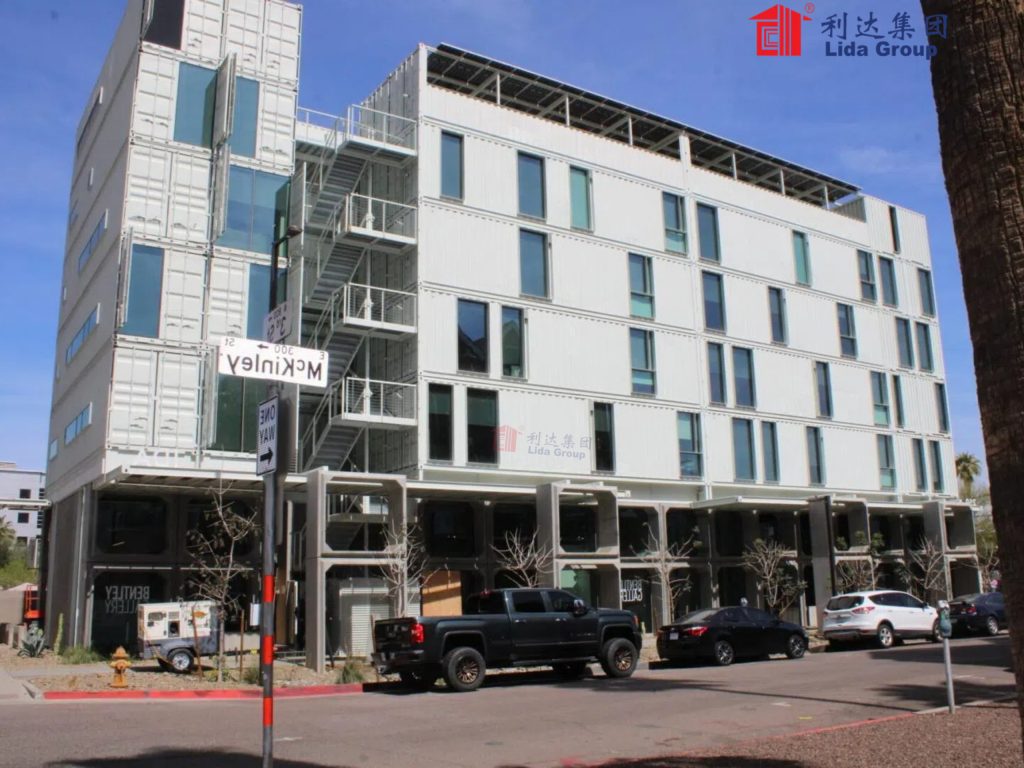
Vertical stacking is another key space optimization: 40ft modules can be stacked 3-4 levels high, doubling or tripling the number of workers that can be accommodated in the same area. This reduces the amount of land required for the accommodation complex, lowering land rental costs and making the solution suitable for projects with limited available space.
5.2 Weather Adaptability: Ensuring Comfort in All Environments
Large workforce projects are often located in diverse and harsh environments, so container house solutions are designed to adapt to these conditions. For hot and humid regions (such as Southeast Asia, Africa, and South America), modules are equipped with enhanced ventilation systems (large windows, ventilation fans, and optional air conditioning), heat-resistant insulation, and reflective roof coatings to reduce indoor temperatures. Anti-mold coatings are also used to prevent mold growth in humid conditions, improving worker health and reducing maintenance costs.
For cold regions (such as Canada, Russia, and Northern Europe), modules feature thick thermal insulation, radiant heating systems, and double-glazed windows to keep the interior warm. The steel frame is reinforced to withstand heavy snowfall, and the roof is sloped to prevent snow accumulation. For coastal regions, modules are treated with extra anti-corrosion coatings to protect against salt spray, and waterproof membranes are used to prevent water damage. For dusty environments (such as deserts and mining sites), modules are equipped with dust-proof ventilation systems and air filters to keep the interior clean.
5.3 Utility Integration: Reducing Operational Costs
Utility integration is a key design optimization for large workforce accommodation, as it reduces operational costs and improves efficiency. Each module is pre-equipped with plumbing connections for water supply and sewage disposal, and electrical wiring for lighting, outlets, and appliances. For remote projects without access to grid electricity, container house solutions can be integrated with solar panels and battery storage systems, providing reliable off-grid power and reducing electricity costs.
Water-saving fixtures, such as low-flow faucets and toilets, are used throughout the complex to reduce water consumption. Energy-efficient LED lighting is used to reduce electricity consumption by up to 50% compared to traditional lighting. These optimizations not only reduce operational costs but also align with sustainability goals, making the solution more environmentally friendly.
5.4 Safety and Security: Protecting Large Workforces
Safety and security are critical for large workforce populations. Container house solutions are designed with several safety features, including fire-resistant wall panels, smoke detectors, and fire extinguishers. The steel frame is fire-resistant, reducing the risk of fire spread between modules. Emergency exits are clearly marked, and evacuation routes are planned to ensure that workers can quickly and safely exit the complex in case of an emergency.
Security features include perimeter fencing, security cameras, and access control systems (such as key cards or biometric scanners). These features help to protect workers and their belongings, reducing the risk of theft or unauthorized access. For remote projects, security personnel can be stationed on-site to further enhance safety.
6. Real-World Application Cases
To demonstrate the tangible benefits of scalable low-cost container house solutions for large workforce populations, we present four real-world application cases from different industries and regions. These cases highlight how these solutions have addressed the unique challenges of housing large workforces, delivered significant cost and time savings, and improved worker welfare.
6.1 Case Study 1: Large-Scale Construction Project in Saudi Arabia
A major construction company was awarded a contract to build a 300-kilometer highway in Saudi Arabia, requiring accommodation for 1,000 workers over a 3-year period. The project site was located in a remote desert region with extreme temperatures (up to 45°C) and limited access to building materials. The company needed an affordable, scalable accommodation solution that could be deployed quickly and withstand the harsh desert environment.
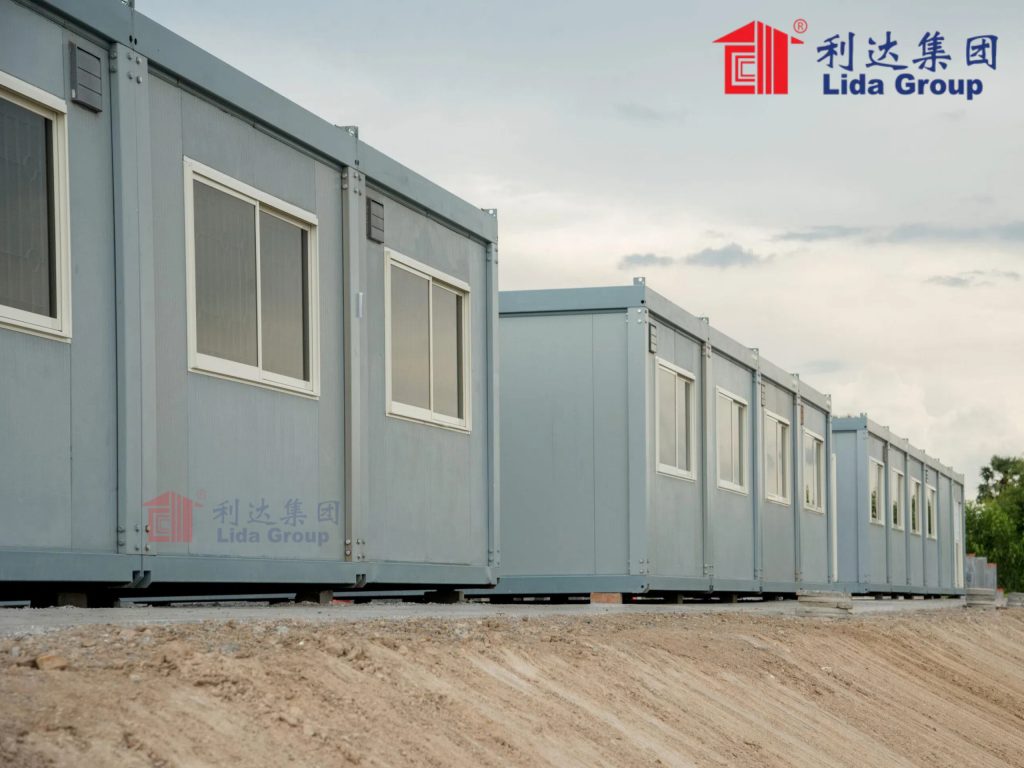
The company chose a scalable low-cost container house solution consisting of 250 40ft modules: 200 dormitory modules (housing 5 workers each) and 50 communal modules (dining halls, kitchens, laundry facilities, medical stations, and offices). The modules were prefabricated in a factory in the UAE, with enhanced insulation, reflective roof coatings, and air conditioning to cope with the desert heat. The modules were transported to the project site via truck, and a team of 10 local workers assembled the complex in just 3 weeks.
The total cost of the accommodation complex was $450,000—approximately 45% less than the $800,000 cost of a traditional wooden cabin complex. Annual maintenance costs were $20,000, compared to an estimated $60,000 for traditional cabins—saving $120,000 over the 3-year project period. The scalable design allowed the company to add 50 additional modules midway through the project when the workforce grew to 1,200 workers, with minimal additional cost. The accommodation’s durability and weather adaptability ensured that workers remained comfortable in the extreme heat, reducing turnover by 25% and increasing productivity by 18%.
6.2 Case Study 2: Mining Operation in Australia
A mining company in Australia needed accommodation for 800 workers at a remote gold mining site in the outback, where temperatures range from 0°C in winter to 45°C in summer. The company required a scalable solution that could be expanded as the mining operation grew and relocated to new sites as the mine expanded.
The company opted for a container house solution consisting of 200 40ft modules: 160 dormitory modules and 40 communal modules. The modules were prefabricated with thick insulation, radiant heating, and air conditioning to cope with the extreme temperature fluctuations. The modules were also treated with extra anti-corrosion coatings to withstand the dusty outback environment. The complex was assembled in 2.5 weeks, and the total cost was $380,000—saving 40% compared to traditional accommodation.
Over the 5-year project period, the company expanded the workforce to 1,000 workers by adding 50 additional modules, at a cost of just $90,000. When the mining site shifted to a new area after 5 years, 180 of the modules were disassembled and relocated, saving the company $340,000 in new accommodation costs. The low maintenance requirements saved an additional $200,000 over 5 years, and the comfortable living environment reduced worker turnover by 30%.
6.3 Case Study 3: Manufacturing Hub in Vietnam
A multinational manufacturing company built a new factory in Vietnam, requiring accommodation for 1,500 workers (factory workers, supervisors, and support staff) over a 10-year period. The company needed an affordable, scalable solution that could be customized to include communal facilities and office space.
The solution consisted of 375 40ft modules: 300 dormitory modules (housing 5 workers each), 50 communal modules (dining halls, kitchens, laundry facilities), and 25 office modules. The modules were prefabricated with basic amenities, and the company added custom features such as a gym, medical center, and recreational area. The complex was assembled in 4 weeks, with a total cost of $675,000—50% less than the $1.35 million cost of a traditional concrete accommodation complex.
The scalable design allowed the company to adjust the number of modules as the workforce grew or shrank over the 10-year period. Annual maintenance costs were $30,000, compared to $90,000 for traditional accommodation—saving $600,000 over 10 years. The comfortable living environment improved worker morale and productivity, and the on-site communal facilities reduced the need for workers to travel off-site, saving time and improving safety.
6.4 Case Study 4: Humanitarian Aid in Ethiopia
An international humanitarian organization needed to provide temporary accommodation for 2,000 displaced workers and their families in Ethiopia, following a severe drought. The organization required an affordable, scalable solution that could be deployed quickly and withstand the harsh rural environment.
The organization chose a container house solution consisting of 500 20ft modules: 400 family modules (housing 5 people each) and 100 communal modules (kitchens, restrooms, medical stations, and schools). The modules were prefabricated with raised floors (to prevent flooding), waterproof membranes, and basic insulation. The modules were transported to the disaster zone via ship and truck, and assembled in 3 weeks with the help of local volunteers.
The total cost of the accommodation complex was $500,000—50% less than the $1 million cost of traditional temporary shelters. The scalable design allowed the organization to add 100 additional modules when more displaced families arrived, at a cost of $100,000. The durable modules withstood heavy rains and extreme temperatures, and the raised floors prevented flood damage. The complex remained in use for 3 years, until the displaced families could return to their homes, and the modules were later repurposed as community centers and schools—extending their value.
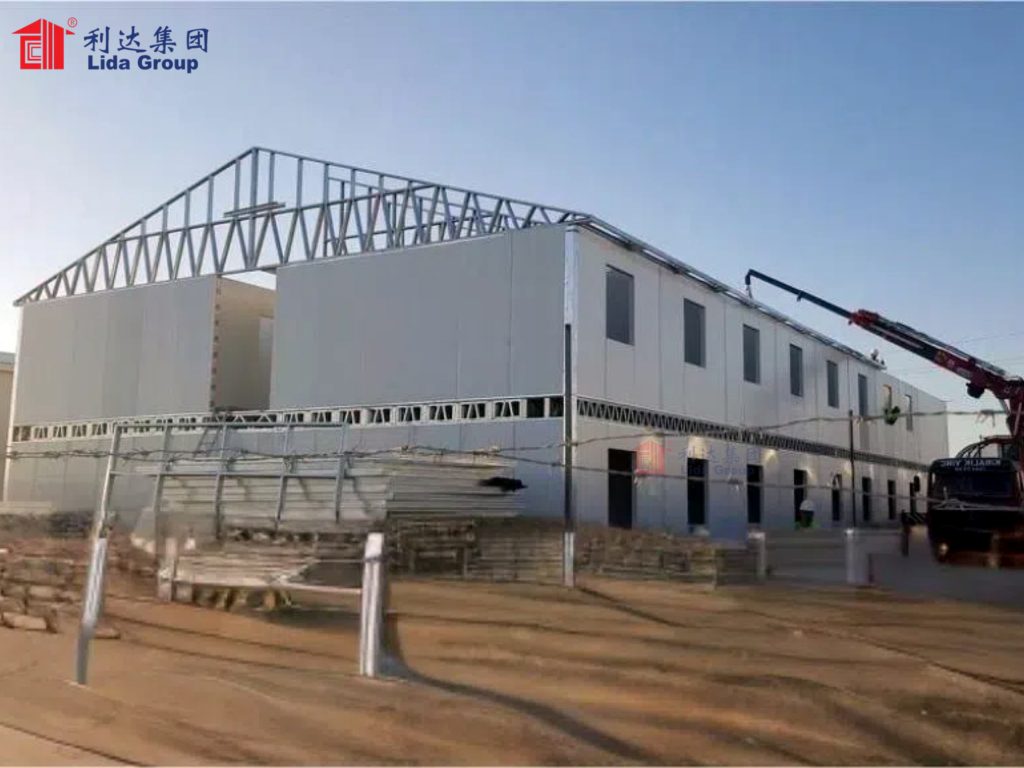
7. Comparison: Scalable Container Solutions vs. Traditional Accommodation
To further quantify the benefits of scalable low-cost container house solutions for large workforce populations, we conduct a detailed comparison with traditional accommodation options (wooden cabins, on-site built structures, and makeshift tents). The comparison is based on a typical project requiring accommodation for 500 workers over a 5-year period, with basic communal facilities.
7.1 Cost Comparison
The total cost of accommodation over 5 years is significantly lower for scalable container solutions: Scalable Container House Solution: Upfront cost of $450,000 (repurposed modules), annual maintenance cost of $20,000 (total $100,000 over 5 years), and relocation cost of $50,000 (if needed). Total cost: $600,000.Traditional Wooden Cabins: Upfront cost of $800,000, annual maintenance cost of $60,000 (total $300,000 over 5 years), and no reusability (cost of new accommodation for next project: $800,000). Total cost: $1,900,000.On-Site Built Structures: Upfront cost of $1,000,000, annual maintenance cost of $75,000 (total $375,000 over 5 years), and no reusability. Total cost: $2,375,000.Makeshift Tents: Upfront cost of $300,000, annual replacement cost of $150,000 (total $750,000 over 5 years), and high maintenance cost of $40,000 per year (total $200,000 over 5 years). Total cost: $1,250,000.
Scalable container solutions save $650,000-$1,775,000 over 5 years compared to traditional accommodation options, with the largest savings coming from reusability and low maintenance costs.
7.2 Scalability Comparison
Scalability is where container solutions outperform traditional options: Scalable Container House Solution: Can be expanded or reduced in days/weeks by adding/removing modules. No major modifications required. Modules can be reused for other projects. Traditional Wooden Cabins: Fixed in size. Expanding requires building new cabins, which takes 4-6 weeks per 50 workers. No reusability—cabins are demolished at the end of the project. On-Site Built Structures: Fixed in size. Expanding requires major construction work, which takes 8-10 weeks per 50 workers. No reusability. Makeshift Tents: Can be expanded, but tents are not durable and require frequent replacement. Expanding takes 1-2 weeks per 50 workers, but replacement costs are high.
7.3 Deployment Time Comparison
Container solutions are deployed significantly faster than traditional options: Scalable Container House Solution: Total deployment time (manufacturing + transportation + assembly) = 6-9 weeks. Traditional Wooden Cabins: Total deployment time = 16-20 weeks. On-Site Built Structures: Total deployment time = 20-24 weeks. Makeshift Tents: Total deployment time = 8-10 weeks, but tents require frequent replacement (adding downtime).
7.4 Durability and Maintenance Comparison
Container solutions are far more durable and require less maintenance: Scalable Container House Solution: Service life of 20-30 years. Annual maintenance cost of $20,000 for 500 workers. Traditional Wooden Cabins: Service life of 5-10 years. Annual maintenance cost of $60,000 for 500 workers. On-Site Built Structures: Service life of 10-15 years. Annual maintenance cost of $75,000 for 500 workers. Makeshift Tents: Service life of 1-2 years. Annual replacement and maintenance cost of $190,000 for 500 workers.
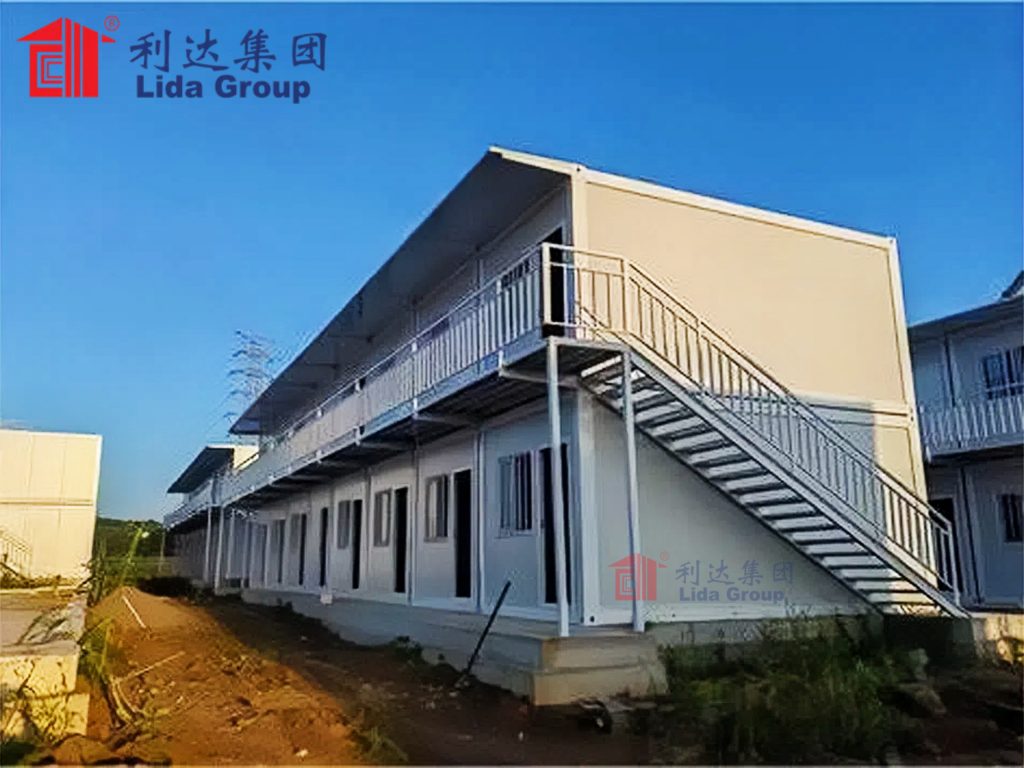
8. Market Status and Future Prospects
Scalable low-cost container house solutions for large workforce populations are gaining significant traction in the global market, driven by the increasing demand for affordable, efficient, and adaptable accommodation. As large-scale projects in construction, mining, manufacturing, and humanitarian aid continue to expand—particularly in emerging markets—the demand for these solutions is expected to grow rapidly in the coming years.
8.1 Current Market Status
The global modular container housing market for large workforces is growing at a CAGR of 9.2% between 2025 and 2030, with a projected market size of $12.5 billion by 2030. The market is driven by several factors, including the increasing number of large-scale infrastructure projects in emerging markets, the need for cost-effective accommodation solutions, and the growing focus on sustainability.
Key players in the market include modular construction companies, shipping container manufacturers, and specialized container housing providers. These companies are focusing on expanding their production capacity, improving modular design technologies, and offering customized solutions to meet the unique needs of different industries. Emerging markets in Asia, Africa, and Latin America are the fastest-growing regions, as these regions have large-scale infrastructure projects and limited budgets for accommodation.
The COVID-19 pandemic also highlighted the value of scalable container house solutions, as they were used to provide temporary accommodation for healthcare workers, quarantine facilities, and emergency shelters. This increased awareness of the benefits of container-based accommodation, further driving adoption in both project and emergency settings.
8.2 Future Prospects
The future of scalable low-cost container house solutions for large workforce populations is bright, with several trends expected to shape the market in the coming years: Integration of Smart Technologies: Manufacturers are increasingly integrating smart technologies into container house solutions, such as IoT sensors (to monitor temperature, humidity, and air quality), solar panels (for off-grid power), and energy-efficient appliances. These technologies will further reduce operational costs and improve worker comfort, making the solutions even more attractive to organizations.Enhanced Customization: As demand grows, manufacturers will expand their customization offerings, developing specialized solutions for specific industries (such as offshore oil and gas, mining, and disaster relief). This includes features such as explosion-proof systems, enhanced insulation, and raised floors, tailored to the unique needs of each industry.Localization of Production: To reduce transportation costs and improve accessibility, manufacturers will expand their production facilities in emerging markets. This localization will make container house solutions more affordable for local organizations and reduce delivery times.Greater Focus on Sustainability: With increasing emphasis on ESG (Environmental, Social, and Governance) commitments, manufacturers will prioritize sustainability in their manufacturing processes. This includes using more recycled materials, improving energy efficiency, and reducing the carbon footprint of container house solutions.Partnerships and Collaborations: Manufacturers will partner with governments, international organizations, and construction companies to expand the adoption of container house solutions. These partnerships will help to standardize the industry, improve quality control, and make the solutions more accessible to large organizations.
Overall, scalable low-cost container house solutions are poised to become the dominant accommodation option for large workforce populations in the coming years, as organizations increasingly recognize their cost-saving, scalability, and durability benefits.
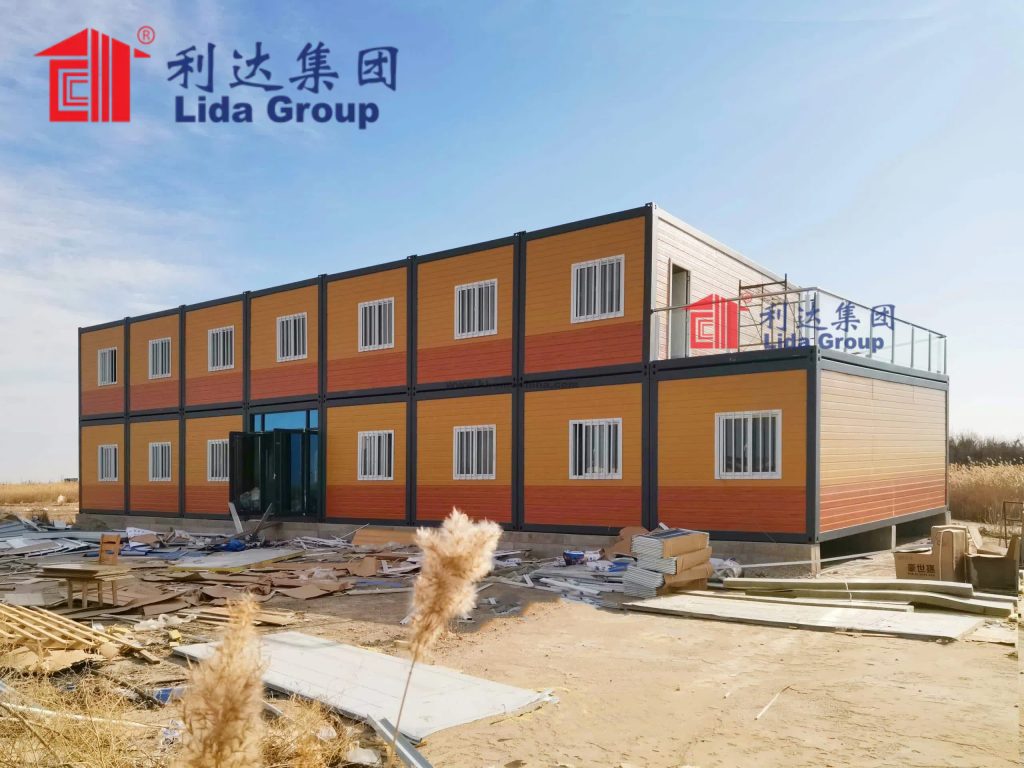
9. Conclusion
Scalable low-cost container house solutions have revolutionized the way organizations accommodate large workforce populations, offering an affordable, efficient, and adaptable alternative to traditional accommodation options. These solutions address the key pain points of housing hundreds or thousands of workers—high costs, slow deployment, inflexibility, and poor durability—while prioritizing worker comfort, safety, and productivity. By leveraging modular design, standardized manufacturing, cost-effective materials, and efficient on-site assembly, these solutions deliver significant cost savings, rapid deployment, and scalability that traditional accommodation cannot match.
The core strength of scalable low-cost container house solutions lies in their modularity, which allows organizations to scale the accommodation up or down as workforce sizes change, eliminating waste and improving budget efficiency. The use of repurposed shipping containers and standardized manufacturing processes reduces upfront and long-term costs, while the durability of steel containers ensures that the solutions can withstand harsh environments and require minimal maintenance. Design optimizations—such as space efficiency, weather adaptability, utility integration, and safety features—ensure that the accommodation is comfortable and functional for large workforces, improving worker morale and productivity.
Real-world application cases from diverse industries and regions demonstrate the tangible benefits of these solutions: significant cost savings (40-50% compared to traditional accommodation), rapid deployment (6-9 weeks vs. 16-24 weeks for traditional options), and scalability that adapts to fluctuating workforce sizes. Whether for a construction project in Saudi Arabia, a mining operation in Australia, a manufacturing hub in Vietnam, or a humanitarian aid effort in Ethiopia, scalable container house solutions have consistently delivered value, helping organizations meet their accommodation needs without compromising on quality or budget.
The global market for these solutions is growing rapidly, driven by increasing demand for affordable, efficient accommodation in emerging markets and the growing focus on sustainability. Future trends—such as the integration of smart technologies, enhanced customization, localization of production, and greater focus on sustainability—will further enhance the value of these solutions, making them even more attractive to organizations managing large workforces.
In conclusion, scalable low-cost container house solutions are more than just temporary accommodation—they are a strategic asset that empowers organizations to optimize their budgets, meet project timelines, and prioritize worker welfare. By combining scalability, affordability, and durability in a single solution, these container house solutions have transformed the way large workforce accommodation is delivered, creating safer, more efficient, and more economical living environments for workers around the world. As the global demand for large-scale infrastructure and humanitarian aid continues to grow, scalable low-cost container house solutions will undoubtedly play an increasingly important role in shaping the future of workforce accommodation.
Related news
-
Lida Group’s Mobile Modular Container Dormitory Offers Comfort and Affordability
2026-04-24 16:55:06
-
Prefabricated Container Worker Camp by Lida Group Saves Time and Money
2026-04-24 17:02:14
-
Efficient Prefabricated Container Worker Camp Now Available from Lida Group
2026-04-24 16:32:25
contact us
- Tel: +86-532-88966982
- Whatsapp: +86-13793209022
- E-mail: sales@lidajituan.com
