



Prefabricated Container Worker Camp by Lida Group Saves Time and Money
2026-Apr-24 17:02:14
By Admin
In the global construction, mining, infrastructure, and humanitarian aid sectors, the efficient deployment of on-site worker accommodation is a critical factor that directly impacts project timelines, budgets, and worker productivity. Large-scale projects—whether highway construction in remote rural areas, mining operations in harsh deserts, offshore energy installations, or temporary shelters for disaster relief—often require housing hundreds or even thousands of workers, supervisors, and support staff in locations where traditional permanent housing is impractical or prohibitively expensive. For decades, enterprises and organizations have struggled with the limitations of conventional temporary worker camps, such as on-site built structures, prefabricated wooden cabins, or makeshift tent villages. These solutions are plagued by lengthy construction timelines, exorbitant costs, poor durability, and inefficient resource utilization, often leading to project delays, budget overruns, and compromised worker welfare. In this challenging landscape, Lida Group, a global leader in modular construction and container-based solutions, has emerged as a transformative force with its prefabricated container worker camp—a innovative, all-in-one accommodation solution that prioritizes time efficiency and cost savings without sacrificing quality, comfort, or functionality. This article provides a comprehensive overview of Lida Group’s prefabricated container worker camp, exploring how its design, manufacturing processes, and modular technology deliver unprecedented time and cost benefits, supported by real-world application cases, detailed cost and time comparisons, and insights into its market impact and future prospects.
Founded in 1993, Lida Group has established itself as a pioneer in the modular construction industry, with a global presence spanning over 120 countries and regions. With decades of experience in designing, manufacturing, and delivering modular container solutions, the company has earned a reputation for quality, innovation, and customer-centricity. Lida Group’s core mission is to provide practical, sustainable, and cost-effective housing solutions that address the unique challenges of on-site accommodation, while prioritizing operational efficiency and worker well-being. The prefabricated container worker camp is one of the company’s flagship products, specifically engineered to solve the long-standing pain points of traditional worker camps—namely, slow deployment, high costs, and poor adaptability. Unlike generic container housing that often requires extensive on-site modification or compromises on functionality, Lida Group’s prefabricated container worker camp is a fully integrated, turnkey solution that combines residential, communal, and utility spaces into a modular system, designed to be deployed quickly, reused repeatedly, and customized to meet the specific needs of any project.
This article delves into the key features of Lida Group’s prefabricated container worker camp that enable it to save time and money, including its modular design, standardized manufacturing processes, efficient on-site assembly, and long-term durability. We will explore how the camp’s design optimizations—from space-efficient layouts to weather-adaptive features—contribute to operational efficiency, and how its reusability and low maintenance requirements further reduce long-term costs. Real-world application cases from different industries and regions will demonstrate the tangible time and cost savings achieved by enterprises that have adopted Lida Group’s solution. A detailed comparison with traditional worker camp solutions will quantify these benefits, highlighting why Lida Group’s prefabricated container worker camp has become the preferred choice for enterprises seeking to optimize project timelines and budgets. Finally, we will discuss the current market status of the product and its future prospects, as Lida Group continues to innovate and expand its offerings to meet the growing global demand for efficient, cost-effective on-site accommodation.
1. Understanding Lida Group’s Prefabricated Container Worker Camp
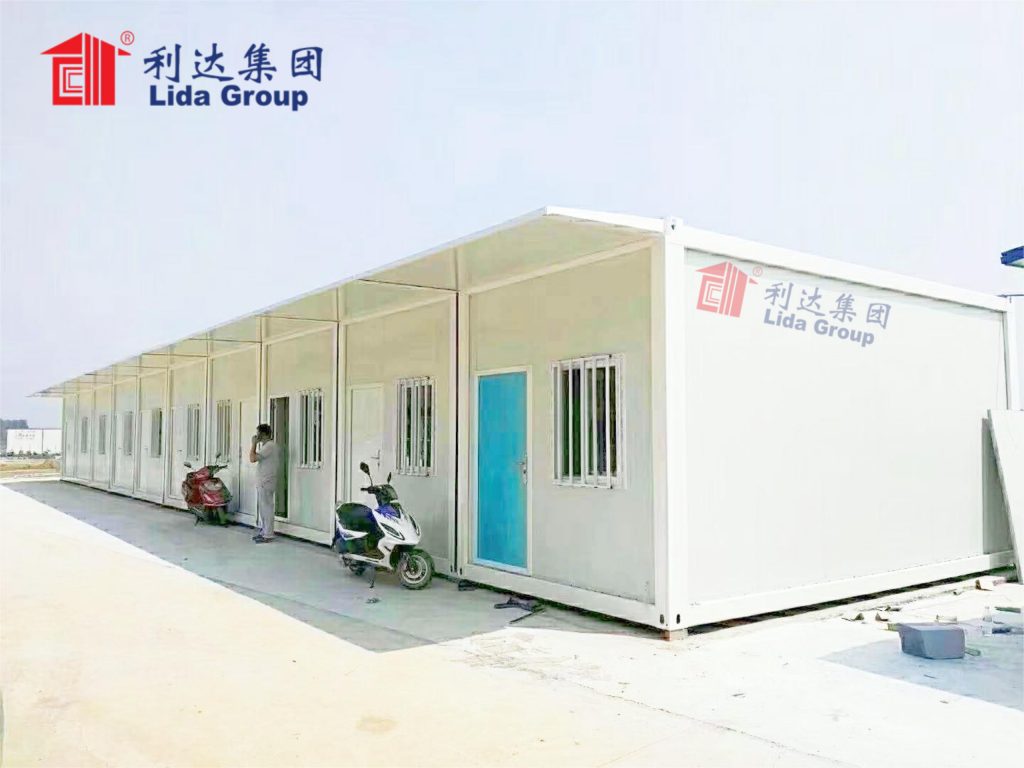
Before exploring the time and cost-saving benefits of Lida Group’s prefabricated container worker camp, it is essential to understand what sets this product apart from traditional worker camps and generic container housing solutions. Lida Group’s prefabricated container worker camp is a fully integrated, modular accommodation system constructed using high-quality steel shipping containers (either new or repurposed) that are prefabricated in a factory and delivered to the project site ready for quick assembly. Unlike traditional worker camps that require on-site construction from scratch or the assembly of disjointed components, Lida Group’s camp is designed as a cohesive system, with all residential, communal, and utility units pre-equipped with essential amenities and pre-connected for easy integration.
The core defining feature of Lida Group’s prefabricated container worker camp is its modularity. Each component of the camp—including dormitory units, dining halls, kitchens, laundry facilities, restrooms, medical stations, and office spaces—is a standalone modular container that can be easily transported, assembled, and reconfigured. This modular design allows enterprises to scale the camp up or down based on workforce size, add or remove facilities as project needs change, and relocate the entire camp to a new project site once the current project is completed. This flexibility not only reduces waste but also maximizes the return on investment by ensuring the camp can be reused across multiple projects.
Lida Group offers a range of standardized configurations for its prefabricated container worker camp, tailored to different project sizes and requirements. The camp can be configured for small teams of 50 workers or large workforces of 500+ workers, with a variety of unit sizes and layouts to choose from. The standard dormitory units are available in 20ft and 40ft sizes: the 20ft unit (approximately 14 square meters) can comfortably house 4-6 workers in bunk beds, with built-in storage and basic amenities, while the 40ft unit (approximately 28 square meters) can accommodate 8-12 workers or be configured as a communal space (such as a dining hall, kitchen, or laundry room). All units are designed with standardized dimensions, ensuring compatibility with global shipping and transportation networks, and can be customized with additional features—such as enhanced insulation, air conditioning, solar power, or specialized safety systems—to meet the unique needs of different project environments.
Another key distinction of Lida Group’s prefabricated container worker camp is its focus on quality and durability. Unlike low-quality container housing that uses substandard materials and simplified construction, Lida Group’s camp units are built using high-strength Q235 or Q355 steel frames (the same steel used in shipping containers), which are resistant to corrosion, impact, and extreme weather conditions. The steel frames are treated with hot-dip galvanization and anti-rust paint to extend their service life to 20-30 years, ensuring the camp remains functional and reliable even in harsh on-site environments—from hot and dusty deserts to cold and snowy mountains, and coastal regions with high salt spray. The units are also equipped with premium insulation, fire-resistant wall panels, and waterproof roofing, ensuring a comfortable and safe living environment for workers while minimizing maintenance requirements.
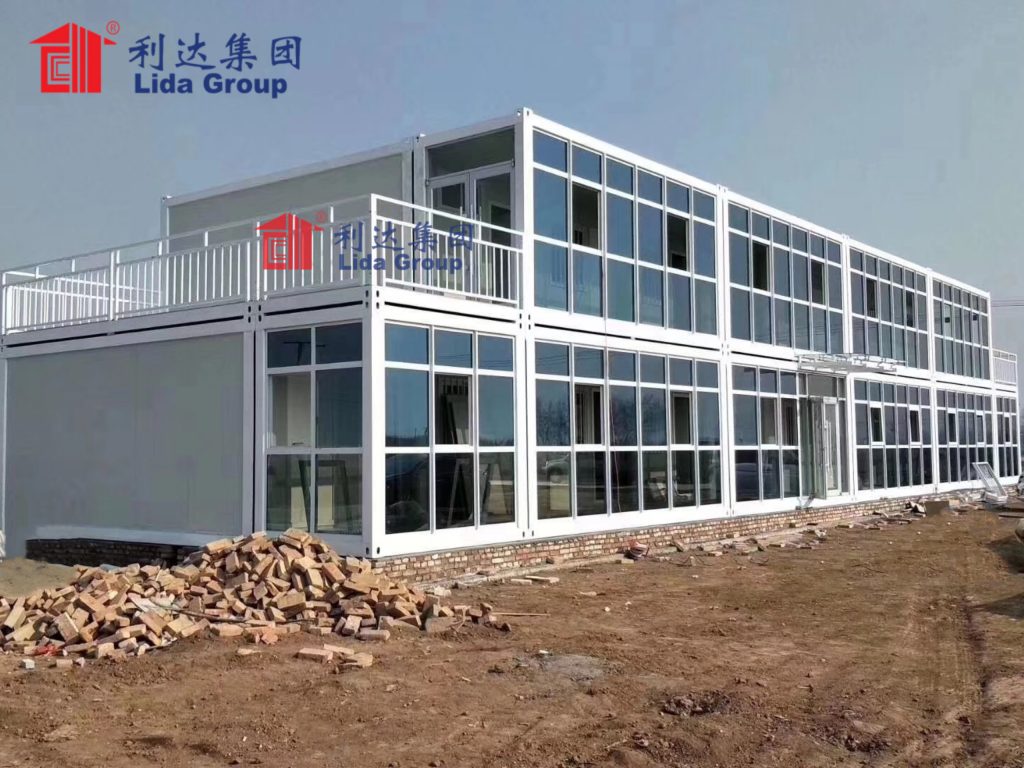
2. Core Advantages: How Lida Group’s Prefabricated Container Worker Camp Saves Time
Time is a critical resource in any large-scale project, and delays in deploying worker accommodation can lead to costly project setbacks, missed deadlines, and reduced productivity. Lida Group’s prefabricated container worker camp is designed from the ground up to minimize deployment time, leveraging prefabrication, modular assembly, and standardized processes to deliver a turnkey solution that can be operational in a fraction of the time required for traditional worker camps. Below is a detailed exploration of the key time-saving features of the camp.
2.1 Factory Prefabrication: Eliminating On-Site Construction Delays
One of the most significant time-saving benefits of Lida Group’s prefabricated container worker camp is its factory-based prefabrication process. Unlike traditional worker camps that require extensive on-site construction—including foundation work, framing, roofing, electrical and plumbing installation, and interior finishing—Lida Group’s camp units are fully prefabricated in state-of-the-art factories. All components, from the steel frame and insulation to the electrical wiring, plumbing, and interior finishes, are installed in the factory before the units are shipped to the project site. This means that when the units arrive on-site, they are fully functional and ready to be assembled, eliminating the need for time-consuming on-site construction work.
The prefabrication process also allows for parallel work streams: while the project site is being prepared (e.g., clearing land, leveling the ground), Lida Group’s factories are manufacturing the camp units. This parallel workflow significantly reduces the overall project timeline, as the camp can be deployed as soon as the site is ready, rather than waiting for on-site construction to be completed. For example, a traditional worker camp for 100 workers might take 8-12 weeks to construct on-site, while Lida Group’s prefabricated container worker camp for the same number of workers can be manufactured in 2-3 weeks and assembled on-site in 1-2 weeks, resulting in a total deployment time of 3-5 weeks—saving 5-9 weeks of project time.
2.2 Quick On-Site Assembly: Minimal Labor and Equipment Requirements
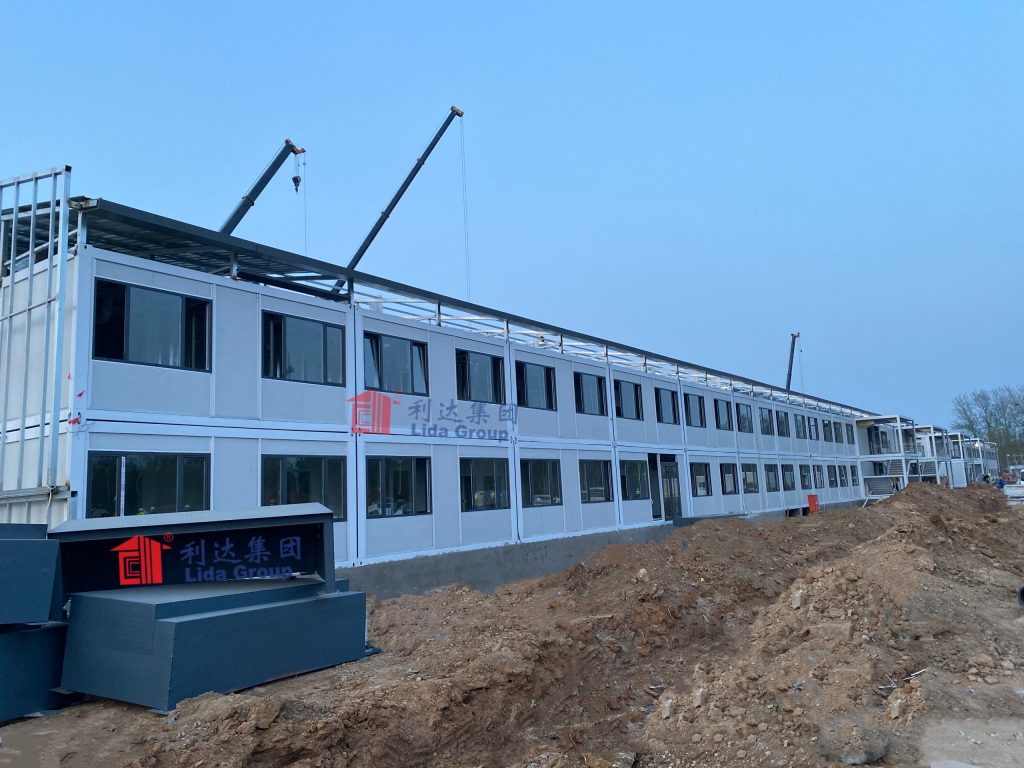
Lida Group’s prefabricated container worker camp is designed for quick and easy on-site assembly, requiring minimal labor and no complex construction equipment. The modular units are equipped with pre-installed connection points for structural alignment, electricity, plumbing, and sewage, allowing them to be quickly connected to each other and to on-site utilities. A team of 4-6 unskilled or semi-skilled workers can assemble 10-15 modular units in a single day, and a full camp for 100 workers can be fully assembled in just 1-2 weeks. This is a stark contrast to traditional worker camps, which require a large team of skilled construction workers (carpenters, electricians, plumbers) and heavy equipment (cranes, bulldozers) to build, often taking months to complete.
The simplicity of the assembly process also reduces the risk of delays due to labor shortages or equipment breakdowns. Since the units are prefabricated and pre-tested in the factory, there is no need for on-site adjustments or repairs, further streamlining the assembly process. Additionally, the modular design allows for phased deployment: the most critical units (e.g., dormitories, restrooms) can be assembled first to accommodate workers as they arrive on-site, while additional units (e.g., dining halls, offices) are added as needed. This phased approach ensures that workers have access to essential accommodation and facilities from the start of the project, minimizing downtime and maximizing productivity.
2.3 Streamlined Transportation: Reducing Logistics Time
Transportation is another area where Lida Group’s prefabricated container worker camp saves time. The modular units are designed to be compatible with standard shipping and transportation methods, including trucks, ships, and trains. Their standardized dimensions (20ft and 40ft) allow them to be stacked during shipping, reducing the number of trips required to transport the entire camp. For example, a camp for 100 workers (consisting of 20 dormitory units and 5 communal units) can be transported in just 3-4 truckloads, compared to traditional worker camps, which require dozens of truckloads to transport loose building materials (wood, concrete, steel, etc.).
The ability to stack the units also reduces transportation time, as more units can be transported in a single trip. For remote project sites, where transportation is often slow and costly, this streamlined logistics process can save weeks of transportation time. Additionally, the units are lightweight enough to be transported to extremely remote sites via helicopter if necessary, ensuring that the camp can be deployed to any project location, regardless of accessibility. This flexibility eliminates delays due to transportation challenges, ensuring that the camp is delivered and assembled on time.
2.4 Reduced Permit and Approval Time
Traditional worker camps often require extensive permits and approvals from local authorities, as they involve on-site construction and permanent or semi-permanent structures. This permit process can take weeks or even months, delaying the deployment of the camp and the start of the project. Lida Group’s prefabricated container worker camp, however, is classified as a temporary modular structure, which typically requires fewer permits and approvals. Since the units are prefabricated and can be easily relocated, local authorities often view them as temporary accommodations, simplifying the permit process and reducing approval time.
Lida Group also provides comprehensive documentation and support to help customers navigate the permit process, including technical drawings, safety certifications, and compliance reports. This support further streamlines the approval process, ensuring that the camp can be deployed as quickly as possible. In many cases, the permit process for Lida Group’s prefabricated container worker camp takes just 1-2 weeks, compared to 4-8 weeks for traditional worker camps—saving an additional 2-6 weeks of project time.
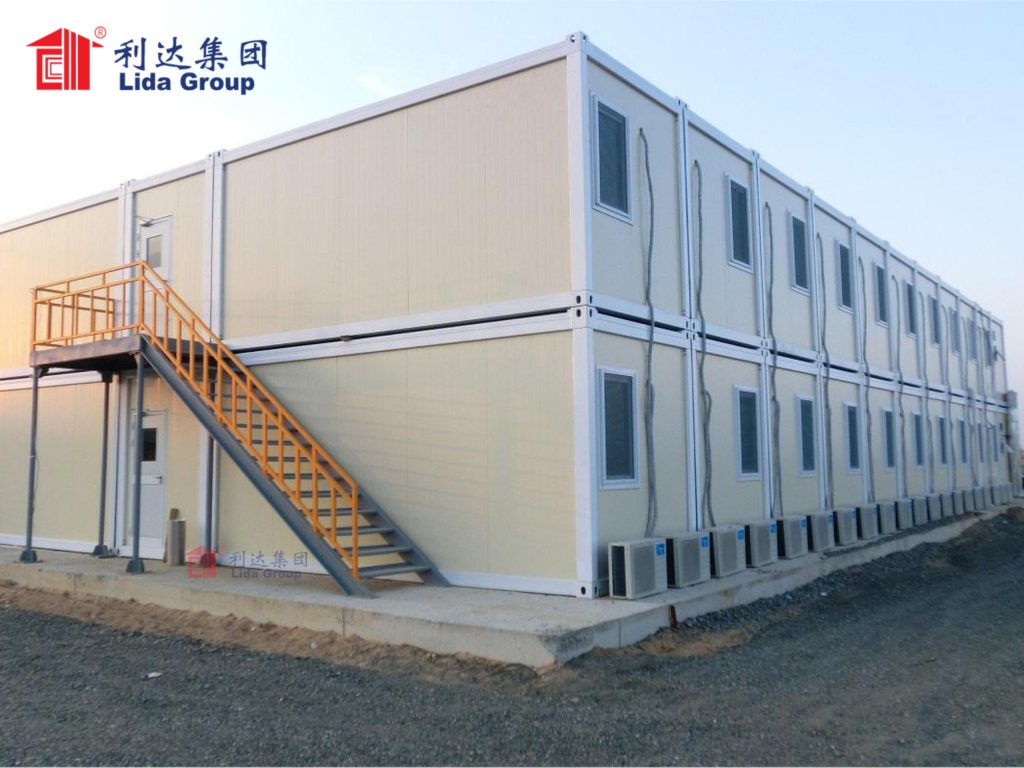
3. Core Advantages: How Lida Group’s Prefabricated Container Worker Camp Saves Money
In addition to saving time, Lida Group’s prefabricated container worker camp delivers significant cost savings compared to traditional worker camp solutions. These cost savings are achieved through a combination of efficient manufacturing processes, smart material selection, low maintenance requirements, reusability, and reduced labor and transportation costs. Below is a detailed exploration of the key cost-saving features of the camp.
3.1 Cost-Effective Materials: Repurposed Containers and Mass-Produced Components
One of the primary cost-saving benefits of Lida Group’s prefabricated container worker camp is the use of repurposed shipping containers. Lida Group sources high-quality used shipping containers from global shipping networks, which are far cheaper than new building materials (such as wood, concrete, or steel framing) used for traditional worker camps. Repurposing these containers not only reduces material costs by 30-50% but also aligns with the company’s sustainability goals by reducing waste and conserving natural resources. For enterprises with extremely tight budgets, Lida Group also offers new container options at a slightly higher cost, but still significantly lower than traditional prefabricated wooden cabins or on-site built structures.
Lida Group also leverages mass production to reduce the cost of components. The company manufactures camp components (such as insulation panels, interior finishes, doors, and windows) in bulk, leveraging economies of scale to reduce the cost per unit by 20-30% compared to custom-designed components. This mass production also ensures consistency in quality across all units, reducing the risk of costly defects or repairs.
3.2 Reduced Labor Costs: Minimal On-Site Labor Requirements
Traditional worker camps require a large team of skilled construction workers to build, including carpenters, electricians, plumbers, and laborers. These workers are often expensive, especially in remote project locations where labor is scarce. Lida Group’s prefabricated container worker camp, however, requires minimal on-site labor, as most of the work is completed in the factory. A small team of unskilled or semi-skilled workers can assemble the camp, reducing on-site labor costs by up to 40% compared to traditional worker camps.
Additionally, the quick assembly process reduces the duration of labor costs, as workers are only needed on-site for 1-2 weeks to assemble the camp, compared to months for traditional construction. This further reduces labor costs, as enterprises do not need to pay for a large labor team for an extended period. The factory prefabrication process also reduces the risk of labor-related delays, which can lead to additional costs in traditional construction.
3.3 Low Maintenance Costs: Durable and Easy to Maintain
Traditional worker camps, such as wooden cabins or makeshift tents, require frequent maintenance to remain functional. Wooden cabins need regular painting, roof repairs, and termite treatment, while tents need to be replaced frequently due to damage from weather or wear and tear. These maintenance costs can add up significantly over the life of the project, increasing the total cost of the camp.
Lida Group’s prefabricated container worker camp, however, requires minimal maintenance. The durable steel frame is resistant to rot, mold, pest infestations, and weather damage, eliminating the need for frequent repairs and replacements. The units are also equipped with high-quality insulation, waterproof roofing, and fire-resistant wall panels, which further reduce maintenance requirements. Annual maintenance costs for Lida Group’s camp are approximately $4,000-$7,000 for a 100-worker camp, compared to $15,000-$25,000 for traditional worker camps. Over a 2-year project period, this translates to savings of $22,000-$42,000 in maintenance costs.
3.4 Reusability: Maximizing Return on Investment
Unlike traditional worker camps, which are often demolished at the end of a project, Lida Group’s prefabricated container worker camp can be easily disassembled, transported, and reassembled at new project sites. This reusability eliminates the need for enterprises to invest in new accommodation for each project, reducing the total cost of accommodation across multiple projects. For example, a construction company that uses Lida Group’s camp for a highway project in one region can relocate the same units to a new building project in another region, saving tens of thousands of dollars in new accommodation costs.
Additionally, used camp units have a high resale value—approximately 50-60% of the original cost—providing an additional return on investment for enterprises. This reusability also reduces waste, aligning with sustainability goals and reducing the environmental impact of the project. Over a 10-year period (5 projects of 2 years each), Lida Group’s camp can save enterprises approximately $550,000-$1,050,000 compared to traditional worker camps, depending on the project size and location.
3.5 Reduced Transportation Costs: Streamlined Logistics
Transportation costs are a significant expense for traditional worker camps, as they require transporting large quantities of loose building materials to the project site. Lida Group’s prefabricated container worker camp, however, minimizes transportation costs by leveraging standardized container dimensions and stackable design. The units can be stacked during shipping, reducing the number of trips required and lowering fuel consumption and transportation costs by up to 40% compared to traditional worker camps.
For remote project sites, where transportation costs are often higher, this savings is particularly significant. For example, transporting a traditional worker camp for 100 workers to a remote mining site might cost $50,000-$70,000, while transporting Lida Group’s prefabricated camp for the same number of workers might cost just $30,000-$42,000—saving $20,000-$28,000 in transportation costs. Additionally, the ability to transport the units via standard shipping methods reduces the need for specialized transportation, further lowering costs.
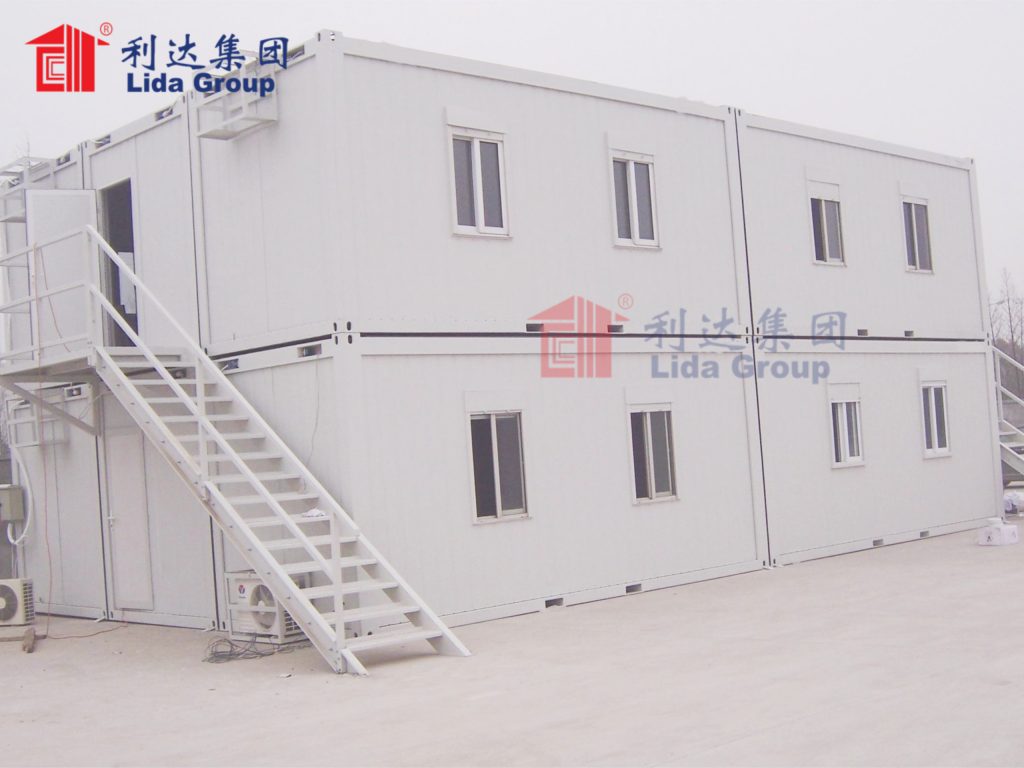
4. Key Technologies and Manufacturing Processes Enabling Time and Cost Savings
Lida Group’s ability to deliver significant time and cost savings with its prefabricated container worker camp is made possible by its advanced technologies and efficient manufacturing processes. The company has invested heavily in research and development to optimize every aspect of the camp’s design and production, ensuring that quality, efficiency, and cost-effectiveness are not compromised. Below is a detailed exploration of these key technologies and processes.
4.1 Advanced Material Selection: Balancing Durability and Cost
Material selection is critical to achieving the dual goals of time and cost savings. Lida Group uses a combination of cost-effective and high-quality materials to ensure the camp is durable, comfortable, and economical. For the steel frame, the company uses high-strength Q235 or Q355 steel, which is both strong and affordable, providing the structural integrity needed to withstand harsh on-site environments. The steel frame is treated with hot-dip galvanization and anti-rust paint to enhance corrosion resistance, extending the service life of the camp to 20-30 years and reducing maintenance costs.
For insulation, Lida Group uses cost-effective yet high-performance materials such as rock wool and polyurethane foam. Rock wool is an affordable, fire-resistant insulation material that provides excellent thermal and sound insulation, while polyurethane foam offers superior insulation properties and is lightweight, reducing the overall weight of the units (which simplifies transportation and assembly). The interior finishes are made of simple, easy-to-install materials such as plywood, PVC panels, or recycled wood panels—these materials are affordable, durable, and easy to clean, ensuring the camp remains comfortable and hygienic while minimizing installation time and costs.
The electrical and plumbing components used in the camp are basic but reliable, focusing on functionality rather than luxury. This includes standard light fixtures, outlets, faucets, and toilets, which are cheaper and easier to maintain than high-end components. For projects that require additional amenities (such as air conditioning, solar power, or water heaters), Lida Group offers optional upgrades at a reasonable cost, allowing enterprises to customize the camp to their specific needs without breaking the budget.
4.2 Standardized and Automated Production: Improving Efficiency and Reducing Costs
Lida Group operates state-of-the-art manufacturing facilities with automated production lines, which significantly reduce production time and costs while improving quality control. The company uses standardized designs for its camp units, which allows for mass production of components (such as insulation panels, interior finishes, and doors). This mass production leverages economies of scale, reducing the cost per unit by 20-30% compared to custom-designed housing.
The production process begins with the preparation of the steel container—cleaning, inspecting, and treating it with anti-corrosion coatings. Next, the container is modified with windows, doors, and openings for utilities. The insulation is then installed in the walls, roof, and floor, followed by the interior finishes, electrical wiring, and plumbing. All components are pre-installed in the factory, ensuring that the units are fully functional when they arrive on-site. This prefabrication process reduces on-site construction time by up to 70% compared to traditional worker camps, further reducing labor costs and project delays.
Quality control is a top priority at Lida Group, and each camp unit undergoes rigorous testing before being shipped to the customer. This includes testing for structural integrity, insulation performance, water resistance, and electrical safety. The company also adheres to international quality standards, ensuring that its camps meet the safety and quality requirements of projects worldwide. This rigorous quality control reduces the risk of costly defects or repairs, further saving time and money for customers.
4.3 Modular Assembly and Connection Technologies: Simplifying On-Site Deployment
Lida Group’s prefabricated container worker camp is designed with ease of assembly and connection in mind. The units are equipped with pre-installed connection points for structural alignment, electricity, plumbing, and sewage, allowing them to be quickly connected to each other and to on-site utilities. The connection process is simple and requires no specialized tools or skills, enabling a small team of workers to assemble the camp quickly.
The company also uses advanced modular connection technologies, such as bolted connections and prefabricated utility junctions, which ensure a secure and reliable connection between units. These technologies not only speed up the assembly process but also ensure that the camp is structurally sound and functional. Additionally, the modular design allows for easy reconfiguration of the camp, enabling enterprises to add or remove units as project needs change, further maximizing efficiency and cost savings.
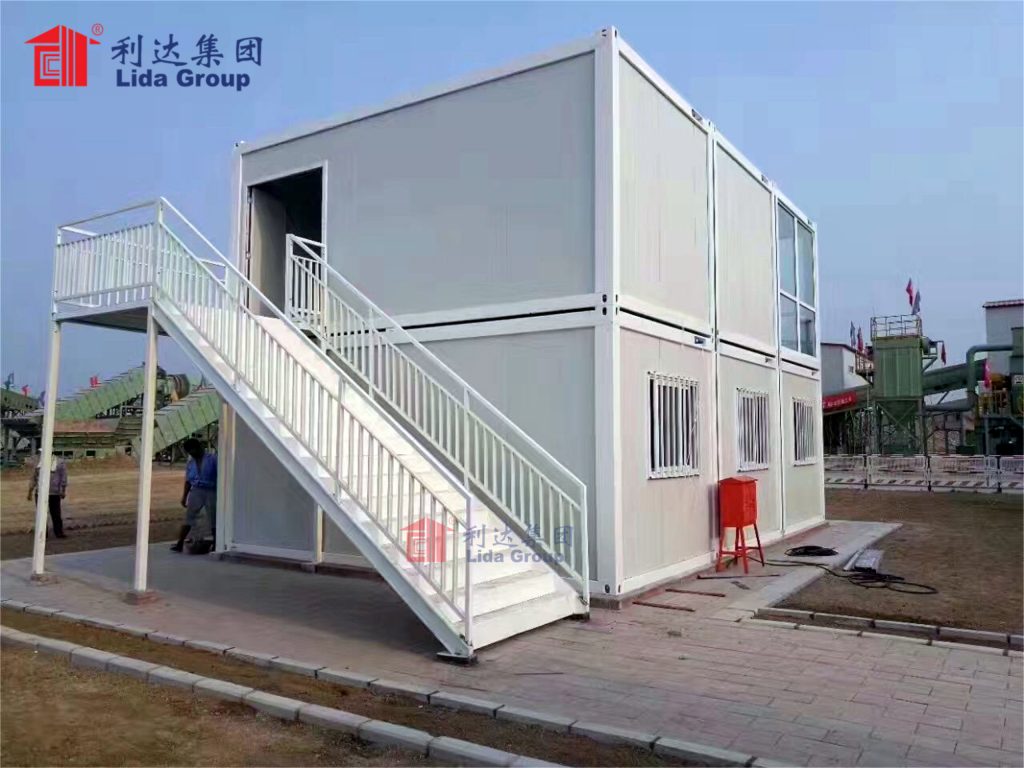
5. Design Optimizations for Enhanced Efficiency and Cost Savings
Lida Group’s prefabricated container worker camp is not just a time and cost-saving solution—it is also designed to meet the unique challenges of on-site living, with a range of design optimizations that enhance operational efficiency, reduce costs, and improve worker comfort. These design optimizations are tailored to different project environments and worker needs, ensuring that the camp is both functional and cost-effective.
5.1 Space Optimization: Maximizing Functionality with Minimal Footprint
On-site accommodation often has limited space, so Lida Group’s camp is designed to maximize living and working space while minimizing the footprint of the camp. The interior layout of each unit is carefully planned to ensure that every square meter is used efficiently. Dormitory units feature bunk beds arranged along the walls, leaving the center of the unit free for movement, and built-in storage solutions—such as under-bed drawers, wall-mounted cabinets, and shelves—help keep the units organized and clutter-free. Communal units, such as dining halls and kitchens, are designed with open layouts to accommodate large numbers of workers, while still providing ample space for food preparation and dining.
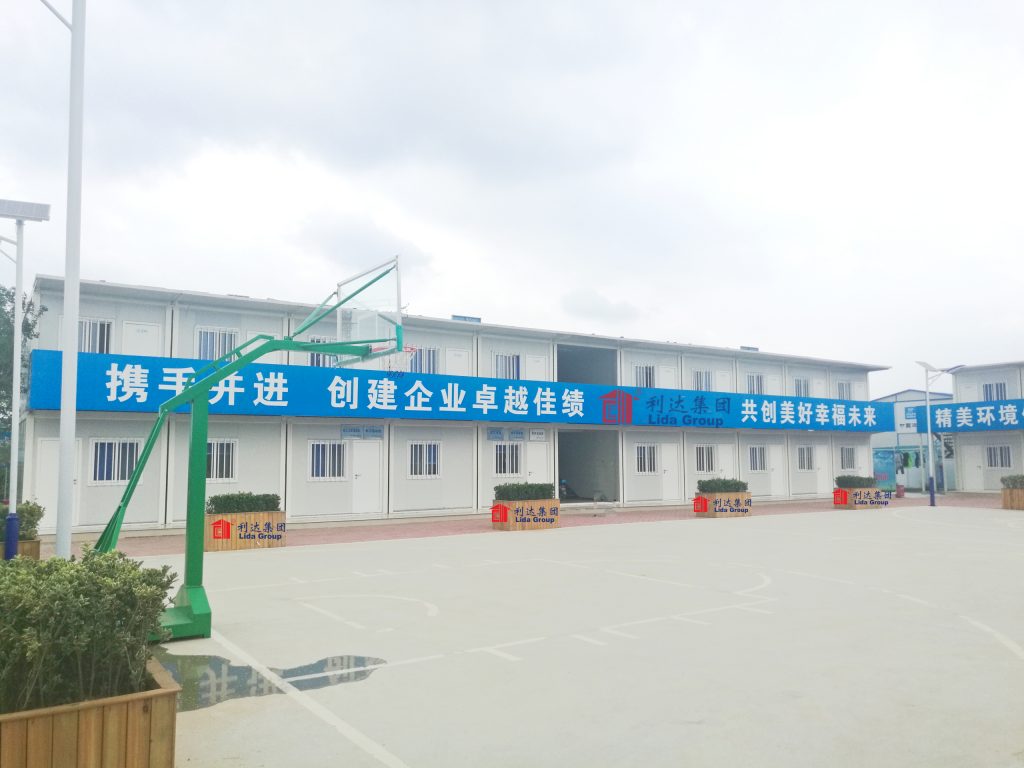
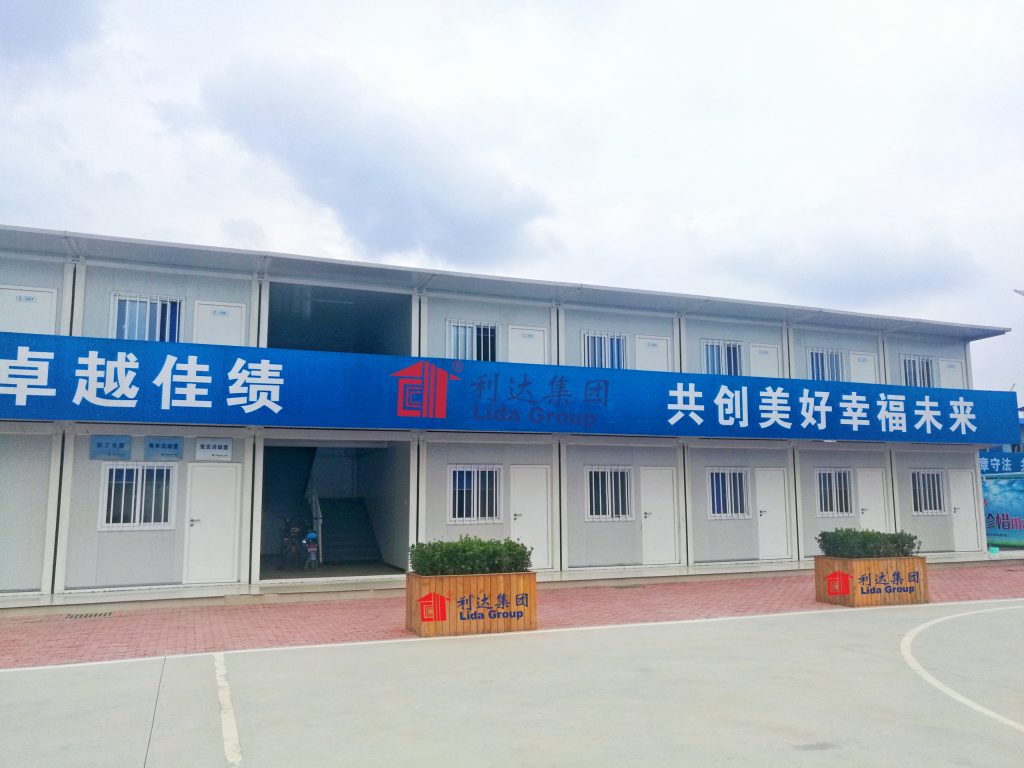
The modular design also allows for vertical stacking of units, which further reduces the camp’s footprint. For example, 40ft units can be stacked two or three high, doubling or tripling the number of workers that can be accommodated in the same area. This space optimization reduces the amount of land required for the camp, lowering land rental costs and making the camp suitable for projects with limited available space.
5.2 Weather Adaptability: Reducing Maintenance and Operational Costs
Project accommodation is often located in diverse and harsh environments, and Lida Group’s camp is designed to adapt to these conditions, reducing maintenance costs and ensuring worker comfort. For hot and humid regions (such as Southeast Asia, Africa, and South America), the camp units are equipped with enhanced ventilation systems (large windows, ventilation fans, and optional air conditioning), heat-resistant insulation, and reflective roof coatings to reduce indoor temperatures. Anti-mold coatings are also used to prevent mold growth in humid conditions, reducing maintenance costs associated with mold remediation.
For cold regions (such as Canada, Russia, and Northern Europe), the units feature thick thermal insulation, radiant heating systems, and double-glazed windows to keep the interior warm. The steel frame is reinforced to withstand heavy snowfall, and the roof is sloped to prevent snow accumulation, reducing the risk of structural damage and maintenance costs. For coastal regions, the units are treated with extra anti-corrosion coatings (hot-dip galvanization and anti-rust paint) to protect the steel frame from salt spray, and waterproof membranes are used to prevent water damage from coastal rains and storms. For dusty environments (such as deserts and mining sites), the units are equipped with dust-proof ventilation systems and air filters to keep the interior clean, reducing cleaning and maintenance costs.
5.3 Utility Integration: Reducing Operational Costs
Lida Group’s prefabricated container worker camp is designed to integrate essential utilities (water, electricity, sewage) efficiently, reducing operational costs. Each unit is pre-equipped with plumbing connections for water supply and sewage disposal, and electrical wiring for lighting, outlets, and appliances. For remote projects without access to grid electricity, Lida Group can integrate solar panels and battery storage systems into the camp, providing reliable off-grid power and reducing electricity costs.
The camp also features water-saving fixtures, such as low-flow faucets and toilets, which reduce water consumption and lower water costs. Energy-efficient LED lighting is used throughout the camp, reducing electricity consumption by up to 50% compared to traditional lighting. These utility optimizations not only reduce operational costs but also align with sustainability goals, making the camp a more environmentally friendly option.
5.4 Customization Options: Tailoring the Camp to Project Needs
Every project has unique requirements, and Lida Group offers a range of customization options to ensure its prefabricated container worker camp meets the specific needs of each customer. This customization not only improves the functionality of the camp but also reduces unnecessary costs by allowing enterprises to pay only for the features they need. Customization options include: customizing the number of bunk beds per unit, adding extra windows or doors, integrating specialized safety features (such as explosion-proof systems for mining projects), adding communal facilities (such as dining halls, kitchens, medical stations, or gyms), and integrating renewable energy systems (such as solar panels or wind turbines).
Lida Group’s design team works closely with customers to understand their project requirements and develop a customized solution that balances functionality, comfort, and cost-effectiveness. This customer-centric approach ensures that the camp is tailored to the specific needs of the project, reducing waste and maximizing cost savings.
6. Real-World Application Cases: Time and Cost Savings in Action
To demonstrate the tangible time and cost savings of Lida Group’s prefabricated container worker camp, we present four real-world application cases from different industries and regions. These cases highlight how the camp has addressed the unique challenges of on-site accommodation, delivered significant time and cost savings, and improved operational efficiency and worker comfort.
6.1 Case Study 1: Highway Construction Project in Kenya
A leading Kenyan construction company was awarded a contract to build a 200-kilometer highway in rural Kenya, requiring accommodation for 150 workers over a 2-year period. The project site was remote, with limited access to building materials and labor, and the company had a tight budget and timeline. Traditional worker camps (wooden cabins) would have taken 10-12 weeks to construct on-site, cost approximately $300,000, and required frequent maintenance. The company turned to Lida Group’s prefabricated container worker camp to meet its time and cost requirements.
Lida Group provided a customized camp consisting of 30 20ft units: 25 dormitory units (housing 6 workers each) and 5 communal units (dining hall, kitchen, laundry room, medical station, and office). The units were prefabricated in Lida Group’s factory in 3 weeks and transported to the project site via truck. A team of 5 local workers assembled the camp in just 2 weeks, meaning the entire camp was operational in 5 weeks—saving 5-7 weeks of project time compared to traditional worker camps.
The total cost of the camp was $170,000 (including manufacturing, transportation, and assembly)—a savings of $130,000 (43%) compared to traditional wooden cabins. Maintenance costs over the 2-year project period were approximately $6,000, compared to an estimated $30,000 for traditional cabins—saving an additional $24,000. The camp’s weather-adaptive design kept workers comfortable in the hot, dusty Kenyan climate, reducing staff turnover by 30% and increasing productivity by 15%. At the end of the project, the camp was disassembled and transported to another highway project in western Kenya, further maximizing the company’s investment.
6.2 Case Study 2: Mining Project in Australia
A major mining company in Australia needed accommodation for 200 workers at a remote gold mining site in the outback, where temperatures can reach 45°C in summer and drop to 0°C in winter. The company required a camp that was durable, weather-resistant, quick to deploy, and cost-effective. Traditional worker camps would have taken 12-16 weeks to construct, cost approximately $400,000, and required high maintenance due to the extreme weather conditions.
Lida Group provided a customized camp consisting of 40 20ft units: 32 dormitory units (housing 6-7 workers each) and 8 communal units (dining hall, kitchen, laundry room, gym, medical station, and offices). The units were prefabricated with enhanced insulation, reflective roof coatings, air conditioning, and radiant heating systems to cope with the extreme weather. The camp was manufactured in 4 weeks, transported to the site via truck, and assembled in 3 weeks—operational in just 7 weeks, saving 5-9 weeks of project time.
The total cost of the camp was $260,000—a savings of $140,000 (35%) compared to traditional worker camps. Maintenance costs over the 3-year project period were approximately $18,000, compared to an estimated $60,000 for traditional camps—saving $42,000. The camp’s durable steel structure withstood dust storms and extreme temperatures, with no structural damage or corrosion over 3 years of use. When the mining site shifted to a new area after 3 years, 30 of the units were relocated, saving the company $200,000 in new accommodation costs.
6.3 Case Study 3: Disaster Relief Project in Bangladesh
After a major flood in Bangladesh, an international humanitarian organization needed to provide temporary accommodation for 500 displaced families (approximately 2,500 people) in a flood-prone region. The organization required a camp that was affordable, quick to deploy, and resistant to flooding and mold growth. Traditional temporary shelters (tents and makeshift cabins) would have taken 8-10 weeks to deploy, cost approximately $500,000, and required frequent replacement due to flood damage.
Lida Group provided a customized camp consisting of 125 40ft units, configured to house families and include communal facilities (kitchens, restrooms, and medical stations). The units were prefabricated with raised floors (to prevent flood damage), waterproof membranes, and anti-mold coatings. The camp was manufactured in 5 weeks, transported to the disaster zone via ship, and assembled in just 1 week with the help of local volunteers—operational in 6 weeks, saving 2-4 weeks of deployment time.
The total cost of the camp was $250,000—a savings of $250,000 (50%) compared to traditional temporary shelters. The camp’s raised floors and waterproof design prevented flood damage, even when the area was hit by a second round of flooding, eliminating the need for costly repairs or replacements. The camp remained in good condition for 2 years, until the displaced families could return to their homes. Afterward, the units were repurposed as community centers and schools in the region, further extending their value.
6.4 Case Study 4: Offshore Wind Farm Project in India
An Indian energy company was building an offshore wind farm off the coast of Tamil Nadu, requiring accommodation for 100 workers (engineers, technicians, and laborers) on a temporary onshore camp. The camp needed to be durable, corrosion-resistant (due to the coastal environment), quick to deploy, and cost-effective. Traditional onshore camps would have taken 9-11 weeks to construct, cost approximately $250,000, and required high maintenance due to salt spray and humidity.
Lida Group provided a customized camp consisting of 20 40ft units: 15 dormitory units (housing 6-7 workers each) and 5 communal units (dining hall, kitchen, laundry room, and office). The units were prefabricated with extra anti-corrosion coatings, waterproof electrical systems, and air conditioning to cope with the coastal climate. The camp was manufactured in 3 weeks, transported to the site via truck, and assembled in 2.5 weeks—operational in just 5.5 weeks, saving 3.5-5.5 weeks of project time.
The total cost of the camp was $175,000—a savings of $75,000 (30%) compared to traditional onshore camps. Transportation costs were reduced by 40% due to the standardized container dimensions, saving an additional $15,000. The anti-corrosion coatings protected the steel frame from salt spray, ensuring no structural damage over the 2-year project period. The camp’s efficient design and low maintenance requirements saved the company an additional $14,000 in maintenance costs over the project duration.
7. Time and Cost Comparison: Lida Group’s Camp vs. Traditional Worker Camps
To further quantify the time and cost savings of Lida Group’s prefabricated container worker camp, we conduct a detailed comparison with traditional worker camp solutions (wooden cabins, makeshift tents, and on-site built structures). The comparison is based on a typical project requiring accommodation for 100 workers over a 2-year period, with basic communal facilities (dining hall, kitchen, laundry room, and office).
7.1 Time Comparison
The time required to deploy Lida Group’s prefabricated container worker camp is significantly less than traditional worker camps: Lida Group’s prefabricated container worker camp: Total deployment time (manufacturing + transportation + assembly) is 3-5 weeks. Manufacturing takes 2-3 weeks, transportation takes 1 week, and assembly takes 1-2 weeks.Traditional wooden cabins: Total deployment time is 8-12 weeks. On-site construction takes 7-10 weeks, and transportation of materials takes 1-2 weeks.Makeshift tents: Total deployment time is 4-6 weeks. Transportation of tents and materials takes 1-2 weeks, and on-site setup takes 3-4 weeks. However, tents require frequent replacement, leading to additional downtime.On-site built structures: Total deployment time is 12-16 weeks. Foundation work takes 2-3 weeks, framing and roofing take 4-5 weeks, and interior finishing takes 4-6 weeks.
Lida Group’s camp saves 3-13 weeks of deployment time compared to traditional worker camps, depending on the type of traditional solution. This time savings allows enterprises to start project work earlier, meet deadlines, and reduce project delays.
7.2 Cost Comparison
The total cost of Lida Group’s prefabricated container worker camp is significantly lower than traditional worker camps, considering upfront costs, maintenance costs, and long-term costs: Upfront Costs: Lida Group’s camp (repurposed containers) costs $140,000-$170,000. Traditional wooden cabins cost $250,000-$300,000. Makeshift tents cost $80,000-$100,000 (but require frequent replacement). On-site built structures cost $300,000-$350,000.Maintenance Costs: Lida Group’s camp has annual maintenance costs of $4,000-$7,000 (total $8,000-$14,000 over 2 years). Traditional wooden cabins have annual maintenance costs of $15,000-$20,000 (total $30,000-$40,000 over 2 years). Makeshift tents have annual maintenance costs of $20,000-$25,000 (total $40,000-$50,000 over 2 years). On-site built structures have annual maintenance costs of $18,000-$22,000 (total $36,000-$44,000 over 2 years).Long-Term Costs (10 years): Lida Group’s camp can be reused for 5 projects, with a total cost of $148,000-$184,000 (plus relocation costs of $10,000-$15,000). Traditional wooden cabins must be rebuilt for each project, with a total cost of $1,250,000-$1,500,000. Makeshift tents must be replaced for each project, with a total cost of $400,000-$500,000. On-site built structures must be rebuilt for each project, with a total cost of $1,500,000-$1,750,000.
For a 2-year project with 100 workers, Lida Group’s camp saves $76,000-$186,000 in total costs compared to traditional worker camps. Over 10 years, the savings increase to $216,000-$1,592,000, depending on the type of traditional solution. This clearly demonstrates that Lida Group’s prefabricated container worker camp is the most cost-effective option for on-site accommodation.
8. Market Status and Future Prospects
Lida Group’s prefabricated container worker camp has gained significant traction in the global market, driven by the increasing demand for efficient, cost-effective on-site accommodation. As global construction, mining, and infrastructure projects continue to expand—particularly in emerging markets where time and cost are critical factors—the demand for Lida Group’s camp is expected to grow significantly in the coming years.
8.1 Current Market Status
Lida Group is a leading player in the global modular container worker camp market, with a market share of approximately 15% in the low-cost and mid-range segments. The company’s camps are sold in over 120 countries and regions, with a strong presence in emerging markets such as Asia, Africa, and Latin America—where large-scale infrastructure projects and limited budgets drive demand for time and cost-saving accommodation solutions.
The global modular construction market for worker accommodation is expected to grow at a CAGR of 8.5% between 2025 and 2030, and Lida Group is well-positioned to capitalize on this growth. The company’s focus on time and cost savings, quality, and customization has made its camps a preferred choice for enterprises in the construction, mining, oil and gas, and humanitarian aid sectors. Additionally, governments in many emerging markets are promoting the use of modular construction (including container-based housing) to accelerate infrastructure development and reduce project costs, further boosting demand for Lida Group’s products.
The COVID-19 pandemic also highlighted the value of Lida Group’s prefabricated container worker camp, as they were used to provide temporary accommodation for healthcare workers, quarantine facilities, and emergency shelters. This increased awareness of the benefits of container-based accommodation, further driving adoption in both project and emergency settings.
8.2 Future Prospects
The future of Lida Group’s prefabricated container worker camp is bright, with several trends expected to shape the product and the market in the coming years: Integration of Smart Technologies: Lida Group is investing in the integration of smart technologies into its camps, such as IoT sensors (to monitor temperature, humidity, and air quality), solar panels (for off-grid power), and energy-efficient lighting and appliances. These technologies will further reduce operational costs and improve worker comfort, making the camps even more attractive to enterprises. Enhanced Customization Options: The company will continue to expand its customization offerings, developing specialized camp solutions for specific industries (such as offshore oil and gas, mining, and disaster relief). This includes features such as explosion-proof systems, enhanced insulation, and raised floors, tailored to the unique needs of each industry. Expansion in Emerging Markets: As infrastructure development in Asia, Africa, and Latin America continues to grow, Lida Group will expand its production capacity and distribution network in these regions, reducing transportation costs and improving accessibility. The company also plans to partner with local manufacturers to further localize production, making its camps even more affordable for local enterprises. Greater Focus on Sustainability: With increasing emphasis on ESG (Environmental, Social, and Governance) commitments, Lida Group will continue to prioritize sustainability in its manufacturing processes. This includes using more recycled materials, improving energy efficiency, and reducing the carbon footprint of its camps, aligning with the global push for sustainable development.
Overall, Lida Group’s prefabricated container worker camp is poised for significant growth in the coming years, as enterprises increasingly recognize the benefits of a solution that saves time, reduces costs, and delivers a high-quality, comfortable living environment for workers.
9. Conclusion
Lida Group’s prefabricated container worker camp has redefined the standards of on-site worker accommodation, offering an innovative solution that delivers unprecedented time and cost savings without sacrificing quality, comfort, or functionality. For enterprises and organizations involved in construction, mining, infrastructure, and humanitarian aid, this product provides a practical, economical, and reliable alternative to traditional worker camps—addressing the long-standing challenges of slow deployment, high costs, and poor adaptability while prioritizing operational efficiency and worker welfare.
The core strength of Lida Group’s prefabricated container worker camp lies in its modular design, factory prefabrication, and efficient on-site assembly, which combine to reduce deployment time by 3-13 weeks compared to traditional worker camps. This time savings allows enterprises to start project work earlier, meet deadlines, and reduce costly project delays. Additionally, the camp’s cost-effective materials, low maintenance requirements, reusability, and streamlined logistics deliver significant cost savings—up to $186,000 for a 2-year project with 100 workers, and up to $1.5 million over 10 years.
The real-world application cases demonstrate that Lida Group’s camp can adapt to diverse environments—from remote rural areas to harsh deserts, coastal regions, and disaster zones—and meet the unique needs of different projects. Whether it is a highway construction project in Kenya, a mining operation in Australia, a disaster relief effort in Bangladesh, or an offshore wind farm in India, the camp has consistently delivered tangible time and cost savings, improved operational efficiency, and enhanced worker comfort.
The detailed time and cost comparison clearly shows that Lida Group’s prefabricated container worker camp is the most efficient and cost-effective option for on-site accommodation, particularly over the long term, due to its reusability and low maintenance costs. As the global market for worker accommodation continues to grow, Lida Group is well-positioned to maintain its leadership position, driven by its commitment to innovation, quality, and customer-centricity.
In conclusion, Lida Group’s prefabricated container worker camp is more than just a temporary accommodation solution—it is a strategic asset that empowers enterprises to optimize project timelines, reduce costs, and prioritize worker welfare while aligning with global sustainability goals. By combining time efficiency and cost savings in a single, modular solution, Lida Group has transformed the way on-site worker accommodation is delivered, creating safer, more efficient, and more economical living environments for workers around the world. As the company continues to innovate and expand, its prefabricated container worker camp will undoubtedly play an increasingly important role in the global construction and infrastructure sectors, shaping the future of on-site accommodation for years to come.
Related news
-
Discover the Benefits of Low Cost Container House for Project Accommodation
2026-04-24 16:46:53
-
Lida Group’s Mobile Modular Container Dormitory Offers Comfort and Affordability
2026-04-24 16:55:06
-
Efficient Prefabricated Container Worker Camp Now Available from Lida Group
2026-04-24 16:32:25
contact us
- Tel: +86-532-88966982
- Whatsapp: +86-13793209022
- E-mail: sales@lidajituan.com
