



Temporary Low Cost Building by Lida Group Creates Efficient Oil Field Worker Dormitory
2026-May-25 11:38:01
By Admin
Introduction
The global oil and gas industry is a capital-intensive and project-driven sector that relies heavily on remote field operations, phased exploration, and long-cycle construction. Most oilfield sites are located in isolated deserts, high-altitude plateaus, coastal tidal zones, and undeveloped wilderness areas where urban residential infrastructure is completely absent. For oil and gas enterprises, building on-site worker dormitories is an indispensable part of project preparation, which directly determines workforce stability, construction progress, on-site safety management, and overall project investment returns. Unlike permanent urban buildings, oilfield worker accommodation features temporary usage, flexible project cycles, and frequent site relocation, making high-investment fixed buildings economically unviable and resource-wasting.
For decades, oilfield operators have been trapped in a long-standing industry dilemma: traditional temporary housing either requires huge construction costs and long lead times or delivers low-quality, unsafe, and short-lived accommodation that triggers frequent renovation and reconstruction. Traditional brick-concrete temporary buildings involve complex on-site construction, massive material consumption, and high labor costs, while simple tents and crude shanties have poor weather resistance, low safety standards, and extremely low living efficiency. To solve the dual pain points of high comprehensive cost and low operational efficiency in oilfield camp construction, Lida Group, as a leading global modular building manufacturer, has developed a series of customized temporary low-cost buildings exclusively for oilfield scenarios. Balancing ultra-low full-lifecycle investment, rapid deployment, safe performance, and efficient camp management, Lida’s temporary buildings have become the optimal solution for modern oilfield worker dormitory construction. This article comprehensively analyzes the cost and efficiency defects of traditional oilfield accommodation, the core advantages of Lida Group’s low-cost temporary buildings, their efficient operational value in oilfield camp scenarios, and long-term economic benefits for energy enterprises.
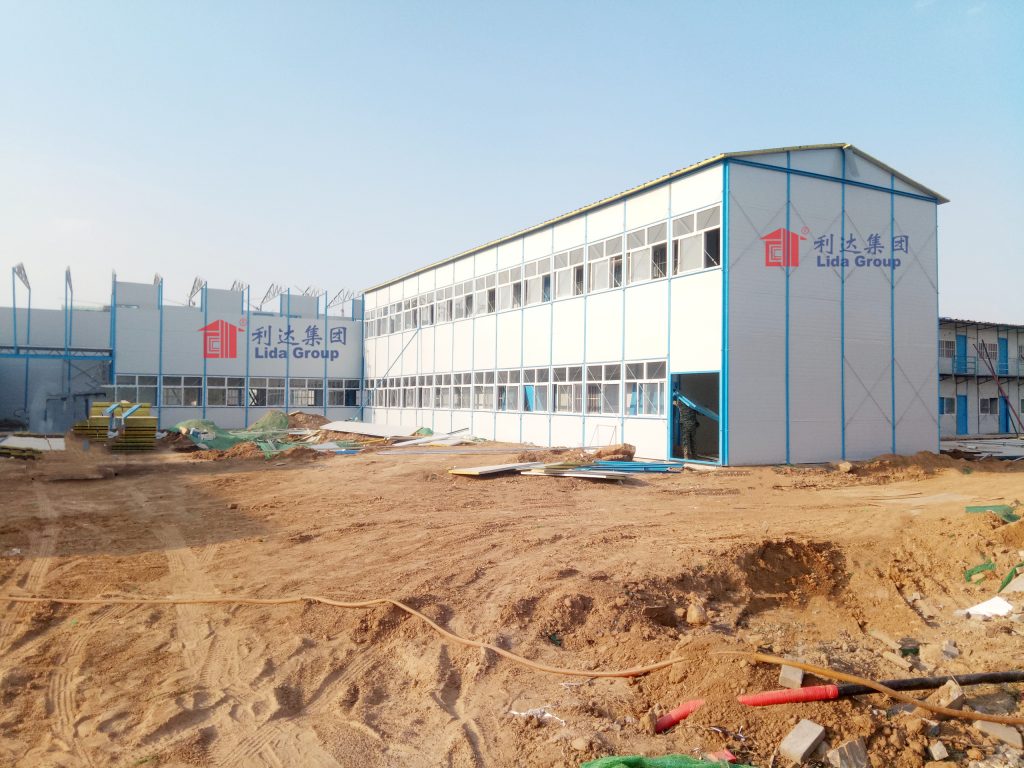
1. Cost and Efficiency Pain Points of Traditional Oil Field Worker Dormitories
Traditional temporary housing solutions for oilfields cannot adapt to the high-efficiency and cost-control requirements of modern energy projects. Whether it is fixed temporary brick buildings or simple makeshift houses, they have prominent defects in upfront investment, construction efficiency, daily operation, and asset turnover, resulting in low overall operational efficiency and excessive hidden costs for oilfield projects.
1.1 Excessive Upfront Construction and Logistics Costs
Traditional on-site constructed oilfield dormitories require complete raw material procurement, long-distance transportation, foundation treatment, and full on-site manual construction. Remote oilfield locations lack local building materials and professional construction teams, forcing enterprises to transport sand, cement, steel, and decorative materials from urban areas, which generates extremely high logistics expenses. Meanwhile, traditional construction requires a large team of skilled workers, mechanical equipment rental, and long-term on-site construction management. The superposition of material cost, labor cost, and transportation cost leads to extremely high upfront investment. Even ordinary simple color steel houses require repeated material cutting and on-site processing, resulting in serious raw material waste and uncontrollable project budgets.
1.2 Slow Construction Progress Delays Project Startup
Oilfield exploration and drilling projects have strict time schedules, and delayed worker settlement will directly postpone project initiation. Traditional temporary building construction is easily affected by extreme weather such as sandstorms, heavy rain, and severe cold, as well as remote construction conditions. The complete construction cycle of a medium-sized oilfield dormitory camp usually takes 20 to 30 days. Complex foundation construction, on-site welding, and manual decoration further extend the preparation cycle. Slow camp deployment reduces the effective working time of oilfield projects and causes intangible economic losses for enterprises.
1.3 High Daily Maintenance and Energy Consumption Costs
Most traditional oilfield temporary buildings adopt low-grade thermal insulation materials and thin protective structures. In extreme high-temperature or low-temperature environments, the poor thermal insulation performance leads to huge energy consumption for air conditioning and heating. In addition, crude structural design and inferior materials easily cause common problems such as wall water leakage, structural rust, panel falling off, and thermal insulation failure. Enterprises need to invest a lot of manpower and material resources in regular inspection, maintenance, and component replacement throughout the project cycle. The continuous daily maintenance costs greatly increase the full-lifecycle expenditure of oilfield camp operation.
1.4 Disposable Usage Causes Serious Asset Waste
Traditional temporary oilfield buildings are non-reusable disposable facilities. After the completion of a single exploration or drilling project, fixed temporary buildings can only be demolished and abandoned, generating a large amount of construction waste. Simple makeshift houses are severely worn after one-time use and cannot be relocated or reused. For oilfield enterprises with multiple cross-region projects, repeated dormitory construction investment forms a huge long-term cost burden, resulting in extremely low asset utilization and poor comprehensive economic benefits.
1.5 Low Living Efficiency Restricts Workforce Stability
Low-cost crude traditional dormitories have unreasonable spatial layout, incomplete supporting facilities, poor sound insulation and dust resistance, and unsanitary living conditions. The poor accommodation environment reduces workers’ rest quality and sense of belonging, leading to high personnel turnover rate. Frequent worker replacement affects the continuity and efficiency of oilfield operations, bringing hidden efficiency losses and indirect recruitment and training costs that are often ignored in project budget accounting.
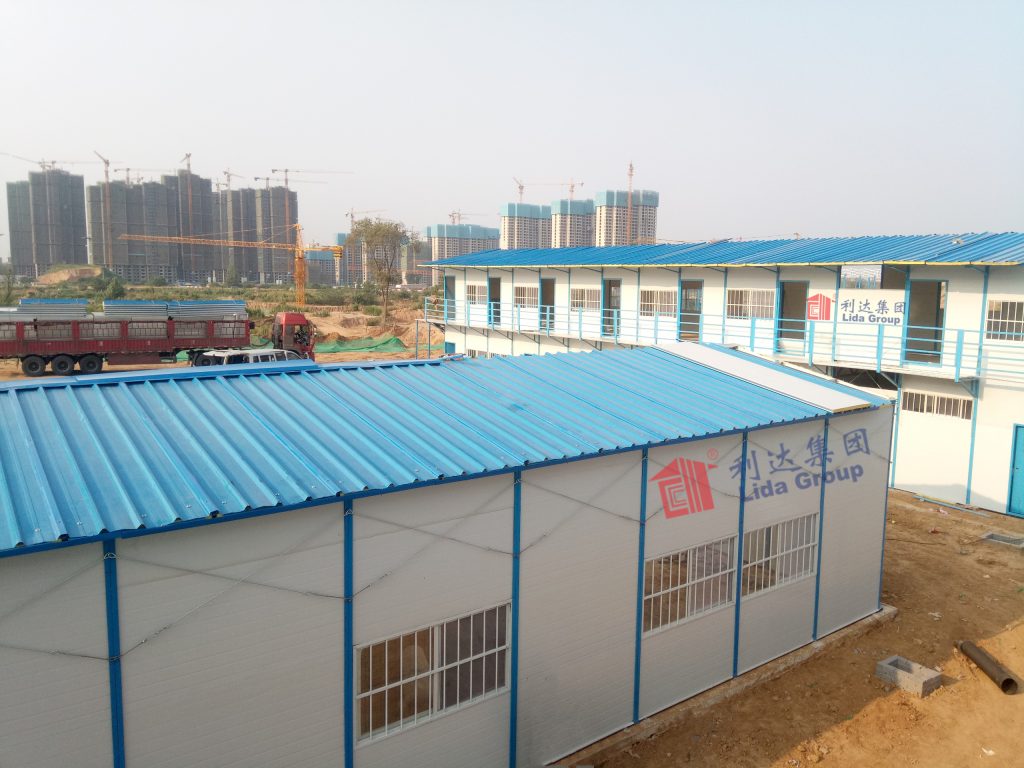
2. Core Design Concepts of Lida Group’s Low-Cost Temporary Buildings
Aiming at the multiple cost and efficiency pain points of traditional oilfield dormitories, Lida Group adheres to the design concept of “low investment, high efficiency, full durability, and reusable value”. The company optimizes product structure, production mode, and assembly technology for oilfield scenarios, realizing comprehensive cost reduction in upfront construction, mid-term operation, and later asset turnover, while greatly improving camp construction and management efficiency.
2.1 Factory Prefabrication Reduces On-Site Comprehensive Investment
Different from the wasteful on-site construction mode of traditional buildings, Lida Group’s temporary low-cost buildings adopt 90% factory integrated prefabrication. All structural frames, wall panels, roof systems, thermal insulation layers, and basic electrical facilities are completed in standardized intelligent factories. Batch industrial production realizes unified material proportioning and precise cutting, reducing raw material waste to the lowest level. The standardized finished product delivery mode eliminates on-site secondary processing, decoration, and material stacking management, saving a large amount of on-site labor, mechanical rental, and construction management costs. This advanced production mode reduces the upfront comprehensive deployment cost of oilfield dormitories by 30% to 40% compared with traditional solutions.
2.2 Simplified Modular Assembly Improves Construction Efficiency
Lida Group’s temporary buildings adopt standardized bolt modular assembly structure, completely abandoning complex welding, cutting, and foundation pouring processes of traditional buildings. The product adopts universal standard components with unified interfaces, realizing tool-free rapid assembly. Ordinary untrained workers can complete unit assembly according to visual operation guidelines without professional construction skills and large mechanical equipment. A single dormitory unit can be completed within several hours, and a large-scale oilfield worker camp can be fully deployed and put into use within 3 to 5 days. The construction efficiency is increased by more than 70%, ensuring rapid worker settlement and timely project startup.
2.3 Scenario-Optimized Material Matching Controls Marginal Cost
Lida Group abandons the one-size-fits-all high-cost material configuration of ordinary prefab buildings and adopts targeted material matching according to actual oilfield environmental demands. For conventional inland oilfields, cost-effective high-quality sandwich panels and lightweight steel structures are used to avoid excessive material surplus and cost waste; for desert, high-altitude, and coastal extreme oilfield environments, targeted anti-corrosion, wind-resistant, and thermal insulation material upgrades are carried out only for key parts. This precise material matching mode balances performance and cost, avoiding unnecessary premium investment while meeting oilfield safety and environmental adaptation standards, and maximizing product cost performance.
2.4 Reusable Modular Design Realizes Long-Term Cost Reduction
The core cost-saving advantage of Lida’s temporary buildings lies in their cyclic reusable value. The detachable modular structure supports multiple times of disassembly, flat-pack transportation, and cross-project reassembly. The high-quality steel frame and composite panel materials have stable physical properties, with no obvious performance loss after repeated turnover. A single set of temporary building units can serve more than 8 different oilfield projects, completely changing the disposable usage mode of traditional temporary buildings. This asset recycling mechanism eliminates repeated construction investment for enterprises and greatly reduces the long-term average annual usage cost of oilfield dormitories.
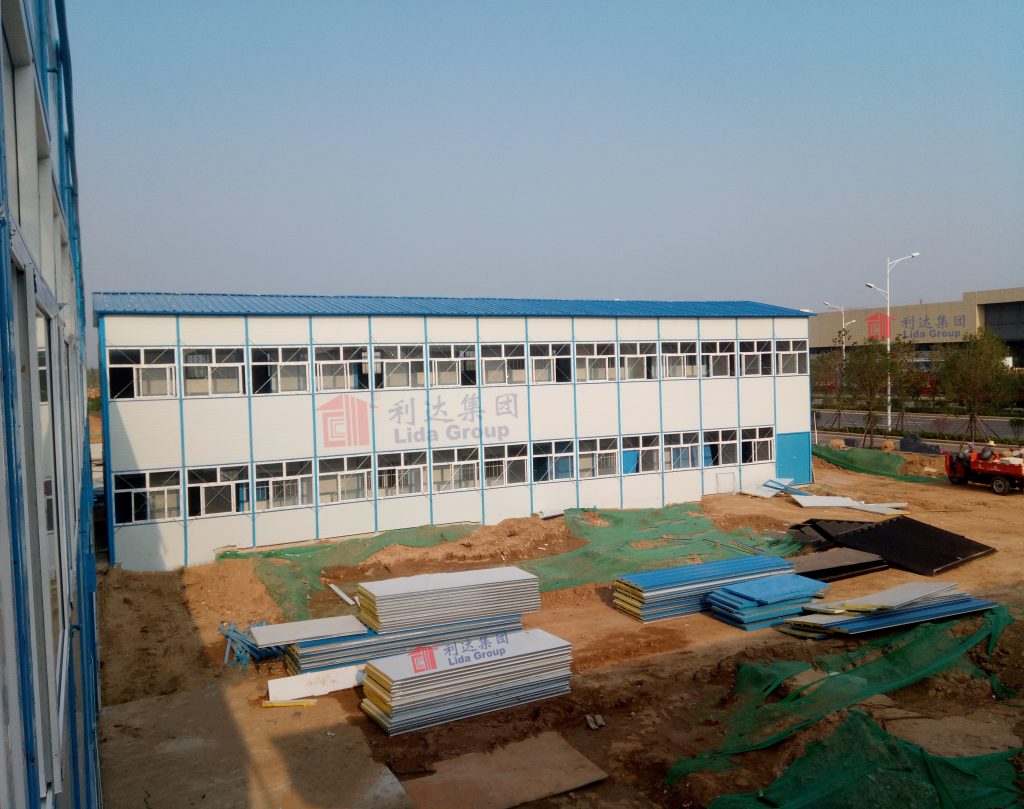
3. Efficient Operation Value of Lida’s Temporary Buildings for Oil Field Dormitories
While achieving full-lifecycle cost reduction, Lida Group’s low-cost temporary buildings create efficient construction, efficient management, and efficient workforce operation capabilities for oilfield camps, solving the low-efficiency dilemma of traditional oilfield accommodation and empowering standardized and high-speed operation of energy projects.
3.1 Rapid Deployment Shortens Project Preparation Cycle
Oilfield projects have urgent startup demands and tight construction schedules. The ultra-fast assembly capability of Lida’s temporary buildings compresses the camp construction cycle from one month to less than one week. Rapid completion of dormitory layout, supporting facility matching, and worker settlement realizes zero waiting time for project preparation. The advanced camp deployment mode effectively shortens the overall project cycle, increases effective operation time for oilfield exploration and drilling, and creates more economic benefits for enterprises within the limited project cycle.
3.2 Flexible Layout Realizes Dynamic Efficient Management
Oilfield project staffing has obvious phased changes: the early exploration stage requires a small number of technical teams, while the mid-term construction stage needs large-scale frontline workers. Lida’s modular temporary buildings support free splicing, combination, and area expansion. Enterprises can flexibly increase or reduce dormitory units according to dynamic workforce changes, realizing precise matching of accommodation scale and project demand. This flexible layout avoids resource idle and space waste caused by fixed-scale traditional buildings, and simplifies daily personnel accommodation management, improving the overall operational efficiency of oilfield camps.
3.3 Low Maintenance and Energy-Saving Operation Reduces Daily Workload
Lida Group’s oilfield-specific temporary buildings adopt high-density anti-aging sandwich panels and fully sealed structural design, with excellent wind resistance, dust prevention, waterproofing, and thermal insulation performance. The stable structural quality avoids frequent failures such as water leakage, cracking, and rust, realizing ultra-low daily maintenance. The efficient thermal insulation system reduces air conditioning and heating energy consumption by 40% to 60%, greatly cutting daily energy operation costs. Meanwhile, the easy-to-clean flat indoor structure reduces sanitation management workload, realizing efficient and lean daily operation of oilfield camps.
3.4 Standardized Camp Layout Improves On-Site Standardization Efficiency
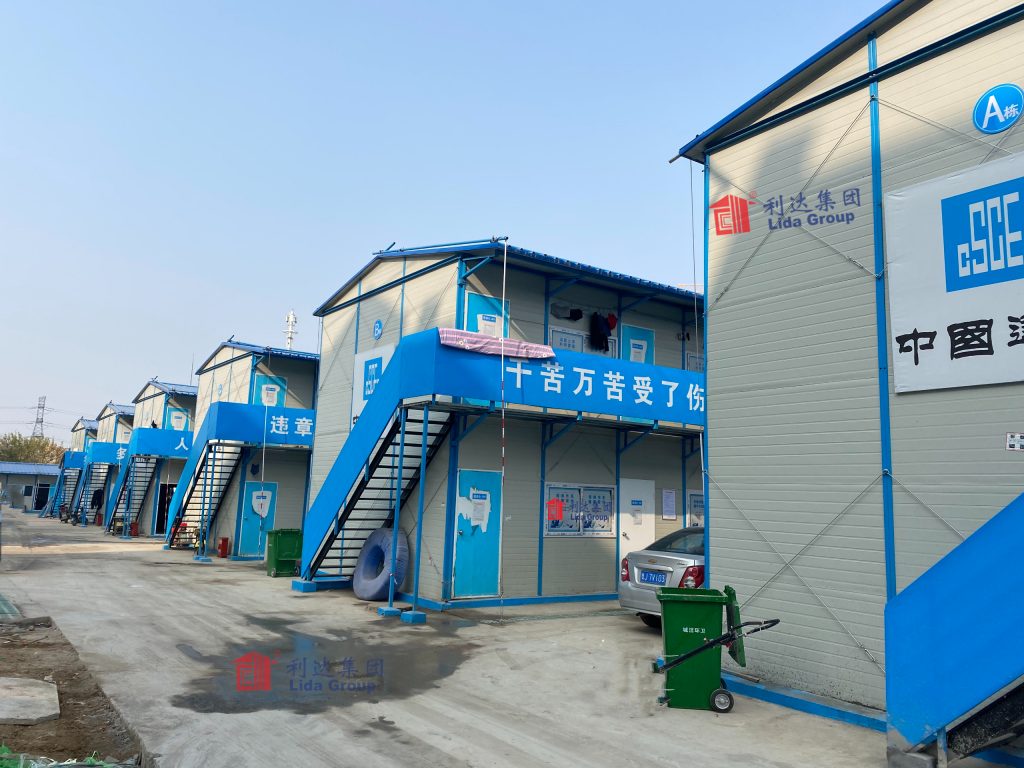
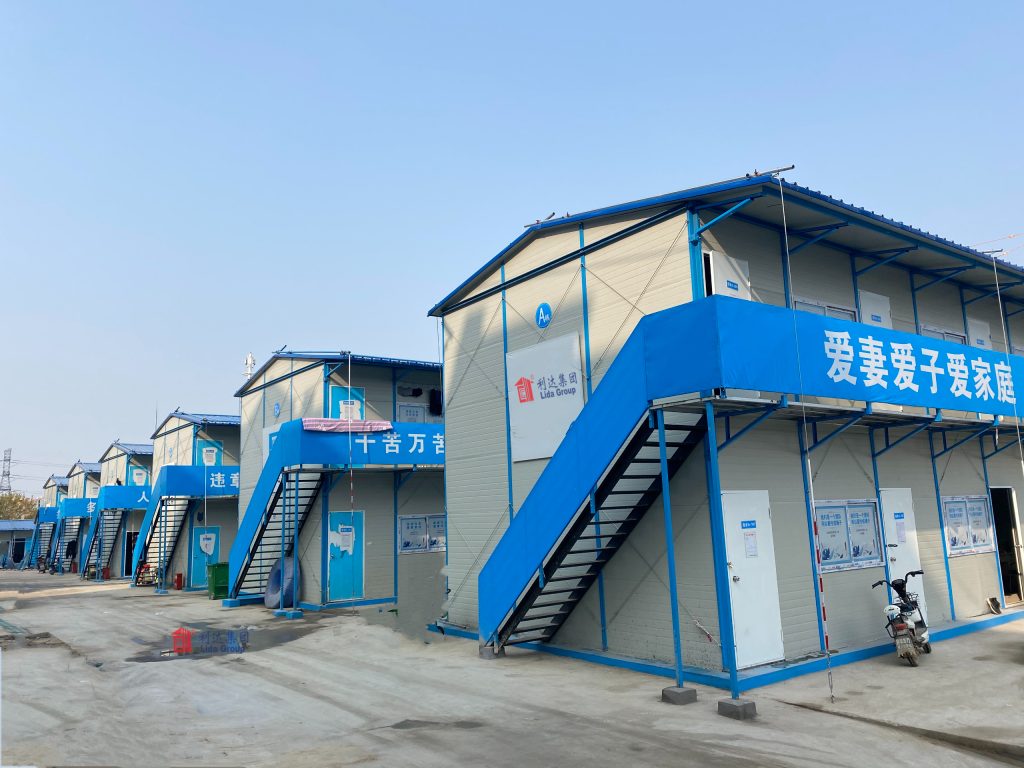
Lida’s temporary buildings adopt unified modular specifications and neat appearance, which can be arranged in an orderly manner to form standardized dormitory areas, office areas, canteen areas, and sanitation areas. The integrated and standardized camp layout meets the civilized construction and safety management standards of international oilfield projects. Compared with the disorderly layout and irregular facilities of traditional temporary camps, Lida’s solution simplifies on-site safety inspection, sanitation supervision, and personnel scheduling management, greatly improving the standardized operation level of remote oilfield sites.
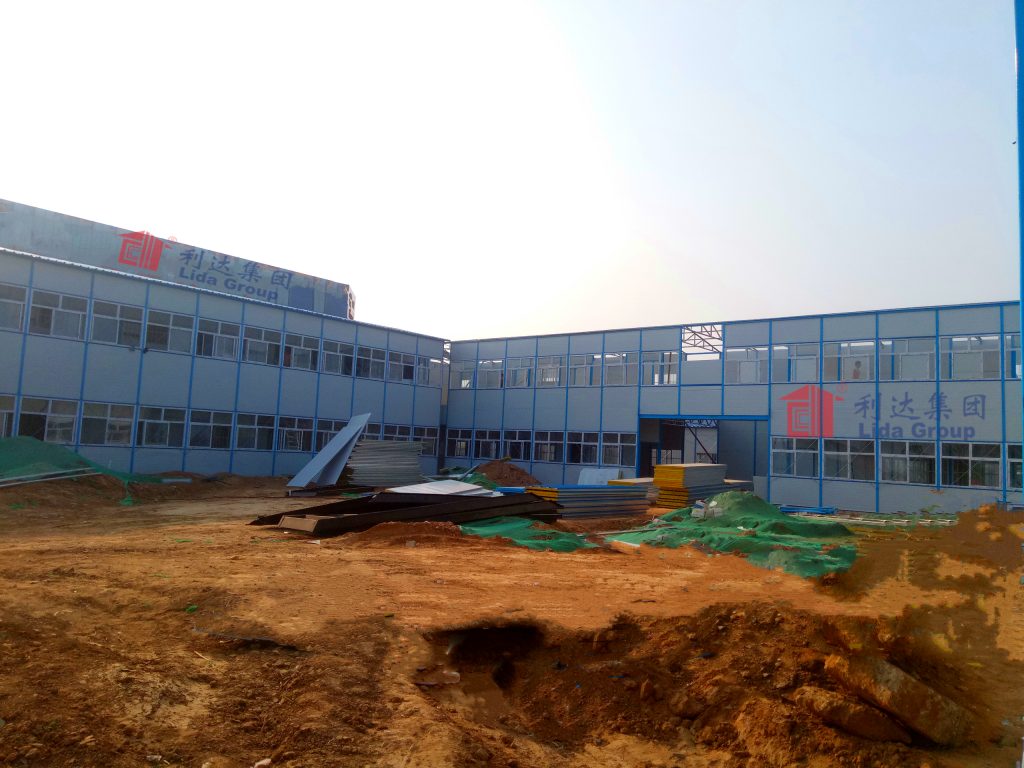
4. Harsh Environment Adaptability Ensures Stable Efficient Operation
Oilfield camps are faced with complex and harsh climatic and environmental conditions, which put forward high requirements for the stability and durability of temporary buildings. Poor environmental adaptability will lead to frequent facility failures and affect continuous camp operation. Lida Group’s low-cost temporary buildings retain high environmental adaptability and industrial safety performance while controlling costs, ensuring long-term stable and efficient operation of dormitories in various extreme oilfield scenarios.
4.1 Extreme Weather Resistance for Global Oilfield Scenarios
Lida’s temporary buildings are optimized for diverse global oilfield climates. For high-temperature desert oilfields, the thickened thermal insulation and dust-sealed structure isolates external high temperature and sand and dust invasion, keeping indoor temperature constant and clean. For high-altitude and northern cold-region oilfields, low-temperature resistant enhanced thermal insulation materials prevent freezing damage and ensure warm indoor residence. For coastal high-salinity oilfields, anti-corrosion coating treatment avoids structural rust and aging. The all-scenario adaptive design ensures that the dormitories maintain stable functional performance throughout the project cycle without frequent maintenance and renovation.
4.2 High Fire Safety Meets Oil Field Industrial Standards
Oilfield operation areas belong to flammable and explosive high-risk environments, and camp fire safety is the core guarantee of stable operation. Lida Group’s temporary buildings adopt non-combustible rock wool core sandwich panels, which have passed international fire resistance tests and meet oilfield industrial fire protection standards. The fully sealed structural design avoids fire penetration risks, and supporting explosion-proof electrical configurations eliminate potential safety hazards. High-standard safety performance prevents fire accidents and ensures the continuous and safe operation of worker dormitory camps, avoiding operational stagnation and economic losses caused by safety accidents.
4.3 Lightweight Structure Adapts to Remote Efficient Transportation
Most remote oilfield sites have narrow and unimproved roads, bringing great difficulties to traditional heavy building transportation. Lida’s temporary building components adopt lightweight flat-pack design, which greatly reduces transportation volume and weight. Ordinary small and medium-sized cargo vehicles can complete delivery, adapting to complex remote road conditions. The efficient logistics mode shortens material transportation cycles and reduces long-distance transportation costs, further supporting the rapid and efficient construction of remote oilfield camps.
5. Humanized Design Boosts Workforce Operational Efficiency
Worker status is the core factor determining oilfield operation efficiency. Long-term remote and high-intensity oilfield work requires a comfortable and safe rest environment to relieve worker fatigue and stabilize team mood. Lida Group’s low-cost temporary buildings integrate humanized design on the premise of cost control, effectively improving worker accommodation experience and team stability, and indirectly boosting overall project operational efficiency.
The sealed sandwich panel structure provides excellent sound insulation performance, isolating on-site mechanical noise and external wind noise to create a quiet rest environment. The scientific indoor spatial planning and smooth easy-clean surfaces ensure indoor sanitation and comfort. Reserved ventilation, power supply, and network interfaces meet workers’ daily rest and entertainment needs. A high-quality living environment significantly improves workers’ sense of belonging and job satisfaction, reduces personnel turnover rate, and avoids efficiency losses and cost waste caused by frequent worker replacement. Stable frontline teams ensure the continuous and efficient advancement of oilfield exploration and development projects.
6. Conclusion
Traditional oilfield temporary worker dormitories have long restricted the efficient and economical operation of energy projects due to high construction costs, slow deployment speed, high maintenance consumption, disposable usage, and low operational efficiency. As a scenario-customized modular building solution for the energy industry, Lida Group’s Temporary Low Cost Building completely breaks the cost and efficiency bottlenecks of traditional oilfield accommodation. Through factory integrated prefabrication, simplified modular assembly, precise scenario material matching, and reusable cyclic design, it realizes full-lifecycle cost reduction in upfront construction, daily operation, and asset turnover, saving 30% to 40% of comprehensive camp investment for oilfield enterprises.
At the same time, the product’s ultra-fast deployment speed, flexible layout mode, low energy consumption and maintenance, standardized camp management, and extreme environmental adaptability greatly improve the construction and operational efficiency of oilfield worker dormitory camps. The humanized living design stabilizes the workforce and guarantees the continuous and efficient progress of oilfield projects. Balancing ultra-low cost, high safety, strong durability, and high operational efficiency, Lida Group’s temporary low-cost buildings perfectly fit the temporary, phased, and high-efficiency operation characteristics of global oilfield projects. In the future, Lida Group will continue to optimize modular building technology and cost-control design, providing more economical, efficient, and reliable temporary accommodation solutions for the global oil and gas industry, and helping energy enterprises achieve lean cost control and efficient project operation.
Related news
-
Easy Install Sandwich Panel House Ideal for Oil Field Worker Dormitory Accommodation
2026-05-25 11:30:31
-
Lida Group Delivers Oil Field Worker Dormitory Using Temporary Low Cost Building Solutions
2026-05-25 11:16:26
-
Flat Packed Modular Container House from Lida Group Saves Shipping and Storage Space
2026-05-22 17:50:17
contact us
- Tel: +86-532-88966982
- Whatsapp: +86-13793209022
- E-mail: sales@lidajituan.com
