



Flat Packed Modular Container House from Lida Group Saves Shipping and Storage Space
2026-May-22 17:50:17
By Admin
Introduction
The global modular construction industry has witnessed explosive growth in cross-border trade and large-scale project deployment in recent years. With the rapid expansion of overseas engineering camps, remote infrastructure projects, tourism homestay development, and emergency shelter reserve construction, the demand for prefabricated container houses has surged worldwide. However, traditional integral container houses have long been restricted by bulky volume, low space utilization, high logistics costs, and difficult inventory management, becoming a major logistical bottleneck for large-scale batch export and long-term project reserve. Integral container units occupy complete cargo space during transportation and storage, resulting in low loading efficiency, frequent shipping batches, high ocean freight expenses, and large warehouse occupation, which greatly increases the comprehensive operation costs of engineering enterprises and modular building suppliers.
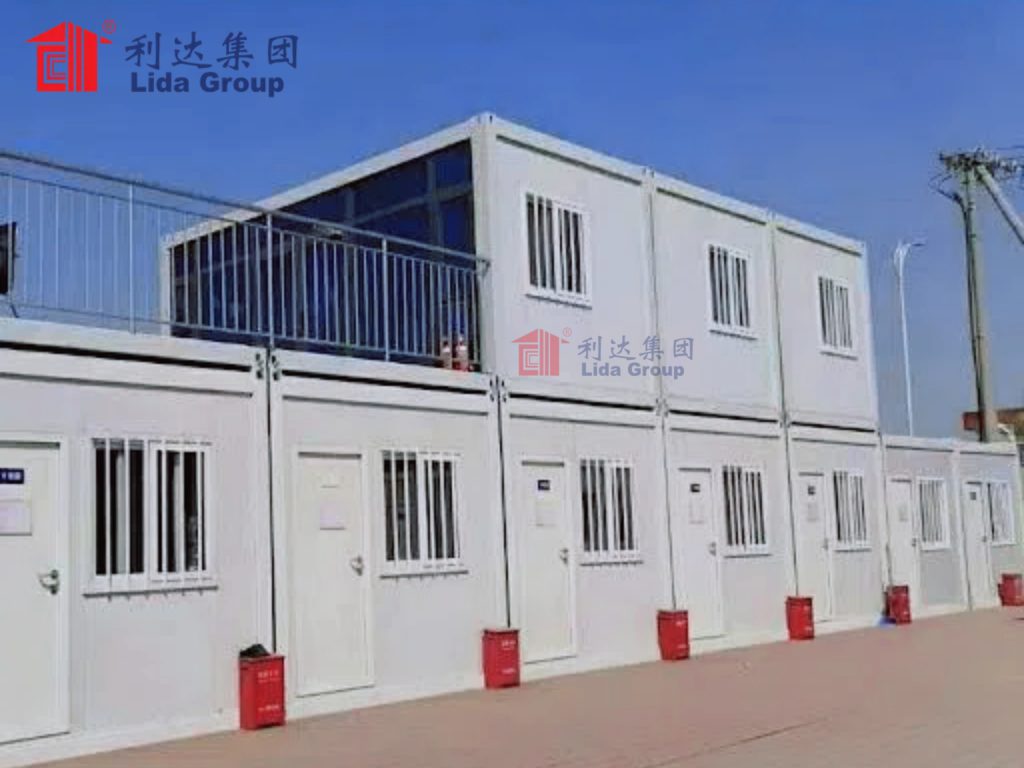
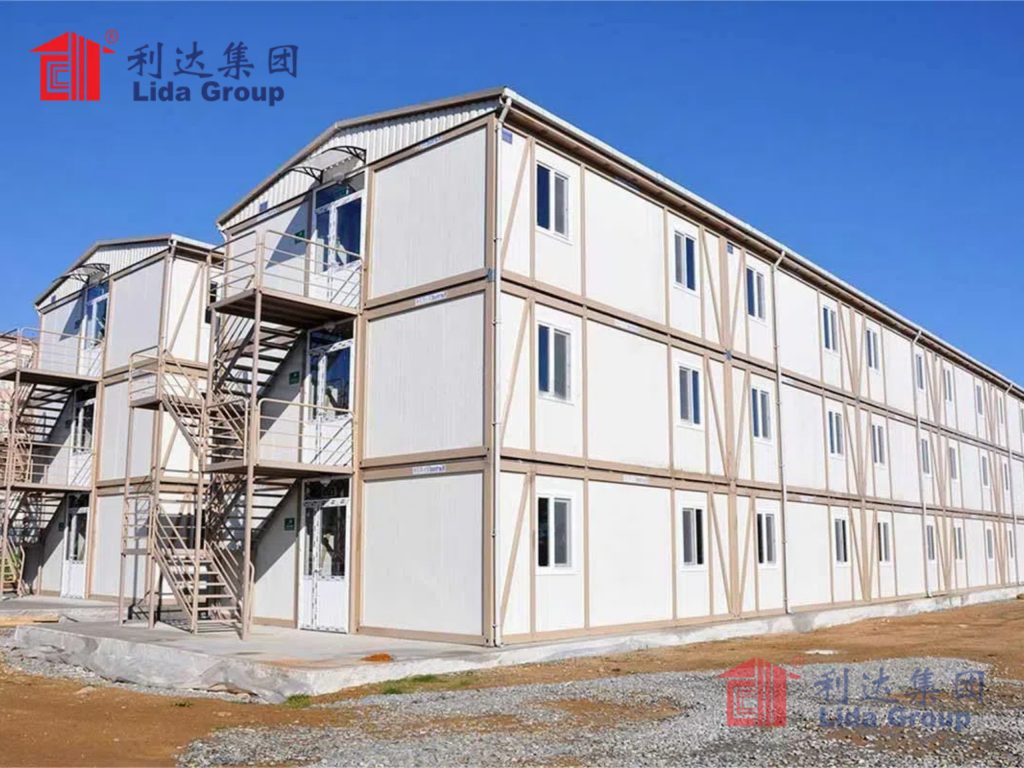
As a world-leading manufacturer and exporter of modular prefabricated buildings, Lida Group has thoroughly optimized product structural design targeting the pain points of shipping waste and storage space occupation. The independently developed flat packed modular container house abandons the integral fixed structure of traditional container products and adopts a fully disassembled flat stacking design. This innovative design drastically reduces product volume during transportation and inventory storage, maximizing the utilization of shipping container space and warehouse storage space while maintaining the original structural strength, safety performance, and functional integrity of container houses. This article comprehensively analyzes the logistical and storage drawbacks of traditional integral container houses, the core space-saving design principles of Lida Group’s flat packed modular container houses, outstanding shipping space optimization advantages, efficient storage management benefits, and long-term economic and operational value for global engineering and export trade, fully demonstrating why Lida’s flat pack products have become the preferred space-saving modular housing solution for global bulk procurement and long-term reserve.
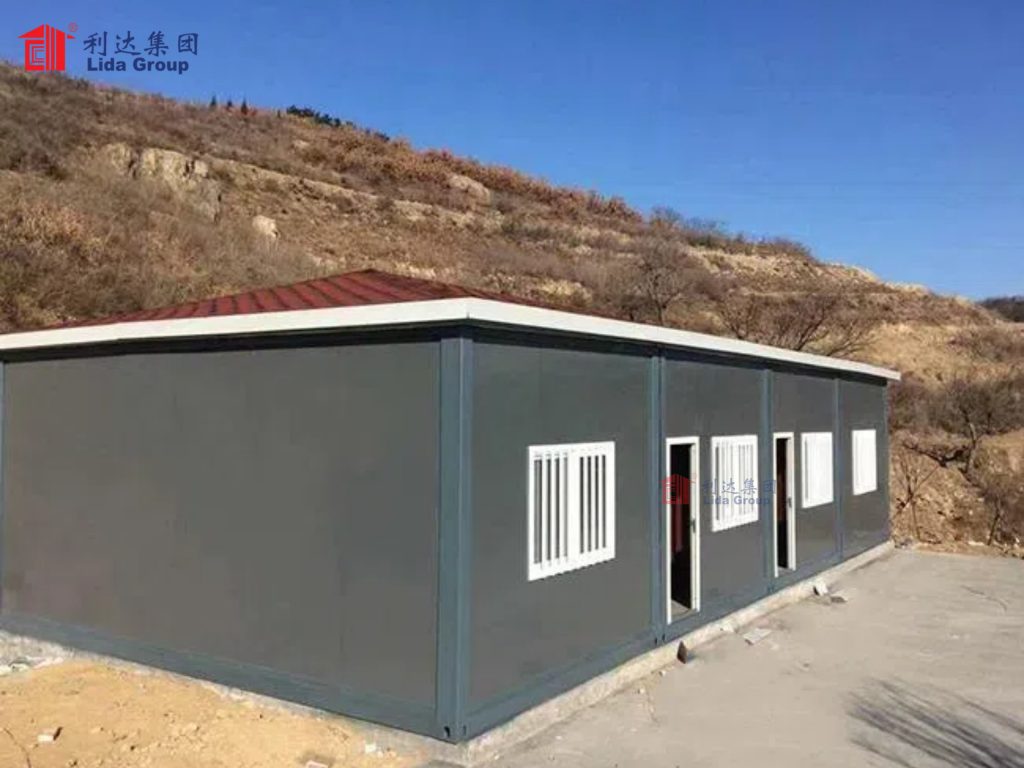
1. Core Drawbacks of Traditional Integral Container Houses in Shipping and Storage
Traditional integral container houses adopt an integrated welded fixed structure, with fixed overall dimensions and non-detachable components. Although they have the advantage of direct placement and occupancy, their inherent structural defects lead to serious space waste in cross-border shipping and long-term storage, restricting large-scale batch deployment and flexible inventory management.
1.1 Low Shipping Space Utilization and High Freight Costs
Standard integral container houses are manufactured with fixed overall dimensions, which cannot be disassembled or compressed. A complete assembled container unit occupies the same space as a standard shipping container, resulting in extremely low loading efficiency. In international ocean transportation, a 40-foot standard shipping container can only load 2 to 3 sets of traditional integral container houses at most. For large-scale engineering projects requiring hundreds of container units, enterprises need to arrange dozens of shipping batches, generating huge ocean freight, port handling fees, and cross-border logistics costs. The low space utilization rate not only increases direct transportation expenses but also extends the overall shipping cycle due to multiple batch deliveries, delaying project preparation progress and bringing intangible economic losses.
1.2 Large Occupied Volume Leads to Difficult Warehouse Storage
For suppliers and engineering enterprises that need bulk inventory reserve and seasonal stock preparation, traditional integral container houses bring huge warehouse pressure. Assembled integral units cannot be stacked or compressed, requiring independent large-area flat storage space. A small batch of dozens of container units will occupy the entire warehouse area, resulting in low warehouse space utilization. In addition, the bulky integral structure cannot be flexibly stored, which limits the enterprise’s inventory reserve capacity. It is impossible to prepare sufficient spare products in advance for peak order seasons and emergency project demands, affecting the stability of order delivery and project deployment.
1.3 Inconvenient Secondary Transit and Dispersed Space Occupation
Many remote engineering projects require secondary land transportation after ocean shipping, including mountain roads, rural gravel roads, and narrow construction site passages. Traditional integral container houses have large overall volume and heavy weight, requiring professional heavy-duty transport vehicles and large hoisting equipment for secondary transit. Oversized body size easily leads to passage obstruction and difficult vehicle entry. Moreover, integral units cannot be disassembled and stored separately after project completion. Idle container houses occupy valuable construction site space for a long time, affecting the orderly layout of on-site engineering facilities and resulting in resource and space waste.
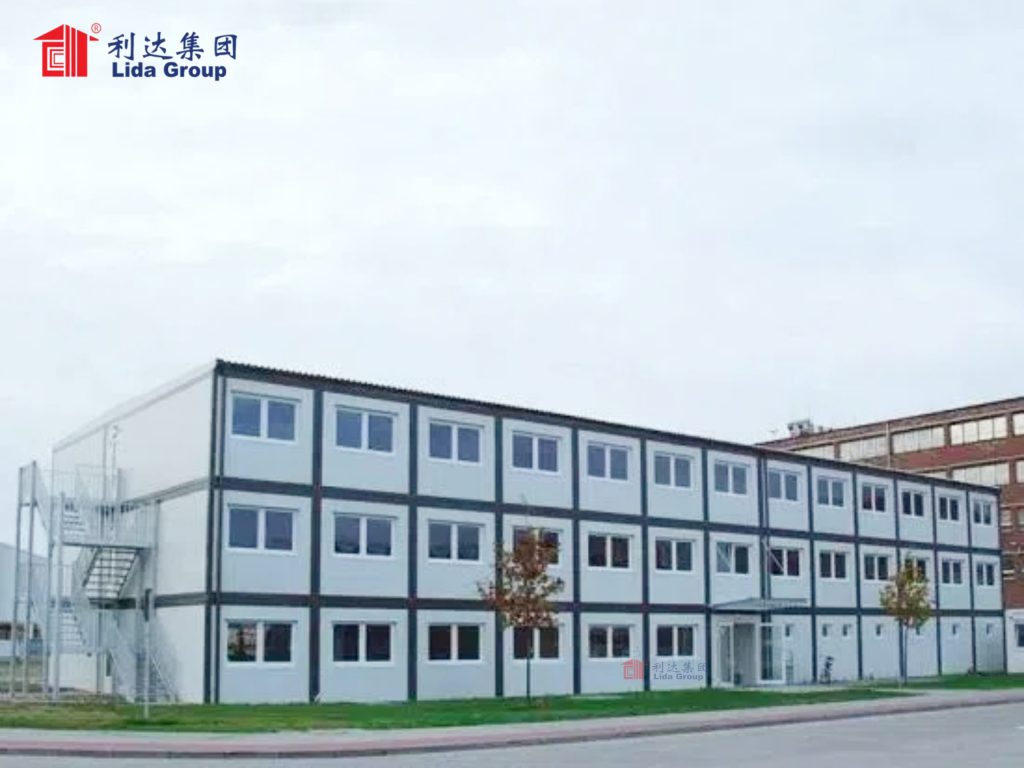
2. Innovative Space-Saving Structural Design of Lida Group’s Flat Packed Container Houses
Aiming at the space waste pain points of traditional integral containers in shipping and storage, Lida Group has carried out targeted structural innovation and dimensional optimization for flat packed modular container houses. Through full disassembly design, standardized component classification, flat stacking packaging, and international container dimensional matching, the product achieves revolutionary breakthroughs in space compression rate, completely solving the space occupation dilemma of traditional modular housing.
2.1 Full Disassembly Flat Stacking Structure
The core space-saving advantage of Lida Group’s flat packed modular container houses lies in the full disassembly flat stacking structure. Different from the integral fixed welding of traditional containers, all components of Lida’s products, including steel frame beams, wall panels, roof panels, floor plates, doors, windows, and electrical accessories, can be completely disassembled into flat independent parts. All flat components have no irregular protruding structures or three-dimensional occupying space, and can be tightly stacked and laminated in a planar manner. This design eliminates the invalid gap space caused by the three-dimensional structure of integral containers, reducing the overall product volume by more than 75% compared with traditional assembled units. The ultra-high compression rate lays a solid foundation for high-efficiency shipping and low-space storage.
2.2 Standardized Classification and Compact Integrated Packaging
Lida Group formulates unified standardized packaging specifications for different disassembled components. Steel frame structures are bundled and fixed in a flat manner, wall and roof panels are stacked and protected with waterproof and shockproof gaskets, and small accessories such as bolts, hinges, and electrical parts are packaged in classified independent boxes. All packaged components adopt regular rectangular specifications without irregular shapes, realizing zero-gap dense stacking. The standardized integrated packaging not only avoids component scattering and loss during transportation and storage but also maximizes the use of limited cargo and warehouse space. Compared with the messy packaging of ordinary flat pack products on the market, Lida’s standardized classification packaging further improves space utilization by 10% to 15%.
2.3 Precise Dimensional Matching with International Shipping Standards
Lida Group’s R&D team optimizes the component dimensions of flat packed container houses based on the internal space parameters of international standard 20-foot and 40-foot shipping containers. All disassembled flat components are precisely sized to match the cargo compartment layout of standard shipping containers, avoiding space waste caused by dimensional mismatch. The optimized dimensional design enables flat pack components to fill the shipping container space to the maximum extent without redundant gaps. A single 40-foot standard shipping container can load 6 to 8 sets of Lida’s standard flat packed container house components, which is three times the loading capacity of traditional integral containers. The precise standard matching realizes the perfect integration of product structure and international logistics system, greatly improving bulk shipping efficiency.
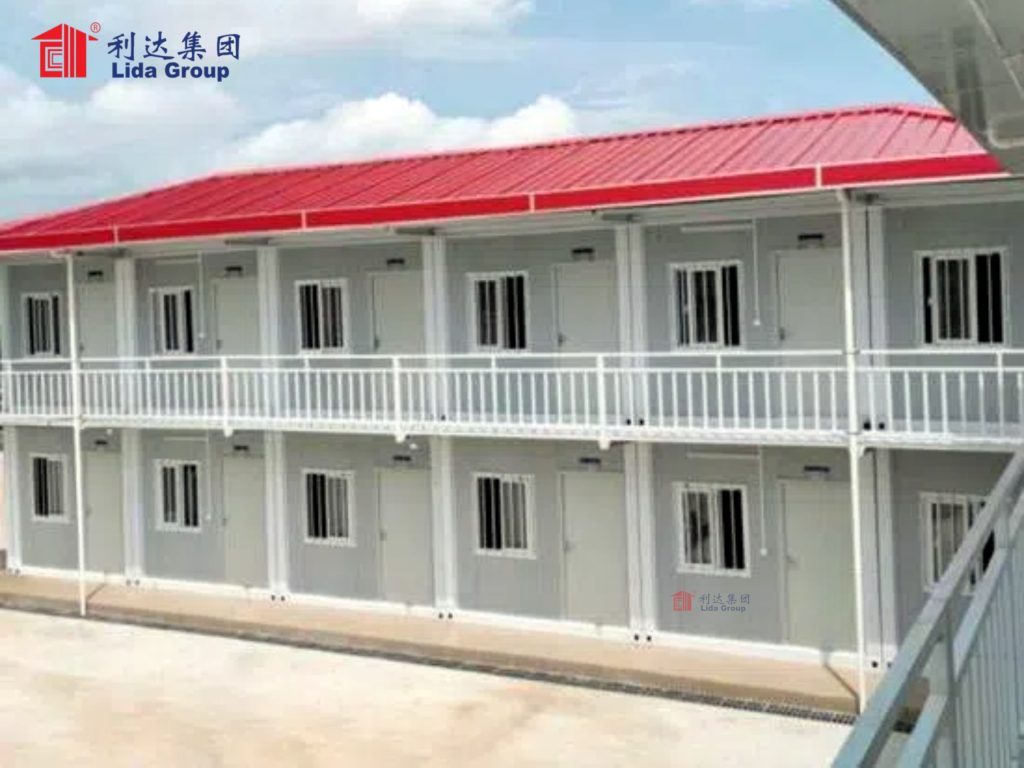
3. Outstanding Shipping Space-Saving Advantages for Global Bulk Export
In international cross-border trade and large-scale overseas project deployment, the space-saving performance of Lida Group’s flat packed modular container houses brings comprehensive improvements in shipping efficiency, cost control, and logistics flexibility, becoming a core competitive advantage for global bulk export.
3.1 Maximize Shipping Container Loading Rate
Traditional integral container houses can only load 2 to 3 units per 40-foot container, with a space utilization rate of less than 30%. In contrast, Lida Group’s flat packed modular container houses achieve a space utilization rate of over 90% through flat stacking and precise dimensional matching. For a large-scale overseas mining camp or infrastructure project requiring 500 container units, traditional integral containers need about 250 shipping containers for transportation, while Lida’s flat pack products only need about 70 shipping containers. The drastic reduction in shipping batches greatly improves the overall loading efficiency of bulk orders, shortens the ocean transportation cycle, and ensures timely product delivery for overseas projects.
3.2 Substantially Reduce Comprehensive Logistics Costs
The improvement of loading efficiency directly reduces multiple logistics expenses. Each additional shipping container will generate a series of costs including ocean freight, container rental fee, port loading and unloading fee, and customs declaration service fee. By reducing the number of shipping containers by more than 70%, Lida’s flat pack products can save nearly 70% of comprehensive shipping costs for customers. According to international freight market data, large-scale bulk export projects can save $180,000 to $220,000 in freight expenses for every 500 units of flat packed container houses exported. In addition, the flat packed components have light single-piece weight and flexible transportation modes, which can adapt to ordinary cargo trucks for secondary land transportation at ports, avoiding the high rental cost of professional heavy-duty vehicles for integral container transportation, further reducing the whole-process logistics cost.
3.3 Adapt to Complex Remote Transportation Scenarios
Most remote engineering project sites are located in mountainous areas, plateaus, deserts, and other areas with narrow roads and limited traffic conditions. Oversized integral containers cannot pass through narrow road sections and can only take long detours, resulting in increased transportation time and costs. Lida Group’s flat packed container components have small single volume and flexible carrying modes, which can adapt to various complex road conditions. Ordinary small and medium-sized cargo vehicles can complete the transportation task, realizing barrier-free delivery to remote project sites. The space-saving and flexible transportation advantage solves the logistics dilemma of difficult delivery of modular housing in remote areas, greatly expanding the applicable scenarios of container house products.
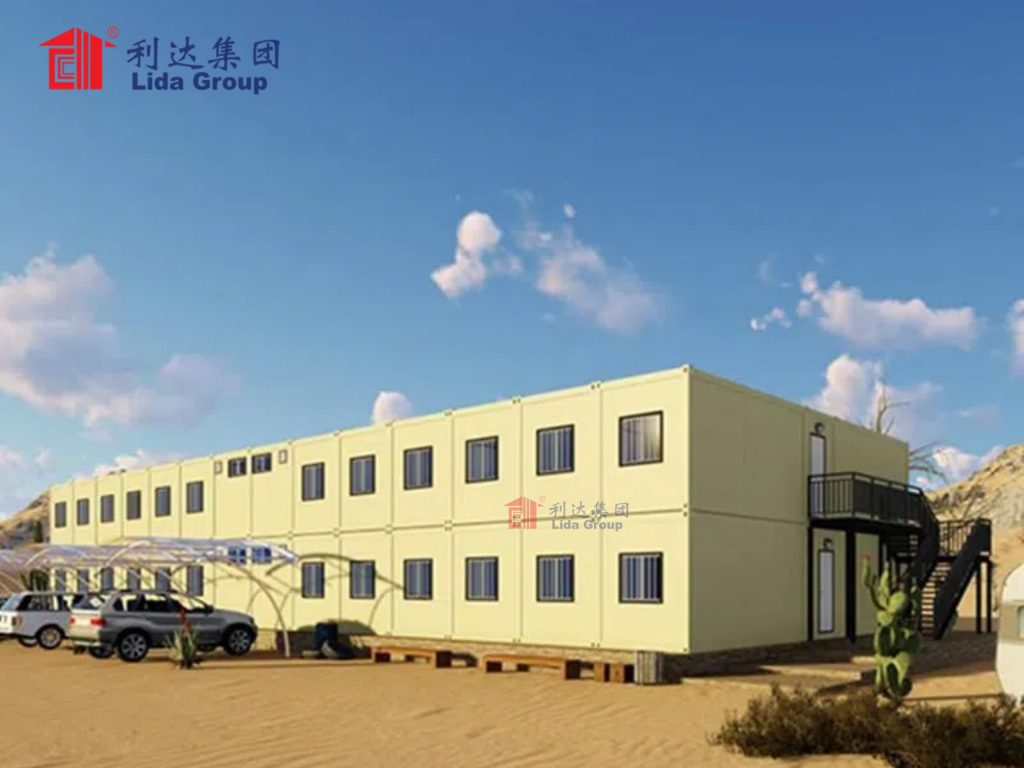
4. Efficient Storage Space Optimization for Long-Term Inventory and Idle Assets
In addition to shipping space saving, Lida Group’s flat packed modular container houses also show excellent space optimization capabilities in warehouse inventory, seasonal stock preparation, and idle asset storage, helping enterprises reduce warehouse occupation pressure and improve inventory management efficiency.
4.1 Minimize Warehouse Static Occupation Space
Traditional integral container houses occupy a large area of flat warehouse space and cannot be stacked, resulting in extremely low warehouse utilization. Lida’s flat packed components can be stacked vertically in multiple layers according to warehouse conditions, making full use of the three-dimensional space of the warehouse. The same warehouse area can store more than 8 times the number of flat pack products compared with integral containers. For suppliers with large order reserves and engineering enterprises with long-term project deployment plans, this stacking storage mode greatly reduces the occupied area of warehouse resources, saves warehouse rental costs, and improves the utilization rate of existing warehouse space.
4.2 Convenient Idle Asset Storage and Transfer
After the completion of short-term engineering projects, idle integral container houses can only be placed on open construction sites, occupying valuable construction space and being exposed to wind and sun for a long time, which easily causes component aging and structural damage. Lida Group’s flat packed container houses can be quickly disassembled and flat-stacked for centralized storage after project use. The compact stacking mode occupies almost no extra space, and the standardized packaging can effectively protect components from environmental erosion, reducing product aging and damage rate. When new projects need housing facilities, the stored flat pack components can be quickly taken out for assembly and reuse, realizing efficient turnover of idle assets and avoiding resource waste.
4.3 Flexible Inventory Management for Peak and Off-Season Orders
The construction industry has obvious seasonal peak and off-season characteristics, and the market demand for container houses fluctuates greatly. In the off-season, enterprises can pre-produce and store a large number of Lida’s flat packed container components by virtue of their space-saving storage advantages, preparing sufficient inventory for peak order demand. The small-space storage feature enables enterprises to flexibly adjust inventory scale according to market changes, avoiding inventory backlog and out-of-stock problems caused by limited warehouse space. This flexible inventory management mode improves the market response speed of enterprises and enhances the stability of order delivery.
5. Retained Core Performance Without Space-Sacrificed Quality
It is worth emphasizing that Lida Group’s flat packed modular container houses achieve excellent shipping and storage space optimization without sacrificing product structural performance, safety, and service life. Many low-cost flat pack products on the market reduce component thickness and structural strength to pursue space compression, resulting in poor stability and short service life. In contrast, Lida Group adheres to high-standard material selection and structural design while optimizing space utilization.
The product still adopts high-strength hot-dip galvanized steel frames and high-density fireproof and heat-insulating sandwich wall panels. The bolted connection structure after assembly has stable overall performance, meeting international wind resistance, earthquake resistance, and fire protection standards. The main steel structure has a service life of more than 15 years, supporting multiple times of disassembly, storage, and reassembly. The space-saving design only optimizes the product packaging and transportation form, without changing the material properties and structural mechanical parameters, ensuring that customers can obtain ultra-high space utilization benefits while enjoying high-quality, safe, and durable modular housing products.
6. Comprehensive Economic and Operational Value
The space-saving advantages of Lida Group’s flat packed modular container houses bring multi-dimensional economic and operational value for global suppliers and engineering enterprises. In terms of economic benefits, the ultra-high shipping loading rate reduces ocean freight, port handling, and cross-border logistics costs by nearly 70%. The efficient storage mode saves warehouse rental expenses and idle asset management costs. The reusable flat pack structure avoids repeated procurement costs, greatly reducing the comprehensive housing deployment cost of projects.
In terms of operational benefits, batch high-efficiency shipping shortens the product delivery cycle and accelerates the startup progress of overseas engineering projects. Flexible storage and inventory adjustment capabilities improve enterprise market response efficiency and order delivery stability. The convenient remote transportation adaptation expands project deployment scenarios and helps enterprises carry out engineering layout in more complex remote areas. At the same time, the green and low-carbon logistics mode reduces carbon emissions caused by multiple shipping batches, conforming to the global green trade and sustainable development concept, and helping enterprises establish environmentally friendly brand images.
7. Conclusion
Traditional integral container houses have long restricted the large-scale export and flexible deployment of modular housing due to their bulky structure, low shipping space utilization, and large storage occupation. Facing the growing demand for global batch modular housing procurement and remote project deployment, Lida Group’s flat packed modular container houses completely break the logistical space bottleneck of traditional products with innovative full disassembly flat stacking design, standardized compact packaging, and international standard dimensional matching. The product reduces transportation volume by more than 75%, increases shipping loading capacity by three times, and maximizes warehouse space utilization, achieving revolutionary optimization in cross-border shipping and long-term storage.
While realizing efficient space saving, Lida Group strictly guarantees product structural safety, durability, and functional integrity, avoiding the common defect of performance attenuation in space-saving products. The significant advantages of low logistics cost, high delivery efficiency, flexible storage management, and wide scenario adaptability make Lida’s flat packed modular container houses the most cost-effective and practical space-saving modular housing solution in the global market. In the future, Lida Group will continue to optimize structural details and packaging technology, further improve shipping and storage space utilization efficiency, provide more economical and efficient modular housing logistics solutions for global engineering enterprises and trade customers, and lead the high-efficiency and low-cost development trend of the global modular construction export industry.
Related news
-
Lida Group’s Living Container House Ideal for Construction Camps and Emergency Shelter
2026-05-22 17:47:19
-
Prefabricated Container Worker Dormitory Offers Fast Assembly and Long Service Life
2026-05-22 17:36:13
-
Lida Group Expands Range of Flat Packed Modular Container House for Export Markets
2026-05-22 17:26:02
contact us
- Tel: +86-532-88966982
- Whatsapp: +86-13793209022
- E-mail: sales@lidajituan.com
