



Lida Group’s Living Container House Ideal for Construction Camps and Emergency Shelter
2026-May-22 17:47:19
By Admin
Introduction
Modern social infrastructure development and public emergency response systems are constantly upgrading to adapt to unpredictable market changes and natural disaster risks. Two scenarios have long posed prominent temporary housing challenges for engineering enterprises and public welfare institutions: standardized long-term accommodation for large-scale construction camps and rapid emergency shelter deployment for post-disaster relief and public emergencies. Traditional temporary housing solutions, including canvas tents, simple makeshift shanties, and on-site built temporary brick rooms, can barely meet the dual requirements of stable long-term use and ultra-fast emergency deployment. Tents are low-cost and easy to transport but lack structural stability, weather resistance, and basic living comfort, making them unsuitable for long-term construction camp operation. Fixed temporary buildings are durable and comfortable but require lengthy construction cycles, heavy labor investment, and cannot be quickly deployed or relocated for emergency scenarios.
As a global leading manufacturer of modular prefabricated buildings, Lida Group has developed professional living container houses tailored for construction camp operation and emergency shelter scenarios after years of technical iteration and practical engineering verification. Breaking the industry dilemma that temporary housing cannot balance long-term durability and rapid deployability, Lida Group’s living container houses integrate factory integrated prefabrication, high-strength durable structure, humanized living configuration, flexible disassembly and relocation, and ultra-fast on-site assembly. The product perfectly adapts to the standardized daily operation needs of construction camps and the rapid response requirements of emergency rescue scenarios, becoming a dual-purpose high-value modular housing solution widely recognized in global engineering and public emergency fields. This article systematically analyzes the industry pain points of traditional temporary housing in construction and emergency scenarios, the core performance advantages of Lida Group’s living container houses, targeted application values in dual scenarios, and long-term economic and social benefits, demonstrating why the product has become the ideal choice for construction camps and emergency shelters worldwide.
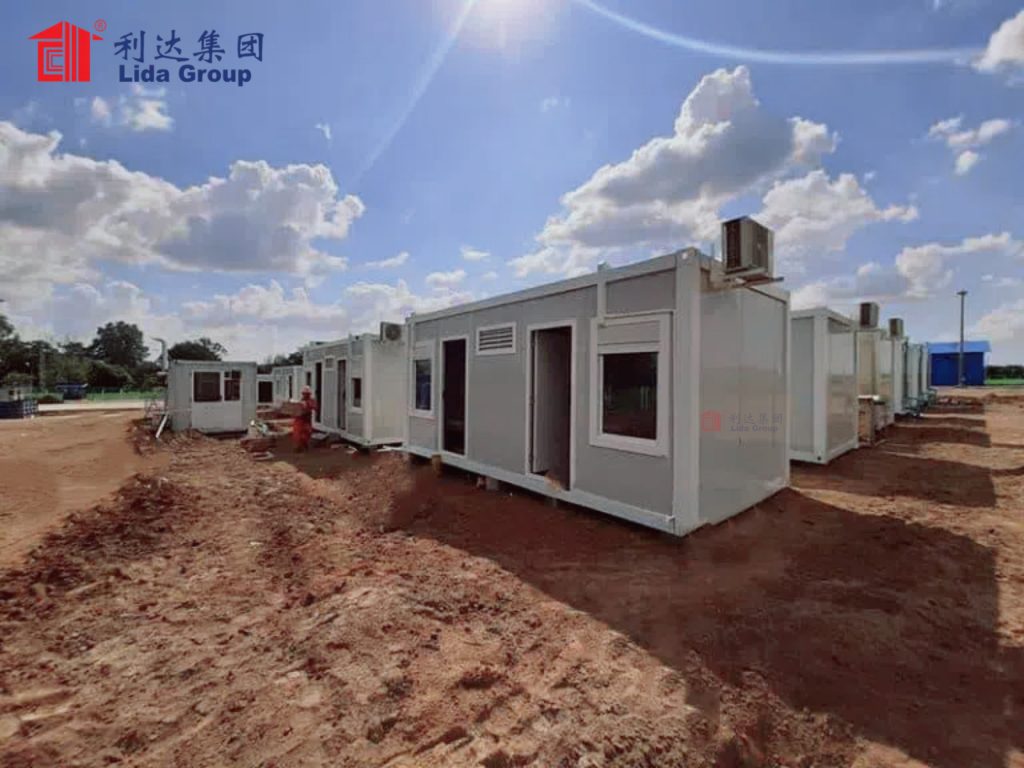
1. Pain Points of Traditional Temporary Housing in Construction and Emergency Scenarios
Construction camp accommodation and emergency shelter placement have completely different demand characteristics in terms of service cycle, deployment speed, environmental adaptability, and functional requirements. Traditional single-functional temporary housing products cannot adapt to the differentiated needs of the two scenarios, resulting in low efficiency, poor safety, and high comprehensive costs in practical application.
1.1 Defects of Traditional Housing for Construction Camp Application
Construction camps require long-term stable operation, standardized management, and reusable deployment with the movement of engineering projects. Traditional on-site built temporary brick buildings have fixed structures and cannot be disassembled and relocated. After the completion of a single project, they can only be demolished and abandoned, generating massive construction waste and repeated capital investment. Simple color steel plate houses have short service life, poor wind and earthquake resistance, and insufficient fireproof performance. Under long-term outdoor open-air use and construction site vibration environments, they are prone to structural loosening, water leakage, wall aging, and other problems, requiring frequent maintenance and renovation. In addition, traditional temporary houses have single functional layout, poor living comfort, and incomplete supporting facilities, which cannot meet the modern management needs of construction enterprises for standardized, clean, and humane staff accommodation, easily leading to low worker satisfaction and high personnel turnover rate.
1.2 Shortcomings of Traditional Shelters for Emergency Rescue Scenarios
Emergency shelter scenarios represented by post-disaster resettlement, epidemic isolation, and field rescue require ultra-fast large-scale deployment, convenient transportation, and basic safe living conditions. Traditional disaster relief tents are the most commonly used emergency shelters, but they have obvious inherent defects. Tents have poor structural stability and cannot resist strong wind, heavy rain, snow pressure, and extreme temperature changes. The thin fabric structure cannot achieve effective heat insulation and waterproofing, resulting in humid, cold, or stuffy indoor environments that fail to provide safe and comfortable living conditions for affected people and rescue workers. Meanwhile, tents lack standardized supporting facilities such as fixed power supply, ventilation, and waterproof floors, and are prone to water accumulation, mildew, and collapse in harsh weather. Most importantly, tents are disposable supplies with low reusability, resulting in serious resource waste and high emergency reserve costs for public emergency departments.
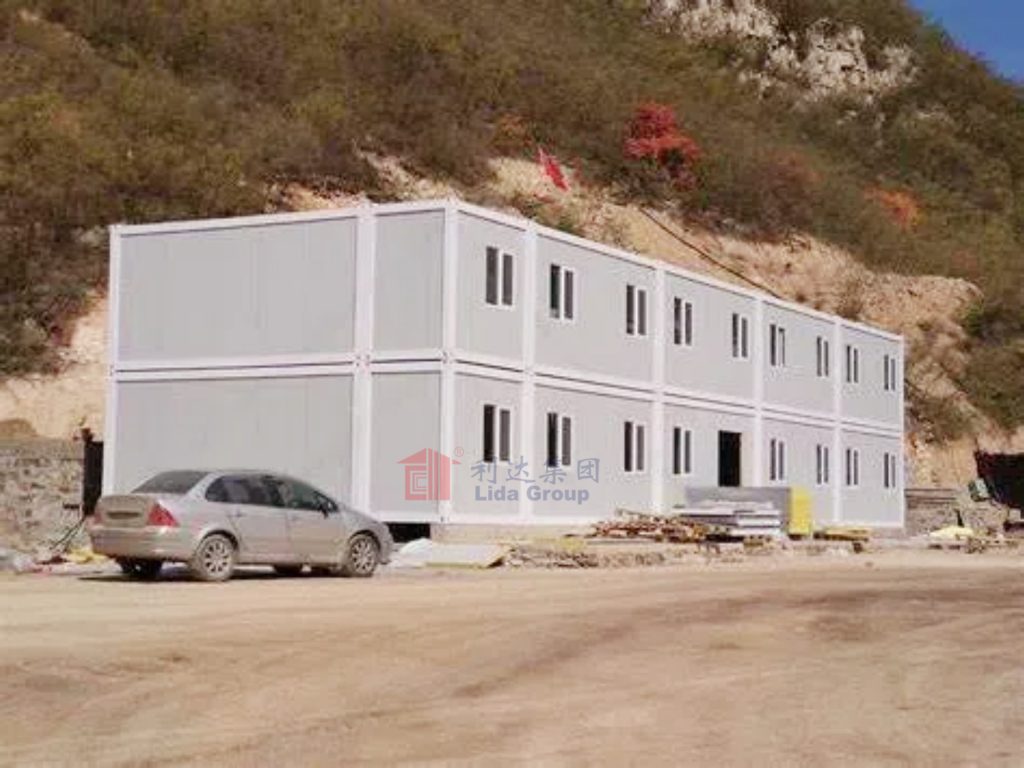
2. Core Comprehensive Advantages of Lida Group’s Living Container Houses
Lida Group’s living container houses are specially optimized for the dual scenario demands of long-term construction camps and rapid emergency shelters, integrating the advantages of fast assembly, high safety, strong durability, flexible mobility, and complete functions. The product fills the performance gap of traditional temporary housing and realizes perfect adaptation to both engineering construction and public emergency fields.
2.1 Ultra-Fast Assembly and Efficient Logistics Deployment
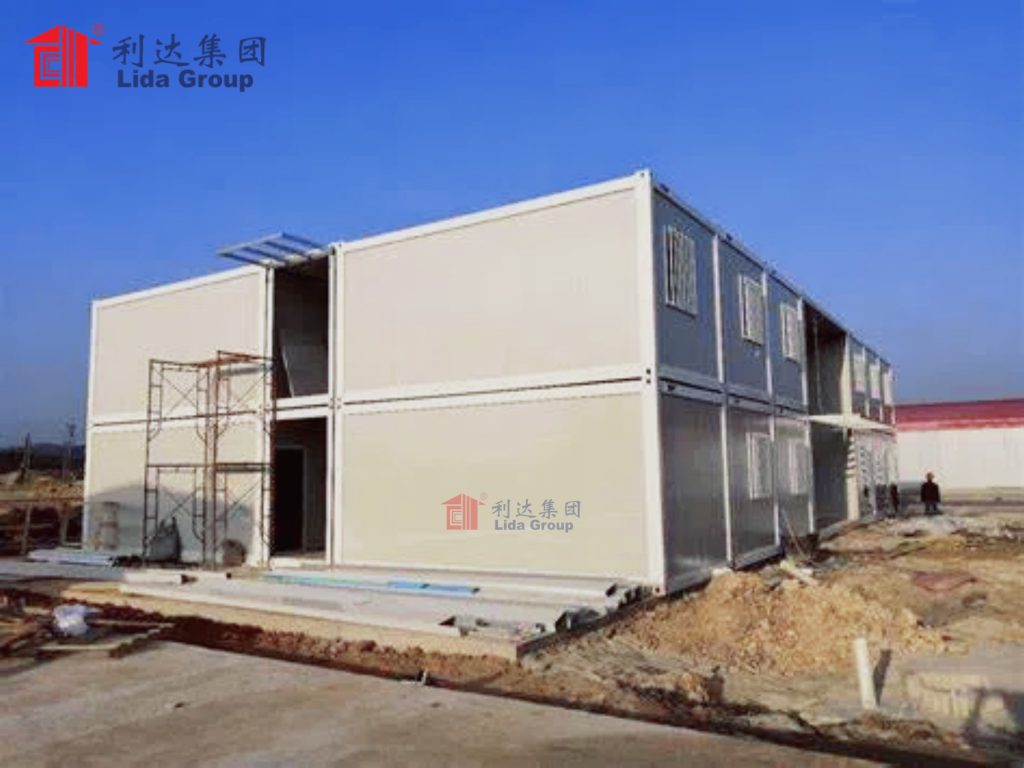
The biggest core advantage of Lida Group’s living container houses is efficient deployability, which meets the urgent placement needs of emergency scenarios and rapid camp layout needs of engineering projects. The product adopts a modular flat-pack disassembled design, with all structural frames, wall panels, and functional components prefabricated in factories. The flat stacked packaging method saves more than 75% of transportation space compared with integral container houses, adapting to narrow mountain roads, rural roads, and complex disaster site road conditions that are inaccessible to large vehicles. A single ordinary cargo vehicle can load multiple sets of container modules, greatly reducing cross-regional transportation costs and improving delivery efficiency. On-site assembly adopts tool-free bolt connection technology, requiring no professional welding, cutting, and large mechanical equipment. Ordinary workers can complete the assembly, sealing, and electrical debugging of a single unit within 3 to 4 hours, and a large-scale camp with hundreds of units can be fully deployed and put into use within 48 hours, realizing rapid response to emergency tasks and quick layout of construction camps.
2.2 High-Safety Structure and Extreme Environmental Adaptability
Safety and stability are the basic guarantees for long-term camp operation and emergency personnel resettlement. Lida Group’s living container houses adopt high-strength hot-dip galvanized steel frames as the main load-bearing structure, with overall structural stability meeting international high-standard wind resistance, earthquake resistance, and pressure resistance requirements. The product can resist level 12 strong winds, bear heavy snow pressure, and adapt to seismic fortification standards in most regions, effectively avoiding structural collapse and damage in extreme weather and complex terrain environments. The wall panels adopt high-density fireproof and heat-insulating sandwich composite materials, with excellent fire resistance, waterproofing, anti-corrosion, and anti-aging performance. The fully sealed integral structure completely isolates external rainwater, dust, and moisture, solving the problems of water leakage, mildew, and cold penetration of traditional tents and simple houses. Whether in high-temperature deserts, severe cold plateaus, rainy coastal areas, or windy mountainous construction sites, the product can maintain stable indoor living conditions and ensure the personal safety of residents.
2.3 Long Service Life and Reusable Circular Value
Different from disposable traditional temporary shelters and short-life simple camp houses, Lida Group’s living container houses have an ultra-long service life of more than 15 years for the main steel structure. The detachable modular design supports multiple times of disassembly, transportation, cross-site relocation, and reassembly, with almost no loss of structural performance and functional configuration after repeated use. For construction enterprises, the reusable design allows the container camp to be transferred and reused with the movement of engineering projects, completely eliminating repeated construction and demolition costs. For public emergency departments, the container shelters used in single disaster relief tasks can be disassembled, cleaned, maintained, and stored as emergency reserve materials, which can be quickly put into use in subsequent public emergencies, greatly reducing long-term emergency reserve costs and improving resource utilization efficiency.
2.4 Humanized Complete Functional Configuration
Lida Group’s living container houses abandon the crude single-functional design of traditional temporary housing and realize integrated humanized functional configuration. All units are pre-installed with standardized power supply circuits, lighting systems, ventilation windows, waterproof and wear-resistant floors, and heat insulation structures, with reserved interfaces for air conditioning, network, and water supply and drainage. The indoor space is scientifically planned with reasonable height and activity area, which can flexibly accommodate 2 to 4 people, meeting daily rest and living needs. For camp and emergency scenarios, supporting modular facilities such as independent toilets, shower rooms, canteens, office rooms, and medical observation rooms can be matched to form a complete closed-loop living system. The clean, comfortable, and safe indoor environment effectively improves the living experience of construction workers and resettled personnel, which is incomparable to traditional tents and simple shanties.
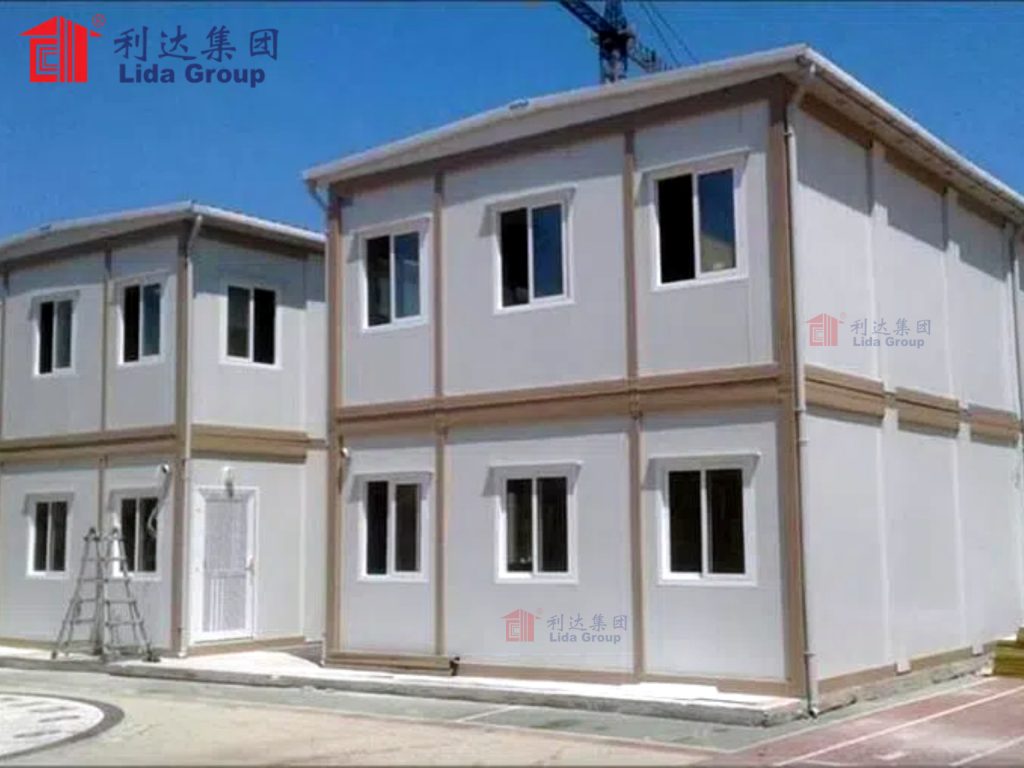
3. Targeted Application Value for Construction Camp Scenarios
In engineering construction scenarios, Lida Group’s living container houses serve as standardized long-term construction camp supporting facilities, bringing comprehensive efficiency improvement and cost reduction for construction enterprises with stable performance, flexible layout, and standardized management advantages.
3.1 Standardized Camp Layout Optimizes On-Site Management
Modern engineering construction pays more and more attention to civilized construction and standardized on-site management. Lida Group’s living container houses adopt unified modular specifications and neat appearance, which can be arranged in an orderly manner according to project management requirements to form standardized dormitory areas, office areas, and living supporting areas. The unified and clean camp environment meets the inspection standards of civilized construction sites, effectively improving the overall image and management level of the construction site. The independent closed dormitory unit is convenient for personnel attendance, safety inspection, and daily sanitation management, avoiding the disorderly layout and difficult management problems of traditional temporary housing.
3.2 Dynamic Adaptation to Phased Project Changes
Engineering projects have obvious phased characteristics, and the number of on-site workers changes dynamically with project progress. Lida Group’s container houses support flexible splicing and combination of single modules. In the peak construction period with large workforce demand, more modules can be quickly assembled to expand the camp scale; in the later finishing stage with reduced workforce, redundant modules can be disassembled and stored in time to avoid resource idle and waste. This flexible dynamic adjustment mode perfectly matches the phased operation law of engineering projects, realizing precise matching of housing scale and project demand.
3.3 Stable Operation Reduces Long-Term Project Costs
Construction projects usually last for several months to several years, requiring long-term stable operation of on-site accommodation facilities. Lida Group’s living container houses have strong weather resistance and low maintenance rate, which can maintain stable performance throughout the project cycle without frequent renovation and repair. The reusable design enables enterprises to realize cross-project cyclic deployment of camp facilities, eliminating the repeated investment of traditional temporary housing in each new project. In addition, the comfortable living environment stabilizes the construction team, reduces personnel turnover and recruitment training costs, and ensures the continuous and efficient progress of engineering construction, bringing significant long-term economic benefits to enterprises.
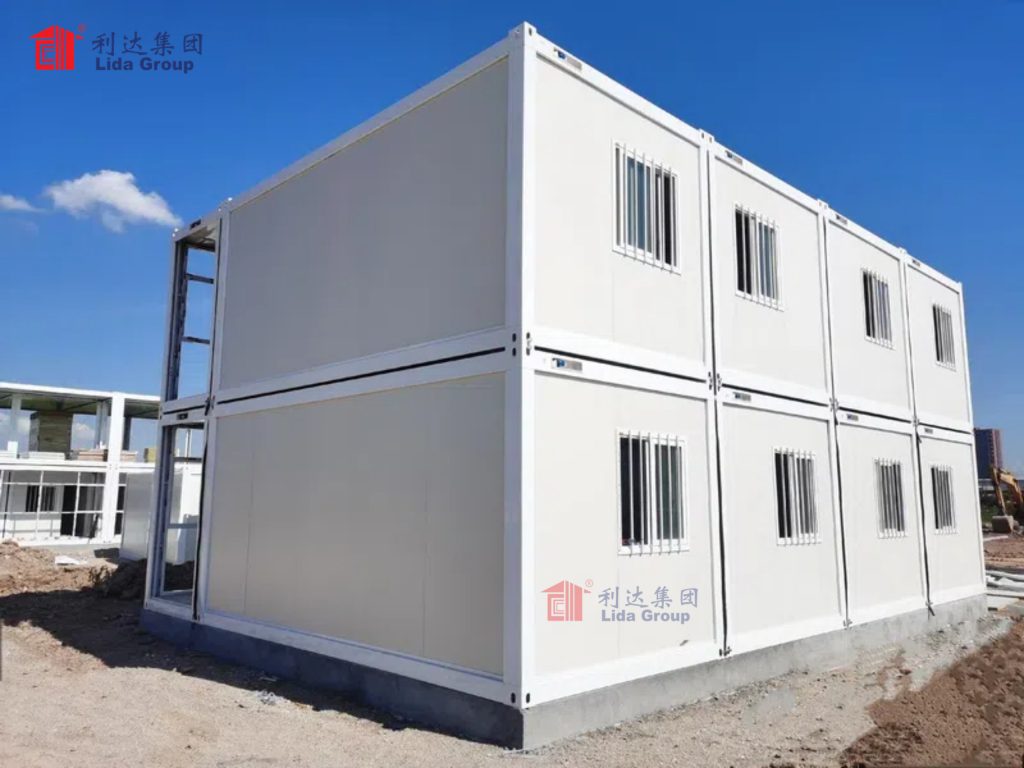
4. Unique Practical Value for Emergency Shelter Scenarios
In public emergency scenarios such as natural disaster relief, public health emergencies, and field rescue, Lida Group’s living container houses rely on ultra-fast deployment capability, safe and comfortable living conditions, and reusable reserve value to solve many pain points of traditional emergency shelters.
4.2 Ultra-Fast Emergency Response for Disaster Relief
Time is the most critical factor in emergency rescue work. After natural disasters such as earthquakes, floods, and typhoons, local houses are severely damaged, and a large number of affected people need rapid resettlement. Traditional brick-concrete shelters cannot be constructed in a short time, and tents have poor safety and comfort. Lida Group’s prefabricated container houses can be transported to disaster-stricken areas in the fastest time and assembled on a large scale within 48 hours, providing safe and stable temporary shelters for affected people and rescue teams. The efficient deployment capability greatly shortens the emergency resettlement cycle and improves the efficiency of public emergency response work.
4.2 Safe and Comfortable Living Environment for Long-Term Resettlement
Many disaster-affected areas need long-term temporary resettlement before post-disaster reconstruction is completed. Traditional tents are difficult to adapt to long-term living needs, and problems such as cold winter, hot summer, rain leakage, and poor sanitation are prominent, which easily trigger psychological anxiety and secondary health problems of resettled personnel. Lida Group’s container shelters have constant temperature heat insulation, waterproof and windproof, sound insulation and dustproof functions, providing a safe, clean, and comfortable long-term living environment. The standardized power supply, ventilation, and lighting systems meet daily living and basic medical observation needs, effectively protecting the physical and mental health of resettled personnel and solving the long-term resettlement dilemma of public emergency departments.
4.3 Storable and Reusable for Emergency Reserve
Public emergency work requires sufficient reserve of emergency shelter materials. Disposable tents have high reserve costs and cannot be reused after disasters, resulting in huge resource waste. Lida Group’s living container houses can be disassembled and flat-packed for centralized storage after completing emergency resettlement tasks, occupying little storage space. After simple cleaning and maintenance, they can be put into the next emergency rescue task, realizing cyclic reserve and repeated use. This reusable emergency shelter mode greatly reduces the annual material reserve cost of public emergency departments and improves the sustainable guarantee capability of public emergency systems.
5. Green Environmental Protection and Social Sustainable Value
In addition to practical application value in construction and emergency scenarios, Lida Group’s living container houses also have outstanding green environmental protection advantages and social sustainable value, conforming to the global low-carbon and green development trend. The product adopts full factory prefabrication production, with almost no construction waste, dust, and noise pollution generated during on-site assembly, realizing zero-damage green construction for construction sites and emergency resettlement sites. All steel structure materials can be fully recycled, and the material recycling rate is as high as 95%, avoiding the environmental pollution and resource waste caused by the demolition of traditional temporary buildings.
For engineering construction, the green and low-carbon construction mode helps enterprises meet green construction assessment standards and establish environmentally friendly project images. For public emergency rescue, the reusable green shelter solution reduces the waste of public resources and improves the scientific and standardized level of public emergency management. At the same time, the stable and humane temporary housing solution ensures the stability of construction teams and disaster-resettled personnel, reduces social contradictions caused by poor living conditions, and brings positive social benefits for safe production and post-disaster social stability.
6. Conclusion
Traditional temporary housing solutions have long been unable to balance the dual scenario needs of long-term construction camp operation and rapid emergency shelter deployment due to their single function, poor safety, low reusability, and low comfort. Lida Group’s living container houses perfectly solve the industry’s dual pain points with ultra-fast assembly and efficient logistics deployment, high-strength safety and extreme weather adaptability, long-cycle reusable performance, and humanized full-functional configuration. In construction camp scenarios, the product realizes standardized camp layout, flexible dynamic adjustment, and low-cost long-term operation, helping construction enterprises optimize on-site management, stabilize workforce, and reduce comprehensive project costs. In public emergency scenarios, it achieves rapid large-scale deployment, safe and comfortable long-term resettlement, and recyclable emergency reserve, greatly improving the response efficiency and service level of public emergency rescue work.
With the dual advantages of engineering practicability and public emergency applicability, Lida Group’s living container houses have become a versatile and high-value modular temporary housing solution. Adhering to the concepts of safety, efficiency, environmental protection, and humanization, Lida Group continues to optimize product performance and functional configuration, providing reliable temporary housing guarantees for global engineering construction and public emergency rescue causes. In the future, this dual-purpose container housing product will further promote the standardized and green upgrading of the global modular construction industry, and become an indispensable basic supporting facility for engineering development and public emergency security.
Related news
-
Living Container House by Lida Group Combines Comfort, Durability, and Affordability
2026-05-22 17:15:28
-
Lida Group Expands Range of Flat Packed Modular Container House for Export Markets
2026-05-22 17:26:02
-
Lida Group Delivers Flat Packed Modular Container House for Remote Workforce Housing
2026-05-22 17:04:32
contact us
- Tel: +86-532-88966982
- Whatsapp: +86-13793209022
- E-mail: sales@lidajituan.com
