



Lida Group Delivers Flat Packed Modular Container House for Remote Workforce Housing
2026-May-22 17:04:32
By Admin
Introduction
Large-scale infrastructure construction, mineral resource exploitation, oil and gas exploration, and border engineering projects are mostly located in remote, undeveloped areas with harsh natural environments and insufficient local supporting infrastructure. These remote project sites often lack commercial residential facilities, standardized accommodation conditions, and complete living supporting systems, making workforce housing a core bottleneck restricting project progress and team stability. For a long time, most engineering enterprises have adopted simple tents, makeshift shanties, or traditional fixed temporary buildings to solve workers’ accommodation problems in remote areas. However, these traditional housing modes have prominent defects such as difficult transportation, slow construction, poor safety performance, harsh living environment, and non-reusability, which not only fail to meet modern construction safety and humanized management standards but also easily lead to low worker morale, high turnover rate, and hidden safety hazards.
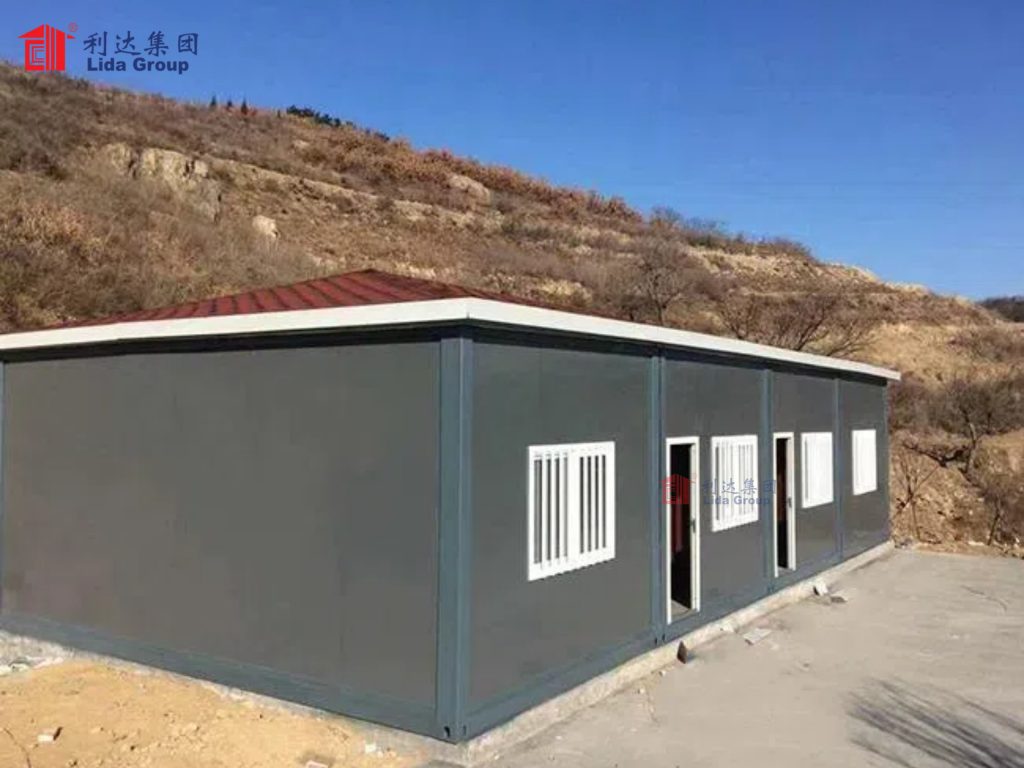
As a global leading manufacturer and solution provider of modular prefabricated buildings, Lida Group has long focused on the pain points of remote workforce housing. After years of technical research and development and engineering practice summary, the company has launched professional flat packed modular container house solutions tailored for remote project scenarios and completed large-scale standardized delivery and deployment worldwide. Different from traditional integral container houses and rough temporary buildings, Lida Group’s flat packed modular container houses adopt disassembled flat packaging design, factory integrated prefabrication, and remote-adaptive functional configuration. They have outstanding advantages in cross-terrain transportation, rapid on-site assembly, extreme weather resistance, and cyclic reuse, which can fully meet the long-term safe accommodation, daily life, and office needs of construction workers, mining teams, and field operation personnel in remote areas. This article comprehensively analyzes the industry challenges of remote workforce housing, the core design advantages of Lida Group’s customized flat packed container houses, efficient delivery and deployment modes, practical application value, and long-term sustainable benefits for remote engineering projects.
1. Core Challenges of Traditional Remote Workforce Housing
Remote engineering projects are typically characterized by inaccessible transportation, complex terrain, extreme climate, scattered construction points, and phased operation. These unique project attributes make traditional temporary housing solutions completely unable to adapt to on-site demands, resulting in multiple management and economic problems for engineering enterprises.
1.1 Extreme Transportation Difficulties and High Logistics Costs
Most remote construction sites are located in mountainous areas, desert regions, plateau zones, or coastal uninhabited areas, with narrow roads, complex road conditions, and limited large-scale vehicle passage capacity. Traditional integral container houses occupy huge transportation space and have large external volumes, requiring professional heavy-duty transport vehicles and large hoisting equipment for delivery and handling. Inaccessible road conditions often lead to difficult vehicle entry, increased transportation risks, and even additional detour costs. In addition, the single transportation volume of integral containers is low, requiring multiple batches of transportation to meet the housing needs of large workforces, which greatly increases cross-regional logistics costs and delays the preparation cycle of on-site accommodation facilities.
1.2 Slow On-Site Construction and Low Project Adaptability
Traditional brick-concrete temporary houses and on-site assembled simple buildings require a complete set of processes including foundation treatment, material transportation, on-site welding, masonry construction, and interior decoration. The whole construction cycle often lasts for several weeks or even months, which cannot match the rapid startup rhythm of modern remote engineering projects. Moreover, remote sites lack sufficient skilled construction workers and professional construction equipment, resulting in low construction efficiency and uneven engineering quality. Once the project construction phase changes or the operation site shifts, fixed temporary buildings cannot be adjusted or transferred, resulting in poor flexibility and low matching with phased project demands.
1.3 Poor Environmental Adaptability and Hidden Safety Hazards
Remote areas are prone to extreme weather such as high-temperature heat, severe cold, strong wind, heavy rainfall, and sandstorms. Traditional temporary housing facilities are made of low-strength simple materials without professional wind resistance, seismic resistance, heat insulation, and waterproof design. Tents and thin iron sheet shanties cannot resist extreme temperature changes, resulting in overheating indoors in summer and severe cold in winter, seriously affecting workers’ rest quality. Meanwhile, these temporary buildings have substandard fireproof performance and unstable structural strength, which are prone to collapse, water leakage, fire, and other safety accidents under extreme weather conditions, threatening the personal safety of on-site workers and bringing great safety management pressure to engineering enterprises.
1.4 Disposable Use and High Long-Term Comprehensive Costs
Most traditional remote temporary houses are disposable buildings. After the completion of a single project, they can only be demolished and abandoned, with no reuse value. A large amount of construction waste generated by demolition needs additional disposal costs and causes damage to the remote ecological environment. For engineering enterprises with multiple remote projects, repeated construction and demolition of temporary houses lead to continuous capital investment and serious resource waste. In addition, traditional housing lacks complete supporting living facilities, resulting in poor worker satisfaction and high workforce turnover, which indirectly increases project recruitment and training costs and affects the continuity and stability of engineering construction.
2. Core Design Advantages of Lida Group’s Flat Packed Container Houses for Remote Housing
Aiming at the multiple pain points of remote workforce housing, Lida Group has carried out targeted technical optimization and structural upgrading for flat packed modular container houses. The product adheres to the design concepts of remote adaptability, rapid deployment, safe residence, and cyclic reuse, realizing innovative breakthroughs in transportation mode, assembly technology, structural performance, and functional configuration, and becoming a dedicated housing solution for remote engineering workforces.
2.1 Flat Packaging Structure Solves Remote Transportation Bottlenecks
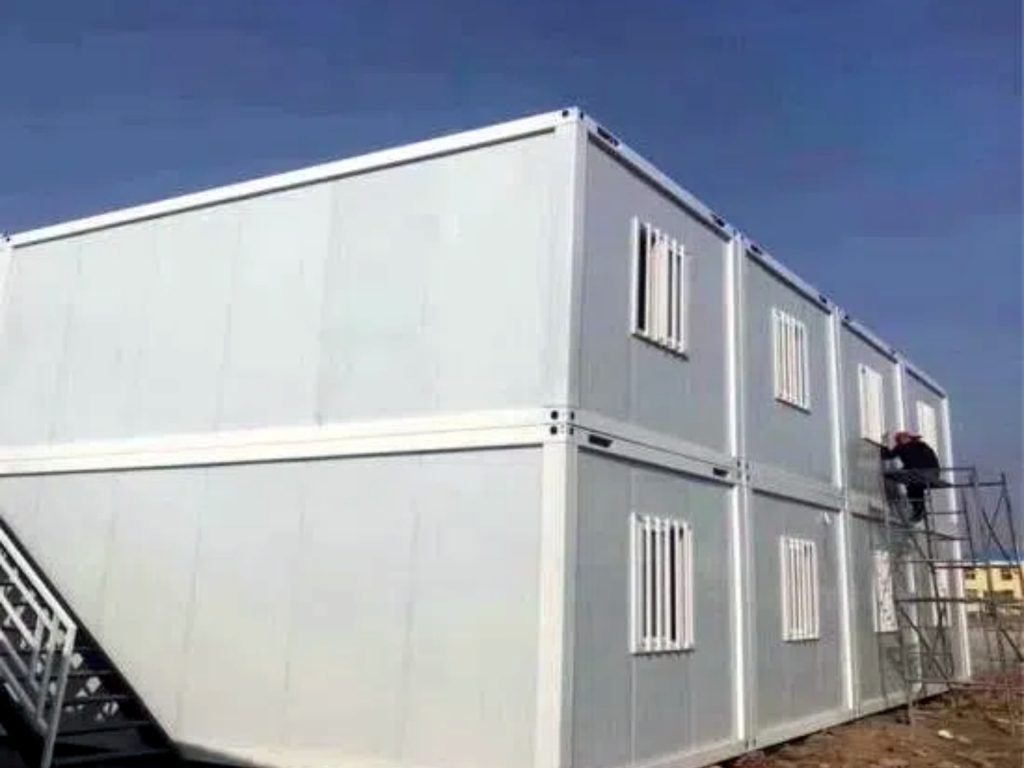
The biggest innovative advantage of Lida Group’s products is the optimized flat disassembled packaging design, which completely solves the transportation dilemma of traditional integral containers in remote areas. The container house can be fully disassembled into flat steel frame components, wall panels, roof panels, floor materials, and standardized accessories. All components are stacked flat and packaged intensively, without irregular protruding structures, which greatly reduces the overall transportation volume. A single standard shipping container or ordinary cargo truck can load more than 12 sets of flat packed container house components, while only 2 to 3 sets of integral containers can be transported in the same space. This design reduces the logistics volume by over 75% and effectively adapts to narrow mountain roads, plateau gravel roads, and other limited transportation conditions in remote areas. It can realize efficient delivery through ordinary transport vehicles without professional hoisting and large-scale transportation equipment, greatly reducing transportation difficulty and logistics costs.
2.2 Tool-Free Rapid Assembly Adapts to Remote Construction Conditions
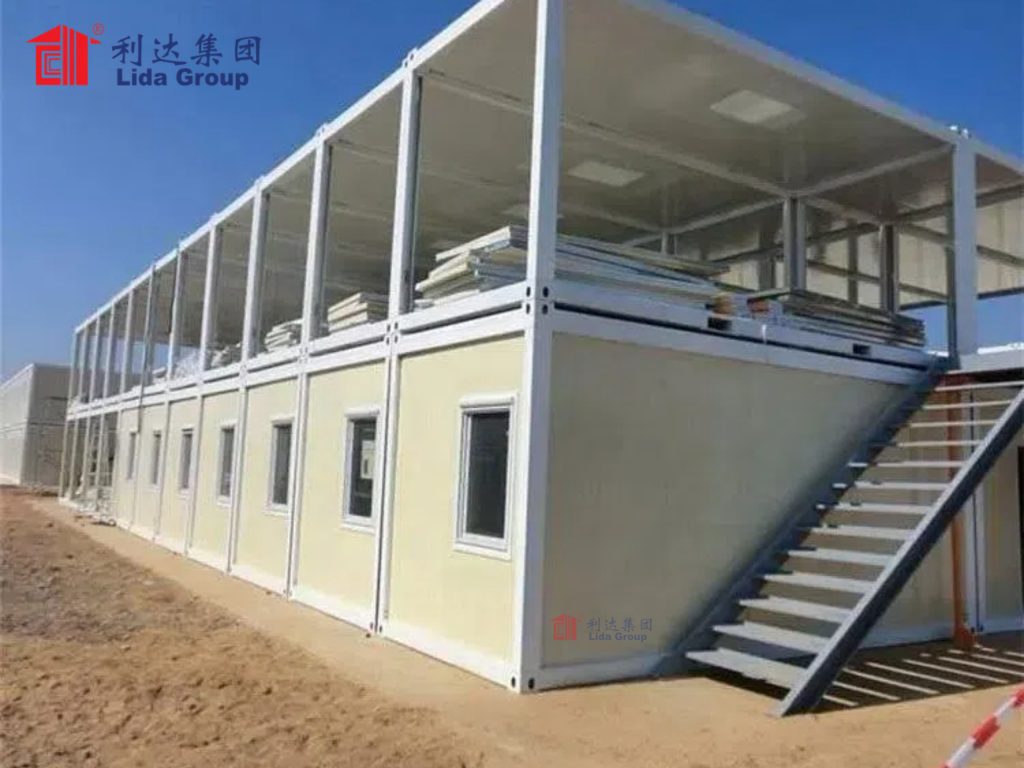
Considering the lack of professional construction workers and mechanical equipment in remote sites, Lida Group’s flat packed container houses adopt fully simplified tool-free assembly design. All components are prefabricated and sized in the factory, with unified standardized connecting interfaces and color-coded matching marks. The product is equipped with detailed visual assembly manuals and remote online guidance videos, requiring no professional construction skills, electric welding, or large mechanical equipment. Only 2 to 4 ordinary workers can complete the assembly, sealing, and basic commissioning of a single container housing unit within 3 to 4 hours. The whole housing camp can be fully built and put into use within one to two days, which is dozens of times more efficient than traditional construction modes. This ultra-fast assembly mode perfectly matches the rapid startup demand of remote projects and ensures that workers can settle in at the fastest speed.
2.3 High-Strength Structure and Extreme Climate Adaptive Design
To adapt to the complex and harsh climatic environment of remote areas, Lida Group has upgraded the structural strength and environmental adaptability of flat packed container houses in an all-round way. The main frame is made of high-strength hot-dip galvanized steel, which has excellent anti-corrosion, anti-rust, wind resistance, and seismic performance, and can resist level 12 strong winds and meet high-standard seismic fortification requirements. For different extreme remote environments, the product supports personalized adaptive configuration: thickened polyurethane heat insulation layers and high-efficiency heat dissipation systems are equipped for desert high-temperature areas to keep indoor temperature constant; low-temperature resistant materials and heating reserved interfaces are adopted for plateau severe cold areas to prevent freezing and heat preservation; enhanced fully sealed waterproof and moisture-proof structures are configured for humid rainy remote areas to avoid water leakage and mildew. The high-performance sandwich wall panels have integrated fireproof, heat insulation, and sound insulation functions, which can effectively isolate external harsh weather and noise, creating a safe and stable indoor living environment for workers.
2.4 Modular Scalable Design Meets Dynamic Workforce Demand
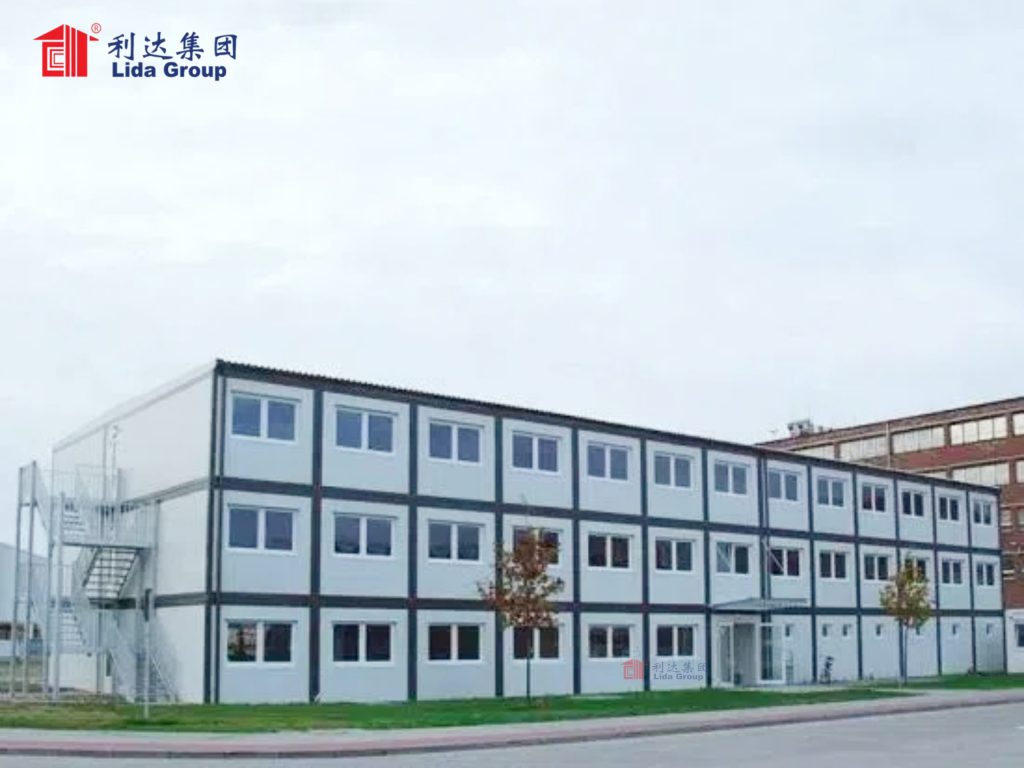
Remote engineering projects have obvious phased characteristics, and the number of construction workers often changes dynamically with project progress. Lida Group’s flat packed container houses adopt flexible modular combination design, and single standard units can be freely spliced horizontally and stacked vertically according to the actual workforce scale. Enterprises can flexibly increase or decrease the number of housing units and expand functional areas such as dormitories, offices, and canteens according to project changes, avoiding resource waste caused by fixed-scale housing construction. After the project is completed, the container houses can be quickly disassembled, flat-packed again, and transported to new remote project sites for secondary assembly and use. The main structure has a service life of more than 15 years and can be reused for many times, realizing cyclic utilization and greatly reducing the long-term housing cost of remote engineering projects.
3. Standardized Delivery System Ensures Stable Supply for Remote Projects
Lida Group has built a mature full-chain delivery service system for remote workforce housing projects, covering standardized factory production, batch customized processing, cross-regional logistics scheduling, on-site technical guidance, and after-sales maintenance, ensuring efficient and high-quality product delivery for various remote engineering projects around the world.
3.1 Intelligent Factory Standardized Batch Production
All flat packed modular container houses for remote workforce housing are produced in Lida Group’s intelligent standardized production bases. The whole production process adopts automated cutting, precise welding, integrated spraying, and one-stop assembly processes, with strict quality inspection procedures for each process. All structural components, functional accessories, and decorative materials comply with international construction safety and environmental protection standards, ensuring consistent product quality and stable performance. The large-scale production capacity can meet the batch delivery demand of large remote engineering camps with hundreds of housing units, realizing rapid order response and short-cycle delivery.
3.2 Customized Remote-Adaptive Configuration Delivery
According to the geographical environment, climatic characteristics, and project management standards of different remote project sites, Lida Group provides personalized customized delivery services. In addition to the basic residential units, the company can support the matching delivery of integrated toilet modules, shower modules, kitchen and canteen modules, office conference modules, and leisure activity modules to form a fully functional closed-loop remote living camp. For special remote projects such as mining and field exploration, professional dust-proof, anti-corrosion, and explosion-proof electrical configurations can be added to further improve the safety and applicability of the housing camp.
3.3 Full-Cycle On-Site Technical Support
For remote areas with inconvenient transportation and lack of technical personnel, Lida Group provides full-cycle remote technical guidance and on-site after-sales service. The professional technical team can provide online real-time assembly guidance, fault debugging, and operation training to ensure that on-site workers complete product assembly and normal use efficiently. For large-scale remote camp projects, the company can arrange professional engineers to go to the site for guidance and acceptance, ensuring that the housing camp meets safety standards and use requirements. The perfect after-sales system solves the technical and maintenance difficulties of modular buildings in remote areas and eliminates the worries of engineering enterprises.
4. Full-Functional Living Configuration Improves Remote Worker Well-Being
Different from the single lodging function of traditional remote temporary housing, Lida Group’s delivered flat packed container house camps integrate accommodation, catering, office, sanitation, and leisure functions, completely upgrading the living standards of remote construction teams and effectively improving workers’ sense of belonging and work enthusiasm.
4.1 Humanized Independent Residential Space
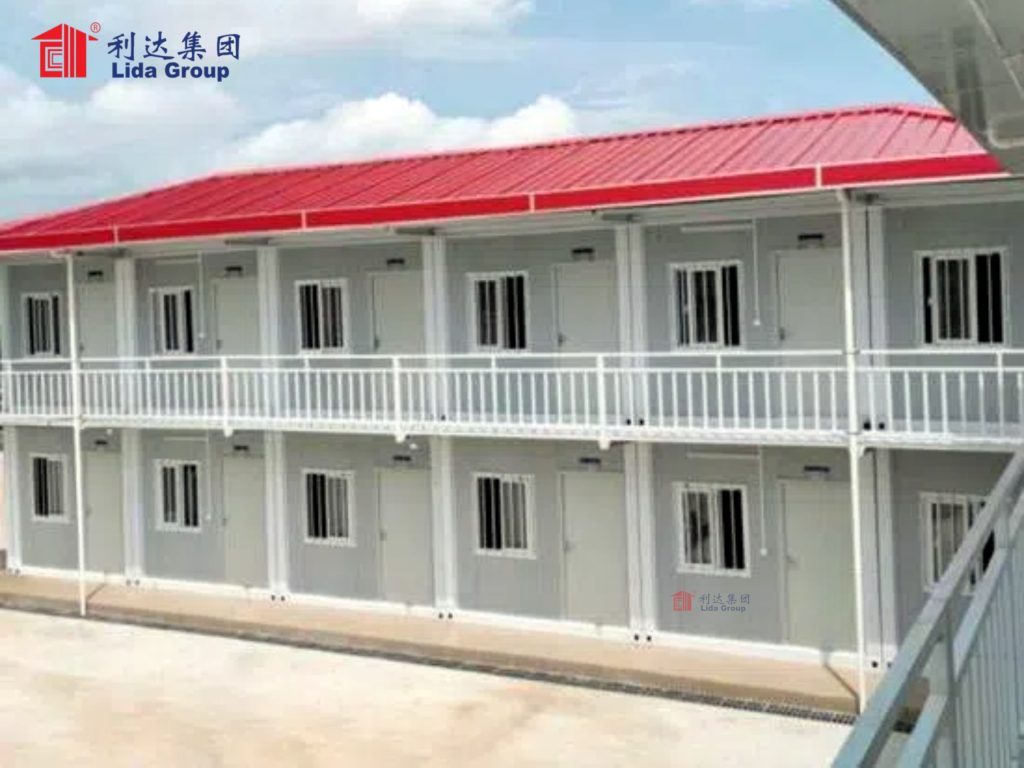
The standard remote worker dormitory unit adopts a scientific space layout, with reasonable indoor height and activity space, and can flexibly arrange 2 to 4 beds according to management needs. Each dormitory is equipped with independent ventilation windows, anti-glare lighting systems, and standardized electrical sockets, with reserved air conditioning and network interfaces. The smooth and easy-to-clean interior wall and floor materials ensure indoor sanitation and tidiness. The excellent sound insulation and heat insulation performance avoid the interference of external construction noise and extreme temperature changes, providing workers with a quiet and comfortable rest environment after high-intensity work.
4.2 Complete Public Supporting Facilities
Lida Group’s overall delivery solution supports the integrated matching of various public service facilities. The centralized sanitary area is equipped with independent toilets, hot water shower rooms, and laundry platforms, with professional water supply, drainage, and ventilation systems to keep the public area dry and hygienic. The supporting container canteen adopts fireproof and oil-proof interior materials, with professional smoke exhaust and oil fume purification equipment, meeting food safety standards. The independent office and conference area provides a dedicated space for project management, safety training, and work deployment, while the leisure activity room enriches workers’ spare-time life, effectively alleviating the negative emotions caused by long-term remote work and improving team cohesion.
5. Economic and Sustainable Value for Remote Engineering Projects
The large-scale delivery and application of Lida Group’s flat packed modular container houses bring significant economic benefits and sustainable development value to remote engineering projects, helping enterprises reduce comprehensive costs, optimize project management, and practice green construction concepts.
In terms of economic benefits, the flat packaging transportation mode greatly reduces the logistics cost of remote housing deployment, and the rapid assembly mode saves a lot of on-site labor costs and time costs. The reusable modular design realizes multiple cyclic uses of a single product, completely avoiding the repeated construction cost of traditional disposable temporary buildings. The durable and low-maintenance product performance reduces the later operation and maintenance costs of the camp, effectively reducing the overall project operating expenditure.
In terms of sustainable development, the factory prefabrication mode produces almost no construction waste, dust, and noise pollution during on-site assembly, realizing zero-damage green construction for remote ecological environments. The steel structure materials can be fully recycled and reused, reducing resource waste and environmental damage caused by construction and demolition. The energy-saving heat insulation design reduces daily energy consumption and carbon emissions of the camp, conforming to the global green engineering construction standards and helping enterprises build environmentally friendly remote project camps.
6. Conclusion
Remote workforce housing has always been a key difficult problem restricting the standardized construction and stable operation of remote engineering projects. Traditional temporary housing solutions have obvious defects in transportation, construction efficiency, safety performance, living comfort, and reusability, which cannot adapt to the high-standard management and humanized construction needs of modern remote projects. Lida Group’s delivered flat packed modular container house solutions perfectly target the pain points of remote workforce housing, relying on innovative flat packaging design to solve remote transportation difficulties, efficient modular assembly to shorten camp construction cycles, high-strength adaptive structure to cope with extreme remote climates, and full-functional supporting configuration to improve workers’ living quality.
With the advantages of low logistics cost, rapid deployment, safe and comfortable residence, cyclic reuse, and green environmental protection, Lida Group’s flat packed container houses have become the most reliable housing choice for global remote construction, mining, oil and gas, and field operation projects. The standardized delivery system and personalized customized service can fully meet the diversified housing needs of different remote projects and different workforce scales. In the future, Lida Group will continue to optimize product performance and upgrade supporting services, provide more high-quality, efficient, and humanized remote workforce housing solutions for global engineering enterprises, help stabilize remote construction teams, improve project operation efficiency, and promote the standardized, green, and high-quality development of global remote engineering construction.
Related news
-
Discover the Versatility of Living Container House Designs from Lida Group
2026-05-22 16:54:35
-
Prefabricated Container Worker Dormitory Solutions by Lida Group Enhance On-Site Living
2026-05-22 14:53:36
-
Lida Group Introduces Flat Packed Modular Container House for Rapid Global Deployment
2026-05-22 11:14:08
contact us
- Tel: +86-532-88966982
- Whatsapp: +86-13793209022
- E-mail: sales@lidajituan.com
