



Lida Group Launches Easy Install Sandwich Panel House for Oil Field Worker Dormitory
2026-May-25 11:42:55
By Admin
Introduction
The global oil and gas industry operates predominantly in remote, barren, and climatically extreme regions, including desert basins, high-altitude plateaus, coastal tidal flats, and undeveloped wilderness zones. These isolated operational areas lack complete urban residential infrastructure, stable power supply, and daily living supporting facilities, making on-site worker accommodation one of the core challenges for oilfield project management. Unlike conventional construction projects, oilfield exploration, drilling, and development activities feature phased construction cycles, flexible staffing scales, and frequent site relocation. Permanent brick-concrete buildings involve excessive investment, long construction cycles, and zero reusability, while traditional temporary housing such as canvas tents and crude makeshift shanties suffer from poor safety, weak weather resistance, and substandard living conditions.
To address the long-standing industry pain points of difficult installation, low efficiency, poor durability, and high comprehensive costs in oilfield camp construction, Lida Group, a global leading manufacturer of modular prefabricated buildings, has officially launched a new generation of easy-install sandwich panel houses tailored exclusively for oilfield worker dormitory scenarios. Integrating innovative modular assembly technology, high-performance industrial-grade sandwich panels, and simplified on-site construction logic, this new product completely subverts the complex construction mode of traditional temporary buildings. It realizes tool-free rapid installation, extreme environmental adaptability, standardized safe accommodation, and low full-lifecycle operating costs, perfectly matching the temporary, high-efficiency, and high-safety operational needs of global oilfield projects. This article systematically elaborates on the drawbacks of traditional oilfield worker dormitories, core innovative advantages of Lida Group’s newly launched easy-install sandwich panel houses, scenario-based performance advantages for oilfield environments, practical application value, and long-term benefits for energy enterprises, providing in-depth insights into the upgraded solution for modern oilfield camp construction.
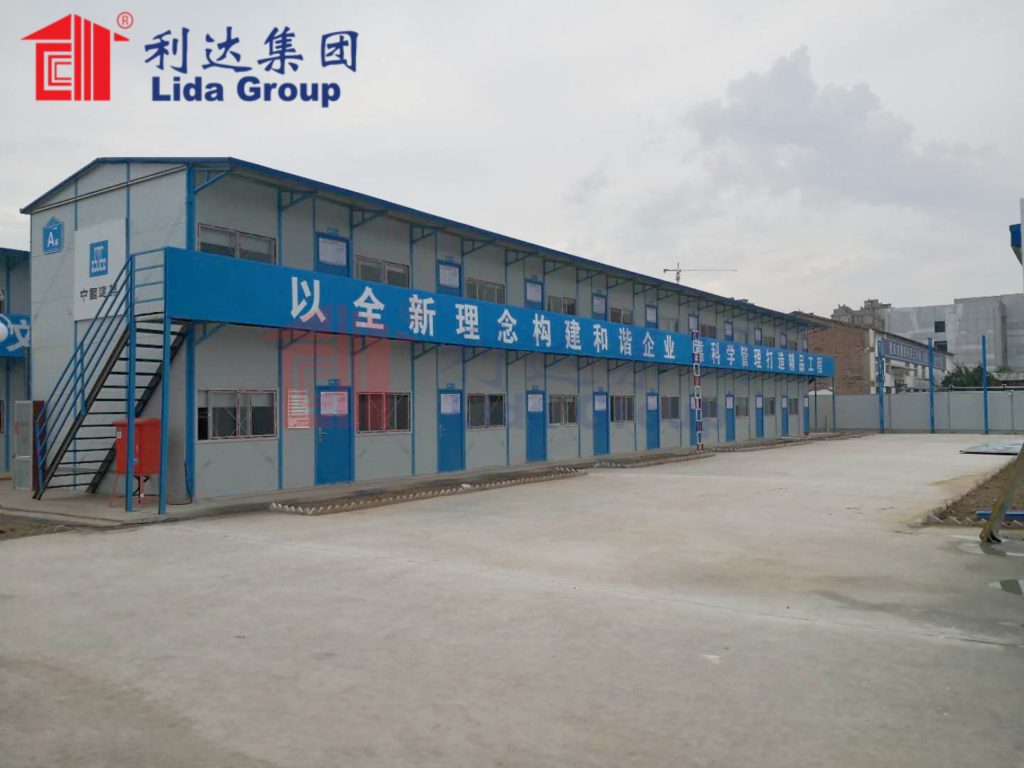
1. Key Deficiencies of Traditional Temporary Housing for Oil Field Dormitories
Traditional temporary accommodation solutions have long restricted the standardized and efficient operation of oilfield worker camps. Affected by backward production technology and outdated structural design, these products have prominent defects in installation efficiency, environmental adaptability, industrial safety, and living comfort, which cannot meet the high-standard management requirements of modern oil and gas enterprises.
1.1 Complicated Installation and High Labor Dependence
Most conventional temporary color steel houses and simple prefab buildings require complex on-site construction procedures, including foundation leveling, steel frame welding, on-site panel cutting and splicing, thermal insulation laying, and waterproof sealing. The whole construction process relies heavily on professional welders, skilled construction workers, and large mechanical equipment such as cranes and cutting machines. In remote oilfield areas with scarce labor resources and backward mechanical conditions, enterprises need to deploy professional construction teams from urban areas, resulting in extremely high labor costs and long construction cycles. A medium-sized oilfield dormitory camp often requires 15 to 30 days of on-site construction, seriously delaying worker settlement and project startup progress.
1.2 Poor Extreme Climate Adaptability and Short Service Life
Oilfield sites are exposed to extreme weather all year round, including high-temperature heat waves in deserts, strong sandstorms, ultra-low temperatures at high altitudes, and high-salinity humid air in coastal areas. Traditional temporary buildings adopt low-density ordinary sandwich panels or single-layer color steel plates, with weak thermal insulation, anti-corrosion, wind resistance, and dust resistance. Ordinary thermal insulation materials fail rapidly in extreme temperatures, leading to sultry indoor environments in summer and freezing cold in winter. Thin steel structures are prone to rust, deformation, and water leakage after long-term exposure to wind and rain. Most traditional temporary oilfield houses have a service life of only 2 to 3 years, requiring frequent maintenance, renovation, and overall reconstruction, resulting in serious resource waste and repetitive investment.
1.3 Low Industrial Safety Compliance for Oilfield Scenarios
Oilfield operation areas belong to flammable, explosive, and high-risk industrial environments, which put forward extremely strict fireproof and structural safety standards for temporary buildings. Traditional low-cost temporary houses generally adopt flammable EPS foam core materials, which burn rapidly and spread flames easily when encountering electrical short circuits or open flames, posing severe fire hazards. In addition, manually welded frames and irregular panel splicing lead to uneven structural stability, failing to resist strong winds and seismic fluctuations in oilfield operation areas. The low safety performance cannot meet the industrial safety assessment specifications of international oil and gas projects, bringing potential risks to the lives and property of on-site workers.
1.4 Disposable Usage and High Full-Lifecycle Costs
Traditional oilfield temporary buildings adopt non-detachable fixed structures and can only be demolished and abandoned after the completion of a single project, generating a large amount of construction waste and zero asset residual value. For oilfield enterprises with cross-regional multi-project deployment demands, repeated procurement and construction of dormitory facilities form a long-term high-cost burden. Meanwhile, poor material durability leads to frequent daily failures, and enterprises need to continuously invest manpower and material resources in inspection and maintenance throughout the project cycle, further increasing the full-lifecycle operating costs of camp operation.
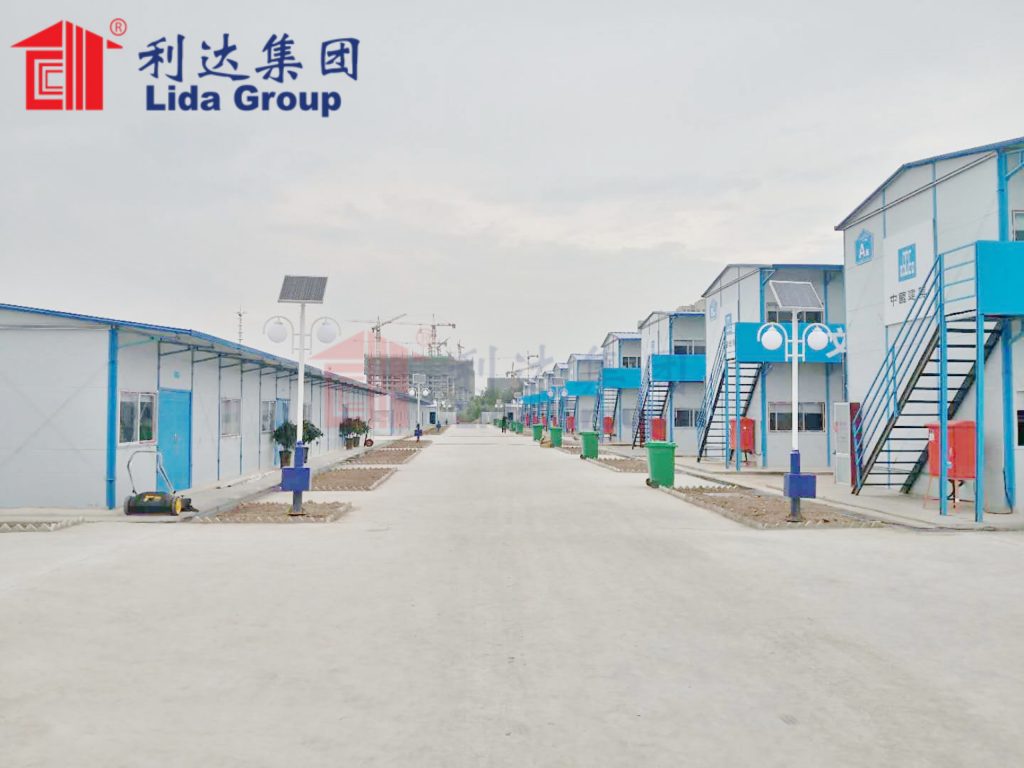
2. Core Innovative Design of Lida Group’s New Easy-Install Sandwich Panel House
Targeting the multiple pain points of traditional oilfield dormitories, Lida Group’s newly launched easy-install sandwich panel house realizes comprehensive technological upgrades in assembly mode, material performance, structural design, and scenario adaptation. Centering on the core advantages of “ultra-easy installation, high durability, high safety, and low cost”, the product breaks the industry bottleneck and creates a customized temporary housing solution exclusive for oilfield scenarios.
2.1 Tool-Free Bolt Assembly Realizes Ultra-Fast Installation
The biggest innovative highlight of Lida Group’s new product is the fully simplified modular bolt assembly system, which completely abandons traditional welding, cutting, and pouring processes. All steel frames, wall sandwich panels, roof panels, floor structures, doors, windows, and electrical accessories are 100% prefabricated and integrated in the factory, with unified standardized interfaces and reserved assembly holes. On-site construction requires no professional skills, no large mechanical equipment, and no destructive processing. Ordinary untrained workers can complete assembly according to detailed visual operation manuals with only simple hand tools.
A single standard oilfield dormitory unit can be fully assembled, sealed, and debugged within 2 to 3 hours, and a large-scale camp accommodating hundreds of workers can be completed and put into use within 3 to 5 days. Compared with traditional temporary buildings, the on-site installation efficiency is increased by more than 70%, and the dependence on professional labor is reduced by 80%. This revolutionary installation mode solves the difficulty of slow construction and labor shortage in remote oilfield camps, realizing rapid worker settlement and instant project startup.
2.2 Industrial-Grade Sandwich Panel Material Upgrading
Lida Group’s newly launched oilfield-specific houses adopt upgraded industrial-grade fireproof sandwich panels, with high-strength galvanized steel plates on both sides and high-density non-combustible rock wool core materials inside. Different from ordinary civilian sandwich panels, this customized material has passed international oilfield industrial safety tests, with excellent fire resistance, thermal insulation, anti-corrosion, and anti-aging performance. The surface steel plate undergoes special anti-ultraviolet and anti-salt spray treatment, which can effectively resist long-term sun exposure, sandstorm impact, and high-salinity air erosion in harsh oilfield environments.
The internal rock wool core material features stable physical and chemical properties, no deformation, no powder falling, and no performance attenuation in extreme high and low temperature environments. The integrated composite structure integrates heat insulation, waterproofing, fire prevention, dust prevention, and decoration functions, eliminating the need for separate laying of thermal insulation layers, waterproof layers, and decorative layers on site. The overall structural service life reaches more than 12 years, supporting multiple disassembly and reassembly cycles, far exceeding the durability of traditional temporary housing materials.
2.3 Lightweight Modular Structure for Flexible Transportation and Layout
Optimized for remote oilfield transportation conditions, the new sandwich panel house adopts an overall lightweight modular design. All components can be flat-packed and stacked, greatly reducing transportation volume and weight. Ordinary small and medium-sized cargo vehicles can complete the delivery work, adapting to narrow mountain roads, unimproved wilderness roads, and other complex traffic conditions in remote oilfields, solving the transportation dilemma of heavy traditional buildings that require large cranes and professional vehicles.
In terms of on-site layout, the standardized modular units support free splicing, combination, and flexible expansion. According to the phased changes of oilfield project staffing, enterprises can freely increase or reduce dormitory units, and flexibly match supporting functional areas such as offices, canteens, shower rooms, and storage rooms. The flexible layout mode avoids resource idle and space waste caused by fixed-scale traditional buildings, realizing precise matching of housing scale and project demand.

3. Scenario Adaptability: Perfect for Harsh Oil Field Working Environments
Lida Group’s new easy-install sandwich panel house is not a universal ordinary prefab product, but a scenario-customized solution optimized for the diverse extreme climatic and operational characteristics of global oilfields, achieving stable and efficient operation in all oilfield working scenarios.
3.1 All-Weather Extreme Climate Adaptation
For high-temperature desert oilfields, the thickened high-efficiency thermal insulation sandwich panel structure effectively isolates external heat radiation, keeping indoor temperature 5-10 degrees Celsius lower than the outdoor environment, and the fully sealed dustproof design prevents sand and dust from invading, ensuring clean and cool indoor living space. For high-altitude and northern cold-region oilfields, low-temperature resistant enhanced sandwich panels are adopted to lock indoor heat, prevent pipeline freezing and structural frost damage, and meet winter living demands in ultra-low temperature environments. For coastal oilfields with high humidity and high salinity, anti-corrosion coated panels and full waterproof sealing technology avoid structural rust and indoor water accumulation. The all-scenario adaptive design ensures that the dormitory maintains stable functional performance throughout the project cycle without frequent maintenance.
3.2 High-Standard Fire Safety for Oilfield High-Risk Environments
Aiming at the flammable and explosive characteristics of oilfield operation areas, Lida Group’s new sandwich panel house achieves industry-leading fire safety performance. The non-combustible rock wool core material has a fire resistance limit of more than 60 minutes, which can effectively block flame spread and avoid fire expansion caused by electrical faults or accidental open flames. The fully sealed panel splicing structure eliminates fire penetration gaps, and the supporting explosion-proof electrical system and leakage-proof circuit design completely meet oilfield industrial safety standards. The high-standard safety configuration effectively eliminates camp fire hazards and ensures the safe residence of frontline oilfield workers.
3.3 Stable Structural Performance Resists External Harsh Interference
The overall high-strength galvanized steel frame structure matches the high-performance sandwich panel enclosure, forming an integrated stable bearing system. The whole house can resist level 12 strong winds and moderate earthquakes, and bear heavy snow pressure and sandstorm impact, adapting to the complex dynamic environmental interference of oilfield construction sites. The integrated sealed structure also has excellent sound insulation performance, which can isolate on-site drilling mechanical noise and external wind noise, creating a quiet and stable rest environment for workers and effectively relieving work fatigue caused by long-term high-intensity operations.
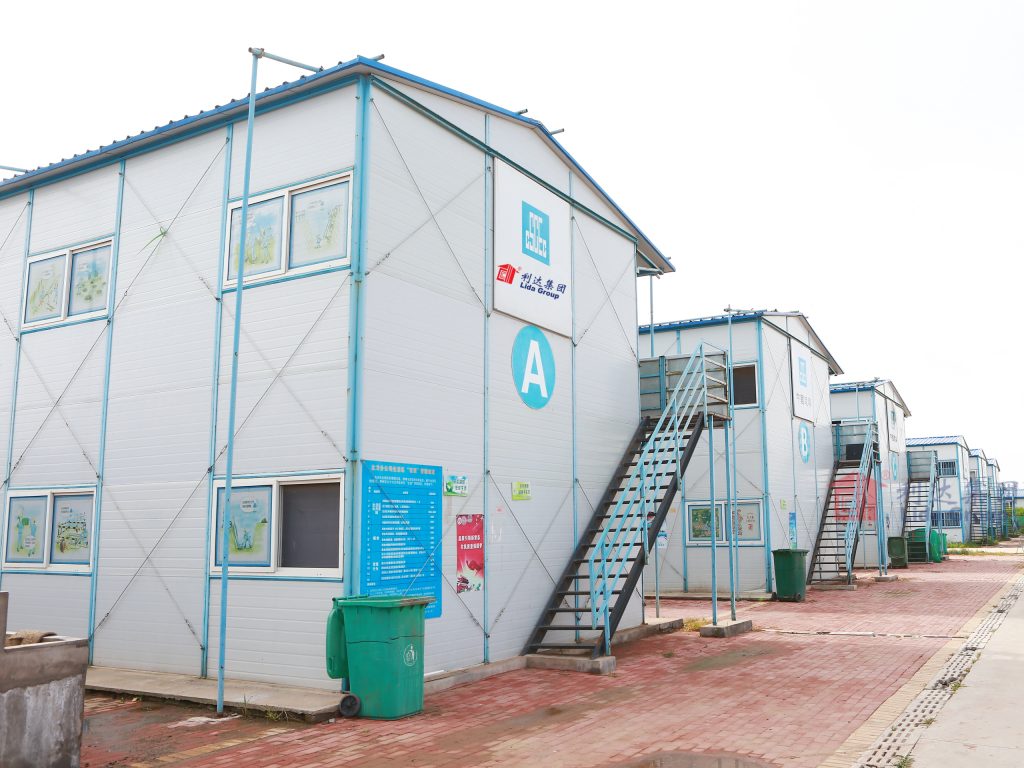
4. Outstanding Economic and Operational Value for Oil Field Projects
While realizing performance upgrading, Lida Group’s newly launched easy-install sandwich panel house brings full-lifecycle cost reduction and efficiency improvement for oilfield enterprises, solving the high-cost and low-efficiency operation dilemma of traditional dormitory camps.
4.1 Ultra-Low On-Site Construction Costs
The factory integrated prefabrication mode greatly reduces on-site construction investment. The simplified installation process saves a large amount of skilled labor costs and mechanical equipment rental fees. The lightweight flat-pack design reduces transportation volume and logistics expenses by more than 70% compared with traditional integral buildings. The precise material cutting and batch industrial production eliminate raw material waste, reducing upfront comprehensive deployment costs by 30% to 40%. The low investment threshold effectively reduces the capital pressure of oilfield project initial construction and optimizes enterprise budget allocation.
4.2 Low Maintenance and Energy-Saving Daily Operation
The upgraded high-performance sandwich panel has anti-aging, wear-resistant, and anti-corrosion characteristics, with stable structural quality and no frequent failures such as water leakage, cracking, and rust. The whole house realizes ultra-low daily maintenance, only requiring simple regular cleaning, saving a lot of daily inspection and maintenance manpower and material costs. Meanwhile, the high-density thermal insulation structure greatly reduces the energy consumption of air conditioning and heating, cutting daily camp energy consumption by 40% to 60%. The long-term energy-saving effect further reduces the daily operating costs of oilfield camps and realizes lean and efficient operation.
4.3 Reusable Design Improves Asset Utilization
The detachable modular bolt structure supports multiple times of complete disassembly, flat-pack storage, and cross-project reassembly. After the completion of a single oilfield project, all components can be recycled and reused without construction waste and asset loss. A single set of sandwich panel houses can serve more than 8 different project cycles, completely changing the disposable usage mode of traditional temporary buildings. This cyclic asset utilization mechanism eliminates repeated construction investment for enterprises, greatly reducing long-term average annual usage costs and improving the economic benefits of project operation.
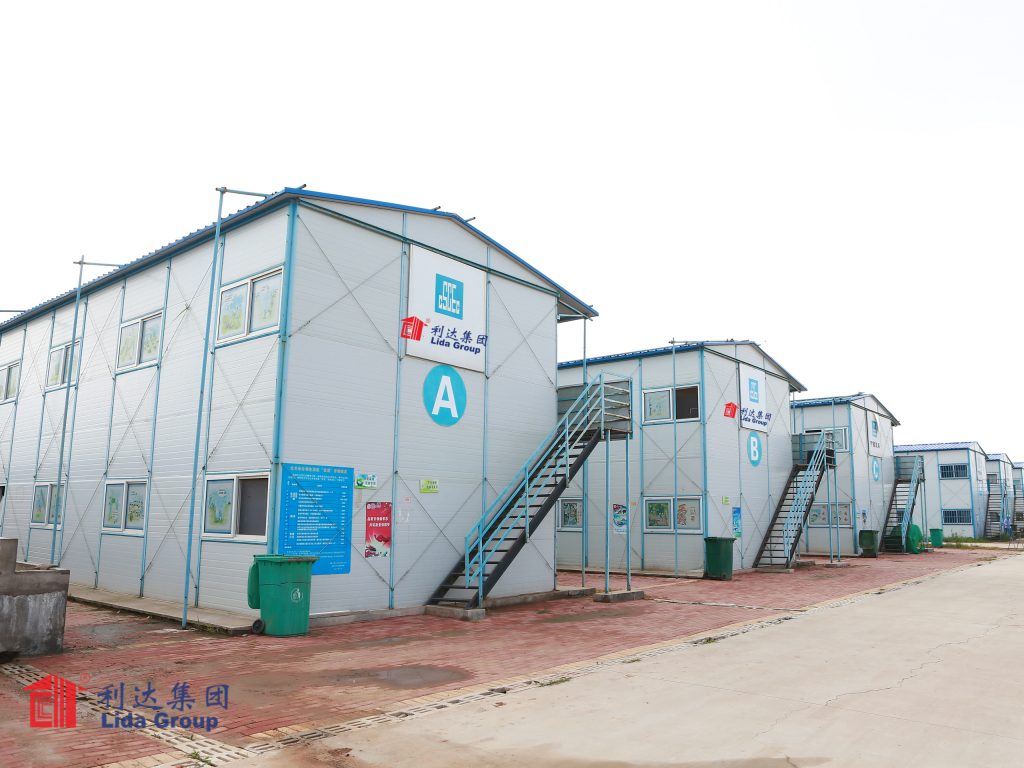
5. Humanized Design Stabilizes Oil Field Workforce
Worker stability is the core guarantee of continuous and efficient oilfield operation. Long-term remote work and harsh living environments easily lead to worker fatigue and high turnover rate. Lida Group’s new easy-install sandwich panel house integrates humanized design in detail on the premise of cost control and safety guarantee, comprehensively improving worker accommodation experience and team cohesion.
The scientific indoor spatial planning ensures spacious and independent rest space for each worker, avoiding the crowded and messy environment of traditional crude dormitories. The smooth and flat indoor panel surface is easy to clean and maintain, ensuring indoor sanitation and effectively inhibiting bacterial growth and moisture mildew in humid environments. Reserved standardized interfaces for ventilation, power supply, air conditioning, and network communication meet workers’ daily rest, entertainment, and remote communication needs. The quiet, clean, and constant-temperature comfortable living environment significantly improves workers’ sense of belonging and job satisfaction, effectively reducing personnel turnover rate, stabilizing frontline construction teams, and ensuring the continuous and orderly progress of oilfield exploration and development projects.
6. Conclusion
Facing the prominent industry pain points of complex installation, poor safety, weak environmental adaptability, and high comprehensive costs of traditional oilfield worker dormitories, Lida Group’s newly launched Easy Install Sandwich Panel House achieves comprehensive breakthroughs in construction efficiency, product performance, scenario adaptability, and economic benefits. The innovative tool-free bolt modular assembly technology realizes ultra-fast on-site deployment, solves the problems of labor shortage and slow construction in remote oilfields, and greatly shortens the project preparation cycle. The upgraded industrial-grade sandwich panel material provides excellent fire resistance, thermal insulation, anti-corrosion, and wind resistance performance, fully meeting the high safety standards and extreme environmental adaptation needs of oilfield high-risk working scenarios.
In addition, the product’s lightweight flexible transportation, reusable cyclic design, low energy consumption, and low maintenance advantages realize full-lifecycle cost reduction for oilfield enterprises, while the humanized detail design effectively stabilizes the workforce and improves project operational efficiency. Perfectly balancing easy installation, high safety, strong durability, and high cost performance, Lida Group’s new sandwich panel house has become an upgraded and ideal temporary dormitory solution for modern global oilfield projects. In the future, Lida Group will continue to optimize modular building technology and scenario-based customization capabilities, launch more efficient, economical, and safe temporary building products for the energy industry, and continuously empower the standardized, green, and high-efficiency development of global oil and gas engineering construction.
Related news
-
Temporary Low Cost Building by Lida Group Creates Efficient Oil Field Worker Dormitory
2026-05-25 11:38:01
-
Easy Install Sandwich Panel House Ideal for Oil Field Worker Dormitory Accommodation
2026-05-25 11:30:31
-
Lida Group Delivers Oil Field Worker Dormitory Using Temporary Low Cost Building Solutions
2026-05-25 11:16:26
contact us
- Tel: +86-532-88966982
- Whatsapp: +86-13793209022
- E-mail: sales@lidajituan.com
