



Quick Assembly Sandwich Panel House Perfect for Oil Gas Field Worker Temporary Camps
2026-Jun-29 17:46:34
By Admin
1. Introduction: The Need for Rapid Deployable Temporary Camps in Oil and Gas Operations
The global oil and gas industry operates in some of the most remote, isolated, and climatically hostile regions on the planet. From arid desert basins and wind-swept Gobi plains to freezing high-altitude plateaus and humid coastal offshore zones, oilfield projects are rarely located near urban residential infrastructure, commercial facilities, or complete public service systems. These unique operational characteristics create distinct challenges for on-site workforce accommodation, which serves as a critical logistical foundation for drilling, exploration, pipeline construction, and field maintenance tasks. Unlike conventional construction projects with fixed construction cycles and accessible site conditions, oil and gas field projects feature sudden startup schedules, flexible workforce scaling, and phased operational cycles, requiring temporary housing solutions that can match fast-paced project progress and adapt to harsh field environments.
Worker accommodation is directly linked to project efficiency, workforce stability, and on-site safety management in oil and gas fields. A delayed camp deployment will hinder worker entry, restrict construction progress, and even cause personnel turnover, bringing invisible economic losses and operational risks to energy enterprises. Meanwhile, oil and gas fields are classified as high-risk flammable and explosive industrial scenarios, which impose strict requirements on the fire resistance, structural stability, airtightness, and environmental adaptability of temporary buildings. Traditional temporary housing solutions, including canvas tents and on-site welded color steel houses, can no longer meet the modern development needs of oilfield camps due to their long construction cycles, complicated installation processes, poor safety performance, and limited adaptability.
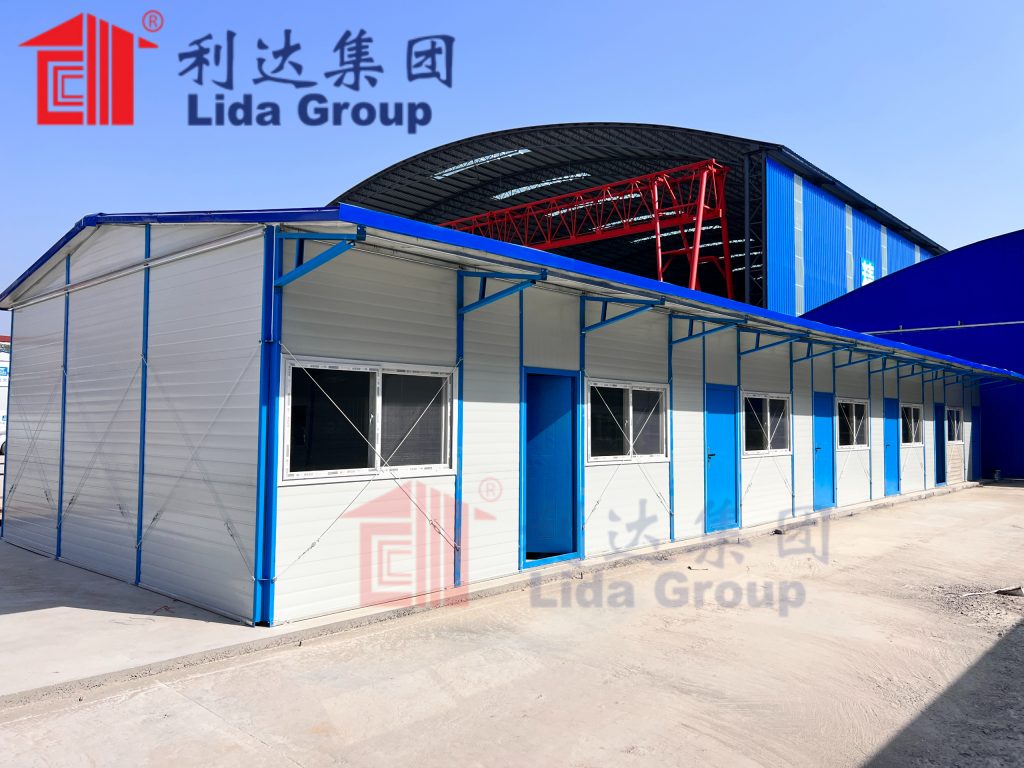
Quick assembly sandwich panel houses have emerged as the optimal temporary accommodation solution for oil and gas field worker camps, precisely addressing the core pain points of traditional camp construction. Adopting factory prefabricated modular design and tool-free bolted assembly technology, this type of temporary building integrates rapid deployment, industrial-grade safety, extreme weather resistance, basic living comfort, and reusable economic value. It enables oilfield camps to be completed and put into operation in an extremely short time while ensuring stable and safe long-term use, perfectly fitting the temporary, efficient, and high-standard operational attributes of oil and gas field projects. This article comprehensively discusses the limitations of traditional oilfield temporary camps, the core advantages of quick assembly sandwich panel houses, key technical features, practical application scenarios, and comprehensive project value, fully demonstrating why this modular housing solution has become the preferred choice for modern oil and gas field worker temporary accommodation.
2. Major Limitations of Traditional Temporary Housing for Oilfield Camps
For decades, oil and gas enterprises have relied on traditional temporary buildings to solve on-site worker accommodation problems. However, constrained by backward construction technologies and single structural designs, these conventional solutions have inherent defects in construction efficiency, safety performance, environmental adaptability, and economic benefits, which have become important bottlenecks restricting the standardized and efficient operation of modern oilfield camps.
2.1 Slow Construction Speed Fails Urgent Project Deployment Needs
Traditional color steel temporary houses require full on-site construction, including foundation leveling, concrete pouring, steel frame welding, wall panel installation, waterproof treatment, and interior decoration. The complete construction cycle of a medium-sized oilfield camp usually lasts 20 to 30 days, and large-scale camps even require more than one month of continuous construction. Most oilfield sites are located in remote areas with inconvenient transportation, insufficient local building materials, and scarce professional construction teams. Enterprises need to transport materials, equipment, and construction workers across long distances, which further delays camp construction progress. In contrast, oil and gas projects often have urgent startup schedules and rapid workforce expansion demands, and the slow construction rhythm of traditional housing cannot realize synchronous camp completion and project launch, easily leading to disjointed construction links and delayed project progress.
Although canvas tents can be deployed quickly, they are only suitable for ultra-short-term emergency rest. Tents lack rigid structural support, complete closed space, and basic thermal insulation and wind resistance functions. They are easily damaged by sandstorms, strong winds, and extreme temperatures, and cannot meet the long-term standardized living and office needs of oilfield workers, making them unable to serve as formal temporary camp facilities.
2.2 Complicated Installation Relies on Skilled Labor and Heavy Equipment
The construction of traditional welded temporary houses highly depends on professional welders, electricians, and decoration workers, as well as large mechanical equipment such as cranes and welding machines. The complex installation process puts forward high requirements for on-site construction technology and equipment conditions. In remote oilfield areas with backward infrastructure, it is difficult to recruit sufficient professional construction personnel and lease supporting mechanical equipment, resulting in unstable construction quality and uncontrollable construction cycle. Once the construction team is insufficient or equipment fails, the camp construction progress will be severely affected, bringing great uncertainty to project schedule management.
2.3 Poor Safety and Environmental Adaptability Restrict Stable Operation
Traditional temporary houses have prominent safety hazards in high-risk oilfield environments. Most ordinary color steel houses adopt flammable foam core materials, which burn rapidly and release toxic smoke when encountering open fire or electrical short circuits, violating the strict fire protection specifications of flammable and explosive oil and gas fields. Structurally, thin-wall light steel keels have low overall rigidity and poor wind and earthquake resistance, and are prone to deformation, loosening, and even partial collapse under the impact of long-term field strong winds, sandstorms, and heavy snow loads.
In terms of environmental adaptability, traditional housing lacks targeted extreme climate optimization design. It cannot effectively isolate high-temperature heat in desert areas or prevent freezing and heat loss in plateau cold regions, resulting in poor indoor living comfort. In coastal high-humidity and salt spray environments, unprotected steel structures rust rapidly, and wall panels age and peel quickly, leading to frequent functional failures and shortened service life.
2.4 Disposable Structure Causes High Costs and Serious Resource Waste
Traditional temporary houses adopt fixed welding integrated structures, which are non-detachable and non-reusable. After the completion of phased oilfield projects, the camps can only be demolished and discarded, generating a large amount of construction waste. For subsequent new oilfield projects, enterprises need to reinvest funds, materials, and manpower to rebuild temporary camps, forming a vicious cycle of repeated construction and resource waste. The disposable use mode greatly increases the full-life-cycle operating cost of oilfield camps and reduces the economic benefits of energy projects, failing to adapt to the sustainable development needs of modern oil and gas enterprises.
3. Core Advantages of Quick Assembly Sandwich Panel Houses for Oilfield Camps
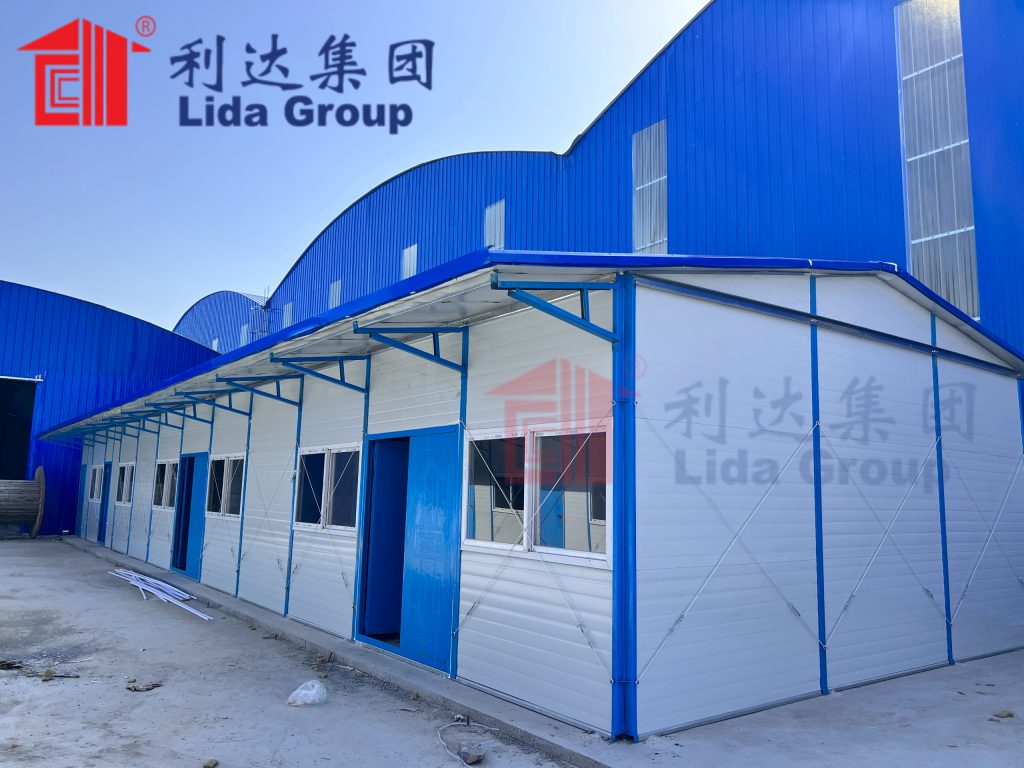
Quick assembly sandwich panel houses are innovative modular temporary buildings optimized for remote engineering and rapid deployment scenarios. With factory integrated prefabrication, standardized modular components, and tool-free bolted assembly technology, they completely subvert the cumbersome construction mode of traditional temporary housing. Centering on rapid deployment, safe operation, comfortable accommodation, and cost-saving circulation, this solution forms multiple core advantages that perfectly match the operational characteristics and actual needs of oil and gas field worker camps.
3.1 Ultra-Fast On-Site Assembly Greatly Shortens Camp Construction Cycle
The most prominent advantage of quick assembly sandwich panel houses is their extremely high on-site construction efficiency. More than 95% of the building components, including steel frames, sandwich wall panels, roof panels, door and window systems, and internal electrical and water pipeline facilities, are fully prefabricated and assembled in standardized factories. All components are produced according to unified specifications with precise matching interfaces, realizing finished product delivery without on-site cutting, welding, painting, and secondary decoration.
The entire on-site construction process adopts pure manual bolted dry assembly, requiring no professional construction skills or large mechanical equipment. Two to three ordinary workers can complete the assembly of a standard single dormitory unit within 3 to 4 hours. A medium-sized comprehensive oilfield camp with dozens of dormitories, offices, and functional rooms can be fully built and put into use within 3 to 5 days. Compared with the 20 to 30-day construction cycle of traditional camps, the construction efficiency is increased by more than six times, which can fully meet the urgent housing needs of rapid worker entry after oilfield project initiation and effectively guarantee the synchronous progress of supporting facilities and main engineering projects.
3.2 Low Site Requirements Adapt to Complex Oilfield Terrain
Most oil and gas field sites are located in wilderness, desert, beach, and plateau areas with uneven terrain and poor foundation conditions. Traditional temporary house construction requires complex foundation treatment processes such as ground leveling and concrete pouring, which consume a lot of time and manpower. Quick assembly sandwich panel houses have an overall lightweight structure and extremely low requirements for site foundation bearing capacity. Only simple ground leveling is needed to complete the layout and assembly of the building, without complex foundation hardening and reinforcement construction. This advantage greatly simplifies the pre-construction preparation process, shortens the site layout cycle, and realizes rapid camp construction in complex and harsh oilfield terrain environments.
3.3 Modular Scalable Design Meets Dynamic Workforce Changes
Oil and gas field projects have obvious dynamic workforce characteristics: the number of on-site workers surges during peak drilling and construction stages and decreases significantly in the later maintenance and closing stages. Quick assembly sandwich panel houses adopt flexible modular splicing design, supporting free horizontal expansion and multi-layer stacking of building units. Enterprises can flexibly increase or reduce the number of housing units according to real-time workforce scale changes, realizing dynamic adjustment of camp scale.
This scalable design avoids the resource waste caused by excessive camp construction in advance and the accommodation shortage caused by insufficient camp scale, realizing precise matching of camp resources and project workforce demand. It can not only meet the centralized accommodation needs of large-scale construction teams in peak periods but also adapt to the small-scale office and rest needs of maintenance teams in low peak periods, greatly improving the flexibility and practicality of oilfield camp operation.
3.4 Detachable and Reusable Structure Reduces Long-Term Operational Costs
Different from the disposable welding structure of traditional temporary houses, quick assembly sandwich panel houses adopt fully detachable bolted connection design. All components can be quickly disassembled, sorted, flat-packed, and transported after project completion. The disassembled components have low damage rate and high integrity, with a reusable rate of more than 90%, and can be recycled and reused in 5 to 8 subsequent oilfield projects.
This cyclic reusable mode completely avoids repeated construction investment and construction waste generation, greatly reducing the full-life-cycle comprehensive cost of oilfield temporary camps. The flat-packed transportation mode also effectively reduces long-distance logistics costs, bringing significant economic benefits for oil and gas enterprises and solving the long-standing cost waste problem of traditional temporary housing.
4. Reliable Safety and Comfort Performance for Oilfield Worker Accommodation
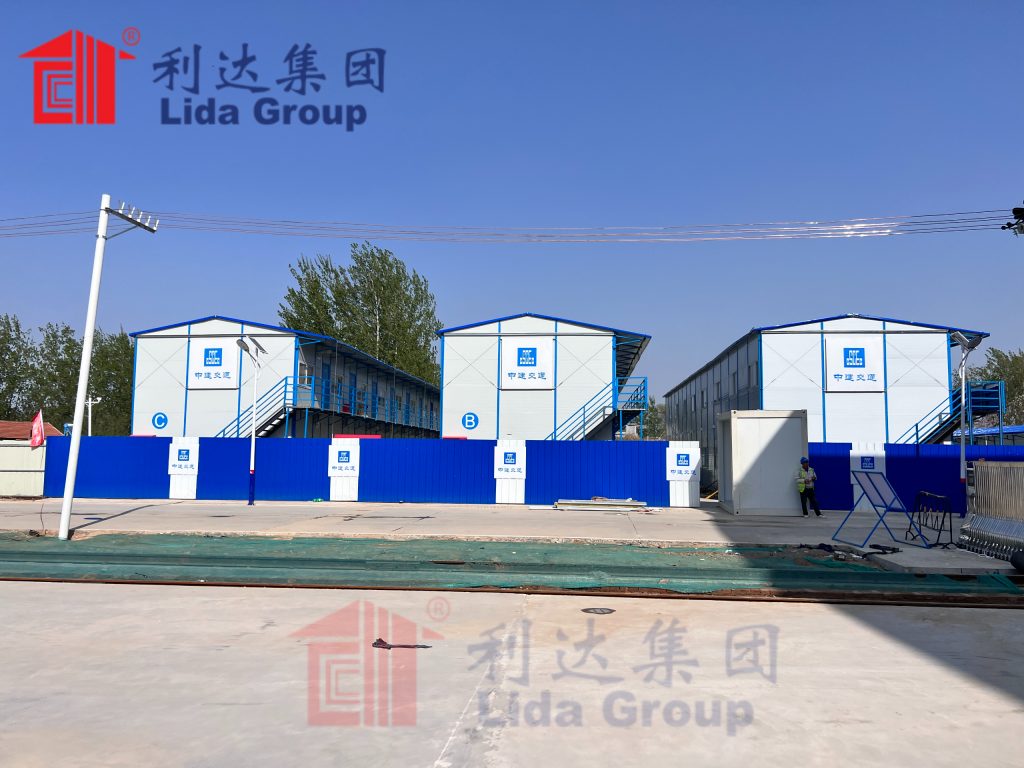
While pursuing ultra-high assembly efficiency, quick assembly sandwich panel houses do not compromise building safety and living comfort. Relying on high-performance sandwich materials and optimized structural design, they have excellent fire resistance, wind and earthquake resistance, thermal insulation, and sound insulation performance, which can fully adapt to high-risk oilfield industrial scenarios and extreme weather environments, creating safe, stable, and comfortable living conditions for field workers.
4.1 A-Level Fireproof Performance Meets Oilfield High-Risk Safety Standards
Aiming at the flammable and explosive characteristics of oil and gas fields, the sandwich core material of quick assembly houses adopts high-density rock wool or glass wool fireproof materials, reaching international A-level non-combustible fire protection standards. The core materials have high temperature resistance and flame retardant properties, will not burn or release toxic and harmful gases when encountering open fire or electrical short circuits, and can effectively block fire spread, completely eliminating building material fire hazards.
The whole house is equipped with standardized embedded electrical wiring, leakage protection devices, and lightning protection systems, which comply with oilfield industrial electrical safety specifications. The high-strength steel frame structure has stable mechanical performance, capable of resisting level 10 strong winds and magnitude 7 earthquakes, effectively avoiding structural deformation and collapse caused by extreme weather, and realizing all-round safety guarantee for on-site camp operation.
4.2 Excellent Extreme Weather Adaptability Ensures Stable Operation
The composite sandwich structure integrates thermal insulation, heat insulation, waterproof, anti-corrosion, and dustproof functions, with strong all-weather environmental adaptability. The high-efficiency thermal insulation layer can effectively isolate external extreme temperature changes, keeping indoor temperature constant and comfortable throughout the year. It solves the problems of stuffy heat in desert high-temperature summers and freezing cold in plateau severe cold winters, completely changing the harsh temperature environment of traditional oilfield camps.
The outer wall adopts high-quality color steel plates with multi-layer anti-corrosion and anti-ultraviolet coating treatment, which can resist long-term wind and sand erosion, coastal salt spray corrosion, and intense ultraviolet aging. The fully closed waterproof and dustproof structure avoids roof water leakage and wall sand penetration, ensuring long-term stable functional performance of the house in various extreme oilfield environments.
4.3 Humanized Design Improves Worker Living Experience
Quick assembly sandwich panel houses adopt scientific humanized spatial layout design, with reasonable storey height and indoor activity space, avoiding the cramped and depressing feeling of traditional temporary housing. Large-size lighting windows and cross-ventilation systems ensure sufficient natural light and fresh indoor air. The multi-layer sound insulation structure can effectively isolate external field operation noise and wind and sand noise, creating a quiet and comfortable rest environment for workers.
In addition, the houses can be flexibly equipped with independent storage lockers, standardized power supply interfaces, clean ventilation systems, and other supporting facilities according to demand. The comfortable and standardized living environment effectively relieves workers’ operational fatigue, improves job satisfaction and team cohesion, and stabilizes the on-site construction workforce.
5. Diversified Application Scenarios in Oil and Gas Field Projects
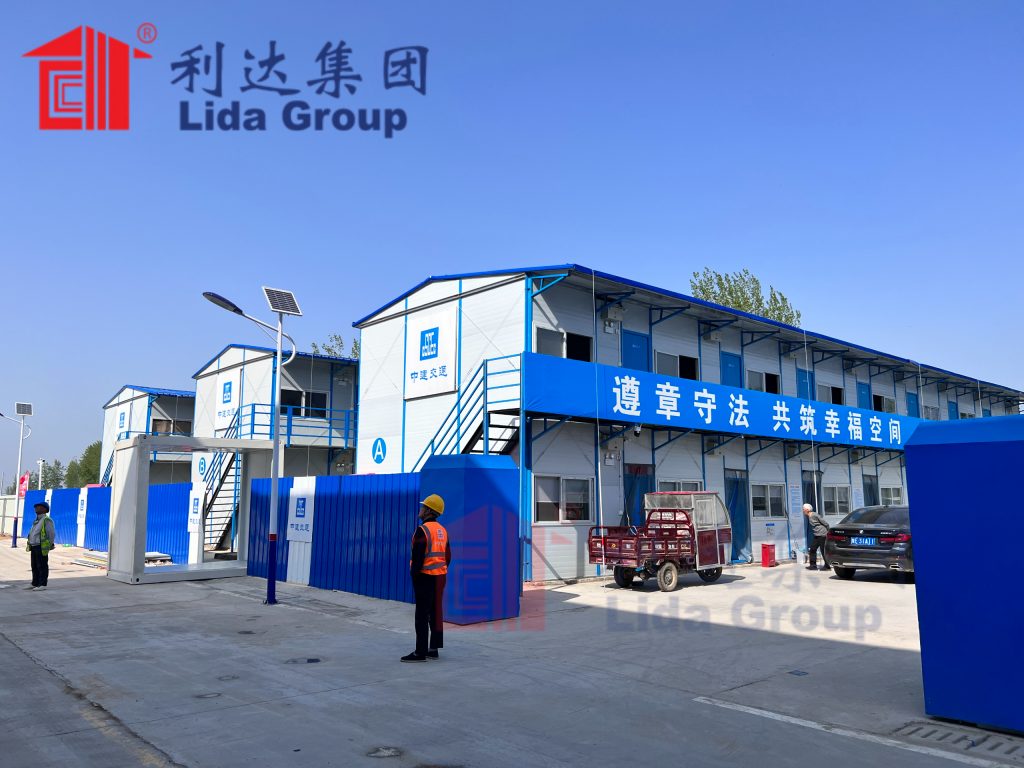
With the dual core advantages of rapid deployment and reliable comprehensive performance, quick assembly sandwich panel houses can be flexibly applied to various oil and gas field project types, covering short-term emergency exploration, long-term large-scale development, and remote emergency operation scenarios, meeting the diversified temporary accommodation needs of energy field projects.
5.1 Short-Term Exploration and Emergency Drilling Camps
For short-cycle oilfield geological exploration, temporary drilling, and field investigation projects with small workforce and short operational cycles, the rapid assembly and convenient disassembly advantages of sandwich panel houses are fully exerted. The lightweight modular units can be quickly deployed in remote uninhabited areas to build temporary dormitories, offices, and material warehouses. After the completion of exploration tasks, the houses can be quickly disassembled and transferred, realizing zero-delay withdrawal and zero-waste reuse, and efficiently supporting mobile emergency oilfield operations.
5.2 Long-Term Large-Scale Oilfield Development Camps
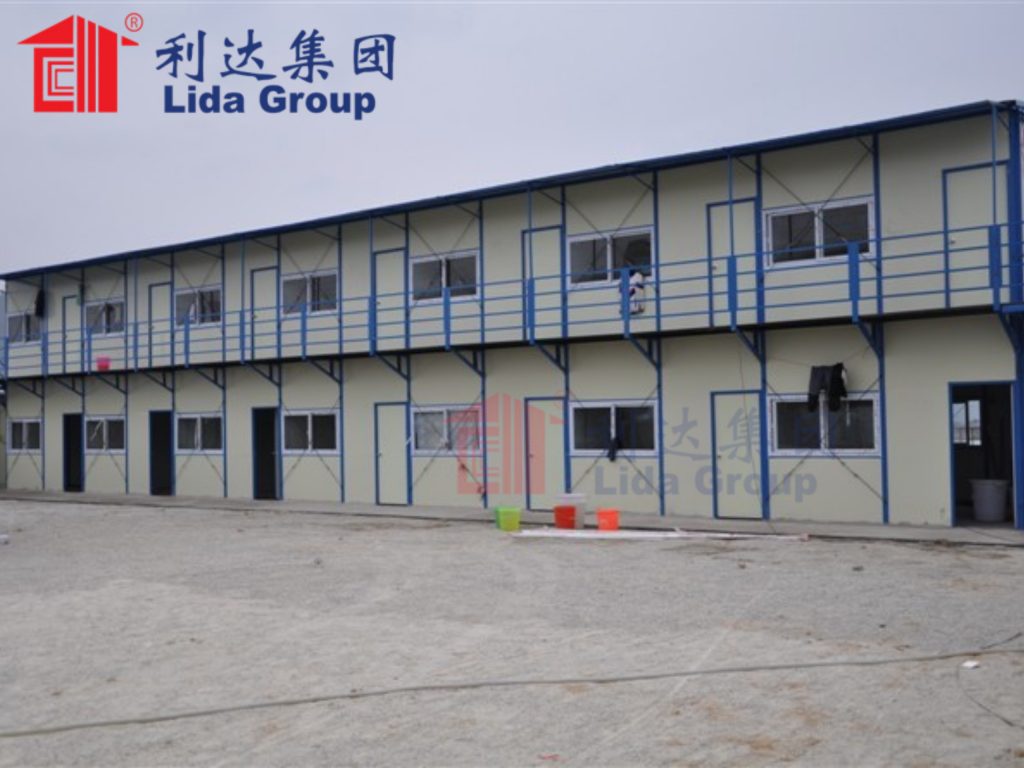
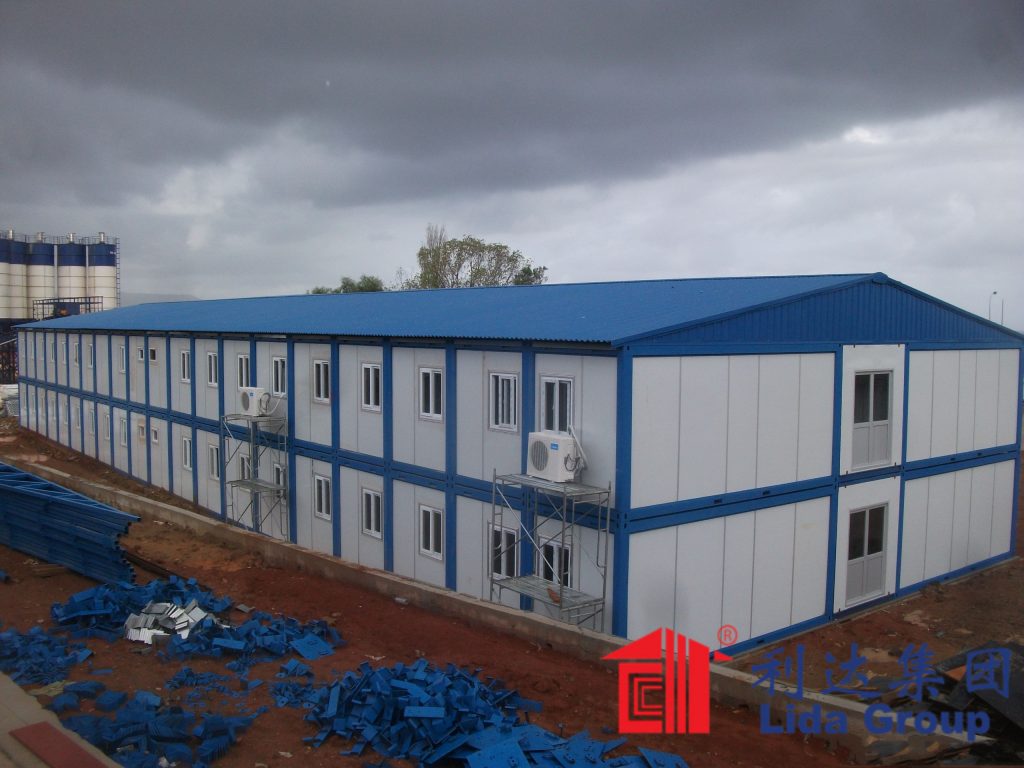
For large-scale oil and gas field development projects with long construction cycles and large workforce scale, modular units can be horizontally spliced and multi-layer stacked to build standardized comprehensive camps. The camp can be divided into independent functional areas including worker dormitory area, office command area, catering service area, and material storage area, realizing integrated and standardized camp construction. The stable structural performance and durable environmental adaptability support long-term continuous operation of the camp, fully meeting the living and office needs of hundreds of field workers for many consecutive years.
5.3 Remote Emergency Maintenance and Rescue Camps
In sudden oilfield equipment failure maintenance, field accident rescue, and emergency repair tasks, time efficiency determines the overall emergency response effect. Quick assembly sandwich panel houses can be rapidly transported and assembled in remote barren areas to build temporary emergency camps within a short time, providing timely rest, office, and logistical support for emergency operation teams. The ultra-fast deployment capability effectively shortens the emergency response cycle and improves the emergency support capacity of oilfield projects.
6. Comprehensive Industrial and Project Value
The popularization and application of quick assembly sandwich panel houses have comprehensively upgraded the temporary construction mode of oil and gas field camps, bringing multi-dimensional value improvement for energy enterprises in project progress control, safety management, cost optimization, team stability, and green development.
In terms of project efficiency, ultra-fast assembly speed solves the problem of lagging supporting accommodation facilities, ensures synchronous progress of worker entry and main engineering construction, effectively avoids project delay losses, and significantly improves the overall operational efficiency of oilfield projects.
In terms of safety management, industrial-grade fireproof, wind-resistant, and earthquake-resistant performance eliminates various potential safety hazards of traditional camps, meets the strict safety production specifications of high-risk oilfield scenarios, and improves the standardized safety management level of on-site camps.
In terms of economic benefits, factory prefabrication reduces on-site labor and equipment costs, and the reusable modular design avoids repeated construction investment and resource waste, greatly reducing the full-life-cycle operating cost of temporary camps and improving project economic returns.
In terms of team management, the comfortable and safe living environment improves workers’ sense of belonging and job satisfaction, reduces workforce turnover rate, stabilizes the on-site construction team, and provides stable human resource guarantee for the sustainable development of oil and gas projects.
In terms of green development, the full dry construction mode produces no construction dust, sewage, or waste. The recyclable and reusable materials reduce carbon emissions and resource consumption, conforming to the low-carbon and sustainable development trend of the global energy industry.
7. Conclusion
Temporary worker camps are indispensable core supporting facilities for the safe operation and efficient construction of oil and gas field projects. The construction speed, safety performance, and service quality of temporary housing directly determine the project progress, safety management level, workforce stability, and comprehensive economic benefits of oil and gas enterprises. Traditional tents and welded temporary houses are restricted by backward construction technology and structural defects, with prominent problems such as slow construction speed, complicated installation, poor safety, weak environmental adaptability, and serious resource waste, which can no longer adapt to the fast-paced and high-standard construction needs of modern oil and gas field projects.
Quick assembly sandwich panel houses perfectly fit the temporary, efficient, and high-standard operational characteristics of oil and gas field camps with ultra-fast modular assembly, low terrain requirements, flexible scalable design, and cyclic reusable advantages. While achieving rapid camp deployment, they maintain industrial-grade fire safety, extreme weather adaptability, and humanized living comfort, realizing the organic unity of construction efficiency, operational safety, living quality, and economic benefits. They can be widely adapted to short-term emergency exploration, long-term large-scale development, and remote emergency operation scenarios, providing reliable and high-quality temporary accommodation solutions for field workers.
With the continuous upgrading of refined management, safe production, and green construction standards in the global oil and gas industry, efficient, reusable, and high-safety modular temporary housing will gradually replace traditional temporary buildings and become the mainstream standard for modern oilfield camp construction. Quick assembly sandwich panel houses will continue to empower the efficient, safe, and green development of global oil and gas field engineering projects, providing solid logistical support for the sustainable and high-quality development of the energy industry.
Related news
-
Temporary Construction Solutions for Oil Gas Field Worker Accommodation by Lida Group
2026-06-29 17:27:20
-
Easy Assembly Sandwich Panel House Speeds Up Oil Gas Field Temporary Worker Housing
2026-06-29 17:33:56
-
Easy Assembly Sandwich Panel House Ideal for Oil Gas Field Worker Temporary Accommodation
2026-06-29 17:12:16
contact us
- Tel: +86-532-88966982
- Whatsapp: +86-13793209022
- E-mail: sales@lidajituan.com
