



Lida Group Offers Durable Temporary Construction for Oil Gas Field Worker Accommodation
2026-Jun-29 17:40:41
By Admin
1. Introduction: Durability as the Core Benchmark for Modern Oilfield Temporary Housing
Oil and gas field operations are predominantly deployed in geographically remote and climatically extreme zones, including arid deserts, frigid high-altitude plateaus, windy Gobi wilderness, and humid coastal offshore areas. These harsh working environments feature intense ultraviolet radiation, extreme temperature differences, frequent sandstorms, salt spray corrosion, and long-term wind erosion, which pose severe aging and structural damage risks to on-site temporary worker accommodation. Unlike ordinary construction camps in urban areas, oil and gas field temporary buildings are required to maintain stable structural performance, complete functional integrity, and safe living conditions under long-term extreme environmental erosion, making durability the most critical core indicator of qualified oilfield temporary construction solutions.
Most oil and gas projects have phased and long-cycle operational characteristics. Although field worker camps are defined as temporary facilities, they often need to serve continuous construction, drilling, maintenance, and patrol tasks for several years. Traditional temporary housing represented by canvas tents and ordinary color steel houses has extremely poor durability. Short-term environmental erosion will lead to wall peeling, steel frame rust, structural deformation, water leakage, and thermal insulation failure, resulting in frequent maintenance, repeated renovation, and even forced scrapping in advance. The poor durability of traditional camps not only increases the long-term operational costs of energy enterprises but also brings potential safety hazards and poor living experience for front-line workers, restricting the standardized and stable operation of oilfield projects.
As a leading global manufacturer and solution provider of modular temporary construction, Lida Group has long focused on the durable performance research and scene-based optimization of temporary buildings for high-risk and harsh oil and gas field scenarios. Aiming at the pain points of short service life, poor weather resistance, and unstable durability of traditional oilfield temporary housing, Lida Group launches high-durability customized temporary construction solutions. Through high-strength structural design, anti-aging material upgrading, professional anti-corrosion and thermal insulation treatment, and standardized industrial production, Lida’s temporary buildings achieve long-term stable operation in extreme oilfield environments, realizing perfect balance of structural durability, environmental adaptability, safety stability, and reusable value. This article comprehensively analyzes the durability defects of traditional oilfield temporary construction, the core technical support of Lida Group’s durable temporary housing, practical performance advantages, field application value, and industrial significance, fully demonstrating why Lida’s durable temporary construction has become the preferred accommodation solution for modern oil and gas field worker camps.
2. Durability Defects of Traditional Oilfield Temporary Construction
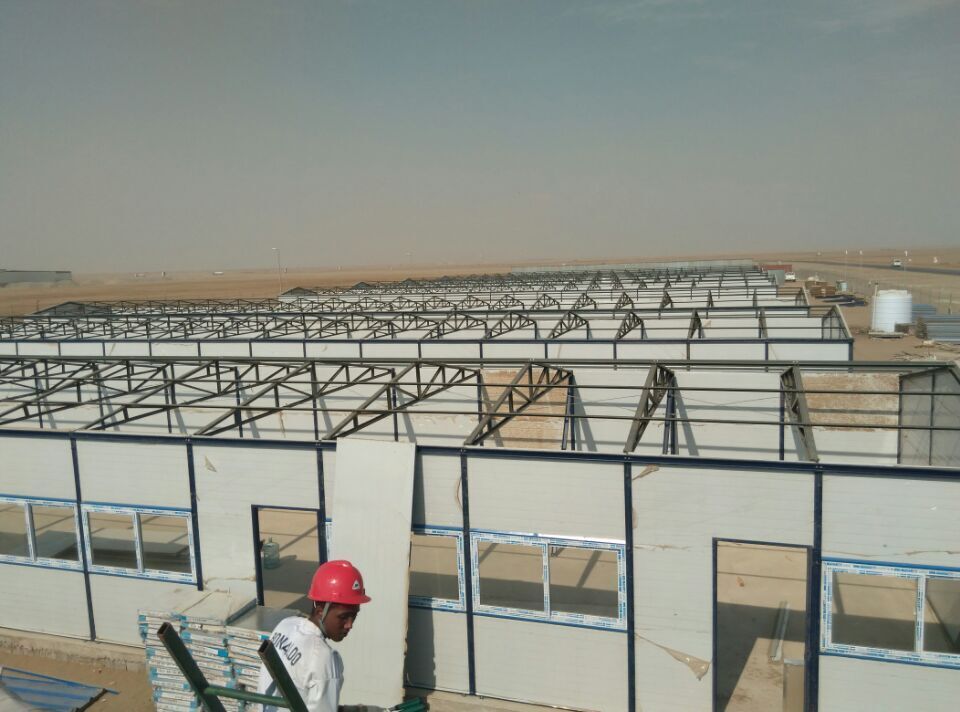
Traditional temporary housing solutions have been widely used in oil and gas field camps for decades, but their backward material selection and simple structural design lead to inherent durability deficiencies. Under the long-term erosion of extreme field environments, various performance failures are prone to occur, which cannot meet the long-term service needs of oilfield projects and bring multiple operational troubles to energy enterprises.
2.1 Weak Structural Rigidity Causes Deformation and Damage Under Extreme Weather
Traditional ordinary color steel temporary houses adopt thin-wall light steel keel structures with low overall rigidity and poor structural stability. The simple welding connection process leads to weak node firmness, making the building unable to resist continuous field wind pressure, sand impact, and snow load extrusion. In desert oilfields with frequent strong winds, wall inclination, roof deformation, and component loosening often occur; in plateau oilfields with heavy snow in winter, local collapse of roof and wall structures is common. Canvas tents have no rigid structural support at all and are easily torn and damaged by sandstorms and strong winds, with extremely low weather resistance and short service life, unable to support long-term stable accommodation needs of field workers.
2.2 Ordinary Materials Are Prone to Corrosion, Aging and Performance Failure
The steel components of traditional temporary houses lack professional anti-corrosion treatment, and the outer wall color steel plates adopt ordinary low-cost coating materials. In coastal oilfield environments with high humidity and salt spray, steel structures rust rapidly, and wall coatings peel off and age in a short time. In high-temperature desert areas, long-term intense ultraviolet radiation accelerates the aging and embrittlement of wall core materials and sealing accessories, resulting in failure of thermal insulation, waterproof and dustproof functions. Ordinary foam sandwich core materials are also prone to water absorption and mildew in humid environments, completely losing thermal insulation performance and seriously affecting indoor living conditions.
2.3 Low Sealing and Thermal Insulation Durability Lead to Frequent Functional Failures
Traditional temporary houses adopt simple sealing processes and ordinary rubber sealing strips, which are easy to age and harden after long-term exposure to high and low temperature alternation. Sealing failure leads to frequent problems such as roof water leakage, wall air leakage, and sand penetration, requiring repeated maintenance and repair. The ordinary thermal insulation layer has poor structural stability and is prone to hollowing and falling off after long-term vibration and environmental erosion, resulting in continuous attenuation of thermal insulation performance. After only one to two years of field use, most traditional temporary houses will suffer from serious functional degradation, losing basic living accommodation conditions.
2.4 Disposable Structure Results in Low Comprehensive Durability and Serious Waste
Traditional temporary houses adopt fixed welding integrated structures, which are non-detachable and non-reusable. Once the local structure is damaged or aged, the whole building can only be demolished and replaced, with extremely low fault tolerance and comprehensive durability. Even if some components are still intact after project use, they cannot be reused, resulting in serious resource waste and repeated construction costs. The short service life and disposable use mode make traditional temporary housing have poor long-term economic and practical value, unable to adapt to the sustainable operational needs of modern oil and gas field projects.
3. Core Technical Support for Lida Group’s Durable Temporary Construction Solutions
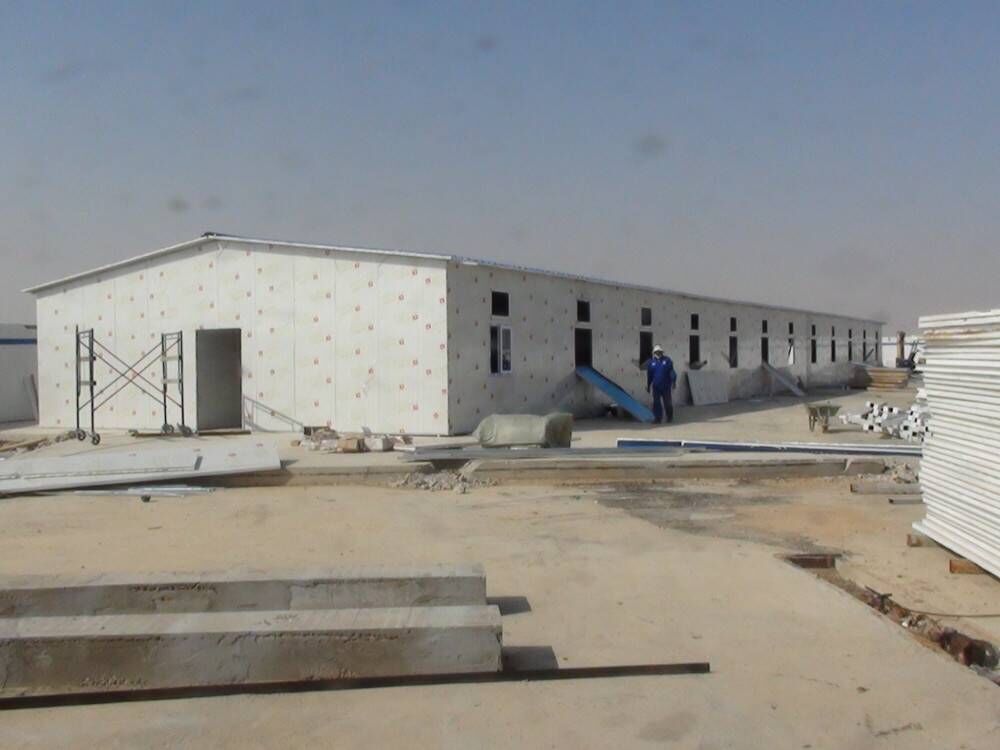
Aiming at various durability defects of traditional oilfield temporary housing, Lida Group carries out targeted upgrading and optimization from structural design, material selection, surface treatment, and production technology. Relying on years of modular building R&D experience and oilfield scene application accumulation, Lida Group builds a full-system durable technical system, ensuring that temporary construction can maintain stable structural performance, complete functional configuration, and long service life in extreme oil and gas field environments.
3.1 High-Strength Galvanized Steel Frame Structure Improves Overall Structural Durability
Lida Group’s durable temporary houses adopt upgraded high-strength hot-dip galvanized steel frame as the main load-bearing structure, abandoning the thin-wall low-rigidity keel of traditional houses. The overall steel frame undergoes integral bending and welding reinforcement, with optimized structural stress distribution and enhanced node firmness, greatly improving the building’s wind resistance, earthquake resistance, and pressure resistance. The structural design meets the standard of resisting level 10 strong winds and magnitude 7 earthquakes, which can effectively cope with long-term wind and sand impact, snow load extrusion, and ground slight vibration in oilfield sites. The hot-dip galvanizing process forms a dense protective layer on the surface of steel components, fundamentally isolating air and moisture erosion and preventing structural rust and deformation. The overall structural durability is increased by more than three times compared with traditional temporary buildings, ensuring long-term stable structural support in harsh field environments.
3.2 High-Durability Sandwich Panel Materials Resist Environmental Aging
Different from ordinary low-cost sandwich panels for civil use, Lida Group’s oilfield-specific wall and roof panels adopt customized high-durability composite materials. The outer layer uses high-quality color-coated steel plates with multi-layer anti-corrosion and anti-ultraviolet coating treatment, which has strong salt spray resistance, weather resistance, and anti-aging ability, effectively resisting long-term ultraviolet radiation, wind and sand erosion, and humid salt spray corrosion in oilfield environments. The inner core adopts high-density rock wool or glass wool fireproof and thermal insulation materials, which have stable physical properties, no water absorption, no mildew, and no deformation, and can maintain long-term stable thermal insulation and flame-retardant performance. All core materials have passed professional aging tests, ensuring that the thermal insulation, sound insulation, and fireproof functions do not attenuate significantly within 10 years of field use, realizing long-term functional durability.
3.3 Professional Sealing and Waterproof System Ensures Long-Term Functional Integrity
For the common water leakage and air leakage problems of traditional temporary houses, Lida Group adopts a full-process optimized sealing and waterproof system. The roof adopts integral waterproof laying and lap sealing technology, with waterproof coils and special waterproof sealant matched at all splicing gaps to form a fully closed waterproof protective layer. Doors, windows, and wall joints are equipped with high-elastic aging-resistant rubber sealing strips, which can adapt to long-term high and low temperature alternation without hardening and aging. The wall and roof splicing structure adopts multi-layer waterproof and dustproof design to avoid sand penetration and water seepage caused by structural gaps. The systematic waterproof and sealing design ensures that the building maintains good sealing performance in long-term field use, avoiding functional failure caused by water leakage and air leakage, and greatly improving the overall service life of the camp.
3.4 Modular Detachable Structure Realizes Reusable Durability
Lida Group’s durable temporary construction adopts fully detachable bolted modular structure design. All steel frames and wall panels are connected by standard high-strength bolts, realizing free disassembly, assembly, and transfer. Compared with the disposable welding structure of traditional houses, this design avoids structural damage caused by integral demolition. The standardized components have high compatibility and low loss rate after repeated disassembly and assembly, with a reusable rate of more than 90%. The durable structural performance supports 5 to 8 cyclic transfers and repeated use in different oilfield projects, realizing long-term reusable durability and completely solving the problem of short service life and serious waste of traditional temporary housing.

4. Outstanding Durability Advantages of Lida Group’s Oilfield Temporary Accommodation
Benefiting from high-strength structural design, high-quality durable materials, and professional environmental adaptation technology, Lida Group’s temporary construction solutions show far better comprehensive durability than traditional products in actual oilfield application scenarios, forming multiple core advantages in long-term stable use, anti-aging performance, and low maintenance cost.
4.1 Ultra-Long Service Life Adapts to Long-Cycle Oilfield Projects
Traditional oilfield temporary houses can only maintain normal use for 1 to 2 years, and will face overall aging and functional failure after that, requiring comprehensive renovation or scrapping. Lida Group’s durable temporary houses have a stable service life of more than 10 years in extreme oilfield environments, and the structural performance can still remain intact after long-term environmental erosion. Whether it is long-term large-scale oilfield development projects lasting 3 to 5 years or multi-cycle continuous exploration projects, Lida’s temporary buildings can maintain stable operation throughout the project cycle, avoiding frequent camp renovation and replacement, and perfectly matching the long-cycle operational characteristics of oil and gas field projects.
4.2 Strong Anti-Aging Performance Reduces Environmental Erosion Loss
Lida’s customized anti-ultraviolet, anti-corrosion, and wind and sand resistant design enables the temporary houses to effectively resist various extreme environmental erosion factors. In desert high-temperature environments, the wall coating will not fade, peel or age for a long time, and the thermal insulation structure remains stable; in coastal salt spray environments, the steel frame will not rust or deform, and the sealing system is intact; in plateau severe cold environments, the materials will not crack or fail due to low temperature freezing. The excellent anti-aging performance ensures that the appearance, structure, and functions of the camp remain stable for a long time, greatly reducing the performance attenuation loss caused by environmental erosion.
4.3 Low Maintenance Durability Reduces Long-Term Operational Costs
Traditional temporary houses need frequent maintenance and repair in daily use, including rust removal and painting, sealing replacement, wall repair, and thermal insulation renovation, consuming a lot of manpower and material resources every year. Lida Group’s durable temporary construction has stable structural and functional performance, with almost no daily maintenance required in the service cycle. Only simple regular inspection is needed to ensure normal operation. The low-maintenance durability greatly reduces the later operational and maintenance costs of oilfield camps, optimizes the project cost structure, and brings significant economic benefits for energy enterprises.
4.4 Stable Safety Durability Eliminates Long-Term Hidden Dangers
Safety durability is the most important advantage of Lida’s temporary construction. The A-level fireproof core material maintains stable flame-retardant and high-temperature resistant performance for a long time, without material aging and fire resistance degradation. The high-strength steel frame structure will not deform or loosen after long-term use, maintaining excellent wind and earthquake resistance. The standardized electrical system and lightning protection structure have stable performance, avoiding electrical safety hazards caused by aging lines and structural damage. The long-term stable safety performance eliminates potential safety hazards caused by aging and damage of traditional camps, ensuring the safe and stable living and working environment of field workers for a long time.
5. Practical Application Scenarios of Lida’s Durable Temporary Construction in Oil and Gas Fields
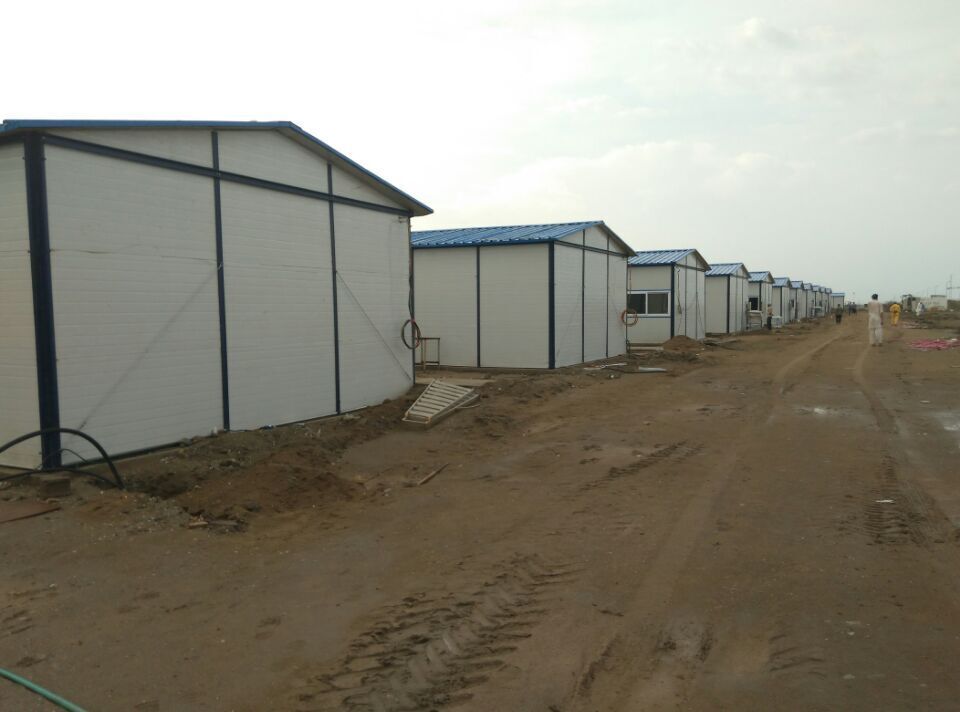
With excellent comprehensive durability and strong environmental adaptability, Lida Group’s temporary construction solutions can be widely applied in various complex oil and gas field scenarios, meeting the long-term durable accommodation needs of different types of oilfield projects and providing stable logistical support for field operations.
5.1 Long-Term Large-Scale Oilfield Development Camps
Large-scale oil and gas field development projects have long construction cycles and continuous workforce settlement needs, putting forward high requirements for the long-term durability of temporary camps. Lida Group’s durable modular houses can be built into large-scale comprehensive camps including dormitory areas, office areas, catering areas, and storage areas. The ultra-long service life and stable functional performance support 3 to 10 years of continuous camp operation, avoiding frequent camp renovation and reconstruction during the project cycle, ensuring the stable progress of long-term oilfield development projects.
5.2 Extreme Climate Oilfield Fixed Operation Camps
For oilfield projects located in extreme climate zones such as high-temperature deserts, cold plateaus, and coastal salt spray areas, Lida’s high-durability temporary houses show unique application advantages. The professional anti-aging, anti-corrosion, and thermal insulation design enables the camps to maintain stable structural integrity and comfortable indoor environment in long-term extreme weather erosion, solving the problem of easy aging and failure of traditional camps in harsh environments, and realizing durable and stable operation of extreme climate oilfield camps.
5.3 Multi-Batch Mobile Exploration and Transfer Camps
Oilfield geological exploration and mobile drilling projects have frequent site transfer characteristics, requiring temporary housing to have reusable durability. Lida’s detachable and reusable durable structure can adapt to multiple disassembly, transportation, and assembly transfers. The components have low loss rate and stable performance after repeated use, which can meet the durable accommodation needs of multi-batch mobile exploration projects, avoid repeated construction investment, and improve the operational efficiency and economic benefits of mobile oilfield projects.

6. Comprehensive Value of Durable Temporary Construction Solutions
Lida Group’s durable temporary construction solutions bring multi-dimensional value upgrading to oil and gas field project operation, covering safety guarantee, cost control, team stability, and green development, and become an indispensable supporting facility for modern high-quality oilfield construction.
In terms of safety value, long-term stable structural safety and fireproof performance eliminate potential safety hazards caused by aging and damage of traditional camps, ensure the personal safety of field workers and the safe operation of high-risk oilfield projects, and improve the overall safety management level of the camp.
In terms of economic value, ultra-long service life and low maintenance performance greatly reduce the long-term operational cost of the camp. The reusable durable structure avoids repeated construction investment and resource waste, effectively reducing the full-life-cycle comprehensive cost of oilfield temporary accommodation and improving project economic benefits.
In terms of operational value, stable and durable functional performance ensures long-term comfortable living and office conditions for workers, avoids worker turnover and low work efficiency caused by poor camp environment and frequent maintenance, stabilizes the on-site workforce team, and guarantees the continuous and efficient progress of oilfield projects.
In terms of green value, high-durability reusable materials reduce the frequency of building replacement and construction waste generation, conform to the green and low-carbon development concept of the global energy industry, and help oil and gas enterprises build environmentally friendly and sustainable field camps.
7. Conclusion
Durability is the core foundation for temporary construction to adapt to the harsh environment and long-cycle operation of oil and gas fields. Traditional temporary housing is restricted by backward materials and simple structure, with prominent durability defects such as easy aging, frequent damage, short service life, and poor reusability, which can no longer meet the high-standard temporary accommodation needs of modern oil and gas field projects.
As a professional supplier of oilfield customized temporary construction solutions, Lida Group effectively solves various durability pain points of traditional camps through high-strength steel frame structure design, high-quality anti-aging durable materials, systematic waterproof and sealing technology, and detachable reusable modular structure. Lida’s temporary construction products achieve ultra-long stable service life, strong extreme environmental anti-aging ability, low maintenance cost, and long-term safe and durable performance, perfectly adapting to the complex and harsh operational scenarios and long-cycle construction characteristics of global oil and gas fields.
While ensuring long-term durable operation of camps, Lida Group’s solutions also take into account rapid assembly, safe production, living comfort, and green environmental protection, realizing the organic unity of durability, efficiency, safety, and economy. With the continuous improvement of refined management and sustainable development standards of the global oil and gas industry, high-durability modular temporary construction will become the mainstream standard for oilfield worker camp construction. In the future, Lida Group will continue to optimize durable material technology and structural design, provide more high-quality and long-life temporary accommodation solutions for global oil and gas field projects, and empower the safe, stable, and sustainable development of the energy industry.
Related news
-
Easy Assembly Sandwich Panel House Speeds Up Oil Gas Field Temporary Worker Housing
2026-06-29 17:33:56
-
Lida Group Delivers Easy Assembly Sandwich Panel House for Oil Gas Field Worker Camps
2026-06-29 17:21:00
-
Easy Assembly Sandwich Panel House Ideal for Oil Gas Field Worker Temporary Accommodation
2026-06-29 17:12:16
contact us
- Tel: +86-532-88966982
- Whatsapp: +86-13793209022
- E-mail: sales@lidajituan.com
