



Easy Assembly Sandwich Panel House Ideal for Oil Gas Field Worker Temporary Accommodation
2026-Jun-29 17:12:16
By Admin
1. Introduction: Unique Temporary Housing Demands of Oil and Gas Field Operations
Oil and gas exploration, drilling, and field development projects are predominantly deployed in remote, barren, and climatically extreme regions, far away from urban residential infrastructure and complete public service systems. These energy projects feature remote site distribution, harsh natural environments, phased construction cycles, and floating workforce scales, which create highly specialized and stringent requirements for on-site temporary worker accommodation. Unlike conventional urban construction camps, oil and gas field temporary housing must balance rapid deployment, extreme environmental adaptability, industrial safety compliance, basic living comfort, and cost-effective reusable performance throughout short-term drilling and long-term field development cycles.
Most oil and gas fields operate under rigorous environmental conditions, including scorching desert heat, frigid plateau cold, coastal high humidity and salt spray, and persistent wind and sand erosion. These extreme climates constantly test the thermal insulation, anti-corrosion, wind resistance, and structural stability of temporary buildings. Meanwhile, oil and gas projects have obvious phased operational characteristics: workforce surges rapidly during peak drilling and construction phases and declines sharply after project completion or phased acceptance. Permanent fixed buildings cause severe resource idleness and economic waste, while traditional makeshift tents and simple crude temporary houses fail to meet modern oilfield safety standards, environmental adaptability requirements, and worker living quality expectations.
In addition to environmental and cyclical challenges, oil and gas fields belong to high-risk flammable and explosive industrial scenarios, imposing strict fireproof, flame-retardant, and electrical safety specifications for all on-site temporary facilities. Ordinary temporary shelters with flammable materials and unstable structures pose severe safety hazards, easily triggering fire accidents and endangering personnel and property safety. Therefore, oil and gas enterprises urgently need a low-cost, fast-assembly, high-safety, and durable temporary housing solution tailored to the extreme working conditions and operational characteristics of energy fields.
Easy assembly sandwich panel houses have emerged as the most ideal temporary accommodation solution for oil and gas field workers, perfectly matching the core demands of energy field temporary camps. Supported by lightweight high-strength sandwich panel materials, modular bolted assembly structure, excellent thermal insulation and fireproof performance, and ultra-convenient disassembly and reuse advantages, these houses solve multiple pain points of traditional oilfield temporary housing. This article comprehensively elaborates on the defects of traditional oilfield accommodation, core structural and performance advantages of easy-assembly sandwich panel houses, practical application values, and diversified field application scenarios, demonstrating why this solution has become the mainstream choice for global oil and gas field temporary worker accommodation.
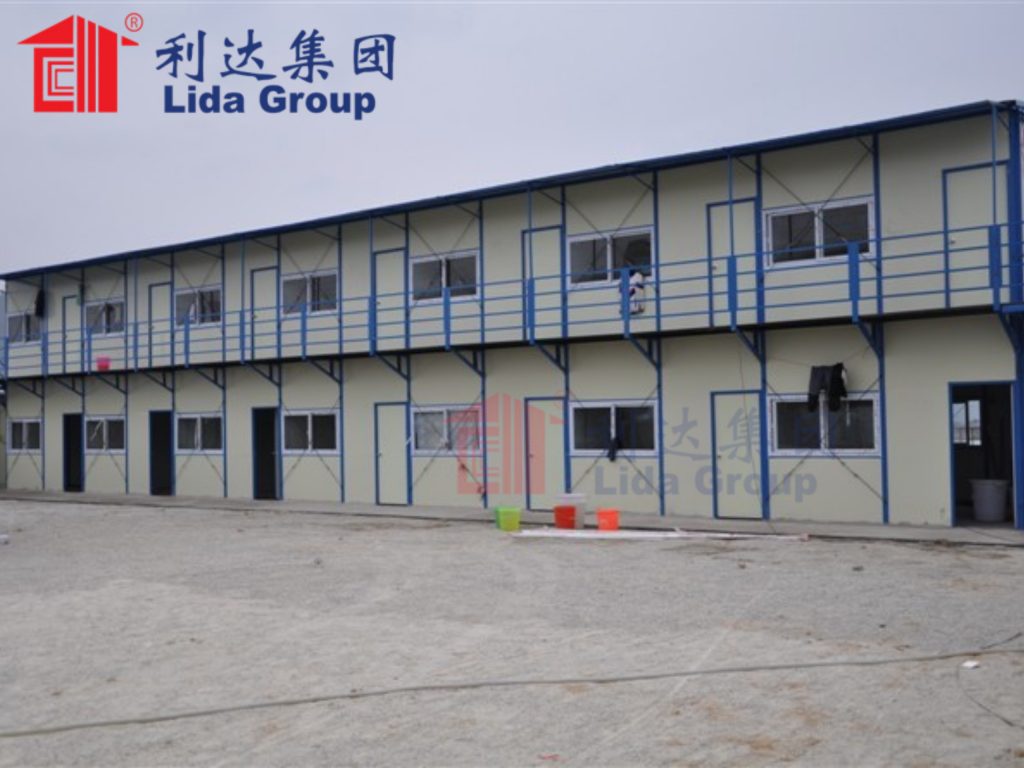
2. Core Pain Points of Traditional Oil Gas Field Temporary Accommodation
For decades, oil and gas field temporary worker accommodation has relied on canvas tents and ordinary color steel temporary houses, which have long restricted the standardized construction and safe operation of field camps due to inherent structural and performance defects. These traditional solutions cannot adapt to the extreme environments and high-risk industrial attributes of oil and gas projects, bringing multiple hidden troubles to project operation and workforce management.
2.1 Complicated Construction and Low Efficiency Fails Dynamic Project Needs
Traditional color steel temporary houses require complex on-site construction procedures, including foundation leveling, concrete pouring, on-site welding, component assembly, and secondary decoration. The entire construction cycle lasts 20 to 30 days, requiring a large number of professional construction workers and mechanical equipment leasing. Oil and gas field sites are remote with scarce local construction resources, leading to high logistics and labor costs and delayed camp construction progress. In contrast, sudden project start-ups and rapid workforce expansion require immediate housing support, making the low-efficiency traditional construction mode unable to match the fast-paced operational rhythm of modern oil and gas projects. Simple canvas tents can be deployed quickly but lack structural stability and basic living functions, only suitable for ultra-short-term emergency refuge rather than long-term worker accommodation.
2.2 Poor Fireproof and Structural Safety Risks Violate Oilfield Industrial Standards
Safety is the primary bottom line for oilfield temporary facilities. Traditional ordinary color steel houses adopt flammable foam core materials, which have extremely poor fire resistance and are prone to rapid combustion and toxic gas release when encountering open fire or electrical short circuits. This defect directly violates the strict fire protection specifications of flammable and explosive oil and gas fields, easily causing large-scale camp fire accidents. Structurally, traditional temporary houses adopt simplified keel structures with low overall rigidity, unable to resist field strong winds, sandstorms, and heavy snow accumulation. Wall deformation, roof water leakage, and overall tilting frequently occur in extreme weather, bringing long-term safety hazards to on-site workers.
2.3 Poor Environmental Adaptability Unable to Resist Extreme Field Climates
Traditional temporary housing lacks targeted environmental adaptation design, resulting in poor performance in diverse extreme oilfield climates. In high-temperature desert oilfields, thin wall structures have no effective thermal insulation function, leading to extremely high indoor temperature and stuffy air in summer, seriously affecting workers’ rest quality. In plateau and northern cold-region oilfields, severe heat loss causes indoor frosting and freezing, endangering workers’ physical health. For coastal offshore oilfields with high salt spray and humidity, unprotected steel structures rust rapidly, and wall panels age and peel in a short time, greatly shortening service life and requiring frequent maintenance and replacement, increasing long-term operational costs for enterprises.
2.4 Low Reusability and Severe Resource Waste Lead to High Comprehensive Costs
Most traditional oilfield temporary buildings are disposable structures. On-site welding and fixed assembly modes make disassembly difficult, and disassembled components are severely damaged and cannot be reused. After the completion of phased oilfield projects, camps can only be demolished and discarded, generating massive construction waste and causing serious waste of building materials and project funds. For subsequent new oilfield projects, enterprises need to reinvest in camp construction, forming a vicious cycle of repeated investment and low resource utilization, resulting in poor long-term economic sustainability.
2.5 Crude Living Environment Affects Workforce Stability
Traditional temporary houses have unreasonable spatial layout, poor ventilation and lighting conditions, and serious external noise interference. The lack of standardized supporting facilities such as independent storage spaces, qualified bathrooms, and clean toilets creates a harsh living environment. Long-term poor accommodation conditions easily cause worker fatigue, low job satisfaction, and high turnover rate, destabilizing the construction team and indirectly restricting the progress and quality of oilfield engineering projects.
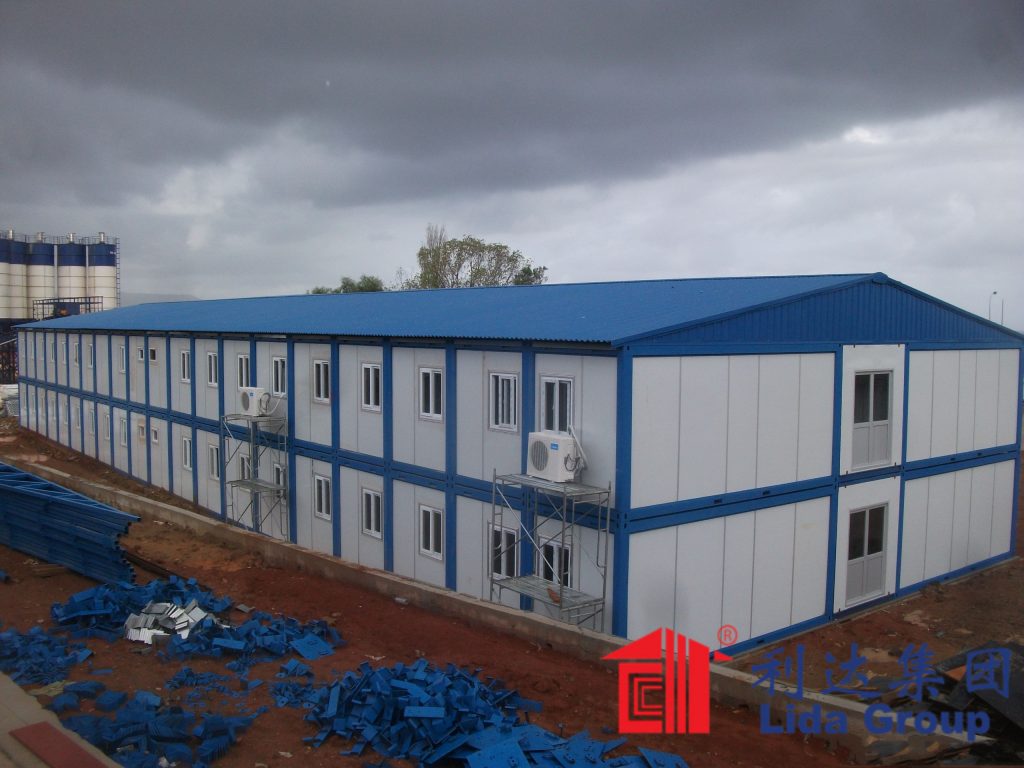
3. Core Structural and Performance Advantages of Easy Assembly Sandwich Panel Houses
Easy assembly sandwich panel houses are specially optimized for temporary construction scenarios such as oil and gas field camps. Adopting lightweight high-strength steel frames and high-performance composite sandwich wall panels, the whole house realizes fully bolted modular assembly without on-site welding and cutting. With ultra-fast assembly efficiency, industrial-grade safety performance, excellent environmental adaptability, and reusable economic advantages, this solution perfectly solves all pain points of traditional oilfield temporary accommodation and becomes the most suitable housing carrier for field workers.
3.1 Tool-Free Quick Assembly Improves Camp Construction Efficiency
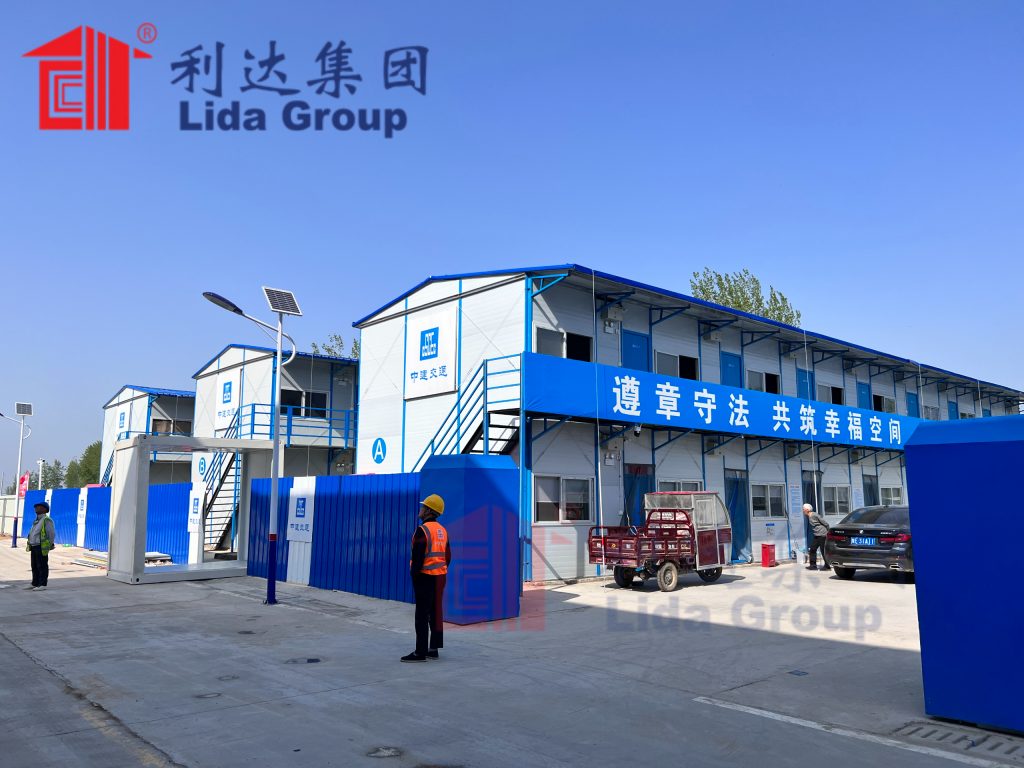
The most prominent advantage of sandwich panel houses is ultra-convenient modular assembly performance. All house components including steel frames, sandwich wall panels, roof panels, and door and window accessories are prefabricated and standardized in factories, with unified matching interfaces and complete supporting accessories. The whole construction process adopts pure bolted assembly, without on-site welding, paint spraying, concrete pouring, or secondary decoration, realizing full dry construction. Two to three ordinary workers can complete the assembly of a standard single dormitory unit within 3 to 4 hours, and a large-scale oilfield camp with dozens of dormitory units can be fully built and put into use within 3 to 5 days.
This efficient assembly mode completely abandons the cumbersome procedures of traditional temporary building construction, greatly shortens the camp construction cycle, and can quickly respond to the sudden housing demand of oilfield project start-up and workforce surge. Meanwhile, the simple assembly process does not rely on professional construction teams and complex mechanical equipment, effectively solving the problem of scarce construction resources in remote oilfield sites and significantly reducing on-site labor and equipment costs.
3.2 High-Performance Sandwich Panels Ensure Industrial-Grade Safety
Tailored for high-risk oil and gas field environments, professional oilfield-specific sandwich panel houses adopt high-quality rock wool or glass wool fireproof core materials, meeting international A-level fireproof and flame-retardant standards. The core materials are non-combustible and high-temperature resistant, will not burn or release toxic smoke when encountering open fire, and can effectively block fire spread, fully complying with the strict fire protection safety specifications of flammable and explosive energy fields. Compared with flammable foam sandwich panels of traditional houses, this material completely eliminates camp fire hazards caused by building materials.
In terms of structural safety, the houses adopt high-strength lightweight steel frame main structures with integral stable performance, capable of resisting level 10 strong winds and magnitude 7 earthquakes, adapting to frequent field extreme weather. The overall closed structural design realizes excellent waterproof, leak-proof, and windproof performance, avoiding water leakage and structural deformation of traditional temporary houses. All electrical systems adopt standardized embedded wiring and leakage protection devices, matching oilfield industrial safety standards to ensure safe indoor electricity use.
3.3 Excellent Thermal Insulation and Weather Resistance Adapt to Extreme Oilfield Environments
The composite sandwich structure of wall panels integrates thermal insulation, heat insulation, sound insulation, and anti-corrosion functions, with ultra-low thermal conductivity, effectively isolating external extreme temperature changes. In high-temperature desert oilfields, the high-efficiency heat insulation layer blocks solar radiation heat, keeping indoor temperature cool and comfortable and avoiding stuffy and hot living environments. In cold plateau oilfields, the thickened thermal insulation core material reduces indoor heat loss, preventing indoor frosting and freezing and ensuring a constant warm living space for workers in severe cold seasons.
For coastal high-humidity and salt-spray oilfield environments, the outer layer of sandwich panels adopts anti-corrosion color steel plates with special coating treatment, which has excellent salt spray resistance, moisture resistance, and aging resistance. It can resist long-term wind and sand erosion, humid corrosion, and ultraviolet radiation, effectively delaying structural aging and wall peeling. The optimized weather-resistant design enables the house to maintain stable performance in all extreme oilfield climates, with a service life of more than 10 years, far exceeding that of traditional temporary houses.
3.4 Detachable and Reusable Structure Reduces Long-Term Project Costs
Different from the disposable fixed structure of traditional temporary houses, easy assembly sandwich panel houses adopt fully detachable modular design. All components are connected by independent bolts, which can be quickly disassembled, sorted, flat-packed, and transported after project completion. The disassembled components have low damage rate and high integrity, and can be reassembled and reused in multiple subsequent oilfield projects, with a reuse rate of over 90% and recyclable times up to 5 to 8 cycles.
This cyclic reusable mode completely avoids construction waste and repeated construction investment of traditional disposable camps. It greatly reduces the long-term temporary housing cost of oil and gas enterprises, optimizes project capital investment structure, and realizes green and low-carbon construction without generating construction waste during assembly and disassembly, conforming to the green development policy of the global energy industry.
3.5 Lightweight and Flexible Layout Meets Diversified Camp Needs
The overall lightweight design of sandwich panel houses has low requirements for on-site foundations, requiring only simple ground leveling without complex foundation treatment, adapting to uneven and complex terrain of remote oilfield sites. The standardized modular units support free horizontal splicing and multi-layer stacking, allowing flexible adjustment of camp scale and functional layout according to project workforce size and site space.
In addition to worker dormitories, the houses can be flexibly transformed into temporary offices, meeting rooms, warehouse storage rooms, camp canteens, and duty rooms, realizing integrated construction of multi-functional camp facilities. The neat and unified appearance and standardized spatial layout optimize the overall planning of oilfield camps, facilitating unified daily management and safety inspection of on-site facilities and improving the refined management level of energy projects.
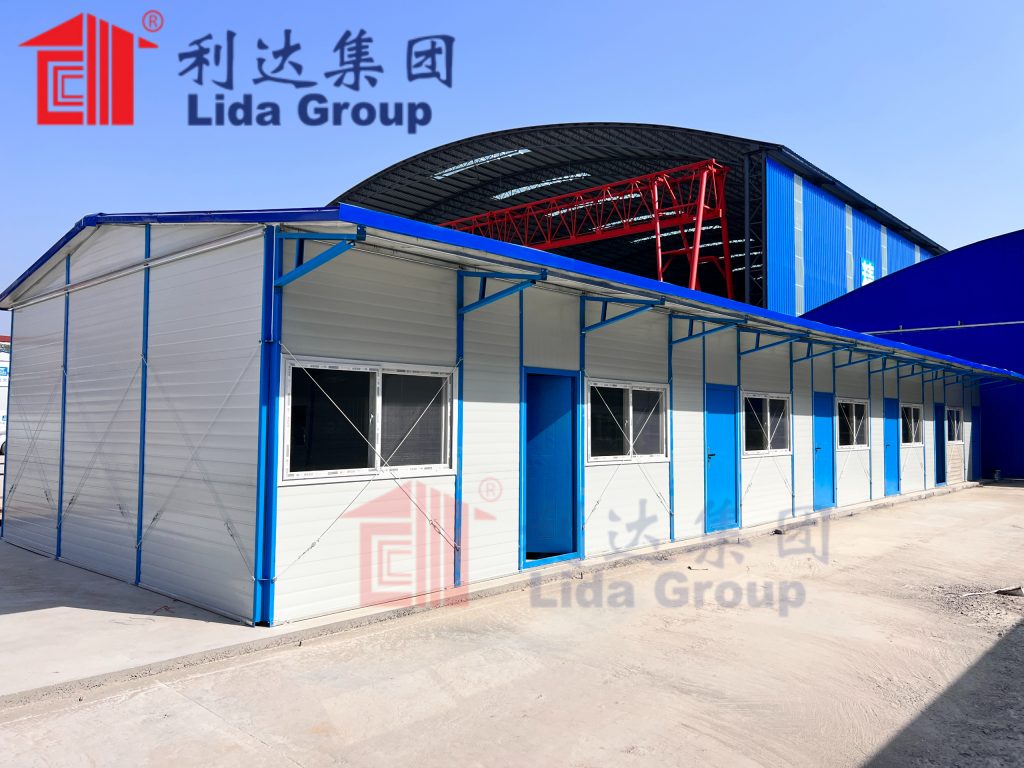
4. Practical Application Values in Oil and Gas Field Temporary Accommodation
As a cost-effective, high-efficiency, and high-reliability temporary housing solution, easy assembly sandwich panel houses bring multi-dimensional practical values to oil and gas field project operation, safety management, workforce stability, and cost control, effectively solving various bottlenecks in traditional camp construction.
4.1 Guarantee Project Construction Schedule with High Efficiency
The ultra-fast assembly and deployment efficiency of sandwich panel houses ensures synchronous completion of camp construction and project start-up. It avoids the problem of delayed worker accommodation caused by slow traditional camp construction, ensures timely entry and stable rest of construction personnel, and provides solid living support for the smooth progress of oilfield drilling, exploration, and development tasks, effectively preventing project schedule delays caused by lagging supporting facilities.
4.2 Improve On-Site Safety Management Level
The A-level fireproof performance, stable structural safety, and standardized electrical configuration fully meet the industrial safety supervision standards of oil and gas fields, eliminating potential fire and structural safety hazards of traditional temporary camps. The closed and tidy camp environment is conducive to on-site safety inspection, hidden danger elimination, and standardized management, reducing the occurrence of safety accidents and ensuring the safe and stable operation of high-risk oilfield projects.
4.3 Optimize Worker Living Environment and Stabilize Workforce
The excellent thermal insulation, sound insulation, and ventilation performance of sandwich panel houses create a comfortable, quiet, and constant-temperature indoor living environment, completely changing the harsh living conditions of traditional oilfield camps. The standardized indoor space and complete supporting facilities improve workers’ rest quality and sense of belonging, enhance team cohesion and job satisfaction, effectively reduce workforce turnover rate, and stabilize the on-site construction team for long-term oilfield operation.
4.4 Reduce Comprehensive Project Operating Costs
From the perspective of full life cycle cost, sandwich panel houses have low one-time construction cost, no need for complex foundation and decoration investment, and low daily maintenance cost. The reusable design avoids repeated construction investment of multiple projects, greatly saving labor, logistics, and material costs for oil and gas enterprises. Compared with traditional temporary housing, it can reduce the comprehensive temporary accommodation cost by more than 35%, with extremely high long-term cost performance.
4.5 Realize Green and Low-Carbon Camp Construction
The full dry construction mode produces no construction dust, sewage, or waste during assembly. All panel materials are environmentally friendly and recyclable, with no harmful gas volatilization, meeting international environmental protection standards. The reusable components reduce resource consumption and construction waste discharge, helping oil and gas enterprises build green and environmentally friendly field camps, conforming to the global energy industry’s low-carbon transformation and sustainable development trend.
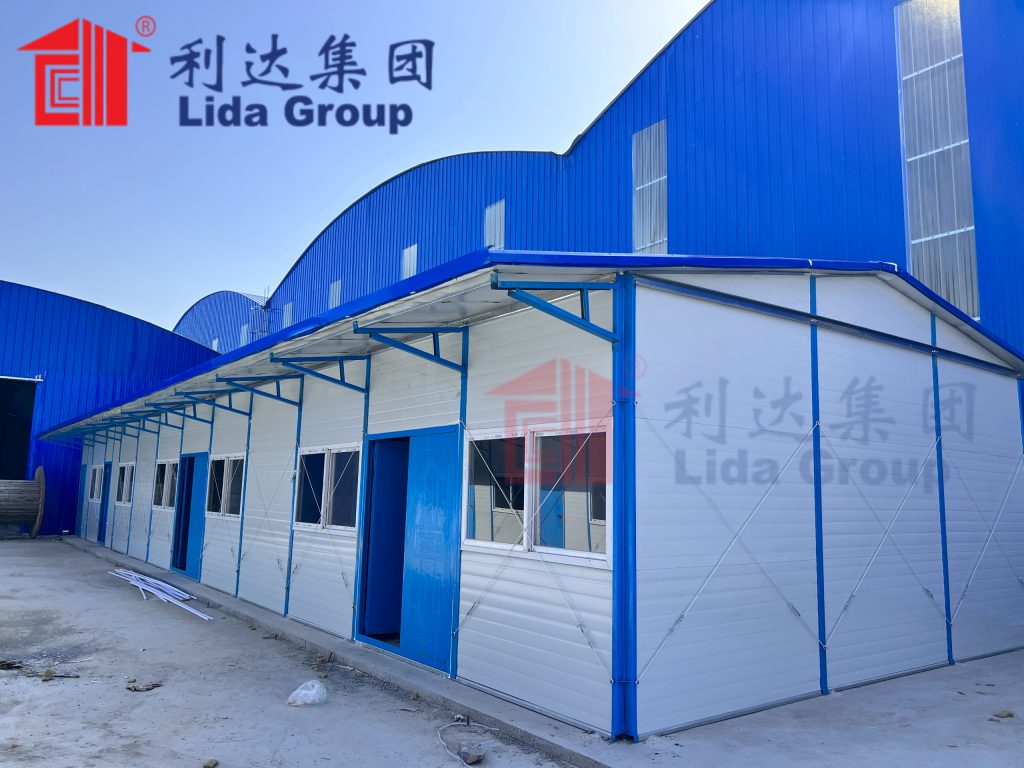
5. Diversified Application Scenarios in Oil and Gas Field Projects
With flexible assembly performance, reliable safety, and strong environmental adaptability, easy assembly sandwich panel houses can fully meet the temporary housing needs of various oil and gas field project types, covering short-term emergency exploration, long-term field development, and remote emergency operation scenarios.
5.1 Short-Term Drilling and Exploration Project Camps
For short-cycle oil and gas drilling, geological exploration, and field investigation projects with small workforce and short operation cycle, sandwich panel houses can be quickly assembled into compact temporary camps. The rapid deployment and convenient disassembly features meet the temporary housing needs of mobile exploration teams. After the completion of exploration tasks, the houses can be quickly disassembled and transferred, realizing zero resource waste and flexible mobile operation.
5.2 Long-Term Large-Scale Field Development Camps
For large-scale oilfield development projects with long construction cycle and large workforce, multi-layer stacked and large-area combined sandwich panel camps can be built. The standardized dormitory groups, office areas, and supporting living facilities form complete functional camp communities. The durable weather resistance and stable safety performance support long-term continuous operation of field camps, fully meeting the long-term living and office needs of hundreds of field workers.
5.3 Remote Emergency Maintenance and Rescue Camps
In sudden oilfield equipment maintenance, field accident rescue, and emergency repair tasks, sandwich panel houses can be rapidly deployed into temporary emergency camps in remote barren areas. The fast assembly speed provides timely housing and rest guarantee for emergency operation teams, ensuring the efficient progress of emergency rescue and maintenance work, and improving the emergency response capability of oilfield projects.
6. Conclusion
Temporary worker accommodation is an indispensable supporting part of oil and gas field engineering construction and safe operation, and the performance of temporary housing directly affects project safety, construction progress, workforce stability, and enterprise operating costs. Traditional tents and ordinary color steel temporary houses have long been unable to adapt to the extreme environments and high-risk industrial attributes of oil and gas fields due to their low assembly efficiency, poor fireproof safety, weak environmental adaptability, and non-reusable defects, becoming a shortcoming restricting the standardized construction of modern oilfield camps.
Easy assembly sandwich panel houses perfectly fit the core demands of oil and gas field temporary accommodation with ultra-fast modular assembly, industrial-grade fireproof and structural safety, excellent extreme weather resistance, cyclic reusable performance, and cost-effective advantages. They solve multiple industry pain points such as slow camp construction, insufficient safety, poor living comfort, and serious resource waste, and realize the organic unity of high efficiency, safety, comfort, economy, and environmental protection. Whether for short-term mobile exploration projects or long-term large-scale field development projects, sandwich panel houses can provide stable, reliable, and high-quality temporary housing guarantee for oilfield workers.
With the continuous upgrading of global oil and gas energy industry’s refined management, safe production, and green construction standards, easy assembly sandwich panel temporary housing will become the mainstream standard solution for energy field temporary camps. In the future, with the continuous optimization of panel materials and modular assembly technology, this efficient and practical temporary building solution will further empower the standardized, safe, and low-carbon development of global oil and gas field engineering construction, providing more reliable temporary accommodation support for the sustainable operation of the energy industry.
Related news
-
Lida Group Provides Oil Gas Field Worker Accommodation with Temporary Construction Solutions
2026-06-29 17:02:51
-
Modular Container House and Prefab Dormitory Building Redefine Mobile Living Standards
2026-06-29 16:55:32
-
Sustainable Living Container House by Lida Group Ideal for Emergency and Temporary Housing
2026-06-29 16:49:27
contact us
- Tel: +86-532-88966982
- Whatsapp: +86-13793209022
- E-mail: sales@lidajituan.com
