



Lida Group Provides Oil Gas Field Worker Accommodation with Temporary Construction Solutions
2026-Jun-29 17:02:51
By Admin
1. Introduction: Unique Accommodation Challenges of Oil and Gas Field Operations
Oil and gas exploration, drilling, and field development projects are mostly located in remote, desolate, and environmentally harsh areas, far away from urban residential supporting facilities and complete public service systems. Different from conventional urban construction projects, oil and gas field operations have distinct characteristics such as remote site distribution, harsh natural environments, phased construction cycles, and floating workforce scale. These industry characteristics bring unprecedented challenges to on-site worker accommodation and camp construction, making safe, comfortable, and cost-effective temporary housing one of the core supporting guarantees for the stable operation of global oil and gas energy projects.
Most oil and gas fields are distributed in extreme environments including high-temperature deserts, severe-cold plateaus, windy and sandy wilderness, and humid coastal oil zones. These areas are accompanied by extreme temperature differences, strong wind erosion, salt spray corrosion, and frequent extreme weather throughout the year, which put forward extremely high requirements for the wind resistance, earthquake resistance, fire resistance, thermal insulation, and anti-corrosion performance of residential buildings. At the same time, oil and gas projects have obvious phased attributes. The workforce surges rapidly during drilling and construction peak periods and decreases sharply after project completion or stage acceptance. Fixed permanent buildings cannot adapt to this dynamic personnel change, resulting in serious resource idle and economic waste, while traditional simple temporary shelters have long been unable to meet modern oilfield safety specifications and worker living standards.
In addition to environmental and cycle constraints, oil and gas field housing also faces strict industrial safety standards. The operation site belongs to high-risk flammable and explosive industrial areas, and temporary accommodation facilities must meet professional fire protection, explosion-proof, and electrical safety specifications to avoid potential safety accidents caused by housing defects. Traditional color steel houses and makeshift tents have insufficient fire resistance and structural stability, which cannot pass industrial safety inspections and bring huge hidden dangers to on-site operation safety.
As a global leading provider of modular temporary construction solutions, Lida Group has long focused on the customized housing needs of the energy industry. Targeting the multiple pain points of difficult construction, poor safety, low comfort, and poor flexibility in oil and gas field accommodation, Lida Group has developed professional temporary camp construction solutions tailored for energy field scenarios. With industrial-grade safety standards, extreme environmental adaptability, rapid deployability, and reusable economic advantages, these solutions provide standardized, safe, and comfortable long-term and short-term accommodation services for oil and gas field workers, becoming the most reliable housing guarantee for modern energy engineering operations. This article comprehensively analyzes the industry pain points of oilfield accommodation, the core advantages of Lida’s customized temporary solutions, and their practical application value in energy field projects.
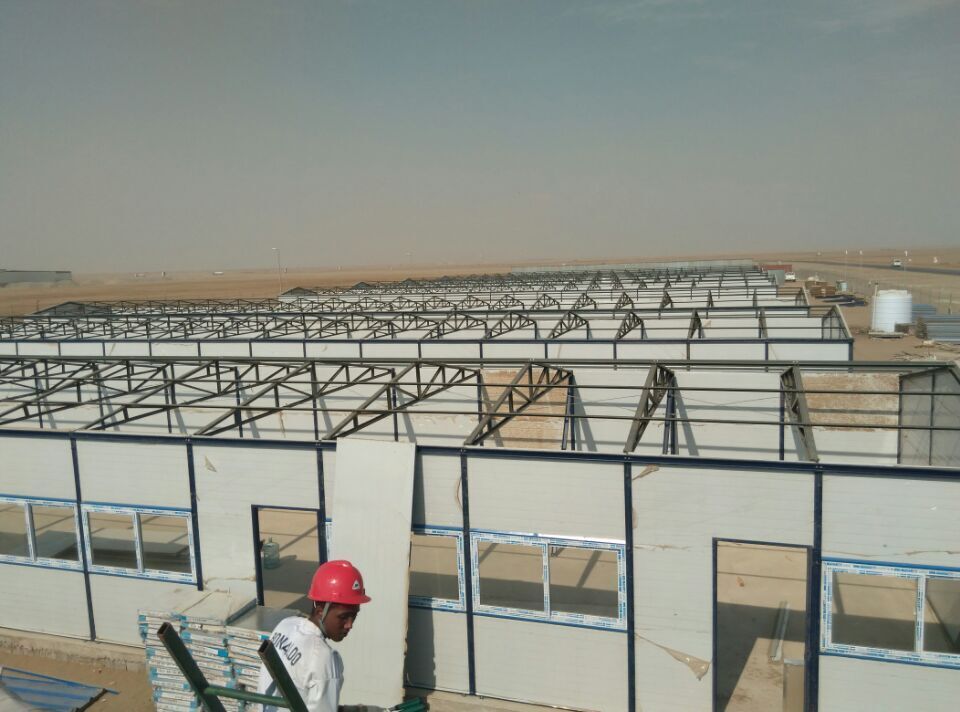
2. Traditional Oilfield Temporary Accommodation Pain Points and Industry Limitations
For a long time, the oil and gas energy industry has relied on simple makeshift tents and ordinary color steel temporary houses to solve on-site worker accommodation problems. Restricted by backward construction technology and single product performance, these traditional accommodation modes have multiple inherent defects in safety performance, environmental adaptability, living comfort, and economic benefits, which seriously restrict the standardized construction and safe operation of oilfield projects.
2.1 Insufficient Industrial Safety Performance and Hidden Operational Risks
Oil and gas fields are high-risk industrial sites with flammable and explosive hydrocarbon gases in the operating environment, so temporary accommodation facilities must have ultra-high fireproof, flame-retardant, and anti-leakage safety performance. Traditional temporary color steel houses mostly adopt ordinary foam sandwich panels, which are flammable and easy to melt when encountering open fire. Once electrical short circuits or small fire accidents occur in the camp, it is easy to cause large-area fire spread, triggering major safety accidents. According to industry safety audit data, nearly 68% of fire accidents in oil and gas field camps are caused by electrical faults and non-fireproof temporary building materials, which fully exposes the serious safety loopholes of traditional accommodation facilities.
In terms of structural safety, traditional temporary buildings adopt simplified keel structures with low overall rigidity and poor wind and earthquake resistance. They cannot resist extreme weather such as field strong winds, sandstorms, and heavy snow accumulation, and are prone to wall deformation, roof collapse, and overall tilting. In addition, the simple wiring and non-standard pipeline layout of traditional oilfield temporary houses lead to frequent electrical leakage and water seepage problems, which cannot meet the strict safety management specifications of modern energy enterprises, bringing long-term hidden dangers to on-site personnel and property safety.
2.2 Poor Environmental Adaptability Unable to Adapt to Extreme Field Conditions
Oil and gas field projects are distributed in diverse extreme environments all year round, but traditional temporary housing has extremely poor environmental adaptability and cannot resist long-term extreme climate erosion. In desert oilfields with high temperature and drought all year round, ordinary temporary houses lack efficient thermal insulation structures, resulting in extremely high indoor temperature, stuffy air, and unable to provide basic rest conditions for workers. In plateau and northern oilfields with severe cold in winter, the thin wall structure leads to rapid heat loss, indoor frosting and freezing, seriously affecting the physical health and rest quality of workers.
For coastal offshore oil and gas fields with high salt spray and high humidity, traditional building materials have no anti-corrosion and moisture-proof treatment. Long-term exposure to salt spray environment will cause rapid rust and aging of steel structures, wall peeling, and internal mildew, greatly shortening the service life of temporary buildings and requiring frequent maintenance and replacement. The poor environmental adaptability makes traditional temporary accommodation facilities unable to support long-term stable operation of oilfield camps, affecting the continuity of field engineering construction.
2.3 Low Living Comfort Affects Workforce Stability and Work Efficiency
Oil and gas field workers often work in shifts for a long time, and comfortable rest accommodation is an important guarantee for maintaining work enthusiasm and team stability. However, traditional temporary oilfield accommodation has crude space design and incomplete supporting facilities. Most camps adopt crowded collective dormitories with unreasonable space layout, no independent storage space, poor indoor ventilation and lighting conditions, and serious external wind and sand noise interference. The long-term harsh living environment easily causes worker fatigue, low morale, and high turnover rate, which indirectly affects the progress and quality of oilfield engineering construction.
In terms of public supporting facilities, traditional oilfield temporary camps lack standardized bathrooms, clean toilets, leisure activity areas, and laundry facilities. Workers face problems such as difficulty in bathing, messy living environment, and no leisure and decompression space after work. The low-standard living environment cannot reflect enterprise humanistic care, reduces workers’ sense of belonging and job satisfaction, and becomes an important factor restricting the stable development of oilfield construction teams.
2.4 Low Construction Efficiency and Poor Economic Sustainability
Oil and gas field sites are remote and lack local building materials and professional construction teams. Traditional temporary house construction requires enterprises to transport a large number of sand, cement, steel, and decorative materials from urban areas, with extremely high logistics and transportation costs. At the same time, on-site pouring, welding, and decoration construction require a large number of skilled construction workers and mechanical equipment leasing, resulting in high labor and mechanical costs. The whole construction cycle lasts for several weeks or even months, which cannot meet the urgent accommodation needs of rapid project start-up and workforce entry.
More importantly, traditional oilfield temporary buildings are disposable structures with no disassembly and reuse value. After the completion of phased oilfield projects, the temporary camps can only be demolished and discarded, generating a large amount of construction waste and causing serious waste of funds and resources. When new oilfield projects are launched, enterprises need to reinvest in camp construction, resulting in repeatedly increased operating costs and poor long-term economic sustainability.
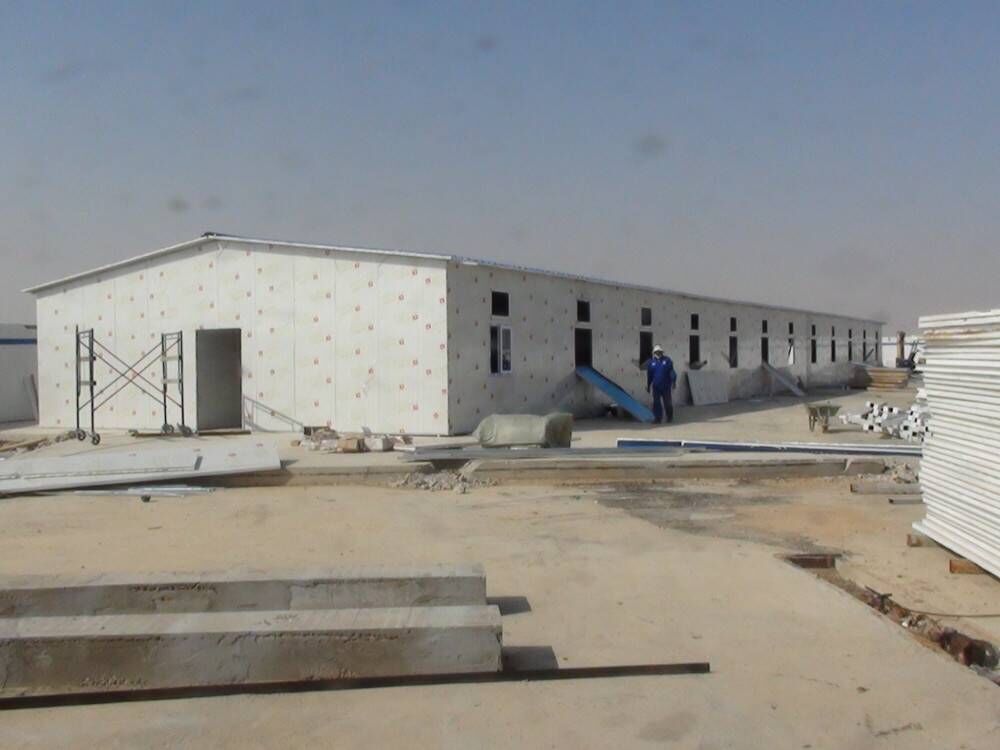
3. Core Advantages of Lida Group’s Oil and Gas Field Temporary Accommodation Solutions
Aiming at the multiple pain points of traditional oilfield temporary accommodation, Lida Group has customized exclusive modular temporary construction solutions suitable for oil and gas field scenarios based on years of modular building R&D experience and in-depth insight into energy industry standards. Relying on industrial-grade safety configuration, extreme environmental adaptation technology, rapid modular deployment, and cyclic reusable design, Lida’s solutions comprehensively solve the problems of unsafe, uncomfortable, inefficient, and uneconomical traditional oilfield housing, and create high-standard temporary accommodation conditions for field workers.
3.1 Industrial-Grade Safety Configuration Meets Oilfield High-Risk Standards
Safety is the primary core indicator of oilfield temporary accommodation. Lida Group’s oilfield-specific temporary housing products adopt upgraded industrial-grade fireproof and explosion-proof configurations, fully complying with international oil and gas industry safety specifications and NFPA fire protection standards. The wall adopts high-density A-level fireproof rock wool sandwich panels, which are non-combustible, flame-retardant, and high-temperature resistant, and will not release toxic and harmful gases in high-temperature environments, completely solving the fire hazard of traditional flammable wall materials. All internal electrical systems adopt standardized hidden wiring and leakage protection devices, equipped with professional overload protection and emergency power-off systems, effectively avoiding fire accidents caused by electrical faults.
In terms of structural safety, the products adopt high-strength hot-dip galvanized steel frame integral structure, which has passed professional wind resistance, earthquake resistance, and pressure resistance tests. It can resist level 12 strong winds, magnitude 8 earthquakes, and heavy snow pressure, and can maintain stable structural performance in extreme field environments such as desert sandstorms and plateau strong winds. At the same time, the whole house is equipped with an integrated lightning protection and grounding system, closed waterproof and anti-leakage structure, and professional explosion-proof ventilation devices, which fully adapt to the flammable and explosive high-risk environment of oil and gas fields, ensuring all-round safety of on-site personnel and camps.
3.2 Extreme Environmental Adaptability Adapts to Diversified Field Scenarios
Lida Group’s oilfield temporary accommodation solutions carry out targeted environmental adaptation optimization according to different oil and gas field climatic characteristics, realizing all-weather stable operation in high-temperature deserts, severe-cold plateaus, humid coasts, and windy and sandy wilderness. For high-temperature desert oilfields, the products adopt multi-layer composite thermal insulation and heat dissipation structures, with high-efficiency heat insulation materials to isolate external high temperature, equipped with enhanced ventilation and cooling systems to keep indoor temperature constant and comfortable, avoiding stuffy and hot indoor environment.
For severe-cold plateau oilfields, the thickened thermal insulation wall panels and closed heat preservation design effectively reduce indoor heat loss, supporting normal indoor temperature maintenance in ultra-low temperature environments. For coastal oil and gas fields with high salt spray and high humidity, the steel structure undergoes multi-layer anti-corrosion and salt spray resistant coating treatment, with excellent moisture-proof and mildew-proof functions, preventing structural rust and wall aging, and greatly extending the service life of the camp.
Whether it is extreme temperature changes, strong wind and sand erosion, or high humidity and salt spray corrosion, Lida’s customized temporary housing can maintain stable structural performance and indoor living environment, fully adapting to the complex and changeable working conditions of global oil and gas field projects.
3.3 Humanized Custom Design Improves Field Living Comfort
Different from the crude design of traditional oilfield temporary housing, Lida Group takes worker living experience as the core and carries out humanized refined design for oilfield camp dormitories and supporting facilities. The indoor space is scientifically laid out with reasonable storey height and activity area, eliminating the cramped and depressing feeling of traditional collective dormitories. Each dormitory unit is equipped with comfortable beds, independent storage lockers, dust-proof storage cabinets, and standardized power supply interfaces, meeting workers’ daily rest and storage needs.
In terms of environmental comfort, the multi-layer sound insulation structure effectively isolates external field operation noise and wind and sand noise, creating a quiet rest environment. The scientific lighting and cross-ventilation system ensures sufficient natural light and fresh indoor air all day long, avoiding indoor stuffiness and mildew. According to the actual scale of the oilfield project, Lida can support the customized construction of complete camp supporting facilities, including standardized centralized bathrooms with constant-temperature hot water, clean ventilation public toilets, hygienic staff canteens, leisure activity rooms, and laundry areas, forming a complete closed-loop living system.
The high-comfort and complete supporting living environment effectively relieves workers’ work fatigue, improves their physical and mental health, enhances team cohesion and job satisfaction, and reduces worker turnover rate, providing stable workforce guarantee for the sustainable operation of oil and gas field projects.
3.4 Ultra-Fast Deployment and Flexible Cycle Use Reduce Project Costs
Lida Group’s oilfield temporary housing adopts 95% factory prefabricated production mode. All steel structures, wall decorations, electrical circuits, and water supply and drainage systems are completed in the factory, realizing finished product delivery. On-site construction only requires hoisting, positioning, and simple pipeline docking, with no complex foundation treatment and on-site decoration work. A single dormitory unit can be put into use within 20 minutes, and a large-scale oilfield camp can be fully completed in 3 to 7 days. The ultra-fast deployment efficiency solves the problem of slow construction and delayed accommodation of traditional oilfield camps, ensuring synchronous entry of workers and synchronous progress of project construction.
In terms of economic benefits, the fully detachable modular structure realizes cyclic reuse of camp facilities. After the completion of phased oilfield projects, the dormitory units and supporting facilities can be completely disassembled, flat-packed, transported, and reused in new oilfield operation sites. The product reuse rate is over 90%, and a single set of facilities can be cyclically used for many times within the 15-year service life, completely avoiding the resource waste and repeated construction investment of traditional disposable temporary buildings.
In addition, the product has low daily maintenance cost and stable performance, which greatly reduces the long-term operation and maintenance costs of oilfield camps. Compared with traditional temporary housing, Lida’s solutions can save more than 40% of comprehensive accommodation costs for oil and gas enterprises, with extremely high long-term cost performance.

4. Diversified Customized Camp Modes for Oil and Gas Field Scenarios
Combined with the different project scales, construction cycles, and site conditions of oil and gas exploration, drilling, and development projects, Lida Group provides diversified customized temporary accommodation camp modes to meet the personalized housing needs of short-term emergency projects and long-term large-scale oilfield projects.
4.1 Short-Term Drilling Project Compact Camp Solution
For short-cycle oil and gas drilling and exploration projects with small workforce and short operation cycle, Lida Group provides compact modular camp solutions. The solution adopts single-layer modular dormitory units with flexible and lightweight design, low site requirements, no complex foundation construction, and convenient transportation and rapid assembly. It can quickly build centralized dormitory areas, simple office areas, and basic supporting living facilities, meeting the basic accommodation and office needs of short-term drilling teams. After the completion of exploration tasks, the facilities can be quickly disassembled and transferred, with flexible operation and zero resource waste.
4.2 Long-Term Large-Scale Oilfield Standardized Camp Solution
For large-scale oil and gas field development projects with long operation cycle and large workforce, Lida Group builds full-set standardized comprehensive camps. The camp adopts scientific overall planning, divided into independent dormitory area, office command area, catering service area, leisure activity area, and storage guarantee area. The multi-layer stacked modular design makes full use of limited field land, improving camp carrying capacity. All facilities are equipped with high-standard fire protection, safety, and environmental protection systems, realizing standardized, institutionalized, and refined camp management. The complete functional configuration and high-quality living environment can support long-term stable work and life of hundreds or thousands of oilfield workers.
4.3 Remote Emergency Operation Mobile Camp Solution
For sudden oilfield emergency maintenance, temporary exploration, and remote field operation tasks, Lida Group provides mobile integrated camp solutions. The flat-packed modular units are convenient for long-distance transportation and rapid deployment in remote barren areas. The integrated design of dormitories, office, and supporting facilities can quickly form a complete temporary living camp in the wilderness, providing timely accommodation guarantee for emergency operation teams. The mobile camp has strong flexibility and adaptability, fully meeting the dynamic housing needs of irregular oilfield operation tasks.
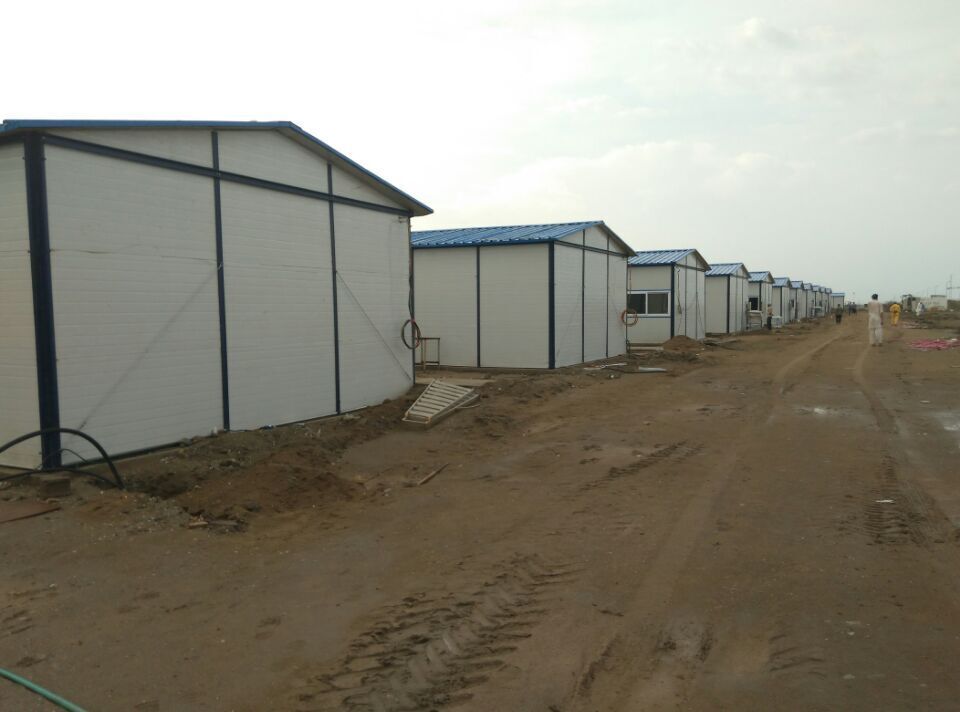
5. Practical Application Value for Oil and Gas Field Enterprises
Lida Group’s customized temporary construction accommodation solutions bring multi-dimensional practical value to oil and gas field operation and enterprise management, effectively solving various housing problems that plague the development of energy enterprises.
In terms of safety management, industrial-grade fireproof, explosion-proof, and wind-resistant performance completely eliminates the potential safety hazards of traditional camps, meets the strict safety supervision standards of the energy industry, ensures the safe operation of oilfield sites, and avoids safety accidents and economic losses caused by unqualified housing facilities.
In terms of team management, the high-comfort and humanized living environment improves workers’ rest quality and happiness, effectively reduces workforce turnover, stabilizes the on-site construction team, and improves overall work efficiency and construction progress. The standardized camp layout also facilitates enterprises’ unified daily management, safety inspection, and personnel scheduling, improving the refined management level of oilfield projects.
In terms of economic operation, the rapid deployment efficiency shortens the project preparation cycle, avoids project delay losses, and the cyclic reusable design greatly reduces the repeated construction investment and long-term operating costs of enterprises, effectively optimizing the project cost structure.
In terms of green construction, the factory prefabricated production mode produces no on-site construction waste, and the recyclable materials reduce resource consumption and environmental pollution, conforming to the green and low-carbon development policy of the global energy industry, and helping energy enterprises build a good social image of green production.
6. Conclusion
Oil and gas field temporary worker accommodation is an indispensable supporting link in energy project construction and operation, and its safety, comfort, and efficiency directly affect project safety production, workforce stability, and enterprise operating benefits. Traditional temporary accommodation modes represented by simple color steel houses and makeshift tents have long restricted the standardized development of oilfield camps due to their insufficient safety performance, poor environmental adaptability, low living comfort, and poor economic sustainability.
Lida Group’s professional temporary construction solutions for oil and gas field worker accommodation completely subvert the backward traditional oilfield housing mode. With industrial-grade safety and explosion-proof configuration, extreme environmental adaptive performance, humanized high-comfort design, and flexible cyclic reusable economic advantages, the solutions accurately solve the multiple pain points of remote oilfield camp construction and worker accommodation. They can adapt to diversified scenarios such as short-term drilling exploration, long-term field development, and remote emergency operations, providing safe, comfortable, efficient, and economical standardized housing guarantee for global oil and gas field workers.
With the continuous development of the global energy industry towards high-standard safety production, green construction, and refined management, the requirements for temporary supporting facilities of oil and gas projects will continue to improve. In the future, Lida Group will continue to optimize modular temporary building technology, upgrade oilfield-specific adaptive configurations, and enrich customized camp solutions. It will continue to provide high-quality, reliable, and cost-effective temporary accommodation services for the energy industry, help global oil and gas enterprises improve project operation efficiency and safety management level, and empower the stable and high-quality development of the global energy industry.
Related news
-
Modular Container House and Prefab Dormitory Building Redefine Mobile Living Standards
2026-06-29 16:55:32
-
Sustainable Living Container House by Lida Group Ideal for Emergency and Temporary Housing
2026-06-29 16:49:27
-
Lida Group Completes Major Prefab Container Dormitory Building Project on Schedule
2026-06-29 16:43:41
contact us
- Tel: +86-532-88966982
- Whatsapp: +86-13793209022
- E-mail: sales@lidajituan.com
