



Modular Container House and Prefab Dormitory Building Redefine Mobile Living Standards
2026-Jun-29 16:55:32
By Admin
1. Introduction: The Evolution of Modern Mobile Living Demands
In the fast-paced era of global infrastructure development, resource exploration, and mobile workforce operations, the definition of residential space has undergone a fundamental transformation. Traditional fixed buildings with rigid structures, long construction cycles, and immovable attributes can no longer meet the dynamic living needs of modern mobile scenarios, including remote engineering camps, field exploration operations, temporary commercial settlements, and emergency mobile resettlement. For decades, mobile living spaces were narrowly defined as simple, crude, and functional-only shelters, where safety, comfort, aesthetics, and sustainability were often sacrificed for basic practicability. Temporary tents and makeshift color steel houses once dominated the mobile housing market, forming a low-standard cognition that mobile living equals low-quality living.
With the upgrading of global construction technology and the improvement of public living quality awareness, modern mobile living has ushered in a revolutionary demand upgrade. Users no longer only pursue the basic shelter function of mobile housing, but put forward higher comprehensive requirements for structural safety, living comfort, deployment efficiency, flexible mobility, green sustainability, and standardized aesthetics. The market urgently needs a new generation of mobile housing products that can balance high efficiency, flexibility, quality, and comfort to break the long-standing low-end dilemma of the mobile living industry.
Driven by modular prefabricated building technology innovation, modern modular container houses and prefab dormitory buildings have completely subverted the traditional mobile living model and officially redefined the global mobile living standards. As a leading practitioner of modern modular building technology, Lida Group integrates industrial standardized manufacturing, humanized space design, green energy-saving technology, and flexible mobile application into product research and development. The new modular mobile housing solutions eliminate all defects of traditional temporary buildings, realize the integration of safety, comfort, efficiency, aesthetics, and sustainability, and set a new industry benchmark for high-quality modern mobile living. This article comprehensively discusses how modular container houses and prefab dormitories reshape mobile living standards from multiple dimensions including technological innovation, performance upgrading, scenario empowerment, and industrial value.
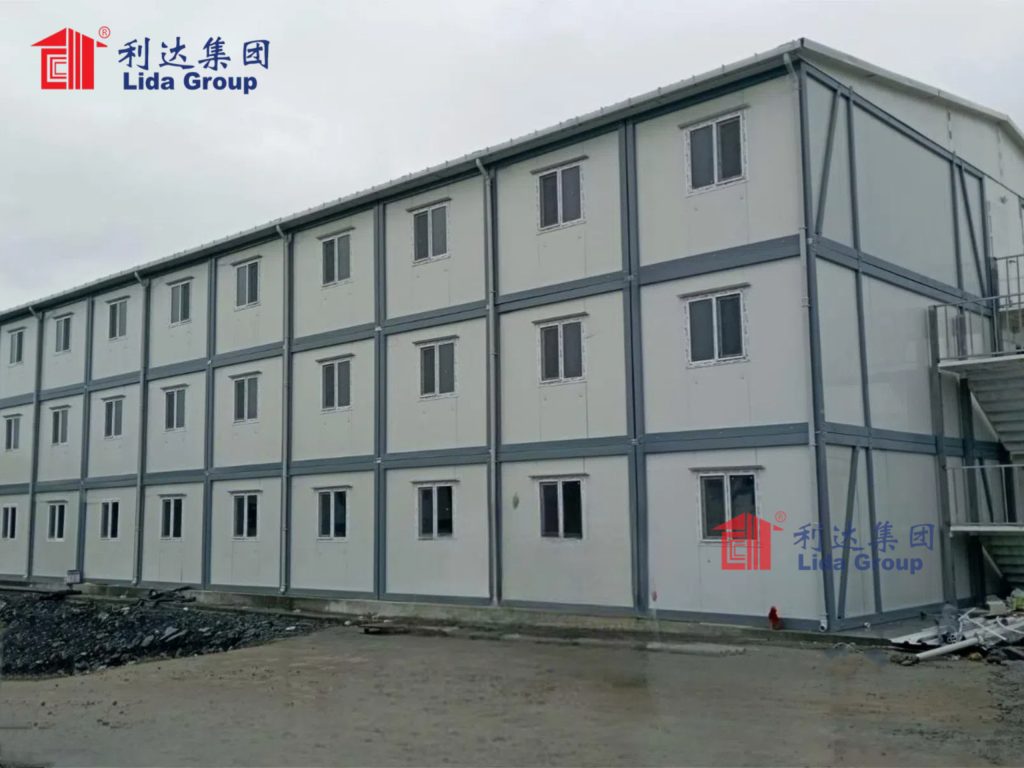
2. Limitations of Traditional Mobile Living Solutions
The upgrading of modern mobile living standards stems from the thorough improvement of the inherent defects of traditional mobile housing. Traditional temporary mobile living products represented by canvas tents and simple assembled color steel houses have obvious shortcomings in structural performance, living experience, and application flexibility, which restrict the long-term development of the mobile housing industry and solidify the low-standard stereotype of mobile living.
2.1 Low Structural Safety and Poor Environmental Adaptability
Traditional mobile housing products have extremely low structural stability and environmental resistance. Canvas tents rely on simple bracket support and canvas wrapping, with no effective wind resistance, earthquake resistance, waterproof, and anti-corrosion capabilities. They are easily damaged by strong winds, heavy rain, snow accumulation, and extreme temperature changes, and can only adapt to ultra-short-term temporary shelter in mild environments. Simple color steel temporary houses have slightly improved structural stability, but their thin single-layer plates and simplified keel structures cannot resist harsh environmental erosion such as coastal salt spray, desert wind and sand, and plateau severe cold. Problems such as wall deformation, water leakage, structural rust, and aging damage frequently occur in long-term outdoor use, bringing continuous potential safety hazards to residents.
2.2 Crude Space Design and Low Living Comfort
Traditional mobile housing always adheres to the functional priority design concept, ignoring humanized living experience. The interior space is cramped and disorderly, with unreasonable height and layout, resulting in a strong sense of depression. The lack of professional thermal insulation and sound insulation design leads to extreme indoor temperature differences, stuffy air, and serious external noise interference. In addition, traditional temporary houses have incomplete supporting facilities, single functional partitions, and no independent rest, storage, and activity spaces. The crude living environment makes mobile living synonymous with hardship and greatly reduces the happiness and sense of belonging of residents.
2.3 Rigid Application and Low Comprehensive Efficiency
Traditional temporary buildings have poor flexibility and mobility. Most color steel houses are fixed assembled structures that cannot be disassembled and moved integrally. Once the project is completed or the site is replaced, they can only be demolished and discarded, resulting in serious resource waste. Even if individual products can be disassembled, they have low reuse rate, easy component damage, and high secondary assembly costs. At the same time, the on-site assembly cycle of traditional mobile housing is long, susceptible to weather and site constraints, unable to achieve rapid deployment and dynamic scaling, and cannot adapt to the flexible and efficient operation needs of modern mobile scenarios.
2.4 Single Style and Unsustainable Development
Traditional mobile housing has a single and rigid appearance, with uniform industrial style and no aesthetic design, which cannot meet the modern aesthetic and personalized matching needs of different scenarios. In terms of environmental protection and sustainability, traditional disposable temporary buildings generate a large amount of construction waste and carbon emissions during construction and demolition, with high resource consumption and serious environmental pollution, which is incompatible with the global green and low-carbon development trend.
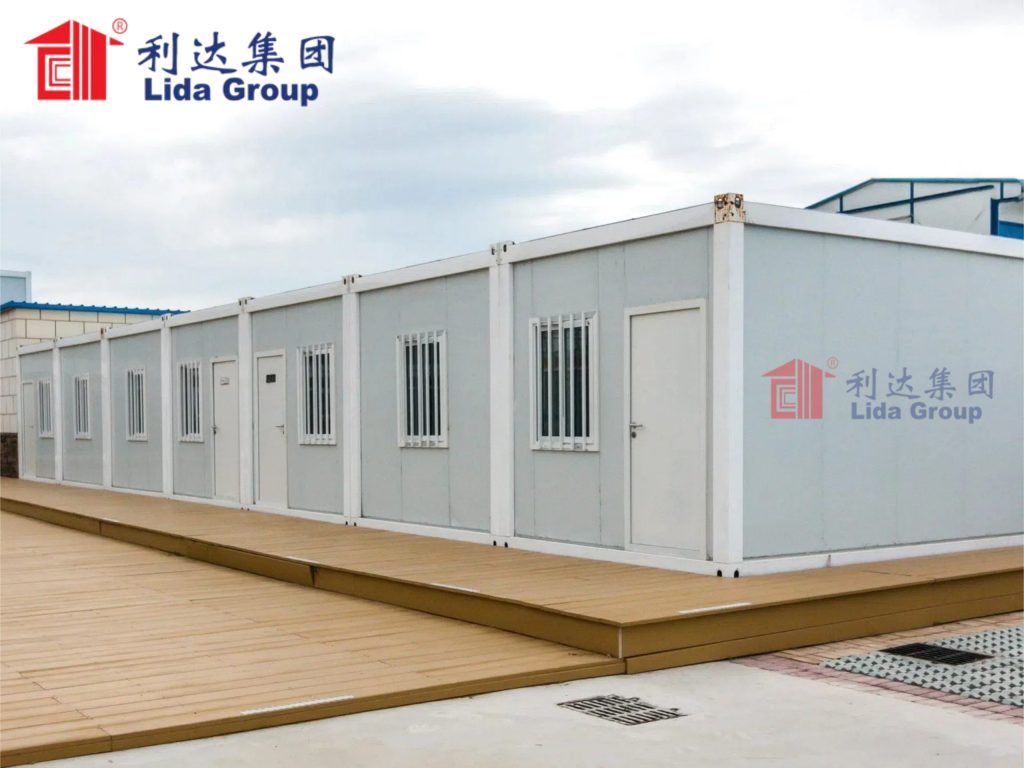
3. Core Technological Innovation: Foundation of Redefining Mobile Living Standards
Modular container houses and prefab dormitory buildings represented by Lida Group rely on breakthroughs in modular integrated construction technology and industrial standardized manufacturing, realizing comprehensive innovation in building structure, production mode, and deployment logic. These technological innovations fundamentally solve the pain points of traditional mobile living and lay a solid technical foundation for upgrading modern mobile living standards.
3.1 Factory Integrated Prefabrication Achieves Standardized Quality
Different from the unstable quality of traditional on-site manual construction, modern modular container houses and prefab dormitories adopt 95% full factory prefabrication production mode. All core links including steel frame structure welding, wall thermal insulation assembly, interior fine decoration, electrical circuit laying, and water supply and drainage pipeline debugging are completed in closed intelligent factory workshops. The standardized assembly line production completely avoids the quality deviation caused by on-site environmental interference and manual operation errors, ensuring that every building unit has consistent precision, stable performance, and reliable quality. The industrial standardized manufacturing mode realizes the transformation of mobile housing from “rough temporary construction” to “precision industrial manufacturing”.
3.2 Modular Unit Design Realizes Flexible Mobile Iteration
The core technological advantage of new mobile housing lies in standardized modular unit design and universal interface configuration. Each container and prefab dormitory unit is an independent and complete functional module with unified size, structure, and connection standards. The modules can be freely combined, horizontally spliced, and vertically stacked according to site conditions and functional needs, supporting arbitrary expansion and reduction of living space. More importantly, the fully detachable modular structure enables rapid disassembly, flat-packed transportation, and secondary assembly of buildings. A single product can be cyclically applied to multiple mobile scenarios, truly realizing “building mobility” and breaking the fixed limitations of traditional housing.
3.3 Upgraded Structural Process Improves Full-Scenario Adaptability
To adapt to complex and changeable mobile living scenarios, modern modular mobile housing adopts upgraded industrial-grade structural technology. The high-strength hot-dip galvanized steel frame greatly improves the compression resistance, wind resistance, earthquake resistance, and impact resistance of the building, enabling it to resist level 12 strong winds and magnitude 8 earthquakes. The multi-layer composite wall structure integrates fire prevention, waterproof, anti-corrosion, thermal insulation, and sound insulation functions, which can stably adapt to extreme environments such as high-temperature deserts, severe cold plateaus, humid coasts, and windy and sandy mountainous areas. The optimized structural process realizes all-weather and full-scenario safe operation of mobile housing.
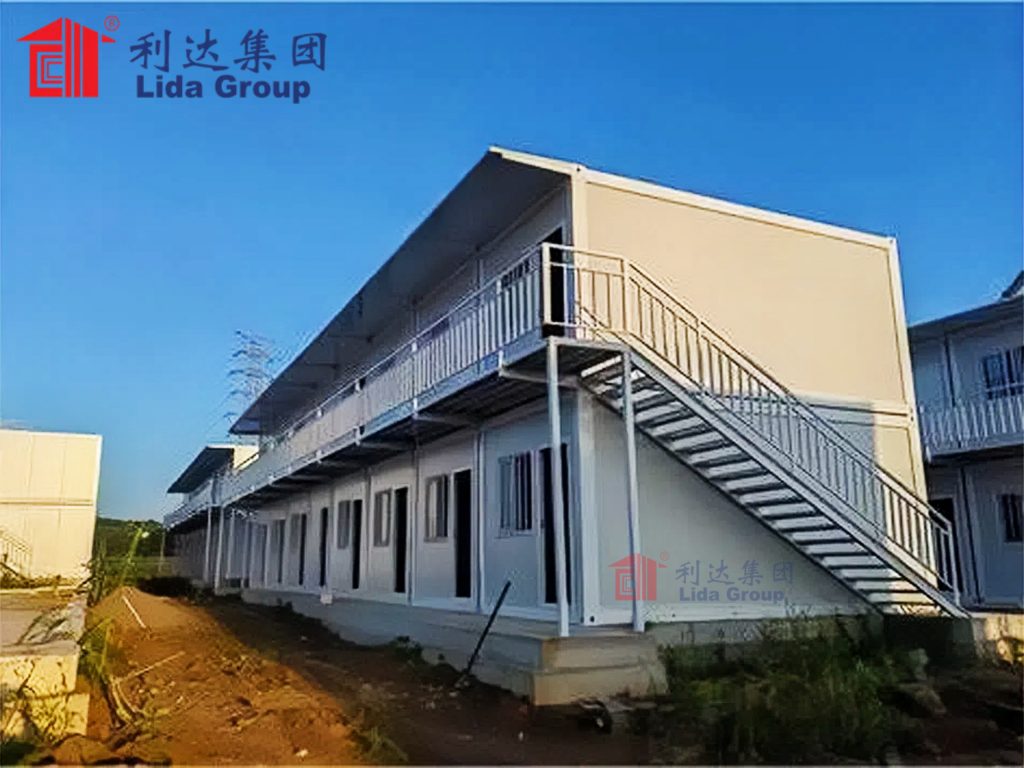
4. Multi-Dimensional Upgrading: New Standards of Modern Mobile Living
Relying on technological innovation advantages, modular container houses and prefab dormitory buildings have achieved comprehensive upgrading of safety, comfort, efficiency, aesthetics, and sustainability, forming a complete set of new modern mobile living standards that completely subvert traditional cognition.
4.1 Safety Standard Upgrade: Zero-Risk Mobile Residence
Safety is the primary bottom line of living standards, and modern modular mobile housing has established a full-link safety guarantee system. In terms of structural safety, the integral steel frame structure has passed professional mechanical performance tests, with strong stability and no collapse or deformation in extreme weather and geological environments. In terms of fire safety, all wall and decorative materials adopt A-level fireproof and flame-retardant environmentally friendly materials, which effectively block fire spread and eliminate fire hazards. In terms of electrical and water safety, standardized hidden wiring and closed pipeline design are adopted, equipped with leakage protection, overload protection, and water leakage prevention devices. The integrated lightning protection and grounding system further improves the outdoor safety performance of mobile buildings, realizing all-round zero-risk safe residence.
4.2 Comfort Standard Upgrade: Humanized High-Quality Living Experience
Breaking the crude comfort dilemma of traditional mobile housing, new modular products take humanized living as the core design principle and comprehensively upgrade the living experience. In terms of spatial comfort, the scientific ergonomic layout makes the indoor space spacious and regular, with reasonable storey height and activity area, eliminating the sense of depression of traditional temporary housing. The large-size lighting windows and scientific cross-ventilation system ensure sufficient natural light and fresh indoor air all day long. The multi-layer sound insulation and constant-temperature thermal insulation structure isolate external noise and extreme temperature changes, realizing warm winter and cool summer, quiet and comfortable indoor environment.
In terms of functional comfort, the products are pre-equipped with complete modern living supporting facilities, including independent beds, storage lockers, integrated lighting, ventilation equipment, and standardized power supply interfaces. Large-scale mobile camps can be matched with centralized bathrooms, clean toilets, leisure activity rooms, and canteen spaces according to demand, forming a complete living system. The refined interior decoration and humanized functional configuration make mobile living reach the comfort level of urban ordinary residential buildings.
4.3 Efficiency Standard Upgrade: Ultra-Fast Deployment and Dynamic Matching
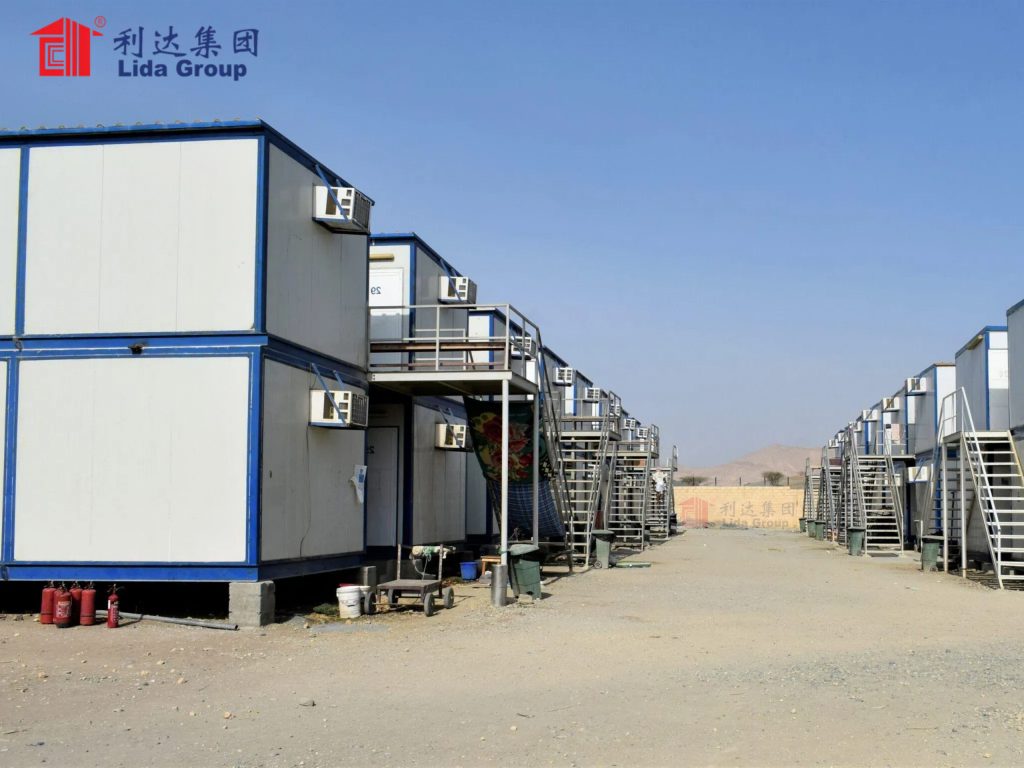
Modern mobile living puts forward high requirements for timeliness and flexibility, and modular mobile housing has established a new efficiency standard for the industry. Relying on factory prefabrication, the on-site construction cycle is shortened by more than 80% compared with traditional buildings. A single standard dormitory unit can be assembled and put into use within 20 minutes, and a complete large-scale mobile living camp can be fully completed in 3 to 7 days. The ultra-fast deployment efficiency meets the urgent housing needs of emergency rescue, sudden project start-up, and rapid workforce expansion.
At the same time, the flexible modular combination mode realizes dynamic matching of housing scale and demand. Users can freely expand the living area in the peak period of project personnel and disassemble and store redundant modules in the low peak period, avoiding resource waste. The convenient flat-packed transportation mode adapts to cross-region and long-distance mobile operation, greatly improving the flexible mobility of living space.
4.4 Aesthetic and Customization Standard Upgrade: Diversified Personalized Presentation
Abandoning the single and rigid industrial appearance of traditional temporary housing, modern modular container houses and prefab dormitories support diversified aesthetic design and personalized customization. The exterior wall can be matched with a variety of colors and decorative styles, and the overall appearance is neat, fashionable, and modern, which can be perfectly integrated with engineering camps, scenic spots, urban temporary spaces, and other different scenarios. In terms of interior space, it can flexibly customize functional partitions such as independent bedrooms, office areas, meeting areas, and storage areas according to user needs, realizing personalized space design on the premise of standardized quality, meeting the dual needs of practicality and aesthetics in modern mobile living.
4.5 Sustainable Standard Upgrade: Green Circular Low-Carbon Living
New mobile living standards take green sustainability as an important core indicator. Modular mobile housing adopts 100% recyclable high-quality steel materials and pollution-free green decorative materials, with no harmful gas volatilization and no construction waste generation during the whole life cycle. The reusable modular structure has a reuse rate of more than 90%, and a single building can be cyclically used for many times, greatly reducing resource consumption and construction waste discharge. The reserved green energy interfaces such as solar power generation and rainwater collection further reduce daily energy consumption and carbon emissions, realizing low-carbon, environmentally friendly, and sustainable mobile living, and conforming to the global green building development concept.
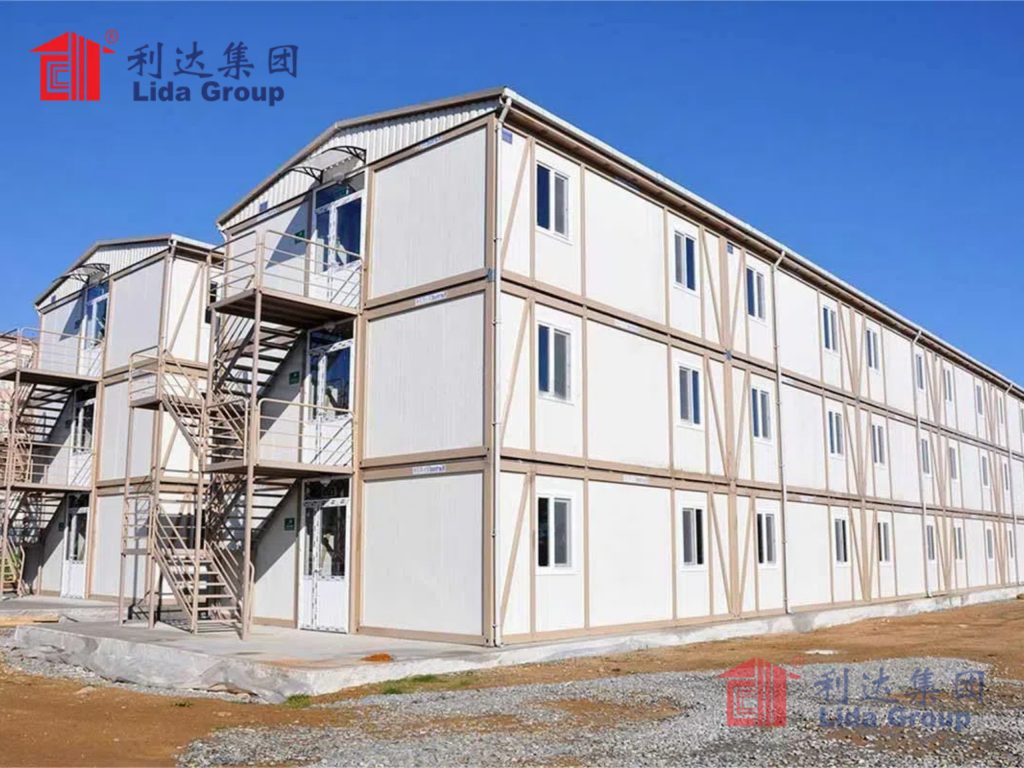
5. Diversified Scenario Empowerment: Wide Application of New Mobile Living Standards
The upgraded modern mobile living standards defined by modular container houses and prefab dormitories have strong scenario adaptability, covering engineering construction, emergency rescue, commercial operation, field operation, and other multiple fields, realizing the popularization and landing of high-quality mobile living in various scenarios.
5.1 Engineering Construction Camp Scenarios
In remote infrastructure, mining, and energy engineering projects, modular prefab dormitories replace traditional crude temporary houses to build standardized, comfortable, and safe staff living camps. The rapid deployment efficiency ensures timely settlement of construction personnel, the humanized living environment stabilizes the workforce, and the reusable performance reduces the long-term operating costs of enterprises. It completely changes the harsh living conditions of traditional engineering camps and establishes a new benchmark for standardized construction of modern engineering supporting facilities.
5.2 Emergency Rescue and Disaster Relief Scenarios
In sudden natural disasters and public emergency incidents, modular container houses rely on ultra-fast batch deployment capabilities and high safety performance to replace traditional tents as high-standard emergency resettlement housing. The safe, comfortable, and complete functional living space provides dignified and high-quality temporary living guarantee for displaced personnel and rescue workers, realizing the upgrading of emergency housing from “simple refuge” to “humanized resettlement” and improving the standard of modern social emergency guarantee.
5.3 Commercial Mobile Operation Scenarios
In scenic spot homestays, temporary commercial stores, mobile exhibition halls, and other commercial scenarios, the fashionable appearance, flexible combination, and comfortable space of modular mobile housing meet commercial operation standards. The low investment cost and flexible mobile characteristics enable commercial projects to achieve rapid launch and dynamic adjustment, creating a new model of high-quality mobile commercial space and expanding the application boundary of modern mobile living standards.
5.4 Field Exploration and Scientific Research Scenarios
For field geological exploration, scientific research monitoring, and border defense duty that require long-term mobile field operations, modular mobile housing adapts to harsh field environments with excellent environmental adaptability, and provides stable, safe, and comfortable long-term living and office space for field operators, solving the long-term living difficulties of field mobile operations.
6. Industrial Value and Future Development Trend
The comprehensive upgrading of mobile living standards driven by modular container houses and prefab dormitory buildings has profound industrial and social value. From the perspective of industrial development, it breaks the low-end and backward development pattern of the traditional mobile housing industry, promotes the transformation of the industry from extensive disposable construction to intensive circular green development, and drives the overall upgrading of modular building technology, production standards, and service modes. It makes mobile housing no longer a low-end auxiliary product, but a high-quality, high-value, and sustainable modern building form, injecting new vitality into the development of the global prefabricated construction industry.
From the perspective of social value, the new mobile living standards greatly improve the living quality of mobile groups such as engineering workers, disaster-affected personnel, and field operators, reflect humanistic care in social construction and engineering operation, and stabilize workforce and social order. At the same time, the green and low-carbon circular development mode effectively reduces construction resource consumption and environmental pollution, helping global construction industry achieve carbon peaking and carbon neutrality goals.
In the future, with the continuous progress of intelligent construction technology and the continuous expansion of mobile living demand, modular mobile housing will further develop towards intelligence, customization, and high integration. Intelligent temperature control, intelligent security, and remote monitoring systems will be fully popularized in mobile housing, and the functional integration of living, office, and leisure will be further improved. Modular container houses and prefab dormitories will become the mainstream choice for global mobile living and fully popularize the new high-standard mobile living model.
7. Conclusion
For a long time, the global mobile living field has been trapped in the low-standard dilemma of safety risks, poor comfort, low efficiency, and unsustainability. Traditional temporary housing products solidify the public’s inherent cognition that mobile living is equal to low-quality living, which restricts the high-quality development of the mobile housing industry. The emergence of modern modular container houses and prefab dormitory buildings completely reverses this situation and successfully redefines the new standards of modern mobile living with technological innovation and comprehensive performance upgrading.
Through factory standardized prefabrication, flexible modular combination, upgraded safety and comfort performance, diversified aesthetic customization, and green circular sustainable development, the new mobile housing solutions realize comprehensive breakthroughs in safety bottom line, living experience, deployment efficiency, scenario adaptability, and environmental protection performance. It not only solves various pain points of traditional mobile living but also builds a set of high-quality, efficient, flexible, and sustainable modern mobile living system, covering engineering camps, emergency rescue, commercial operations, and field work scenarios, bringing revolutionary changes to the global mobile living field.
In the future, as modular prefabricated building technology continues to mature and market demand continues to expand, high-standard modular mobile housing will completely replace traditional temporary buildings and become the mainstream form of mobile living. Continuously optimized and upgraded modular container and prefab dormitory solutions will further lead the iterative upgrading of global mobile living standards, promote the green, efficient, and high-quality development of the construction industry, and provide more high-quality and reliable mobile living guarantee for all walks of life worldwide.
Related news
-
Sustainable Living Container House by Lida Group Ideal for Emergency and Temporary Housing
2026-06-29 16:49:27
-
Lida Group Completes Major Prefab Container Dormitory Building Project on Schedule
2026-06-29 16:43:41
-
Expand Camp Capacity with Modular Container House and Prefab Dormitory Solutions
2026-06-29 16:32:57
contact us
- Tel: +86-532-88966982
- Whatsapp: +86-13793209022
- E-mail: sales@lidajituan.com
