



Expand Camp Capacity with Modular Container House and Prefab Dormitory Solutions
2026-Jun-29 16:32:57
By Admin
1. Introduction: The Pressing Need for Rapid Camp Capacity Expansion in Modern Projects
Global construction, mining, energy exploration, infrastructure upgrade, and emergency engineering projects are characterized by dynamic workforce scaling and phased construction cycles. In the peak construction stage of large-scale projects, the number of on-site workers, technical personnel, and management teams often surges rapidly within a short period, bringing severe pressure on the carrying capacity of traditional on-site camps. Most conventional temporary camps are designed according to the initial small-scale staffing demand, with fixed building layout, limited accommodation space, and rigid functional partitions. Once the project enters the peak construction period, the original camp facilities cannot accommodate the expanded workforce, resulting in overcrowded dormitories, insufficient supporting facilities, and disorderly on-site living arrangements.
The lag of camp capacity expansion has become a key bottleneck restricting project progress and workforce stability. Many engineering enterprises still adopt traditional expansion methods such as adding simple color steel houses and makeshift tents to cope with personnel surge. However, these temporary makeshift solutions have obvious defects: slow on-site construction speed, poor structural safety, low living comfort, and non-reusability. Complex foundation treatment, material transportation, and on-site assembly processes make traditional camp expansion require weeks of construction time, which cannot match the rapid growth of project staffing. In addition, the disorderly added temporary buildings will damage the overall planning of the camp, cause chaotic functional zoning, and bring potential safety hazards such as fire risks and personnel congestion.
In addition to peak staffing expansion demands, remote engineering projects, seasonal construction tasks, and post-disaster emergency resettlement projects also put forward high requirements for flexible camp capacity adjustment. Traditional fixed camps can only be built once and used for a long time, unable to shrink with the reduction of project personnel after the peak period, resulting in serious resource waste and idle assets. This rigid camp construction mode with poor flexibility and low expansion efficiency is no longer adapted to the efficient and refined management needs of modern engineering projects.
As a global leading provider of modular prefabricated building solutions, Lida Group targets the pain points of slow expansion, poor flexibility, high cost, and low safety in traditional camp capacity upgrading. It launches professional modular container house and prefab dormitory integrated expansion solutions, providing fast, flexible, safe, and scalable camp capacity upgrading services for global engineering camps. With standardized modular design, ultra-fast on-site assembly, flexible space combination, and reusable assets advantages, Lida’s solutions realize rapid expansion, dynamic adjustment, and standardized upgrading of on-site camps, helping engineering projects efficiently cope with dynamic workforce changes and improve the overall standardized management level of camps.
2. Deficiencies of Traditional Camp Capacity Expansion Methods
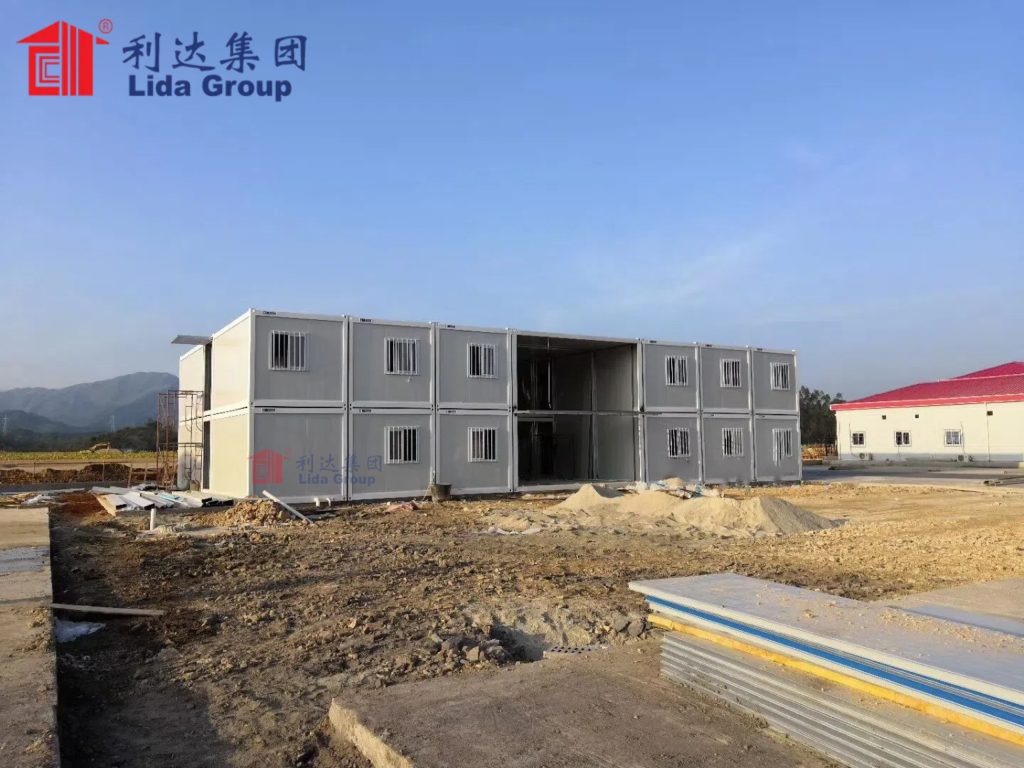
To fully reflect the advantages of Lida Group’s modular camp expansion solutions, it is necessary to systematically sort out the inherent deficiencies of traditional camp capacity expansion modes. These long-standing problems have restricted the efficient operation and standardized upgrading of engineering camps and increased the comprehensive management costs and safety risks of projects.
2.1 Slow Expansion Speed Fails to Match Dynamic Workforce Growth
Traditional camp expansion mainly relies on on-site assembled color steel temporary houses and brick-built auxiliary houses. The whole process involves site clearing, foundation pouring, raw material transportation, on-site welding assembly, interior decoration, and pipeline laying, with complex construction procedures and long cycle. Even a small-scale camp capacity expansion project requires 15 to 30 days of on-site construction time. For engineering projects with sudden personnel surge and tight construction schedules, the slow expansion speed leads to delayed staff accommodation, forcing many workers to live in overcrowded dormitories or temporary tents, seriously affecting rest quality and work efficiency, and restricting the progress of peak construction tasks.
2.2 Rigid Layout Causes Confused Camp Functional Zoning
Traditional temporary expansion buildings adopt non-standard customized construction, with inconsistent building specifications and disorderly layout. Most expansion facilities are randomly built in the spare space of the original camp, without overall scientific planning, resulting in mixed functional areas of accommodation, office, dining, and storage. The chaotic camp layout not only reduces the overall aesthetics and standardization of the project camp but also causes problems such as blocked pedestrian flow, inconvenient daily life, and difficult on-site management. In addition, the inconsistent structural standards and facility configurations of new and old buildings increase the difficulty of unified camp management and daily maintenance.
2.3 Poor Safety and Low Living Comfort
In order to save costs and speed up progress, traditional expanded temporary buildings often adopt low-cost inferior materials and simplified construction processes, with unqualified structural stability, fire resistance, and weather resistance. Most makeshift expansion houses have poor wind resistance, earthquake resistance, and waterproof performance, and are prone to water leakage, structural deformation, and material aging in harsh outdoor environments. At the same time, the lack of effective thermal insulation, sound insulation, and ventilation design leads to poor indoor living comfort, stuffy air, and noisy environment, which cannot meet the long-term living needs of on-site staff.
2.4 Disposable Construction Results in High Comprehensive Waste
Traditional camp expansion buildings are disposable temporary structures with no disassembly and reuse value. After the project peak period ends and the workforce decreases, the randomly built expansion facilities can only be demolished and discarded, generating a large amount of construction waste and causing serious waste of building materials and economic costs. Each project capacity expansion requires repeated investment in construction, resulting in high long-term comprehensive operating costs for enterprises, which is not in line with the green and low-carbon development trend of modern engineering construction.
3. Core Advantages of Lida’s Modular and Prefab Camp Expansion Solutions
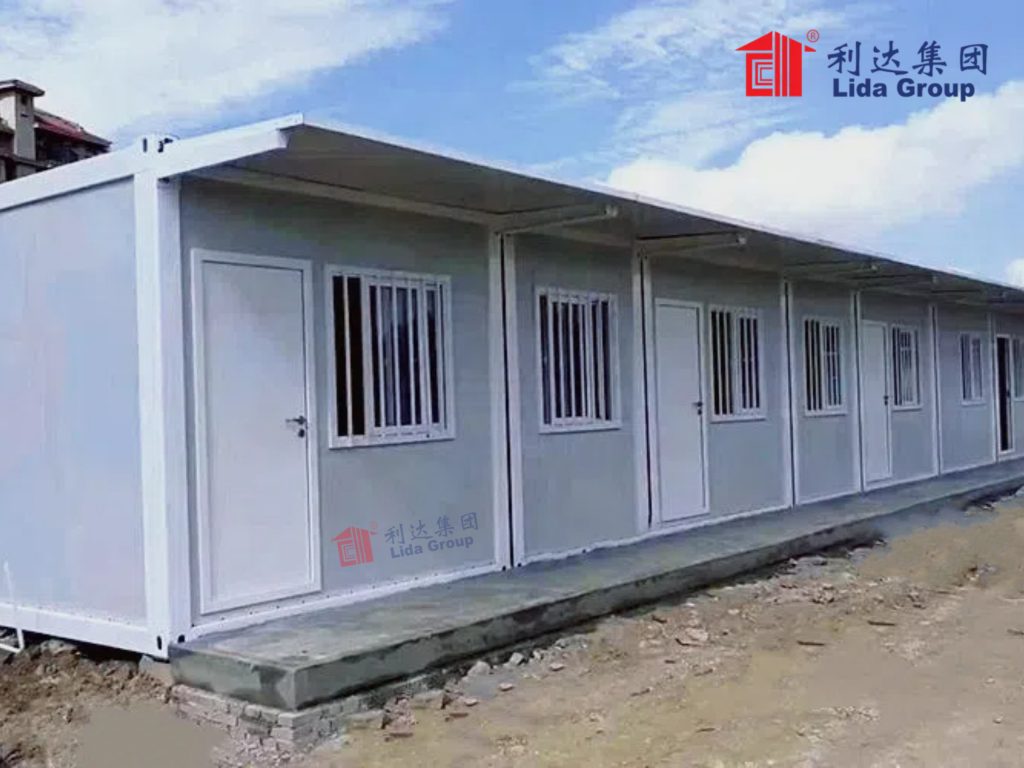
Lida Group’s modular container house and prefab dormitory expansion solutions completely subvert the traditional camp upgrading mode, taking rapid expansion, flexible scaling, standardized construction, and cyclic reuse as the core advantages, solving all pain points of traditional camp capacity upgrading in one stop. Relying on advanced modular integrated construction technology and industrial standardized production, Lida’s solutions realize efficient, safe, economical, and high-quality camp capacity expansion, becoming the optimal choice for modern engineering camp dynamic upgrading.
3.1 Ultra-Fast Deployment Realizes Zero-Cycle Capacity Expansion
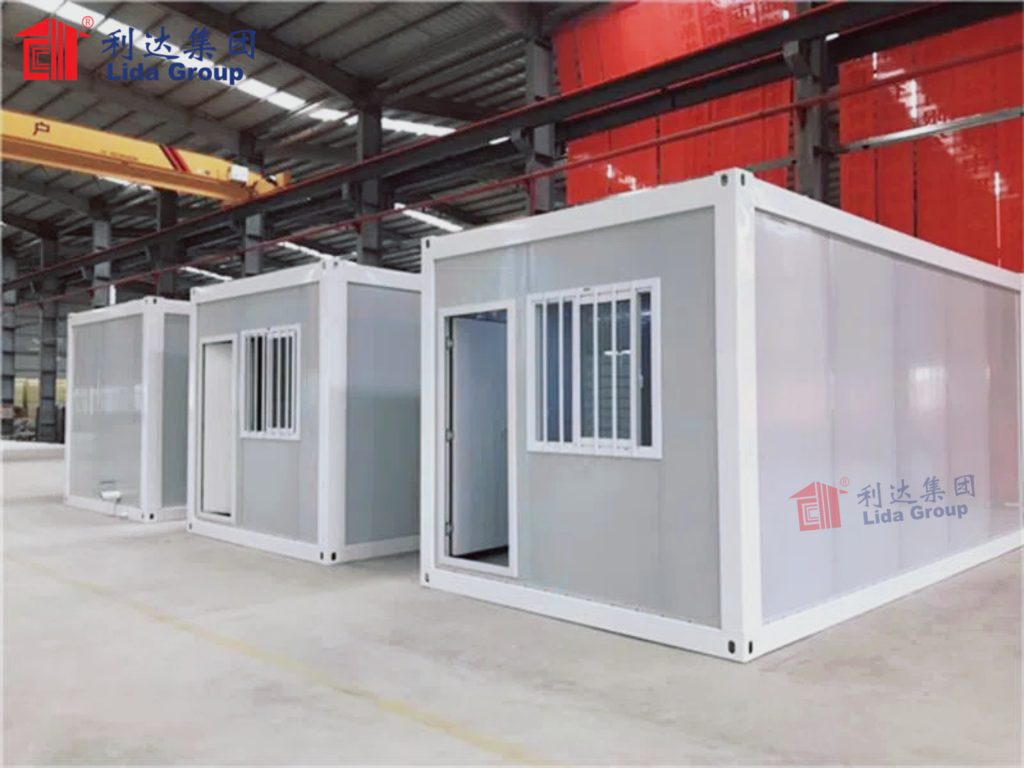
The biggest advantage of Lida’s camp expansion solutions is ultra-high construction efficiency. All modular container units and prefab dormitory components are prefabricated, decorated, and debugged in Lida’s intelligent factory workshops, with a factory prefabrication rate of over 95%. All steel structures, wall thermal insulation layers, indoor decorations, electrical circuits, and water supply and drainage systems are completed in one-time factory molding, requiring no complex on-site construction and decoration work.
During camp expansion, the finished modular units only need to be transported to the project site for rapid hoisting, positioning, and pipeline docking. A single standard prefab dormitory unit can be assembled and put into use within 20 minutes, and a large-scale camp expansion of 50 to 100 dormitory units can be completed within 3 to 7 days. Compared with the traditional expansion cycle of more than 20 days, the efficiency is increased by more than 85%, realizing rapid capacity expansion in line with project peak staffing growth, completely solving the problem of delayed staff accommodation caused by slow camp upgrading.
3.2 Flexible Modular Combination Supports Dynamic Scaling
Lida’s modular expansion products adopt unified standardized unit design and interchangeable interface specifications, with extremely flexible space combination and dynamic scaling capabilities. According to the actual staffing growth demand of the project, users can freely increase the number of single dormitory units, expand office areas, canteen facilities, and public living areas, and realize horizontal splicing and vertical stacking of modules. The modular combination mode supports arbitrary expansion of camp capacity from small-scale incremental upgrading to large-scale overall expansion.
More importantly, the solution supports two-way dynamic adjustment of camp scale. In the peak construction period, modules can be quickly added to expand camp capacity; after the peak period, redundant modular units can be disassembled and stored or transferred to other project sites, avoiding idle waste of camp facilities. This flexible scaling mode perfectly adapts to the phased and dynamic changes of engineering project staffing, realizing precise matching of camp capacity and project demand.
3.3 Standardized Construction Optimizes Overall Camp Layout
All modular container houses and prefab dormitories of Lida Group adopt unified design specifications, structural standards, and exterior and interior decoration styles. When expanding camp capacity, the new modular units can be perfectly integrated with the original camp buildings in terms of appearance, height, and functional configuration, realizing unified and standardized overall camp layout. The professional technical team will conduct overall camp planning according to the original camp terrain and functional zoning before expansion, scientifically arranging newly added dormitory areas, office areas, and public supporting facilities to ensure reasonable functional partitioning, smooth pedestrian flow, and neat overall layout of the upgraded camp.
The standardized expansion mode completely avoids the disorderly layout and inconsistent specifications of traditional makeshift expansion buildings, effectively improving the overall standardization and aesthetics of the project camp, facilitating unified daily management, safety inspection, and facility maintenance, and greatly improving the refined management level of on-site camps.
3.4 High Safety and Comfort Improve Staff Living Experience
Lida’s prefab dormitories and modular container units adopt industrial-grade high-strength hot-dip galvanized steel frame structures and A-level fireproof and flame-retardant thermal insulation wall panels, with excellent structural stability and environmental adaptability. The products can resist level 12 strong winds and magnitude 8 earthquakes, and have passed professional fireproof, waterproof, and anti-corrosion tests, completely eliminating the potential safety hazards of traditional low-quality expansion buildings. All indoor decorative materials are environmentally friendly and odor-free, meeting international health and safety standards.
In terms of living comfort, the products are equipped with multi-layer sound insulation and constant-temperature thermal insulation structures, scientific ventilation and large-size lighting windows, and complete modern living supporting facilities. The indoor space is spacious and regular, with reasonable layout of beds, storage lockers, and power supply interfaces, creating a safe, quiet, and comfortable living environment for staff. The standardized public supporting facilities such as bathrooms, canteens, and activity rooms can be expanded synchronously with the dormitory area, realizing simultaneous upgrading of camp capacity and living quality.
3.5 Reusable Modular Design Reduces Long-Term Costs
Different from disposable traditional expansion buildings, Lida’s modular camp expansion units adopt fully detachable structural design, with a reuse rate of more than 90%. After the completion of the project or the end of the peak staffing period, all expanded modular units can be completely disassembled, flat-packed, transported, and reused in other new project camps. A single set of modular units can be cyclically used in 4 to 6 different engineering projects, realizing asset recycling and repeated value creation.
This reusable expansion mode completely eliminates the construction waste and material waste caused by traditional disposable expansion, greatly reducing the repeated construction investment and long-term comprehensive operating costs of enterprises. In addition, the products have a service life of more than 15 years, with low daily maintenance costs and stable performance, bringing extremely high long-term cost performance for camp capacity expansion.
4. Diversified Expansion Modes to Adapt to Different Project Demands
Lida Group formulates targeted camp capacity expansion schemes according to different project scales, expansion demands, and site conditions, providing diversified modular upgrading modes to meet the personalized needs of various engineering camps.
4.1 Incremental Single-Layer Expansion for Small-Scale Staff Surge
For small and medium-sized projects with temporary small-scale staff surge, Lida Group adopts single-layer modular incremental expansion mode. On the basis of the original camp layout, standard single-layer prefab dormitory units are added in the spare space to rapidly supplement accommodation capacity. This expansion mode has low site requirements, fast assembly speed, and no need for large-scale site transformation, which can complete capacity upgrading in the shortest time and is suitable for short-term seasonal construction and temporary staffing increase scenarios.
4.2 Multi-Story Superimposed Expansion for Limited Site Camps
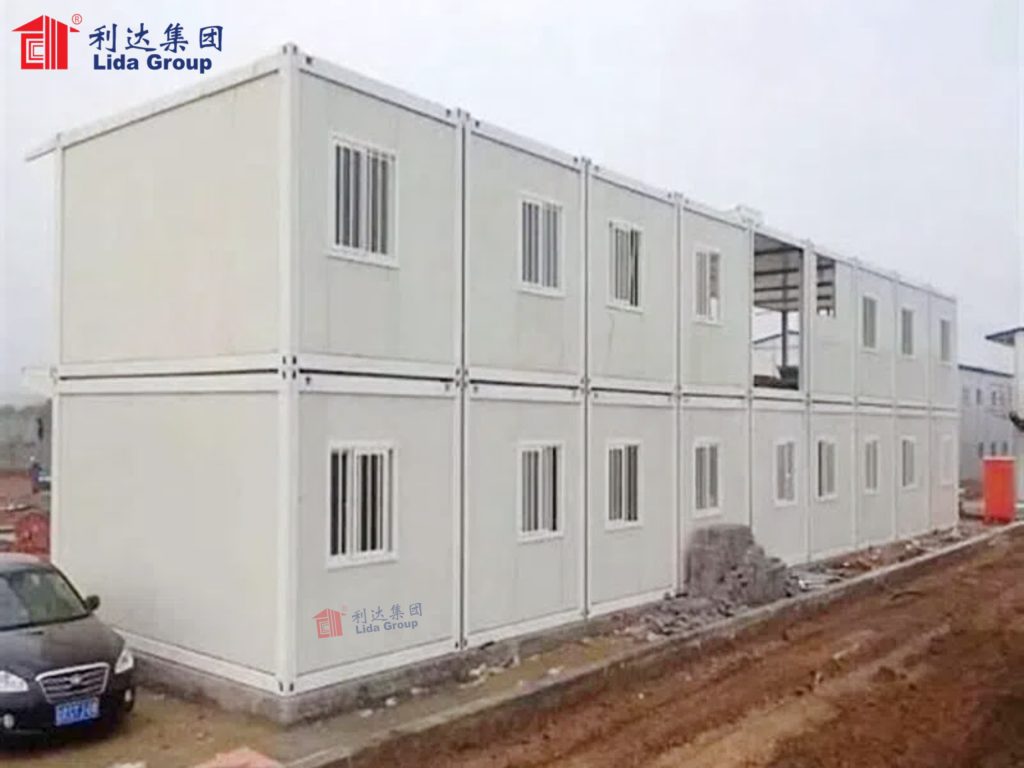
For urban engineering camps and remote camps with limited land area and no spare space for horizontal expansion, Lida Group provides multi-story superimposed modular expansion solutions. The high-strength modular units support 2 to 3 layers of safe stacking, which can vertically expand camp space without occupying additional land resources, greatly improving the land utilization rate and camp carrying capacity. The multi-story expansion scheme is equipped with standardized safe staircases, protective railings, and lightning protection systems to ensure the safety of multi-layer camp operation, which is the optimal solution for site-constrained camp capacity upgrading.
4.3 Overall Integrated Expansion for Large-Scale Peak Projects
For large-scale infrastructure, mining, and energy projects with massive workforce surge in the peak construction period, Lida Group adopts overall integrated camp expansion mode. According to the overall demand of the project, a complete new modular camp area is built in a unified manner, including centralized dormitory groups, expanded office areas, standardized canteens, supporting bathroom areas, and staff activity spaces. The overall expansion realizes synchronous upgrading of camp accommodation capacity, office conditions, and living supporting facilities, meeting the long-term high-standard operation needs of large-scale peak projects.
5. Practical Application Value and Project Benefits
Lida Group’s modular container house and prefab dormitory camp expansion solutions bring multi-dimensional practical value and economic benefits to engineering project operation and camp management, effectively solving various problems in traditional camp upgrading.
In terms of project schedule guarantee, ultra-fast modular expansion efficiency realizes synchronous upgrading of camp capacity and project staffing growth, ensuring timely accommodation of peak workforce, avoiding construction delay caused by lagging camp supporting facilities, and effectively guaranteeing the smooth progress of project peak construction tasks.
In terms of workforce stability, the standardized, safe, and comfortable expanded camp environment significantly improves staff living experience and job satisfaction, effectively reducing workforce turnover caused by poor accommodation conditions, stabilizing the on-site construction team, and improving overall work efficiency and construction quality.
In terms of project management upgrading, the unified and standardized modular expansion mode optimizes the overall camp layout, realizes standardized and refined camp management, reduces potential safety hazards and management difficulties, and improves the overall image and standardized construction level of engineering projects.
In terms of economic and environmental benefits, the reusable modular expansion mode avoids repeated construction investment and construction waste generation, greatly reduces the long-term comprehensive operating costs of enterprises, and conforms to the global green construction and low-carbon environmental protection development concept, realizing the organic unity of project economic benefits and social environmental benefits.
6. Conclusion
In the dynamic operation process of modern engineering projects, the flexible expansion and dynamic upgrading of on-site camp capacity is an important guarantee for stable workforce and efficient project progress. Traditional camp capacity expansion modes, which are slow in construction, rigid in layout, poor in safety and comfort, and high in waste cost, can no longer adapt to the efficient and refined development needs of modern engineering construction.
Lida Group’s modular container house and prefab dormitory solutions completely innovate the traditional camp upgrading mode, relying on ultra-fast deployment efficiency, flexible dynamic scaling capability, standardized overall layout optimization, high-standard safety and comfort configuration, and cyclic reusable economic advantages. The solutions can quickly respond to the sudden surge and phased changes of project workforce, realize rapid, safe, standardized, and low-cost expansion of camp capacity, and solve the industry pain points of lagging camp supporting facilities and difficult dynamic matching.
With the continuous development of global engineering construction towards high efficiency, standardization, and green sustainability, flexible modular camp expansion will become the mainstream development trend of engineering camp construction and upgrading. In the future, Lida Group will continue to optimize modular building technology and camp planning schemes, further improve the flexibility, intelligence, and cost performance of camp expansion solutions, and provide more efficient, reliable, and economical capacity expansion and upgrading services for global engineering camps, empowering the high-quality development of the global construction and engineering industry.
Related news
-
Lida Group's Living Container House Combines Affordability with Modern Amenities
2026-06-29 16:27:56
-
Efficient Prefab Container Dormitory Building Now Available for Remote Project Sites
2026-06-29 15:21:13
-
Lida Group Delivers Modular Container House for Construction and Mining Camps Worldwide
2026-06-29 15:10:39
contact us
- Tel: +86-532-88966982
- Whatsapp: +86-13793209022
- E-mail: sales@lidajituan.com
