



Efficient Prefab Container Dormitory Building Now Available for Remote Project Sites
2026-Jun-29 15:21:13
By Admin
1. Introduction: The Housing Dilemma of Modern Remote Engineering Projects
Global infrastructure expansion, mineral resource exploitation, energy facility construction, and cross-border engineering projects are increasingly extending into remote and geographically isolated regions. These project sites are commonly located in mountainous areas, desert zones, remote plateaus, and uninhabited coastal wilderness, where urban supporting infrastructure is extremely scarce. Unlike urban construction projects with complete residential, transportation, and living facilities, remote project operations face a fundamental and urgent challenge: providing reliable, timely, and livable staff accommodation for on-site construction and operation teams.
For decades, remote project sites have relied on two traditional temporary housing solutions: simple canvas tents and crude on-site assembled color steel houses. Both options have obvious inherent defects that restrict project efficiency and workforce stability. Tents feature extremely low structural stability, poor weather resistance, and zero thermal insulation performance, failing to resist strong winds, heavy rainfall, extreme high temperatures, and severe cold. They can only meet the most basic temporary shelter needs and cannot support long-term staff residence. Traditional color steel temporary houses require lengthy on-site construction, complex foundation treatment, and massive manual assembly work. In remote areas with inconvenient transportation and harsh construction conditions, transporting building materials and organizing on-site construction consumes enormous time and economic costs, seriously delaying project preparation progress.
Furthermore, traditional temporary housing suffers from low reusability, poor living comfort, insufficient safety performance, and high long-term maintenance costs. Cramped indoor spaces, poor sound and thermal insulation, incomplete supporting facilities, and unstable structural quality lead to low staff satisfaction and high workforce turnover. Frequent personnel replacement increases project recruitment and training costs, indirectly reducing construction efficiency and bringing potential safety risks to engineering operations. As global engineering projects become larger in scale, longer in cycle, and more demanding in standardized management, the industry is in urgent need of a new generation of efficient, durable, comfortable, and reusable temporary housing solutions tailored for remote sites.
To solve the long-standing accommodation bottleneck of remote projects, Lida Groupofficially launches its high-efficiency prefab container dormitory buildings specially optimized for remote project scenarios. Built on advanced Modular Integrated Construction (MiC) technology and 30 years of modular building R&D and engineering experience, this new product realizes factory integral prefabrication, ultra-fast on-site assembly, all-weather environmental adaptation, and humanized living optimization. It completely subverts the backward mode of traditional remote temporary housing, providing standardized, efficient, and cost-effective staff dormitory solutions for global remote construction, mining, energy, and exploration projects.
2. Core Deficiencies of Traditional Remote Site Accommodation Solutions
To fully demonstrate the innovative value of Lida Group’s efficient prefab container dormitories, it is essential to systematically analyze the core deficiencies of traditional remote site housing. These pain points have long plagued the sustainable operation of remote engineering projects and become key factors restricting the improvement of on-site management standards.
First and foremost is the extremely low construction efficiency. Traditional temporary houses require complete on-site construction processes including foundation leveling, material transportation, wall assembly, pipeline laying, and interior decoration. In remote areas with harsh terrain and inconvenient logistics, the whole construction cycle often lasts two to four weeks, and complex extreme weather may further delay the progress. The slow housing construction speed leads to delayed staff settlement, resulting in idle engineering equipment and stagnant preliminary work, causing invisible economic losses for projects.
Secondly, traditional housing has poor environmental adaptability and low structural durability. Most ordinary temporary color steel houses adopt thin single-layer plates and simple keel structures, with weak wind resistance, earthquake resistance, and corrosion resistance. In desert windy and sandy areas, wall panels are prone to deformation and sand penetration; in high-temperature tropical areas, ordinary insulation materials fail to block heat, leading to extremely high indoor temperature; in alpine and humid coastal areas, structural rust, water leakage, and wall mildew frequently occur. Most traditional temporary houses can only maintain normal use for two to three years, with frequent maintenance and replacement required during the project cycle.
Thirdly, poor living comfort severely affects workforce stability. Traditional temporary dormitories have unreasonable spatial layout, dense bed arrangement, narrow activity space, and poor ventilation and lighting conditions. The lack of effective sound insulation leads to serious noise interference from construction sites and adjacent dormitories. In addition, most remote temporary camps lack standardized bathrooms, laundry areas, and leisure facilities, resulting in poor staff living experience, low work enthusiasm, and high turnover rate, which directly affects the continuity and stability of engineering construction.
Finally, traditional temporary housing has poor economic and environmental benefits. Most traditional temporary buildings are disposable structures that cannot be disassembled and reused after project completion, generating a large amount of construction waste and resource waste. Enterprises need to repeatedly invest in housing construction for different projects, resulting in high comprehensive long-term operating costs and failing to meet the global green construction and low-carbon development requirements.
3. Core Design and Efficient Manufacturing Advantages of Lida Prefab Container Dormitories
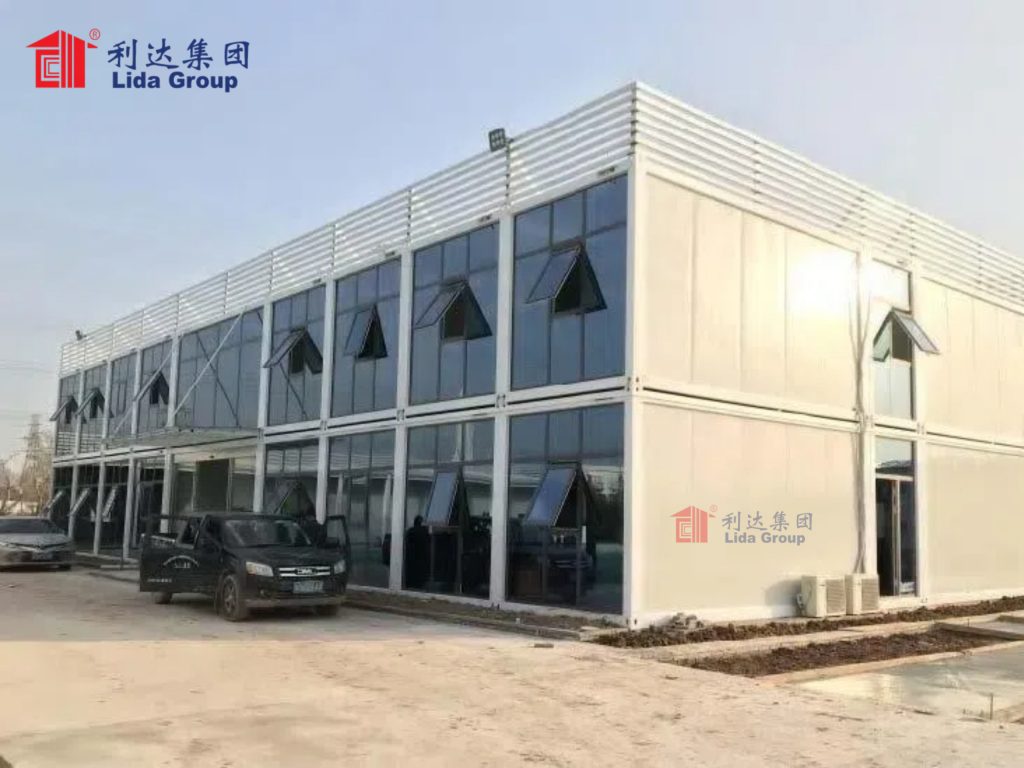
Lida Group’s new prefab container dormitories take “high efficiency, remote adaptation, durability, and humanization” as the core design orientation, adopting a full factory prefabrication and modular integrated construction mode that fundamentally solves various pain points of traditional remote accommodation. The factory prefabrication rate of the product reaches over 90%, covering steel structure framework, wall thermal insulation system, interior decoration, electrical circuits, water supply and drainage pipelines, and door and window installation, realizing one-time integral molding in the factory.
Different from on-site assembled temporary buildings, all production links of Lida’s container dormitories are completed in standardized, closed, and intelligent factory workshops, free from the influence of external weather, terrain, and environmental factors. The professional quality inspection system strictly controls product precision and performance, avoiding the problems of uneven quality and unqualified construction caused by manual on-site operation of traditional buildings. Standardized modular unit design ensures high interchangeability and combination flexibility of all products, laying a foundation for rapid on-site assembly and flexible camp layout.
In terms of transportation efficiency tailored for remote scenarios, the product supports flat-packed and integral dual transportation modes. The flat-packed design can compress the transportation volume to one-third of the integral state, greatly improving the loading capacity of a single vehicle, effectively reducing long-distance cross-border and mountain road logistics costs, and solving the transportation difficulty of building materials and integral houses in remote areas. Each standardized module has unified size and interface specifications, which is convenient for container vehicle transportation and container ship maritime transportation, adapting to diverse remote project transportation conditions worldwide.
The most prominent advantage of the product is ultra-fast on-site deployment efficiency. After being transported to the remote project site, the prefab container dormitories require no complex foundation treatment, on-site welding, painting, or decoration work. Professional construction workers can complete the assembly, positioning, and pipeline docking of a single dormitory unit within 20 minutes, and a complete medium-sized staff dormitory camp can be fully built and put into use within 5 days. Compared with traditional temporary building construction cycles, the efficiency is increased by more than 70%, enabling remote projects to complete staff settlement and camp layout in the shortest time and start construction work in advance.
4. All-Weather Durability and Safety Performance Adapted to Remote Harsh Environments
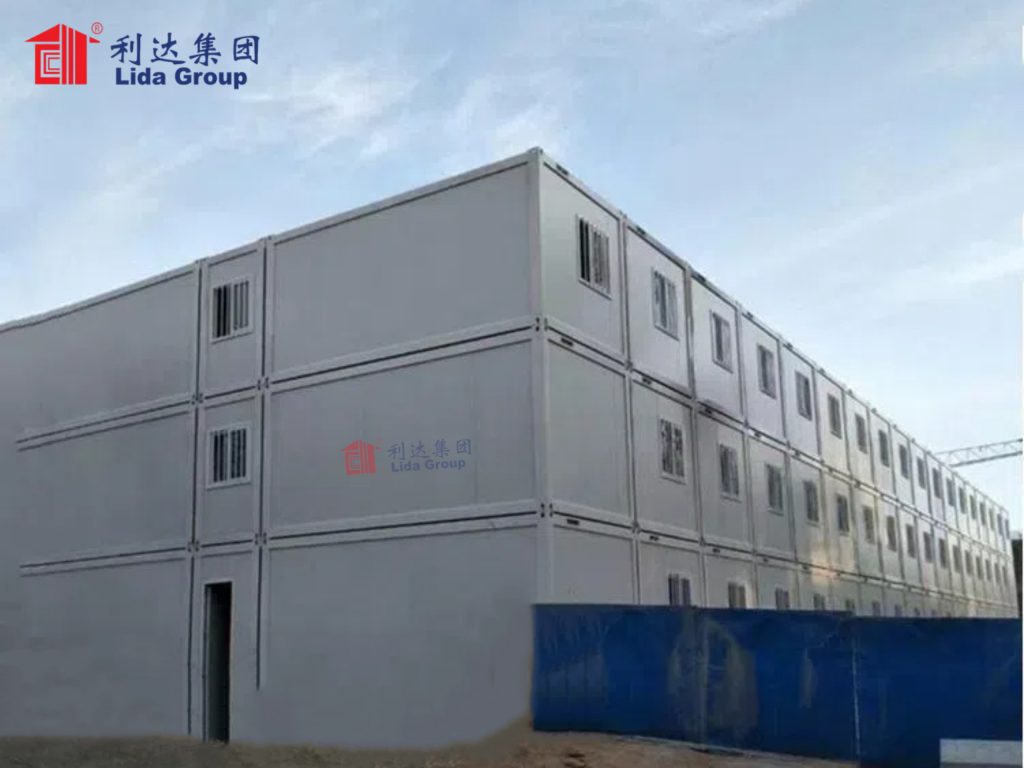
Remote project sites are characterized by complex and changeable climatic and geological conditions, which put forward extremely high requirements for the structural safety and environmental adaptability of dormitory buildings. Lida Group’s prefab container dormitories adopt industrial-grade high-strength hot-dip galvanized steel frame as the main load-bearing structure, with excellent compression resistance, impact resistance, wind resistance, and earthquake resistance. The overall structure can resist magnitude 8 earthquakes and level 12 strong winds, fully meeting the high safety standards of remote engineering camps.
Aiming at diverse extreme environments worldwide, the product achieves targeted performance optimization. For high-temperature desert remote projects, the wall adopts high-density polyurethane composite thermal insulation materials with a heat transfer coefficient as low as 0.35 W/(㎡·K), which effectively isolates external high temperature and keeps indoor temperature stable and cool. For severe cold plateau and alpine remote sites, the thickened rock wool thermal insulation layer prevents indoor heat loss, ensuring warm and comfortable indoor residence in low-temperature environments below minus 30 degrees Celsius. For humid and rainy coastal and mountain remote areas, the overall fully sealed waterproof structure and multi-layer anti-corrosion coating process effectively avoid water leakage, wall mildew, and steel structure rust, greatly extending the service life of the building.
In terms of safety configuration, all wall panels, decorative materials, and auxiliary accessories of the dormitory adopt A-level fireproof and flame-retardant environmentally friendly materials, with no harmful gas volatilization, meeting international occupational health and safety standards. The standardized indoor circuit layout is equipped with leakage protection and overload protection devices to avoid circuit safety hazards caused by long-term use and complex on-site power consumption. The integrated lightning protection and grounding system effectively prevents lightning strike risks in open remote areas, providing all-round safety protection for staff residence.
With excellent anti-aging and wear-resistant performance, the product has a stable service life of more than 15 years under normal use conditions. It can adapt to long-term outdoor exposure and harsh environmental erosion of remote projects, avoiding frequent maintenance and replacement problems of traditional temporary houses, greatly reducing the later operation and maintenance costs of remote camps.
5. Humanized Comfort Design Optimized for Long-Term Remote Residence
Long-term remote field work brings great physical and mental pressure to staff, and comfortable living environment is an important guarantee to stabilize workforce and improve work efficiency. Lida Group abandons the crude design of traditional temporary dormitories and carries out humanized refinement design from spatial layout, environmental optimization, and functional configuration, fully considering the long-term residence needs of on-site staff.
In terms of spatial design, the prefab container dormitory adopts a scientific ergonomic layout with spacious and regular indoor space, reasonable house height, and no redundant structural barriers. According to project scale and management needs, it can be flexibly customized into 2-person, 4-person, and 6-person dormitory layouts, balancing accommodation density and personal activity space. Each dormitory is equipped with independent beds, anti-rust storage lockers, writing desks, and special socket interfaces, providing staff with independent rest and private storage space, avoiding the crowded and messy state of traditional dormitories.
In terms of environmental comfort optimization, the product is equipped with multi-layer composite sound insulation structure and high-transmittance lighting windows. The efficient sound insulation layer can effectively isolate external construction noise, wind and sand noise, and adjacent room noise, creating a quiet rest environment for staff. The large-size lighting windows ensure sufficient natural light indoors during the day, improving the indoor sense of spaciousness and comfort. The scientific cross-ventilation design and silent ventilation equipment keep the indoor air fresh and circulating all the time, effectively solving the problems of stuffy air, moisture, and peculiar smell in closed remote temporary houses.
In terms of supporting facilities, Lida Group can support the integrated matching of public functional modules according to project needs, building a complete remote camp living system. It includes standardized centralized bathrooms with all-weather hot water supply, clean public toilet areas, independent laundry rooms, staff leisure activity rooms, and material storage areas. The complete supporting facilities solve the problem of missing living guarantees in remote project sites, greatly improving staff living happiness and sense of belonging, and effectively reducing workforce turnover caused by poor living conditions.
6. Flexible Combination and High Cost-Effectiveness for Remote Project Operation
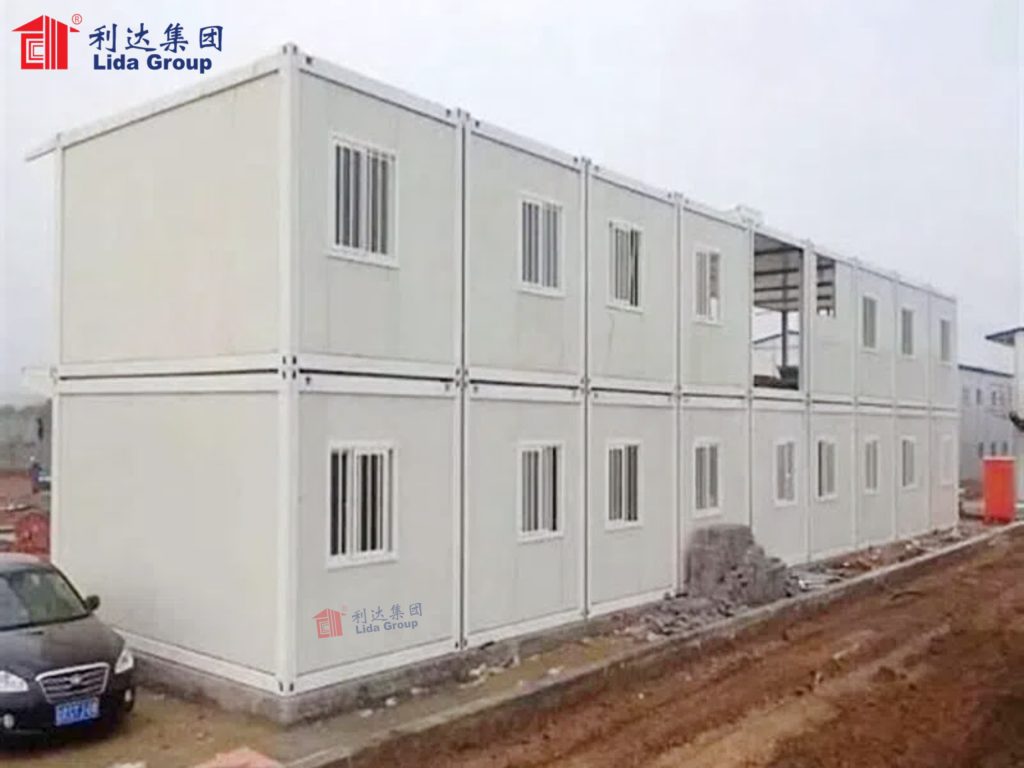
Remote engineering projects have prominent phased and dynamic characteristics, with continuous changes in staff scale and functional demand in different construction stages. Lida Group’s prefab container dormitories have highly flexible modular combination capabilities, which can freely realize horizontal splicing and vertical stacking of single modules. Users can flexibly expand or reduce the number of dormitory units according to the dynamic changes of project construction progress and staff size, realizing dynamic matching of camp scale and project demand, and avoiding resource waste caused by fixed-scale traditional buildings.
The excellent reusable performance is another core advantage of the product adapted to remote project operations. Different from disposable traditional temporary houses, Lida’s prefab container dormitories adopt a fully detachable integrated structure. After the completion of a single remote project, all modules can be completely disassembled, flat-packed and transported to the next project site for secondary assembly and use, with a reuse rate of more than 90%. A single set of container dormitories can be cyclically applied to 4 to 6 different remote projects, greatly reducing the repeated construction investment of enterprises and optimizing the asset utilization rate of engineering equipment and facilities.
In terms of comprehensive cost performance, although Lida’s prefab container dormitories adopt high-standard durable materials and advanced manufacturing technology, their full-life-cycle economic benefits are far higher than traditional temporary housing. The ultra-fast deployment efficiency shortens the project preparation cycle and reduces the idle loss of engineering machinery and personnel. The low daily maintenance cost and long service life save a large amount of later maintenance funds for enterprises. The reusable cyclic use mode greatly reduces the average annual use cost, helping remote engineering projects save more than 40% of comprehensive temporary housing costs throughout the project cycle.
In addition, the factory prefabrication and on-site assembly mode produces no construction waste, dust pollution, and noise pollution during the construction process, which will not damage the fragile ecological environment of remote areas. It conforms to the global green construction concept and environmental protection policies of various countries, helping enterprises avoid environmental assessment risks and achieve green and sustainable project operation.
7. Wide Application Scenarios and Practical Engineering Value
Lida Group’s efficient prefab container dormitories have strong scenario adaptability and can fully meet the accommodation needs of various remote engineering projects. In remote infrastructure construction fields such as mountain highway, railway, and hydropower projects, the product’s rapid deployment and convenient transportation characteristics solve the difficulty of rapid camp construction in inaccessible mountainous areas, providing stable accommodation guarantee for road and water conservancy construction teams.
In remote mining and energy development projects including desert open-pit mines, plateau energy bases, and offshore wind power supporting projects, the product’s all-weather environmental adaptability can cope with extreme working conditions such as desert high temperature, plateau severe cold, and coastal salt spray corrosion, providing long-term safe and comfortable residence for mining and energy operation teams. In field exploration, geological survey, and remote scientific research projects, the product’s flexible movement and rapid assembly advantages enable temporary rapid settlement of small teams, meeting the mobile operation needs of field engineering teams.
At the same time, the product also has excellent emergency response value. In remote post-disaster reconstruction and emergency rescue projects, prefab container dormitories can be quickly transported and assembled to provide safe temporary resettlement and working accommodation for rescue personnel and disaster-affected personnel, making up for the poor safety and low comfort of traditional disaster relief tents.
A large number of global remote engineering practices have verified that Lida Group’s prefab container dormitories can effectively improve the standardized management level of remote project camps, stabilize on-site workforce, shorten project preparation cycles, and reduce comprehensive operating costs, bringing dual improvements in economic benefits and management efficiency for engineering enterprises.
8. Conclusion
Remote project site accommodation has always been a key weak link in the operation and management of global engineering projects. Traditional temporary housing solutions with low efficiency, poor durability, low comfort, and non-reusability can no longer adapt to the high-efficiency, standardized, and sustainable development needs of modern remote engineering construction. Lida Group’s newly launched efficient prefab container dormitory buildings perfectly solve various industry pain points of remote site accommodation relying on advanced modular prefabrication technology, excellent all-weather environmental adaptability, humanized comfortable design, and high reusable economic value.
With ultra-fast factory prefabrication and on-site deployment efficiency, the product greatly shortens the construction cycle of remote project camps and accelerates the overall progress of engineering projects. The industrial-grade durable structure and professional safety configuration ensure long-term stable and safe operation of dormitories in various harsh remote environments. The humanized spatial layout and complete supporting facilities effectively improve staff living comfort, stabilize workforce teams, and enhance project operation efficiency. The flexible modular combination and high cyclic reuse rate significantly reduce the full-life-cycle operating costs of enterprises, while realizing green and low-carbon construction in remote areas.
As global remote engineering construction continues to advance and industry management standards continue to improve, efficient, durable, comfortable, and reusable prefab modular dormitories will become the mainstream standard configuration for remote project sites. In the future, Lida Group will continue to focus on technological innovation and product upgrading, further optimize the intelligent configuration and extreme environment adaptability of prefab container dormitories, and provide more high-efficiency, high-quality, and cost-effective housing solutions for global remote engineering projects, empowering the high-quality and sustainable development of the global engineering construction industry.
Related news
-
Lida Group Delivers Modular Container House for Construction and Mining Camps Worldwide
2026-06-29 15:10:39
-
Living Container House Designs from Lida Group Offer Versatile and Durable Accommodation
2026-06-29 14:56:32
-
Prefab Container Dormitory Building by Lida Group Enhances On‑Site Living Comfort
2026-06-29 14:20:30
contact us
- Tel: +86-532-88966982
- Whatsapp: +86-13793209022
- E-mail: sales@lidajituan.com
