



Sustainable Living Container House by Lida Group Ideal for Emergency and Temporary Housing
2026-Jun-29 16:49:27
By Admin
1. Introduction: Global Demand for Sustainable Emergency and Temporary Housing Solutions
In recent years, the world has witnessed a sharp rise in extreme natural disasters, sudden public emergencies, and large-scale temporary engineering construction activities, generating a huge and urgent global demand for emergency resettlement and temporary residential housing. Traditional emergency housing dominated by canvas tents and simple makeshift shelters has long been widely used in disaster relief and temporary resettlement scenarios, but it has obvious inherent defects such as poor structural safety, low living comfort, weak environmental adaptability, and disposable use characteristics. These crude temporary shelters can only provide the most basic short-term shelter function, failing to meet the safe, healthy, and long-term living needs of displaced populations and on-site staff, and easily cause secondary environmental pollution and resource waste after use.
Meanwhile, with the rapid development of global green construction concepts and circular economy models, the construction industry has put forward higher requirements for temporary housing: rapid emergency deployment, safe and stable performance, reusable and recyclable resources, low carbon and environmental protection, and multi-scenario adaptive application. Traditional disposable temporary housing modes that rely on extensive material consumption and produce massive construction waste are gradually being eliminated by the market. The industry urgently needs a new generation of sustainable temporary housing solutions that balance emergency efficiency, residential safety, living comfort, and ecological environmental protection.
As a global leading enterprise in modular prefabricated building R&D and manufacturing, Lida Group has deeply integrated sustainable green building technology with emergency temporary housing design, successfully launching high-performance sustainable living container houses. Different from ordinary temporary container houses that only focus on basic shelter functions, Lida Group’s products take ecological sustainability as the core design concept, combining rapid emergency response, all-weather safe residence, flexible repeated utilization, and low-carbon environmental protection advantages. They are perfectly adapted to emergency disaster resettlement, post-disaster reconstruction housing, engineering camp temporary residence, public health emergency isolation, and other diversified scenarios, becoming the most ideal sustainable solution for global emergency and temporary housing. This article systematically analyzes the sustainable design core, emergency application advantages, scenario adaptability, and industrial value of Lida Group’s living container houses.
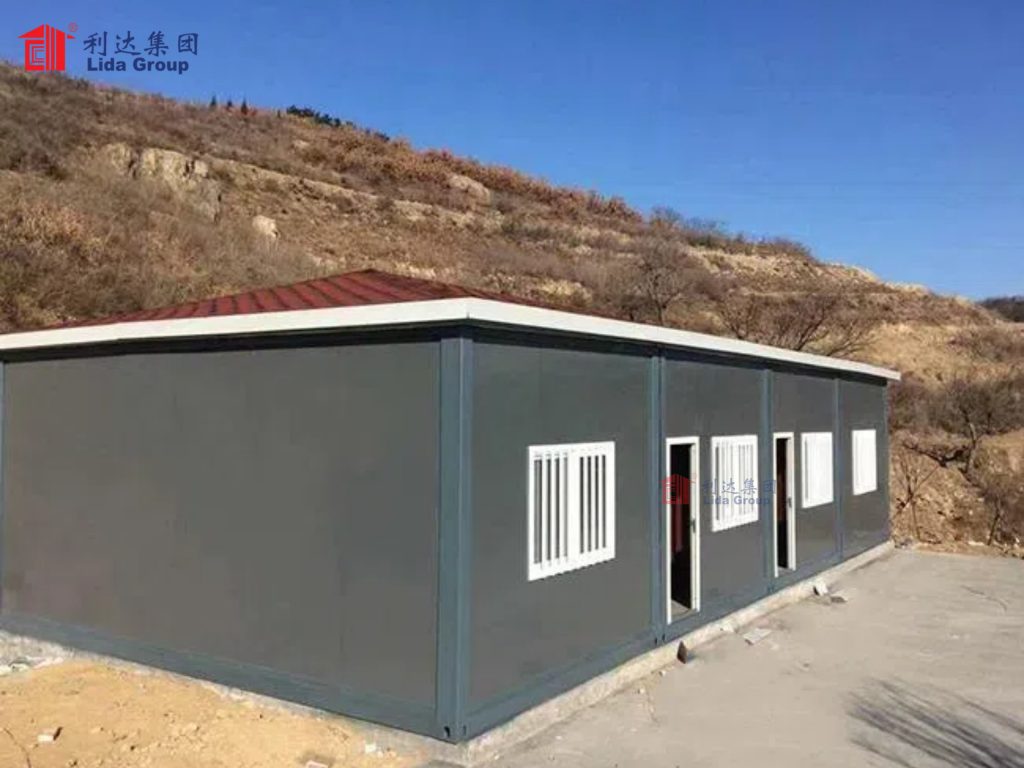
2. Deficiencies of Traditional Emergency and Temporary Housing
To fully reflect the innovative value of Lida Group’s sustainable container housing solutions, it is necessary to clarify the multiple pain points of traditional temporary and emergency housing in practical application, which are also the key reasons for the industry’s urgent transformation towards sustainable modular housing.
2.1 Poor Structural Safety and Low Living Comfort
Traditional emergency tents and simple color steel temporary houses have extremely low structural stability. Canvas tents are easily damaged by strong winds, heavy rain, snow accumulation, and extreme temperature changes, with no wind resistance, earthquake resistance, and waterproof capabilities. In severe disaster environments, tents are prone to collapse and water leakage, bringing potential safety hazards to resettled personnel. Simple color steel houses have improved structural stability compared with tents, but their thin-wall structure and inferior thermal insulation materials lead to poor heat preservation, heat insulation, and sound insulation effects. The indoor environment is stuffy in summer and cold in winter, with serious external noise interference, unable to provide basic comfortable living conditions for long-term temporary residence.
2.2 Disposable Use Causes Serious Resource Waste
Most traditional emergency temporary housing products are designed for one-time emergency use. After the disaster ends or the temporary project is completed, tents and simple temporary houses are seriously damaged and cannot be reused, and can only be discarded and demolished in large quantities. A large amount of waste plastics, waste fabrics, and inferior building materials generate massive construction waste and garbage, which not only consumes huge social public resources and economic costs but also causes long-term pollution to the ecological environment of disaster areas and construction sites, inconsistent with the global sustainable development and circular economy concepts.
2.3 Slow Deployment and Difficult Large-Scale Promotion
Traditional temporary color steel houses require on-site foundation treatment, material transportation, welding assembly, and decoration construction, with long construction cycles and low efficiency. In sudden disaster emergency scenarios with urgent time requirements, it is impossible to complete large-scale housing deployment in a short time to resettle displaced people. Although tents can be deployed quickly in batches, their poor safety and comfort make them only suitable for ultra-short-term emergency refuge, unable to support medium and long-term post-disaster resettlement and temporary living needs, resulting in disconnection between emergency response and post-disaster reconstruction housing guarantee.
2.4 Single Function and Poor Scenario Adaptability
Traditional emergency housing has a single functional positioning, only meeting the basic sleeping and shelter needs of personnel, lacking complete living supporting facilities and functional scalability. It cannot be flexibly adjusted according to different scenario needs such as emergency medical isolation, disaster relief command, staff office, and daily living residence, resulting in low comprehensive utilization rate and unable to meet the diversified and refined housing guarantee needs of modern emergency and temporary scenarios.
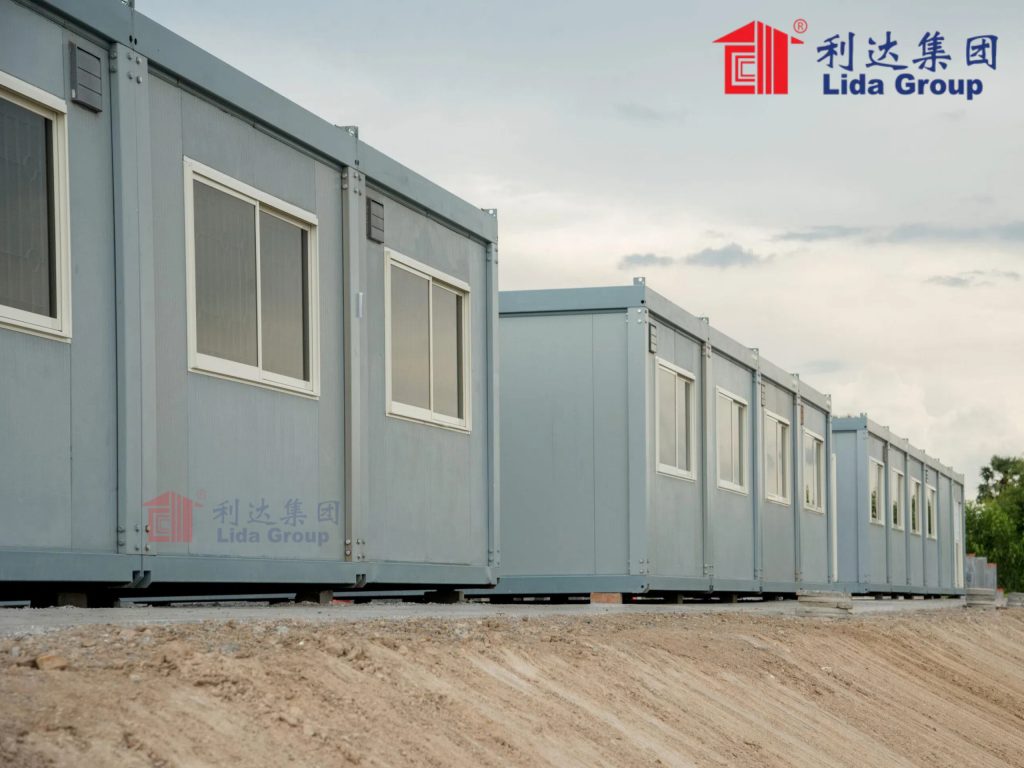
3. Core Sustainable Design Concepts of Lida Group’s Living Container Houses
Lida Group’s sustainable living container houses take green low carbon, circular reuse, ecological environmental protection, and long-term sustainable application as the core design orientation, realizing comprehensive innovation in material selection, structural design, production process, and application mode, completely solving the unsustainable pain points of traditional temporary housing.
3.1 Green Recycled Material Selection Reduces Carbon Emissions
Different from traditional temporary housing that uses a large number of disposable inferior materials, Lida Group’s sustainable container houses adopt high-quality recyclable environmental protection materials in an all-round way. The main load-bearing frame is made of high-strength hot-dip galvanized steel and recyclable Corten steel, which can be 100% recycled and remanufactured after the end of the product’s service life, effectively avoiding steel waste and reducing resource consumption. Each container unit can divert nearly 2.5 tons of steel materials from landfills, greatly reducing the exploitation of new industrial raw materials and lowering the overall carbon emission of building products.
The wall thermal insulation layer, interior decorative panels, and floor materials all adopt formaldehyde-free, pollution-free, and degradable green environmental protection materials, which do not release harmful gases during use and will not cause environmental pollution after abandonment. All electrical and hardware accessories are energy-saving and recyclable customized parts, realizing full-life-cycle green material application of the product, laying a solid foundation for the sustainable development of temporary housing.
3.2 Circular Reuse Structure Realizes Zero Waste Application
The product adopts a fully detachable modular integrated structural design, abandoning the disposable fixed structure of traditional temporary housing. All modules have unified standardized interfaces and independent structural performance, which can be quickly disassembled, flat-packed, transported, and reassembled. The reuse rate of a single container unit is more than 90%, and it can be cyclically applied to multiple emergency rescues, engineering temporary residences, and public temporary housing scenarios within the 15-year service life, realizing repeated value creation of a single asset.
This circular reuse mode completely eliminates construction waste and material waste generated by repeated construction and demolition of traditional temporary housing. It greatly reduces the consumption of social public resources and enterprise construction costs, and realizes the sustainable cycle of building resources, which is highly compatible with the global circular economy development model and green building evaluation standards.
3.3 Energy-Saving and Low-Carbon Structure Optimizes Operation Sustainability
Lida Group’s sustainable container houses are equipped with high-efficiency energy-saving structures and green energy configuration designs. The high-density composite thermal insulation and sound insulation wall panels greatly reduce the energy consumption of indoor temperature regulation, avoiding the long-term high energy consumption of traditional temporary housing due to poor thermal insulation performance. The reserved solar power installation interface, rainwater collection and purification system interface, and natural ventilation and lighting design maximize the use of natural renewable resources, reduce the dependence on traditional electric energy and water resources, and realize low-carbon and energy-saving operation of the housing in the use stage.
In the factory production stage, Lida Group adopts intelligent centralized production and batch processing mode, which effectively reduces production energy consumption and industrial waste discharge. The factory prefabrication rate of the product is as high as 95%, which avoids dust pollution, noise pollution, and material waste caused by on-site construction of traditional buildings, realizing sustainable production and low-carbon operation of the whole industrial chain.
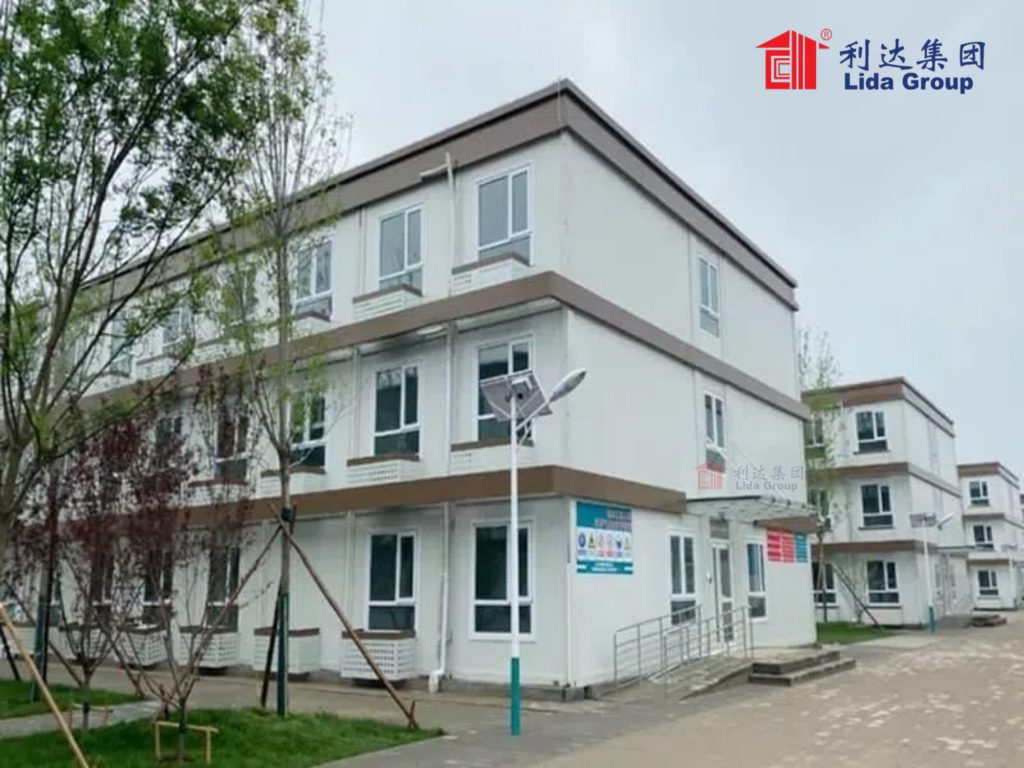
4. Core Advantages of Lida’s Container Houses for Emergency Housing Scenarios
In emergency disaster relief and sudden public incident resettlement scenarios, rapid deployment, structural safety, and reliable living guarantee are the most critical indicators of housing solutions. Lida Group’s sustainable living container houses have outstanding emergency response capabilities, fully meeting the efficient and safe housing needs of various emergency scenarios.
4.1 Ultra-Fast Batch Deployment Meets Emergency Timeliness Needs
Emergency rescue work is extremely time-sensitive, and every minute of housing delay will increase the risk of personnel casualties and social unrest. Lida Group’s prefabricated container houses realize full factory prefabrication and finished product delivery. After receiving the emergency demand, the finished modular units can be quickly transported to the disaster area or emergency site through special logistics channels. A single standard housing unit can be assembled and put into use within 20 minutes, and hundreds of emergency housing units can be deployed and completed within 48 hours to realize large-scale rapid resettlement of displaced personnel, which is far more efficient than traditional temporary housing construction.
The flat-packed transportation mode greatly improves logistics efficiency, reduces transportation volume and cost, and can quickly complete cross-regional emergency material scheduling. Whether it is sudden flood disasters, earthquake disasters, typhoon disasters, or public health emergency isolation needs, Lida’s container houses can respond quickly and complete emergency housing guarantee in the shortest time.
4.2 Super Structural Safety Adapts Harsh Disaster Environments
Disaster areas are often accompanied by harsh weather and complex environmental conditions such as aftershocks, strong winds, heavy rainfall, and residual dangerous factors. Lida Group’s container houses adopt high-strength steel frame structure, which can resist magnitude 8 earthquakes and level 12 strong winds, with excellent structural stability and impact resistance. The fully sealed waterproof and anti-corrosion structure can effectively resist rainwater erosion, snow accumulation pressure, and wind and sand impact, avoiding structural damage and water leakage of traditional emergency shelters in harsh environments.
All products meet international A-level fire protection standards, with fireproof, flame-retardant, and anti-leakage performance, eliminating fire safety hazards in densely populated emergency resettlement areas. The stable structural performance can support long-term safe residence in disaster areas, providing safe and reliable shelter for resettled personnel during post-disaster reconstruction, and solving the problem of poor safety and easy damage of traditional emergency tents.
4.3 Humanized Comfort Improves Emergency Living Quality
Traditional emergency housing only focuses on basic shelter, ignoring the living dignity and physical and mental health of resettled personnel. Lida Group’s sustainable container houses adhere to humanized design, with spacious and bright indoor space, scientific ventilation and lighting system, and multi-layer sound insulation and thermal insulation structure. The indoor temperature is constant and comfortable all year round, with fresh air and low noise, completely changing the cramped, stuffy, and noisy living environment of traditional emergency shelters.
Each housing unit is equipped with complete living supporting facilities such as independent power supply system, lighting system, ventilation equipment, and storage space. Large-scale emergency resettlement camps can be matched with centralized bathrooms, clean toilets, dining areas, and activity areas according to demand, forming a complete living system. The comfortable and standardized living environment can effectively relieve the psychological pressure of disaster-affected personnel and isolated personnel, protect their physical and mental health, and reflect the humanistic care of modern emergency rescue work.
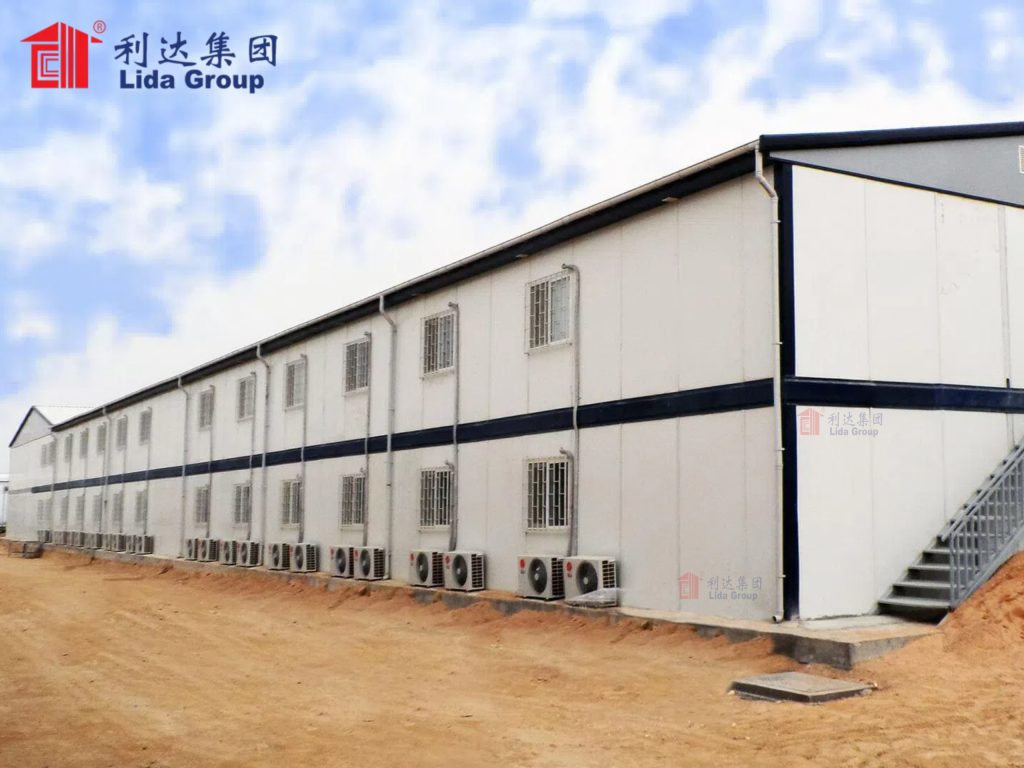
5. Excellent Performance for Long-Term Temporary Housing Scenarios
In addition to emergency rescue scenarios, Lida Group’s sustainable living container houses also have irreplaceable advantages in long-term temporary housing scenarios such as engineering construction camps, remote field operation residences, urban temporary supporting housing, and project phased construction supporting housing, realizing sustainable and high-quality temporary residence guarantee.
5.1 Flexible Modular Combination and Scalable Application
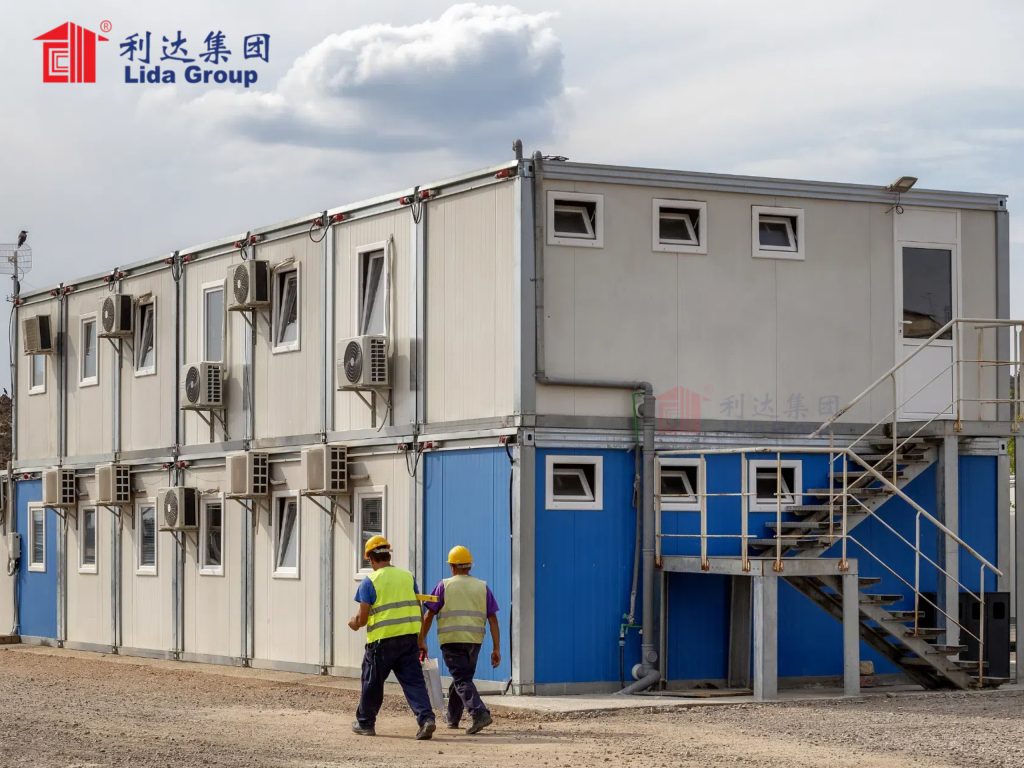
Lida’s container houses adopt standardized modular design with flexible combination and arbitrary scalability. Single units can be used independently as temporary duty rooms, single dormitories, and small office spaces; multiple units can be horizontally spliced and vertically stacked to form large-scale residential camps, office areas, and comprehensive supporting communities. According to the dynamic changes of project scale and personnel quantity, the housing scale can be freely expanded or reduced, realizing precise matching of temporary housing demand and avoiding resource waste.
The flexible disassembly and assembly performance enables the product to adapt to mobile engineering operations and multi-project cyclic use. After the completion of a single temporary project, the container units can be disassembled and transferred to the next project site for reuse, realizing sustainable asset operation and greatly reducing the long-term temporary housing cost of enterprises and institutions.
5.2 Long Service Life and Low Maintenance Sustainability
With industrial-grade durable materials and professional anti-aging, anti-corrosion, and waterproof processes, Lida Group’s container houses have a stable service life of more than 15 years, which is far longer than the 1-3 year service life of traditional temporary housing. The product has strong environmental adaptability, can stably operate in high temperature, severe cold, humidity, wind and sand, and other harsh environments for a long time, with low daily maintenance cost and no frequent component replacement and overall maintenance.
The long-term stable performance and low maintenance characteristics ensure the sustainable and stable operation of temporary housing, avoid frequent renovation and reconstruction of traditional temporary buildings, reduce resource consumption and economic investment in the whole life cycle, and have extremely high long-term cost performance and ecological sustainability.
5.3 Diversified Customization Meets Refined Temporary Housing Needs
Lida Group supports personalized functional and spatial customization according to different temporary housing scenarios. For engineering staff dormitories, it can customize comfortable rest layouts and storage facilities; for temporary office spaces, it can configure partition offices and meeting areas; for medical temporary isolation housing, it can customize sterile ventilation systems and disinfection spaces; for field scientific research and exploration housing, it can strengthen environmental adaptability and energy-saving configuration. Diversified customized design enables the product to accurately meet the refined functional needs of different temporary scenarios, improving the comprehensive utilization value and application sustainability of temporary housing.
6. Ecological and Economic Sustainable Value
Lida Group’s sustainable living container houses create dual sustainable value of ecology and economy for emergency and temporary housing fields, promoting the transformation and upgrading of the industry from extensive disposable mode to intensive circular mode.
In terms of ecological sustainability, the product’s recyclable and reusable characteristics greatly reduce the consumption of new building materials and the generation of construction waste, reduce industrial carbon emissions and environmental pollution, and effectively protect the ecological environment of disaster areas and temporary construction sites. The green energy-saving design reduces daily energy and resource consumption, realizing low-carbon and environmentally friendly operation of temporary housing, and conforming to the global green development and carbon neutrality strategic goals.
In terms of economic sustainability, the cyclic reuse mode of the product avoids repeated procurement and construction investment of traditional disposable temporary housing, saving more than 40% of comprehensive housing costs for users in the whole life cycle. The ultra-fast deployment efficiency shortens the project preparation cycle and emergency resettlement cycle, reducing invisible time costs and economic losses. The low maintenance and long-life characteristics further optimize the cost structure of temporary housing, creating stable and long-term economic benefits for enterprises, governments, and public institutions.
In terms of social sustainability, the product provides safe, comfortable, and dignified housing guarantee for emergency displaced personnel and temporary resident staff, improves the level of modern social emergency rescue and engineering camp management, stabilizes social order and workforce stability, and promotes the sustainable and healthy development of social public service and engineering construction industries.
7. Conclusion
Emergency and temporary housing is an important part of social emergency guarantee and engineering construction supporting facilities, and its sustainable development level is related to social public security, ecological environmental protection, and economic operation efficiency. Traditional disposable temporary housing solutions have long restricted the high-quality development of the industry due to their poor safety, low comfort, serious resource waste, and unsustainable operation.
Lida Group’s sustainable living container houses perfectly solve various industry pain points of traditional emergency and temporary housing with green recycled material design, circular reusable structural performance, ultra-fast emergency deployment capability, safe and comfortable living quality, and low-carbon energy-saving operation advantages. The products not only meet the rapid resettlement needs of various sudden emergency scenarios and the long-term stable residence needs of temporary engineering projects but also realize the organic unity of ecological environmental protection, economic cost savings, and social value improvement, representing the latest development direction of global modular sustainable temporary housing.
In the future, with the continuous improvement of global ecological environmental protection standards and social emergency guarantee requirements, sustainable modular container housing will gradually replace traditional temporary housing and become the mainstream standard solution for emergency resettlement and temporary residence. Lida Group will continue to focus on sustainable technological innovation and product upgrading, further optimize green energy-saving configuration, emergency response efficiency, and multi-scenario adaptation capabilities, and provide more high-quality, efficient, and eco-friendly sustainable housing solutions for global users, empowering the green and sustainable development of the global construction and social emergency guarantee industry.
Related news
-
Lida Group Completes Major Prefab Container Dormitory Building Project on Schedule
2026-06-29 16:43:41
-
Expand Camp Capacity with Modular Container House and Prefab Dormitory Solutions
2026-06-29 16:32:57
-
Lida Group's Living Container House Combines Affordability with Modern Amenities
2026-06-29 16:27:56
contact us
- Tel: +86-532-88966982
- Whatsapp: +86-13793209022
- E-mail: sales@lidajituan.com
