



Prefabricated Container Worker Dormitory Offers Fast Assembly and Long Service Life
2026-May-28 14:02:31
By Admin
Introduction
Modern infrastructure development, mining exploitation, road and bridge construction, and large-scale engineering projects rely heavily on efficient temporary camp facilities to accommodate on-site construction teams. Worker dormitories are not merely simple shelters but fundamental supporting facilities that determine project deployment speed, workforce stability, on-site safety management, and overall operational efficiency. In the highly competitive global engineering industry, project contractors are constantly seeking temporary housing solutions that balance rapid deployment, stable structural performance, low maintenance costs, and long-term recyclable value.
Traditional temporary housing options, including on-site welded color steel houses, makeshift tents, and brick-built temporary rooms, have long plagued engineering projects with prominent drawbacks. These conventional solutions require lengthy on-site construction cycles, involve complex wet construction processes, demand abundant manual labor, and feature poor structural durability. Most traditional temporary dormitories can only serve short-term projects and suffer from rapid aging, rusting, deformation, and water leakage after one or two years of use, leading to frequent maintenance, repeated reconstruction, and serious resource waste. In addition, their slow assembly speed often delays worker settlement and project commencement, becoming a major bottleneck restricting efficient project operation.
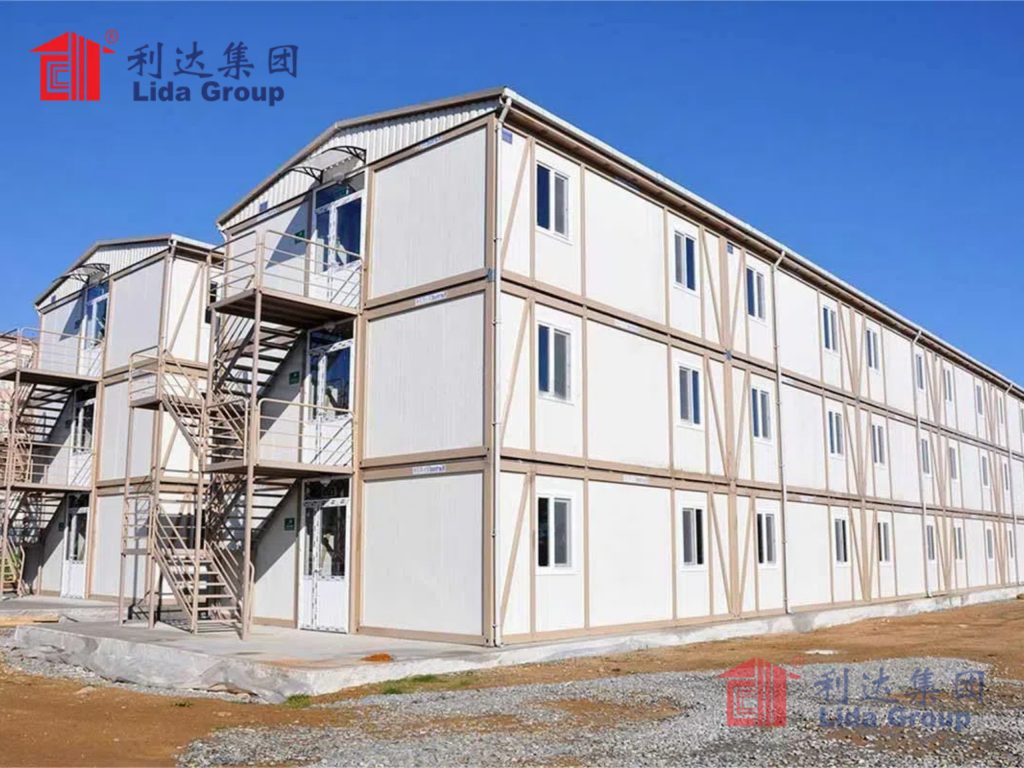
Against this industry backdrop, Lida Group launches high-performance prefabricated container worker dormitories that perfectly integrate ultra-fast assembly efficiency and ultra-long service life. Optimized exclusively for harsh engineering site environments and long-cycle construction projects, this series of container dormitories adopts fully factory prefabricated modular technology, high-strength anti-corrosion steel structures, and standardized bolt assembly design. It completely subverts the defects of traditional temporary buildings, enabling rapid on-site deployment while maintaining stable structural durability for more than 15 years. This article systematically elaborates on the limitations of traditional on-site dormitories, the core technical advantages of Lida’s prefabricated container dormitories in fast assembly and long service life, safety and environmental performance, full-lifecycle economic benefits, and diversified engineering application values, providing in-depth insights into why modular container dormitories have become the mainstream standard for modern engineering camp construction.
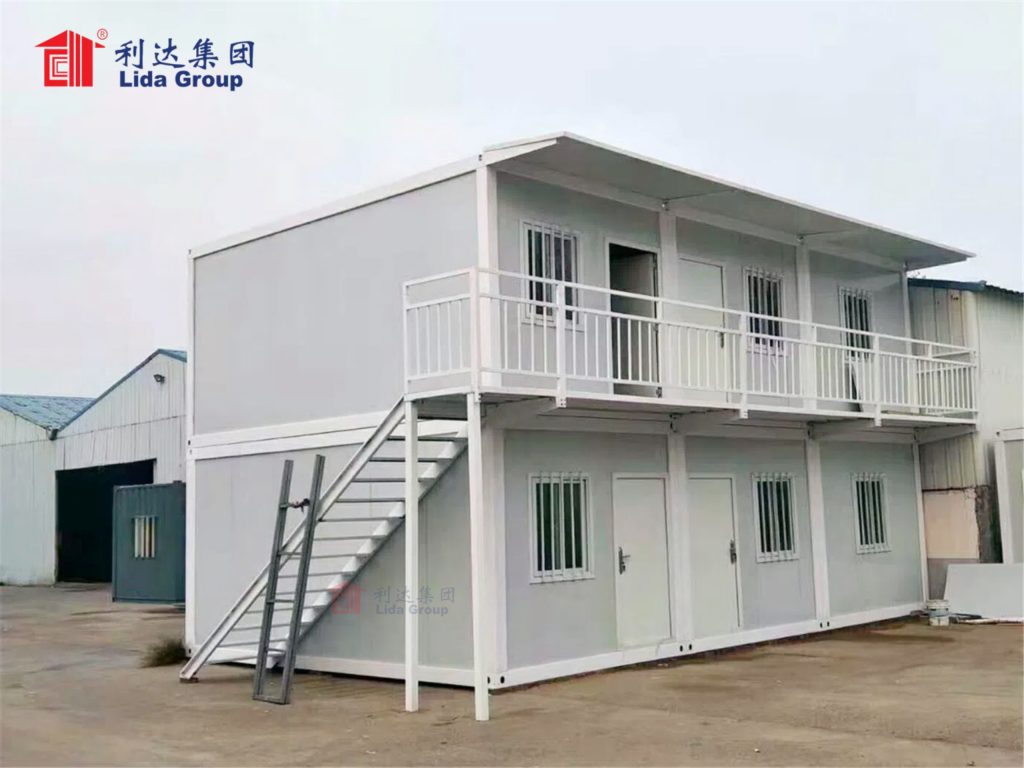
1. Critical Drawbacks of Traditional Temporary Worker Dormitories
To fully reflect the dual core advantages of Lida’s prefabricated container dormitories in assembly efficiency and service durability, it is essential to analyze the inherent defects of traditional temporary housing solutions. These long-standing industry pain points have increased project costs, delayed construction progress, and lowered on-site living standards for decades.
1.1 Slow and Labor-Intensive On-Site Construction
Traditional color steel temporary houses and brick-built dormitories depend entirely on on-site manual construction, involving multiple complex procedures such as foundation leveling, concrete pouring, steel frame welding, wall panel installation, and interior finishing. The entire construction process requires professional construction teams, large mechanical equipment, and continuous weather conditions. A medium-sized engineering camp with dozens of dormitory units usually requires two to four weeks of intensive construction before occupancy. Moreover, on-site wet construction generates massive dust, construction waste, and noise pollution, failing to meet modern green construction standards. The slow deployment speed directly delays worker settlement, restricts manpower allocation, and drags down the overall project construction schedule, bringing invisible economic losses to engineering contractors.
1.2 Short Service Life and Rapid Structural Aging
Durability is the most prominent weakness of traditional temporary dormitories. Most color steel houses adopt thin low-quality steel plates and ordinary iron frames without professional anti-corrosion and anti-aging treatment. Exposed to outdoor harsh environments including strong sunlight, rain erosion, sandstorms, and temperature fluctuations, the steel frames quickly rust and deform, while wall panels fade, crack, and lose thermal insulation performance. The welding connection structure is prone to loose joints and water leakage after long-term wind and rain exposure. Under normal outdoor working conditions, the effective service life of traditional temporary houses is only one to two years. After that, large-area maintenance, component replacement, or even overall demolition and reconstruction are required, resulting in continuous capital investment and resource waste.
1.3 Poor Reusability and Low Asset Utilization
Most traditional temporary dormitories adopt fixed welding and integral pouring structures, which cannot be disassembled, transferred, or reused after project completion. Once the construction project ends, the dormitory facilities can only be demolished and discarded, producing a large amount of construction waste and causing serious resource loss. For engineering enterprises undertaking multiple cross-regional and long-cycle projects, repeated investment in temporary camp construction greatly increases long-term operational costs. The disposable use mode makes traditional dormitories lack sustainable economic value and cannot form recyclable fixed assets for enterprises.
1.4 Unstable Safety Performance and High Hidden Risks
Restricted by backward construction technology and low-cost material selection, traditional temporary dormitories have poor wind resistance, seismic resistance, snow load resistance, and fireproof performance. Random on-site wiring, non-standard thermal insulation materials, and unstable steel structures bring frequent hidden dangers of fire, electric leakage, collapse, and water seepage. These safety hazards not only threaten the personal safety of on-site workers but also easily lead to unqualified civilized construction assessments, affecting project acceptance and corporate reputation.

2. Ultra-Fast Assembly: Core Efficiency Advantage of Lida’s Prefabricated Dormitories
Lida Group’s prefabricated container worker dormitories take rapid deployment as the core design goal, adopting a fully factory prefabricated modular manufacturing mode. Over 95% of structural production, interior decoration, and electromechanical pipeline embedding are completed in standardized workshops, achieving revolutionary breakthroughs in on-site assembly efficiency and completely solving the slow construction pain points of traditional dormitories.
2.1 Full Factory Prefabrication Eliminates On-Site Wet Construction
Different from the scattered on-site construction mode of traditional temporary houses, Lida’s prefabricated container dormitories realize integrated factory prefabrication. The steel frame processing, anti-corrosion treatment, wall and roof assembly, floor paving, thermal insulation filling, and electrical system layout are all finished in strict accordance with industrial standards in the factory. After delivery to the construction site, the products are complete semi-finished units that only require splicing and fixing. This mode completely cancels on-site concrete pouring, welding construction, and secondary decoration, eliminating wet construction links and greatly simplifying on-site operation procedures. It effectively avoids construction delays caused by bad weather, insufficient personnel, and equipment shortages, ensuring stable and controllable camp construction progress.
2.2 Tool-Free Bolt Assembly Simplifies Operation
All structural connections of Lida’s prefabricated container dormitories adopt standardized bolt assembly design, with no welding operation required on site. Each component is equipped with unified reserved interfaces and positioning holes, featuring high assembly accuracy and strong compatibility. Ordinary construction workers can complete unit assembly, positioning, and fixing with only simple hand tools, without relying on professional welding technicians and large hoisting equipment. The simplified operation threshold enables rapid deployment even in remote mountainous areas, desert mining sites, and other areas lacking construction supporting conditions.
2.3 Ultra-Short Deployment Cycle Improves Project Progress
The efficient modular assembly mode brings extremely fast deployment speed. A single standard 20-foot prefabricated container dormitory unit can be fully assembled, debugged, and put into use within one hour. A large-scale engineering camp composed of dozens or hundreds of dormitory units can be completely constructed and occupied within three to five days. Compared with the one-month construction cycle of traditional temporary houses, Lida’s products shorten the camp deployment time by more than 90%. Rapid worker settlement ensures timely manpower deployment and equipment commissioning, effectively accelerating the overall project commencement and construction progress, and creating greater time value for engineering projects.
2.4 Flexible Splicing and Scalable Layout
Lida’s prefabricated container dormitories support free horizontal splicing and vertical multi-layer stacking. According to changes in the number of on-site workers and project construction stages, the camp scale can be flexibly expanded or reduced at any time. The standardized modular combination realizes integrated layout of dormitories, offices, canteens, shower rooms, and storage rooms, forming a complete functional camp system. The flexible scalable layout adapts to the dynamic construction needs of short-term urgent projects and long-cycle large-scale projects, achieving precise matching of housing supply and project demand.
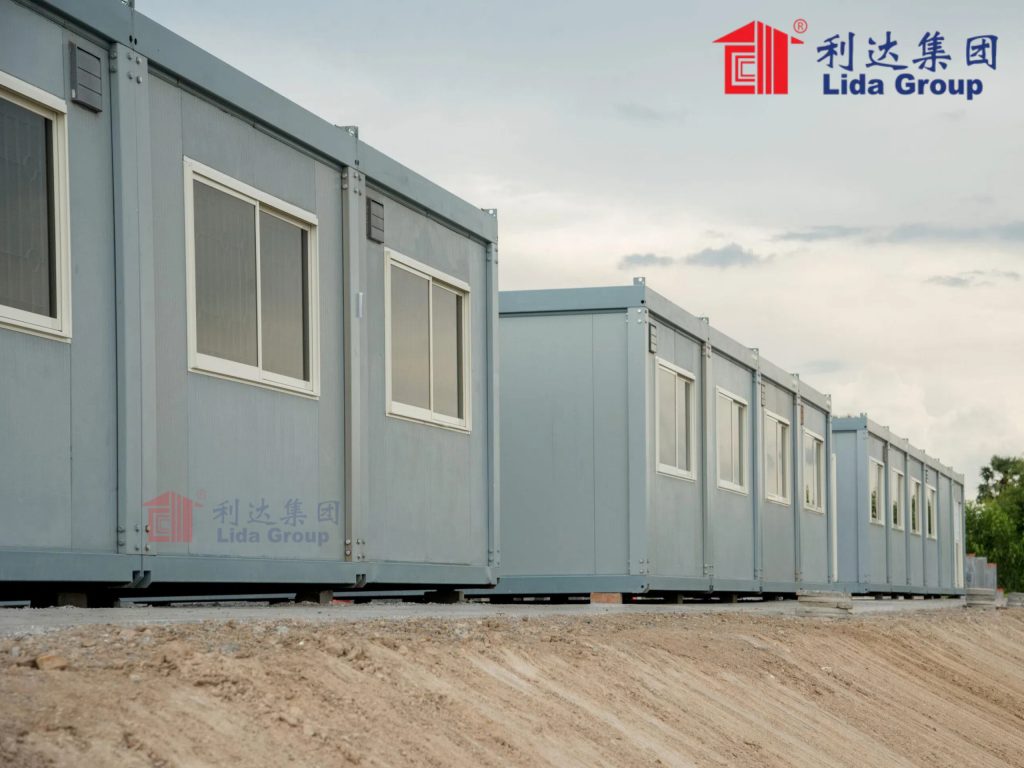
3. Long Service Life: Industrial Durability for Long-Cycle Engineering
While ensuring ultra-fast assembly efficiency, Lida Group focuses on improving the structural durability and environmental adaptability of prefabricated container dormitories. Through high-quality material selection, industrial anti-corrosion technology, and scientific structural optimization, the products achieve an ultra-long service life far exceeding traditional temporary buildings, meeting the long-term use needs of multi-year engineering and mining projects.
3.1 High-Strength Galvanized Steel Frame Structure
The main load-bearing frame of Lida’s container dormitories adopts high-quality Q235B hot-rolled steel and zinc-aluminum-magnesium alloy steel materials. All steel components undergo industrial hot-dip galvanizing anti-corrosion treatment and electrostatic spraying technology, forming a dense and wear-resistant protective layer on the surface. This professional treatment effectively resists outdoor rain erosion, ultraviolet aging, sand and wind abrasion, and chemical corrosion. The overall steel frame structure has high rigidity and stability, passing finite element mechanical simulation tests to meet international wind resistance, seismic resistance, and heavy snow load standards. It can maintain stable structural performance in harsh environments such as high-altitude low-temperature areas, high-temperature deserts, and humid coastal regions.
3.2 Professional Waterproof, Thermal Insulation and Anti-Aging Design
To solve the aging problems of water leakage, heat loss, and panel cracking, Lida’s dormitories adopt integrated waterproof roofing technology and high-elasticity sealing rubber strips for all wall and component joints, realizing full-coverage waterproof protection without dead ends. The wall and roof layers are filled with high-density fireproof rock wool thermal insulation materials, which not only provide excellent constant-temperature living performance but also enhance structural stability and anti-aging ability. The exterior wall panels are coated with weather-resistant protective paint, which can effectively prevent fading, peeling, and cracking caused by long-term sunlight exposure and wind and rain erosion, ensuring long-term intact appearance and stable internal functions.
3.3 Ultra-Long Service Life and Multiple Reuse Cycles
Benefiting from high-strength structural materials and industrial anti-corrosion technology, Lida’s prefabricated container dormitories have a design service life of more than 20 years in conventional environments and can work stably for 15 years in harsh outdoor engineering sites. Different from the disposable attribute of traditional temporary houses, the full bolt assembly structure will not cause structural damage during disassembly and transfer. The products can withstand more than 8 times of repeated disassembly, assembly, and cross-project reuse without performance attenuation. The ultra-long service life and recyclable characteristics completely change the short-cycle use mode of traditional temporary buildings, realizing long-term cyclic asset appreciation.
3.4 Stable Performance in Extreme Working Conditions
Engineering and mining projects are often located in extreme environments with harsh climatic conditions. Lida’s prefabricated container dormitories are specially optimized for extreme working scenarios. The low-temperature resistant structural design adapts to cold plateau and northern winter environments, avoiding steel frame brittle deformation and thermal insulation failure. The high-temperature heat insulation structure resists desert strong sunlight and high temperature, ensuring indoor comfort. The dustproof and windproof structure adapts to windy and sandy construction sites, preventing sand and dust from entering the room and wearing components. The stable environmental adaptability ensures that the dormitories maintain normal and safe operation throughout the year without frequent maintenance due to seasonal climate changes.
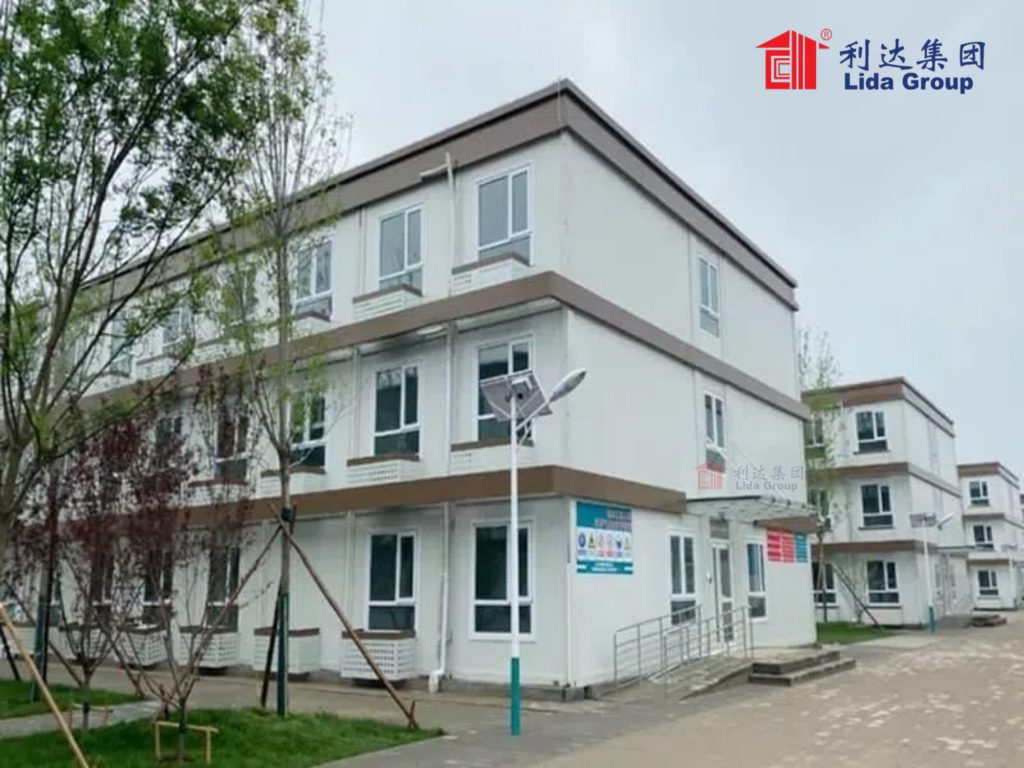
4. Standardized Safety and Humanized Living Performance
Fast assembly and long service life are the core functional advantages, while reliable safety and comfortable living experience are the basic guarantees for long-term on-site application of Lida’s prefabricated container dormitories. Lida Group always adheres to high-standard safety design and humanized configuration to balance efficiency, durability, and livability.
4.1 High-Level Fireproof and Electrical Safety Performance
All thermal insulation and wall materials of Lida’s dormitories reach A-level fireproof standard, with excellent flame retardant and fire-resistant capabilities, effectively blocking fire spread. The internal electrical system adopts standardized fireproof wiring, leakage protection switches, and fully enclosed wire grooves, avoiding electrical short circuit and fire hazards caused by messy wiring. The overall structural fire protection design meets international construction site safety standards, eliminating potential safety risks and ensuring safe long-term use.
4.2 Humanized Thermal Insulation and Sound Insulation Configuration
The high-density multi-layer composite thermal insulation structure solves the problems of hot summer and cold winter in traditional steel container houses, realizing stable indoor temperature and reducing worker discomfort caused by extreme temperature changes. The multi-layer sound insulation materials effectively isolate external construction noise and wind noise, creating a quiet rest environment for workers after high-intensity work. The fully sealed dustproof and moisture-proof design keeps the indoor environment clean and dry, avoiding mildew and bacterial growth caused by long-term outdoor placement.
4.3 Complete Supporting Functional Facilities
Each standard dormitory unit is pre-equipped with safe lighting systems, standardized sockets, ventilation windows, waterproof floors, and anti-corrosion storage facilities. The modular combination mode can be matched with supporting facilities such as public toilets, shower rooms, canteens, and activity rooms to form a complete living system. The neat and unified layout and standardized configuration effectively improve the on-site living quality of workers, stabilize workforce teams, and help enterprises achieve civilized construction and standardized site management.
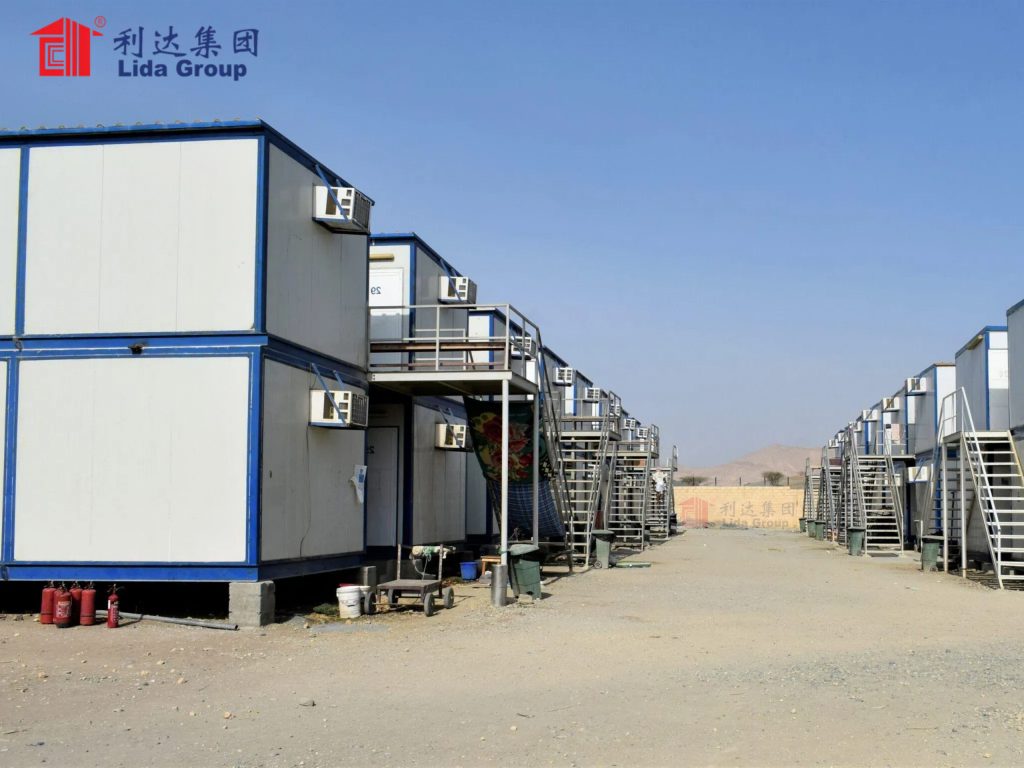
5. Outstanding Full-Lifecycle Economic Benefits
The dual advantages of fast assembly and long service life bring significant comprehensive economic benefits for engineering enterprises, reducing upfront construction costs and long-term operational expenses while improving asset utilization efficiency.
5.1 Save Upfront Construction Time and Labor Costs
The ultra-fast assembly efficiency greatly shortens camp construction cycles, saving a large amount of on-site labor and mechanical leasing costs. Factory batch prefabrication reduces material waste and manual errors caused by on-site construction, cutting overall upfront investment by more than 30% compared with traditional temporary dormitories. Rapid occupancy also avoids project delay losses caused by slow camp construction, bringing invisible economic benefits to enterprises.
5.2 Reduce Long-Term Maintenance and Replacement Costs
Lida’s durable anti-aging structure avoids frequent rust removal, repainting, component replacement, and overall maintenance required by traditional dormitories. The annual maintenance cost is less than 3% of the initial investment, far lower than the high maintenance expenditure of traditional temporary buildings. The ultra-long service life eliminates repeated dormitory reconstruction investment for multi-year long-cycle projects, greatly reducing long-term operational costs.
5.3 Improve Asset Reuse Value
The reusable design enables one-time investment to support multiple project uses. After the completion of a single project, the dormitories can be disassembled, transferred, and reused in new construction sites, realizing cyclic asset utilization. Compared with the disposable loss of traditional dormitories, Lida’s prefabricated container dormitories can reduce comprehensive project housing costs by more than 40% within the full lifecycle, with extremely high cost performance and sustainable economic value.
6. Wide Engineering Application Scenarios
Relying on fast assembly efficiency, ultra-long durability, stable safety performance, and high cost performance, Lida Group’s prefabricated container worker dormitories are widely used in various engineering and public service scenarios. They are the preferred temporary housing solution for urban infrastructure construction such as roads, railways, bridges, and water conservancy projects. In remote mining, oil field, and new energy base construction, the products adapt to harsh field environments and long-cycle operation needs. In emergency disaster relief and public emergency construction, the rapid deployment capability provides timely resettlement guarantees for rescue teams and affected personnel. In factory expansion, rural infrastructure construction, and military temporary camps, the standardized and durable design also delivers stable and reliable housing support, covering almost all global temporary workforce accommodation scenarios.
7. Conclusion
In the modern engineering construction industry that pursues high efficiency, standardization, and sustainable development, temporary worker dormitories are evolving from simple disposable shelters to high-efficiency, durable, and recyclable modular supporting facilities. Traditional temporary housing solutions have long been unable to meet the needs of modern engineering projects due to slow construction, short service life, poor safety, and low reuse value, becoming a key factor restricting refined project management.
Lida Group’s prefabricated container worker dormitories perfectly solve the industry’s core pain points with two core advantages: fast assembly and long service life. The fully factory prefabricated modular design realizes ultra-fast on-site deployment, greatly shortening camp construction cycles and improving project operation efficiency. The industrial-grade anti-corrosion steel structure and professional environmental adaptation design ensure ultra-long stable service life and multiple cyclic reuse, completely changing the short-cycle disposable use mode of traditional temporary buildings. Meanwhile, the products maintain high-standard safety performance and humanized living configuration, balancing efficiency, durability, safety, and comfort. With outstanding full-lifecycle economic benefits and wide scenario adaptability, Lida’s prefabricated container dormitories have become the mainstream standardized choice for global engineering camp construction, continuously empowering the efficient, green, and sustainable development of the modern construction industry.
Related news
-
Lida Group Expands Range of Flat Packed Container House for Easy Export and Storage
2026-05-28 13:46:30
-
Living Container House by Lida Group Combines Comfort, Durability, and Affordability
2026-05-28 13:19:58
-
Efficient Prefabricated Container Worker Dormitory Now Available from Lida Group
2026-05-27 18:01:15
contact us
- Tel: +86-532-88966982
- Whatsapp: +86-13793209022
- E-mail: sales@lidajituan.com
