



Efficient Prefabricated Container Worker Dormitory Now Available from Lida Group
2026-May-27 18:01:15
By Admin
Introduction
The global construction, mining, infrastructure, and energy industries rely heavily on mobile workforces and temporary on-site residential facilities. Worker accommodation is no longer a secondary auxiliary facility but a core component that determines project progress, team stability, construction safety, and enterprise operational benefits. Traditional on-site worker dormitories, including handmade color steel sheds, simple makeshift tents, and on-site welded temporary houses, have long plagued engineering contractors with low efficiency, poor safety, substandard living conditions, and high comprehensive costs. These conventional housing solutions require lengthy on-site construction cycles, consume massive labor and material resources, and fail to adapt to the fast-paced, mobile, and scalable operational characteristics of modern engineering projects.
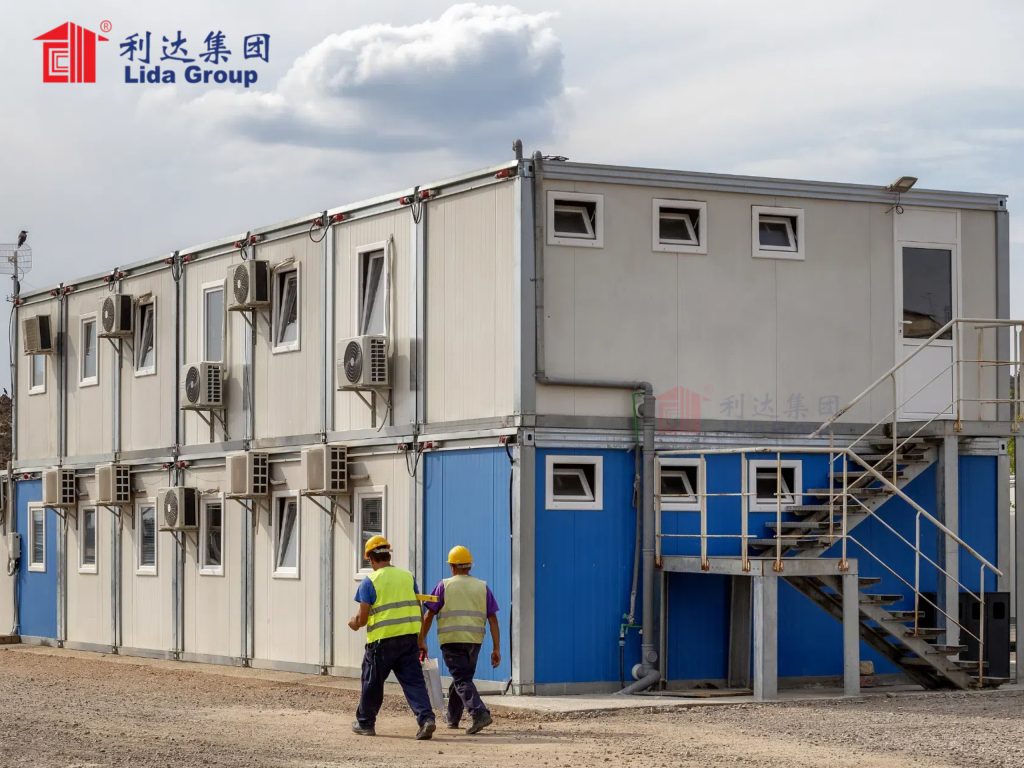
To solve the industry-wide pain points of inefficient dormitory construction and low-quality worker accommodation, Lida Group, a leading global manufacturer of modular prefabricated buildings, officially launches high-efficiency prefabricated container worker dormitories. Tailored exclusively for construction sites, mining camps, remote engineering bases, and emergency workforce resettlement scenarios, this new series of container dormitories takes efficiency, standardization, safety, and comfort as the core design concepts. With factory full prefabrication, ultra-fast on-site assembly, modular flexible combination, industrial-grade durable structure, and humanized living configuration, Lida’s new prefabricated dormitories completely subvert the defects of traditional temporary housing. This article systematically elaborates on the drawbacks of traditional on-site worker dormitories, core efficient design highlights, standardized manufacturing advantages, on-site deployment capabilities, safety and comfort performance, full-lifecycle economic value, and diversified practical applications of Lida’s prefabricated container dormitories, comprehensively demonstrating the industry value of this high-efficiency modular housing solution.
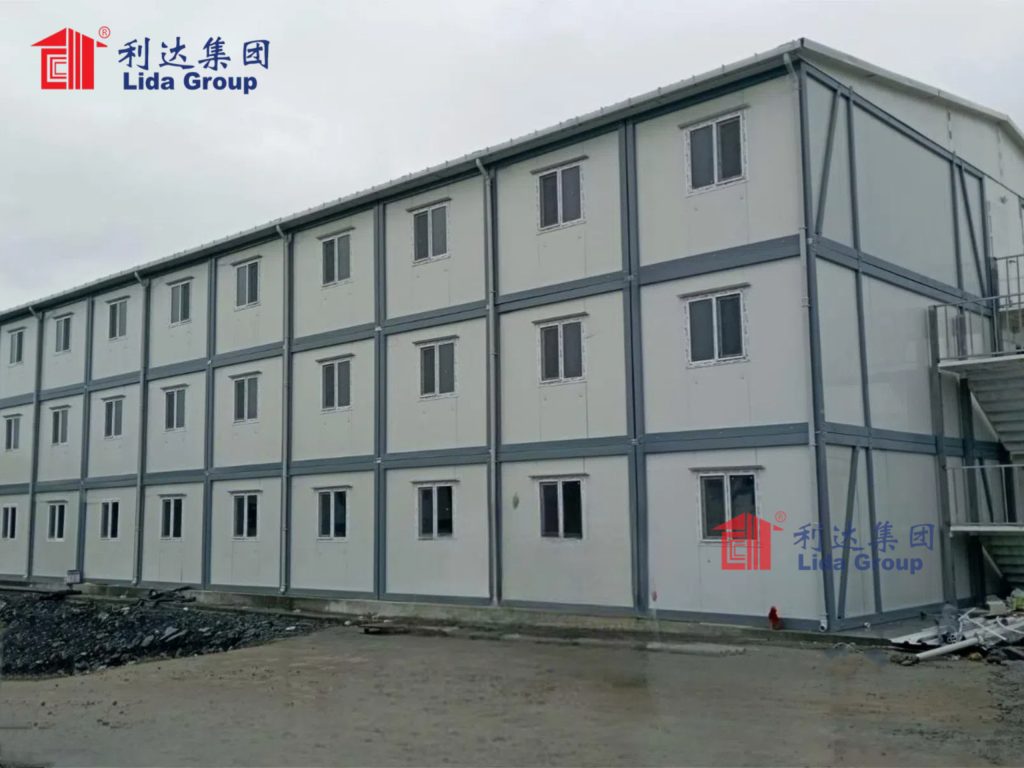
1. Bottlenecks of Traditional On-Site Worker Dormitories
Traditional temporary worker dormitories have long been constrained by backward construction modes and outdated design concepts, resulting in prominent deficiencies in construction efficiency, structural safety, living experience, and resource utilization. These bottlenecks seriously restrict the standardized management and efficient operation of modern engineering projects.
1.1 Low Construction Efficiency Restricts Project Progress
Most traditional temporary dormitories adopt on-site manual welding and wet construction modes, involving multiple complex processes such as foundation leveling, concrete pouring, steel frame welding, wall assembly, and interior decoration. The entire construction cycle usually lasts two to four weeks, and the progress is easily affected by bad weather, site conditions, and manual proficiency. For time-sensitive infrastructure projects and urgent emergency construction tasks, slow dormitory deployment leads to delayed worker settlement, insufficient manpower deployment, and postponed project commencement, forming a serious constraint on overall construction progress. Unlike modern prefabricated products, traditional dormitories cannot realize batch rapid production and centralized deployment, resulting in extremely low housing supply efficiency for large-scale worker teams.
1.2 Unstandardized Structure Brings Hidden Safety Hazards
To control short-term costs, most traditional temporary dormitories adopt inferior thin steel plates and unqualified auxiliary materials, lacking standardized structural design and professional safety verification. The overall frame has low rigidity, poor wind resistance, seismic resistance, and snow load capacity, and is prone to deformation, collapse, and water leakage under extreme weather conditions such as strong winds, heavy rain, and blizzards. In addition, on-site random wiring, irregular pipeline layout, and non-standard fire protection design lead to frequent hidden dangers of electric leakage and fire, threatening the personal safety and property security of on-site workers. The unstandardized construction process also makes it impossible to form unified safety assessment standards, bringing great difficulties to site safety management.
1.3 Poor Living Conditions Lead to Workforce Instability
Traditional makeshift dormitories have unreasonable spatial layout, cramped indoor space, and single functional configuration. Lacking professional thermal insulation, sound insulation, and ventilation systems, the rooms are stuffy in summer, cold and airtight in winter, and prone to dampness and mildew in rainy seasons. The poor living environment makes it difficult for workers to get effective rest after high-intensity construction work, resulting in low work enthusiasm and high workforce turnover. In modern engineering management, worker welfare and living quality have become important indicators of civilized construction and enterprise image. The backward accommodation conditions of traditional dormitories not only affect team stability but also restrict the standardized upgrading of enterprise project management.
1.4 Disposable Design Causes High Comprehensive Costs
Traditional on-site dormitories mostly adopt fixed welded structures without disassembly and reuse value. After the completion of a single project, the temporary housing can only be demolished and discarded, producing a large amount of construction waste and causing serious resource waste. Engineering enterprises undertaking multi-site cross-regional projects need to repeatedly invest in dormitory construction, resulting in high long-term operational costs. Meanwhile, traditional dormitories have poor durability, requiring frequent maintenance, rust removal, and component replacement during use, and the continuous hidden maintenance expenditure further increases the comprehensive housing cost of projects.
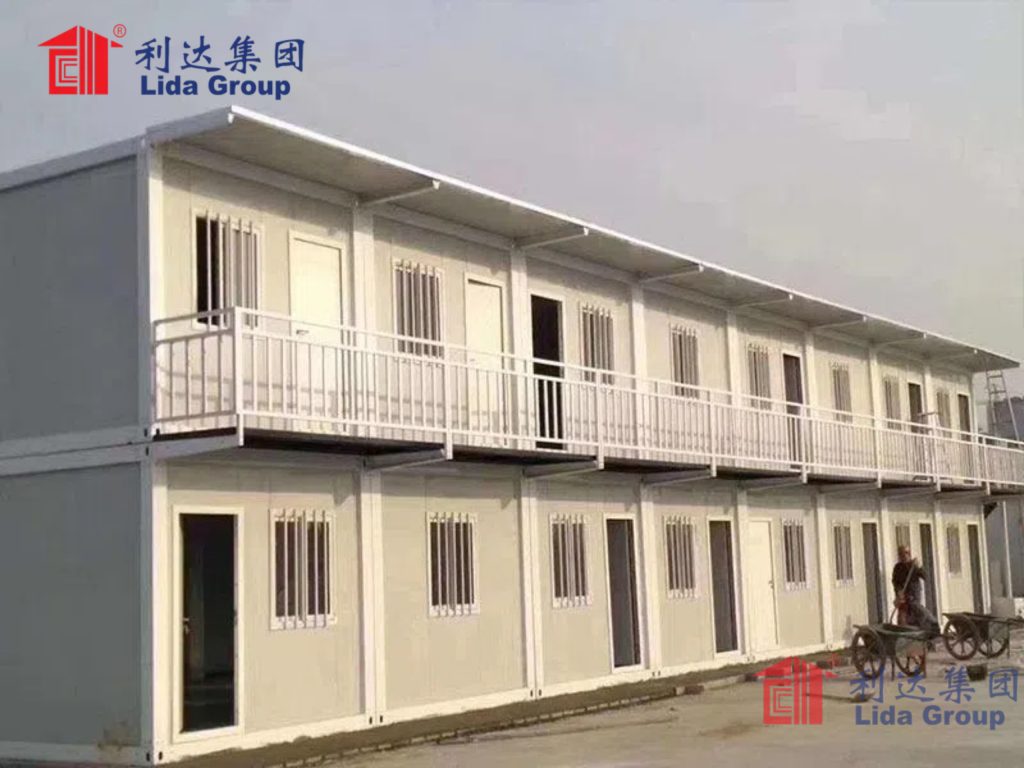
2. Core Efficient Design Advantages of Lida’s Prefabricated Container Dormitories
Aiming at the multiple bottlenecks of traditional worker dormitories, Lida Group optimizes and upgrades the product from design, production, and deployment links, taking “high efficiency” as the core breakthrough point. The newly launched prefabricated container worker dormitories realize qualitative leaps in production efficiency, assembly efficiency, and application efficiency through modular standardized design and integrated prefabrication technology, perfectly adapting to the fast-paced deployment needs of modern engineering projects.
2.1 Full Factory Prefabrication Improves Production Efficiency
Different from the scattered on-site construction mode of traditional dormitories, Lida’s prefabricated container dormitories realize 100% factory integrated prefabrication. All core links including steel frame processing, anti-corrosion treatment, wall and roof assembly, floor paving, interior decoration, and water and electricity pipeline embedding are completed in standardized intelligent production workshops. The assembly line batch production mode completely avoids the uncertainty of on-site manual construction, realizes unified product quality standards and efficient output, and greatly shortens the overall product preparation cycle. Standardized modular unit design enables mass production of dormitory units, which can quickly respond to large-scale order demands and meet the rapid housing deployment needs of super-large engineering camps.
2.2 Modular Standard Structure Supports Flexible Scalable Deployment
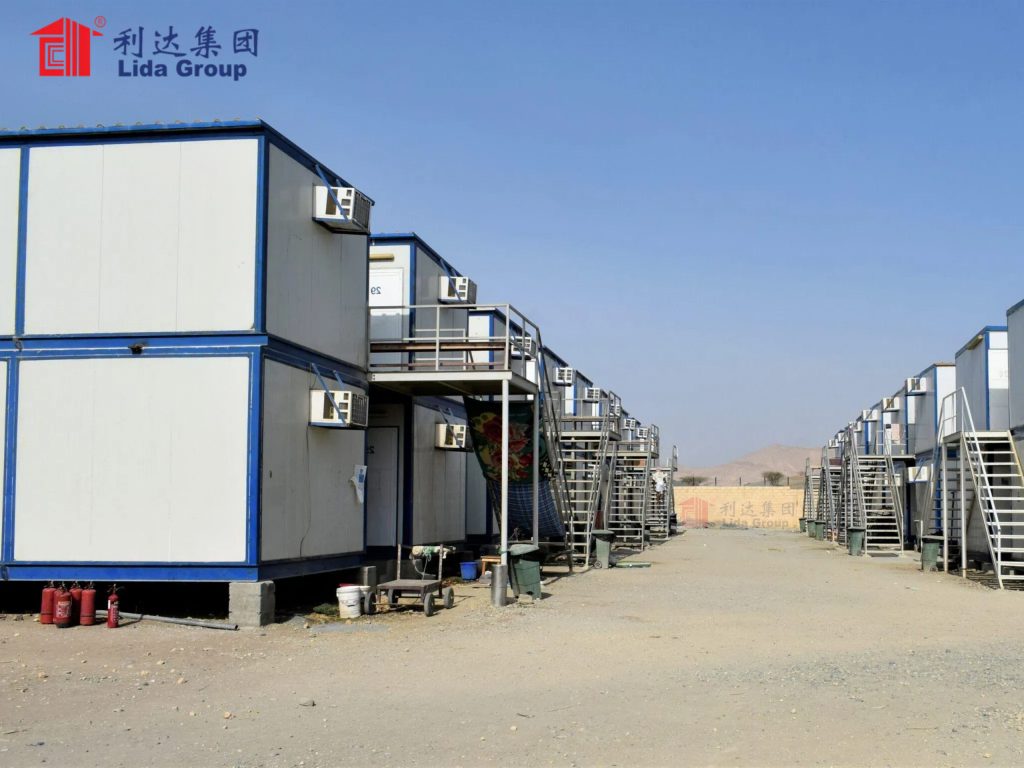
Lida’s prefabricated container dormitories adopt unified international standard modular unit specifications, with highly compatible assembly interfaces. Single standard units can be used independently, and multiple units can be freely spliced horizontally and stacked vertically to form large-scale dormitory clusters, multi-storey dormitory buildings, and supporting functional areas. Engineering teams can flexibly adjust the number and layout of dormitory units according to project construction progress and changes in worker quantity, realizing rapid expansion or reduction of accommodation space. This scalable flexible design completely solves the problem of fixed layout and poor adaptability of traditional dormitories, realizing dynamic matching of housing supply and project demand, and greatly improving the flexibility of site camp planning.
2.3 Ultra-Fast On-Site Assembly Shortens Settlement Cycle
Efficiency is the most prominent competitive advantage of Lida’s new prefabricated dormitories. The product adopts a full bolt assembly structure without on-site welding and wet construction. After the factory prefabricated units are transported to the site, ordinary workers can complete positioning, splicing, and fixing with simple hand tools. A single standard dormitory unit can be assembled and put into use within 30 to 60 minutes, and a large-scale camp with hundreds of dormitory units can be fully deployed and occupied within 3 to 5 days. Compared with the weeks-long construction cycle of traditional dormitories, the deployment efficiency is increased by more than 90%, realizing zero-delay worker settlement and effectively guaranteeing the smooth commencement of engineering projects.
2.4 Lightweight and Portable Design Reduces Transportation Difficulty
Optimized for remote and complex construction sites, Lida’s prefabricated container dormitories adopt a lightweight modular structure. Compared with traditional integrated container houses, the optimized structural design reduces the overall self-weight on the premise of ensuring safety, making transportation more convenient. The standardized unit size is suitable for various land and ocean transportation modes, and can adapt to narrow mountain roads, plateau dirt roads, and temporary construction passages in remote areas. It does not require large hoisting and transportation equipment, effectively solving the transportation difficulties of dormitory facilities in inaccessible remote engineering and mining projects, and greatly reducing logistics time and cost.
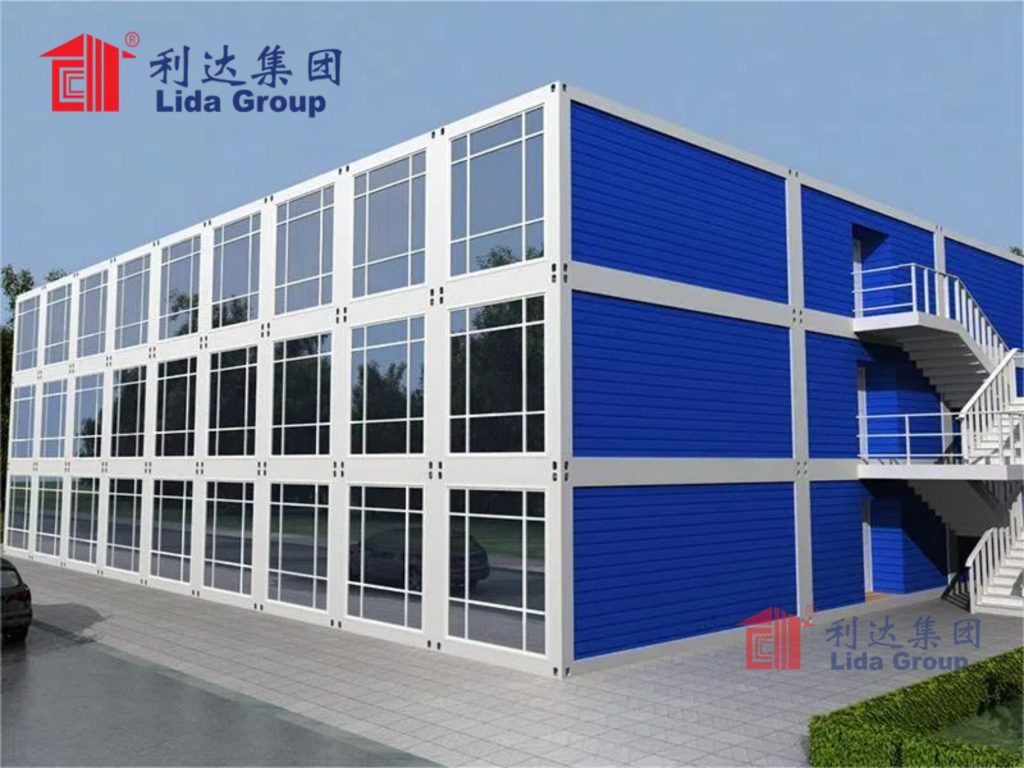
3. Industrial-Grade Durability and Safety Performance
While pursuing high deployment efficiency, Lida Group never compromises on product safety and durability. All prefabricated container dormitories adopt high-standard industrial materials and professional structural design, ensuring long-term stable and safe use in various complex construction site environments.
3.1 High-Strength Anti-Corrosion Steel Frame Structure
The main load-bearing frame of Lida’s prefabricated dormitories is made of high-quality galvanized steel and zinc-aluminum-magnesium alloy steel, with high structural strength and strong toughness. All steel components undergo industrial hot-dip galvanizing anti-corrosion treatment to form a dense protective layer on the surface, which can effectively resist outdoor humidity, rainwater erosion, ultraviolet aging, and construction dust pollution. The overall structure passes finite element mechanical simulation tests and meets international wind resistance, seismic resistance, and snow load safety standards. It can maintain stable structural integrity in harsh environments such as high temperature, severe cold, strong wind, and sandstorm, with a service life of more than 20 years in conventional environments, far exceeding that of traditional temporary dormitories.
3.2 Standardized Fireproof and Waterproof Protection System
In view of the high fire protection requirements of construction site dormitories, Lida’s prefabricated container dormitories are equipped with high-standard fireproof rock wool insulation materials, which have excellent flame retardant and fire-resistant performance, effectively preventing the spread of open fire. The fully sealed structural design and professional waterproof adhesive technology eliminate the hidden danger of rainwater leakage, and the integrated waterproof layer of the roof and wall gaps ensures long-term waterproof and moisture-proof performance. Meanwhile, the internal electrical system adopts standardized fireproof wiring and leakage protection devices, which effectively avoids electrical safety hazards and meets the civilized construction and safety assessment standards of global engineering sites.
3.3 Stable Structural Performance for Long-Term Reuse
Different from the disposable attributes of traditional dormitories, Lida’s prefabricated container dormitories have a detachable bolt structure, which will not cause structural damage during disassembly and transfer. The high-strength steel frame and high-quality auxiliary materials can withstand more than eight repeated disassembly and assembly cycles without performance attenuation. The stable structural durability enables the dormitories to be reused across projects and regions, realizing cyclic asset utilization and providing long-term reliable housing guarantees for multi-site engineering enterprises.
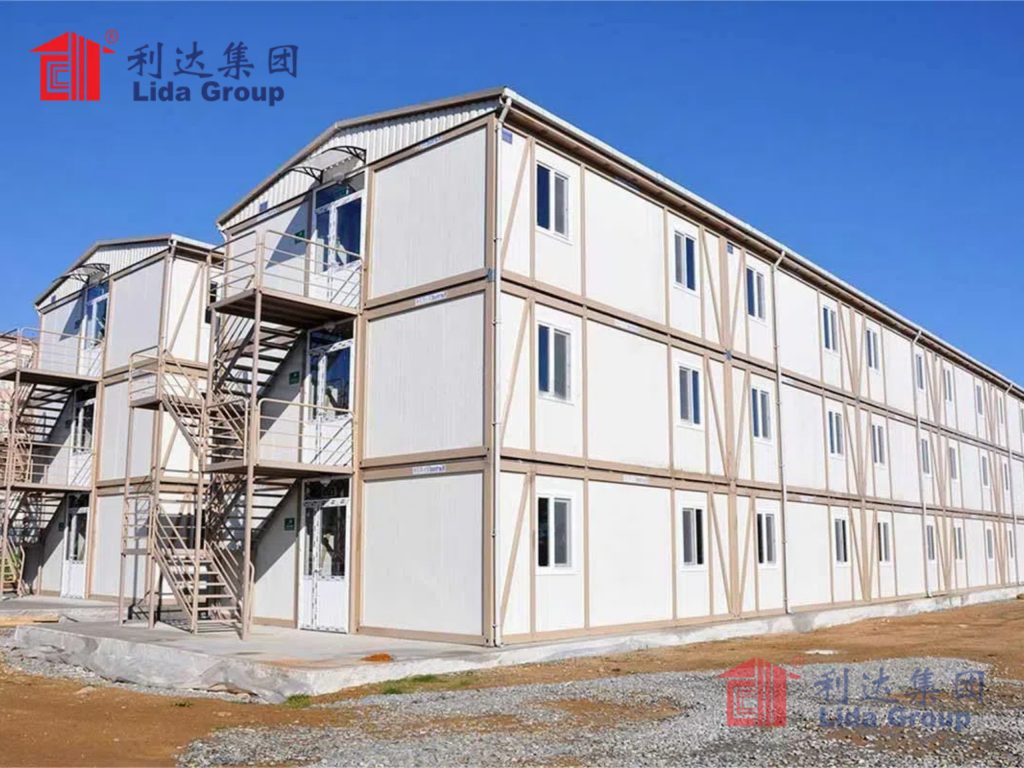
4. Humanized Configuration Optimizes On-Site Living Quality
Lida Group’s high-efficiency prefabricated dormitories not only pursue efficient deployment but also focus on improving worker living experience. Through humanized spatial design and complete functional configuration, the product completely changes the crude living environment of traditional temporary dormitories, realizing the integration of high efficiency and high comfort.
4.1 Scientific Spatial Layout and Comfortable Thermal Environment
Each standard dormitory unit adopts a scientific and reasonable spatial layout, with a spacious and tidy indoor environment, which can flexibly configure 2-person, 4-person, and 6-person accommodation modes according to user needs. The wall and roof are filled with high-density thermal insulation and sound insulation materials, which effectively isolate external temperature changes and construction noise, forming a constant-temperature and quiet indoor environment. It solves the pain points of hot summer, cold winter, and noisy rest environment of traditional dormitories, enabling workers to fully recover physical strength and energy after work.
4.2 Complete Supporting Living Facilities
All Lida prefabricated dormitory units are pre-installed with standardized lighting systems, safe socket circuits, ventilation windows, and waterproof and moisture-proof floors. The modular combination mode can be freely matched with supporting public facilities such as shower rooms, toilets, canteens, and activity rooms to form a complete closed-loop living system. The neat and unified indoor configuration and clean sanitary conditions effectively improve workers’ living satisfaction and sense of belonging, reduce team turnover, and lay a solid foundation for stable project construction.
4.3 Green and Environmentally Friendly Living Space
All materials of Lida’s prefabricated dormitories are environmentally friendly, non-toxic, and odorless, meeting international environmental protection standards, without harmful gas volatilization. The factory prefabrication mode produces no construction waste on site, realizing green construction and zero pollution. The fully sealed dustproof design keeps the indoor environment clean and tidy, avoiding the breeding of bacteria and mosquitoes caused by dust and moisture, and effectively protecting the physical health of on-site workers.
5. Significant Full-Lifecycle Economic Benefits
Lida Group’s efficient prefabricated container worker dormitories create comprehensive cost advantages for engineering projects through high production efficiency, low deployment cost, ultra-low maintenance consumption, and reusable value, realizing the optimal balance of high quality, high efficiency, and low cost.
5.1 Save Upfront Construction and Deployment Costs
Factory batch prefabrication greatly reduces unit production costs, and the modular assembly mode eliminates material waste and labor waste caused by traditional on-site construction. The foundation-free laying design saves the cost of concrete foundation pouring and ground leveling. The ultra-fast assembly efficiency shortens the camp construction cycle, avoids project delay losses, and greatly reduces the comprehensive upfront investment of on-site dormitory construction.
5.2 Reduce Long-Term Operation and Maintenance Costs
The industrial-grade anti-corrosion, waterproof, and aging-resistant performance of Lida’s dormitories avoids frequent rust removal, repainting, and component replacement of traditional dormitories. The annual maintenance cost is less than 3% of the initial investment, which is far lower than the high maintenance expenditure of traditional temporary housing. The stable structural performance reduces equipment failure and safety hidden dangers, saving a great deal of manpower and material resources for daily site management and maintenance.
5.3 Realize Cyclic Asset Appreciation
The reusable modular design enables Lida’s prefabricated dormitories to realize cross-project cyclic utilization. One-time investment can meet the housing needs of multiple projects, completely eliminating the repeated construction cost of traditional disposable dormitories. For long-term engineering enterprises, the reusable dormitory system effectively improves asset utilization rate, reduces long-term operational costs, and brings sustainable economic benefits.
6. Diversified Application Scenarios
With the dual advantages of high efficiency and high cost performance, Lida Group’s prefabricated container worker dormitories are widely applicable to various engineering and public service scenarios. In urban infrastructure construction projects such as roads, railways, and bridges, they provide rapid centralized accommodation for construction teams. In remote mining, oil field, and new energy base projects, they adapt to harsh field environments and solve the difficulty of rapid camp construction. In emergency disaster relief and public emergency resettlement work, ultra-fast deployment efficiency realizes rapid housing supply for rescue workers and affected personnel. In factory expansion, rural construction, and temporary commercial supporting projects, flexible scalable deployment meets diversified short-term and medium-term accommodation needs, becoming a universal and efficient housing solution for global temporary workforce accommodation.
7. Conclusion
Efficient and standardized worker accommodation is an indispensable supporting guarantee for the high-quality development of modern engineering construction. Traditional temporary dormitories have long restricted project operation and management upgrading due to low construction efficiency, poor safety performance, poor living conditions, and high comprehensive costs. In the context of increasingly standardized and efficient global engineering construction, the demand for fast-deployed, safe, comfortable, and reusable temporary worker dormitories has become increasingly urgent.
As an innovative modular housing solution launched by Lida Group, the efficient prefabricated container worker dormitory completely breaks the industry limitations of traditional temporary housing. Through full factory prefabrication and ultra-fast on-site assembly, it greatly improves the deployment efficiency of on-site workforce accommodation; through high-strength anti-corrosion steel structure and standardized safety design, it ensures long-term safe and stable use of the dormitory; through humanized functional configuration, it comprehensively optimizes workers’ on-site living quality and stabilizes workforce teams; through reusable modular design, it creates excellent full-lifecycle economic value for engineering enterprises. With outstanding efficiency, safety, comfort, and cost performance, Lida Group’s prefabricated container dormitories provide reliable, efficient, and economical standardized housing solutions for global construction, mining, and emergency projects, leading the efficient, humanized, and sustainable upgrading of the global temporary workforce housing industry.
Related news
-
Lida Group Delivers Flat Packed Container House for Remote Construction and Mining Camps
2026-05-27 17:56:04
-
Discover the Versatility of Living Container House Designs from Lida Group
2026-05-27 17:47:34
-
Prefabricated Container Worker Dormitory Solutions by Lida Group Enhance On-Site Living
2026-05-27 17:17:57
contact us
- Tel: +86-532-88966982
- Whatsapp: +86-13793209022
- E-mail: sales@lidajituan.com
