



Lida Group’s Living Container House Ideal for Project Sites and Emergency Shelter
2026-May-28 14:12:22
By Admin
Introduction
Modern social infrastructure development and public emergency response systems are increasingly reliant on flexible, rapid, and reliable temporary building solutions. Whether for long-term remote engineering construction, large-scale project camp operation, or sudden natural disaster relief and public emergency resettlement, traditional fixed buildings and simple temporary shelters can no longer meet the dual demands of efficient deployment and safe long-term use. Project construction sites require movable, reusable, and durable living facilities to accommodate mobile construction teams, while emergency rescue scenarios urgently need rapid-deployment, weather-resistant, and humane shelter spaces for displaced populations and rescue personnel.
Traditional temporary housing solutions face obvious dual dilemmas in project and emergency scenarios. Simple tents and makeshift shanties feature ultra-low construction thresholds but lack structural safety, thermal insulation, and windproof capabilities, unable to support long-term living and anti-extreme weather needs. Brick-concrete fixed houses and on-site welded color steel houses have stable performance but require long construction cycles, cannot be quickly deployed in emergency situations, and fail to be disassembled and transferred with project changes. This extreme imbalance between rapid response and durable usability has long restricted the standardized construction of engineering camps and the efficient implementation of public emergency rescue work.
As a leading global manufacturer of modular prefabricated buildings, Lida Group launches high-performance living container houses specially optimized for project site camps and emergency shelter scenarios. Integrating rapid factory prefabrication, flexible modular combination, industrial-grade structural safety, humanized living configuration, and free disassembly and transfer advantages, Lida’s living container houses perfectly adapt to long-term cyclic operation of engineering sites and rapid emergency resettlement needs. This article comprehensively analyzes the scenario pain points of traditional temporary shelters, the core adaptive advantages of Lida’s living container houses in project construction sites and emergency rescue scenarios, product safety and comfort performance, full-lifecycle application value, and practical application cases, fully demonstrating why Lida’s modular container houses have become the ideal dual-purpose solution for modern engineering camp construction and public emergency shelter guarantee.
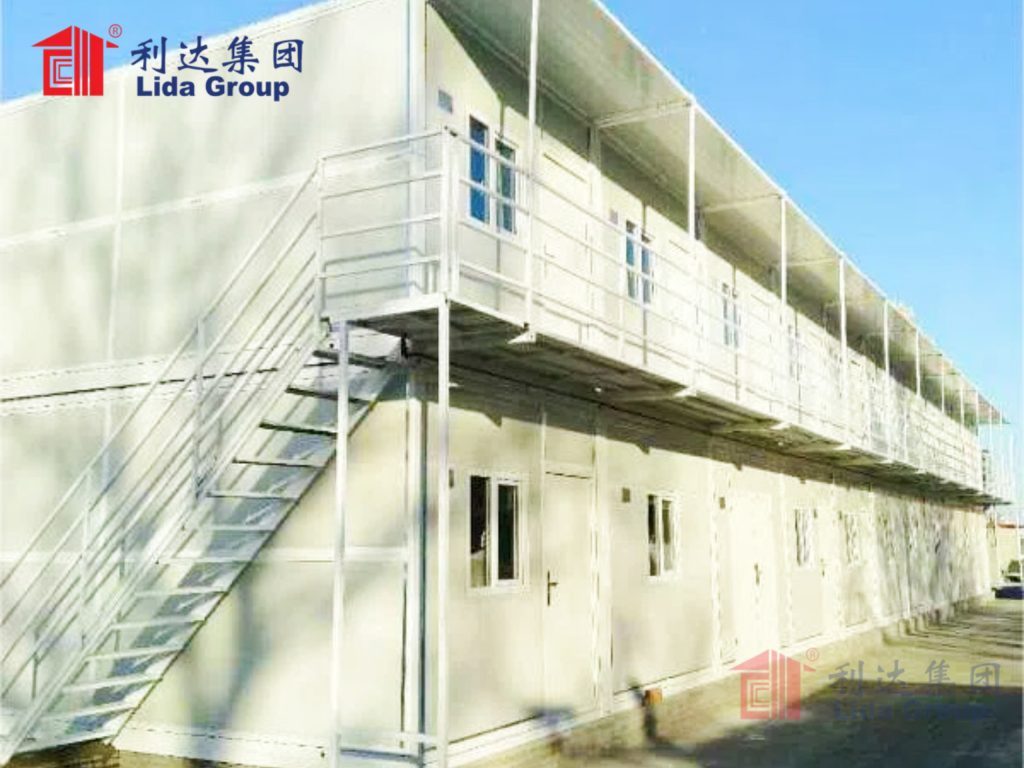
1. Scenario Pain Points of Traditional Temporary Housing Solutions
Engineering project camps and emergency shelter scenarios have completely different operational requirements but share the same high demands for rapid deployment, safety stability, and flexible mobility. Traditional temporary housing products have prominent functional defects in these two core scenarios, resulting in low construction efficiency, poor living experience, and insufficient emergency response capability.
1.1 Limitations in Long-Term Project Site Application
Construction, mining, road and bridge, and water conservancy projects are mostly located in remote and open areas with harsh natural environments and long construction cycles. On-site worker dormitories, offices, and supporting living facilities need to maintain stable operation for several years and support multiple transfers and repeated use with project iteration. Simple tents have extremely low durability, being easily damaged by strong winds, heavy rain, and sandstorms, and can only be used for short-term emergency transition, unable to meet long-term living needs. On-site welded color steel houses require weeks of wet construction, delaying worker settlement and project commencement. Moreover, fixed welding structures cannot be disassembled, resulting in one-time use and massive resource waste after project completion, with high comprehensive camp construction costs and low asset utilization. In addition, traditional temporary houses have poor thermal insulation and sound insulation performance, leading to poor on-site living conditions, easy workforce turnover, and unfavorable standardized civilized construction management.
1.2 Shortcomings in Emergency Shelter Scenarios
Emergency disaster relief, flood control resettlement, and public health emergency scenarios put forward ultra-high requirements for housing deployment speed, environmental adaptability, and batch scalability. The biggest drawback of traditional brick-concrete buildings is the slow construction speed, which cannot realize rapid resettlement within the golden rescue cycle. Although tents are easy to transport, they have poor sealing, no thermal insulation and moisture-proof functions, weak wind and snow resistance, and cannot provide safe and warm living space for the affected people and rescue teams in low-temperature, rainy, and humid environments. Meanwhile, tents lack independent functional partitions, unable to meet the differentiated needs of rest, office, medical observation, and material storage, resulting in chaotic emergency site management. Most traditional temporary houses also lack standardized fire protection, electrical safety, and dustproof and antibacterial design, bringing potential safety hazards to emergency resettlement sites.
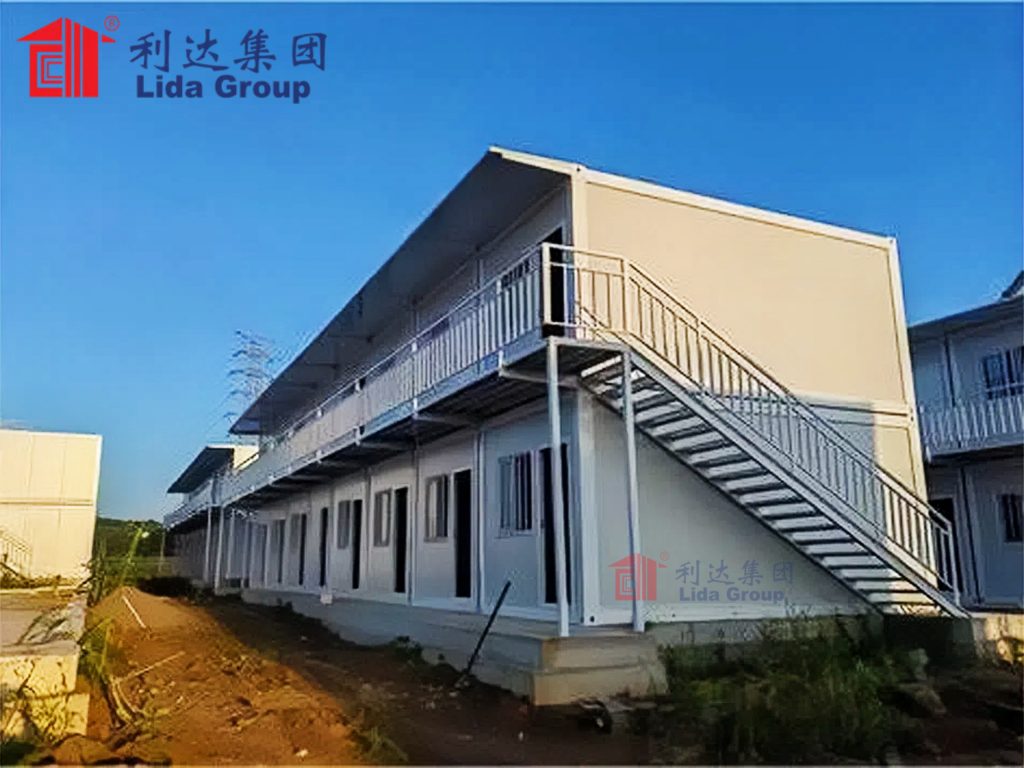
2. Core Advantages of Lida’s Living Container Houses for Project Site Deployment
Lida Group’s living container houses are tailor-made for long-cycle and mobile engineering project sites, with multiple advantages such as modular flexible layout, long-term durable structure, low maintenance cost, and recyclable turnover. They fully meet the standardized construction and refined management needs of modern engineering camps and solve various pain points of traditional project temporary housing.
2.1 Modular Flexible Layout Adapts to Dynamic Project Needs
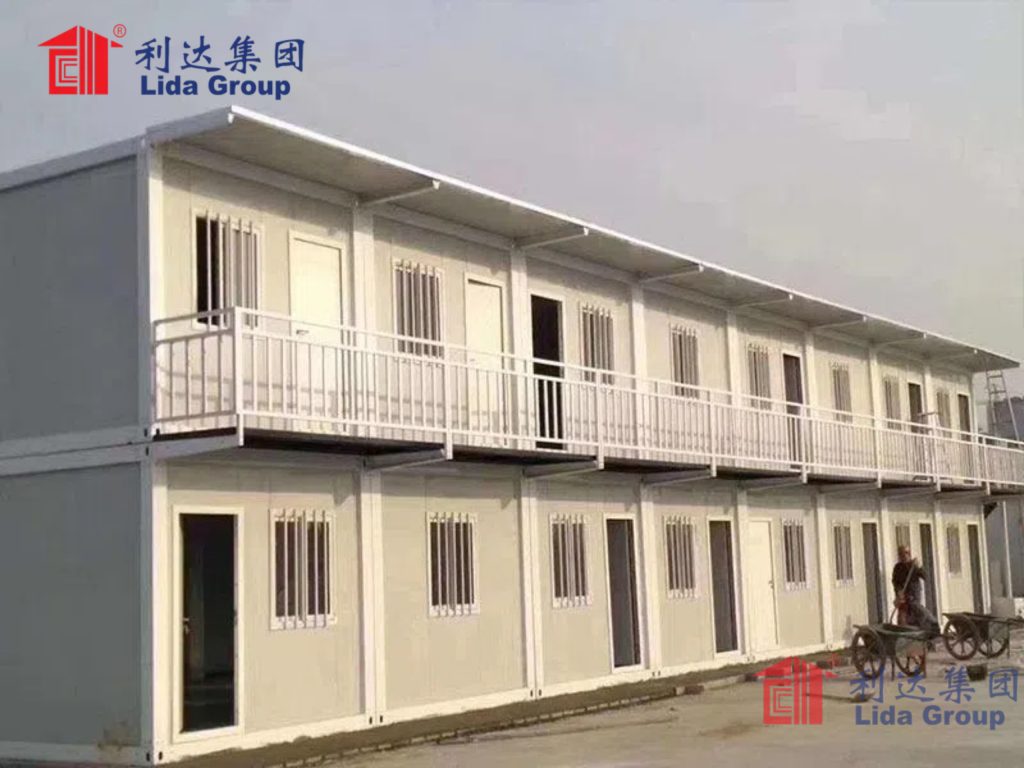
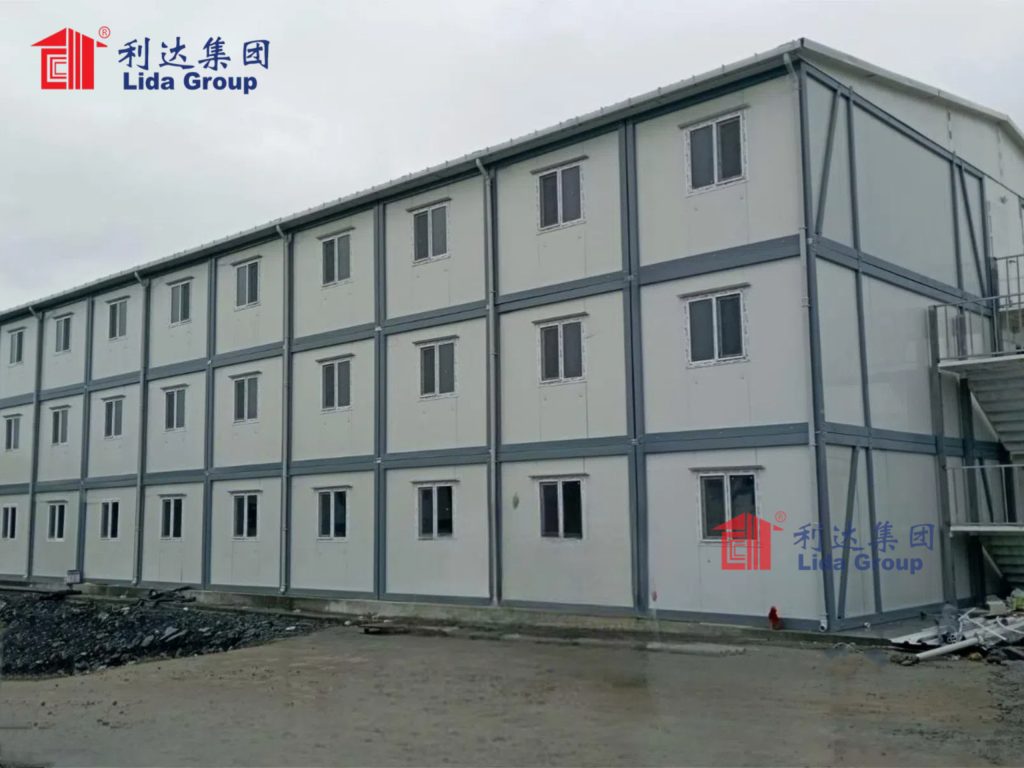
Lida’s living container houses adopt international standard modular unit design, with highly compatible assembly interfaces. Single units can be used independently, and multiple units can be freely spliced horizontally and stacked vertically to form multi-functional camp clusters including worker dormitories, project offices, meeting rooms, material storage rooms, and on-site security rooms. Engineering teams can flexibly adjust the camp scale and functional layout according to changes in construction progress and worker quantity, realizing dynamic matching of housing supply and project demand. Different from the fixed and single layout of traditional temporary houses, the modular combination mode can form neat and standardized camp communities, helping construction enterprises achieve unified on-site management and improve the overall image of civilized construction.
2.2 Industrial Durable Structure Suits Harsh Site Environments
Aiming at the harsh outdoor working conditions of remote engineering sites such as strong ultraviolet radiation, rain erosion, sandstorm impact, and temperature alternation, Lida’s living container houses adopt high-strength zinc-aluminum-magnesium alloy steel frames and industrial hot-dip galvanizing anti-corrosion technology. All load-bearing steel components form a dense anti-rust and anti-aging protective layer, which can effectively resist long-term outdoor environmental erosion. The overall structure passes professional wind resistance, seismic resistance, and snow load tests, meeting international outdoor building safety standards. The fully sealed waterproof and dustproof design avoids water leakage, dust accumulation, and damp mildew problems. The design service life reaches more than 20 years in conventional environments and 15 years in harsh remote sites, fully supporting long-term continuous operation of multi-year engineering and mining projects.
2.3 Detachable and Reusable for Cross-Project Turnover
Different from the disposable use attribute of traditional welded temporary houses, Lida’s living container houses adopt full-bolt assembly structure without destructive welding fixation. After the completion of a single project, the houses can be quickly disassembled, flat-packed, transported, and reused in new construction sites. The high-quality steel structure can withstand more than eight repeated disassembly and assembly cycles without structural deformation and performance attenuation. For engineering enterprises undertaking cross-regional and multi-project construction tasks, one-time investment can realize long-term cyclic asset utilization, completely eliminating repeated camp construction costs, greatly reducing project comprehensive operating costs, and improving enterprise asset utilization efficiency.
2.4 Humanized Configuration Improves On-Site Living Quality
Lida Group focuses on balancing practicality and comfort for project site living needs. The container house is filled with high-density thermal insulation and sound insulation materials inside the wall and roof, which effectively isolates external high temperature and severe cold, solves the pain points of hot summer and cold winter in traditional steel temporary houses, and reduces internal and external temperature difference fluctuation. The multi-layer sound insulation structure can block construction noise and wind noise, creating a quiet rest environment for workers. The indoor environment is clean and tidy, equipped with standardized lighting, safe socket system, ventilation windows, and waterproof and moisture-proof floors. The humanized living configuration effectively improves worker rest quality, reduces workforce turnover caused by poor accommodation conditions, and stabilizes on-site construction manpower.
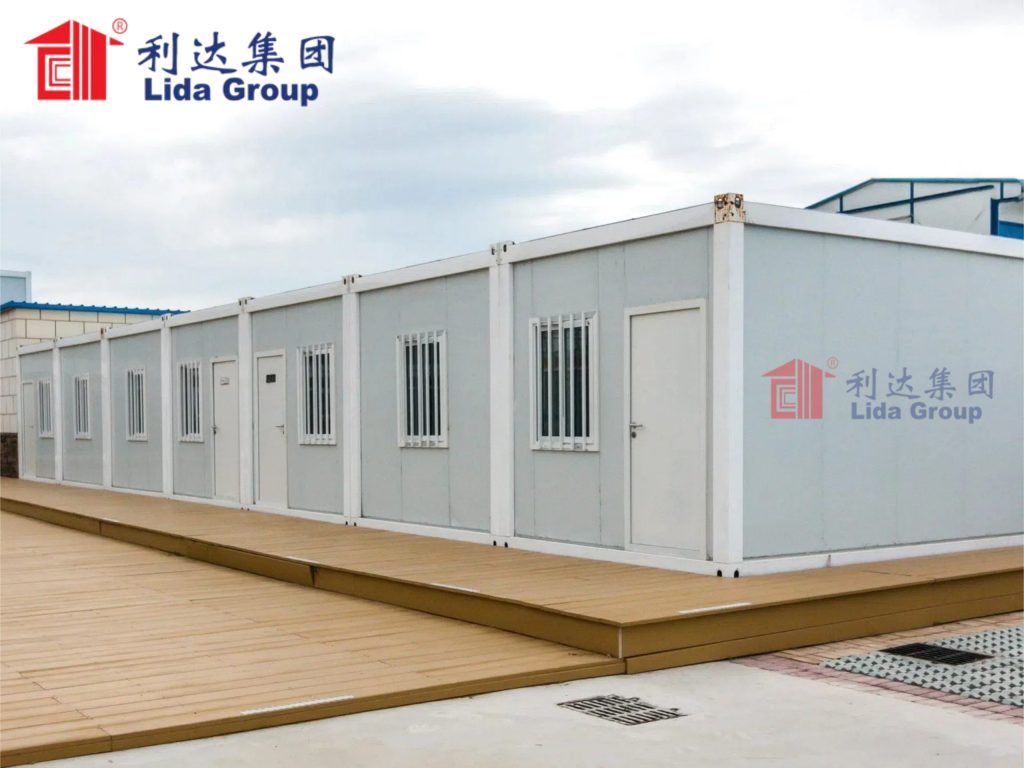
3. Outstanding Emergency Adaptability for Rapid Emergency Shelter Deployment
In response to sudden disaster relief and public emergency scenarios, Lida’s living container houses have exclusive advantages of ultra-fast deployment, batch transportation, standardized safety, and multi-functional expansion, which can make up for the insufficient emergency response capacity of traditional shelters and provide reliable temporary resettlement guarantees for emergency sites.
3.1 Ultra-Fast Factory Prefabrication and On-Site Assembly
More than 95% of the production and decoration work of Lida’s living container houses is completed in factory standardized workshops. After receiving emergency demand, the finished modular units can be transported to the site at the first time. The tool-free rapid assembly design enables ordinary workers to complete unit assembly and occupancy within one hour without professional technicians and large equipment. A large-scale emergency resettlement camp can be fully built and put into use within three to five days, realizing rapid resettlement of affected people and rapid stationing of rescue teams. Compared with the weeks-long construction cycle of traditional buildings and the poor comfort of tents, Lida’s container houses maximize emergency rescue efficiency and living safety within the shortest golden rescue time.
3.2 Excellent Weather Resistance and Anti-Disaster Performance
Emergency resettlement sites are mostly located in post-disaster harsh environments with complex weather conditions. Lida’s living container houses have strong wind resistance, seismic resistance, rain resistance, and snow load capacity, which can stably resist secondary disasters such as aftershocks, strong winds, and heavy rainfall. The fully sealed waterproof structure prevents rainwater infiltration and ground moisture, avoiding the damp and moldy problems of tent shelters. The professional thermal insulation system can maintain constant indoor temperature, provide warm living space in cold disaster areas, and effectively avoid physical discomfort and disease infection caused by extreme weather, protecting the physical health of resettled personnel and rescue workers.
3.3 Diversified Functional Expansion Meets Emergency Multi-Scenario Needs
Lida’s modular container houses support flexible functional combination and can be quickly transformed into different emergency functional spaces according to on-site needs. Single units can be used as emergency residential shelters, medical observation rooms, and rescue duty rooms. Combined units can form temporary emergency command centers, on-site medical stations, material reserve warehouses, and public sanitation areas. The standardized electrical system and ventilation system meet the operational needs of emergency equipment and long-term on-duty work. The diversified functional expansion capability realizes integrated layout of residence, office, medical treatment, and storage for emergency sites, solving the problem of single function and chaotic zoning of traditional emergency shelters.
3.4 Convenient Transportation and Batch Deployment
Lida’s living container houses support flat disassembly and stacked transportation, with high loading efficiency, suitable for large-scale batch rapid transportation after disasters. The modular units have low requirements on site foundation, can be laid on uneven ground, gravel ground, and temporary open space, without concrete foundation pouring and ground leveling, and can quickly complete site layout in disaster areas with damaged infrastructure. The flexible transportation and low foundation requirements enable the product to adapt to various complex emergency site conditions and realize barrier-free rapid deployment in remote disaster-stricken areas.
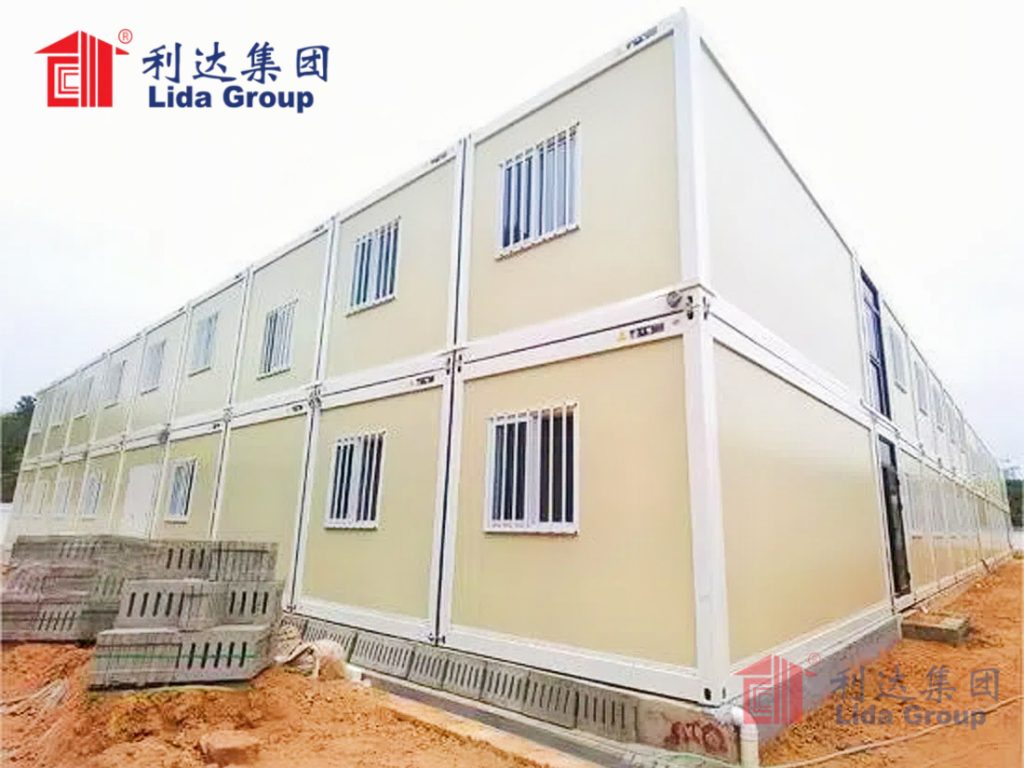
4. Unified Safety Standard and Green Environmental Protection Performance
Whether used for long-term project camps or short-term emergency shelters, building safety and environmental protection are the primary guarantees for user health and stable operation. Lida Group’s living container houses adhere to high-standard safety design and green building concepts, achieving dual optimization of safety performance and environmental adaptability.
4.1 High-Level Fireproof and Electrical Safety
All wall and thermal insulation materials of Lida’s container houses adopt A-level fireproof and flame-retardant materials, which can effectively block fire spread and avoid fire hazards in crowded living environments. The internal electrical system adopts standardized fireproof wiring, fully enclosed wire grooves, and leakage protection devices, which can effectively prevent electrical short circuit and electric leakage accidents. The overall fire protection and electrical safety design meets international construction site and public emergency shelter safety standards, eliminating potential safety risks for long-term living and intensive resettlement scenarios.
4.2 Green and Low-Carbon Zero-Pollution Design
All materials of Lida’s living container houses are environmentally friendly, non-toxic, and odorless, without harmful gas volatilization, ensuring healthy indoor air quality. The factory prefabrication mode produces no on-site construction waste, dust, and noise pollution, realizing green construction. The reusable modular design avoids massive construction waste generated by traditional temporary building demolition, reducing resource consumption and carbon emissions. In emergency rescue scenarios, the green and pollution-free performance can effectively protect the ecological environment of disaster-stricken areas and avoid secondary environmental pollution.
4.3 Dustproof, Moisture-Proof and Antibacterial Living Environment
The fully sealed structural design of Lida’s container houses can effectively isolate external dust, impurities, and humid air, keeping the indoor environment clean and dry. It avoids bacterial and mold growth caused by long-term closed resettlement, reduces the risk of infectious diseases in intensive resettlement sites, and creates a healthy and hygienic living environment for workers and resettled personnel.
5. Full-Lifecycle Economic and Practical Value
Lida’s living container houses break the dilemma that high-performance temporary buildings are expensive and low-cost products have poor quality. With standardized mass production, low maintenance consumption, and recyclable turnover advantages, they create excellent full-lifecycle economic value for engineering enterprises and public emergency institutions.
5.1 Low Upfront Deployment Cost
Factory batch prefabrication greatly reduces unit production costs, and the rapid assembly mode saves a large amount of on-site labor and mechanical leasing costs. The foundation-free laying design eliminates foundation pouring and ground leveling expenses, reducing upfront comprehensive investment by more than 30% compared with traditional temporary houses. For large-scale project camp construction and large-area emergency resettlement deployment, the cost-saving advantage is extremely prominent.
5.2 Ultra-Low Long-Term Maintenance Cost
The industrial-grade anti-corrosion, waterproof, and anti-aging structure avoids frequent rust removal, repainting, and component replacement. The annual maintenance cost is less than 3% of the initial investment, far lower than the high maintenance expenditure of traditional color steel houses and tents. Long-term stable performance reduces equipment failure and safety hidden dangers, saving a great deal of daily management and maintenance manpower and material resources.
5.3 Sustainable Reusable Asset Value
For engineering enterprises, the reusable design realizes cross-project cyclic utilization of camp facilities, turning one-time construction investment into sustainable fixed assets. For public emergency departments, container houses can be stored in batches as emergency reserve materials, deployed rapidly in case of disasters, and recycled and stored after emergency tasks, realizing long-term repeated use and greatly improving public emergency resource utilization efficiency.
6. Diversified Practical Application Scenarios
With dual advantages of engineering durability and emergency rapid deployment, Lida Group’s living container houses have achieved large-scale application in multiple fields. In infrastructure construction fields such as roads, railways, bridges, and water conservancy projects, they are used as long-term on-site worker dormitories and office camps. In remote mining, oil fields, and new energy base projects, they adapt to harsh field environments and provide stable long-term living support. In natural disaster relief, flood season resettlement, and public health emergency scenarios, they serve as rapid emergency shelters and medical observation stations. In temporary military camps, scenic homestays, and factory expansion supporting housing, their flexible and efficient performance also meets diversified temporary housing needs, forming a universal dual-purpose modular housing solution for engineering and emergency scenarios.
7. Conclusion
Temporary housing facilities for modern engineering projects and public emergency shelters have core common demands: rapid deployment, safe stability, flexible mobility, and low comprehensive cost. Traditional tents and fixed temporary buildings cannot balance long-term durable use and ultra-fast emergency response, resulting in low efficiency and poor safety in project camp construction and emergency resettlement work. As a high-performance dual-purpose modular housing solution, Lida Group’s living container houses perfectly solve the industry’s long-standing scenario pain points.
For engineering project sites, Lida’s container houses rely on modular flexible combination, industrial durable structure, and recyclable turnover advantages to realize standardized, comfortable, and low-cost long-term camp operation, helping engineering enterprises reduce operating costs, stabilize workforce teams, and improve civilized construction levels. For emergency shelter scenarios, the product’s ultra-fast factory prefabrication and on-site assembly capability greatly shorten emergency deployment cycles, while excellent weather resistance, anti-disaster performance, and diversified functional expansion provide safe, healthy, and multi-functional temporary resettlement space for emergency sites. With high-standard safety performance, green environmental protection advantages, and outstanding full-lifecycle economic value, Lida Group’s living container houses have become the ideal choice integrating engineering long-term application and emergency rapid guarantee, continuously empowering the efficient development of modern engineering construction and public emergency rescue systems.
Related news
-
Living Container House by Lida Group Combines Comfort, Durability, and Affordability
2026-05-28 13:19:58
-
Lida Group Expands Range of Flat Packed Container House for Easy Export and Storage
2026-05-28 13:46:30
-
Prefabricated Container Worker Dormitory Offers Fast Assembly and Long Service Life
2026-05-28 14:02:31
contact us
- Tel: +86-532-88966982
- Whatsapp: +86-13793209022
- E-mail: sales@lidajituan.com
