



Flat Packed Container House from Lida Group Saves Shipping Space and Installation Time
2026-May-28 15:59:15
By Admin
Introduction
The global modular construction industry has entered an era of high efficiency and cost optimization, where logistics efficiency and on-site construction speed have become core competitive factors for cross-border engineering projects and temporary building solutions. For international contractors, mining enterprises, infrastructure developers, and modular building distributors, two major factors continuously raise operational costs and delay project schedules: wasted shipping space during cross-border transportation and time-consuming on-site installation of temporary housing facilities. Traditional integrated container houses, though durable and practical, feature fixed integral structures that occupy massive cargo space, lead to low container loading rates, and generate exorbitant international freight fees. Meanwhile, their complicated on-site assembly and modification procedures consume substantial working hours, labor resources, and mechanical costs, severely restricting the rapid deployment of global engineering camps.
To solve the dual industry pain points of low shipping space utilization and inefficient on-site installation, Lida Group, a world-leading manufacturer of prefabricated modular buildings, has optimized and upgraded its classic flat packed container house series. Tailored for global cross-border transportation and fast on-site deployment, Lida’s flat packed container houses adopt a scientific disassembled flat stacking structure, standardized component classification, and integrated prefabrication technology. This innovative design drastically saves shipping space, improves container loading efficiency, cuts down international logistics costs, and simplifies on-site assembly procedures to greatly shorten installation time. While maximizing transportation and construction efficiency, the product retains industrial-grade structural durability, safe living performance, and multi-scenario adaptability. This article systematically analyzes the drawbacks of traditional integrated container houses in shipping and installation, the core technical advantages of Lida’s flat packed solutions, practical efficiency data, comprehensive project value, and diversified application prospects, fully demonstrating why Lida’s flat packed container houses have become the most cost-effective and time-saving modular housing choice for global projects.
1. Major Drawbacks of Traditional Integrated Container Houses
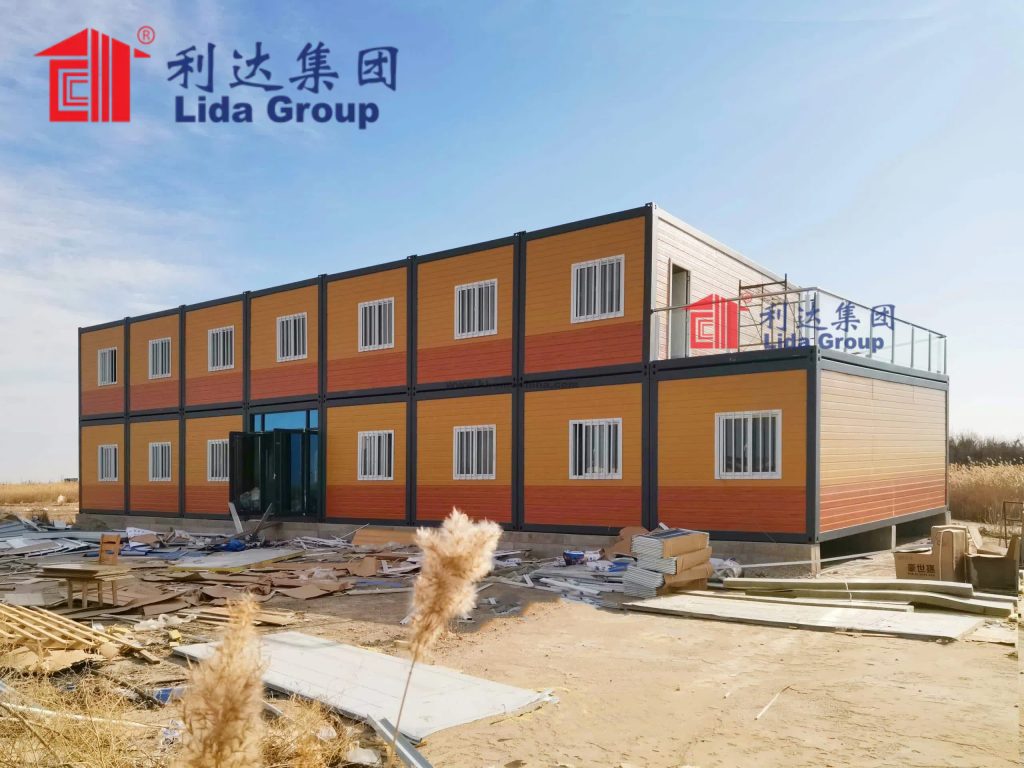
Traditional one-piece welded container houses have long been widely used in engineering accommodation, temporary office spaces, and emergency resettlement scenarios due to their stable structure and good sealing performance. However, their inherent integral structural design brings irreparable defects in international shipping and on-site installation, forming huge barriers for large-scale global promotion and rapid project deployment.
1.1 Low Shipping Space Utilization and Excessive Freight Costs
The biggest limitation of traditional integrated container houses is their fixed three-dimensional volume. Completely assembled integral units cannot be disassembled or folded, resulting in severe empty space waste during ocean transportation. A standard 20ft integrated container house occupies the full internal space of a large shipping container, with no room for additional component stacking. Industry data shows that a single 40HQ international shipping container can only load 2 to 3 sets of traditional integrated container house units. This ultra-low loading rate leads to extremely high unit freight costs. For bulk orders involving dozens or hundreds of housing units, the number of required ocean shipments increases exponentially, bringing huge logistics pressure and capital occupation. In addition, oversized integral units belong to over-limit cargo in road and sea transportation, generating extra port handling fees, hoisting fees, and over-limit supervision fees, further raising comprehensive transportation costs.
1.2 Complicated On-Site Installation and Long Construction Cycles
Although traditional integrated container houses are pre-assembled in factories, they still require cumbersome auxiliary construction work after arriving at the site. The overall unit is heavy and bulky, requiring large professional cranes and forklifts for handling and positioning. The leveling, fixing, pipeline connection, and sealing calibration of integral containers rely on professional technical workers, with high operation thresholds and long working cycles. For multi-unit combined camps, the overall alignment and gap adjustment of integral containers take a great deal of time. In remote construction sites lacking large mechanical equipment and professional technicians, the installation progress will be severely delayed, directly affecting worker settlement and project commencement schedules.
1.3 Low Flexibility and High Risk of Transit Damage
Integrated container houses have poor transportation flexibility and can only adapt to standard container ship transportation modes, unable to flexibly match multi-modal transportation such as land trucking and river shipping. The protruding integral structure is prone to collision, extrusion, and surface damage during long-distance transit, resulting in paint peeling, component deformation, and sealing failure. Damaged units require secondary repair and correction on site, which not only wastes installation time but also increases after-sales maintenance costs and affects the overall construction quality of the camp.
2. Lida’s Flat Packed Structure: Maximize Shipping Space Utilization
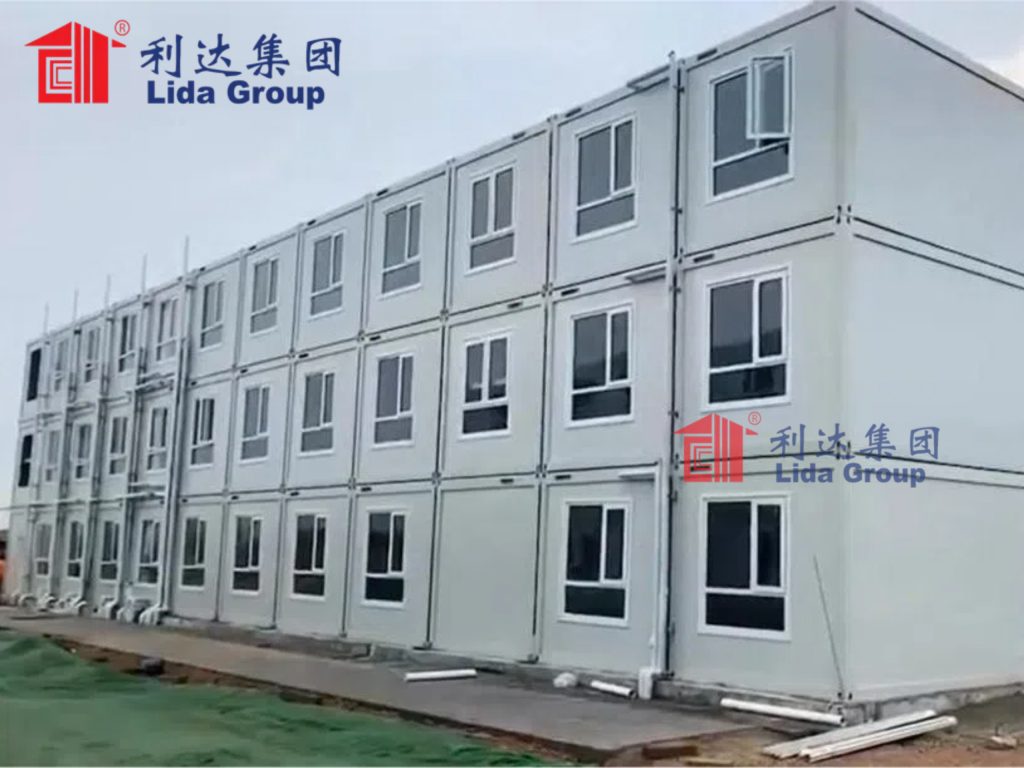
Lida Group’s upgraded flat packed container houses adopt a fully disassembled modular design, completely subverting the integral structure of traditional container houses. All house components including steel frames, wall panels, roof plates, floor materials, doors, windows, and electrical accessories are split into flat standardized parts, realizing dense stacking and zero-waste container loading. This structural innovation achieves revolutionary breakthroughs in shipping space utilization and logistics cost control.
2.1 Scientific Flat Disassembly and Stacking Design
Lida’s flat packed container houses follow professional logistics optimization principles for structural splitting. All irregular three-dimensional structures are decomposed into flat regular plates and standardized strip components. Each component is designed with unified positioning dimensions and stacking gaps, enabling seamless dense stacking without redundant space occupation. Corner posts and frame parts are packaged in a targeted classified manner to avoid extrusion deformation, while wall and roof sandwich panels are stacked flat in batches to maximize plane space utilization. Compared with traditional integral containers, the flat packing mode reduces the overall transportation volume of a single house by more than 70%, fundamentally solving the problem of cargo space waste.
2.2 Ultra-High Container Loading Rate Reduces Unit Freight
The optimized flat stacking structure greatly improves the loading capacity of international shipping containers. A standard 40HQ shipping container can load 12 to 15 complete sets of Lida’s flat packed container house components, which is more than 5 times the loading quantity of traditional integral container houses. For large-scale engineering camp projects requiring 100 housing units, traditional integrated containers need 30 to 50 shipping containers, while Lida’s flat packed products only require 7 to 9 containers. This massive improvement in loading efficiency directly cuts international freight costs by 75% to 85%, saving hundreds of thousands of dollars in logistics expenses for large projects. Meanwhile, the reduced shipment quantity shortens port loading and customs clearance cycles, effectively avoiding cargo delay demurrage fees.
2.3 Standardized Packaging Adapts to Diversified Transportation
All flat packed components of Lida’s container houses adopt unified standardized packaging specifications, with no over-limit size or weight. The neat flat packaging is compatible with ocean shipping, land container transportation, railway freight, and multi-modal combined transportation, adapting to narrow mountain roads, rural temporary roads, and remote area transportation conditions that integral containers cannot pass through. The flexible transportation adaptability enables products to quickly cover global remote engineering markets in Africa, Southeast Asia, Central Asia, and South America. In addition, the customized moisture-proof, dust-proof, and compression-resistant packaging materials protect components from rain erosion, dust pollution, and extrusion damage during long-distance ocean transit, ensuring 100% intact product quality after arrival.

3. Optimized Modular Design Greatly Shortens Installation Time
While achieving extreme space savings in transportation, Lida Group focuses on optimizing on-site assembly logic. The flat packed container house abandons complicated on-site modification and debugging links, adopts fully prefabricated standardized components and unified assembly interfaces, greatly reducing on-site installation difficulty and working hours, realizing rapid deployment of housing facilities.
3.1 Full Factory Prefabrication Reduces On-Site Workload
More than 98% of the production and prefabrication work of Lida’s flat packed container houses is completed in factory standardized workshops. The cutting of steel frames, anti-corrosion spraying, wall panel thermal insulation filling, door and window matching, and internal electrical pipeline pre-embedding are all finished in advance. The components delivered to the site are all finished parts with precise sizes and reserved interfaces, requiring no secondary cutting, drilling, or welding processing on site. This completely eliminates the tedious wet construction and component modification work of traditional temporary buildings, concentrating all construction work on simple assembly and splicing, greatly compressing on-site construction time.
3.2 Unified Bolt Assembly Simplifies Operation Procedures
Lida’s flat packed container houses adopt a full-bolt assembly structure with universal unified interfaces for all components. The standardized assembly design eliminates technical thresholds, requiring no professional welding workers and large hoisting equipment. Ordinary construction workers can complete assembly operations with only simple hand tools. Each component is marked with unified serial numbers and assembly instructions, realizing standardized and procedural installation. A single standard 20ft flat packed container house can be fully assembled, debugged, and put into use within 2 to 3 hours by a 3-person team. Compared with the 8 to 12 hours required for traditional container house positioning and debugging, the installation efficiency is increased by more than 70%.
3.3 Rapid Large-Scale Camp Deployment Capability
For large-scale engineering camps composed of dozens or hundreds of housing units, the time-saving advantage of Lida’s flat packed containers is more prominent. Traditional container camps require batch hoisting, positioning, and gap adjustment, with a deployment cycle of more than one week. In contrast, Lida’s flat packed container houses support simultaneous assembly by multiple teams, and a complete large-scale camp can be fully constructed and occupied within 3 days. The ultra-fast deployment speed realizes timely worker settlement and rapid project startup, effectively shortening the overall project construction cycle and creating substantial time benefits for engineering enterprises.
3.4 Low Foundation Requirements Further Accelerate Deployment
Lida’s flat packed container houses have lightweight structural characteristics and stable stress distribution, requiring no complex concrete foundation pouring and long curing time. The houses can be directly laid on flat gravel ground, cement ground, and temporary hardened ground, realizing immediate laying and immediate use. This foundation-free design saves 2 to 3 days of foundation construction time for each batch of camps, further optimizing the overall installation and deployment efficiency and perfectly adapting to urgent construction and emergency resettlement scenarios.
4. Stable Product Performance Without Loss of Core Functions
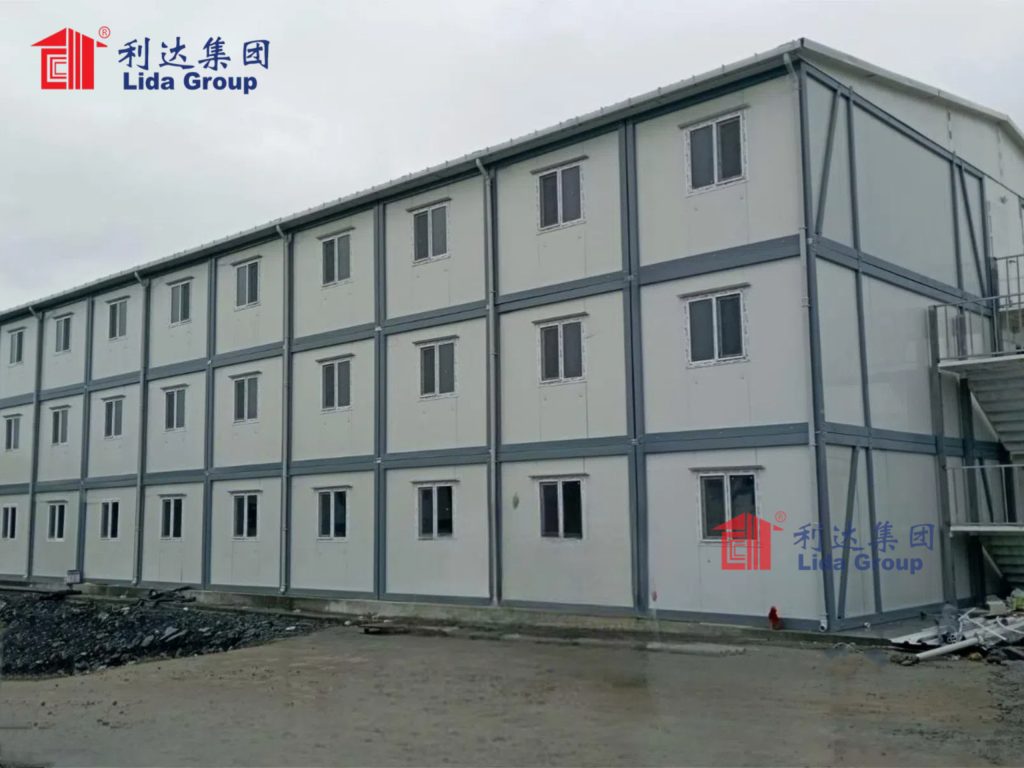
Many disassembled flat packed products on the market sacrifice structural stability and living comfort for transportation convenience. In contrast, Lida Group achieves perfect balance between efficient transportation, rapid installation, and high-quality product performance through precise structural optimization and high-standard material selection, with no attenuation of safety, durability, and livability.
4.1 Industrial-Grade Durable Structure
Lida’s flat packed container houses adopt high-strength zinc-aluminum-magnesium alloy steel frames and high-density fireproof thermal insulation sandwich panels. All steel components undergo industrial hot-dip galvanizing anti-corrosion treatment, with excellent anti-rust, anti-aging, and weather-resistant capabilities. The optimized bolt connection structure has uniform stress and strong overall rigidity, passing international wind resistance, seismic resistance, and snow load tests. The design service life reaches more than 15 years in harsh outdoor environments, fully meeting the long-term use needs of engineering projects. The disassembly and assembly process will not cause structural damage or performance attenuation, supporting multiple repeated turnover uses.
4.2 Complete Living and Functional Configuration
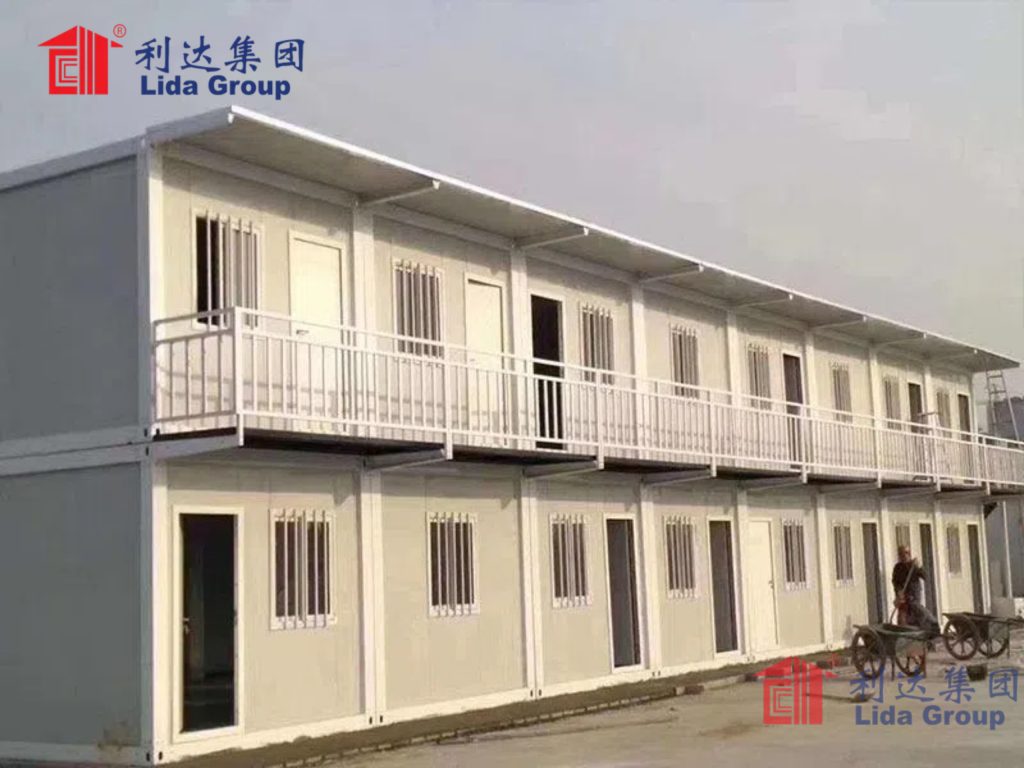
Despite the flat disassembled packaging, all functional configurations of the container house are completely retained. After assembly, the house is equipped with complete lighting systems, safe socket circuits, ventilation windows, waterproof and moisture-proof floors, and thermal insulation layers, with the same comfortable living environment as traditional integrated container houses. The product supports personalized customization of interior layout, door and window positions, and exterior styles, and can be freely combined into dormitories, offices, meeting rooms, and storage rooms, fully meeting the diversified functional needs of project sites.
4.3 Reliable Sealing and Safety Performance
Lida’s flat packed container houses adopt high-elasticity waterproof sealing strips for all assembly gaps, realizing fully sealed waterproof and dustproof effects after installation. The A-level fireproof wall materials and standardized electrical leakage protection devices ensure high-standard fireproof and electrical safety performance. The precise assembly tolerance control avoids gaps and looseness caused by disassembly and assembly, ensuring stable sealing and safety performance for long-term outdoor use.
5. Comprehensive Economic and Operational Benefits
The dual advantages of saved shipping space and shortened installation time bring multi-dimensional economic and operational value for global engineering contractors and modular building distributors, covering logistics cost savings, labor cost reduction, capital turnover acceleration, and project cycle optimization.
5.1 Drastic Logistics Cost Reduction
The ultra-high loading rate of Lida’s flat packed containers greatly reduces the number of ocean shipments, directly cutting freight, port handling, and customs clearance costs. For bulk export orders, the comprehensive logistics cost per unit is reduced by nearly 80%. Meanwhile, flat packaged components occupy small warehouse space, reducing factory inventory storage costs and overseas local warehousing rental fees, further optimizing the overall cost structure of products.
5.2 Significant Labor and Time Cost Savings
The simplified installation process reduces the number of on-site construction workers and working hours, saving a great deal of labor costs. The rapid deployment speed shortens the project preparation cycle, avoids project delay losses caused by slow camp construction, and accelerates project revenue realization. For enterprises undertaking multiple cross-regional projects, the fast assembly and convenient transportation features greatly improve project turnover efficiency and increase annual project output.
5.3 Improved Asset Utilization Rate
The detachable flat packed structure supports free disassembly, transportation, and repeated reuse. After project completion, the houses can be flat-packed and stored for subsequent project use, avoiding the scrapping waste of traditional disposable temporary buildings. The reusable asset attribute improves the long-term return on investment of enterprises and realizes sustainable operational benefits.
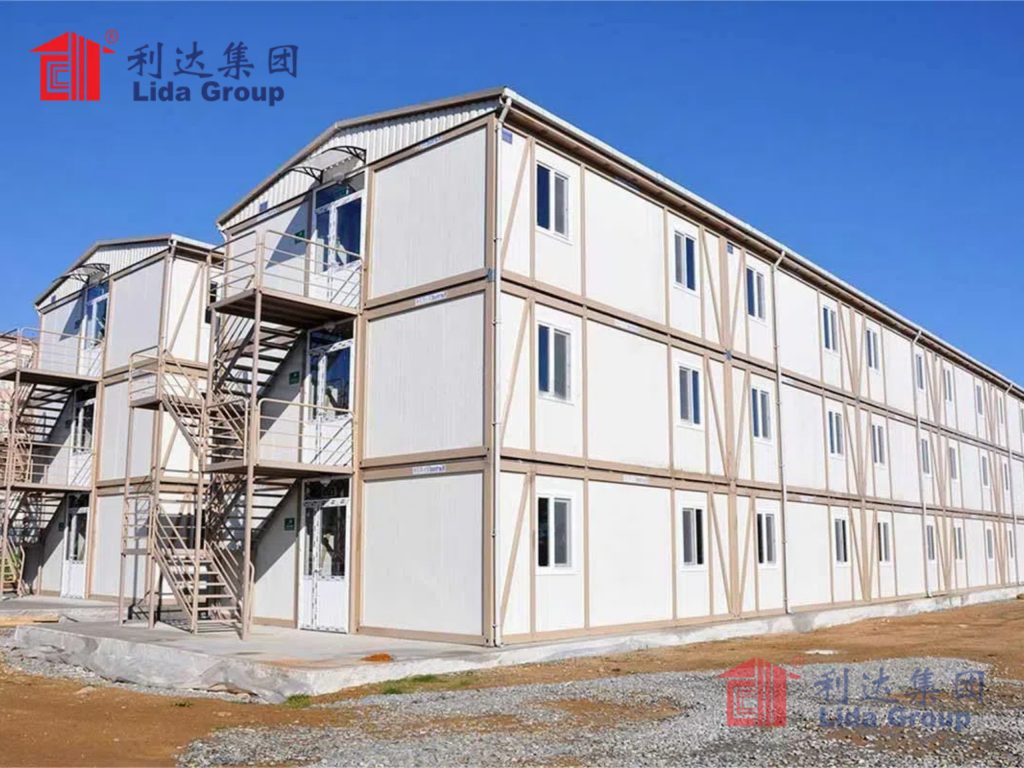
6. Wide Application Scenarios of Lida’s Flat Packed Container Houses
Benefiting from efficient shipping performance and fast installation advantages, Lida’s flat packed container houses are widely used in global cross-border engineering and public service fields. In infrastructure projects such as roads, railways, bridges, and water conservancy construction, they serve as rapid-deployment worker dormitories and project offices, effectively shortening camp construction cycles. In remote mining, oil field, and new energy base projects with difficult transportation conditions, the flat packed and easy-to-transport features solve the deployment dilemma of remote site facilities. In emergency disaster relief and public emergency resettlement scenarios, ultra-fast transportation and assembly capabilities realize rapid emergency shelter layout. In global modular building wholesale and distribution business, high space utilization and low logistics costs help distributors improve market competitiveness and profit margins, forming a versatile and efficient modular building solution for global markets.
7. Conclusion
In the fiercely competitive global modular construction market, logistics efficiency and on-site construction speed have become key factors determining project profitability and market competitiveness. Traditional integrated container houses can no longer adapt to the efficient and low-cost development trend of modern global projects due to low shipping space utilization, high freight costs, and time-consuming installation.
Lida Group’s flat packed container houses perfectly solve the core pain points of the industry with dual core advantages of saving shipping space and shortening installation time. The innovative flat disassembled stacking design greatly improves container loading efficiency, reduces international logistics costs by more than 75%, and realizes maximum utilization of transportation space. The full factory prefabrication and standardized bolt assembly structure simplify on-site construction procedures, drastically shorten installation cycles, and reduce labor and mechanical costs. At the same time, the product retains industrial-grade structural durability, safe and comfortable living performance, and reusable value, achieving the perfect integration of high efficiency, low cost, and high quality. With outstanding logistics advantages, rapid deployment capabilities, and comprehensive economic benefits, Lida Group’s flat packed container houses have become the preferred modular housing solution for global cross-border engineering projects, continuously promoting the efficient, standardized, and low-cost upgrading of the global modular construction industry.
Related news
-
Lida Group’s Living Container House Ideal for Project Sites and Emergency Shelter
2026-05-28 14:12:22
-
Prefabricated Container Worker Dormitory Offers Fast Assembly and Long Service Life
2026-05-28 14:02:31
-
Lida Group Expands Range of Flat Packed Container House for Easy Export and Storage
2026-05-28 13:46:30
contact us
- Tel: +86-532-88966982
- Whatsapp: +86-13793209022
- E-mail: sales@lidajituan.com
