



New Oil Field Worker Dormitory Features Temporary Low Cost Building and Easy Install Panels
2026-May-25 16:17:46
By Admin
Introduction
The global oil and gas industry relies heavily on field exploration, drilling, and development operations that are mostly deployed in remote, barren, and climatically extreme regions. These isolated oilfield sites lack mature urban infrastructure, stable residential supporting systems, and professional construction conditions, making on-site worker accommodation a key factor restricting project progress and team stability. Unlike permanent civil buildings, oilfield worker dormitories belong to typical temporary supporting facilities with obvious phased usage, mobile deployment, and short-cycle application characteristics. This determines that oilfield accommodation projects must balance rapid construction, economic cost control, and reliable environmental adaptability, rather than pursuing excessive structural permanence and redundant decoration.
In response to the long-standing industry pain points of high construction costs, slow deployment, cumbersome installation, and poor reusability of traditional oilfield dormitories, Lida Group has launched a new customized oilfield worker dormitory solution. Centered on temporary low-cost building structure and upgraded easy-install sandwich panel technology, this new product completely adapts to the temporary operational attributes of oilfield projects. It abandons redundant construction procedures and high-cost material configurations of traditional buildings, realizes ultra-simple on-site assembly, full-lifecycle cost reduction, and flexible mobile deployment, while retaining safe and comfortable living performance suitable for harsh oilfield environments. This article comprehensively elaborates on the shortcomings of traditional oilfield dormitory construction, the core design features of Lida Group’s new low-cost temporary dormitories, the technical advantages of easy-install sandwich panels, on-site construction efficiency, practical application value, and long-term economic benefits, providing an in-depth interpretation of the new standardized solution for modern oilfield temporary accommodation.
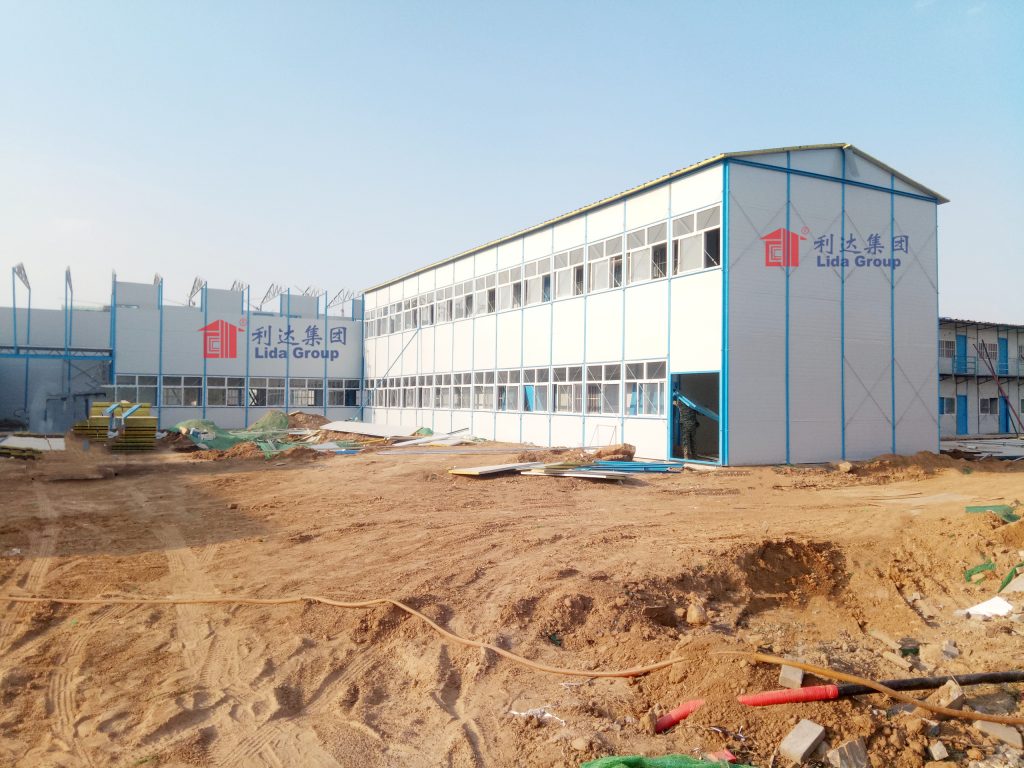
1. Drawbacks of Traditional Oil Field Temporary Dormitories
For a long time, oilfield worker dormitories have adopted two mainstream temporary construction modes: manually welded color steel houses and simple canvas tents. Both solutions fail to balance installation efficiency, economic cost, and living performance, resulting in low overall project benefit and restricting the standardized development of oilfield camp construction.
1.1 High Comprehensive Cost and Severe Resource Waste
Traditional welded color steel temporary houses require complete on-site foundation pouring, steel frame welding, manual panel cutting, and secondary decoration. The whole process consumes a large amount of steel, concrete, and auxiliary building materials, with serious raw material waste caused by irregular manual operation. The long construction cycle requires continuous investment in skilled labor and mechanical equipment rental, leading to high upfront construction costs. More importantly, the welded fixed structure is non-detachable and non-reusable. After the completion of a single oilfield project, the dormitory can only be demolished and discarded, generating massive construction waste and zero residual asset value. For oilfield enterprises with multi-site cross-regional operation demands, repeated construction forms a heavy long-term cost burden. Although canvas tents have low initial procurement costs, they are easily damaged by wind and sand, require frequent replacement, and cannot form standardized living spaces, resulting in extremely high comprehensive usage costs.
1.2 Complicated Installation and Low Construction Efficiency
Traditional temporary buildings rely entirely on on-site manual operation and fire welding processes, with tedious and time-consuming construction steps. A medium-sized oilfield dormitory camp often requires 20 to 40 days of on-site construction. Remote oilfield areas have insufficient local construction teams and harsh weather conditions, and sandstorms, heavy rainfall, and ultra-low temperatures will further delay construction progress. The slow installation speed leads to delayed worker settlement and postponed project startup, missing the golden construction window of oilfield projects and causing intangible economic losses. In addition, traditional construction requires professional welders and large mechanical equipment, with high technical thresholds and poor emergency response capabilities, unable to adapt to rapid deployment demands of sudden oilfield tasks.
1.3 Poor Environmental Adaptability and Unstable Living Conditions
Traditional temporary housing uses low-grade ordinary insulation materials and thin steel plates, with weak resistance to extreme oilfield climates. In desert high-temperature environments, the indoor space is sultry and stuffy due to poor thermal insulation; in high-altitude cold regions, serious heat loss leads to low indoor temperature; in coastal saline areas, steel structures are prone to corrosion and rust. Meanwhile, manual splicing produces large gaps, resulting in poor airtightness, allowing sand, dust, and humid air to penetrate indoors. These defects cause frequent failures such as water leakage, dust accumulation, and wall mildew, making the living environment noisy, damp, and unhygienic. Long-term residence seriously affects workers’ rest quality and physical health, leading to high personnel turnover and unstable frontline teams.
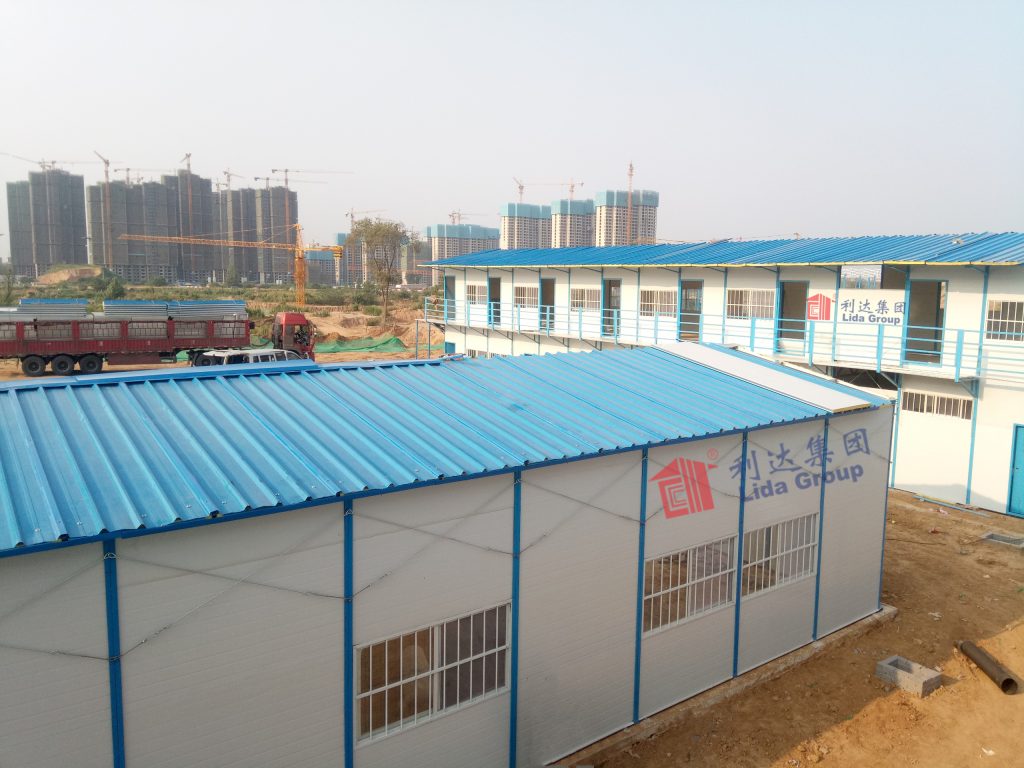
2. Core Design Advantages of New Low-Cost Temporary Building Structure
Lida Group’s new oilfield dormitory adopts an optimized temporary building structural design tailored for phased oilfield operations. Different from permanent buildings with excessive structural redundancy and traditional temporary buildings with crude performance, this new structure realizes scientific cost control and structural stability, perfectly matching the temporary, mobile, and high-efficiency operational characteristics of oilfield projects.
2.1 Scientific Temporary Structural Design Reduces Redundant Investment
Aiming at the short-term and temporary usage needs of oilfield dormitories, Lida Group removes unnecessary permanent structural configurations and adopts a lightweight high-strength steel frame temporary structure. The structure abandons thick concrete foundations and heavy load-bearing components, and only requires simple ground leveling and gravel compaction for installation, eliminating foundation pouring costs and long curing cycles. Under the premise of meeting oilfield wind resistance, earthquake resistance, and load-bearing safety standards, the optimized structural design reduces steel consumption and material redundancy, greatly cutting upfront material costs. This targeted temporary structure design avoids over-engineering of traditional buildings, realizing precise cost control without compromising basic safety performance.
2.2 Detachable Modular Realizes Reusable Low-Cost Cycle
The new temporary building adopts a fully detachable bolted connection structure, completely different from the disposable welded structure of traditional houses. All steel frames and wall units are independent modular components that can be freely disassembled, flat-packed, transported, and reassembled. After the completion of one oilfield project, all building components can be recycled and stored without construction waste or asset loss. The high-quality galvanized steel structure has anti-corrosion and anti-aging properties, supporting more than 8 repeated disassembly and assembly cycles across different projects. This cyclic reusable mode fundamentally eliminates repeated construction investment, greatly reducing the average annual usage cost of oilfield dormitories and realizing long-term low-cost operation.
2.3 Lightweight Structure Cuts Logistics and Deployment Costs
Optimized for remote oilfield transportation conditions, the temporary building structure features overall lightweight and flat-pack stacking design. Disassembled components occupy a small volume and light weight, which can be transported by ordinary medium-sized cargo vehicles, adapting to narrow mountain roads and unimproved wilderness roads in remote oilfields. It avoids the high logistics costs of large-scale building component transportation required by traditional temporary buildings. Meanwhile, the lightweight structure does not need large cranes for hoisting, saving mechanical equipment rental and labor costs during deployment, further reducing the comprehensive construction threshold of oilfield camps.
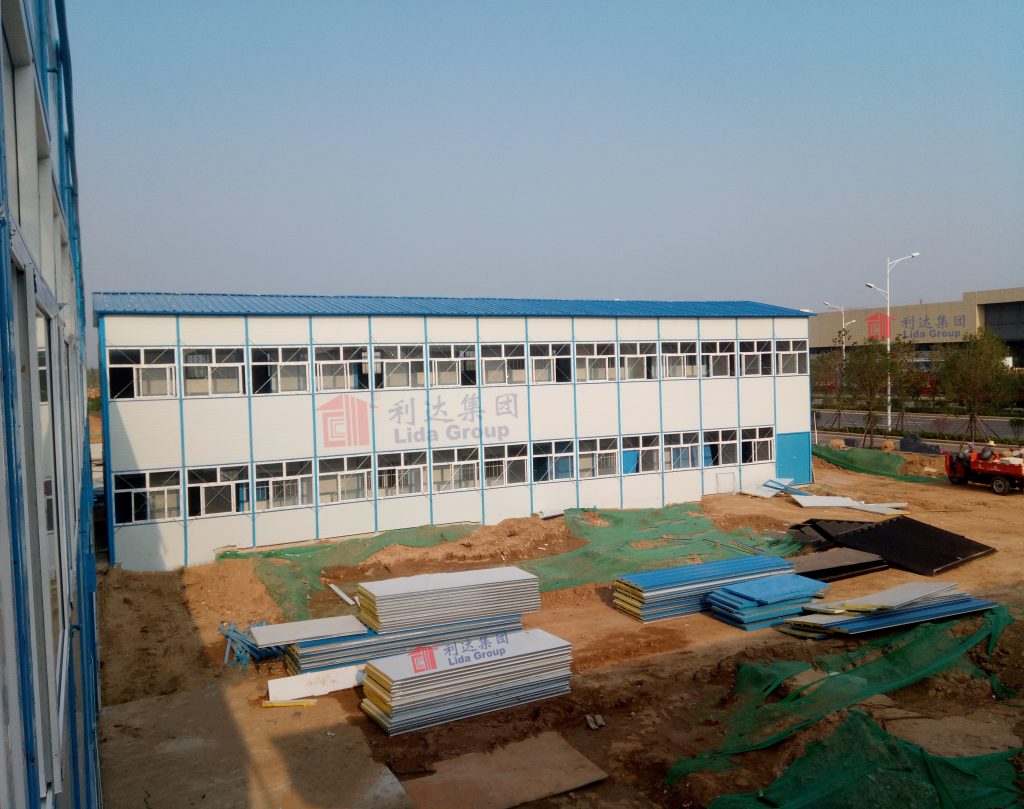
3. Innovative Performance of Lida’s Easy-Install Sandwich Panels
As the core building material of the new oilfield dormitory, Lida Group’s upgraded easy-install sandwich panels realize revolutionary breakthroughs in installation convenience, structural stability, and environmental adaptability. The prefabricated integrated panel design simplifies on-site construction steps and becomes the key support for rapid deployment and low-cost construction of oilfield dormitories.
3.1 Pre-Fabricated Integrated Panel for Tool-Free Fast Installation
All sandwich panels are 100% prefabricated and integrated in the factory, with finished thermal insulation, waterproof, anti-corrosion, and decorative layers. Each panel is designed with standardized interlocking interfaces and reserved bolt holes, realizing precise docking and seamless splicing. Unlike traditional panels that require on-site cutting, secondary processing, and adhesive bonding, Lida’s easy-install panels can be directly assembled on site with simple hand tools. Ordinary untrained workers can complete panel laying and sealing efficiently without professional construction skills or fire operation. A single wall assembly can be finished in a few minutes, and the overall installation efficiency is more than 80% higher than that of traditional panels, greatly shortening the camp construction cycle.
3.2 High-Strength Composite Material Balances Performance and Cost
The easy-install sandwich panel adopts a composite structure of high-strength galvanized steel plate and high-density functional core material. According to differentiated oilfield scenarios, Lida Group implements precise material matching to avoid performance redundancy and cost waste. Inland plain oilfields adopt cost-effective fireproof rock wool core panels to control unit prices; desert high-temperature and sandstorm areas adopt thickened dust-proof and thermal insulation core materials; high-altitude cold regions are equipped with low-temperature resistant core materials; coastal saline areas use anti-salt spray coated steel plates. This scenario-based customized configuration ensures that the panels fully adapt to harsh oilfield environments while maintaining low material costs, achieving optimal cost performance.
3.3 Multi-Functional Integration Improves Comprehensive Usability
The integrated sandwich panel integrates thermal insulation, sound insulation, waterproofing, dust prevention, and decoration functions in one piece. It eliminates the need for separate laying of thermal insulation layers, waterproof layers, and decorative layers required by traditional building materials, saving a large amount of auxiliary materials and working hours. The smooth and flat panel surface is easy to clean and maintain, effectively resisting dust accumulation and mold growth in oilfield environments. The excellent sound insulation performance can isolate on-site drilling noise and wind noise, creating a quiet indoor rest space. The multi-functional integrated design simplifies building structure configuration, reduces comprehensive construction costs, and improves the overall quality of the dormitory living environment.
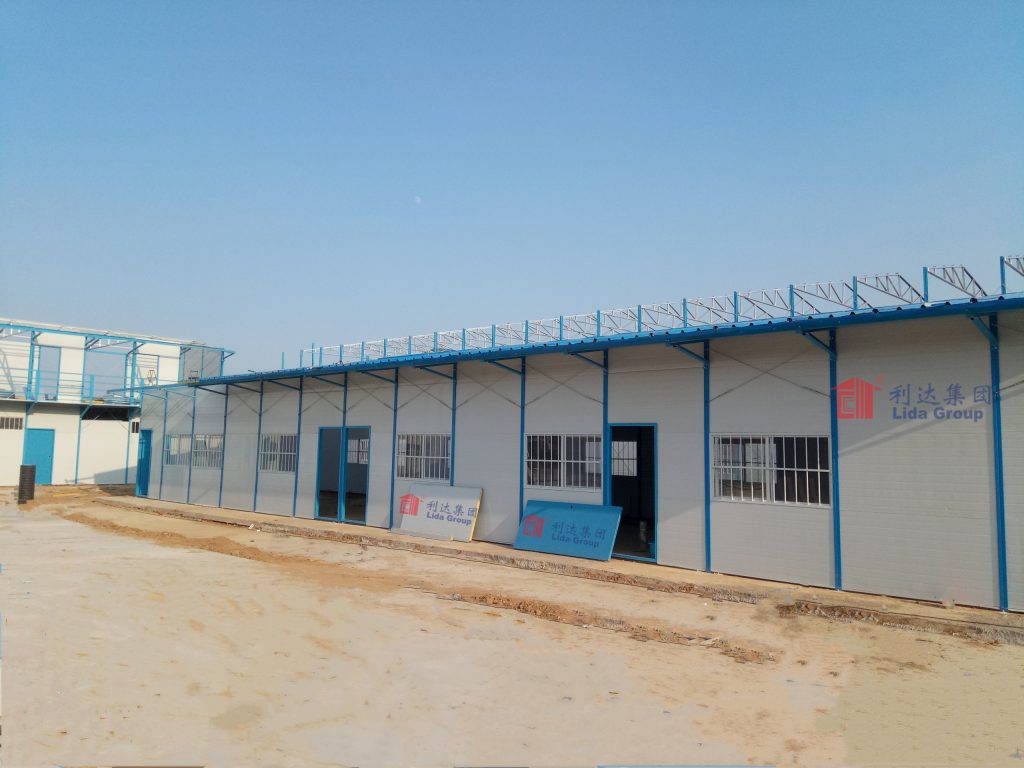
4. On-Site Construction Efficiency and Operational Advantages
The combination of low-cost temporary structure and easy-install sandwich panels brings qualitative improvement to oilfield dormitory construction efficiency and on-site operational management, solving the dual bottlenecks of slow construction and high cost in traditional camp projects.
4.1 Ultra-Fast Deployment Shortens Project Preparation Cycle
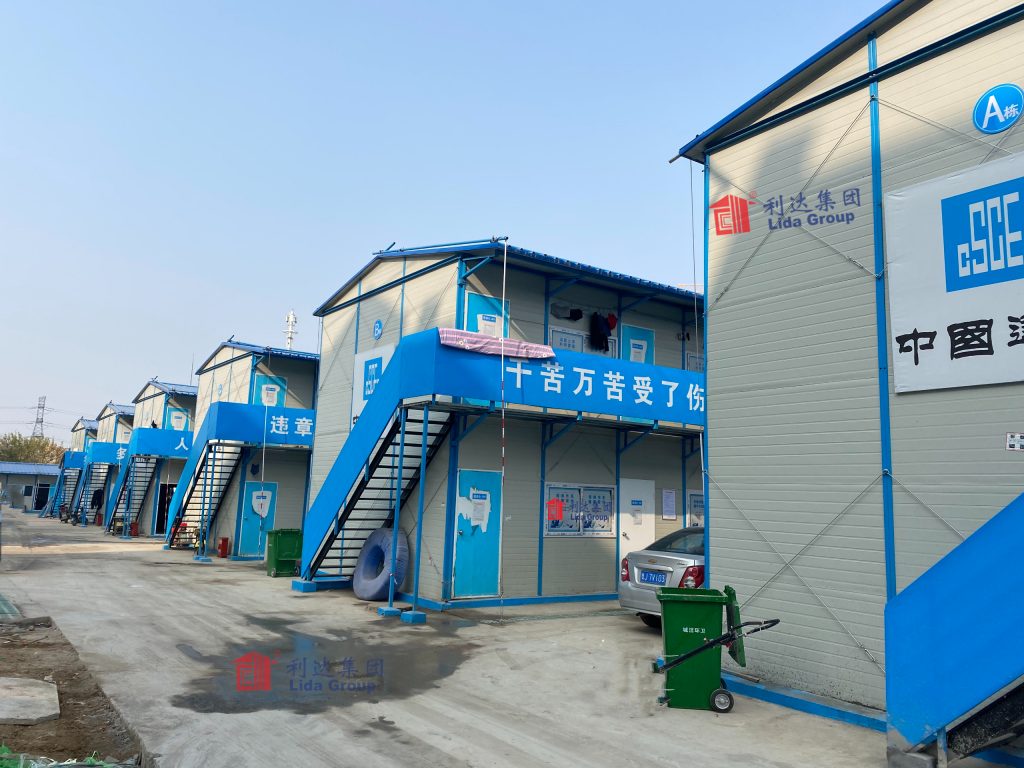
The full factory prefabrication of panels and modular structure simplifies on-site construction to pure assembly work. The entire construction process eliminates time-consuming steps such as foundation curing, on-site welding, and material processing. A single standard dormitory unit can be fully assembled and occupied within 3 hours, and a large-scale worker camp accommodating hundreds of people can be completed and put into use within 3 to 5 days. Compared with the 30-day+ construction cycle of traditional dormitories, the deployment efficiency is increased by more than 85%. Rapid worker settlement ensures on-schedule project startup, effectively capturing the time value of oilfield construction and avoiding progress delays and economic losses caused by slow camp construction.
4.2 Flexible Layout Adapts to Dynamic Project Changes
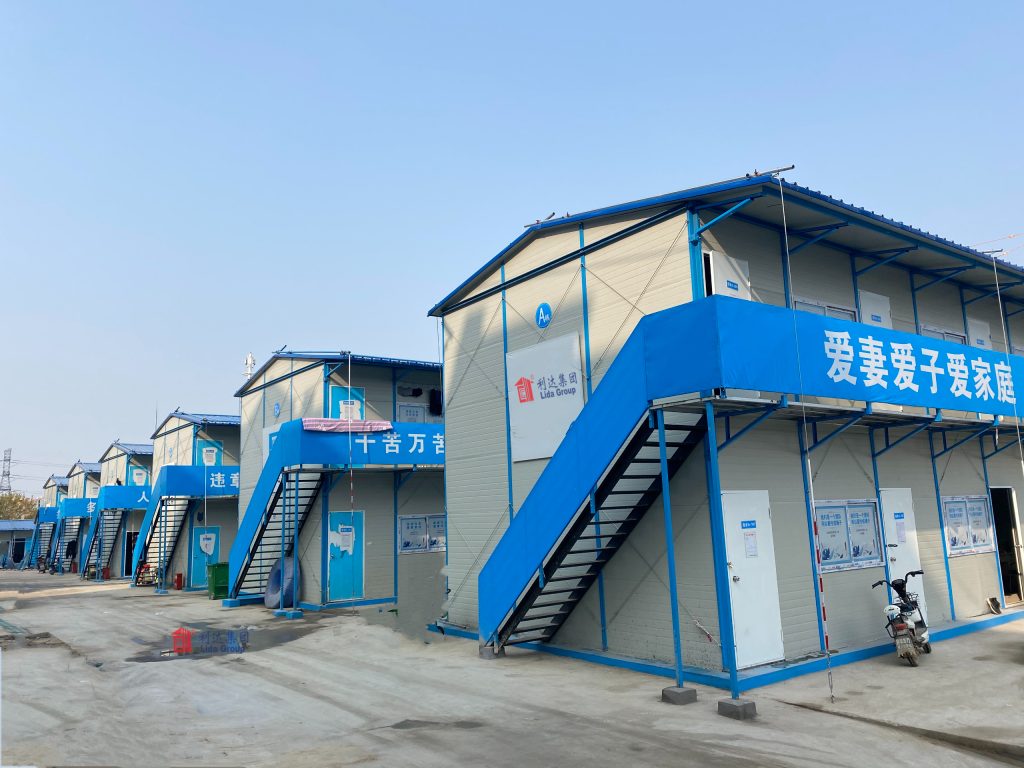
The standardized modular panels and temporary supporting structure support free splicing, expansion, and splitting of dormitory units. Enterprises can flexibly adjust the number of dormitories according to the phased changes of oilfield staffing: deploying a small number of units in the early exploration stage, rapidly expanding scale in the peak construction stage, and disassembling redundant units in the later maintenance stage. This flexible layout mode realizes precise matching of housing scale and project demand, avoiding resource idle waste caused by fixed-scale traditional buildings. It not only ensures construction efficiency but also optimizes enterprise fund allocation and resource utilization.
4.3 Low On-Site Operation Threshold Reduces Management Pressure
The tool-free panel assembly and simplified temporary structure greatly reduce the technical threshold and management difficulty of on-site construction. The project does not need to deploy professional welding teams or rent large mechanical equipment, saving labor deployment and equipment management costs. The standardized assembly process reduces manual operation errors and rework rates, ensuring stable construction quality. The neat and unified modular camp layout is convenient for unified safety inspection, sanitation management, and personnel arrangement, improving the standardized and refined management level of remote oilfield sites.
5. Long-Term Economic and Practical Value for Oil Field Projects
Lida Group’s new dormitory solution creates sustainable full-lifecycle economic value for oilfield enterprises through low upfront investment, low daily consumption, and high asset reuse rate, while ensuring safe and comfortable living conditions for frontline workers.
5.1 Low Upfront Investment Optimizes Budget Allocation
The optimized temporary structure reduces material redundancy and foundation costs, while factory batch production of easy-install panels lowers unit production costs. Simplified on-site assembly saves labor, machinery, and time costs. Compared with traditional standard temporary dormitories, the comprehensive upfront deployment cost is reduced by 35% to 40%. The low investment threshold effectively reduces capital occupation of oilfield projects, optimizes enterprise budget allocation, and alleviates the financial pressure of project initial construction.
5.2 Ultra-Low Daily Maintenance and Energy Consumption
The high-performance sandwich panels have excellent anti-aging, anti-corrosion, and weather-resistant properties, with stable structural performance and low failure rate. The seamless splicing structure avoids common problems such as water leakage, dust penetration, and wall damage of traditional buildings, reducing daily maintenance frequency and repair costs by more than 80%. The efficient thermal insulation structure of the panels greatly reduces the energy consumption of air conditioning and heating, cutting daily camp energy expenditure by 40% to 60%. The dual advantages of low maintenance and energy saving realize lean low-cost operation throughout the project cycle.
5.3 Humanized Living Environment Stabilizes Workforce
While focusing on cost control and installation efficiency, the new dormitory retains excellent living comfort. The constant-temperature thermal insulation system adapts to extreme temperature changes, the fully sealed structure ensures indoor cleanliness, and the sound insulation design isolates external noise. The scientific indoor space planning and complete ventilation and power supply interfaces create a healthy, quiet, and comfortable rest environment. High-quality accommodation conditions effectively reduce worker fatigue and turnover rate, stabilize frontline construction teams, and ensure the continuous and efficient progress of oilfield projects, bringing indirect economic and management benefits for enterprises.
6. Conclusion
Traditional oilfield worker dormitories have long restricted the efficient and economical operation of energy projects due to high construction costs, cumbersome installation, low reuse rate, and poor living conditions. Lida Group’s new oilfield worker dormitory perfectly integrates temporary low-cost building structure and easy-install sandwich panel technology, thoroughly solving the industry’s long-standing contradiction between construction efficiency, economic cost, and living quality. The optimized temporary structural design eliminates redundant construction investment and realizes low upfront deployment costs; the innovative easy-install prefabricated sandwich panels greatly improve on-site assembly efficiency and shorten the project preparation cycle; the detachable reusable modular mode realizes cyclic asset utilization and reduces long-term comprehensive costs.
In addition, the scenario-customized panel materials and multi-functional integrated design ensure excellent extreme environmental adaptability, safety performance, and living comfort, fully meeting the temporary residential needs of frontline oilfield workers. This new dormitory solution balances speed, cost, safety, and comfort, providing a highly cost-effective and reliable standardized accommodation mode for modern oilfield camp construction. In the future, Lida Group will continue to optimize modular temporary building structures and easy-install panel technology, further reducing full-lifecycle costs and improving scenario adaptation capabilities, empowering the high-efficiency, low-cost, and sustainable development of global oil and gas engineering construction.
Related news
-
Lida Group Combines Affordability and Speed in Oil Field Worker Dormitory Projects
2026-05-25 16:05:44
-
Achieve Fast Setup for Oil Field Worker Dormitory Using Easy Install Sandwich Panel House
2026-05-25 15:23:27
-
Lida Group’s Temporary Low Cost Building Transforms Oil Field Worker Dormitory Housing
2026-05-25 14:15:46
contact us
- Tel: +86-532-88966982
- Whatsapp: +86-13793209022
- E-mail: sales@lidajituan.com
