



Lida Group Combines Affordability and Speed in Oil Field Worker Dormitory Projects
2026-May-25 16:05:44
By Admin
Introduction
The global oil and gas industry operates on strict project timelines and tight budget constraints, where every phase of field exploration, drilling, and infrastructure development demands balanced control of construction speed and capital expenditure. Most oilfield sites are located in remote deserts, high-altitude cold plateaus, coastal saline zones, and undeveloped wilderness areas with limited local labor, backward transportation conditions, and harsh climatic environments. On-site worker dormitories serve as a fundamental supporting facility for oilfield operations, directly determining team mobilization efficiency, project startup progress, and long-term camp operational costs.
For decades, oil and gas enterprises have faced an unavoidable industry trade-off: traditional high-quality temporary buildings guarantee safety and durability but feature long construction cycles and high upfront investment, while ultra-low-cost crude housing reduces initial spending yet suffers from slow secondary modification, poor durability, frequent maintenance, and delayed occupancy. This contradiction between construction speed and cost control has long plagued refined project management, resulting in either delayed project schedules or excessive hidden operational expenses. As a leading global provider of modular temporary building solutions, Lida Group has broken this industry bottleneck by integrating high-speed modular construction technology with full-lifecycle cost optimization. The company’s customized temporary sandwich panel dormitories perfectly combine rapid on-site deployment and outstanding affordability, delivering fast occupancy, stable performance, and low overall costs for oilfield camp projects. This article systematically analyzes the speed-cost dilemma of traditional oilfield dormitory construction, the core technologies of Lida Group’s dual-advantage solutions, practical on-site application values, and long-term economic benefits, demonstrating how Lida’s innovative model reshapes the cost and efficiency standards of modern oilfield worker accommodation projects.
1. The Traditional Speed-Cost Dilemma in Oil Field Dormitory Construction
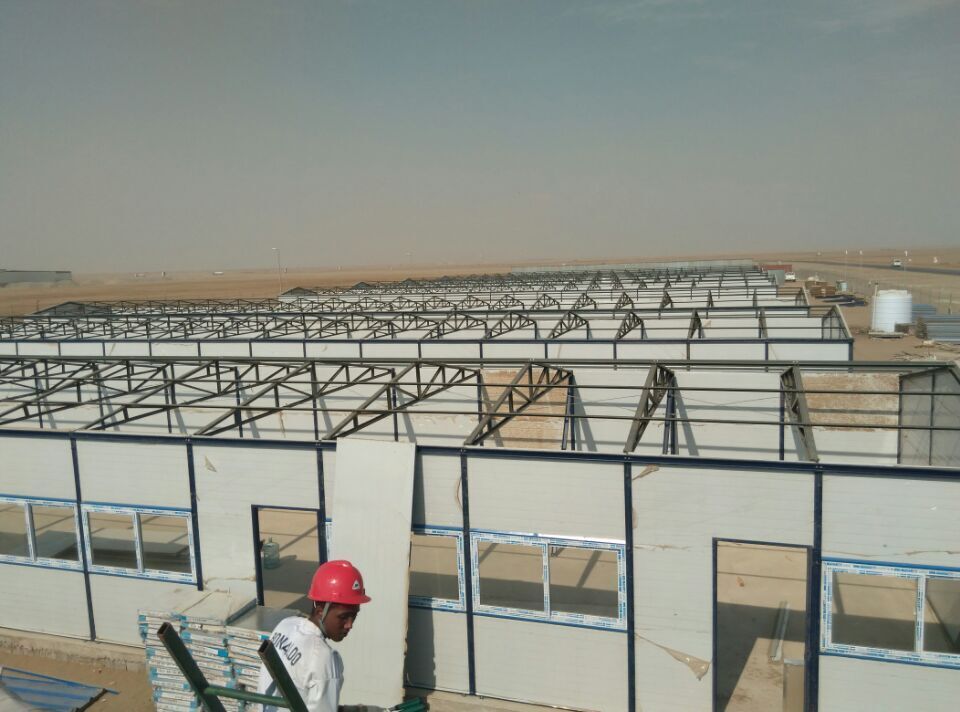
Traditional temporary housing solutions for oilfields cannot achieve synchronous optimization of construction speed and cost control, forming a fixed contradictory pattern that restricts the efficient and economical operation of oilfield projects. All conventional solutions have obvious one-sided defects, making it difficult to meet the dual needs of rapid project deployment and lean budget management.
1.1 High-Quality Fixed Buildings Bring Slow Progress and Heavy Capital Pressure
Traditional brick-concrete and fully welded steel temporary buildings can provide stable and safe living conditions, but their construction mechanism leads to inherent low efficiency and high costs. This type of building requires complete foundation pouring, on-site welding, masonry, thermal insulation laying, and interior decoration, with a conventional construction cycle of 30 to 60 days for medium-sized camps. The lengthy construction period delays worker settlement and equipment commissioning, causing delayed project startup and lost golden construction opportunities. In terms of cost, complex on-site processes require a large number of skilled construction workers, mechanical equipment rental, and long-distance material transportation, resulting in extremely high upfront investment. Moreover, fixed non-detachable structures can only be demolished after project completion, generating huge sunk costs and zero residual asset value, which greatly increases the comprehensive burden of oilfield camp construction.
1.2 Low-Cost Crude Housing Causes Massive Hidden Long-Term Expenses
To pursue short-term cost savings, many oilfield projects choose low-cost simple tents and inferior color steel houses. Although the initial procurement cost is low, these crude facilities bring continuous hidden expenses throughout the project cycle. Inferior materials have poor wind resistance, dust resistance, thermal insulation, and fire resistance, leading to frequent failures such as wall water leakage, structural rust, thermal insulation failure, and dust penetration. Enterprises need to invest continuous manpower and material resources in regular maintenance, component replacement, and indoor cleaning. In addition, poor living conditions cause high worker turnover, increasing recruitment and training costs. Low energy efficiency also leads to excessive power consumption for heating and cooling. In the end, the full-lifecycle comprehensive cost of crude low-cost housing far exceeds the initial budget, failing to achieve real economic benefits.
1.3 Inflexible Construction Mode Cannot Adapt to Dynamic Project Needs
Oilfield projects have typical phased operational characteristics, with dynamic changes in staffing scale from early exploration, peak construction to later maintenance. Traditional fixed-scale buildings cannot be quickly expanded or reduced according to actual demand. Excess housing leads to idle resource waste, while insufficient dormitories restrict team expansion. Whether building oversized camps in advance or conducting secondary reconstruction later, it will cause simultaneous losses of time and capital. This rigid construction mode makes it impossible for traditional solutions to balance speed, cost, and flexibility, resulting in low overall project management efficiency.
2. Lida Group’s Core Mechanism for Balancing Speed and Affordability
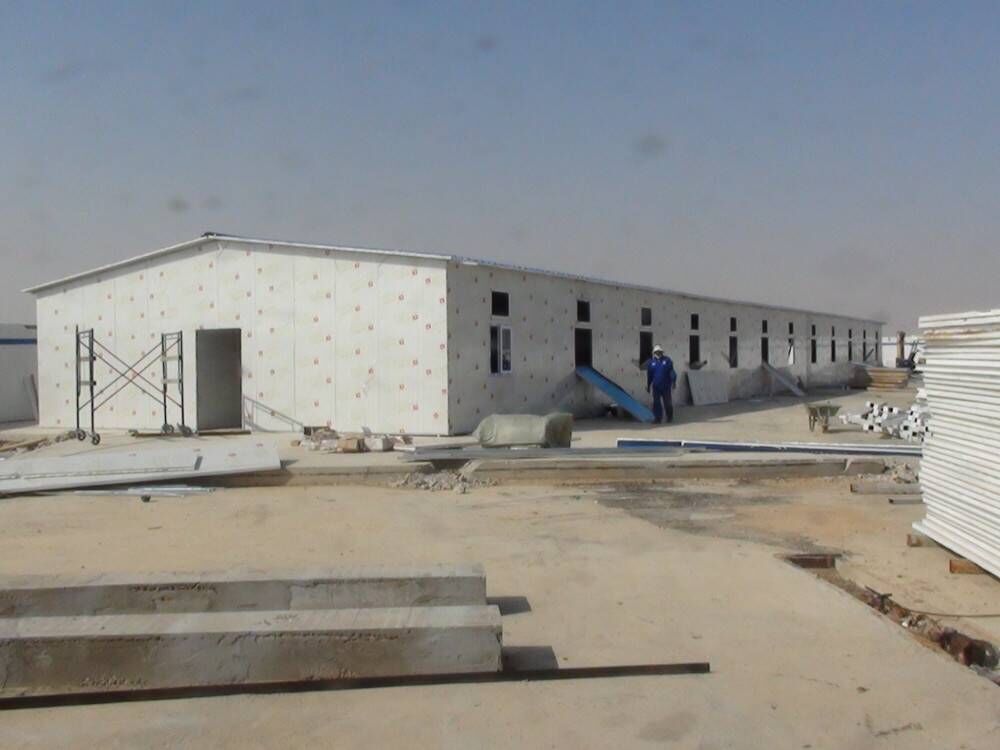
Targeting the long-standing speed-cost trade-off in the oilfield construction industry, Lida Group has optimized modular building technology from production, transportation, assembly, and material matching links. By transferring complex processes to standardized factory production, simplifying on-site operations, and realizing precise cost control, the brand-new sandwich panel dormitory solution achieves ultra-fast deployment on the premise of low full-lifecycle costs, completely resolving the traditional industry dilemma.
2.1 Full Factory Prefabrication Accelerates Progress and Cuts On-Site Costs
The core innovation of Lida Group’s solution is the 100% integrated factory prefabrication model. Unlike traditional decentralized on-site construction, all core components of oilfield dormitories, including steel frames, sandwich wall panels, roof systems, floor structures, doors, windows, and basic electrical accessories, are fully processed, assembled, and quality-inspected in intelligent standardized factories. Batch industrial production adopts precise cutting and scientific material proportioning, which eliminates raw material waste caused by irregular manual operation and reduces unit production costs through scale effects. More importantly, this model transfers all time-consuming processes such as welding, cutting, and thermal insulation laying to factory workshops, reducing on-site construction procedures by more than 90%. It not only greatly shortens the project cycle but also saves a large amount of on-site labor, machinery rental, and site management costs, realizing synchronous improvement of speed and cost performance.
2.2 Tool-Free Bolt Assembly Eliminates Professional Labor Barriers
Lida Group abandons traditional fire welding and complex fixing processes and adopts universal standardized bolt splicing technology. All building components are designed with unified reserved interfaces and matching holes, achieving precise modular docking without secondary processing. The entire on-site assembly process requires no professional construction skills, no large mechanical equipment, and no open fire operation. Ordinary untrained workers can complete efficient installation according to visual operation guidelines. A single standard dormitory unit can be put into use within 2 to 3 hours, and a large-scale camp accommodating hundreds of workers can be fully completed within 3 to 5 days. This ultra-efficient assembly mode greatly shortens the construction cycle while eliminating the high salary costs of professional welders and construction teams, cutting on-site labor expenditure by more than 60% and achieving rapid deployment at low labor costs.
2.3 Scenario-Based Precise Material Matching Avoids Cost Redundancy
Many high-speed modular building products blindly adopt high-grade materials, resulting in excessive performance redundancy and unnecessary premium costs. Lida Group adopts a customized material matching mechanism for different oilfield scenarios to balance performance and cost perfectly. For inland plain oilfields with mild climates, cost-effective high-strength fireproof sandwich panels are used to control unit prices; for desert oilfields with strong sandstorms and high temperatures, only key parts are upgraded with enhanced dust-proof and thermal insulation materials; for high-altitude cold regions and coastal saline areas, targeted anti-freezing and anti-corrosion material optimization is carried out. This precise matching mode avoids over-engineering, ensures that product performance fully adapts to harsh oilfield environments, and eliminates redundant material costs, making rapid construction truly affordable and practical.
2.4 Detachable Reusable Structure Reduces Long-Term Average Costs
The biggest advantage of Lida Group’s solution in full-lifecycle affordability is its cyclic reusable value. Different from the disposable use of traditional temporary buildings, Lida’s modular dormitories adopt a fully detachable bolt structure. After the completion of a single oilfield project, all components can be completely disassembled, flat-packed, transported, and stored without construction waste or asset loss. High-quality galvanized steel frames and composite sandwich panels have stable physical properties, supporting more than 8 times of cross-project disassembly and reassembly. This cyclic utilization model completely eliminates repeated construction investment for multi-project oilfield enterprises, greatly reducing the annual average usage cost of dormitory facilities and realizing long-term low-cost operation on the basis of one-time rapid construction.

3. Practical Dual Advantages of Speed and Affordability in On-Site Operations
Lida Group’s optimized modular building system delivers tangible dual values of rapid deployment and cost savings for oilfield projects, effectively solving various operational and budgetary pain points in traditional camp construction and helping enterprises achieve refined and efficient project management.
3.1 Rapid Occupancy Captures Time Value and Avoids Opportunity Losses
Oilfield exploration and drilling projects have strong time sensitivity, and seasonal construction windows directly determine annual project output and revenue. Lida Group’s ultra-fast camp deployment capability shortens the traditional one-month-level construction cycle to less than one week, realizing rapid worker settlement and equipment entry. Timely completion of dormitory construction ensures on-schedule project startup, extends effective construction duration, and maximizes project revenue conversion. For emergency oilfield maintenance and temporary exploration tasks, the rapid assembly mode can quickly complete camp setup within days, improving the project’s emergency response capability and avoiding economic losses caused by construction delays. The time benefit brought by high-speed deployment far exceeds the marginal cost of product investment, creating substantial invisible value for enterprises.
3.2 Full-Lifecycle Cost Control Eliminates Hidden Budget Risks
Different from the low initial cost but high later consumption of traditional crude housing, Lida Group’s solution realizes comprehensive cost optimization throughout the entire project lifecycle. In the upfront construction stage, factory batch production and simplified assembly reduce comprehensive deployment costs by 30% to 40% compared with traditional standard temporary buildings. In the daily operation stage, high-density anti-aging and weather-resistant materials avoid frequent equipment failures and reduce maintenance costs by more than 80%. The efficient thermal insulation structure cuts air conditioning and heating energy consumption by 40% to 60%, greatly reducing daily operational overheads. In the later asset recycling stage, reusable components eliminate repeated construction investment. The all-round cost control model avoids budget fluctuations and hidden risks, enabling enterprises to accurately predict and control camp construction expenditures.
3.3 Flexible Phased Construction Matches Dynamic Budget Allocation
Lida Group’s modular units support free splicing, expansion, and splitting, enabling phased construction according to project progress and staffing changes. In the early exploration stage with fewer personnel, only a small number of dormitory units can be deployed to reduce initial capital occupation; in the peak construction stage with expanded staffing, modules can be quickly added to meet accommodation needs; in the later maintenance stage, redundant units can be disassembled and stored. This flexible construction mode realizes synchronous matching of construction scale, project progress, and budget allocation, avoiding fund waste caused by one-time full investment and idle resources. It not only ensures construction speed but also improves the scientific nature of enterprise fund scheduling.
4. Stable Comprehensive Performance Ensures Cost-Effective Sustainability
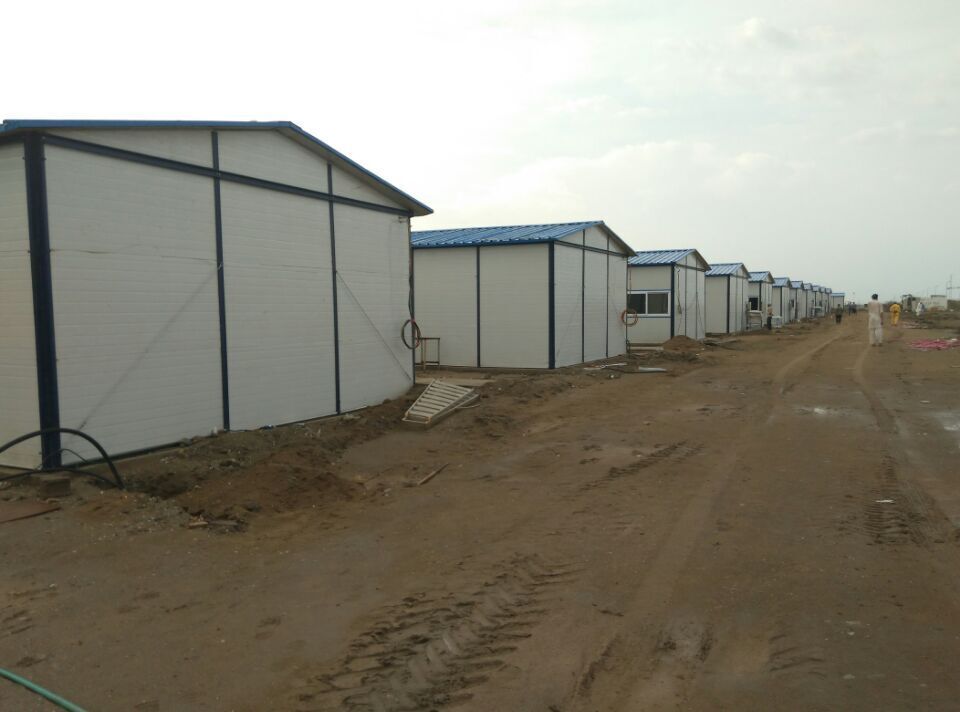
While pursuing rapid deployment and low costs, Lida Group never sacrifices product quality and safety performance. The oilfield-specific sandwich panel dormitories maintain high-standard industrial safety, extreme environmental adaptability, and comfortable living conditions, ensuring that low-cost and high-speed construction can form sustainable long-term value and avoid performance attenuation and secondary costs.
4.1 High-Standard Safety Performance Avoids Safety Accident Losses
Aiming at the flammable and explosive high-risk characteristics of oilfield operation areas, Lida Group’s products adopt non-combustible rock wool core sandwich panels, which meet international oilfield fire protection standards and can effectively block flame spread. The high-strength galvanized steel frame forms an integrated stable structure, resisting level 12 strong winds and moderate earthquakes, adapting to harsh environmental disturbances such as desert sandstorms and coastal strong winds. All electrical systems adopt explosion-proof and leakage-proof configurations to eliminate potential safety hazards. High-standard safety performance avoids economic losses and project stagnation caused by safety accidents, ensuring stable and sustainable camp operation at low costs.
4.2 Extreme Environmental Adaptability Reduces Failure and Maintenance Frequency
Optimized for global oilfield climatic characteristics, Lida’s sandwich panel houses have excellent thermal insulation, dust-proof, waterproof, and anti-corrosion properties. The fully sealed structure isolates sand and dust invasion in desert areas, maintains constant indoor temperature in extreme hot and cold environments, and prevents mildew and dampness in coastal humid areas. Stable environmental adaptability ensures that the building will not have frequent functional failures during long-term outdoor operation, greatly reducing inspection and maintenance frequency, and realizing long-term trouble-free operation with low maintenance costs.
4.3 Humanized Design Stabilizes Workforce and Reduces Personnel Costs
High-quality living environments are key to stabilizing frontline oilfield teams. Lida Group’s dormitories adopt scientific spatial layout, excellent sound insulation and ventilation performance, and complete supporting facilities, creating a clean, quiet, and comfortable rest space for workers. A good accommodation environment effectively reduces worker fatigue and turnover rate, avoiding repeated recruitment, induction, and training costs caused by personnel flow. Stable team structure ensures continuous and efficient project progress, indirectly improving the overall economic benefits of oilfield projects and enriching the connotation of product cost performance.
5. Comprehensive Project Value of Lida’s Dual-Advantage Solution
Lida Group’s innovative modular dormitory solution breaks the inherent speed-cost contradiction of the traditional oilfield construction industry, bringing multi-dimensional comprehensive value for oil and gas enterprises. In terms of project management, ultra-fast deployment simplifies camp construction procedures, shortens project preparation cycles, and improves overall operational efficiency. In terms of budget control, full-lifecycle cost optimization reduces enterprise capital pressure, realizes lean budget management, and improves fund utilization efficiency. In terms of asset management, reusable modular structures turn temporary construction facilities into recyclable fixed assets, improving enterprise asset value and sustainable operational capabilities.
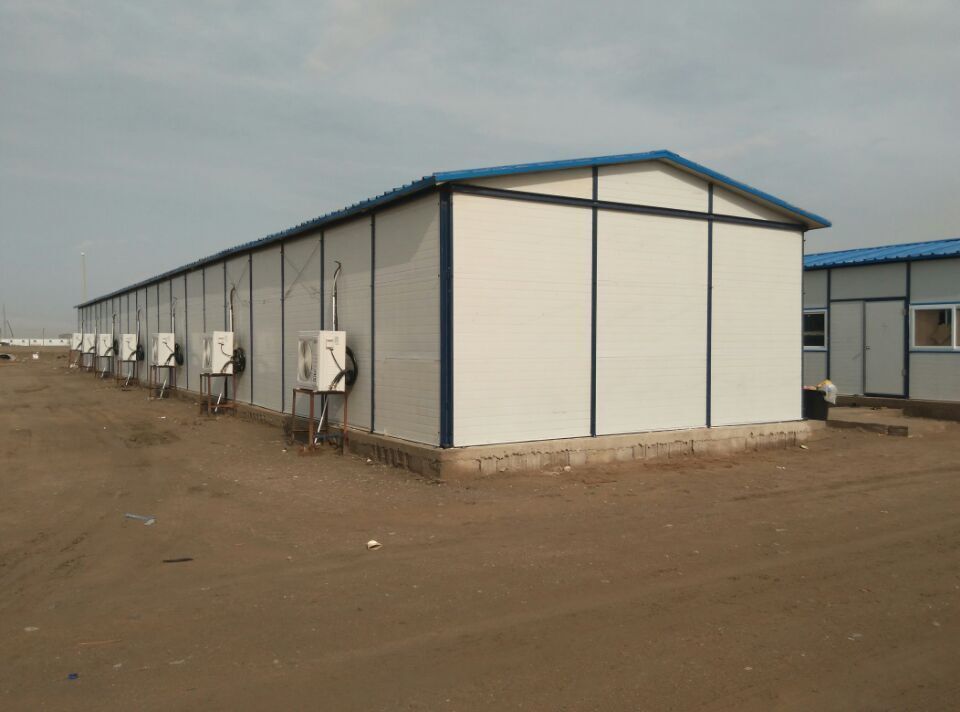
In addition, the standardized and orderly modular camp layout meets the civilized construction and safety management specifications of international oilfield projects, helping enterprises improve standardized operation levels and enhance project competitiveness. The perfect balance of speed, cost, safety, and comfort makes Lida Group’s sandwich panel dormitories the most cost-effective temporary accommodation solution for modern oilfield projects.

6. Conclusion
For a long time, the oilfield construction industry has been trapped in the unavoidable trade-off between construction speed and economic cost. Traditional high-standard buildings are safe and durable but slow in progress and costly, while low-cost crude housing reduces initial investment but brings numerous hidden expenses and safety risks, failing to meet the modern refined management needs of oil and gas projects. Lida Group’s easy-install sandwich panel house completely subverts this traditional industry pattern with innovative modular prefabrication technology, tool-free rapid assembly, scenario-based precise material matching, and reusable cyclic design.
This solution perfectly combines ultra-fast on-site deployment and full-lifecycle high affordability. It compresses the camp construction cycle from months to days, ensuring timely project startup and capturing time-based operational benefits. Meanwhile, it reduces upfront construction costs, daily maintenance consumption, energy expenditure, and repeated investment, realizing comprehensive budget optimization. Without sacrificing industrial safety, environmental adaptability, and living comfort, Lida Group’s products deliver stable, reliable, and sustainable temporary housing value for oilfield projects. As a mature and proven dual-advantage solution, it effectively solves the core pain points of slow construction and high comprehensive costs in traditional oilfield dormitory projects. In the future, Lida Group will continue to optimize modular building technology and cost-control systems, providing more efficient, economical, and high-quality temporary accommodation solutions for the global oil and gas industry, and empowering the high-efficiency and low-cost sustainable development of energy engineering construction..
Related news
-
Easy Install Sandwich Panel House Provides Comfortable Oil Field Worker Dormitory by Lida Group
2026-05-25 14:05:45
-
Lida Group’s Temporary Low Cost Building Transforms Oil Field Worker Dormitory Housing
2026-05-25 14:15:46
-
Achieve Fast Setup for Oil Field Worker Dormitory Using Easy Install Sandwich Panel House
2026-05-25 15:23:27
contact us
- Tel: +86-532-88966982
- Whatsapp: +86-13793209022
- E-mail: sales@lidajituan.com
