



Easy Install Sandwich Panel House Provides Comfortable Oil Field Worker Dormitory by Lida Group
2026-May-25 14:05:45
By Admin
Introduction
The global oil and gas industry operates primarily in remote and geographically harsh zones, including arid deserts, freezing high-altitude plateaus, windy coastal salt spray areas, and isolated wilderness regions. These operational sites lack mature urban residential infrastructure, stable temperature conditions, and daily living supporting facilities, making long-term on-site residence an enormous challenge for frontline oilfield workers. Oilfield staff typically engage in high-intensity, round-the-clock rotational work, and a safe, quiet, and comfortable dormitory environment is essential for relieving work fatigue, restoring physical strength, stabilizing team morale, and improving overall work efficiency. Unlike ordinary construction camps, oilfield accommodation faces stricter requirements for extreme weather resistance, environmental hygiene, living comfort, and long-term usability.
For decades, most oilfield projects have relied on traditional temporary housing solutions such as simple color steel houses and canvas tents. These conventional buildings focus only on basic shelter functions but suffer from prominent defects: complicated and time-consuming on-site installation, poor thermal insulation, severe dust penetration, excessive noise interference, and unstable living conditions. The substandard accommodation environment easily leads to worker fatigue, low job satisfaction, and high personnel turnover, indirectly restricting the safe and efficient operation of oilfield projects. As a leading global manufacturer of customized modular prefabricated buildings, Lida Group has launched easy-install sandwich panel houses specially optimized for oilfield worker dormitory scenarios. Balancing tool-free rapid installation, extreme environmental adaptability, and humanized comfortable design, this innovative product completely upgrades the living standard of remote oilfield camps. This article comprehensively analyzes the comfort defects of traditional oilfield dormitories, the structural and material advantages of Lida Group’s easy-install sandwich panel houses, core comfortable living functions, on-site application values, and long-term benefits for oilfield workforce management.
1. Comfort Defects of Traditional Oil Field Worker Dormitories
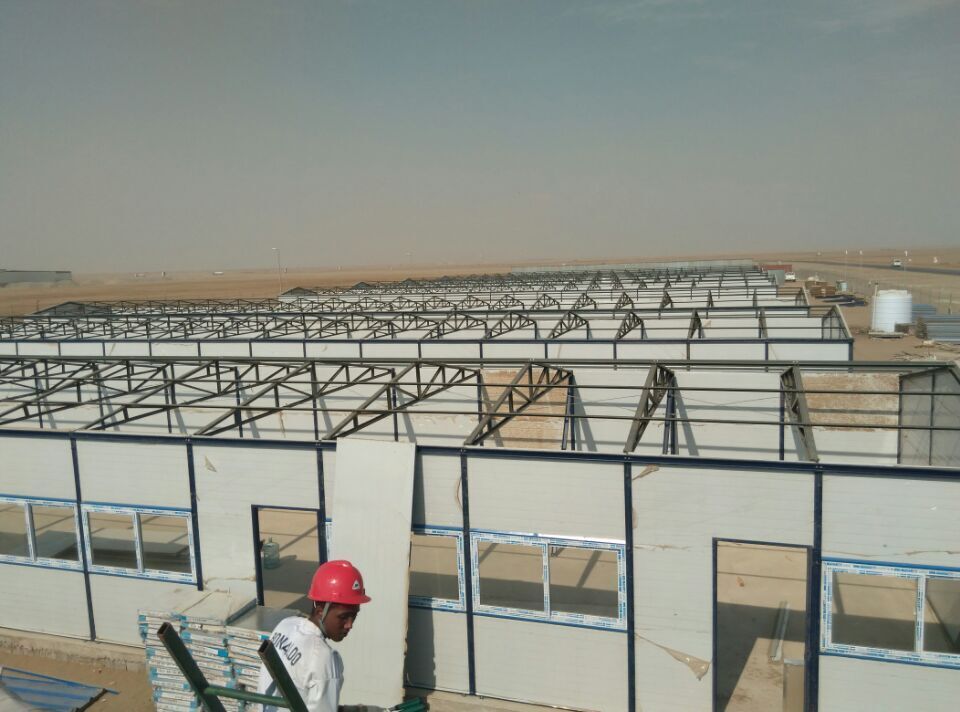
Traditional temporary housing for oilfields is designed with a single focus on basic shelter, ignoring the long-term living comfort needs of frontline workers. Restricted by backward materials, outdated structural design, and complicated on-site construction processes, these buildings have multiple inherent comfort flaws that cannot meet the modern management standards of oil and gas enterprises for worker welfare and camp civilization.
1.1 Poor Thermal Insulation Causes Extreme Indoor Temperature Fluctuations
Most traditional oilfield temporary houses adopt low-density ordinary foam insulation materials and thin single-layer steel plates, with extremely poor thermal insulation and temperature locking performance. In desert oilfield areas with year-round high temperatures, outdoor surface temperatures can exceed 45 degrees Celsius, and ineffective heat insulation leads to rapid indoor temperature rise, resulting in sultry and stuffy living spaces that affect workers’ rest quality. In high-altitude and northern cold-region oilfields, weak thermal conductivity resistance causes serious indoor heat loss, making rooms freezing cold in winter and requiring long-term high-power heating that consumes massive energy. Traditional buildings fail to form a constant-temperature living environment, forcing workers to endure extreme temperature differences throughout the year and causing great physical discomfort.
1.2 Weak Sealing Performance Leads to Dust and Humidity Disturbance
Oilfield sites are plagued by frequent sandstorms, floating dust, and high humidity in coastal areas. Traditional manually assembled temporary houses have rough panel splicing gaps and unoptimized door and window sealing structures, resulting in poor overall airtightness. Wind and sand easily penetrate indoor spaces, causing continuous dust accumulation on beds, floors, and daily supplies, which not only affects indoor cleanliness but also endangers workers’ respiratory health. For coastal oilfields with high salinity and humidity, unsealed structures lead to indoor moisture condensation, wall mildew, and damp bedding, creating an unhygienic living environment and easily triggering discomfort and sub-health problems for long-term resident workers.
1.3 Poor Sound Insulation Interferes with Worker Rest
Oilfield operation sites generate continuous high-decibel noise from drilling equipment, mechanical operation, and vehicle scheduling throughout the day. Traditional thin steel plate structures have almost no sound insulation and noise reduction capabilities. Outdoor mechanical noise and wind noise can easily penetrate the room, resulting in noisy indoor environments. Many oilfield workers work rotating shifts and need to rest during the day; persistent noise interference makes it difficult for workers to obtain high-quality sleep, leading to accumulated fatigue, low work concentration, and even reduced on-site operation safety awareness, bringing hidden risks to long-term project operation.
1.4 Complicated Construction Delays Standard Comfort Configuration
Traditional oilfield dormitory construction requires on-site welding, cutting, secondary processing, and manual decoration, with long construction cycles and disordered on-site operation. Restricted by construction progress and technical limitations, most traditional temporary houses lack standardized ventilation, lighting, and supporting living facilities. The cramped indoor layout, unreasonable space planning, and incomplete living supporting functions make it impossible to form a standardized and comfortable living system. Meanwhile, delayed construction progress often leads to makeshift occupancy, further reducing workers’ accommodation experience and sense of belonging.
2. Core Advantages of Lida Group’s Easy-Install Sandwich Panel House
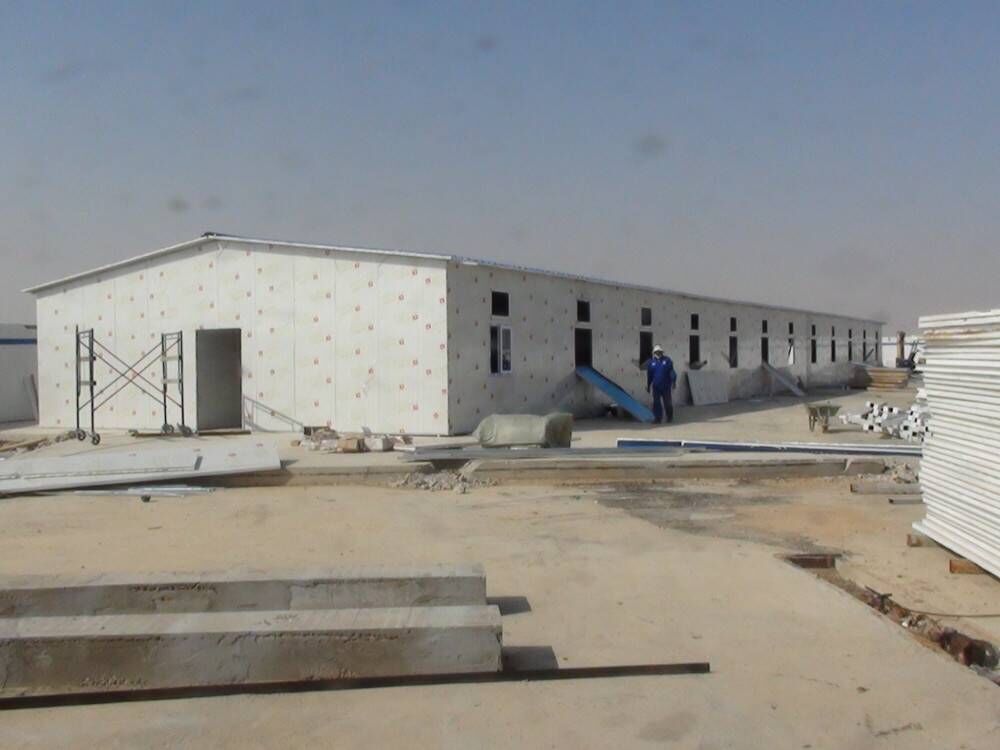
Targeting the comfort and construction pain points of traditional oilfield dormitories, Lida Group’s customized easy-install sandwich panel house realizes dual upgrades of installation efficiency and living quality. With high-performance integrated sandwich panel materials, simplified modular assembly technology, and humanized structural optimization, the product achieves fast on-site installation while comprehensively improving indoor living comfort, perfectly adapting to long-term residence needs in harsh oilfield environments.
2.1 Tool-Free Easy Installation Improves Camp Construction Efficiency
The most prominent functional advantage of Lida Group’s new product is ultra-simple modular installation, which completely abandons the complex on-site construction mode of traditional temporary buildings. All wall sandwich panels, roof panels, steel frames, doors, windows, and accessory components are 100% prefabricated and integrated in the factory, with unified standard assembly interfaces and reserved fixed holes. The whole house adopts bolt splicing connection, requiring no welding, cutting, pouring, and other destructive and professional operations. Ordinary untrained workers can complete assembly only with simple hand tools and visual operation guidelines, without relying on professional construction teams and large mechanical equipment.
A single standard oilfield dormitory unit can be assembled, sealed, and put into use within 2 to 3 hours, and a large-scale worker camp with complete supporting facilities can be fully completed within 3 to 5 days. The efficient installation mode shortens the camp construction cycle by more than 80% compared with traditional buildings, realizing rapid worker settlement. More importantly, standardized factory prefabrication and integrated assembly avoid irregular construction gaps and structural defects caused by manual operation, laying a solid foundation for excellent sealing, sound insulation, and thermal insulation performance, and fundamentally solving the comfort problems caused by backward construction technology.
2.2 High-Performance Sandwich Panel Material Ensures Stable Comfort
Lida Group’s oilfield-specific sandwich panels adopt upgraded industrial-grade composite materials, with high-strength galvanized anti-corrosion steel plates on both sides and high-density functional core materials inside. According to different global oilfield climatic characteristics, the product supports customized material matching: high-density rock wool core panels for high-temperature and fire-prone desert oilfields, low-temperature resistant polyurethane core panels for high-altitude cold regions, and anti-corrosion enhanced panels for coastal saline and humid oilfields. This targeted material design maximizes environmental adaptability and living comfort.
The high-density sandwich structure has ultra-low thermal conductivity, forming an efficient constant-temperature protection layer for the house. It can isolate external high-temperature heat radiation in summer and lock indoor heat in winter, maintaining a comfortable indoor constant temperature between 19°C and 25°C all year round. The integrated one-piece panel molding eliminates splicing gaps, achieving full sealing and dustproof effects. At the same time, the composite sandwich structure has excellent sound absorption and noise reduction performance, which can effectively isolate outdoor mechanical noise and wind noise, creating a quiet and stable rest space for workers.
2.3 Lightweight Modular Design for Flexible Comfort Layout
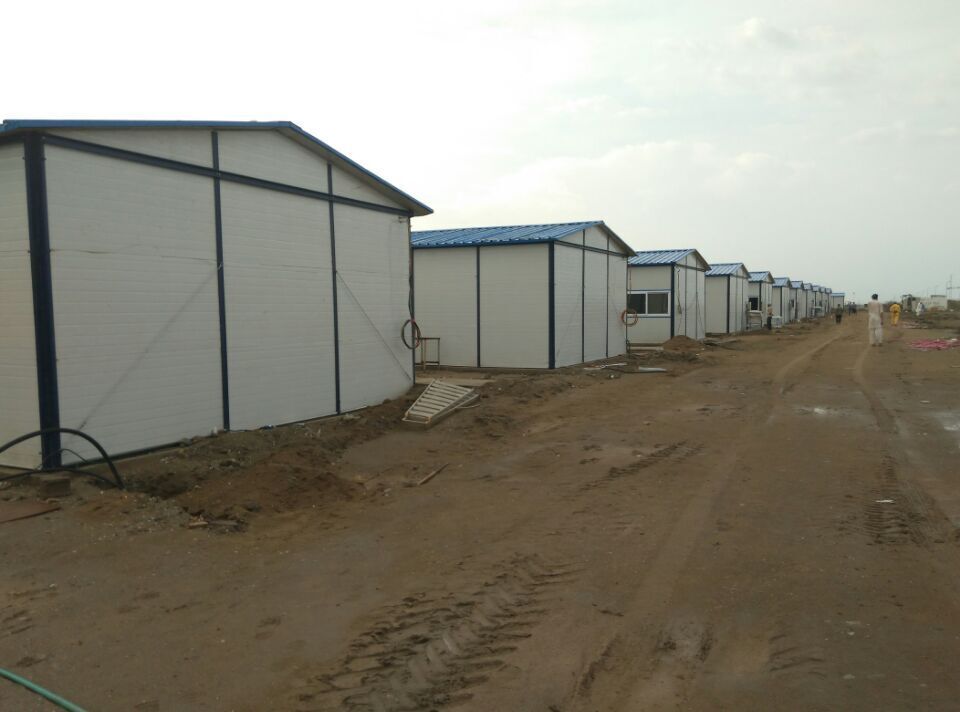
Different from the fixed single layout of traditional temporary houses, Lida Group’s easy-install sandwich panel house adopts flexible modular unit design. Standardized independent units can be freely spliced, combined, and expanded according to oilfield staffing scale and camp planning. The indoor space is scientifically proportioned with reasonable storey height and activity area, avoiding the cramped and depressed space of traditional dormitories. Enterprises can flexibly arrange single rooms, double rooms, and four-person rooms according to job attributes, and independently divide dormitory areas, office areas, and activity areas. The standardized and orderly layout improves the overall living environment grade of the camp and realizes refined and comfortable space management.

3. Multi-Dimensional Comfort Optimization for Harsh Oil Field Environments
Lida Group’s sandwich panel house focuses on the long-term remote residence characteristics of oilfield workers, and carries out all-round comfort optimization targeting sand, dust, extreme temperature, noise, and humidity interference in oilfield scenarios, creating a humanized living environment suitable for long-term residence.
3.1 Constant-Temperature Thermal Insulation Solves Extreme Temperature Disturbance
Extreme temperature change is the biggest factor affecting oilfield living comfort. Lida Group’s thickened high-density sandwich panel forms a closed thermal insulation system for walls, roofs, and floors, realizing all-round temperature control. In high-temperature desert oilfields, the efficient thermal insulation layer blocks external heat invasion, avoiding sultry indoor environments and reducing the energy consumption of air conditioning equipment. In ultra-low temperature plateau oilfields, the thermal insulation structure locks indoor heat stably, preventing pipeline freezing and indoor temperature loss, ensuring warm and comfortable indoor living conditions in cold seasons. Compared with traditional temporary houses with passive temperature adaptation, Lida’s products realize active constant-temperature adjustment, greatly improving seasonal living comfort throughout the year.
3.2 Full Sealing Dust and Humidity Prevention Ensures Indoor Hygiene
Aiming at the sandstorm and floating dust problems in desert oilfields, the product adopts fully sealed panel splicing technology and optimized rubber strip sealing design for doors and windows, eliminating gap leakage. Even in continuous sandstorm weather, it can effectively block external sand and dust from entering the room, keeping indoor floors, bedding, and daily supplies clean and dust-free. For coastal and humid oilfield areas, the overall waterproof and moisture-proof structure prevents wall mildew, indoor water accumulation, and bedding dampness. The smooth and easy-to-clean indoor panel surface is convenient for daily sanitation cleaning, effectively improving indoor hygiene conditions and protecting workers’ physical health.
3.3 High-Efficiency Sound Insulation Creates Quiet Rest Space
The multi-layer composite sandwich structure of Lida Group’s panels has excellent sound absorption and noise reduction functions, which can absorb and isolate most high-decibel mechanical noise and outdoor wind noise. The fully sealed closed structure avoids noise transmission through gaps, forming an independent quiet indoor space. For oilfield workers with shift work and fragmented rest time, the quiet living environment effectively improves sleep quality, relieves long-term work fatigue, and ensures that workers can recover physical strength and mental state in a short rest period, providing important support for safe and efficient on-site work.
4. Humanized Supporting Design Improves Overall Living Experience
On the basis of core comfortable performance, Lida Group’s easy-install sandwich panel house integrates diversified humanized details, fully considering the daily rest, entertainment, and life needs of long-term remote oilfield workers, and comprehensively upgrades the quality of camp life.
4.1 Scientific Indoor Space and Lighting Ventilation Design
Each standard dormitory unit adopts ergonomic space planning, with spacious and open indoor layout and no cramped dead space. The standardized high-transmittance window design ensures sufficient natural light during the day, brightening the indoor space and alleviating the depressive mood caused by long-term remote work. At the same time, the product is equipped with a professional ventilation system, which can realize indoor and outdoor air circulation, avoid turbid air and odor accumulation, and maintain fresh indoor air quality. The reasonable combination of lighting and ventilation creates a healthy and comfortable living atmosphere.
4.2 Complete Supporting Living Facilities
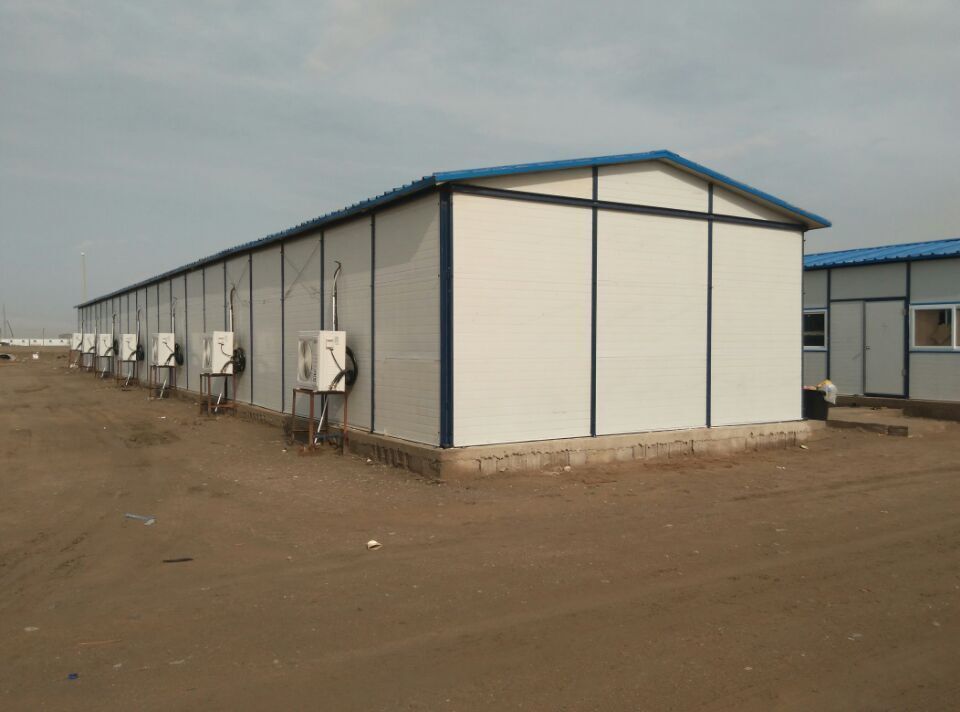
Lida Group’s sandwich panel dormitories reserve standardized interfaces for power supply, air conditioning, ventilation, and network communication, supporting the installation of daily living equipment such as air conditioners, water heaters, and network devices. The indoor configuration of anti-slip and wear-resistant floors, stable wall structures, and safe door and window systems meets daily living and entertainment needs. In addition, the modular design can be matched with supporting canteens, shower rooms, laundry rooms, and activity rooms, forming a fully functional living camp. Complete living supporting facilities solve the inconvenience of remote life, greatly improving workers’ sense of happiness and belonging.
4.3 Safe and Environment-Friendly Materials Protect Worker Health
All sandwich panel materials used in Lida Group’s oilfield dormitories are environmentally friendly and non-toxic, with no formaldehyde or harmful gas volatilization, meeting international indoor environmental protection standards. The flame-retardant and fireproof core materials avoid potential safety hazards, and the anti-corrosion and anti-aging panels will not produce harmful substances after long-term use. The healthy and environmentally friendly indoor environment effectively protects the physical health of workers who live indoors for a long time, avoiding physical discomfort caused by inferior building materials.
5. Practical Application Value for Oil Field Project Operation
The comfortable and easy-install sandwich panel house brings multi-dimensional practical value to oilfield project management and workforce construction. In terms of workforce stability, the high-quality living environment effectively reduces worker fatigue and turnover rate, stabilizes frontline construction teams, and avoids recruitment and training losses caused by frequent personnel replacement. In terms of project management, rapid installation shortens camp construction cycles, realizes rapid team settlement, and ensures timely project startup.
In terms of operational safety, the high-standard fireproof, wind-resistant, and sealed structure eliminates potential safety hazards in harsh environments, ensuring long-term stable operation of the dormitory camp. In terms of cost control, the reusable modular structure supports multiple disassembly and reassembly, avoiding repeated construction investment, and the energy-saving thermal insulation design reduces daily camp energy consumption. The dual advantages of comfort and economy make it the most cost-effective long-term accommodation solution for modern oilfield projects.
6. Conclusion
Traditional oilfield temporary dormitories have long restricted worker welfare improvement and standardized camp management due to cumbersome installation, poor thermal insulation, serious dust and noise interference, and substandard living comfort. As a scenario-customized solution for the energy industry, Lida Group’s Easy Install Sandwich Panel House completely solves the comfort pain points of traditional oilfield accommodation with innovative modular easy-install technology and high-performance composite sandwich panel materials. The tool-free rapid assembly mode realizes efficient camp construction and timely worker settlement, while the all-round optimized thermal insulation, sealing, sound insulation, and humanized design creates a constant-temperature, quiet, clean, and comfortable long-term living environment for frontline oilfield workers.
While ensuring excellent living comfort, the product retains high industrial safety, extreme environmental adaptability, and reusable economic value, perfectly fitting the temporary and phased operational characteristics of global oilfield projects. It not only improves worker satisfaction and team stability but also optimizes the refined management level and comprehensive economic benefits of oilfield projects. With the dual core advantages of convenient installation and superior comfort performance, Lida Group’s sandwich panel house has become the ideal comfortable dormitory solution for modern oilfield worker camps. In the future, Lida Group will continue to optimize modular building materials and humanized design details, continuously upgrade remote camp living standards, and provide more high-quality, comfortable, and efficient temporary accommodation services for the global oil and gas industry.
Related news
-
Lida Group Launches Easy Install Sandwich Panel House for Oil Field Worker Dormitory
2026-05-25 11:42:55
-
Rapid Deployment of Oil Field Worker Dormitory with Temporary Low Cost Building Technology
2026-05-25 13:42:05
-
Temporary Low Cost Building by Lida Group Creates Efficient Oil Field Worker Dormitory
2026-05-25 11:38:01
contact us
- Tel: +86-532-88966982
- Whatsapp: +86-13793209022
- E-mail: sales@lidajituan.com
