



Lida Group’s Temporary Low Cost Building Transforms Oil Field Worker Dormitory Housing
2026-May-25 14:15:46
By Admin
Introduction
The global oil and gas industry is indispensable to modern energy development, with most exploration, drilling, and construction projects deployed in remote, barren, and climatically extreme regions. These isolated oilfield sites lack mature urban residential infrastructure, stable living support systems, and standardized accommodation conditions, making on-site worker housing a core challenge for energy project management. Oilfield workers engage in high-intensity, shift-based work throughout the year, and their dormitory environment directly affects physical recovery, mental status, work efficiency, and team stability. For a long time, oilfield enterprises have faced a universal industry dilemma: permanent brick-concrete buildings involve excessive investment, long construction cycles, and zero reusability, while traditional temporary housing such as crude color steel houses and canvas tents features low cost but substandard safety, poor comfort, and short service life.
Traditional oilfield worker dormitories have long been plagued by backward construction modes and outdated design concepts, resulting in high comprehensive operating costs, frequent safety hazards, poor living experience, and low asset utilization. These drawbacks not only increase the economic burden of oilfield projects but also restrict the standardized construction and efficient operation of modern oilfield camps. As a global leading manufacturer and solution provider of modular temporary buildings with decades of engineering experience, Lida Group has launched innovative temporary low-cost building systems tailored exclusively for oilfield scenarios. Breaking the long-standing industry contradiction between “low cost and low quality” and “high quality and high price”, Lida’s solutions have comprehensively transformed the traditional backward state of oilfield worker dormitory housing. This article systematically analyzes the inherent defects of traditional oilfield accommodation, the core technological advantages of Lida Group’s transformative low-cost temporary buildings, comprehensive upgrades in housing quality and camp management, full-lifecycle economic benefits, and practical industrial value, demonstrating how professional modular building technology reshapes modern oilfield worker housing standards.
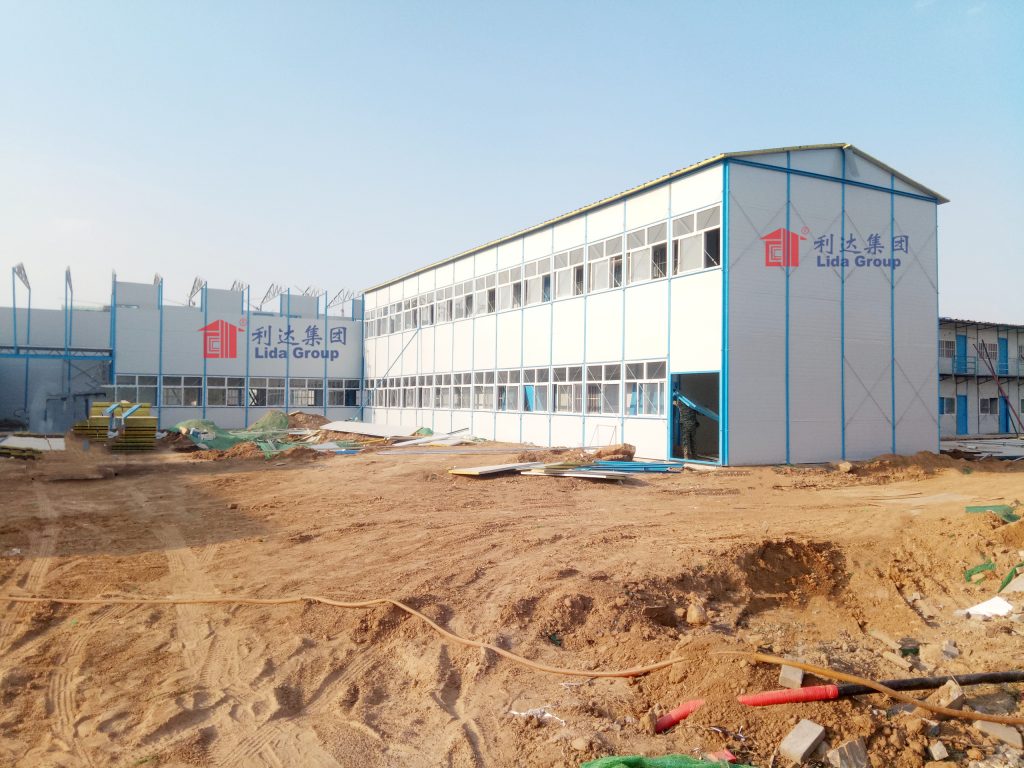
1. Long-Standing Defects of Traditional Oil Field Worker Dormitory Housing
Traditional temporary housing for oilfields has remained unchanged for many years, focusing merely on basic shelter functions while ignoring industrial safety standards, long-term living comfort, project cost control, and asset recyclable value. Under the background of modern refined project management, these inherent defects have become important factors restricting the high-quality development of oilfield camp construction.
1.1 Unbalanced Cost Structure and Serious Capital Waste
Traditional oilfield housing presents two extreme cost problems. On the one hand, fixed permanent temporary buildings require massive upfront investment in materials, foundation construction, and on-site labor. After the completion of phased oilfield exploration tasks, these non-detachable buildings can only be demolished and abandoned, generating huge sunk costs and construction waste. On the other hand, ultra-low-cost simple tents and crude shanties have low initial investment but need frequent maintenance, renovation, and repeated reconstruction due to poor durability. For oilfield enterprises with multi-site and cross-regional project deployment demands, repeated housing investment and continuous maintenance expenditure form a heavy long-term cost burden, resulting in extremely low comprehensive return on investment.
1.2 Poor Safety Performance with Hidden Operational Risks
Oilfield operation areas belong to flammable, explosive, and high-risk industrial environments, which put forward extremely strict safety requirements for temporary residential buildings. Most traditional temporary houses adopt low-grade flammable thermal insulation materials and manually welded unstable steel structures. The flammable core materials cannot resist high temperature and open flames, easily triggering fire accidents caused by electrical short circuits and operational negligence. Meanwhile, irregular manual splicing and unstandardized structural design lead to poor wind resistance, seismic resistance, and structural stability. In the face of desert sandstorms, coastal strong winds, and high-altitude extreme weather, traditional dormitories are prone to deformation, water leakage, and structural damage, bringing serious safety threats to the lives and property of frontline workers.
1.3 Backward Living Conditions Restrict Workforce Stability
Most traditional oilfield dormitories have crude interior layouts, cramped living spaces, and incomplete supporting facilities. The inferior thermal insulation and sealing materials cause extreme indoor temperature fluctuations, serious dust accumulation, and humid mildew problems in different seasons. The thin wall structure lacks basic sound insulation ability, making it impossible to isolate on-site mechanical noise and wind noise. Long-term residence in such a harsh living environment leads to worker fatigue, low sleep quality, and negative emotions. With the increasing attention to enterprise humanistic management, backward dormitory conditions have become a key factor leading to high worker turnover rate, unstable team structure, and reduced work enthusiasm, indirectly restricting project construction efficiency.
1.4 Low Construction Efficiency and Poor Flexible Adaptability
Traditional dormitory construction relies on extensive on-site manual operation, including welding, cutting, masonry, and decoration, with complex procedures and long construction cycles. Affected by remote traffic obstacles and harsh weather, the camp construction cycle is often extended, delaying worker settlement and project startup progress. In addition, traditional fixed buildings cannot be flexibly adjusted according to the phased changes of oilfield staffing. The fixed housing scale cannot adapt to the dynamic changes of personnel from early exploration, peak construction to later maintenance, resulting in either insufficient accommodation capacity or idle waste of housing resources, which cannot meet the flexible management needs of modern oilfield projects.
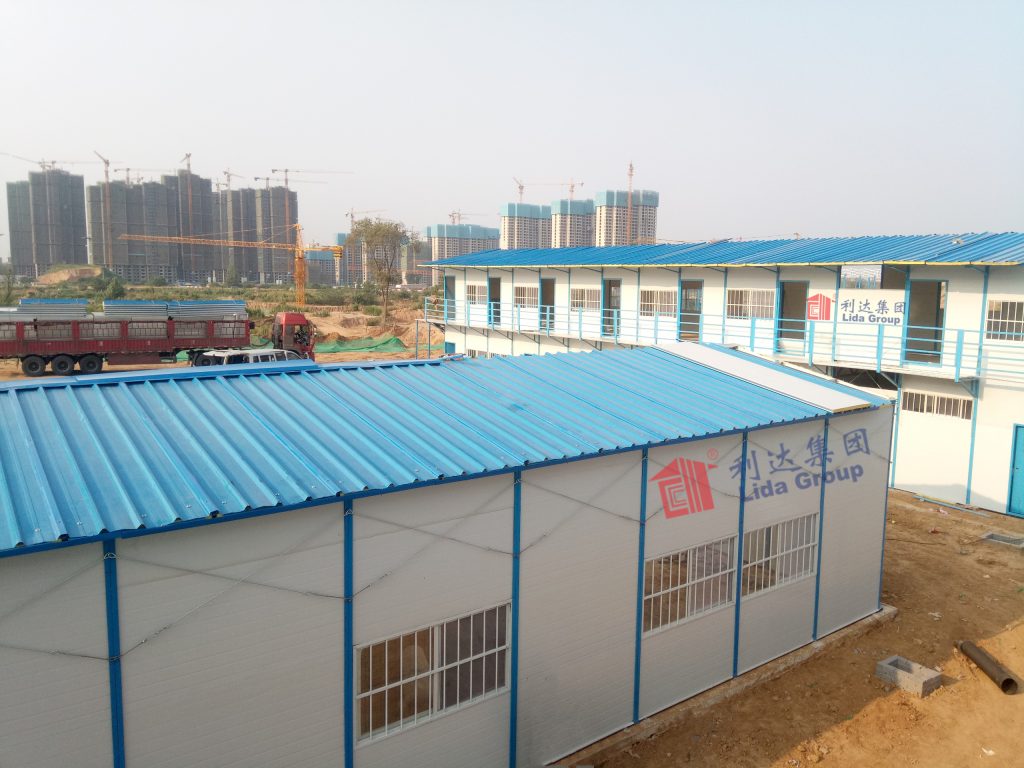
2. Core Transformation Technologies of Lida Group’s Temporary Low-Cost Buildings
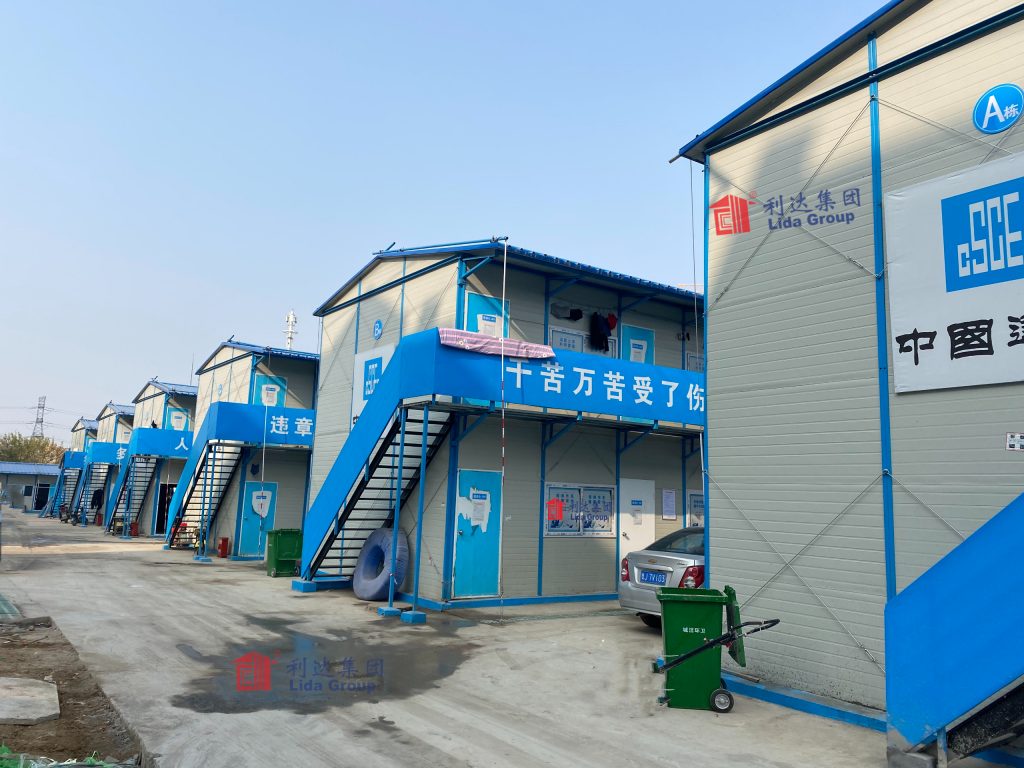
Targeting the multiple pain points of traditional oilfield dormitories, Lida Group has completed technological iteration and structural optimization of temporary buildings based on decades of modular construction experience. Relying on factory prefabrication, standardized modular design, scenario-based material matching, and detachable cyclic utilization technology, the brand-new low-cost temporary building system realizes a comprehensive transformation of traditional oilfield housing modes, achieving perfect balance of low cost, high safety, high efficiency, and high comfort.
2.1 Factory Prefabrication Technology Reduces On-Site Comprehensive Costs
Different from the high-consumption on-site construction mode of traditional buildings, Lida Group’s temporary low-cost buildings adopt 100% factory integrated prefabrication. All steel frames, wall panels, roof systems, thermal insulation layers, and basic electrical facilities are produced, processed, and assembled in standardized intelligent factories. Batch industrial production realizes precise material cutting and scientific proportioning, effectively eliminating raw material waste caused by irregular manual operation. The unified assembly standard and streamlined production process greatly reduce unit production costs. On-site construction only requires simple modular splicing, which saves a large amount of skilled labor costs, mechanical equipment rental fees, and long-distance material logistics costs. This technological innovation reduces the upfront comprehensive deployment cost of oilfield dormitories by more than 35% compared with traditional solutions, fundamentally solving the problem of high construction investment.
2.2 Tool-Free Modular Assembly Improves Construction Efficiency
Lida Group abandons traditional complex welding and pouring processes and adopts advanced standardized bolt connection modular technology. All building components are designed with unified assembly interfaces and reserved fixing holes, realizing fully matched modular combination. The whole construction process requires no professional construction skills, no fire operation, and no large mechanical equipment. Ordinary untrained workers can complete assembly quickly according to visual operation guidelines. A single standard dormitory unit can be put into use within several hours, and a large-scale standardized oilfield camp can be fully completed within 3 to 5 days. This ultra-efficient deployment mode shortens the camp construction cycle by more than 80%, realizes rapid worker settlement, and thoroughly solves the problem of delayed project preparation caused by slow traditional dormitory construction.
2.3 Scenario-Based Customized Material Optimization Balances Cost and Performance
To avoid performance waste and cost redundancy, Lida Group adopts precise scenario-based material matching technology for oilfield housing. According to the differentiated climatic characteristics of desert, high-altitude, northern cold-region, and coastal oilfields, the company configures targeted building materials and structural schemes. Conventional cost-effective high-strength sandwich panels are used for inland oilfields to control costs; enhanced fireproof and dust-proof materials are equipped for high-temperature desert oilfields; low-temperature resistant and anti-freezing structures are optimized for high-altitude cold regions; and anti-corrosion and salt-spray resistant materials are adopted for coastal humid oilfields. This customized design ensures that product performance fully adapts to harsh oilfield environments while eliminating unnecessary premium investment, maximizing product cost performance and realizing true low-cost and high-quality housing.
2.4 Detachable Reusable Structure Realizes Long-Term Cost Reduction
The most revolutionary transformation of Lida Group’s temporary buildings is the cyclic reusable asset mode. Different from the disposable use of traditional temporary housing, Lida’s modular buildings adopt fully detachable structural design. After the completion of a single oilfield project, all building components can be completely disassembled, flat-packed, transported, and stored without construction waste and asset loss. The high-quality steel structure and composite panels have stable physical properties, supporting more than 8 times of cross-project disassembly and reassembly. This cyclic utilization mode completely changes the repeated construction investment mode of traditional oilfield dormitories, greatly improving asset utilization rate and reducing the average annual housing cost of enterprises, bringing sustainable long-term economic benefits.
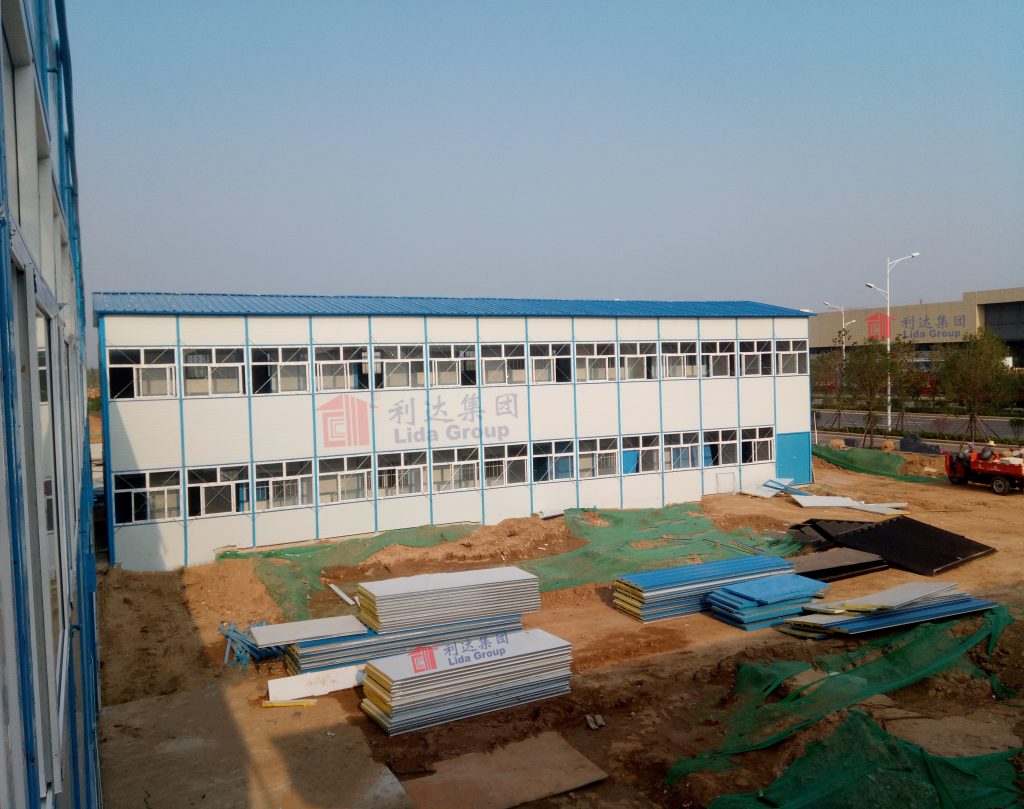
3. Comprehensive Upgrades of Oil Field Housing Living Quality and Safety Standards
While realizing low-cost transformation, Lida Group’s temporary buildings achieve all-round upgrades in living comfort, environmental adaptability, and industrial safety, completely changing the backward and crude living state of traditional oilfield dormitories, and establishing modern standardized housing standards for remote oilfield workers.
3.1 Constant-Temperature Thermal Insulation Improves Living Comfort
Lida Group’s high-density composite sandwich panel structure forms an efficient closed thermal insulation system for walls, roofs, and floors. The ultra-low thermal conductivity material can effectively isolate external extreme temperature interference, maintaining a constant indoor temperature of 19-25°C throughout the year. In high-temperature desert environments, it blocks heat radiation to avoid sultry indoor space; in ultra-low temperature cold regions, it stably locks indoor heat to prevent freezing. Compared with traditional dormitories with drastic indoor temperature changes, Lida’s buildings create a comfortable constant-temperature living environment, effectively relieving worker physical discomfort caused by extreme weather and improving rest quality.
3.2 Full Sealing Design Solves Dust and Humidity Disturbance
Aiming at the common problems of sandstorms, floating dust, and high humidity in oilfield sites, Lida Group adopts integrated one-piece panel molding and high-elastic rubber strip sealing technology for doors and windows. The fully sealed structure eliminates splicing gaps, effectively blocking external sand and dust from invading the room and keeping indoor living facilities clean and hygienic. For coastal and rainy oilfield areas, the overall waterproof and moisture-proof structure prevents wall mildew, indoor water accumulation, and bedding dampness. The smooth and easy-to-clean indoor surface reduces daily sanitation workload, creating a healthy and tidy living environment for long-term resident workers.
3.3 High-Standard Safety Performance Meets Oil Field Industrial Specifications
Lida Group strictly abides by oilfield industrial safety standards and carries out comprehensive safety upgrades for temporary buildings. The non-combustible rock wool core material has excellent fire resistance and high-temperature resistance, effectively blocking flame spread and eliminating fire hazards. The high-strength galvanized steel frame structure forms an integral stable bearing system, which can resist level 12 strong winds and moderate earthquakes, adapting to harsh environmental disturbances of oilfield sites. All supporting electrical systems adopt explosion-proof and leakage-proof configurations suitable for flammable and explosive environments. The standardized safety design completely solves the safety loopholes of traditional dormitories, ensuring the safe residence of frontline workers and the stable operation of oilfield camps.
3.4 Humanized Layout Optimizes Remote Living Experience
Lida Group’s modular buildings adopt scientific ergonomic space planning, with spacious indoor layout, reasonable storey height, and no cramped dead space. The high-transmittance window design ensures sufficient natural light, and the professional ventilation system realizes indoor and outdoor air circulation, maintaining fresh air quality. The standardized dormitory units can be flexibly matched with supporting canteens, shower rooms, activity rooms, and office rooms according to project demands, forming a fully functional integrated living camp. Complete living supporting facilities and humanized detail design effectively alleviate the loneliness and depression of remote work, improve workers’ sense of belonging and happiness, and stabilize the frontline workforce.
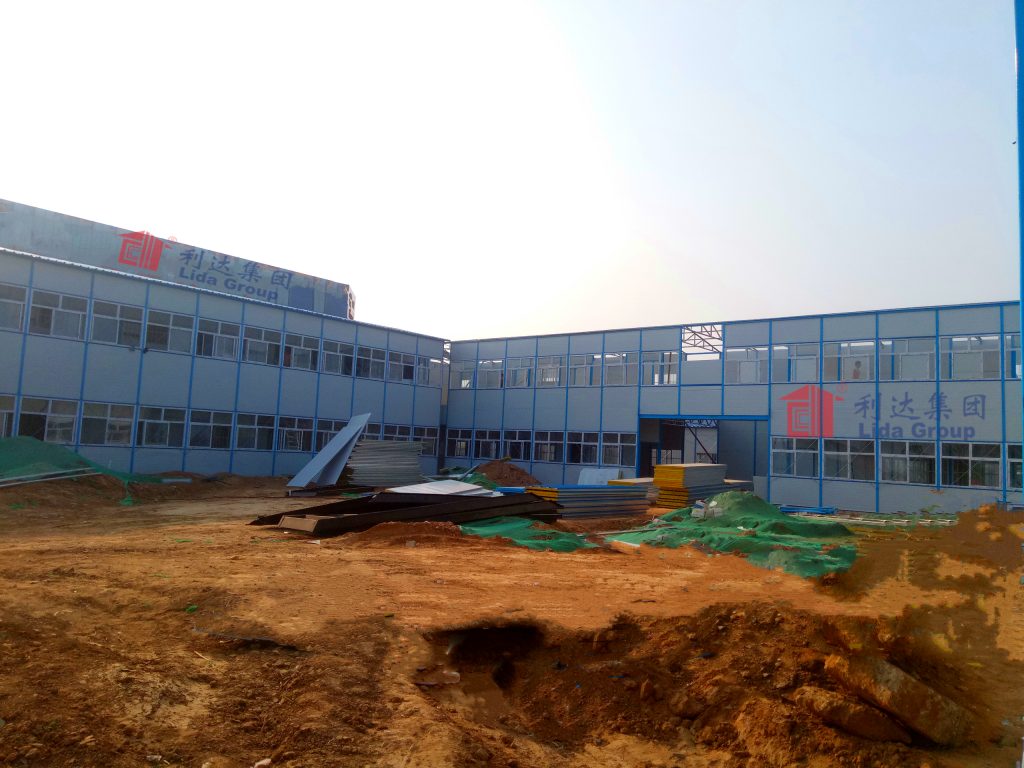
4. Full-Lifecycle Economic and Management Value Transformation
Lida Group’s temporary low-cost buildings not only realize the qualitative upgrade of oilfield housing quality but also bring revolutionary changes to project cost control and standardized management, helping oilfield enterprises achieve refined and efficient camp operation.
4.1 Low Upfront Investment Optimizes Capital Allocation
The factory prefabrication and lightweight flat-pack design greatly reduce the upfront investment of oilfield camp construction. Batch production reduces unit material costs, simplified assembly saves labor and mechanical expenses, and flat-pack transportation cuts logistics costs. Meanwhile, the lightweight structure does not need complex foundation pouring, saving foundation construction costs. Compared with traditional temporary housing, Lida’s solutions significantly reduce initial capital occupation, optimize enterprise fund allocation, and reduce project financial pressure.
4.2 Ultra-Low Maintenance and Energy-Saving Operation
The high-quality anti-aging, anti-corrosion, and weather-resistant materials ensure stable structural performance of the building for a long time, avoiding common failures such as water leakage, deformation, and rust of traditional dormitories. The whole house realizes ultra-low daily maintenance, saving a lot of long-term repair and replacement costs. In addition, the efficient thermal insulation system reduces air conditioning and heating energy consumption by 40% to 60%, greatly cutting daily camp energy expenditure. The dual advantages of low maintenance and energy saving realize lean low-cost operation of oilfield camps.
4.3 Flexible Deployment Improves Refined Management Level
The modular flexible splicing design supports free expansion and reduction of dormitory scale according to dynamic changes of oilfield staffing. Enterprises can accurately match housing resources with project demands, avoiding resource idle and waste caused by fixed-scale buildings. The unified and standardized camp layout is neat and orderly, which is convenient for unified personnel management, safety inspection, and sanitation supervision, effectively improving the standardized and refined management level of remote oilfield sites and solving the chaotic management problems of traditional crude camps.
5. Conclusion
For a long time, traditional oilfield worker dormitory housing has restricted the standardized construction, cost control, and workforce management of oilfield projects due to high comprehensive costs, backward living conditions, insufficient safety performance, and poor flexible adaptability. Lida Group’s Temporary Low Cost Building completely transforms the backward situation of traditional oilfield accommodation with innovative modular prefabrication technology, scenario-based customized design, and reusable cyclic utilization mode. It breaks the industry’s long-standing cost-performance bottleneck, realizing low upfront investment, low daily consumption, and zero waste of later assets on the premise of high-standard safety and comfortable living quality.
Through all-round upgrades of constant-temperature thermal insulation, dust-proof and moisture-proof sealing, noise reduction and humanized layout, Lida Group’s temporary buildings comprehensively improve the remote living experience of oilfield workers, effectively stabilize the frontline workforce, and provide solid support for the efficient and safe operation of oilfield projects. At the same time, the advantages of rapid deployment, flexible layout, and full-lifecycle cost reduction bring significant economic and management value for energy enterprises. With unique technological innovation, reliable product performance, and excellent cost performance, Lida Group’s low-cost temporary building solutions have become the mainstream choice for modern oilfield worker dormitory transformation and upgrading. In the future, Lida Group will continue to optimize modular building technology and scene customization capabilities, continuously empower the high-quality, low-cost, and sustainable development of global oilfield camp construction, and set a new benchmark for remote worker accommodation in the energy industry.
Related news
-
Easy Install Sandwich Panel House Provides Comfortable Oil Field Worker Dormitory by Lida Group
2026-05-25 14:05:45
-
Rapid Deployment of Oil Field Worker Dormitory with Temporary Low Cost Building Technology
2026-05-25 13:42:05
-
Lida Group Launches Easy Install Sandwich Panel House for Oil Field Worker Dormitory
2026-05-25 11:42:55
contact us
- Tel: +86-532-88966982
- Whatsapp: +86-13793209022
- E-mail: sales@lidajituan.com
