



Lida Group’s Low-Cost Durable Building Technology Transforms Mining Field Worker Dormitory
2026-Apr-29 16:33:41
By Admin
1. Introduction
The global mining industry acts as a fundamental pillar supporting modern industrial and economic development. Mineral resources extracted from remote mining sites fuel manufacturing production, energy infrastructure development, and large-scale urban construction worldwide. However, mining operations are inherently characterized by remote working locations, extreme climatic conditions, phased project cycles, and harsh on-site environments. Unlike standardized urban construction projects, mining field auxiliary infrastructure faces unique challenges in construction conditions, service life requirements, and budget control.
Worker dormitories represent the most critical on-site auxiliary infrastructure for mining enterprises. Stable, safe, and affordable staff accommodation directly determines frontline worker satisfaction, team stability, and continuous mining production efficiency. For decades, global mining enterprises have struggled with outdated dormitory construction solutions. Traditional cast-in-place concrete buildings feature reliable durability but require massive capital investment and lengthy construction cycles. Ordinary temporary prefabricated buildings reduce upfront costs significantly but suffer from poor structural durability, frequent functional failures, and high long-term maintenance expenses. This long-standing industry contradiction between low cost and structural durability has restricted the standardized upgrading of global mining camp construction.
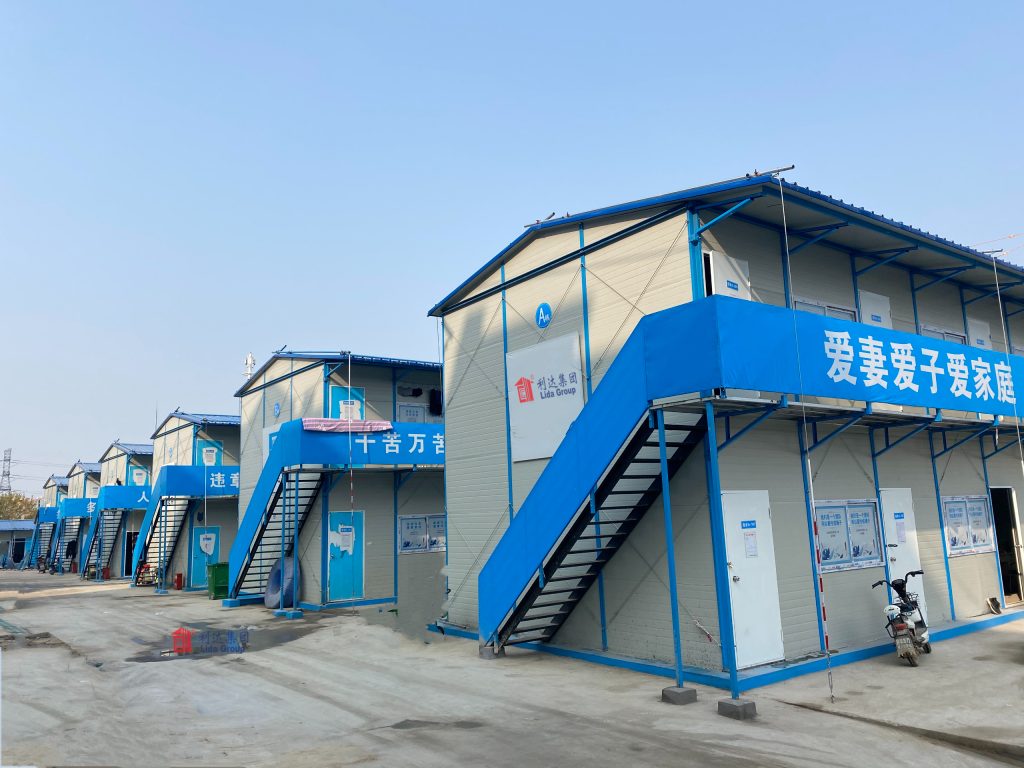
As a world-leading prefabricated building solution provider with over 30 years of technological accumulation and engineering experience, Lida Group has independently developed innovative low-cost durable building technology tailored for extreme mining scenarios. Breaking the universal industry dilemma that low-cost buildings sacrifice quality and high-durability buildings require excessive investment, this proprietary technology optimizes building materials, structural mechanics, modular production processes, and assembly techniques in all dimensions. By balancing full-cycle economic benefits and extreme environmental adaptability, Lida Group’s technological system thoroughly upgrades the quality and operational value of mining field worker dormitories, realizing comprehensive transformation and upgrading of traditional mining camp construction modes. This article systematically discusses the defects of traditional mining dormitory construction technologies, core principles and technical advantages of Lida Group’s low-cost durable building technology, and its practical transformation value in global mining camp projects.
2. Technical Defects of Traditional Mining Dormitory Construction
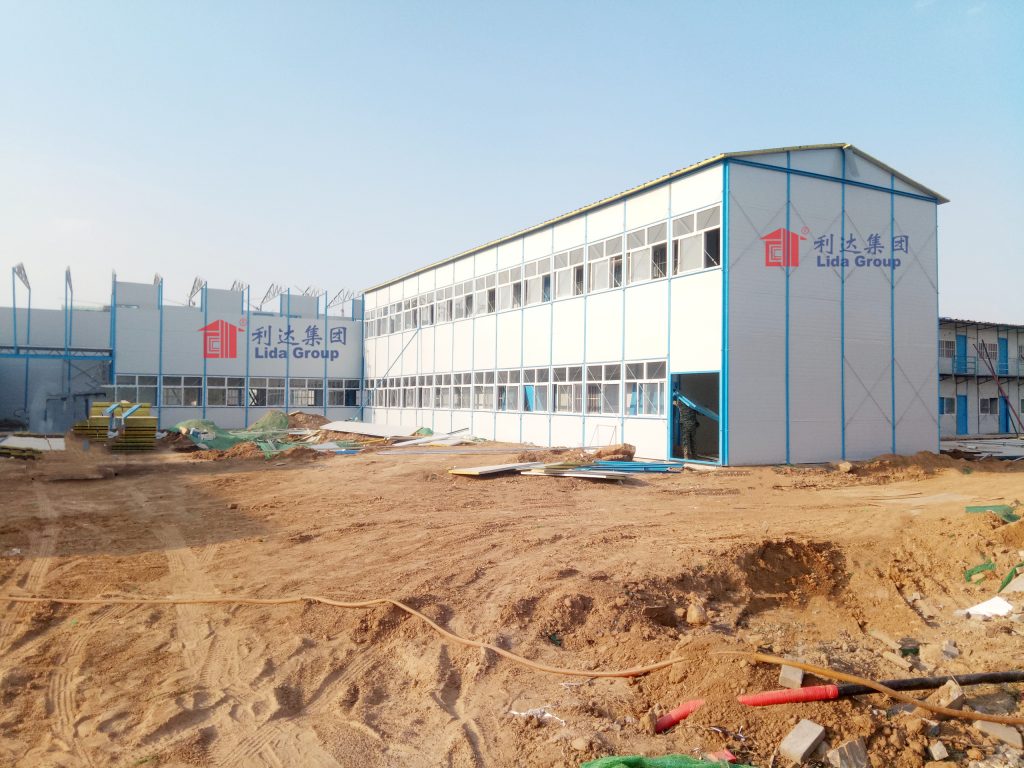
Traditional mining worker dormitories mainly adopt two construction technologies: cast-in-place concrete technology and conventional scattered color steel assembly technology. Restricted by backward technical concepts and single structural design logic, both technical solutions have irreparable defects in cost control, structural durability, environmental adaptability, and cyclic utilization, unable to meet the sustainable development needs of modern mining enterprises.
2.1 High Investment and Low Reusability of Concrete Construction Technology
Cast-in-place concrete construction is the most traditional mining dormitory building technology, featuring high overall structural stability and strong wind and earthquake resistance. Nevertheless, this technology has prominent economic drawbacks. The whole construction process involves foundation pouring, steel bar binding, concrete curing, wall masonry, and indoor secondary decoration, requiring a large amount of cement, steel, sand, and other raw materials, as well as professional construction teams and large mechanical equipment. The upfront material and labor investment remains at a high level, bringing huge budget pressure to mining enterprises.
More importantly, concrete buildings belong to fixed static infrastructure without disassembly and migration capabilities. Mining projects have typical phased operational characteristics. After mineral resource exploitation is completed, fixed concrete dormitories can only be abandoned or demolished, generating massive construction waste and irreversible asset losses. The zero-reuse rate results in extremely low full-cycle economic benefits, making concrete construction technology unsuitable for large-scale promotion in temporary mining camp scenarios.
2.2 Insufficient Durability and Hidden Safety Risks of Ordinary Prefabricated Technology
To control construction budgets, most small and medium-sized mining enterprises choose conventional scattered color steel assembly technology for temporary dormitory construction. This technology simplifies structural design and reduces raw material consumption, effectively lowering upfront construction costs. However, oversimplified structural design and inferior material configuration lead to serious durability defects. Ordinary temporary buildings adopt thin ungalvanized steel frames and single-layer color steel plates without professional anti-corrosion, waterproof, and ultraviolet-resistant treatment.
Under long-term exposure to extreme mining environments including intense solar radiation, severe temperature differences between day and night, saline-alkali soil corrosion, and persistent wind and sand erosion, steel components are prone to rusting, deformation, and structural loosening. Wall panels easily crack, fade, and leak water. The average service life of buildings constructed through ordinary prefabricated technology is only two to three years. Frequent component replacement, structural maintenance, and building renovation generate continuous additional expenditure. In the long run, the comprehensive operational cost far exceeds that of high-quality durable buildings, while aging structures bring potential safety hazards to workers’ living environments.
2.3 Backward Construction Logic Restricts Industrial Upgrading
Both traditional construction technologies adopt scenario-fixed design logic without considering the flexible deployment and cyclic operation characteristics of mining projects. Concrete technology focuses excessively on structural stability while ignoring construction efficiency and asset mobility. Ordinary prefabricated technology blindly pursues low upfront costs while abandoning structural durability and long-term safety. The single and backward technical concepts make it impossible for traditional mining dormitories to balance construction efficiency, economic cost, living comfort, and environmental safety, severely restricting the standardized, green, and intelligent upgrading of global mining camp infrastructure.
3. Core Technical Principles of Lida Group’s Low-Cost Durable Building Technology
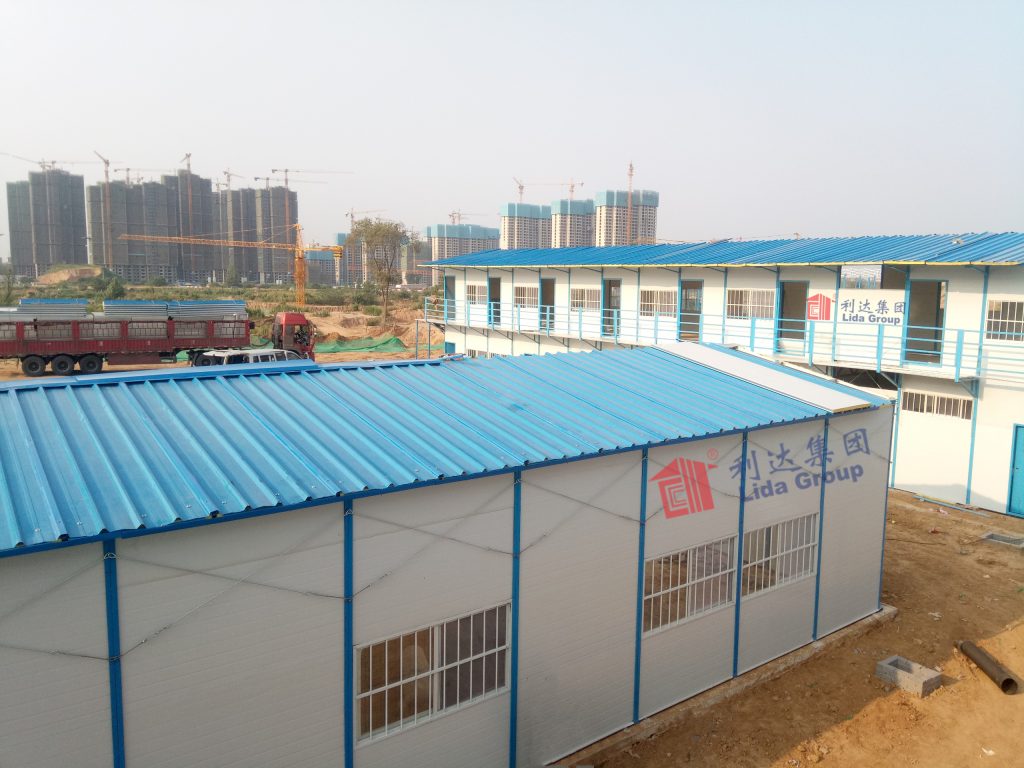
Targeting the technical pain points of traditional mining dormitory construction, Lida Group’s independently developed low-cost durable building technology adheres to two core R&D principles: cost optimization through technological innovation and durability improvement through structural iteration. Abandoning the outdated industry design thinking of sacrificing quality for low price or increasing investment for high quality, this technological system realizes complementary advantages of modular industrial production, high-performance composite materials, and optimized mechanical structure design.
Technically, the system relies on standardized factory prefabrication to reduce on-site construction waste and manual errors, cutting invalid construction costs. Through hot-dip galvanizing anti-corrosion technology, seamless plug-in assembly structure, and mechanical stress optimization design, the building’s environmental resistance and structural stability are comprehensively improved. Meanwhile, the fully detachable modular design realizes cross-project cyclic reuse of building components, fundamentally reducing the full-cycle infrastructure investment of multi-project mining enterprises. This innovative technical framework completely subverts the traditional mining dormitory construction mode and brings transformative upgrades to mining camp construction.
4. Core Technical Advantages and Transformative Value
4.1 Standardized Modular Production Reduces Comprehensive Construction Costs
Cost control is the core advantage of Lida Group’s innovative building technology. Different from the scattered on-site operation mode of traditional construction technologies, over 95% of building components of Lida’s mining dormitories are completed in standardized industrial factories, including steel frames, composite sandwich wall panels, roof systems, doors, windows, and internal water and electricity integration modules. Unified mold production and standardized process management eliminate material waste, cutting errors, and rework losses caused by manual on-site construction.
On-site construction is simplified into basic assembly and fixation procedures, greatly reducing reliance on professional construction workers and large hoisting equipment. The on-site deployment cycle is shortened from several months to 3 to 7 days, significantly lowering on-site labor costs, mechanical equipment rental fees, and project management costs. Compared with concrete dormitories, Lida’s modular buildings reduce upfront construction investment by 30% to 50%. Combined with the component reuse rate of more than 85% across different mining projects, the long-term average construction cost of enterprise mining camps is reduced by over 60%, achieving industry-leading full-cycle cost control capability.
4.2 Reinforced Structure and Anti-Aging Technology Improve Extreme Durability
While controlling construction costs efficiently, Lida Group’s proprietary technology comprehensively optimizes building durability to adapt to extreme mining environments. In terms of bearing structure, the technology adopts high-strength cold-formed galvanized steel frame systems. All steel components undergo dual anti-corrosion treatment of hot-dip galvanizing and fluorocarbon surface coating, which effectively resists saline-alkali corrosion, wind and sand abrasion, and long-term ultraviolet aging. Optimized mechanical structural calculations enable the steel frame to disperse external wind pressure and seismic force evenly, realizing Level 12 strong wind resistance and Level 8 earthquake resistance.
In terms of enclosure structure, matched high-density composite sandwich panel technology is adopted. Double-sided aluminum-zinc color-coated steel plates improve surface scratch resistance and aging resistance, while internal rock wool core materials enhance structural stability and environmental adaptability. The seamless plug-in splicing structure avoids gap failure risks of traditional lap-joint structures. Cooperated with integrated drainage systems and high-weather-resistance waterproof sealant, the building completely solves common problems such as water leakage, dust penetration, and air leakage. Verified by long-term field engineering, buildings adopting Lida’s technology can operate stably for more than 20 years in high-altitude low-temperature, arid high-temperature, and humid rainy mining areas with minimal daily maintenance, far exceeding the service life of ordinary temporary buildings.
4.3 Detachable Cyclic Structure Realizes Sustainable Asset Value
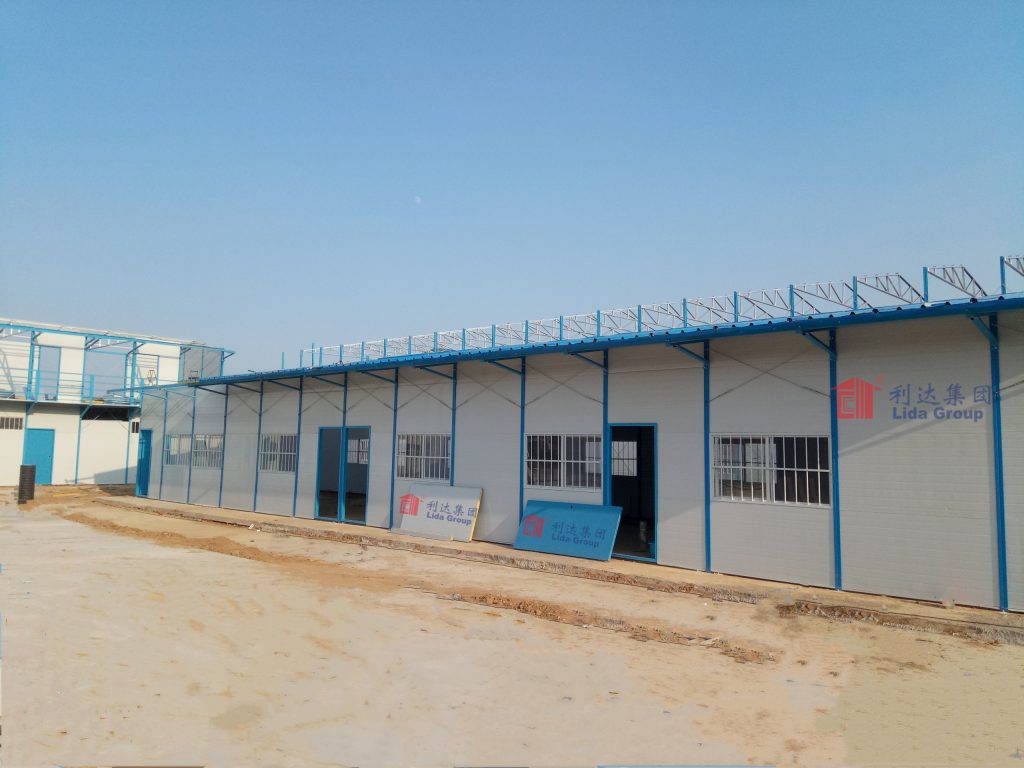
A major innovative breakthrough of Lida Group’s low-cost durable building technology is the detachable reusable structural design. Traditional mining building technologies produce one-time fixed assets with zero reusability, resulting in huge resource waste. Lida’s modular assembly structure does not adopt welding and fixed pouring processes. All components are connected through standard bolts and plug-in locking structures, enabling complete disassembly, integral packaging, and cross-regional transportation and reassembly.
After the completion of a single mining project, the dormitory building can be completely disassembled, and intact components can be directly applied to new mining camp construction. This cyclic utilization mode converts temporary mining infrastructure into reusable fixed assets of enterprises, effectively solving the asset loss problem of traditional one-time construction. For large mining enterprises with multi-project global layout, this technical advantage greatly optimizes asset allocation efficiency and forms sustainable economic benefits.
4.4 Humanized Supporting Technology Optimizes Worker Living Environment
Lida Group’s building technology not only achieves breakthroughs in cost control and structural durability but also integrates humanized design concepts to transform the poor living environment of traditional mining dormitories. Based on the extreme climatic characteristics of different mining areas, the technology supports customized configuration of sandwich panel thickness, ventilation systems, and thermal insulation structures to realize constant indoor temperature throughout the year.
The high-density sandwich structure brings excellent sound insulation performance, effectively isolating external mining mechanical operation noise and creating a quiet resting environment. Meanwhile, the modular flexible space design supports free adjustment of indoor layout, residential density, and functional partitions. Supporting facility integration technology can realize the synchronous matching of canteens, bathhouses, laundry rooms, and rest activity areas, forming a fully functional closed-loop living community. The comprehensive upgrading of living conditions solves the staff turnover problem caused by poor accommodation environment in traditional mining camps, stabilizing frontline mining teams and indirectly improving enterprise production benefits.
4.5 Green Low-Carbon Construction Technology Optimizes Ecological Benefits
Modern global mining industry is accelerating the transformation to green and low-carbon development, and ecological environmental protection has become an important assessment indicator for mining project operation. Traditional building construction technologies produce a large amount of construction dust, sewage, and solid waste, causing irreversible damage to fragile mining ecological environments.
Lida Group’s innovative building technology adopts factory prefabrication and on-site dry assembly mode, with almost no on-site construction pollution. All building materials are recyclable, non-toxic, and environmentally friendly, complying with international green building certification standards. The whole construction process realizes low energy consumption and zero pollution. After project completion, no construction waste remains on the mining site, realizing zero damage to the local ecology. This green construction technology helps mining enterprises efficiently pass environmental assessment audits, reduce ecological governance costs, and shape standardized green mining brand images.
5. Global Engineering Practice and Industrial Transformation Value
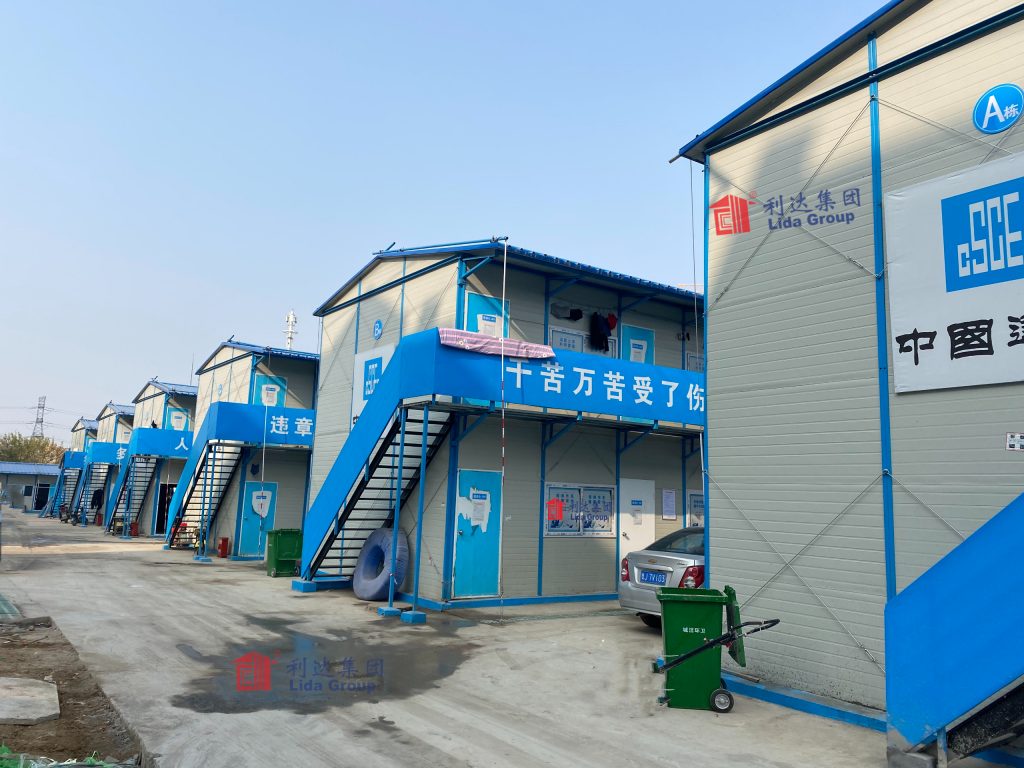
After years of continuous technological iteration and market verification, Lida Group’s low-cost durable building technology has been widely applied in hundreds of mining camp projects worldwide, covering coal, metal, non-metal, and other diversified mineral exploitation fields. The technology has achieved stable operational effects in multiple extreme scenarios, including Central Asian high-altitude cold mining areas, African arid desert mining areas, and Southeast Asian humid coastal mining areas.
A large number of practical engineering cases have verified that Lida Group’s innovative building technology successfully solves the long-standing industry pain points of high cost, poor durability, single function, and low reusability of traditional mining dormitories. It realizes the perfect integration of low full-cycle cost, extreme environmental durability, rapid deployment, humanized residence, and green environmental protection. Cooperative mining enterprises generally feedback that this technological solution has thoroughly upgraded the construction standard and operational value of mining field staff dormitories, effectively reducing enterprise infrastructure investment pressure and improving on-site staff living standards and team stability.
Supported by a complete global service system, Lida Group provides one-stop full-cycle technical services including on-site survey, personalized scheme design, standardized production, cross-border transportation guidance, on-site technical assembly guidance, and long-term after-sales operation and maintenance. Professional technical teams dynamically adjust technological schemes according to local climate and project characteristics to ensure that building products perfectly adapt to diverse complex mining scenarios, maximizing technological application value.
6. Conclusion
Mining field worker dormitory construction is an indispensable basic link in the operation and development of global mining enterprises, and its construction technology level directly determines enterprise infrastructure investment cost, staff living quality, project operational safety, and green development capability. Restricted by backward design concepts and single structural logic, traditional concrete construction technology and ordinary prefabricated assembly technology cannot balance economic cost, structural durability, construction efficiency, and living comfort, restricting the standardized transformation and upgrading of modern mining camps.
Lida Group’s independently developed low-cost durable building technology brings comprehensive transformative upgrades to mining field worker dormitory construction. Through standardized modular industrial production technology, high-strength anti-corrosion structural optimization technology, detachable cyclic reuse design, humanized living supporting technology, and green low-carbon construction concepts, this innovative technological system perfectly solves the core defects of traditional mining dormitory construction technologies. It not only greatly reduces the upfront investment and long-term operational maintenance costs of mining enterprises but also significantly improves building structural safety, extreme environmental adaptability, and staff living comfort.
In addition, the technology’s excellent ecological environmental protection performance and sustainable asset cycle capability help mining enterprises meet global green mining development standards, optimize on-site management systems, and stabilize frontline talent teams. With the continuous upgrading of the global mining industry toward standardization, high efficiency, and green sustainability, low-cost, durable, reusable, and humanized modular building technology will become the mainstream technical solution for mining camp infrastructure construction. As a global leader in prefabricated building technology R&D and application, Lida Group will continue to deepen technological innovation, iterate product performance, expand scenario adaptation capabilities, and provide more high-quality, professional, and transformative building technical solutions for global mining and engineering projects, empowering the sustainable and high-quality development of the global mining industry.
Related news
-
Easy Install Sandwich Panel House Provides Comfortable Mining Field Worker Dormitory by Lida Group
2026-04-29 16:24:07
-
Fast Assembly of Mining Field Worker Dormitory Using Lida Group's Low-Cost Durable Building
2026-04-29 16:07:34
-
Lida Group Launches Easy Install Sandwich Panel House for Mining Field Worker Dormitory
2026-04-29 16:01:46
contact us
- Tel: +86-532-88966982
- Whatsapp: +86-13793209022
- E-mail: sales@lidajituan.com
