



Lida Group Launches Easy Install Sandwich Panel House for Mining Field Worker Dormitory
2026-Apr-29 16:01:46
By Admin
1. Introduction
The global mining industry remains the backbone of fundamental industrial development, supplying essential metallic and non-metallic mineral resources for urban construction, energy production, industrial manufacturing, and cross-industry downstream production chains. Most mining exploration and exploitation projects are deployed in remote, desolate zones featuring extreme natural conditions, including high-altitude cold plateaus, arid sandy deserts, rainy humid mountain areas, and wind-exposed wilderness regions. These harsh geographical and climatic environments create tremendous challenges for auxiliary infrastructure construction, especially worker residential facilities.
Frontline mining workers require safe, comfortable, and timely accommodation to guarantee physical rest and stable working status, which directly determines project continuity, team stability, and overall production efficiency. Unlike urban residential buildings, mining field dormitories prioritize rapid installation, strong environmental adaptability, affordable costs, and stable durability rather than decorative aesthetics. Nevertheless, traditional mining accommodation solutions have long failed to satisfy diversified operational demands. Concrete buildings feature stable structure but slow construction and high investment, while conventional color steel temporary houses suffer from complicated assembly procedures, poor durability, and frequent maintenance troubles.
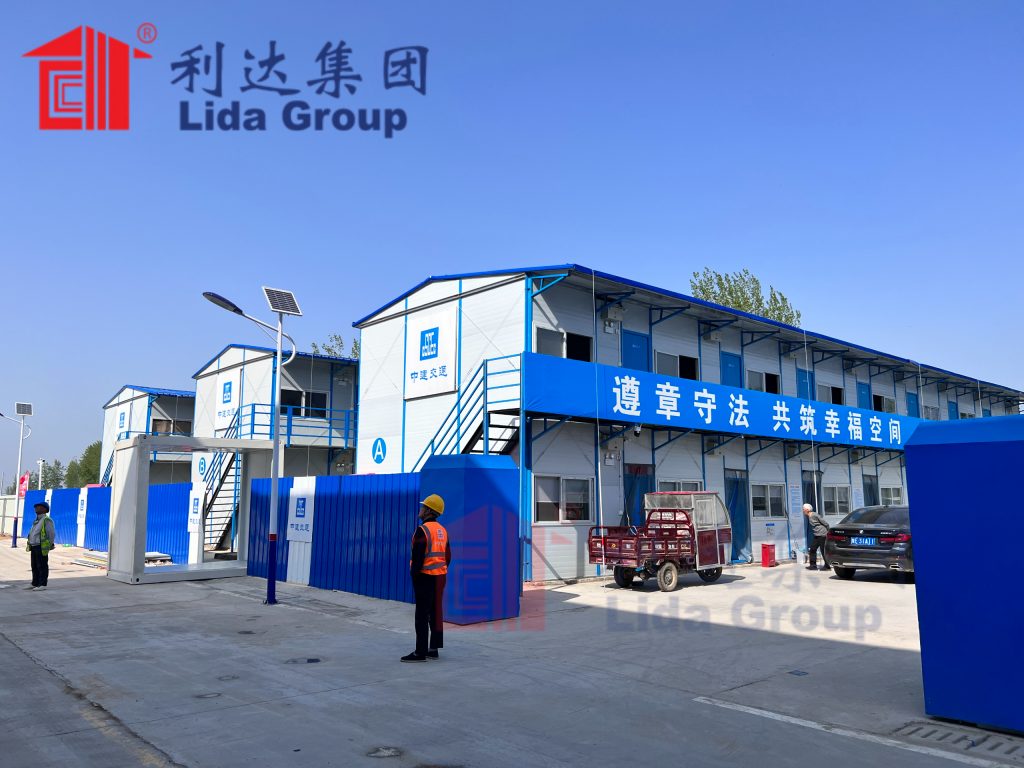
To solve the universal accommodation bottlenecks plaguing global mining enterprises, Lida Group, a professional prefabricated building manufacturer with over 30 years of industrial R&D and engineering experience, officially launches upgraded easy-install sandwich panel houses specially customized for mining field worker dormitories. Optimized based on actual mining scenario pain points, this new generation of modular buildings integrates simplified assembly techniques, high-performance composite sandwich materials, reinforced structural design, and humanized functional configuration. Effectively balancing installation efficiency, structural safety, living comfort, and economic cost, Lida Group’s new sandwich panel house solutions have become ideal standardized residential facilities for modern mining camps. This article comprehensively analyzes the defects of traditional mining dormitories, core design concepts, technical advantages, practical application values, and market prospects of Lida Group’s newly launched easy-install sandwich panel houses.
2. Deficiencies of Traditional Mining Field Worker Dormitories
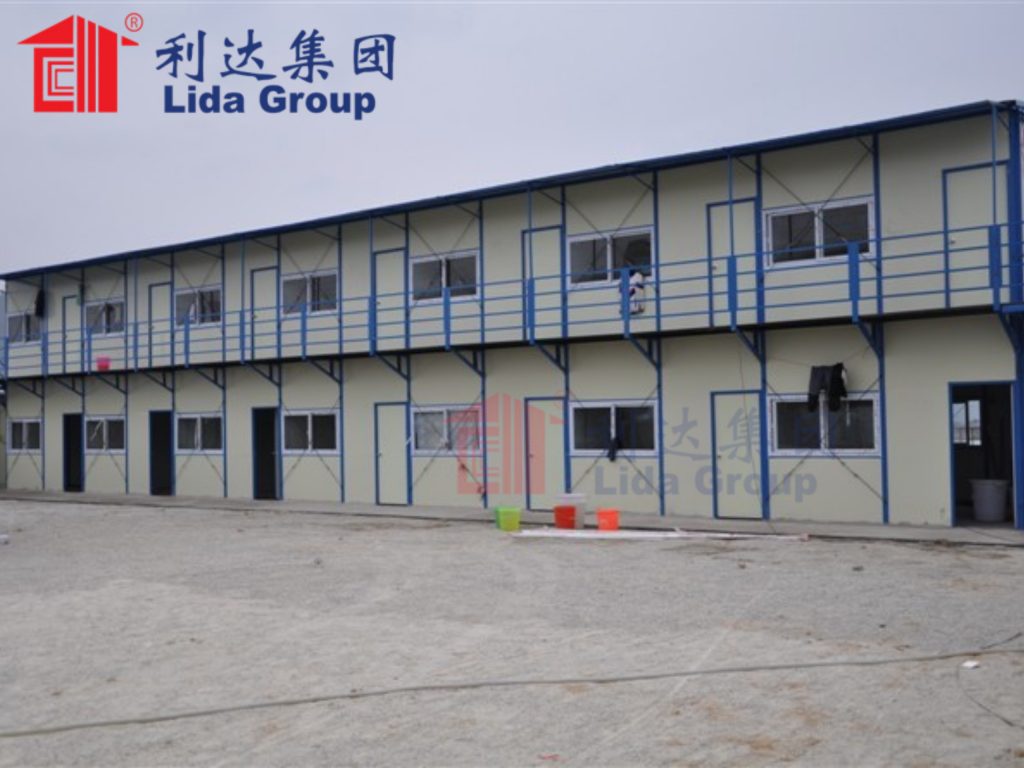
Mining projects possess distinctive industrial characteristics including remote construction locations, harsh operating environments, tight construction schedules, and phased exploitation cycles. These unique attributes put forward extremely strict requirements for supporting dormitory buildings in terms of construction speed, environmental resistance, construction cost, and reusable performance. Common traditional mining accommodation facilities mainly include cast-in-place concrete buildings and ordinary assembled color steel houses, both of which have unavoidable functional and structural deficiencies.
2.1 Cumbersome Construction and Low Deployment Efficiency
Cast-in-place concrete dormitories require multiple complex construction procedures, including foundation excavation, steel bar binding, concrete pouring, long-term curing, wall masonry, and indoor secondary decoration. The whole construction cycle lasts two to three months or even longer. Mining areas are susceptible to sudden heavy rain, sandstorms, and low-temperature freezing weather, which easily interrupt construction progress and delay worker settlement. For ordinary traditional color steel houses, although the construction process is simpler than concrete buildings, they adopt scattered component design with numerous independent keels, connectors, and enclosure accessories. On-site assembly requires professional construction skills, repeated calibration, and manual fixing, resulting in low installation efficiency and failing to meet mining projects’ urgent pre-production preparation demands.
2.2 Inferior Material Performance and Poor Durability
Most conventional temporary mining buildings adopt thin single-layer color steel plates and lightweight ungalvanized steel frames without professional anti-corrosion, waterproof, and ultraviolet-resistant treatment. Under long-term exposure to extreme mining environments featuring intense solar radiation, saline-alkali soil corrosion, severe temperature differences, and persistent wind and sand erosion, building components are prone to rusting, deformation, wall cracking, water leakage, and structural loosening. The average service life of ordinary temporary buildings is merely two to three years. Frequent component damage not only affects workers’ daily living safety but also leads to continuous investment in building maintenance and renovation, greatly increasing the long-term operational costs of mining enterprises.
2.3 High Comprehensive Cost and Low Asset Utilization
Concrete dormitories require massive investment in raw materials, mechanical equipment, and professional construction labor, resulting in extremely high upfront construction costs. Meanwhile, fixed concrete buildings cannot be disassembled, migrated, or reused. After the completion of single-project mineral exploitation, most dormitories are abandoned or demolished, generating massive construction waste and severe economic losses. Although ordinary color steel houses have low initial investment, their short service life and frequent maintenance lead to extremely high full-cycle costs, with component reuse rates lower than 30%, failing to form sustainable asset value for multi-project mining enterprises.
2.4 Outdated Design and Poor Worker Living Experience
Traditional mining dormitories adopt rigid and single space design, lacking humanized functional optimization. Most temporary buildings have insufficient thermal insulation and sound insulation capabilities, resulting in sweltering indoor environments in summer and severe heat loss in winter. External mining equipment operation noise cannot be effectively isolated, seriously affecting workers’ rest quality. In addition, incomplete supporting living facilities lead to poor worker satisfaction, triggering high frontline staff turnover, destabilizing mining working teams, and indirectly restricting project production efficiency.
3. Core Design Concepts of Lida Group’s New Easy-Install Sandwich Panel House
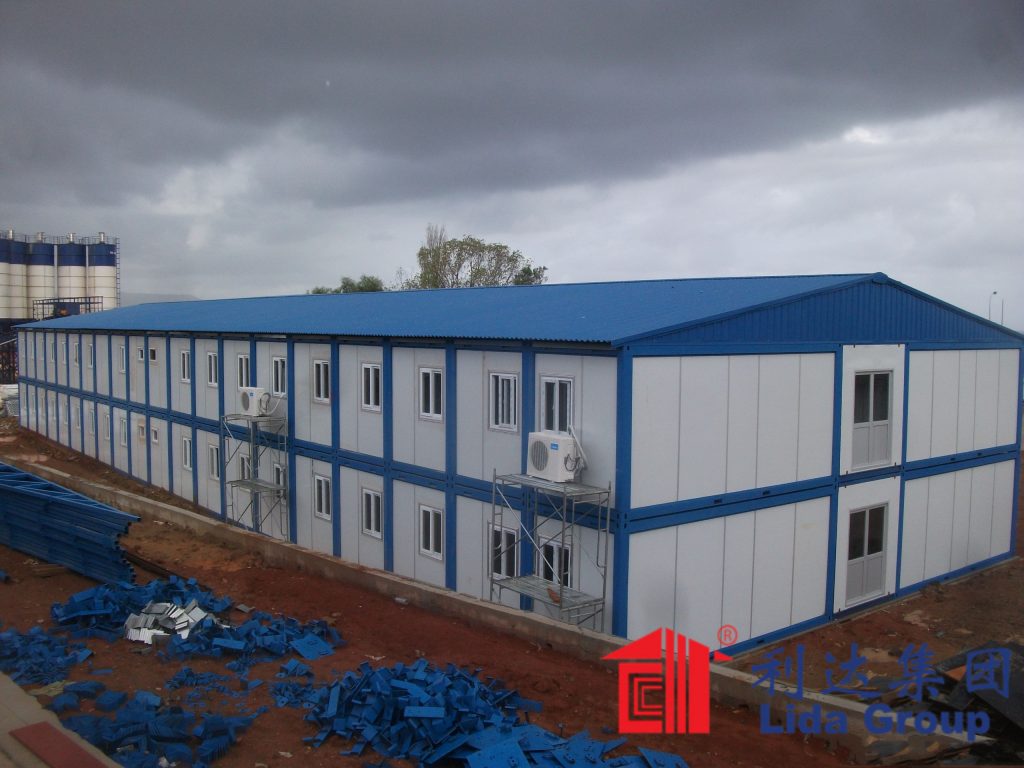
Based on systematic summary of traditional mining dormitory defects and in-depth research on global mining camp construction standards, Lida Group’s newly launched easy-install sandwich panel houses adhere to four core design concepts: simplified assembly process, reliable structural durability, controllable full-cycle cost, and humanized living optimization. Different from generic temporary prefabricated buildings on the market, Lida’s products are specially tailored for mining extreme scenarios, abandoning redundant structural design while retaining all practical functional modules, achieving perfect coordination of efficiency, safety, economy, and comfort.
All core building modules are prefabricated and integrated in standardized industrial factories, realizing modular integration of steel frames, sandwich enclosure panels, doors, windows, and internal water and electricity systems. The product completely breaks the technical bottleneck of complicated on-site assembly of traditional temporary buildings, greatly lowering construction thresholds, shortening deployment cycles, and adapting to the limited construction conditions of remote mining fields.
4. Key Technical and Functional Advantages
4.1 Industry-Leading Easy-Install Modular Structure
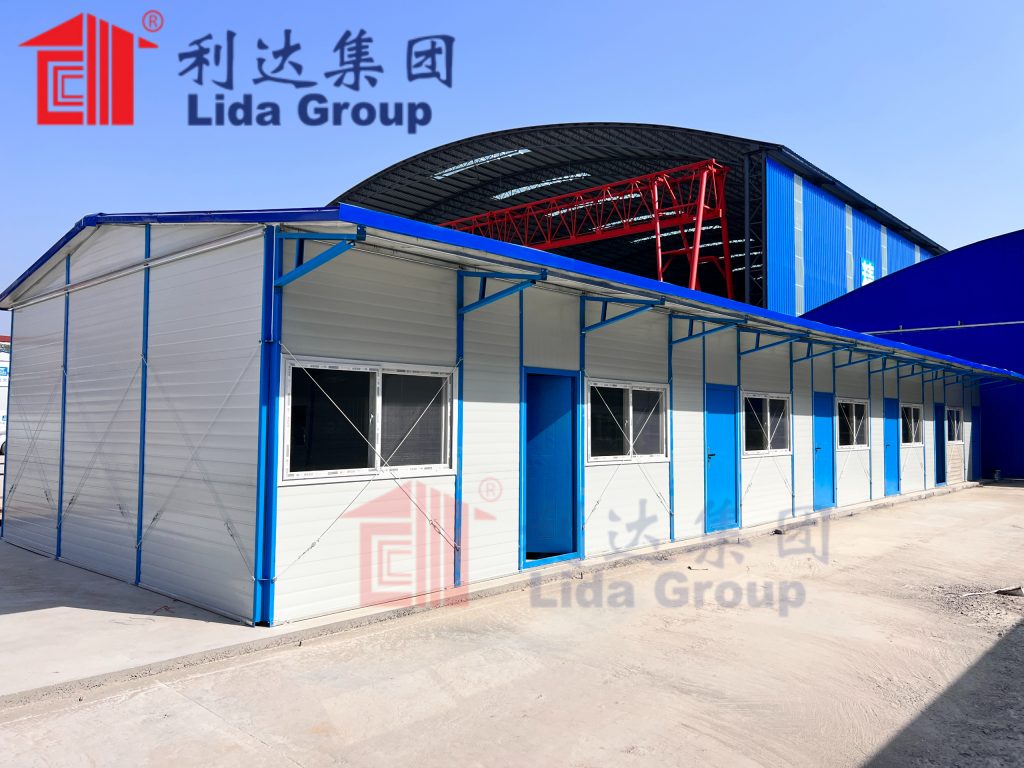
The most prominent advantage of Lida Group’s new sandwich panel house is ultra-simple and fast on-site installation. The product adopts innovative plug-in integrated assembly structure, with all wall panels, roof panels, and bearing steel frames preset with unified standard connecting grooves and locking structures. All assembly interfaces are precisely calibrated through industrial mold production, eliminating complex on-site welding, cutting, glue spraying, and concrete pouring procedures required by traditional buildings.
The entire on-site construction process is simplified into four basic steps: foundation leveling, steel frame placement, wall and roof panel plug-in assembly, and door and window installation. Ordinary construction workers without professional prefabricated building construction experience can proficiently complete assembly work after simple guidance. Two workers can finish the installation of a standard 20-square-meter single dormitory within half a day. A complete mining camp dormitory cluster capable of accommodating hundreds of frontline workers can be fully installed, debugged, and put into use within 3 to 7 days. Compared with traditional temporary color steel houses, the on-site installation efficiency is improved by more than 75%, effectively solving the pain point of slow deployment of mining supporting facilities and helping mining enterprises complete rapid staff settlement and project launch.
Furthermore, the overall lightweight design eliminates the dependence on large hoisting machinery and professional construction equipment. The building can be smoothly assembled on rugged, uneven, and traffic-inconvenient mining sites, realizing flexible deployment in diverse complex terrain environments.
4.2 High-Performance Custom Sandwich Panel Materials
Material quality determines building durability and living comfort. Lida Group’s customized sandwich panels adopt three-layer composite integrated molding technology, consisting of double-sided high-strength color-coated aluminum-zinc steel plates and high-density flame-retardant inner core materials including rock wool and polyurethane. The double-sided metal plates undergo multi-layer anti-corrosion, anti-rust, scratch-resistant, and ultraviolet-resistant coating treatment, which can effectively resist saline-alkali corrosion, wind and sand impact, and long-term solar aging in harsh mining environments.
The internal rock wool core material reaches Class A fireproof rating, possessing excellent flame retardant and fire prevention capabilities to avoid building fire hazards caused by circuit aging and daily living operations. Meanwhile, the high-density core material provides stable thermal insulation and heat preservation performance. Customized panel thickness configurations are available for different climatic zones: thickened thermal insulation panels are matched for high-altitude low-temperature mining areas to prevent indoor heat loss, while high-reflective thermal insulation panels are adopted for arid high-temperature desert mining areas to isolate external heat radiation and maintain constant indoor temperature.
In terms of waterproof and dustproof performance, the seamless plug-in splicing structure of sandwich panels completely avoids the gap leakage problem of traditional lap-joint assembled buildings. Matched with integrated roof drainage grooves and high weather resistance waterproof sealant, the building realizes comprehensive waterproof and dustproof effects, ensuring long-term stable indoor dry and clean environment in rainy, snowy, and sandy weather conditions.
4.3 Reinforced Safety Structure and Superb Environmental Adaptability
Targeting the complex geological and climatic characteristics of mining fields, Lida Group carries out reinforced optimization for the overall bearing structure of sandwich panel houses. The main bearing framework adopts hot-dip galvanized high-strength square steel tubes and C-shaped steel purlins. All steel components pass standardized anti-corrosion treatment and structural stress testing. The optimized steel frame structure can resist Level 12 strong winds and Level 8 earthquakes, effectively coping with extreme weather impacts and slight geological fluctuations in remote mining areas.
Professional engineering verification shows that Lida Group’s easy-install sandwich panel houses can maintain stable structural performance in diverse extreme scenarios, including high-altitude low-temperature environments below minus 30 degrees Celsius, arid high-temperature deserts above 40 degrees Celsius, and perennial humid rainy mining zones. With minimal daily maintenance, the overall service life of the building exceeds 20 years, far surpassing ordinary temporary mining dormitories and fully meeting the long-term phased operation needs of mining projects.
4.4 Low Full-Cycle Cost and Recyclable Utilization
Lida Group’s new sandwich panel house realizes comprehensive cost reduction covering initial construction, daily operation, later maintenance, and project migration. Factory integrated prefabrication avoids material waste, manual rework, and resource loss caused by traditional on-site scattered construction, greatly reducing upfront material and labor investment. Ultra-fast on-site assembly shortens the construction cycle, lowers equipment rental costs and site management expenses, and effectively reduces the pre-operation preparation costs of mining projects.
Excellent material durability and stable structural performance greatly reduce later maintenance pressure. The anti-corrosion and anti-aging sandwich panels and steel frames do not require frequent painting repair, component replacement, and waterproof renovation, cutting long-term maintenance costs by more than 60% compared with ordinary temporary buildings. Most importantly, the modular detachable design enables all building components to be completely disassembled, packaged, and transported for secondary assembly in new mining projects, with a component reuse rate of over 85%. This cyclic reusable mode converts temporary mining camp buildings into reusable enterprise assets, greatly improving asset utilization and creating long-term stable economic benefits for multi-project mining enterprises.
4.5 Humanized Layout and Complete Supporting Facilities
While improving installation efficiency and structural performance, Lida Group fully considers frontline workers’ living experience and optimizes indoor space design and supporting configurations. The dormitory adopts flexible customizable space layout, which can freely adjust indoor area, room spacing, and resident capacity according to the number of mining workers and project scale. Each independent dormitory unit is equipped with large-area daylighting windows and multi-directional ventilation systems to ensure sufficient natural light and smooth indoor air circulation.
All water supply, power supply, and drainage pipelines are pre-embedded in factory production, enabling immediate use after on-site assembly without secondary decoration. Meanwhile, Lida Group can customize complete supporting functional facilities including staff canteens, bathhouses, laundry rooms, meeting rooms, storage rooms, and staff rest lounges according to project demands, forming a fully functional closed-loop mining camp living community. The humanized design comprehensively improves worker living comfort, enhances staff sense of belonging and job satisfaction, and helps mining enterprises stabilize frontline working teams and reduce staff turnover rates.
5. Green Environmental Protection and Sustainable Development Value
With the global mining industry accelerating green transformation and upgrading, environmental protection performance has become a key indicator for mining project approval, environmental assessment, and standardized construction. Traditional on-site building construction generates massive dust pollution, sewage waste, and construction residue, causing irreversible damage to the fragile ecological environment of remote mining areas.
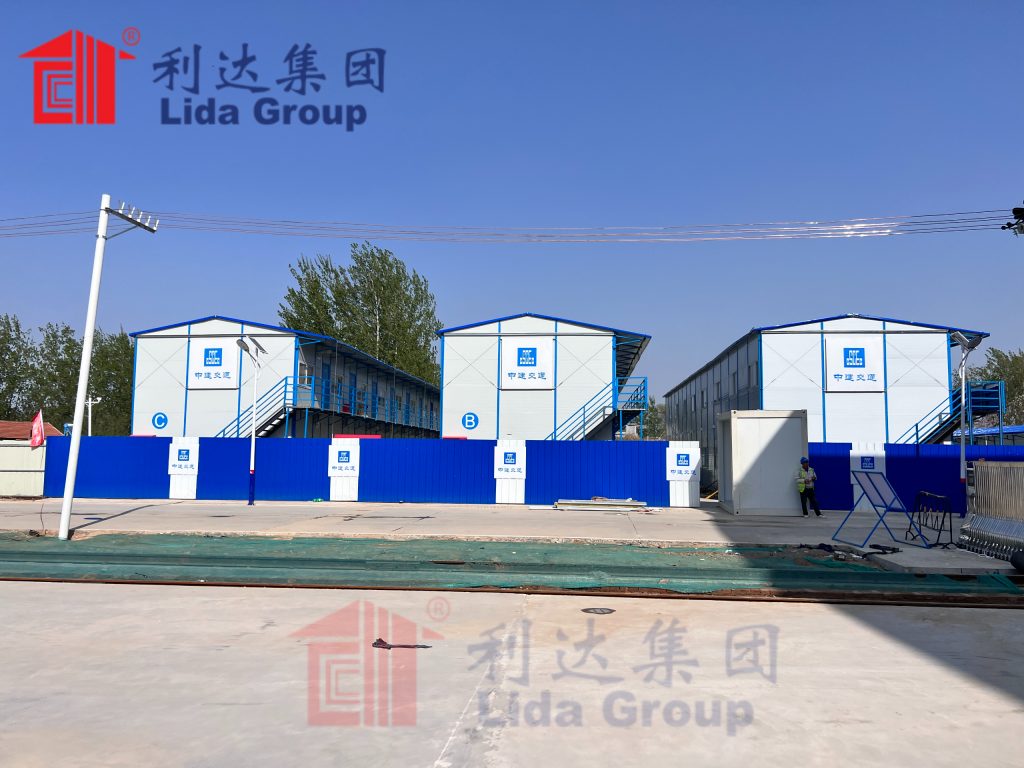
Lida Group’s easy-install sandwich panel houses adopt factory prefabrication and on-site dry assembly construction mode. Over 95% of building processing work is completed in standardized factories, and on-site operations only involve assembly and fixation, producing almost no construction dust, sewage, or solid waste. All building materials are non-toxic, odorless, and environmentally friendly, complying with international green building certification standards. After project completion, buildings can be disassembled and reused without leaving construction waste on mining sites, realizing zero ecological damage. This green low-carbon construction mode not only helps mining enterprises efficiently pass environmental assessment audits but also shapes standardized and eco-friendly corporate brand images for global mining enterprises.
6. Global Engineering Application and Professional Service System
Since the official launch, Lida Group’s easy-install sandwich panel mining dormitory solutions have been widely applied in hundreds of mining projects worldwide, covering coal mining, metal ore mining, non-metal ore mining, and other diversified mining fields. The products have successfully adapted to various extreme construction environments across Asia, Africa, Southeast Asia, and other global regions, accumulating rich practical engineering experience.
A large number of field application cases verify that Lida’s upgraded sandwich panel houses maintain stable structural safety, excellent thermal insulation and waterproof performance, and low failure rates in long-term harsh outdoor operation. All cooperative mining enterprises have highly recognized the product’s outstanding advantages of simple installation, stable quality, low comprehensive cost, and convenient reuse, affirming that the product thoroughly solves the long-standing accommodation difficulties of remote mining projects.
In addition to high-quality products, Lida Group supports global customers with a one-stop full-cycle professional service system, including early project site survey, personalized scheme customization, standardized factory production, cross-border transportation protection, on-site assembly guidance, and later after-sales maintenance and component replacement. Professional technical teams adjust building schemes dynamically according to local climate characteristics, terrain conditions, and project scale to ensure high matching between building products and actual mining project demands.
7. Conclusion
Worker dormitory supporting infrastructure is an indispensable core component of modern mining project construction, whose installation efficiency, structural safety, durability, economic cost, and living comfort directly affect mining project progress, operational benefits, ecological protection effects, and team stability. Facing the multiple industry pain points of cumbersome installation, poor durability, high comprehensive cost, and single functional design of traditional mining dormitories, Lida Group’s newly launched easy-install sandwich panel house provides a targeted and efficient solution for global mining camp construction.
Integrating innovative plug-in modular assembly technology, high-performance composite sandwich panel materials, reinforced safety structure design, low-carbon environmental protection concepts, and humanized living configuration, the product realizes perfect balance between rapid deployment, long-term durability, low full-cycle cost, and comfortable living experience. It effectively makes up for various defects of traditional temporary mining buildings, greatly shortens mining project pre-operation preparation cycles, reduces enterprise infrastructure investment and maintenance costs, and provides safe, stable, and comfortable living guarantees for frontline mining workers.
As the global mining industry continues to develop toward standardization, greening, and high efficiency, efficient, economical, safe, and reusable modular supporting buildings will become the mainstream choice for mining camp construction. As a leading global prefabricated building solution provider, Lida Group will continue to focus on technological innovation and product iteration, continuously optimizing easy-install, high-durability, and cost-effective sandwich panel building solutions. In the future, Lida Group will deliver more professional and customized supporting construction services for global mining and engineering projects, continuously empowering the standardized, green, and sustainable high-quality development of the global mining industry.
Related news
-
Easy Install Sandwich Panel House by Lida Group Ideal for Mining Field Worker Dormitory
2026-04-29 15:45:04
-
Low-Cost Durable Building Meets Rapid Deployment in Mining Field Worker Dormitory Solutions
2026-04-29 15:52:04
-
Lida Group Delivers Mining Field Worker Dormitory with Low-Cost Durable Building Design
2026-04-29 15:38:54
contact us
- Tel: +86-532-88966982
- Whatsapp: +86-13793209022
- E-mail: sales@lidajituan.com
