



Fast Assembly of Mining Field Worker Dormitory Using Lida Group’s Low-Cost Durable Building
2026-Apr-29 16:07:34
By Admin
1. Introduction
The global mining industry serves as an irreplaceable foundational sector for modern industrial development, providing essential mineral resources for manufacturing production, energy supply, infrastructure construction, and various downstream industrial chains. Most mining exploitation projects are located in remote, undeveloped areas with harsh natural conditions, including arid deserts, high-altitude cold plateaus, windy and sandy wilderness, and humid rainy mountainous regions. These extreme geographical and climatic environments bring huge challenges to the construction of on-site supporting infrastructure, among which worker dormitory construction is the most critical link affecting project progress and team stability.
Mining projects have distinct industrial characteristics of tight schedules, phased operation, and limited on-site construction conditions. Mining enterprises urgently require worker accommodation solutions that can be deployed rapidly, control investment costs effectively, and maintain stable performance in harsh environments. However, traditional mining dormitory construction modes struggle to balance core indicators. Cast-in-place concrete buildings feature stable structure but require long construction cycles and high upfront investment. Ordinary temporary color steel buildings have low initial costs but suffer from tedious assembly processes, poor durability, and frequent failures, failing to meet the efficient and sustainable operation needs of modern mining projects.
As a leading global manufacturer of modular prefabricated buildings with over 30 years of professional R&D and engineering experience, Lida Group focuses on the core pain points of slow deployment, high comprehensive cost, and insufficient durability of traditional mining camp buildings. The company independently develops low-cost and durable modular building systems tailored for mining scenarios, realizing ultra-fast on-site assembly, long-term environmental resistance, and full-cycle cost control. Widely applied in global mining field worker dormitory projects, Lida Group’s building solutions effectively solve the accommodation dilemma of remote mining projects. This paper systematically explores the drawbacks of traditional mining dormitory construction, core technical advantages of Lida Group’s fast-assembly durable buildings, practical application values, and industrial development significance.
2. Key Challenges Facing Traditional Mining Dormitory Construction
Different from ordinary urban civil buildings, mining field dormitories have special assessment standards for construction efficiency, economic benefit, and environmental adaptability due to remote construction locations, harsh working environments, and phased project cycles. Traditional accommodation solutions have multiple inherent defects, restricting the standardized and efficient operation of mining enterprises.
2.1 Slow On-Site Construction Delays Project Launch
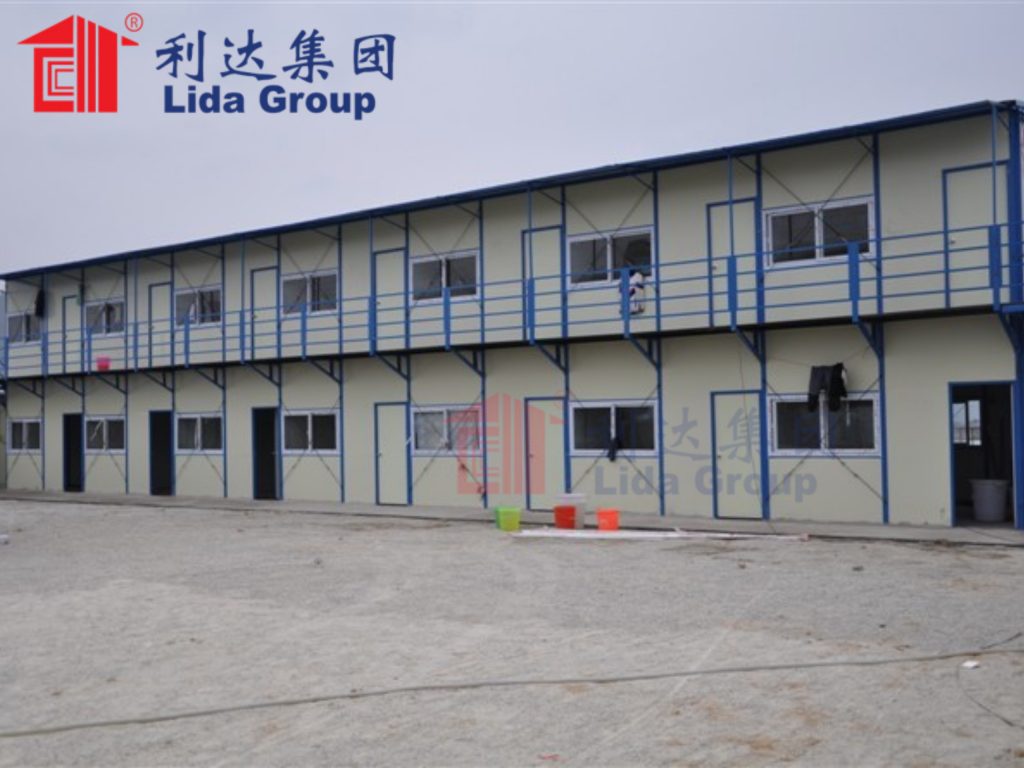
Traditional cast-in-place concrete dormitories involve complicated construction procedures such as foundation excavation, steel bar binding, concrete pouring, curing, and secondary decoration, with a single construction cycle lasting two to three months. Mining areas are susceptible to sudden sandstorms, heavy rainfall, and low-temperature freezing weather, which easily interrupt construction progress and delay worker settlement. Ordinary scattered color steel temporary buildings require manual assembly of a large number of independent keels, connectors, and enclosure components. The assembly process relies heavily on professional construction skills and repeated calibration, resulting in low deployment efficiency and inability to match the tight pre-production preparation cycle of mining projects.
2.2 Poor Building Durability and Frequent Failures
Most traditional temporary mining buildings adopt thin ungalvanized steel frames and single-layer color steel plates without professional anti-corrosion, waterproof, and ultraviolet-resistant treatment. Long-term exposure to extreme mining environments featuring intense solar radiation, severe temperature differences, saline-alkali soil corrosion, and persistent wind and sand erosion leads to component rusting, structural deformation, wall cracking, and water leakage. The average service life of ordinary temporary buildings is only two to three years. Frequent equipment failures and building damage not only threaten workers’ living safety but also disrupt the stable operation of mining projects.
2.3 Uncontrollable Full-Cycle Operational Costs
Concrete dormitories require massive investment in raw materials, mechanical equipment, and professional labor, resulting in extremely high upfront construction costs. Moreover, fixed concrete buildings cannot be disassembled or migrated, leading to total asset loss and massive construction waste after project completion. Although ordinary temporary buildings have low initial investment, their short service life and frequent maintenance and renovation work generate continuous additional expenditure. The component reuse rate of traditional temporary buildings is lower than 30%, resulting in extremely low asset utilization and high comprehensive operational costs for multi-project mining enterprises.
2.4 Inferior Living Environment Causes Staff Instability
Traditional mining dormitories adopt rigid and single functional design with insufficient thermal insulation and sound insulation performance. Indoor environments are sweltering in summer and severely heat-losing in winter, while external mining equipment operation noise cannot be effectively isolated. In addition, incomplete supporting living facilities lead to poor worker rest quality and low job satisfaction, triggering high turnover rates of frontline workers, destabilizing project teams, and indirectly reducing mining production efficiency.
3. Core Design Concepts of Lida Group’s Mining Dormitory Buildings
Targeting the universal pain points of traditional mining accommodation, Lida Group’s customized modular buildings adhere to three core design concepts: rapid on-site assembly, long-term structural durability, and controllable full-cycle cost. Combined with humanized functional optimization and green environmental protection design, the products are fully adapted to the extreme operating conditions and phased construction characteristics of global mining projects.
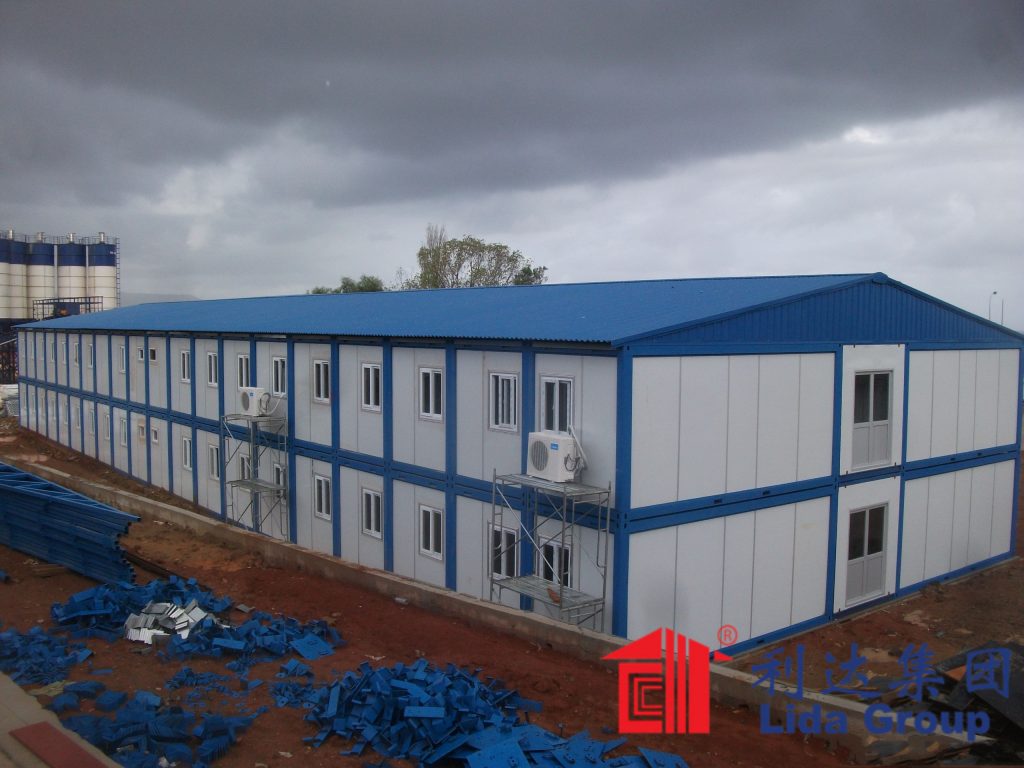
All building modules including steel frames, enclosure panels, doors, windows, and internal water and electricity systems are integrally prefabricated in standardized industrial factories. The innovative bolted splicing and plug-in assembly structure eliminates complex on-site welding, cutting, and pouring procedures. While greatly improving on-site deployment efficiency, high-strength anti-corrosion materials and reinforced structural design ensure long-term building stability, and the detachable modular design realizes cyclic asset reuse, perfectly balancing efficiency, safety, and economy.
4. Dominant Advantages of Lida Group’s Fast-Assembly Low-Cost Durable Buildings
4.1 Ultra-Fast Modular Assembly Improves Project Efficiency
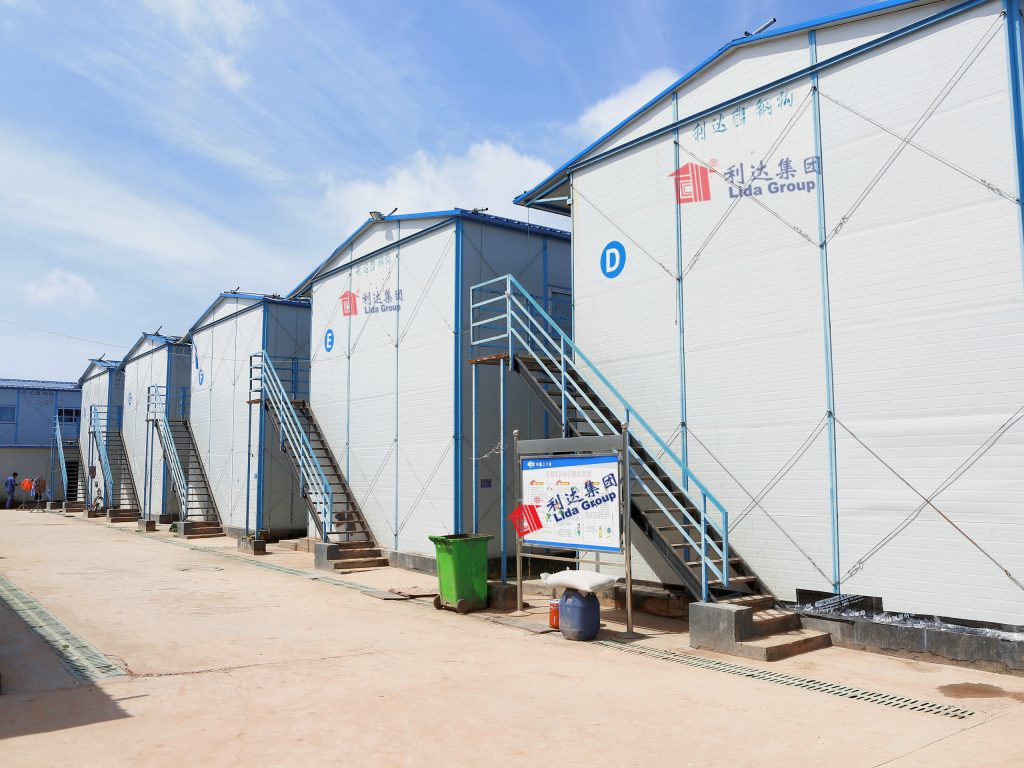
Fast assembly is the most competitive core advantage of Lida Group’s mining dormitory solutions. Different from the scattered assembly mode of traditional temporary buildings, Lida’s modular buildings adopt integrated factory prefabrication. All structural components and functional modules are precisely produced according to unified industrial standards with reserved standard connecting interfaces. The entire on-site construction process is simplified into foundation leveling, module placement, bolt fixation, and accessory installation, eliminating most complex on-site construction procedures.
The construction threshold is significantly reduced. Ordinary construction workers without professional prefabricated building experience can complete assembly work under simple guidance. A standard single dormitory unit can be assembled within half a day by two workers, and a complete mining camp dormitory cluster accommodating hundreds of workers can be fully deployed and put into use within 3 to 7 days. Compared with traditional concrete buildings, the construction cycle is shortened by more than 80%, and compared with ordinary color steel temporary buildings, the assembly efficiency is improved by over 70%. This ultra-fast deployment capability helps mining enterprises complete rapid staff settlement, shorten project pre-operation preparation time, and accelerate the formal launch of mining production.
In addition, the lightweight modular design does not rely on large hoisting machinery and complex supporting equipment. The buildings can be smoothly assembled on rugged, uneven, and traffic-inconvenient remote mining sites, realizing flexible deployment in diverse complex terrain environments and solving the construction difficulties of remote mining projects.
4.2 Reinforced Structure and High-Grade Materials Ensure Long-Term Durability
To adapt to harsh mining environments, Lida Group carries out comprehensive durability optimization in structural design and material selection. The main bearing framework adopts hot-dip galvanized high-strength square steel tubes and C-shaped steel purlins. All steel components undergo dual anti-corrosion treatment of hot-dip galvanizing and fluorocarbon coating, which effectively resists saline-alkali corrosion, wind and sand erosion, and ultraviolet aging. The reinforced steel frame structure passes professional structural stress tests, capable of resisting Level 12 strong winds and Level 8 earthquakes, adapting to extreme weather and slight geological fluctuations in mining areas.
The enclosure structure adopts high-quality composite sandwich panels with double-sided aluminum-zinc color steel plates and high-density rock wool inner core. The panels reach Class A fireproof rating, with excellent flame retardant, thermal insulation, and sound insulation performance. Customized panel thickness matching different climatic zones ensures stable indoor temperature throughout the year, whether in high-altitude ultra-low temperature environments or desert high-temperature environments. The seamless plug-in splicing structure cooperates with integrated drainage systems and high weather resistance waterproof sealant to completely solve the common water leakage and dust penetration problems of traditional temporary buildings. Professional engineering verification proves that Lida’s modular mining dormitories have a stable service life of more than 20 years with minimal daily maintenance, far exceeding traditional temporary accommodation facilities.
4.3 Full-Cycle Cost Control Reduces Enterprise Operational Pressure
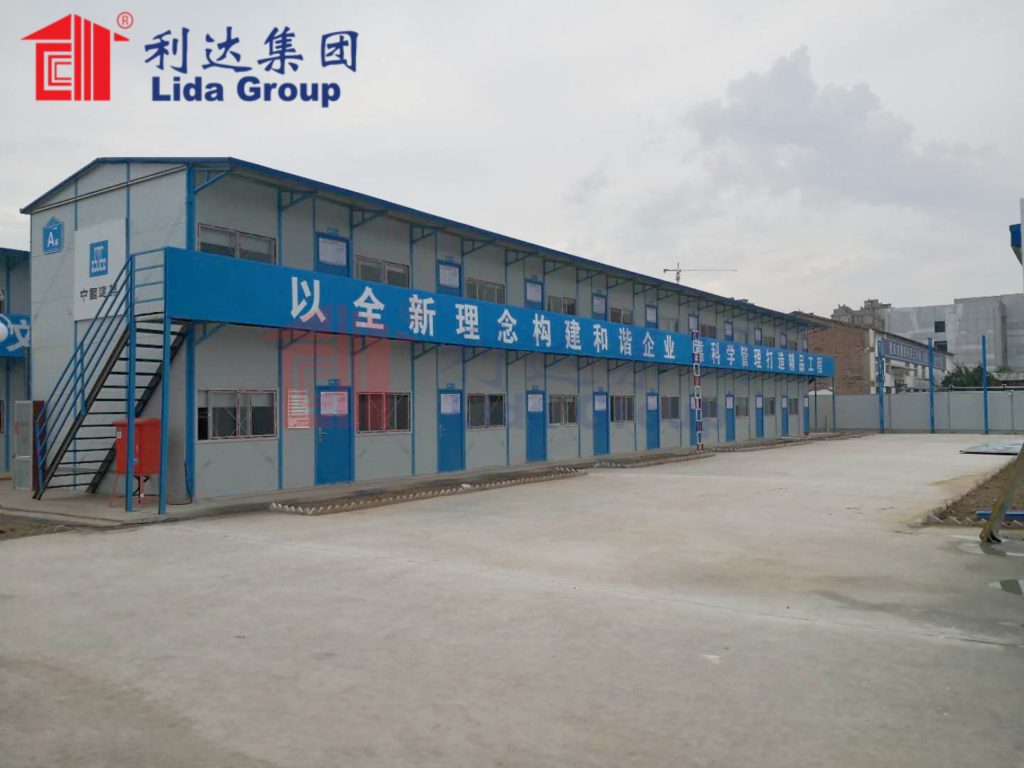
Lida Group’s modular buildings realize systematic cost reduction covering initial construction, daily operation, later maintenance, and project migration. First, factory integrated prefabrication avoids material waste, manual rework, and resource loss caused by traditional on-site scattered construction, effectively reducing upfront material and labor investment. Ultra-fast on-site assembly shortens the construction cycle, lowers mechanical equipment rental fees and on-site management costs, and greatly reduces the pre-operation investment of mining projects.
Second, excellent structural durability and anti-aging performance significantly reduce later maintenance costs. The anti-corrosion steel frames and high-quality sandwich panels do not require frequent painting repair, component replacement, and waterproof renovation, cutting long-term maintenance expenditure by more than 60% compared with ordinary temporary buildings. Most importantly, the fully detachable modular design enables all building components to be disassembled, packaged, and transported to new project sites for secondary assembly, with a component reuse rate of over 85%. This cyclic utilization mode converts temporary mining camp buildings into reusable enterprise assets, solving the problem of asset loss after single-project completion and effectively reducing the average infrastructure investment of multi-project layout for mining enterprises.
4.4 Humanized Functional Design Stabilizes Mining Working Teams
On the premise of ensuring fast assembly, low cost, and high durability, Lida Group optimizes the living experience of frontline mining workers through humanized design. The dormitory adopts flexible customizable space layout, which can adjust indoor area, room spacing, and resident capacity according to project scale and staff quantity. Each independent dormitory unit is equipped with large-area daylighting windows and multi-directional ventilation systems to guarantee sufficient natural light and smooth indoor air circulation.
All water supply, power supply, and drainage pipelines are pre-embedded in factory production, enabling immediate occupancy after on-site assembly without secondary decoration. Meanwhile, Lida Group can customize complete supporting facilities including staff canteens, bathhouses, laundry rooms, meeting rooms, and rest lounges according to customer demands, forming a fully functional closed-loop mining living community. Optimized living conditions effectively enhance workers’ sense of belonging and job satisfaction, reduce frontline staff turnover rates, stabilize project working teams, and indirectly improve mining production efficiency.
5. Green Construction and Sustainable Industrial Value
With the global mining industry accelerating green transformation and upgrading, environmental assessment and low-carbon construction have become essential assessment indicators for mining project approval and standardized operation. Traditional on-site building construction generates massive dust pollution, sewage waste, and construction residue, causing irreversible damage to the fragile ecological environment of remote mining areas.
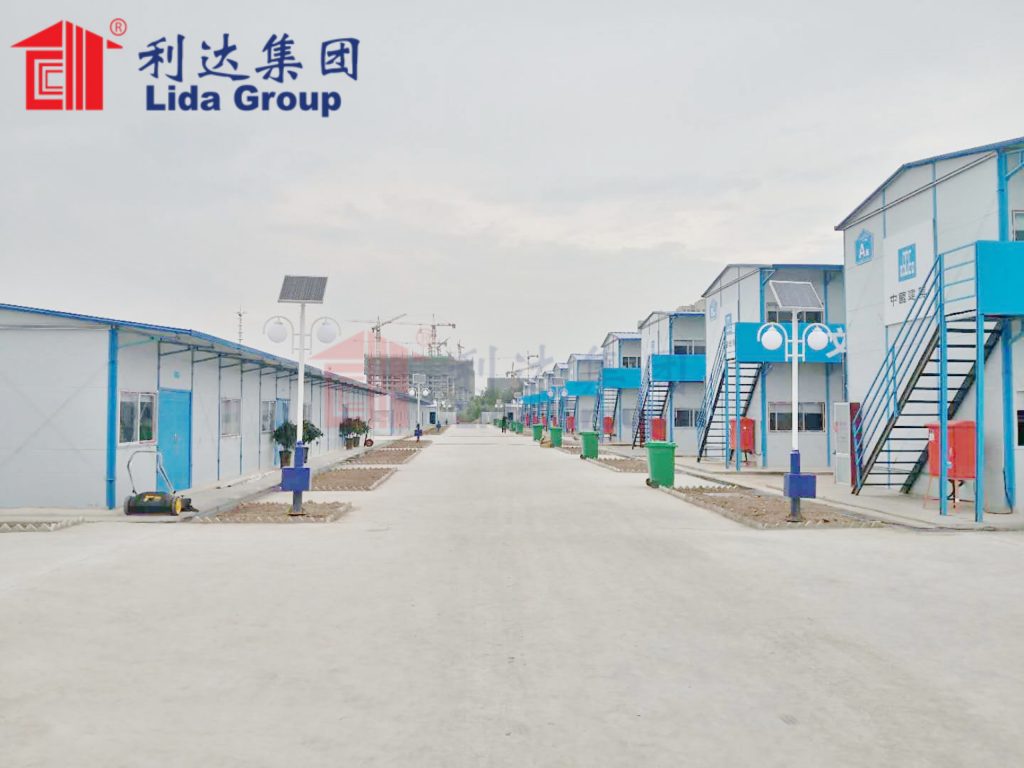
Lida Group’s modular mining dormitories adopt factory prefabrication and on-site dry assembly construction mode. Over 95% of building processing work is completed in standardized factories, and on-site operations only involve assembly and fixation, producing almost no construction pollution. All building materials are non-toxic, environmentally friendly, and recyclable, complying with international green building certification standards. After project completion, buildings can be completely disassembled and reused without leaving construction waste on mining sites, realizing zero damage to local ecology. This green low-carbon construction mode not only helps mining enterprises efficiently pass environmental assessment audits but also shapes standardized and eco-friendly corporate brand images.
6. Global Engineering Verification and Professional One-Stop Service
After years of market iteration and practical engineering verification, Lida Group’s fast-assembly, low-cost, and durable mining dormitory solutions have been widely applied in hundreds of mining projects across Asia, Africa, Southeast Asia, and other global regions, covering coal, metal, and non-metal mineral exploitation fields. The products have maintained stable operational performance in diverse extreme environments including high-altitude cold zones, arid deserts, and rainy humid mountainous areas, fully verifying excellent environmental adaptability and engineering practicability.
All cooperative mining enterprises have highly recognized that Lida Group’s modular buildings perfectly solve the multiple pain points of slow deployment, poor durability, and high comprehensive cost of traditional mining accommodation. The efficient, economical, and reusable building solutions greatly optimize mining camp construction standards and create tangible economic and management value for enterprise operation.
In addition to high-quality products, Lida Group provides full-cycle one-stop professional services, including early site survey, personalized scheme customization, standardized factory production, cross-regional transportation protection, on-site assembly guidance, and long-term after-sales maintenance and component replacement. Professional technical teams dynamically adjust building schemes according to local climate characteristics, terrain conditions, and project demands to ensure high matching between building products and actual mining project scenarios.
7. Conclusion
Worker dormitory infrastructure is a vital supporting guarantee for the stable and efficient operation of mining projects. Construction speed, structural durability, comprehensive cost, and living comfort directly determine mining project progress, operational benefits, ecological protection effects, and frontline team stability. Traditional mining accommodation solutions have long been trapped in the industry dilemma of unbalanced efficiency, cost, and quality, unable to meet the standardized and sustainable development needs of modern mining enterprises.
Lida Group’s low-cost durable modular buildings with fast assembly capabilities bring comprehensive upgrades to global mining camp construction. Through innovative integrated modular assembly technology, high-strength anti-corrosion building materials, reinforced safety structure design, and detachable reusable structure, the products perfectly realize ultra-fast on-site deployment, long-term environmental durability, and full-cycle cost reduction. They effectively make up for various defects of traditional mining dormitories, shorten project pre-operation cycles, reduce enterprise infrastructure investment and maintenance costs, and provide safe, stable, and comfortable living conditions for frontline mining workers.
Furthermore, humanized functional configuration and green low-carbon construction concepts endow mining camp buildings with higher comprehensive value, helping mining enterprises optimize on-site management, stabilize talent teams, and meet global green mining development standards. As the global mining industry continues to upgrade toward standardization, high efficiency, and sustainability, fast-assembly, low-cost, and durable modular prefabricated buildings will become the mainstream choice for mining supporting infrastructure construction. As a leading global prefabricated building solution provider, Lida Group will continue to promote technological innovation and product iteration, continuously optimize high-cost-performance mining camp solutions, and empower the long-term sustainable and high-quality development of the global mining industry.
Related news
-
Low-Cost Durable Building Meets Rapid Deployment in Mining Field Worker Dormitory Solutions
2026-04-29 15:52:04
-
Lida Group Launches Easy Install Sandwich Panel House for Mining Field Worker Dormitory
2026-04-29 16:01:46
-
Lida Group Delivers Mining Field Worker Dormitory with Low-Cost Durable Building Design
2026-04-29 15:38:54
contact us
- Tel: +86-532-88966982
- Whatsapp: +86-13793209022
- E-mail: sales@lidajituan.com
