



Achieve Affordable Workforce Housing with Easy Install Sandwich Panel House for Mining Fields
2026-Apr-29 16:39:07
By Admin
1. Introduction
The global mining industry remains a foundational economic sector, delivering essential mineral resources that support manufacturing, energy production, infrastructure development, and cross-border industrial supply chains. Most mining exploration and extraction projects operate in remote, isolated regions characterized by extreme temperatures, barren terrain, limited transportation networks, and scarce local residential infrastructure. Unlike urban industrial projects with mature supporting facilities, mining operations rely entirely on on-site temporary camps to accommodate frontline workers, making workforce housing one of the most critical preconditions for continuous and safe mineral production.
Affordable, reliable, and livable workforce housing is not merely a basic welfare facility but a core operational asset for modern mining enterprises. Stable on-site dormitories reduce worker commute risks, improve rest quality, enhance job satisfaction, and lower staff turnover rates, which directly boosts project productivity and operational stability. However, global mining companies have long faced a universal dilemma in camp construction: traditional concrete buildings deliver stable quality but require prohibitive upfront investment and lengthy construction cycles, while low-cost makeshift structures suffer from poor durability, substandard living conditions, and recurring maintenance costs. This persistent contradiction between affordability and building performance has hindered the standardized development of mining camps worldwide.
As a professional global supplier of customized modular prefabricated buildings, Lida Group targets the unique housing demands and budget constraints of mining projects, launching optimized easy-install sandwich panel houses exclusively designed for affordable mining workforce housing. Breaking the industry stereotype that low-cost temporary buildings must sacrifice livability and durability, this series of modular structures integrates tool-free simplified assembly technology, high-performance composite sandwich materials, humanized space design, and recyclable modular architecture. It enables mining enterprises to complete rapid camp deployment, control full-cycle construction expenditure, and provide qualified comfortable accommodation for frontline workers. This article comprehensively analyzes prevalent workforce housing challenges in global mining fields, core advantages of Lida Group’s easy-install sandwich panel houses, and how such modular building solutions achieve cost-effective, sustainable, and worker-friendly mining camp construction.
2. Prevalent Workforce Housing Challenges for Modern Mining Projects
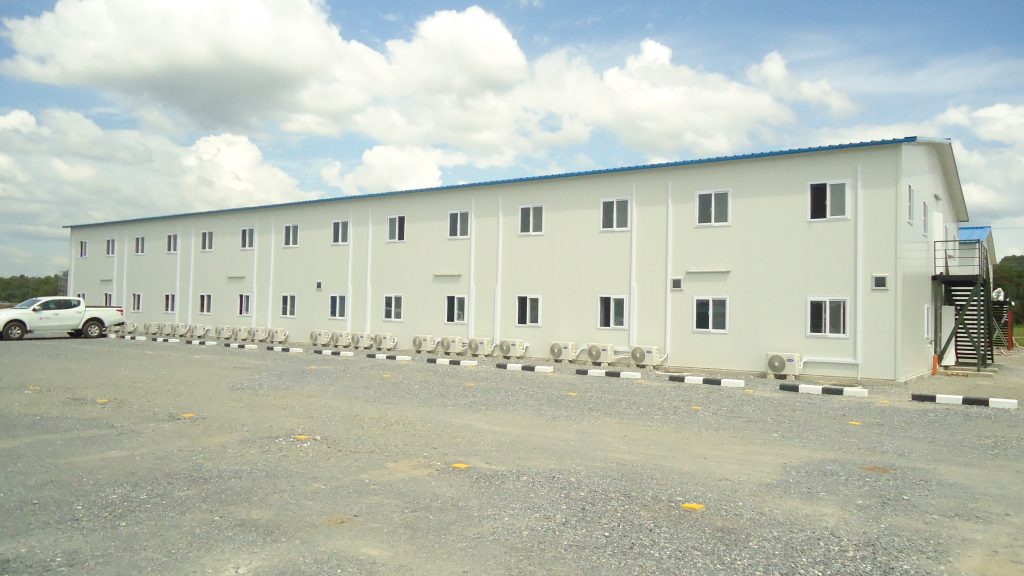
Mining workforce housing possesses unique industrial attributes different from ordinary commercial and residential buildings. Mining camps require temporary deployment, flexible scalability, extreme environmental adaptability, and strict budget control. Traditional housing solutions fail to match these special requirements, resulting in multiple persistent operational pain points for mining enterprises.
2.1 Unaffordable Full-Cycle Construction Costs
Cast-in-place concrete dormitories are the most reliable traditional housing option but involve extremely high comprehensive investment. Foundation treatment, raw material procurement, professional construction teams, mechanical equipment leasing, and long-term on-site management generate massive upfront capital pressure for mining enterprises. Moreover, concrete buildings are fixed permanent structures with zero disassembly and reusability. Since most mining projects are phased and temporary, fixed dormitories become abandoned assets after resource exploitation, producing substantial construction waste and irreversible economic losses.
To save upfront budgets, numerous small and medium-sized mining enterprises adopt low-cost makeshift color steel houses. Although initial construction expenses are low, these simple structures have poor anti-corrosion, waterproof, and aging resistance performance. Frequent component rusting, wall cracking, water leakage, and structural loosening require continuous maintenance, renovation, and part replacement throughout operation. The cumulative long-term maintenance expenditure far exceeds the cost of high-quality modular buildings, leading to uncontrollable full-cycle housing investment.
2.2 Complicated On-Site Construction and Slow Deployment
Mining project schedules are usually tight, requiring rapid worker settlement to ensure uninterrupted mineral extraction operations. Traditional concrete buildings require multiple complex construction procedures and several months of on-site construction, which is easily delayed by extreme weather such as sandstorms, heavy rainfall, and low-temperature freezing. Ordinary scattered color steel houses consist of countless independent keels, connectors, and enclosure components, demanding professional construction skills and repeated on-site calibration. Remote mining sites lack skilled workers and advanced construction equipment, further slowing down camp deployment and delaying project launch.
2.3 Substandard Living Conditions and High Staff Turnover
Most traditional low-cost mining dormitories adopt oversimplified design, lacking professional thermal insulation, sound insulation, ventilation, and daylighting systems. Indoor environments feature extreme temperature fluctuations, severe dampness, stale air, and persistent external mechanical noise. Cramped living spaces and incomplete supporting facilities fail to meet the basic rest needs of frontline workers after high-intensity manual labor. Poor accommodation quality leads to low worker happiness and sense of belonging, triggering frequent staff turnover. Continuous worker recruitment and training offset mining enterprises’ cost savings from low-cost camp construction, bringing invisible operational losses.
2.4 Poor Environmental Adaptability and Hidden Safety Hazards
Mining areas feature harsh and changeable natural conditions, including intense ultraviolet radiation, severe day-night temperature differences, saline-alkali soil corrosion, and frequent strong winds. Traditional temporary buildings adopt thin unprocessed steel structures and single-layer panels, which cannot resist extreme environmental erosion. Aging structures easily produce potential safety hazards, endangering worker living safety and restricting standardized and safe production management of mining projects.
3. Core Strengths of Lida Group’s Easy-Install Sandwich Panel Houses for Affordable Mining Housing
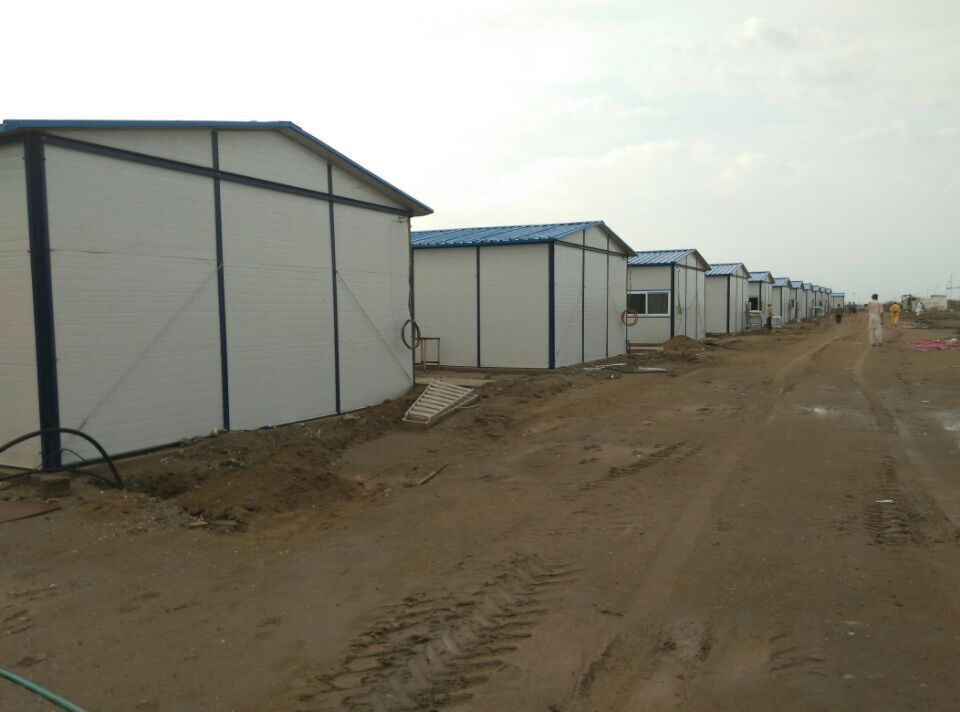
Targeting the above industry-wide workforce housing pain points, Lida Group’s customized sandwich panel houses focus on two core goals: maximizing housing affordability and optimizing practical living performance. Through innovative modular design, simplified assembly techniques, high-quality composite materials, and recyclable structural architecture, the products completely resolve the imbalance between low cost, fast deployment, structural safety, and living comfort, becoming ideal affordable workforce housing solutions for global mining fields.
3.1 Tool-Free Easy Installation Realizes Rapid Camp Deployment
The simplified installation design is the foundational advantage of Lida Group’s mining dormitory solutions. Different from the scattered assembled structure of traditional temporary buildings, all wall panels, roof panels, and steel frame components of Lida’s sandwich panel houses are integrally prefabricated in standardized factories. Each module is preset with unified plug-in locking grooves and standard connecting interfaces, eliminating complex on-site welding, cutting, concrete pouring, and professional calibration procedures.
The entire on-site construction workflow is simplified into foundation leveling, module placement, plug-in assembly, and door and window installation. Ordinary untrained construction workers can complete independent assembly operations after simple guidance. A standard single worker dormitory can be finished within half a day by two workers, and a complete mining camp housing dozens or hundreds of frontline employees can be fully deployed and occupied within 3 to 7 days. The ultra-fast installation mode greatly reduces on-site construction time, helps mining enterprises complete rapid worker resettlement, accelerates project pre-production preparation, and effectively saves on-site labor and equipment leasing costs.
3.2 Optimized Modular Structure Greatly Reduces Comprehensive Housing Costs
Lida Group achieves genuine housing affordability through systematic full-cycle cost control rather than simply reducing material quality. Factory integrated prefabrication unifies production standards, avoids material waste and manual rework errors caused by traditional scattered on-site construction, and cuts invalid upfront investment. The simplified assembly process lowers reliance on professional construction teams and large mechanical equipment, significantly reducing on-site construction management and labor costs.
In terms of long-term operation, high-quality galvanized steel frames and multi-layer composite sandwich panels possess excellent anti-corrosion, anti-aging, waterproof, and dustproof capabilities. The stable structural performance minimizes daily maintenance demands, reducing long-term renovation and component replacement costs by more than 60% compared with ordinary temporary buildings. Most importantly, the fully detachable modular structure enables complete disassembly, packaging, cross-regional transportation, and secondary reassembly of all building components, with a reusable rate exceeding 85%. For mining enterprises with multi-project global layout, the cyclic utilization of building modules converts temporary camp housing into reusable enterprise assets, fundamentally solving the problem of one-time construction waste and greatly reducing the average workforce housing investment across multiple projects.
3.3 High-Performance Sandwich Materials Upgrade Living Comfort
While ensuring economic affordability, Lida Group fully optimizes worker living quality to avoid the low-quality defects of traditional cheap mining dormitories. The customized three-layer composite sandwich panel adopts double-sided aluminum-zinc color-coated steel plates and high-density flame-retardant rock wool core materials. The premium composite structure delivers outstanding thermal insulation, heat preservation, and sound insulation performance.
For high-altitude cold mining areas, thickened sandwich panels lock indoor heat efficiently and resist outdoor low temperature and cold wind, ensuring warm indoor environments in frigid seasons. For arid desert mining areas, high-reflective panel surfaces isolate intense solar radiation and outdoor high temperature, preventing indoor stuffiness and heat accumulation. The porous rock wool core absorbs external mining mechanical operation noise and wind sand sound, forming an effective sound insulation layer to create quiet private resting space for workers. In addition, seamless plug-in splicing structures completely solve the water leakage and dust penetration problems of traditional buildings, keeping indoor living environments dry, clean, and tidy throughout the year.
3.4 Reinforced Structural Design Ensures Long-Term Residential Safety
Affordable workforce housing must be based on reliable structural safety. Lida Group’s sandwich panel houses adopt high-strength hot-dip galvanized steel frame bearing systems. All steel components undergo professional anti-corrosion and surface curing treatment to adapt to saline-alkali erosion, wind sand abrasion, and long-term ultraviolet aging in harsh mining environments. Optimized mechanical structural design enables the building to disperse external wind pressure and seismic force evenly, achieving Level 12 strong wind resistance and Level 8 earthquake resistance.
Professional factory testing and long-term field verification prove that Lida’s modular dormitories can operate stably in diverse extreme mining scenarios including high-altitude low-temperature zones, arid high-temperature deserts, and humid rainy mountainous areas. With minimal daily maintenance, the stable service life exceeds 20 years, far surpassing ordinary makeshift housing and providing continuous and reliable safety guarantees for frontline mining workers.
3.5 Flexible Humanized Layout Stabilizes Mining Workforce
Understanding the importance of stable workforce retention for mining project operation, Lida Group integrates humanized design concepts into affordable modular housing solutions. The flexible modular architecture supports free adjustment of indoor area, ceiling height, room layout, and resident capacity according to project scale and staff quantity, avoiding the crowded and cramped space problems of traditional low-density dormitories.
Each independent dormitory unit is equipped with large-area daylighting windows and adjustable multi-directional ventilation systems to ensure sufficient natural light and smooth indoor and outdoor air circulation, effectively eliminating indoor dampness and peculiar smells. All water supply, power supply, and drainage pipelines are pre-embedded during factory production, realizing immediate occupancy after assembly without secondary decoration. Meanwhile, supporting functional modules including staff canteens, bathhouses, laundry rooms, and rest lounges can be customized to build complete closed-loop living communities. The comprehensively upgraded living experience enhances workers’ sense of identity and belonging, reduces enterprise staff turnover rates, and stabilizes frontline production teams.
4. Green Construction Adds Sustainable Value to Mining Workforce Housing
With the global mining industry accelerating green transformation and standardized environmental assessment, ecological sustainability has become a vital indicator for mining project approval and long-term operation. Traditional mining camp construction generates massive dust pollution, construction sewage, and solid waste, causing irreversible damage to fragile remote ecological environments and increasing enterprise environmental governance costs.
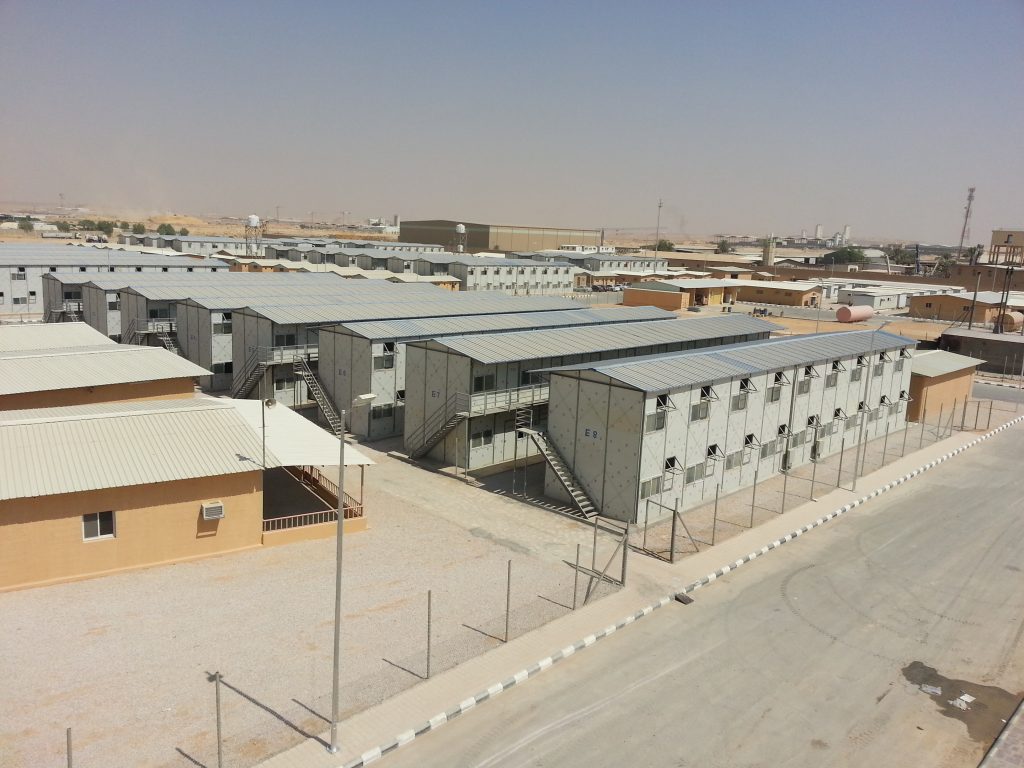
Lida Group’s easy-install sandwich panel houses adopt factory prefabrication and on-site dry assembly modes. Over 95% of building processing work is completed in standardized factories, with almost no pollutant generation during on-site assembly. All building materials are non-toxic, odorless, and fully recyclable, complying with international green building certification standards. After the completion of mining projects, buildings can be completely disassembled and reused without leaving construction waste on mining sites, realizing zero ecological damage. This green and low-carbon construction mode not only helps mining enterprises efficiently pass environmental audits but also shapes standardized, eco-friendly corporate images while achieving affordable workforce housing construction.
5. Global Field Application and Market Validation
After years of market iteration and engineering practice, Lida Group’s affordable easy-install sandwich panel workforce housing solutions have been widely deployed in hundreds of mining camps across Asia, Africa, Southeast Asia, and other global regions, covering coal, metal, and non-metal mineral extraction projects. These modular houses maintain stable operational performance in diverse extreme environments, fully verifying outstanding environmental adaptability and cost-performance advantages.
Practical global engineering cases confirm that Lida’s sandwich panel dormitories effectively solve the core pain points of high cost, slow deployment, poor safety, and substandard livability of traditional mining workforce housing. Cooperative mining enterprises universally recognize that Lida Group’s modular building solutions perfectly balance economic affordability, construction efficiency, residential safety, and worker comfort. The one-stop full-cycle services including on-site survey, personalized scheme customization, standardized production, cross-regional transportation, and on-site assembly guidance further ensure high matching degree between building products and actual mining project demands, delivering stable and long-term value for global mining camp construction.
6. Conclusion
Affordable and reliable workforce housing is an indispensable foundational guarantee for stable, safe, and sustainable operation of global mining projects. It not only undertakes the basic function of worker accommodation and rest but also profoundly affects enterprise infrastructure investment, workforce stability, production efficiency, and green development performance. Traditional mining housing solutions have long been trapped in the industry dilemma of either high construction cost and low reusability or low upfront price and poor comprehensive performance, unable to meet the modern mining industry’s demands for low-cost, efficient, safe, and worker-friendly camp construction.
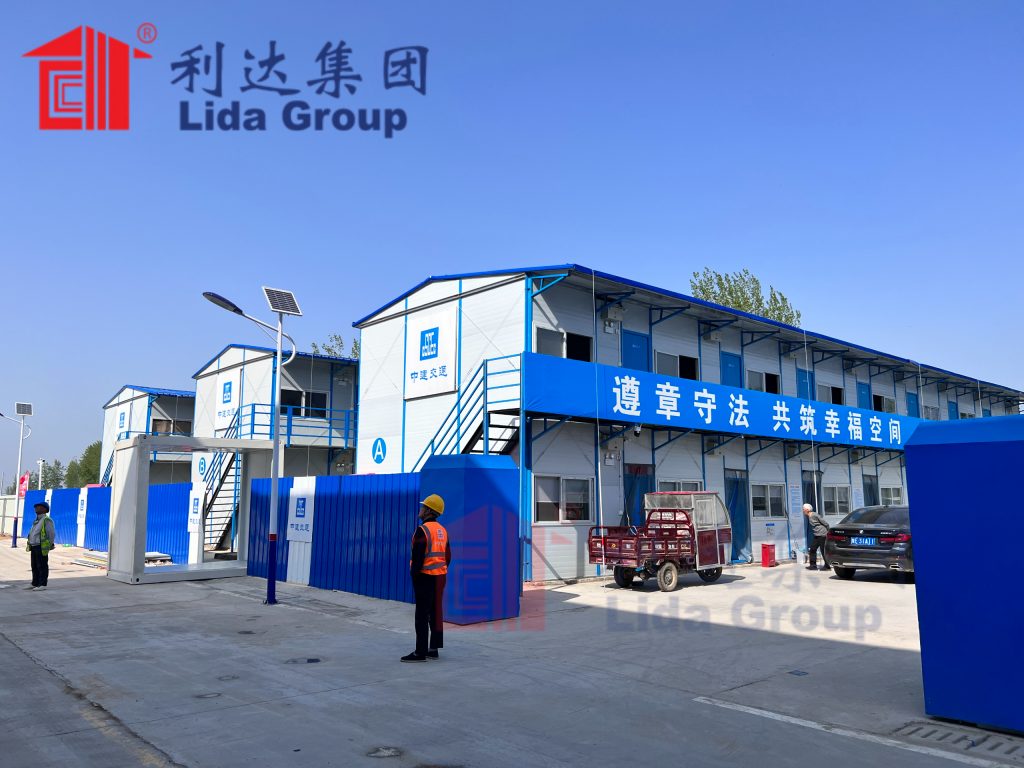
Lida Group’s easy-install sandwich panel houses thoroughly break this industry bottleneck. Through innovative plug-in modular assembly technology, ultra-simplified on-site construction procedures, high-performance composite sandwich materials, reinforced safety structure design, and flexible reusable architectural concepts, the solutions realize rapid on-site deployment, controllable full-cycle construction costs, stable structural safety, and optimized worker living comfort. Compared with traditional housing options, Lida’s modular buildings significantly reduce mining enterprises’ workforce housing investment and long-term operational costs, effectively solve the problem of expensive and low-quality worker accommodation in remote mining fields, and stabilize frontline talent teams.
Furthermore, the products’ excellent green environmental protection performance and flexible scalable design adapt to the standardized and green upgrading trend of the global mining industry. As affordable, efficient, safe, and sustainable modular workforce housing solutions, Lida Group’s sandwich panel houses will continue to become the mainstream choice for global mining camp infrastructure construction. Moving forward, Lida Group will keep optimizing modular building technology and product performance, continuously deliver high-cost-performance customized housing solutions, and empower global mining enterprises to build more economical, standardized, comfortable, and sustainable worker camp systems.
Related news
-
Lida Group's Low-Cost Durable Building Technology Transforms Mining Field Worker Dormitory
2026-04-29 16:33:41
-
Easy Install Sandwich Panel House Provides Comfortable Mining Field Worker Dormitory by Lida Group
2026-04-29 16:24:07
-
Fast Assembly of Mining Field Worker Dormitory Using Lida Group's Low-Cost Durable Building
2026-04-29 16:07:34
contact us
- Tel: +86-532-88966982
- Whatsapp: +86-13793209022
- E-mail: sales@lidajituan.com
