



Lida Group Combines Affordability and Speed in Mining Field Worker Dormitory Projects
2026-Apr-29 16:49:15
By Admin
1. Introduction
The global mining industry serves as a pivotal foundational sector, providing essential mineral resources to support manufacturing development, energy supply, large-scale infrastructure construction, and diverse industrial chains worldwide. Most mining exploration and extraction projects are situated in remote, underdeveloped regions with harsh natural conditions, including arid deserts, high-altitude cold plateaus, windy wilderness, and humid mountainous areas. These isolated mining sites lack local residential infrastructure, forcing mining enterprises to build independent on-site worker camps to accommodate frontline operational staff.
Worker dormitories are core auxiliary facilities for mining project operation, directly affecting worker rest quality, team stability, on-site management efficiency, and overall project progress. Modern mining projects feature tight construction schedules, phased operation cycles, and limited infrastructure budgets, putting forward two primary requirements for camp construction: affordable full-cycle costs and ultra-fast on-site deployment. Nevertheless, the global mining industry has long faced an unavoidable construction dilemma. Traditional concrete dormitories deliver stable structural quality but require excessive capital investment and lengthy construction cycles. Ordinary simple temporary buildings reduce upfront spending but cannot balance construction efficiency, structural durability, and living quality, failing to meet the standardized operational demands of modern mining enterprises.
As a globally recognized professional provider of modular prefabricated building solutions with decades of engineering experience, Lida Group deeply focuses on the dual core pain points of high cost and slow deployment in mining camp construction. By optimizing modular building structure, industrial production technology, and on-site assembly procedures, Lida Group perfectly combines outstanding economic affordability and rapid construction speed in mining field worker dormitory projects. Breaking the inherent industry contradiction that fast construction leads to high costs and low-cost buildings sacrifice construction efficiency and quality, Lida’s customized modular dormitory solutions provide a balanced, high-cost-performance option for global mining camp construction. This article systematically analyzes the construction bottlenecks of traditional mining dormitories, core technical logic and practical advantages of Lida Group’s dual advantages of affordability and rapid deployment, as well as the industrial value of its engineering applications.
2. Dual Bottlenecks of Cost and Speed in Traditional Mining Dormitory Construction
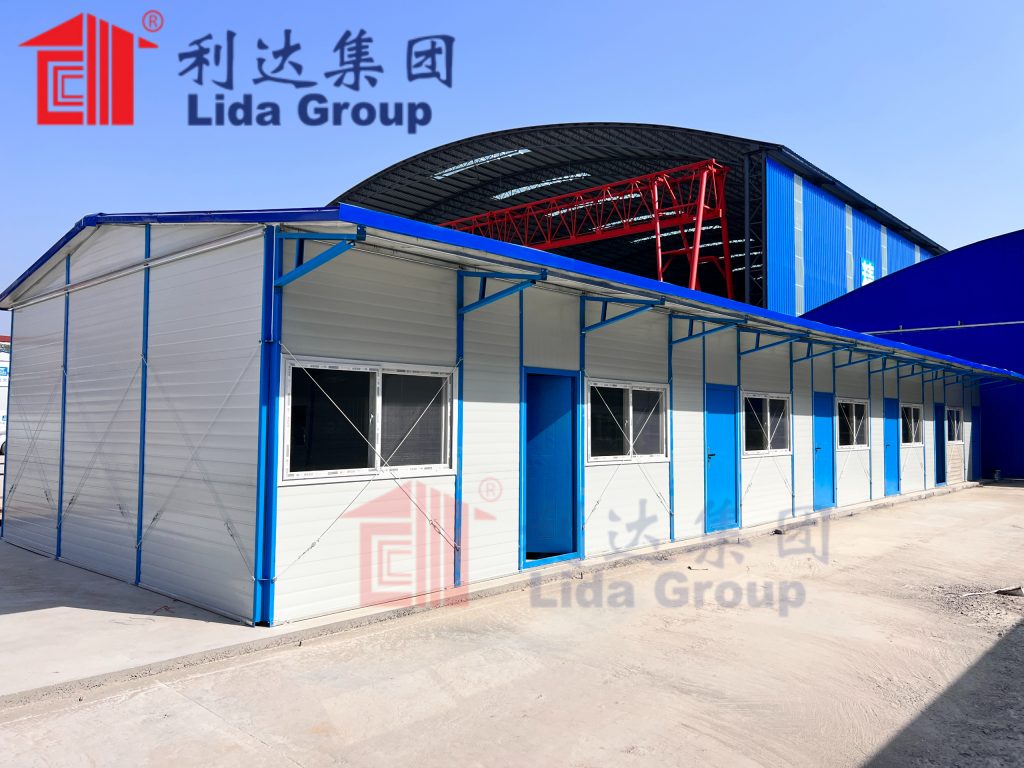
Different from urban fixed residential buildings, mining field worker dormitories belong to temporary supporting infrastructure with unique industrial attributes. Mining projects have strict budget constraints and urgent schedule requirements, but traditional construction modes cannot coordinate economic cost and construction efficiency, resulting in dual operational bottlenecks that restrict the standardized upgrading of mining camps.
2.1 High Full-Cycle Costs Restrict Project Budget Control
Cast-in-place concrete construction is the most traditional mining dormitory solution. Its complex construction process requires massive consumption of cement, steel, sand, and other raw materials, as well as large mechanical equipment leasing and professional construction teams, leading to extremely high upfront construction investment. In addition, concrete buildings are fixed permanent structures without disassembly and migration capabilities. After the completion of phased mining projects, fixed dormitories can only be abandoned or demolished, generating massive construction waste and irreversible asset losses. The one-time investment mode results in extremely low asset utilization and poor full-cycle economic benefits.
To compress upfront budgets, most small and medium-sized mining enterprises choose ordinary scattered color steel temporary buildings. Although the initial construction cost is low, these simple structures adopt thin ungalvanized steel frames and single-layer enclosure plates with poor anti-corrosion and anti-aging performance. Long-term exposure to harsh mining environments easily causes component rusting, structural deformation, and water leakage. Frequent maintenance, renovation, and component replacement produce continuous additional expenditure. Statistical data shows that the cumulative full-cycle maintenance cost of ordinary temporary buildings is far higher than that of standardized modular buildings, resulting in uncontrollable hidden costs for mining camp construction.
2.2 Cumbersome Construction Procedures Delay Project Launch
Mining project operation has strong timeliness, and worker settlement progress directly determines the start time of formal mineral extraction and overall project benefits. Traditional concrete dormitories require foundation pouring, steel bar binding, concrete curing, wall masonry, and secondary decoration, with a single construction cycle lasting two to three months. Remote mining areas are susceptible to sudden sandstorms, heavy rainfall, and low-temperature freezing weather, which easily interrupt on-site construction and further delay worker resettlement.
Ordinary color steel temporary buildings adopt scattered component assembly design, including numerous independent keels, connecting accessories, and enclosure parts. The on-site assembly process requires repeated positioning, calibration, welding, and fixation, relying heavily on professional construction skills. Limited by insufficient professional workers and imperfect construction equipment in remote mining sites, the actual deployment efficiency is low, often failing to meet the urgent pre-production preparation needs of mining projects.
2.3 Inherent Contradiction Between Cost and Speed Limits Industrial Upgrading
For a long time, the global mining camp construction industry has formed a solidified development dilemma: high-quality buildings with stable performance require high investment and long construction cycles, while low-cost temporary buildings have low construction standards and poor comprehensive performance. No traditional construction solution can achieve low full-cycle cost and ultra-fast deployment simultaneously. This inherent contradiction not only increases the operational pressure of mining enterprises but also restricts the standardized, efficient, and sustainable upgrading of global mining supporting infrastructure.
3. Core Design Logic of Lida Group’s Balanced Construction Solution
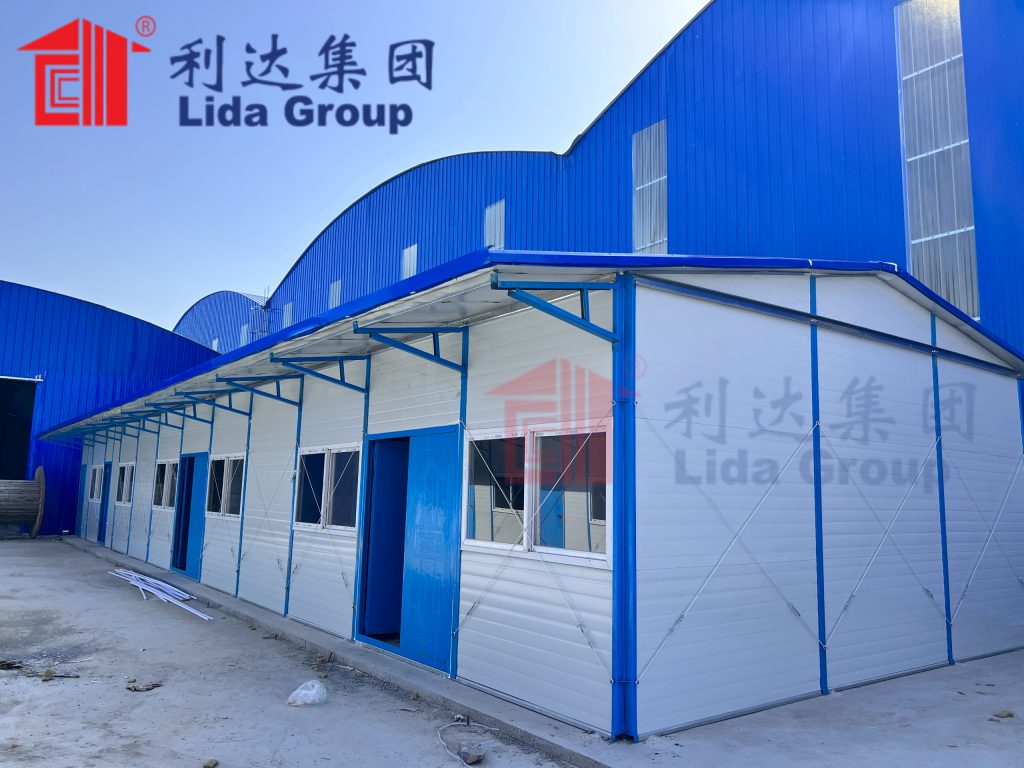
Targeting the long-standing industry contradiction between construction cost and deployment speed, Lida Group’s customized mining worker dormitory projects adhere to a balanced design concept: controlling full-cycle costs through industrialized production and improving construction efficiency through modular innovation. Abandoning the outdated single design thinking of traditional buildings, Lida Group realizes the organic integration of economic affordability and rapid deployment without sacrificing building safety, durability, and worker living comfort.
All building modules are integrally prefabricated in standardized factories. Over 95% of structural production, material processing, and internal water and electricity pre-embedding work is completed off-site, avoiding on-site construction waste and repeated rework. On-site operations are simplified into pure assembly procedures, greatly compressing the construction cycle. At the same time, standardized unified production reduces raw material consumption and labor investment, and the detachable reusable modular design further optimizes full-cycle cost control, finally achieving the dual breakthrough of low cost and high efficiency in mining dormitory construction.
4. Dual Core Advantages: Perfect Integration of Affordability and Rapid Deployment
4.1 Industrialized Modular Production Reduces Full-Cycle Construction Costs
Lida Group achieves genuine affordable construction through systematic full-cycle cost optimization rather than inferior material substitution. Traditional scattered on-site construction has uncontrollable material loss, manual error, and management costs. In contrast, Lida’s factory standardized production adopts unified molds, fixed process standards, and refined material scheduling, reducing construction material waste by more than 70% compared with traditional construction modes. Centralized industrial production also effectively lowers unit production costs, eliminating the invalid investment caused by scattered on-site operation.
In terms of on-site construction costs, the simplified assembly process greatly reduces reliance on professional construction teams and large hoisting equipment. Ordinary workers can complete assembly after simple training, cutting on-site labor costs by more than 60%. The ultra-short construction cycle shortens on-site project management cycles and mechanical equipment leasing cycles, further compressing auxiliary construction expenditure.
In terms of long-term operational costs, Lida’s mining dormitories adopt hot-dip galvanized steel frames and high-performance composite sandwich panels with excellent anti-corrosion, waterproof, and anti-aging capabilities. The stable structural performance minimizes daily maintenance demands, reducing long-term renovation and component replacement costs by over 60% compared with ordinary temporary buildings. Most importantly, the fully detachable modular structure supports cross-project disassembly, transportation, and reassembly, with a component reuse rate exceeding 85%. For mining enterprises with multi-project global layout, reusable building modules convert temporary camp infrastructure into sustainable circulating assets, greatly reducing the average dormitory construction cost of multiple projects and realizing long-term economic benefits.
4.2 Innovative Assembly Technology Realizes Ultra-Fast On-Site Deployment
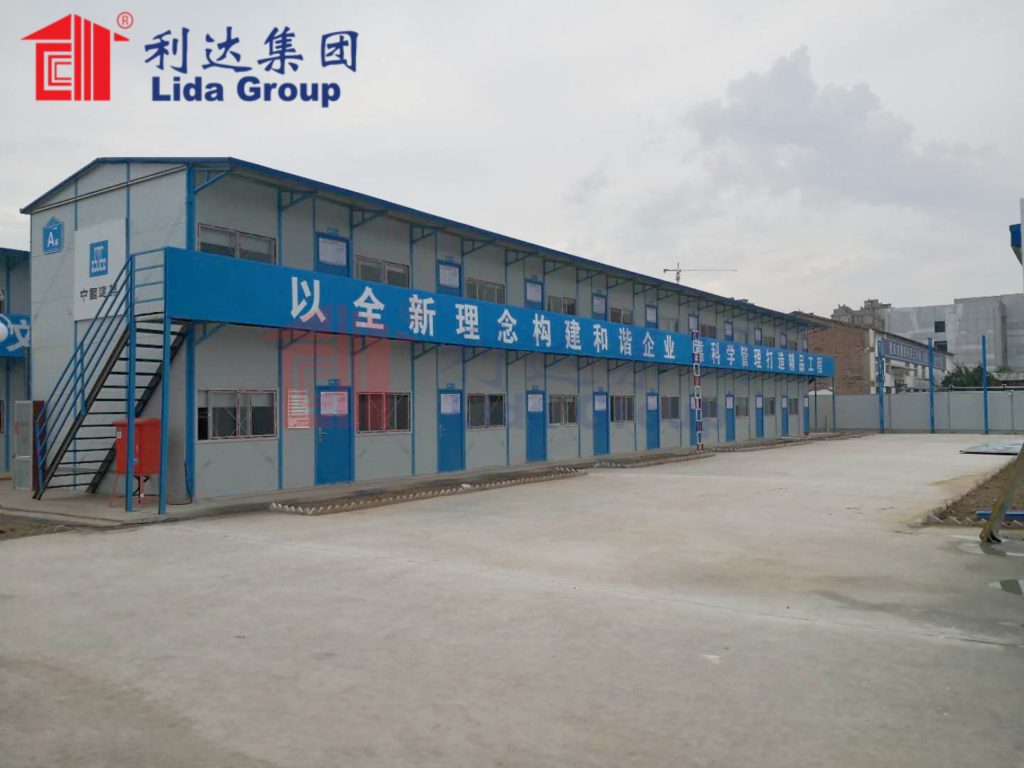
While controlling construction costs efficiently, Lida Group’s innovative plug-in modular assembly technology achieves industry-leading deployment speed. Different from the complex scattered assembly mode of traditional temporary buildings, all wall panels, roof panels, and steel frame components of Lida’s dormitories are preset with standardized locking interfaces in factories. All prefabricated modules are complete finished products with pre-installed doors, windows, ventilation systems, and embedded water and electricity pipelines.
The entire on-site construction workflow is simplified into foundation leveling, module placement, plug-in assembly, and simple fixation, eliminating complex on-site welding, cutting, concrete pouring, and secondary decoration procedures. A standard independent worker dormitory unit can be fully assembled and put into use within half a day by two workers. A complete mining camp that can accommodate hundreds of frontline workers can be completely deployed and occupied within 3 to 7 days. Compared with traditional concrete buildings, the construction cycle is shortened by more than 80%, and compared with ordinary color steel temporary buildings, the assembly efficiency is improved by over 70%.
This ultra-fast deployment capability enables mining enterprises to complete rapid worker resettlement immediately after project approval, solving the problem of delayed project pre-production preparation caused by slow dormitory construction. It effectively shortens the overall project preparation cycle, accelerates the formal launch of mineral extraction operations, and creates additional time value and economic benefits for mining projects. In addition, the lightweight modular design adapts to rugged and traffic-inconvenient mining terrain, realizing flexible rapid deployment in various complex geographical environments.
4.3 Stable Comprehensive Performance Avoids Hidden Cost Losses
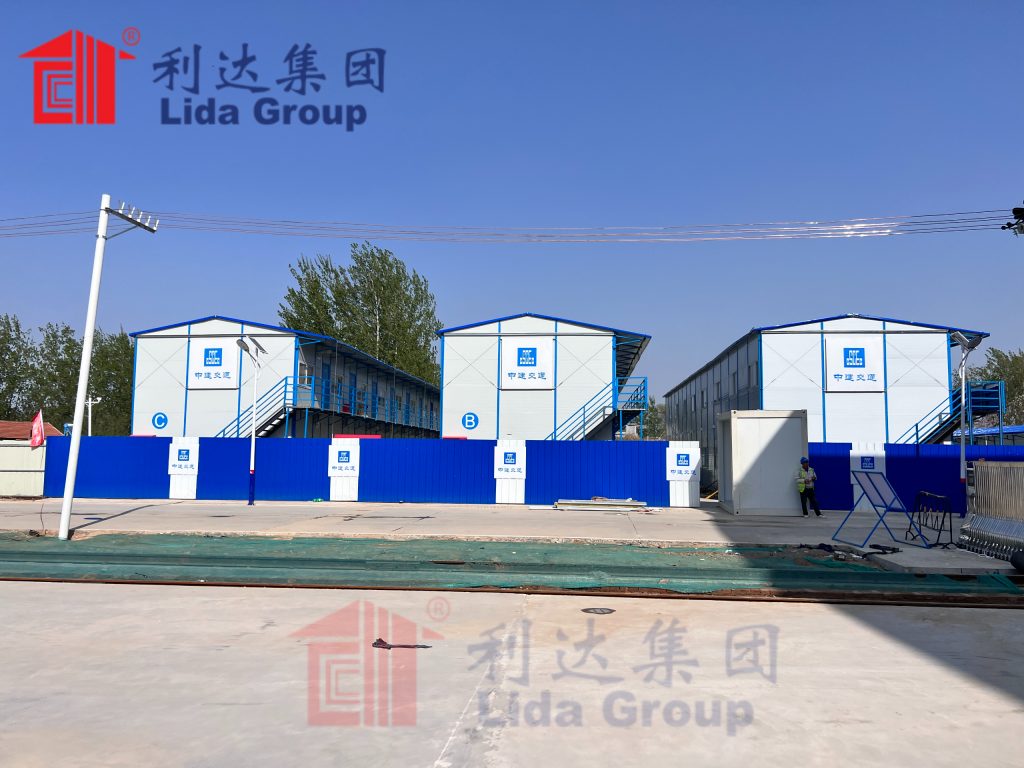
A major defect of traditional low-cost fast-built temporary buildings is reduced structural safety and living quality, which easily cause potential safety hazards and invisible operational losses. Lida Group balances affordability and speed while fully guaranteeing building comprehensive performance. The reinforced hot-dip galvanized steel frame structure can resist Level 12 strong winds and Level 8 earthquakes, adapting to extreme weather and slight geological changes in mining areas.
High-density composite sandwich panels provide excellent thermal insulation, heat preservation, and sound insulation performance, solving the problems of extreme indoor temperature fluctuation, noisy environment, and damp air of traditional temporary buildings. The humanized space layout and complete supporting facilities effectively improve worker living comfort, reduce staff turnover rates, and avoid invisible human resource losses caused by poor accommodation conditions. Stable building quality and reliable living environment eliminate potential safety risks and subsequent rectification costs, ensuring that low-cost and fast construction will not sacrifice project safety and long-term operational value.
5. Additional Comprehensive Value of Lida’s Balanced Construction Solutions
5.1 Green Low-Carbon Construction Reduces Ecological Governance Costs
Modern global mining projects face strict environmental assessment standards, and traditional camp construction generates massive dust pollution, construction sewage, and solid waste, increasing enterprise ecological governance costs and environmental assessment risks. Lida Group’s modular dormitories adopt factory prefabrication and on-site dry assembly modes, producing almost no construction pollutants on site. All building materials are non-toxic and fully recyclable, complying with international green building standards. After project completion, buildings can be disassembled and reused without leaving construction waste, realizing zero damage to fragile mining ecological environments, helping mining enterprises efficiently pass environmental audits and reduce ecological governance investment.
5.2 Flexible Customization Adapts to Diversified Project Demands
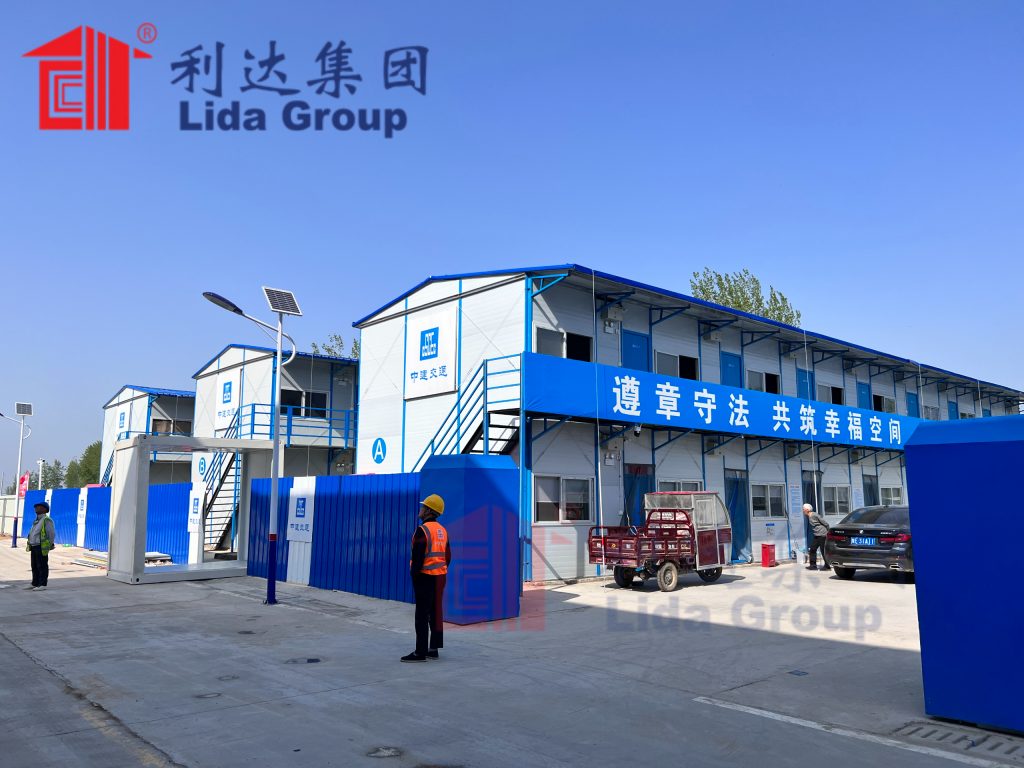
While ensuring low cost and fast deployment, Lida Group supports personalized customized design according to mining project scale, climatic characteristics, and staff accommodation demands. The dormitory space layout, building scale, and supporting functional facilities can be flexibly adjusted to match different project scenarios. Supporting functional modules such as staff canteens, bathhouses, laundry rooms, and meeting rooms can be added to build integrated closed-loop living communities. Flexible customization enables standardized building products to adapt to diversified project demands, further improving the comprehensive cost performance of mining camp construction.
6. Global Engineering Verification and Market Recognition
After long-term market iteration and practical engineering verification, Lida Group’s mining dormitory solutions that balance affordability and rapid deployment have been widely applied in hundreds of mining projects worldwide, covering coal, metal, and non-metal mineral extraction fields. The products have achieved stable operational effects in multiple extreme scenarios including high-altitude cold zones, arid deserts, and humid rainy mountainous areas.
A large number of global engineering cases prove that Lida’s modular dormitories successfully break the traditional industry dilemma. They complete rapid camp deployment within an ultra-short cycle while effectively controlling full-cycle construction costs, and maintain excellent structural safety and living comfort. Cooperative mining enterprises generally recognize that Lida Group’s balanced construction solutions greatly optimize mining camp construction modes, reduce enterprise infrastructure investment pressure, shorten project preparation cycles, and provide reliable guarantee for stable project operation.
Supported by a complete one-stop service system, Lida Group provides full-cycle professional services including early site survey, personalized scheme customization, standardized factory production, cross-regional transportation guidance, and on-site assembly technical guidance, ensuring that each mining dormitory project efficiently achieves dual goals of low cost and fast construction.
7. Conclusion
Cost control and construction efficiency are two core assessment indicators for mining field worker dormitory construction, directly determining the infrastructure investment benefit and project operation progress of mining enterprises. Traditional mining camp construction modes have long been trapped in the unresolvable contradiction that high-quality buildings cost too much and low-cost buildings are inefficient and low-quality, unable to meet the efficient and economical construction demands of modern mining projects.
Lida Group’s modular mining dormitory solutions thoroughly break this industry bottleneck by perfectly combining economic affordability and ultra-fast deployment efficiency. Through industrialized factory prefabrication technology, innovative plug-in modular assembly structure, detachable reusable design, and optimized material configuration, Lida Group realizes systematic full-cycle cost reduction and substantial construction efficiency improvement. Compared with traditional construction solutions, Lida’s products not only greatly compress upfront construction investment and long-term maintenance expenditure but also shorten the camp deployment cycle by more than 70%, accelerating project pre-production preparation and bringing additional economic benefits for mining enterprises.
At the same time, stable structural safety, humanized living design, and green low-carbon attributes ensure that low-cost and fast construction will not sacrifice building quality and worker living experience, helping mining enterprises stabilize frontline worker teams, optimize on-site management standards, and meet green mining development requirements. With the continuous upgrading of the global mining industry toward standardization, high efficiency, and low consumption, modular building solutions that balance affordability and rapid deployment will become the mainstream choice for mining supporting infrastructure construction. In the future, Lida Group will continue to iterate modular building technology, optimize dual advantages of cost control and construction efficiency, and continuously empower global mining enterprises to build more economical, efficient, safe, and standardized worker camp systems.
Related news
-
Achieve Affordable Workforce Housing with Easy Install Sandwich Panel House for Mining Fields
2026-04-29 16:39:07
-
Lida Group's Low-Cost Durable Building Technology Transforms Mining Field Worker Dormitory
2026-04-29 16:33:41
-
Easy Install Sandwich Panel House Provides Comfortable Mining Field Worker Dormitory by Lida Group
2026-04-29 16:24:07
contact us
- Tel: +86-532-88966982
- Whatsapp: +86-13793209022
- E-mail: sales@lidajituan.com
