



Lida Group’s Corrosion-Resistant Steel Construction Sets New Standard for Low Cost Metal House
2026-May-27 11:40:03
By Admin
Introduction
The global low-cost metal house industry has long fallen into a rigid and backward development stereotype. For decades, the market has universally defined low-cost metal buildings as disposable, short-lived, and low-durability temporary facilities. Most manufacturers prioritize upfront price reduction by adopting inferior steel substrates, simplistic single-layer anti-rust painting, and rough welded structures. This outdated manufacturing mode has formed a fixed industry default: low-cost metal houses must compromise on corrosion resistance, structural stability, and service life. As a result, end users have to bear high long-term maintenance costs, frequent component replacement, and repeated reconstruction losses, severely restricting the standardized and high-quality development of the modular construction industry.
Breaking the long-standing industry limitations, Lida Group has completely redefined the technical and quality standards of low-cost metal houses with self-developed systematic corrosion-resistant steel construction technology. Abandoning the backward low-price and low-quality competition logic, Lida Group integrates high-standard steel structure engineering, industrial-grade anti-corrosion systems, modular reusable design, and full-lifecycle cost optimization. It successfully realizes the perfect integration of low upfront cost, ultra-high corrosion resistance, long service life, and stable structural safety, setting a new authoritative industry benchmark for low-cost metal houses. This article comprehensively analyzes the defects of traditional industry standards, Lida’s innovative corrosion-resistant steel construction system, core technical strengths, upgraded performance standards, full-lifecycle value advantages, and industry driving significance, illustrating how Lida Group leads the iterative upgrading of the global low-cost metal house industry.
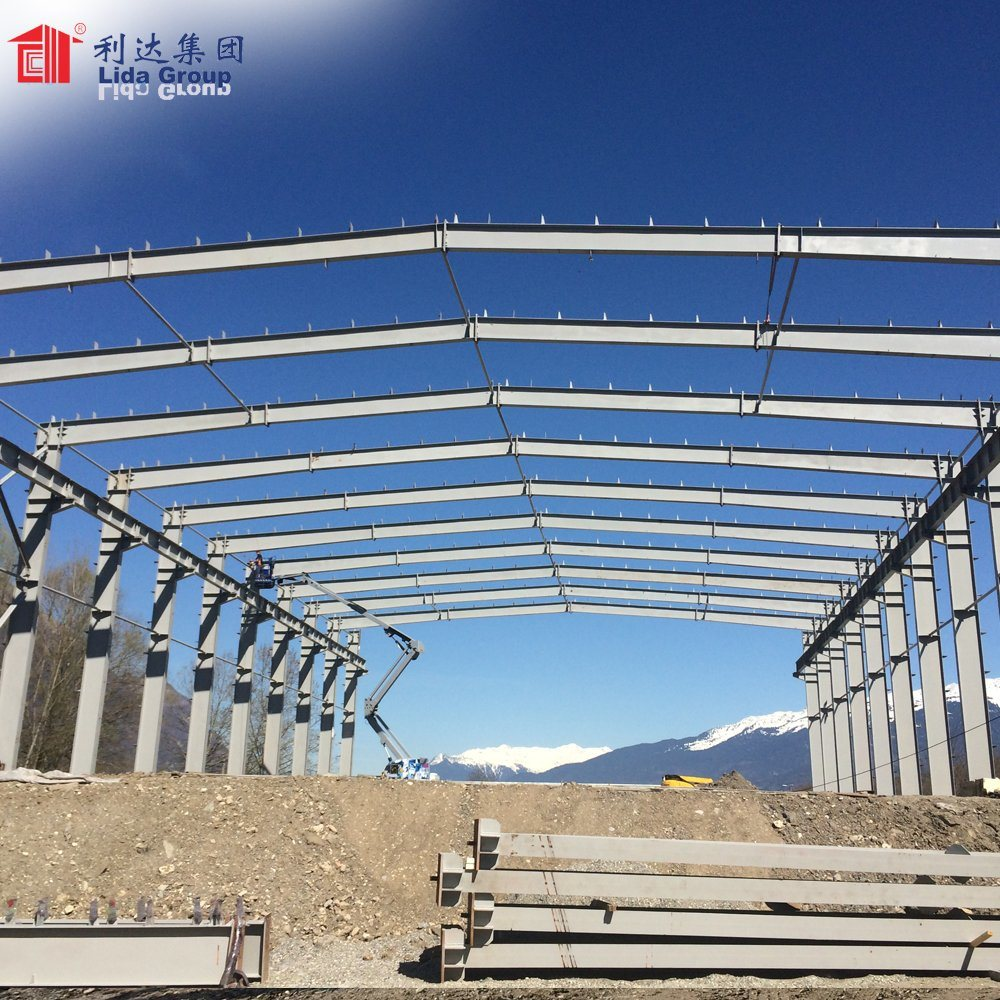
1. Defects of Traditional Industry Standards for Low-Cost Metal Houses
The traditional low-cost metal house industry lacks unified and rigorous quality and anti-corrosion standards. Most manufacturers follow backward folk manufacturing norms, resulting in widespread product homogeneity and performance defects. These outdated industry conventions have become the core bottleneck restricting the healthy development of the modular construction field.
1.1 Backward Single Anti-Corrosion Standard Leads to Rapid Performance Failure
The traditional industry’s default anti-corrosion standard for low-cost metal houses only requires one-time manual anti-rust paint spraying, with no mandatory requirements for substrate treatment, coating thickness, and layered protection. This superficial anti-corrosion measure has extremely poor weather resistance and adhesion. After 1 to 2 years of outdoor exposure, the paint layer easily peels, fades, and cracks. In complex environments such as coastal salt-spray areas, humid rainy regions, and industrial pollution zones, unprotected steel structures oxidize and rust rapidly. Without standardized metallurgical protection and layered sealing, traditional metal houses suffer from large-area corrosion, steel plate thinning, and structural loosening in a short period, completely losing their usage value. This loose anti-corrosion standard makes durability the biggest weakness of traditional low-cost metal buildings.
1.2 Simplified Steel Structure Standards Cause Hidden Safety Risks
To control production costs, the traditional industry adopts simplified steel structure manufacturing standards, allowing the use of thin non-standard low-carbon steel plates and unreasonable frame stress design. There is no rigorous finite element mechanical simulation and structural reinforcement process, leading to poor wind resistance, seismic resistance, and snow load resistance of finished products. Most traditional metal houses cannot meet international outdoor building safety standards and are prone to deformation, collapse, and component falling under extreme weather conditions. The lack of unified structural safety standards leads to uneven product quality, bringing persistent hidden dangers to personnel and property safety during occupancy.
1.3 Disposable Manufacturing Standards Result in Low Asset Value
The traditional industry universally adopts fixed welded disposable manufacturing standards, ignoring the reusable and cyclic usage value of metal structures. Conventional low-cost metal houses cannot be disassembled, transported, or reassembled after project completion and can only be discarded as construction waste. This backward disposable standard not only causes serious resource waste and environmental pollution but also leads to extremely low asset utilization rate. Users have to repeatedly invest in reconstruction, resulting in extremely poor full-lifecycle cost performance, which cannot meet the flexible deployment needs of modern engineering multi-project cross-regional operations.
1.4 Confused Cost Standards Form False Low-Price Misconception
The traditional industry’s cost evaluation standard only focuses on initial procurement and construction prices, ignoring long-term maintenance, energy consumption, and reconstruction costs. This one-sided cost standard forms a wrong market cognition that “low price equals cost-effective”. In fact, traditional low-cost metal houses require annual rust removal, repainting, and component replacement, with high hidden operational expenses. The full-lifecycle comprehensive cost is far higher than high-quality standardized products, forming a typical false low-price trap that misleads user choices for a long time.
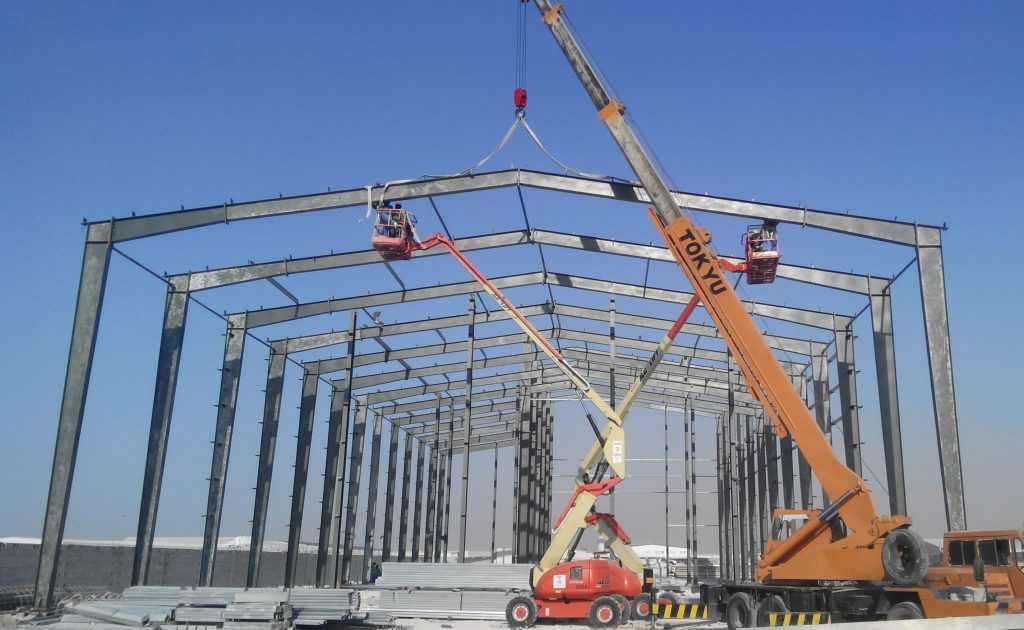
2. Lida’s Systematic Corrosion-Resistant Steel Construction: The New Industry Benchmark
Targeting the various defects of traditional industry standards, Lida Group has established a set of systematic, standardized, and quantifiable corrosion-resistant steel construction systems through years of engineering R&D and field verification. This new standard takes corrosion resistance durability and structural safety as the core, balances low-cost manufacturing and long-term asset value, and completely subverts the backward technical norms of the traditional low-cost metal house industry.
2.1 Scenario-Based High-Grade Steel Substrate Standard
Lida Group takes the lead in proposing differentiated scenario-based steel substrate selection standards for low-cost metal houses, abandoning the uniform low-grade carbon steel application norm of the traditional industry. For conventional inland ordinary atmospheric environments, high-quality Q355 galvanized steel with stable mechanical properties and basic oxidation resistance is adopted to control costs reasonably; for coastal high salt-spray and high-humidity environments, zinc-aluminum-magnesium alloy coated steel and ASTM A588 weathering steel are matched, with corrosion resistance 3 to 4 times higher than ordinary galvanized steel; for high-temperature and high-pollution industrial zones, thickened anti-aging steel plates are used to enhance environmental adaptability. All raw materials pass strict incoming quality inspection to ensure uniform internal structure, low impurity content, and excellent tensile toughness, laying a solid material foundation for standardized anti-corrosion performance.
2.2 Industrial Hot-Dip Galvanizing Metallurgical Protection Standard
Breaking the traditional single paint anti-corrosion standard, Lida Group takes industrial hot-dip galvanizing metallurgical protection as the mandatory basic standard for all steel frame components. All load-bearing steel parts are immersed in 450°C high-temperature molten zinc to form a dense metallurgical bonding zinc layer that is integrally fused with the steel substrate. Different from superficial paint coating, the zinc layer provides dual protection of physical barrier and cathodic protection. It can self-heal minor scratches and prevent edge rusting, effectively isolating air, moisture, and corrosive media. This standardized metallurgical anti-corrosion process eliminates the instability of manual painting quality and realizes long-term passive rust prevention of steel structures.
2.3 Three-Layer Composite Anti-Corrosion Coating Standard
Lida Group formulates a unified three-layer composite anti-corrosion coating thickness and process standard, realizing full dead-angle sealing protection. The bottom layer is epoxy zinc-rich primer with high adhesion to block electrochemical corrosion; the middle layer is high-elasticity anti-rust intermediate paint to thicken the protective structure and isolate corrosive substances; the surface layer is weather-resistant polyurethane topcoat with ultraviolet resistance and self-cleaning functions. The total coating thickness is strictly controlled above 80μm, forming an integrated anti-aging and anti-corrosion protective system. This standardized coating process solves the problems of uneven coating, easy peeling, and rapid aging of traditional products, ensuring long-term intact surface performance of metal houses.
2.4 Refined Detail Anti-Corrosion Construction Standard
On the basis of macroscopic material and coating standards, Lida Group establishes comprehensive detail anti-corrosion construction specifications. All steel cutting, drilling, and welding notches are precisely polished and repaired with special anti-rust paint to avoid corrosion starting from damaged gaps; all connecting bolts adopt matched stainless steel anti-corrosion fasteners and waterproof sealing gaskets; the overall building drainage structure is scientifically optimized to eliminate long-term water accumulation hidden dangers. The full-process standardized detail construction realizes no dead-angle anti-corrosion protection, filling the gap of traditional industry’s neglect of detail corrosion prevention.
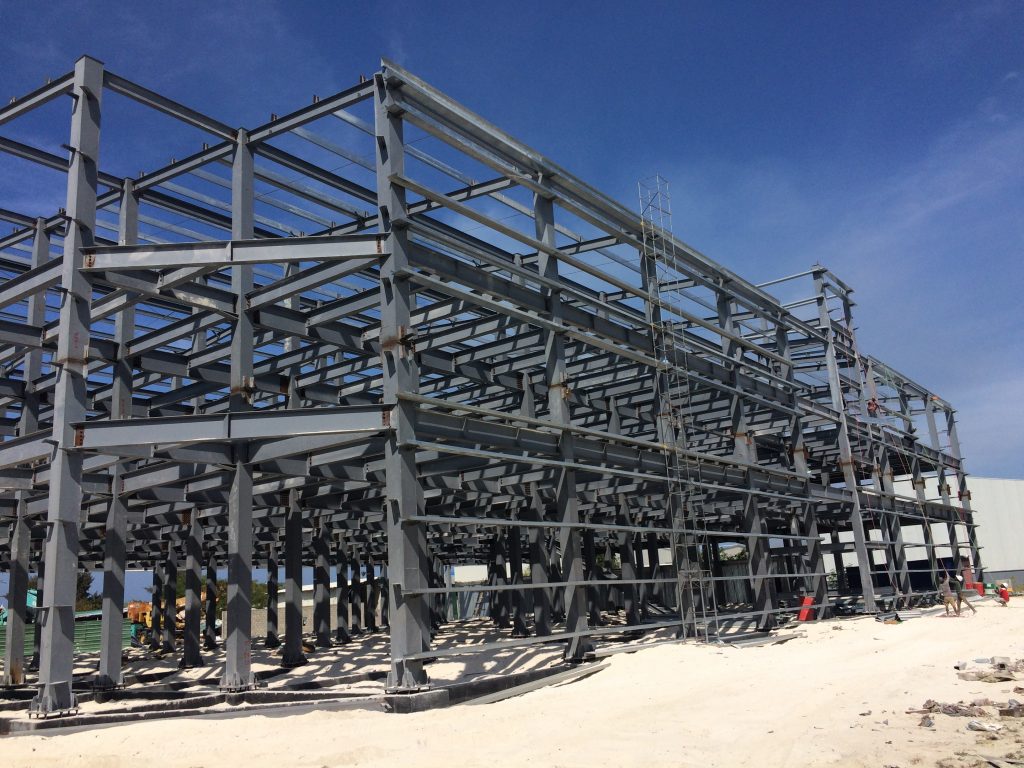
3. Structural Engineering Upgrade: Redefining Safety and Durability Standards
While innovating anti-corrosion standards, Lida Group upgrades the steel structure engineering standards of low-cost metal houses, breaking the industry’s inherent cognition that “low cost equals simplified structure”. Through scientific structural optimization and standardized mechanical design, Lida realizes the dual improvement of lightweight cost control and high safety performance, setting a new structural benchmark for the industry.
3.1 Finite Element Simulation Structural Design Standard
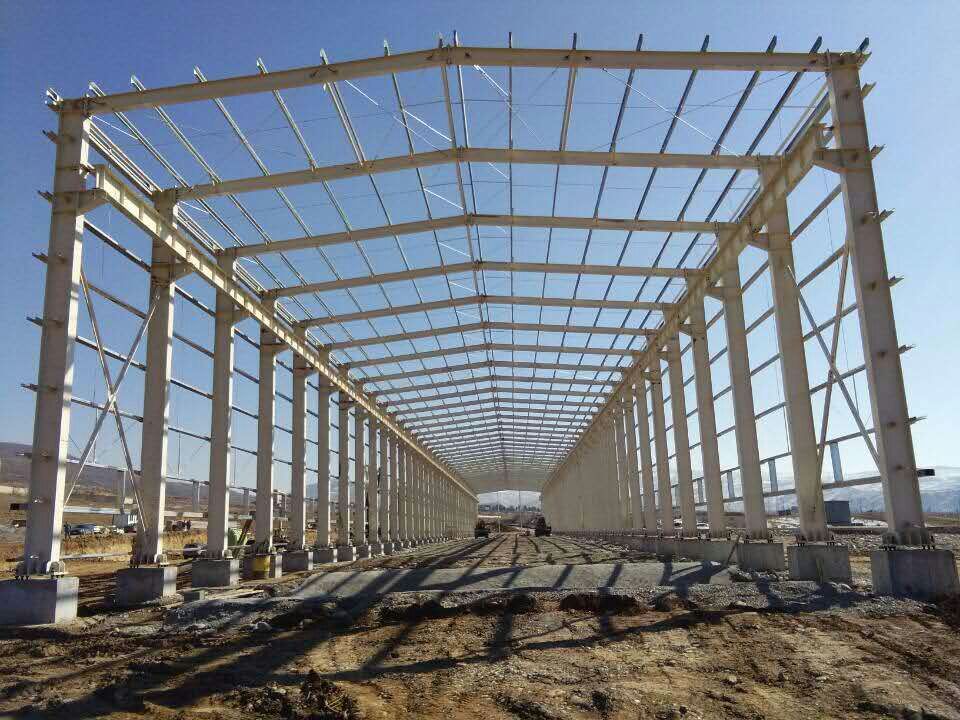
Different from the random empirical design of traditional manufacturers, all Lida steel frame structures adopt professional finite element mechanical simulation calculation to optimize stress distribution and component layout. The lightweight high-strength design removes redundant steel consumption without reducing safety performance, reducing the overall building self-weight by 20% to 30%. The optimized structure strictly meets level 12 wind resistance, magnitude 6 earthquake resistance, and heavy snow load resistance standards, fully complying with international outdoor building safety specifications. This scientific design standard ensures that low-cost metal houses have stable structural bearing capacity and environmental impact resistance.
3.2 Modular Detachable Reuse Standard
Lida Group replaces the traditional disposable welded structure standard with a fully detachable bolt assembly modular standard. All frames and panel components are standardized universal modules with unified reserved interfaces, supporting free disassembly, flat-pack transportation, and cross-project reassembly. The standardized steel structure can withstand more than 8 repeated disassembly and assembly cycles without structural deformation and performance attenuation. This new reusable standard turns temporary low-cost buildings into recyclable fixed assets, greatly improving enterprise asset utilization rate and realizing cyclic value iteration.
3.3 Full-Scenario Environmental Adaptability Standard
Combined with anti-corrosion and structural optimization technologies, Lida Group establishes a full-scenario environmental adaptability standard for low-cost metal houses. The upgraded products can operate stably in multiple harsh environments: resisting coastal salt spray corrosion, desert high-temperature ultraviolet aging, plateau low-temperature frost damage, and rainy area humid mildew. This universal adaptability standard breaks the traditional industry’s limitation that low-cost metal houses can only be used in mild environments, expanding the application boundary of modular metal buildings.
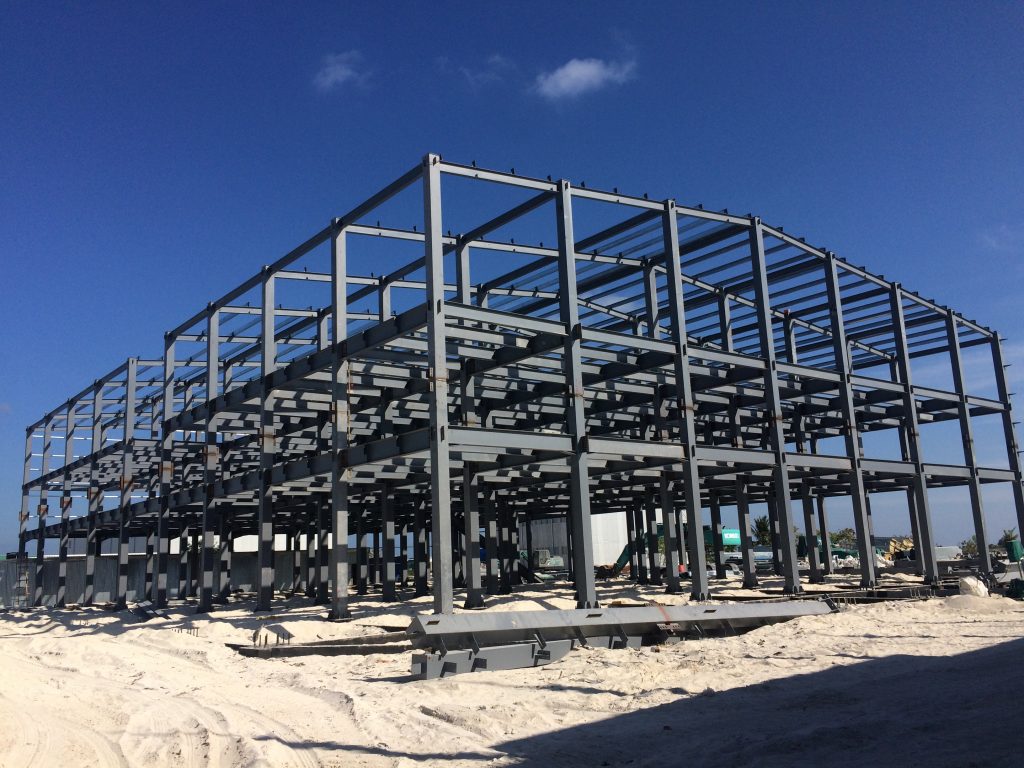
4. Full-Lifecycle Cost Performance: Establishing New Low-Cost Industry Norms
Lida Group completely reverses the traditional industry’s one-sided low-price evaluation standard and establishes a full-lifecycle cost performance evaluation system centered on low initial investment, ultra-low maintenance consumption, and long-term service life. It enables low-cost metal houses to achieve real economical operation and sets a new cost-benefit benchmark for the industry.
4.1 Balanced Initial Cost Control Standard
Through factory batch standardized production, lightweight structural optimization, and scenario-based precise material matching, Lida Group eliminates performance redundancy and cost waste. While adopting industrial-grade anti-corrosion and structural standards, it controls the upfront construction cost 35% to 40% lower than traditional permanent steel buildings, maintaining the core low-cost advantage of metal houses. This new standard abandons the traditional low-price and low-quality vicious competition and realizes genuine high cost performance with reasonable cost and reliable performance.
4.2 Ultra-Low Maintenance Consumption Standard
Lida’s standardized corrosion-resistant system greatly reduces building failure rate and later maintenance costs. Field engineering verification shows that the annual maintenance cost of Lida’s metal houses is less than 3% of the initial investment, far lower than the 10% to 15% maintenance ratio of traditional products. The stable anti-rust and anti-aging performance avoids frequent rust removal, repainting, and component replacement. Matched with integrated sealed thermal insulation structure, it reduces daily heating and cooling energy consumption, forming a new standard of low operation and maintenance for low-cost metal houses.
4.3 Long Service Life Value Standard
Traditional low-cost metal houses have a stable service life of only 3 to 5 years under industry loose standards. In contrast, Lida’s standardized corrosion-resistant steel structure metal houses can maintain intact structural and surface performance for more than 40 years in harsh coastal and industrial environments and over 50 years in conventional atmospheric environments. The 6 to 8 times extended service life avoids repeated demolition and reconstruction investment, reduces average annual usage cost by more than 70%, and establishes a new long-term value standard for low-cost modular buildings.
5. Industrial Significance of Lida’s New Industry Standards
Lida Group’s innovative corrosion-resistant steel construction standards have profound guiding significance for the iterative upgrading of the global low-cost metal house industry. It breaks the industry’s long-standing wrong cognition that low cost must equal low performance, promotes the transformation of the industry from price-oriented competition to quality and technology-oriented competition, and guides small and medium-sized manufacturers to abandon backward rough production processes.
In terms of user value, the new standards eliminate the false low-price trap of traditional products, enable global users to obtain safe, durable, and reusable low-cost metal building solutions, reduce full-lifecycle investment risks, and maximize asset utilization value. In terms of green development, the modular reusable standard reduces construction waste generation, conforms to global low-carbon and environmental protection development concepts, and promotes the sustainable development of the modular construction industry.
6. Conclusion
For a long time, the global low-cost metal house industry has been restricted by backward anti-corrosion technology, simplified structural design, loose quality norms, and one-sided cost evaluation standards, resulting in widespread product performance defects and low comprehensive value. Traditional industry conventions have locked low-cost metal buildings in the positioning of disposable low-grade temporary facilities, seriously restricting industry innovation and upgrading.
Lida Group completely subverts the traditional industry pattern with systematic corrosion-resistant steel construction technology and standardized manufacturing systems. By establishing scenario-based high-grade material standards, industrial metallurgical anti-corrosion standards, three-layer composite coating specifications, refined detail construction norms, and scientific structural design standards, Lida Group successfully solves the core pain points of easy rusting, short service life, poor safety, and high hidden costs of traditional low-cost metal houses. It balances low upfront investment, long-term durability, structural safety, environmental adaptability, and reusable asset value, setting an authoritative new benchmark for the global low-cost metal house industry. Leading the industry to transform from low-price vicious competition to high-quality and high-value development, Lida Group continuously empowers the standardized, green, and sustainable upgrading of the global modular construction field.
Related news
-
Why Choose Lida Group for Steel Structure Building and Corrosion-Resistant Low Cost Metal House?
2026-05-27 11:20:12
-
Lida Group Engineers Corrosion-Resistant Steel Construction to Maximize Low Cost Metal House Value
2026-05-27 10:32:00
-
Affordable Living Solution: Low Cost Metal House Featuring Steel Structure Building and Corrosion-Resistant Construction
2026-05-27 10:15:11
contact us
- Tel: +86-532-88966982
- Whatsapp: +86-13793209022
- E-mail: sales@lidajituan.com
