



Lida Group Sets New Standard in Corrosion-Resistant Construction for Steel Structure Building Houses
2026-Apr-29 17:55:02
By Admin
1. Introduction
Steel structure buildings have become a mainstream choice for modern residential and commercial construction due to their outstanding mechanical performance, flexible architectural design, efficient modular assembly, and superior environmental friendliness. Compared with traditional concrete and masonry buildings, prefabricated steel houses feature lighter weight, higher seismic resistance, shorter construction cycles, and recyclable components, perfectly fitting the fast development and green upgrading trends of the global construction industry. Nevertheless, structural corrosion has long plagued the steel construction sector and become the biggest bottleneck restricting the quality improvement and long-term operation of steel structure houses.
Most traditional steel building projects adopt fragmented, experience-based anti-corrosion construction processes without unified standardized specifications. Simple single-layer paint coating, incomplete surface pretreatment, and neglected node protection lead to inconsistent anti-corrosion quality across projects. Under harsh environmental conditions including coastal salt fog, inland saline-alkali soil, strong ultraviolet radiation, and alternating temperature and humidity, unstandardized corrosion protection quickly fails, resulting in steel rusting, structural performance degradation, frequent maintenance, and shortened building service life. For decades, the global steel construction industry lacked unified, scenario-adaptive, and full-process corrosion-resistant construction benchmarks, resulting in uneven project quality and restricting the high-quality development of steel structure residential buildings.
As a global leading manufacturer and constructor of modular steel structure buildings, Lida Group has deeply explored the pain points of traditional anti-corrosion construction and industry standard loopholes. By combining international ISO corrosion classification specifications and domestic industrial technical guidelines, the enterprise independently develops a full-process, standardized, scenario-customized corrosion-resistant construction system. Breaking the backward single protection mode of the industry, Lida Group sets a new industrial standard for corrosion-resistant construction of steel structure building houses, realizing standardized production, refined construction, and long-life protection for steel residential buildings. This article systematically analyzes the defects of traditional industrial anti-corrosion standards, Lida Group’s innovative standardized anti-corrosion technologies, industrial benchmark advantages, and practical engineering value.
2. Limitations of Traditional Industrial Corrosion-Resistant Construction Standards
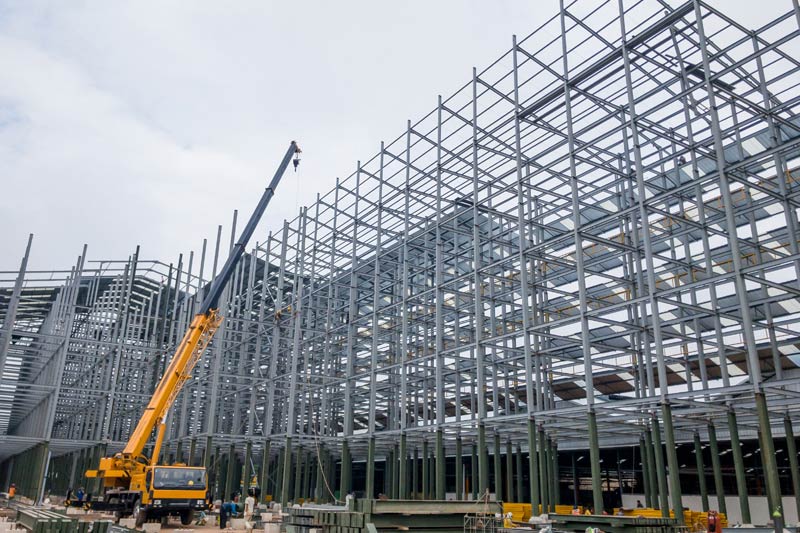
Current international and domestic steel structure anti-corrosion construction standards provide basic construction guidelines for the industry, but they still have obvious limitations in practical residential project application. Generalized unified specifications fail to match differentiated environmental scenarios, lack refined construction management requirements, and cannot meet the high-standard durability and quality demands of modern premium steel structure houses.
2.1 Generalized Specifications Lack Scenario Adaptability
International standards such as ISO 12944 and ISO 9223 classify building corrosion environments into multiple grades ranging from low corrosivity to extreme corrosivity and formulate basic coating and protection requirements. However, most construction enterprises only adopt unified single-layer or double-layer anti-corrosion schemes according to the lowest industry standard without targeted adjustment based on regional environmental differences. Traditional standards only put forward macroscopic performance requirements but lack detailed operational guidelines for residential steel structures applied in coastal salt fog, saline-alkali land, high-altitude ultraviolet, and humid rainy scenarios.
The one-size-fits-all construction mode leads to two major industrial problems. In high-corrosion areas, basic standard protection is insufficient, causing rapid coating failure and structural rust. In low-corrosion areas, excessive protection leads to redundant investment and wasted resources. The lack of scenario-based refined standards makes it impossible for traditional steel houses to achieve balanced high performance and economic benefits.
2.2 Fragmented Construction Process and Incomplete Quality Control
Traditional industry standards mainly focus on finished coating performance inspection while ignoring full-process construction quality control. Most construction teams separate steel structure fabrication, surface pretreatment, coating construction, and node protection. Many vulnerable corrosion points including welding joints, cutting sections, bolt gaps, and wall base connections lack standardized protection specifications.
In actual construction, irregular manual operation often causes incomplete surface rust removal, insufficient coating thickness, and damaged protective layers during on-site assembly. Traditional standards fail to constrain detailed construction behaviors, resulting in unstable anti-corrosion quality of finished buildings. Even projects that pass standard acceptance will suffer structural aging and coating peeling within a few years, failing to guarantee long-term stable building quality.
2.3 Disconnection Between Anti-Corrosion Design and Structural Engineering
Traditional industrial standards treat anti-corrosion coating as an independent auxiliary process rather than a core part of steel structure engineering design. Most steel structure design schemes only consider structural bearing capacity and architectural aesthetics without reserving anti-corrosion protection space and optimizing structural drainage and moisture-proof design. Passive post-construction anti-corrosion protection cannot fundamentally solve environmental erosion risks, resulting in low overall durability of steel structure residential buildings.
3. Core Innovations of Lida Group’s New Corrosion-Resistant Construction Standard
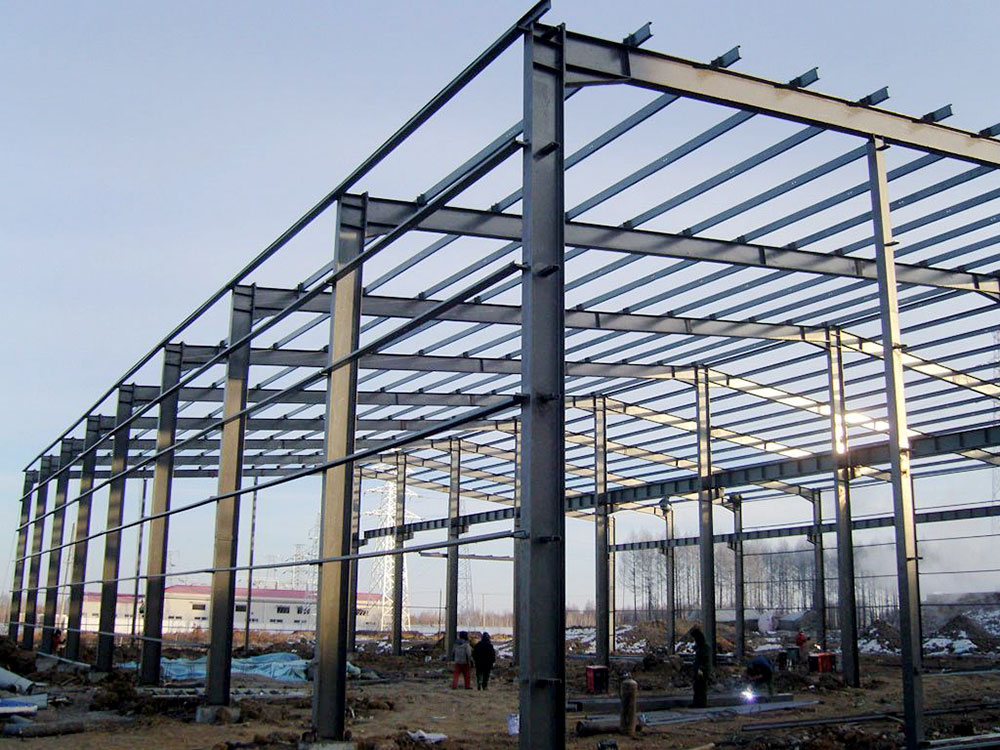
Targeting the multiple limitations of traditional industry standards, Lida Group upgrades and iterates the whole industrial chain of corrosion-resistant construction. Centering on residential steel structure application scenarios, the enterprise builds a complete set of proprietary standardized systems covering scenario classification, factory pretreatment, multi-layer composite protection, structural node optimization, on-site refined construction, and post-completion inspection and maintenance. This innovative system supplements and upgrades traditional industry specifications, establishing a new benchmark for steel house anti-corrosion construction.
3.1 Scenario Graded Customized Protection Standard
Based on international ISO 9223 environmental corrosion classification standards, Lida Group further refines regional environmental characteristics and divides residential building application scenarios into five detailed grades: dry indoor environments, rural low-corrosion environments, urban light-industrial environments, coastal salt-fog environments, and inland saline-alkali extreme corrosion environments. Corresponding matched anti-corrosion material configurations and construction processes are formulated for each grade.
For low-corrosion rural and indoor scenarios, optimized cost-effective composite coating schemes are adopted to avoid resource waste. For medium-corrosion urban areas, thickened zinc-rich primer systems are configured to enhance daily weather resistance. For high-corrosion coastal and saline-alkali regions, composite protection combining hot-dip galvanizing integral treatment and fluorocarbon topcoats is applied to resist chemical corrosion. This graded customized standard fills the gap of refined scenario-based construction specifications in the traditional industry, ensuring targeted and efficient anti-corrosion protection for all steel structure houses.
3.2 Full-Process Factory Preprocessing Standard
Breaking the traditional industry mode of focusing only on on-site coating construction, Lida Group takes factory component pretreatment as the primary core standard of anti-corrosion engineering. All steel components for residential buildings must pass unified standardized factory processing before delivery, including sand blasting and pickling derusting, surface passivation treatment, and primer integral coating.
The unified factory standard ensures that the surface cleanliness and roughness of all steel components reach the highest industrial level, completely removing oxide scale, oil stains, and welding slag that may cause coating peeling. The standardized passivation process forms a dense chemical isolation film on the steel matrix, inhibiting electrochemical corrosion from the source. All pretreatment procedures are completed in closed constant-temperature factories to avoid interference from external environmental changes, realizing unified and controllable component anti-corrosion foundation quality.
3.3 Three-Layer Composite Closed Coating Standard
Different from the single or double-layer random coating specifications of traditional standards, Lida Group establishes a mandatory three-layer composite closed coating construction standard for high-quality steel houses, including epoxy zinc-rich anti-rust primer, adhesive intermediate coating, and weather-resistant fluorocarbon topcoat. Each coating has clear standardized thickness parameters, construction temperature requirements, and curing time specifications.
The zinc-rich primer provides durable electrochemical anti-rust protection for the steel substrate. The intermediate coating enhances structural toughness, impact resistance, and moisture isolation performance. The fluorocarbon topcoat resists ultraviolet aging, salt fog erosion, and wind and rain scouring. Cooperated with integral hot-dip galvanizing treatment of main load-bearing steel frames, the dual physical and chemical protection system far exceeds traditional industry anti-corrosion standards, ensuring that the protective layer remains intact for more than 30 years in harsh outdoor environments.
3.4 Structural Node Anti-Corrosion Optimization Standard
Aiming at the unregulated node protection gap in traditional industry standards, Lida Group formulates exclusive structural node anti-corrosion construction specifications. The enterprise abandons traditional on-site welding processes that easily damage protective layers and fully adopts factory prefabrication and bolt assembly structures. All connection nodes are precisely preset in factories to avoid secondary destructive processing on site.
Unified mandatory standards are formulated for easily corroded weak points such as bolt gaps, component lap joints, roof drainage structures, and wall base contacts. All gaps must be equipped with waterproof and anti-corrosion sealing gaskets and supplementary touch-up coatings. Roofs adopt gradient integrated drainage standards, and wall bases are equipped with customized moisture-proof skirts. This comprehensive node protection standard eliminates all hidden corrosion risks that are ignored by traditional industry specifications.
4. Comprehensive Advantages of Lida’s New Industrial Standard
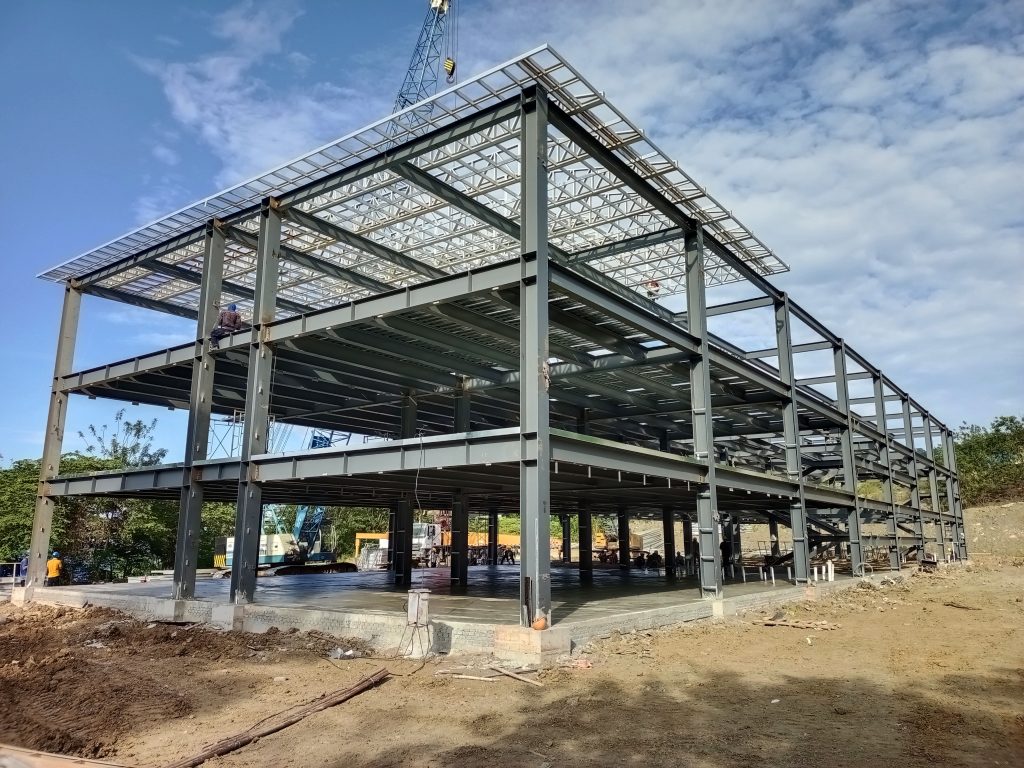
The innovative corrosion-resistant construction standard created by Lida Group comprehensively optimizes the quality, safety, economy, and sustainability of steel structure residential buildings, solving various long-standing pain points in the traditional construction industry and leading the upgrading of industrial construction specifications.
4.1 Stable Long-Term Structural Quality
Guided by traditional industry standards, ordinary steel structure houses usually suffer coating failure and structural aging within 5 to 10 years, with an effective service life of less than 15 years. Under Lida Group’s standardized corrosion-resistant construction system, steel residential buildings maintain stable mechanical performance and intact protective layers for a long time. The overall design service life reaches more than 50 years, meeting the quality standards of permanent premium residential buildings. The standardized full-process protection completely avoids structural performance attenuation caused by environmental erosion, stably maintaining building safety and structural rigidity throughout the whole life cycle.
4.2 Lower Full-Cycle Project Cost
Although Lida’s high-standard anti-corrosion construction slightly optimizes upfront construction investment, it greatly reduces the long-term operational cost of residential projects. Traditional standard-compliant steel houses require comprehensive rust removal, repainting, and structural maintenance every 2 to 3 years, generating continuous labor and material consumption. Buildings constructed under Lida Group’s new standard almost do not need professional maintenance in the first 20 years of operation. Combined with the detachable and reusable characteristics of modular steel structures, the standardized construction mode effectively reduces resource waste and realizes optimal full-cycle economic benefits.
4.3 Unified Standardized Project Quality
Traditional generalized industry standards lead to large quality differences between different construction teams and different project sites. Lida Group’s complete set of refined construction specifications covers every link from raw material selection, factory processing, on-site assembly to finished product inspection. All procedures have clear operational standards and acceptance indicators, eliminating quality instability caused by manual experience differences. This enables every delivered steel structure house to achieve consistent high-standard anti-corrosion performance and overall construction quality.
4.4 Excellent Green and Sustainable Value
Lida Group’s new corrosion-resistant construction standard conforms to global green building and low-carbon development trends. The ultra-long building service life reduces repeated reconstruction and resource consumption. Factory prefabrication and on-site dry assembly cut down construction dust, sewage, and solid waste pollution. Steel materials can be 100% recycled and reused, effectively reducing carbon emissions of residential construction projects. The standardized durable construction mode provides a replicable green construction benchmark for the global steel building industry.

5. Global Engineering Application and Industrial Benchmark Recognition
After years of technical iteration and practical engineering verification, Lida Group’s innovative corrosion-resistant construction standards have been widely applied in global steel structure residential projects. The standardized construction system covers diversified scenarios including premium customized residences, commercial residential communities, remote field staff camps, and scenic boutique supporting buildings. All projects operate stably in complex environments such as coastal salt fog zones, inland saline-alkali lands, high-altitude cold areas, and arid high-temperature regions.
A large number of practical engineering cases prove that compared with traditional industry standard construction schemes, Lida’s new standard significantly improves the durability, safety, and stability of steel structure houses. The unified refined specifications solve the problems of uneven project quality, insufficient anti-corrosion capability, and high maintenance costs in the traditional industry. Global construction partners and real estate developers have universally recognized that Lida Group’s standardized corrosion-resistant construction system has become a reliable industrial benchmark for high-quality steel structure residential building construction.
6. Conclusion
Steel structure residential construction is developing toward standardization, durability, and green sustainability. Traditional generalized industrial anti-corrosion specifications have inherent limitations such as poor scenario adaptability, incomplete process control, and disconnected structural design, which cannot meet the high-quality and long-life construction requirements of modern steel structure houses, restricting the standardized upgrading of the global steel construction industry.
By innovating full-process refined construction specifications, Lida Group successfully sets a new industrial standard in corrosion-resistant construction for steel structure building houses. The graded scenario customization standard, unified factory pretreatment standard, three-layer composite closed coating standard, and comprehensive node optimization standard perfectly make up for the deficiencies of traditional industry specifications. This systematic standard realizes comprehensive dead-angle-free corrosion protection for steel structures, effectively extending building service life, stabilizing structural safety, reducing full-cycle maintenance costs, and unifying project construction quality.
As the global construction industry continues to upgrade quality evaluation systems, standardized and refined anti-corrosion construction technology will become the core threshold for high-quality steel structure residential projects. In the future, Lida Group will continue to optimize and iterate industrial construction standards, promote the popularization and upgrading of standardized corrosion-resistant construction technology in the global steel building industry, and lead the entire industry to develop toward higher quality, longer durability, lower energy consumption, and more standardized construction.
Related news
-
Corrosion-Resistant Construction Ensures Long Life for Steel Structure Building High Quality House
2026-04-29 17:51:01
-
Lida Group Combines Steel Structure Building and Corrosion-Resistant Construction for Premium Homes
2026-04-29 17:41:08
-
High Quality House Built with Durable Steel Structure Building and Corrosion-Resistant Construction
2026-04-29 17:28:03
contact us
- Tel: +86-532-88966982
- Whatsapp: +86-13793209022
- E-mail: sales@lidajituan.com
