



Lida Group Combines Affordability and Speed in Oil Gas Field Worker Dormitory Construction
2026-Jun-18 13:37:51
By Admin
1. Introduction
The global oil and gas industry operates on strict project timelines and tight budget constraints, where every phase of field development demands balanced efficiency, cost control, and operational stability. Exploration, drilling, and pipeline construction projects are commonly located in remote, undeveloped regions with limited local infrastructure, making on-site worker dormitories an indispensable part of project preparation. For energy enterprises, the construction of field accommodation facilities faces two core contradictory demands: rapid camp deployment to match fast-track engineering schedules and reasonable capital investment to control overall project costs. Traditional construction methods have long failed to reconcile these two key demands, resulting in either schedule delays due to slow camp construction or excessive budget overruns from expensive on-site building projects.
Conventional temporary dormitory construction for oil and gas fields relies on on-site masonry, welding, and wet concrete operations, which require extensive labor, large quantities of building materials, and lengthy construction cycles. While traditional fixed buildings deliver stable structural performance, their slow deployment speed often hinders early project mobilization. Meanwhile, low-quality makeshift tents and simple temporary structures can be built quickly but incur frequent maintenance costs, poor safety performance, and short service lifespans, leading to higher long-term operational expenses. To resolve the industry’s long-standing conflict between construction speed and cost control, Lida Group has developed a mature modular temporary building system that perfectly combines ultra-fast deployment capabilities and outstanding cost affordability. By adopting factory prefabrication, standardized modular design, and tool-free assembly technology, Lida Group redefines the cost-performance standard of oil and gas field dormitory construction, enabling energy projects to achieve rapid worker settlement without excessive capital investment. This article comprehensively analyzes the industry pain points of unbalanced speed and cost in traditional oilfield dormitory projects, the core technical support of Lida Group’s dual-advantage solution, specific cost-saving and efficiency-boosting mechanisms, scenario-based application values, and long-term industrial benefits.
2. Core Industry Pain Points: Speed-Cost Imbalance in Traditional Oilfield Dormitory Construction
For decades, oil and gas field dormitory construction has been trapped in a vicious cycle of speed-cost imbalance, with no optimal solution to balance rapid deployment and low-cost investment. Traditional construction modes can only prioritize one single indicator, resulting in overall low project benefits and restricting the standardized development of energy engineering supporting facilities.
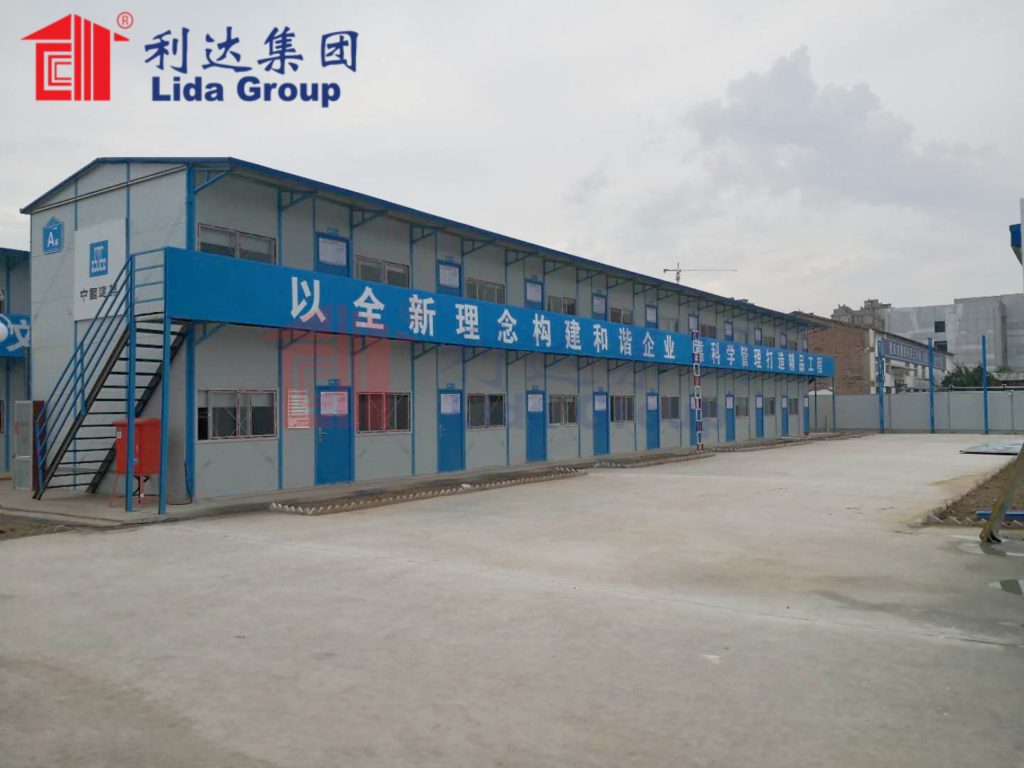
The first typical dilemma is high-cost slow construction. Standard traditional temporary buildings adopt complete on-site construction processes including foundation pouring, steel structure welding, wall masonry, and interior decoration. The complete construction cycle of a medium-scale oilfield camp lasts 30 to 45 days, requiring a large team of professional construction workers, a full set of mechanical equipment, and massive building material reserves. In remote oilfield areas, the long-distance transportation of materials and equipment further increases logistics costs, and prolonged on-site labor arrangements greatly raise labor expenditures. Although these traditional buildings have relatively stable quality, their ultra-slow deployment speed delays project startup progress, and high upfront investment significantly compresses project profit margins.
The second dilemma is low-quality fast construction with hidden long-term costs. To pursue rapid camp deployment and save upfront costs, many energy projects choose simple canvas tents and low-grade color steel temporary houses. These facilities can be set up in a short time with low initial investment, but they have extremely poor comprehensive performance. Low-grade materials have weak fire resistance, weather resistance, and structural stability, prone to aging, damage, and safety hazards in harsh oilfield environments. Frequent daily maintenance, regular component replacement, and periodic overall renovation generate continuous hidden costs. In addition, poor living conditions lead to high worker turnover, increasing enterprise recruitment and training costs. From a full-cycle perspective, this seemingly affordable construction mode actually brings higher comprehensive operational expenses.
Thirdly, traditional construction lacks flexible cost control and scalable efficiency. Traditional dormitory projects adopt fixed one-time construction modes, with rigid investment scales and unadjustable construction areas. When the oilfield workforce expands in peak construction periods or shrinks in operation and maintenance stages, fixed buildings cannot dynamically match personnel changes, resulting in accommodation shortages or resource idle waste. The disposable construction mode also means repeated investment in new dormitory construction for subsequent migrated projects, forming continuous ineffective capital consumption and seriously affecting the long-term cost control of multi-project layout enterprises.
3. Lida Group’s Core Solution: Integrated Balance of Speed and Affordability
Targeting the speed-cost imbalance pain point of traditional oilfield dormitory construction, Lida Group abandons the single development thinking of traditional building modes and builds a comprehensive solution integrating ultra-fast deployment and full-cycle cost optimization. Centering on modular industrialized construction technology, the solution realizes qualitative breakthroughs in construction efficiency on the premise of reducing comprehensive project costs, achieving the dual goals of rapid camp delivery and affordable investment.
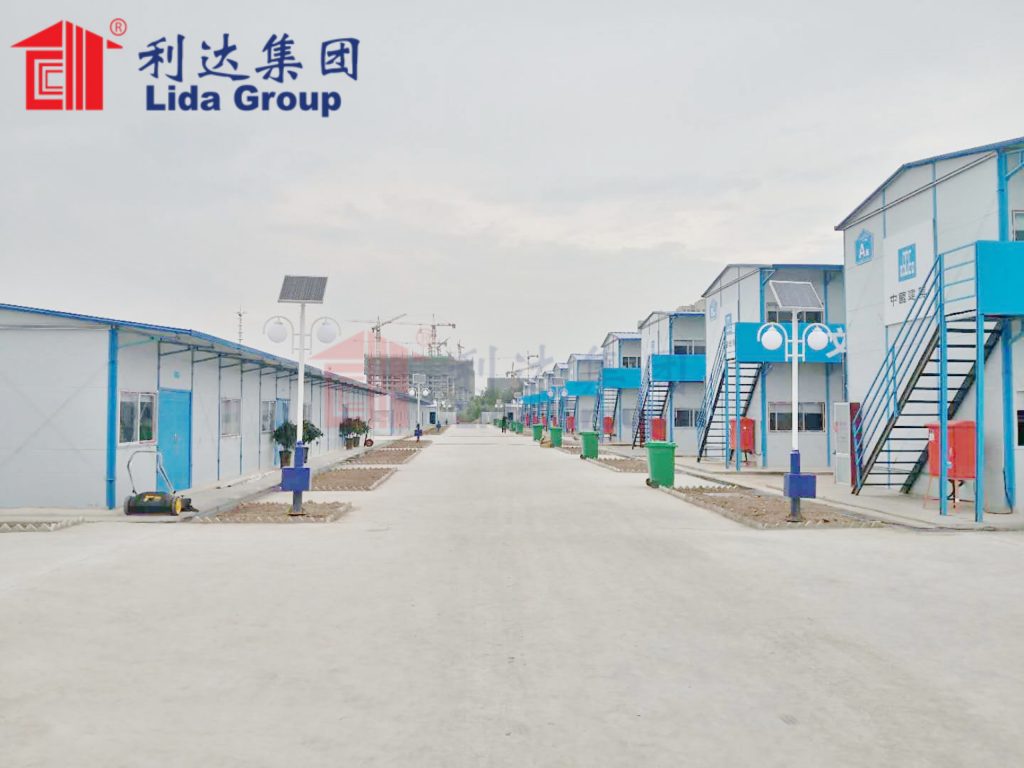
Different from the extensive on-site operation mode of traditional buildings, Lida Group’s oilfield dormitory solution adopts a “factory prefabrication + on-site rapid assembly” industrialized construction system. More than 98% of building components including steel frames, composite sandwich panels, doors and windows, water and electricity pipelines, and thermal insulation structures are completed in standardized intelligent factories. Automated production realizes precise material cutting and efficient component forming, greatly reducing material waste and manual errors in traditional on-site construction. All prefabricated components are designed with unified modular specifications and universal interfaces, supporting flexible combination and scalable layout, which lays a foundation for efficient construction and flexible cost control.
In terms of on-site construction optimization, Lida Group innovates a fully bolted tool-free assembly mode, completely eliminating complex processes such as on-site welding, concrete pouring, and secondary decoration. The on-site construction cycle is compressed to the greatest extent, while the dependence on professional labor, mechanical equipment, and auxiliary building materials is sharply reduced. This not only ensures ultra-rapid camp deployment but also greatly cuts on-site construction costs. Meanwhile, the detachable and reusable modular design realizes cross-project and cross-regional turnover of dormitory facilities, fundamentally solving the disposable investment waste of traditional buildings and reducing the long-term comprehensive cost of oilfield camp construction.
4. Technical Mechanisms of Lida Group’s Ultra-Fast Construction Advantage
The outstanding speed advantage of Lida Group’s oilfield dormitory construction comes from systematic technical innovation and process optimization, which completely subverts the slow construction logic of traditional temporary buildings and provides efficient preconditions for cost reduction and efficiency improvement.
4.1 High-Precision Factory Prefabrication Shortens Overall Cycle
Traditional oilfield dormitory construction is restricted by weather, site conditions, and human factors, leading to uncontrollable progress and frequent delays. Lida Group transfers all core production links to indoor standardized factories, realizing uninterrupted all-weather component production. Automated production lines ensure efficient and high-quality completion of all building modules, avoiding construction suspension and progress delays caused by outdoor extreme weather such as sandstorms, rainfall, and low temperature. The highly integrated prefabrication mode synchronizes factory component production and oilfield site preparation work, realizing parallel operation of multiple processes and greatly compressing the overall project cycle. A complete oilfield camp that traditionally takes more than 30 days to build can be fully completed and put into use within 5 to 7 days, improving construction efficiency by over 80%.
4.2 Simplified On-Site Assembly Reduces Operational Links
Lida Group’s modular dormitory components are all finished products with reserved assembly interfaces, requiring no secondary processing on site. The on-site construction only includes simple alignment docking and bolt fixing, with extremely low technical threshold and operational difficulty. Ordinary untrained workers can complete assembly work with conventional hand tools, eliminating the need for high-cost professional construction teams and large hoisting equipment. The streamlined construction process avoids redundant operational links and rework risks in traditional construction, further accelerating project delivery speed while stabilizing construction quality.
4.3 Foundation-Free Installation Adapts to Rapid Site Layout
Most remote oilfields have complex terrain such as sandy land, gravel ground, and uneven slopes, requiring long-term site leveling and foundation pouring for traditional dormitory construction. Lida Group’s lightweight high-strength steel frame structure is equipped with adjustable support feet, which can be directly installed on various complex terrains without foundation treatment. This innovative installation mode saves nearly 90% of site preparation time, enables rapid large-scale layout of dormitories in remote oilfield working areas, and perfectly matches the urgent rapid deployment needs of oil and gas projects.

5. Multi-Dimensional Affordability: Full-Cycle Cost Optimization Mechanism
While ensuring ultra-fast construction speed, Lida Group’s modular dormitory solution realizes comprehensive cost reduction from upfront investment, on-site construction, daily operation, and long-term reuse, forming a full-cycle affordable system that traditional buildings cannot match. Data shows that Lida’s modular solutions cut upfront project costs by 35% and reduce five-year operating expenses by 40% compared with traditional oilfield construction modes, delivering substantial economic benefits for energy enterprises.
5.1 Low Upfront Investment Reduces Initial Budget Pressure
Lida Group’s factory centralized production mode greatly reduces unit component costs through scale effect. Automated production minimizes material waste, avoiding the serious material loss of traditional on-site cutting and processing. The simplified on-site assembly mode eliminates expensive mechanical equipment rental, professional labor costs, and auxiliary building material investment. Meanwhile, the foundation-free installation design saves foundation pouring and site leveling expenses. Compared with traditional temporary buildings, Lida’s modular dormitories significantly reduce upfront capital investment, effectively easing the initial budget pressure of oilfield projects.
5.2 Low Maintenance Cost Optimizes Operational Expenses
Lida Group’s oilfield-specific dormitories adopt high-strength hot-dip galvanized steel frames and weather-resistant composite sandwich panels, with excellent anti-corrosion, anti-aging, and extreme weather resistance. The standardized integrated structure has stable performance and low failure rate, avoiding frequent panel replacement, structural maintenance, and waterproof renovation required for traditional temporary buildings. In long-term field operation, the daily maintenance cost of Lida’s modular dormitories is reduced by nearly 50%, and the ultra-long service life of more than 15 years avoids frequent overall reconstruction investment, greatly optimizing the daily operational expenditure of oilfield camps.
5.3 Reusable Design Eliminates Repeated Investment Waste
The fully detachable modular structure is the core source of long-term cost advantages. Different from traditional disposable temporary buildings that can only be demolished and discarded after project completion, Lida Group’s dormitory modules support zero-damage disassembly, flat-pack transportation, and cross-project secondary assembly. The reusable components maintain 55% to 70% residual value after five years of use, realizing resource turnover and repeated utilization. For energy enterprises with multi-region continuous project layout, this design completely eliminates repeated dormitory construction investment, saving more than 60% of long-term comprehensive camp construction costs.
5.4 Flexible Scale Matching Avoids Resource Idle Waste
Lida Group’s modular dormitories support free combination and flexible scale adjustment. Enterprises can reasonably configure the number of dormitory units according to the actual number of on-site workers, realizing precise matching of accommodation resources and personnel scale. In peak construction periods, additional modules can be quickly assembled to expand camp capacity; in low peak operation stages, redundant modules can be disassembled and stored for subsequent projects. This flexible dynamic adjustment avoids resource shortage in peak periods and equipment idle waste in off-peak periods, further improving project cost control accuracy.
6. No Compromise on Core Performance While Balancing Speed and Cost
Many low-cost rapid construction solutions in the market sacrifice building safety, durability, and living comfort to control costs and speed up progress. In contrast, Lida Group realizes the dual advantages of speed and affordability without any performance compromise, ensuring that the dormitory fully meets the high-standard operational requirements of high-risk oil and gas field scenarios.
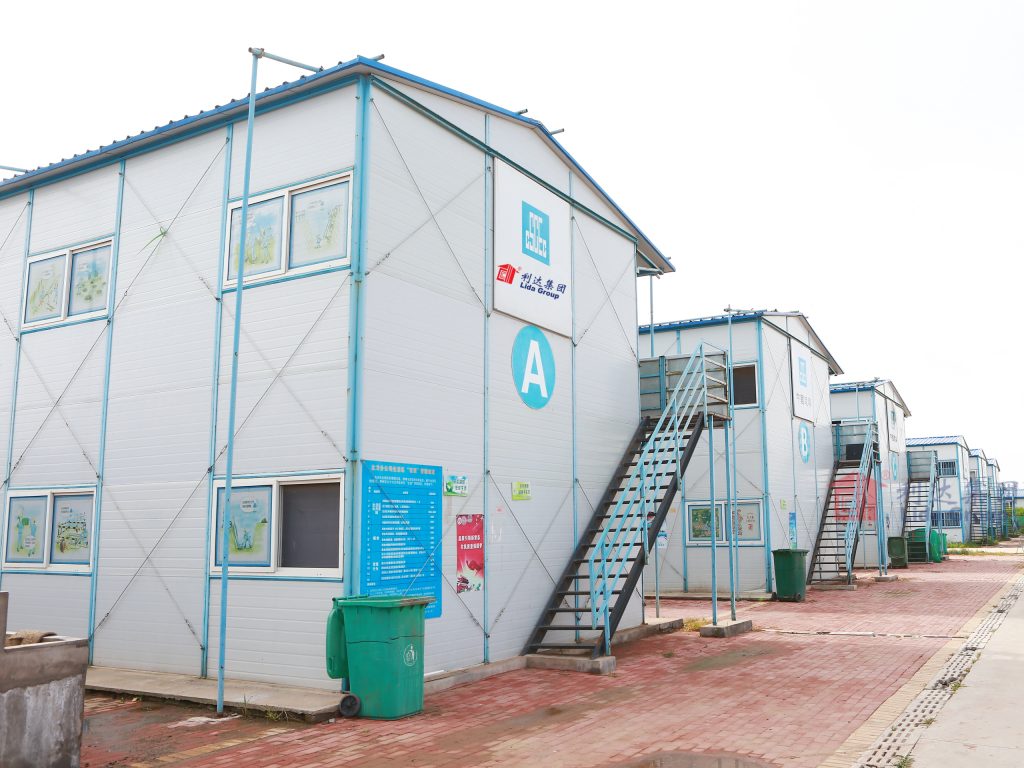
In terms of safety performance, all building materials of Lida’s modular dormitories reach A1-level non-combustible fire protection grade, which is far higher than the flammable materials used in ordinary low-cost temporary buildings. The factory pre-buried explosion-proof circuit system is equipped with complete leakage protection and overload power-off devices, matching international oilfield safety specifications. The overall reinforced steel frame structure can resist level 12 strong winds and magnitude 8 earthquakes, effectively coping with extreme weather and complex working conditions of oilfields.
In terms of environmental adaptability, the multi-layer anti-corrosion and weather-resistant coating technology enables the dormitory to resist desert high-temperature aging, coastal salt spray corrosion, and plateau low-temperature frost damage. The high-density thermal insulation sandwich structure realizes all-season constant temperature adjustment, avoiding the defects of poor thermal insulation and easy aging of low-cost simple buildings. Excellent environmental durability ensures long-term stable operation of the dormitory and avoids additional renovation costs caused by performance degradation.
In terms of living comfort, Lida Group integrates humanized design into standardized modules, pre-configuring sound insulation, ventilation, lighting, and complete supporting living facilities. The quiet, dry, and comfortable indoor living environment effectively improves worker satisfaction and reduces personnel turnover, indirectly saving enterprise recruitment and training costs and realizing deeper full-cycle value optimization.
7. Practical Industrial Value of Dual-Advantage Construction Mode
Lida Group’s innovative construction mode, which balances ultra-fast deployment and high affordability, brings multi-dimensional practical value to the upgrading of oil and gas field dormitory construction standards and the high-quality development of energy projects.
First, it improves project time-benefit balance. The rapid camp deployment enables early worker settlement and project startup, creating valuable time benefits for oil and gas resource development. Meanwhile, controllable low-cost investment avoids budget overruns, realizing the dual improvement of project efficiency and economic benefits.
Second, it promotes standardized and refined project management. The standardized modular construction mode unifies the quality and specification of oilfield dormitory facilities, facilitating enterprises to implement unified safety management, personnel arrangement, and daily operation specifications. It eliminates the safety hazards and management difficulties caused by uneven quality of traditional makeshift buildings, improving the standardized management level of oilfield sites.
Third, it conforms to green and sustainable development trends. Factory prefabrication produces no on-site construction waste and dust pollution, and all steel and panel materials can be 100% recycled. This low-carbon and environmentally friendly construction mode meets the ESG assessment requirements of modern energy enterprises, realizing coordinated development of economic benefits and environmental benefits.
Fourth, it enhances the market competitiveness of energy projects. In the increasingly competitive global energy market, efficient cost control and rapid project response capability have become core competitive advantages. Lida Group’s dual-advantage dormitory solution helps enterprises reduce comprehensive project costs, shorten construction cycles, and improve overall project revenue levels.
8. Conclusion
The construction of oil and gas field worker dormitories is a key link in the preliminary preparation of energy projects, and the balance of construction speed and economic affordability has always been a core problem restricting the high-efficiency and low-cost operation of the industry. Traditional construction modes cannot reconcile rapid deployment and cost control, resulting in widespread problems such as slow project progress, high comprehensive costs, uneven facility quality, and serious resource waste. Lida Group’s innovative modular temporary building system completely breaks the industry’s speed-cost contradiction through industrialized prefabrication technology, simplified rapid assembly process, and reusable full-cycle optimization design.
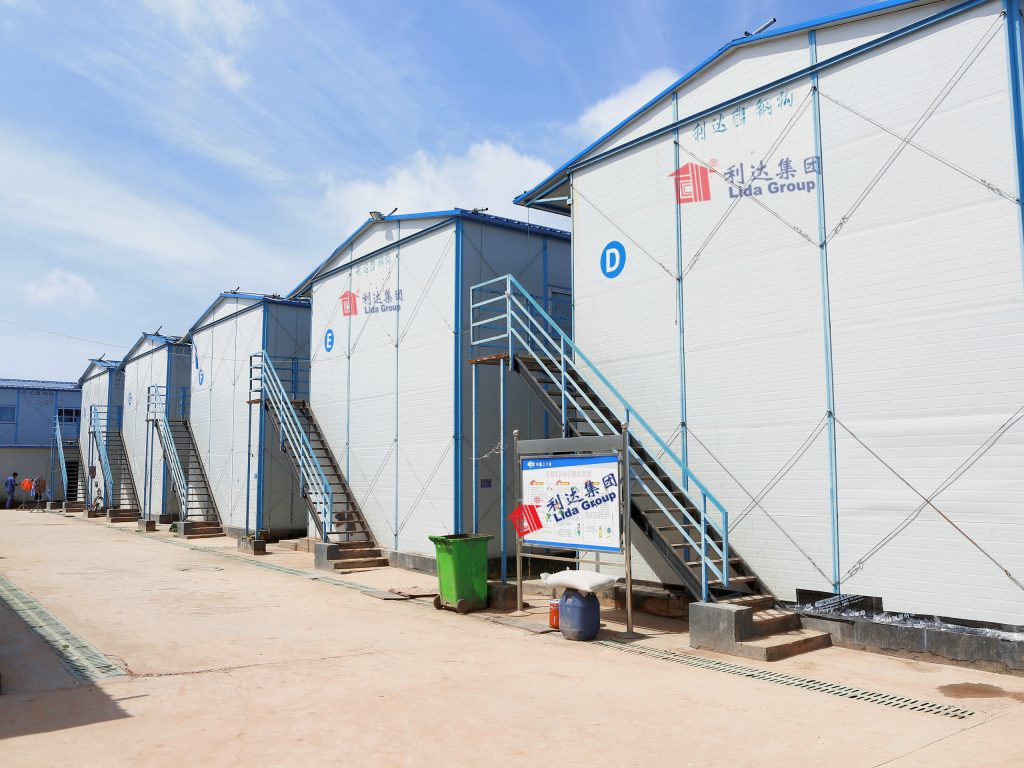
This advanced solution realizes ultra-fast camp deployment within one week, greatly accelerating the startup progress of oil and gas field projects. At the same time, it reduces upfront construction investment, daily maintenance costs, and repeated project investment from multiple dimensions, delivering outstanding affordable advantages. More importantly, Lida Group achieves dual optimization of speed and cost without compromising safety, durability, and living comfort, ensuring that the dormitory facilities fully adapt to the high-risk and harsh operational characteristics of oil and gas fields. The flexible, green, and standardized construction mode provides a new high-cost-performance development path for global oilfield camp construction.
With the continuous intensification of global energy market competition and the continuous improvement of engineering refined management standards, the demand for efficient, low-cost, and high-quality temporary supporting facilities will continue to grow. In the future, Lida Group will further optimize modular building technology, continuously improve the cost-performance ratio and scenario adaptability of products, and provide more balanced, reliable, and economical construction solutions for global oil and gas field worker dormitory projects, empowering the efficient, low-cost, and sustainable development of the global energy industry.
Related news
-
Fast Deployment of Oil Gas Field Worker Dormitory with Easy Assembly Sandwich Panels
2026-06-12 16:55:02
-
Temporary Building from Lida Group Transforms Oil Gas Field Worker Dormitory Projects
2026-06-11 16:48:27
-
Lida Group’s Easy Assembly Sandwich Panel House Ideal for Remote Oil Gas Field Camps
2026-06-11 16:39:41
contact us
- Tel: +86-532-88966982
- Whatsapp: +86-13793209022
- E-mail: sales@lidajituan.com
