



Lida Group’s Easy Assembly Sandwich Panel House Ideal for Remote Oil Gas Field Camps
2026-Jun-11 16:39:41
By Admin
1. Introduction
Global oil and gas exploration, drilling, and pipeline construction projects are predominantly deployed in remote, isolated, and geographically harsh regions, including barren Gobi deserts, arid wilderness basins, humid coastal offshore zones, and high-altitude freezing plateaus. These remote working areas are far away from urban residential clusters and complete public infrastructure, making on-site temporary worker camps the only reliable living and logistical support for frontline engineering teams. Unlike ordinary construction camps, remote oil and gas field camps face extremely stringent operational challenges: inconvenient transportation and scarce local construction resources, extreme and volatile climatic conditions, high flammable and explosive industrial risks, and frequent project migration and personnel scale adjustment. All these characteristics put forward higher comprehensive requirements for temporary residential buildings in terms of assembly efficiency, terrain adaptability, environmental durability, operational safety, and reusable performance.
For decades, remote oil and gas field projects have relied on traditional temporary accommodation solutions such as simple canvas tents, crude wooden houses, and on-site welded color steel buildings. These conventional facilities have long been unable to adapt to the harsh operational conditions of remote energy camps, exposing prominent defects including complicated on-site construction, poor extreme weather resistance, low fire safety, inferior living comfort, and non-reusability. The backward accommodation mode not only delays camp deployment and project startup progress but also causes frequent safety hazards and high personnel turnover, restricting the efficient and stable operation of oil and gas engineering projects. To solve the long-standing pain points of remote oilfield camp construction, Lida Group, a professional global manufacturer of modular prefabricated buildings, has optimized and upgraded sandwich panel house products targeting the exclusive characteristics of remote oil and gas field scenarios. The newly upgraded easy assembly sandwich panel house perfectly adapts to the complex terrain, harsh climate, and high-risk industrial environment of remote oil and gas camps, becoming the most ideal temporary housing solution for modern remote energy projects. This article comprehensively analyzes the housing difficulties of remote oil and gas field camps, the core advantages of Lida Group’s easy assembly sandwich panel houses, scenario-based performance optimization, humanized design, and practical project application value, providing in-depth interpretation of the efficient and high-quality housing mode for remote oilfield engineering teams.
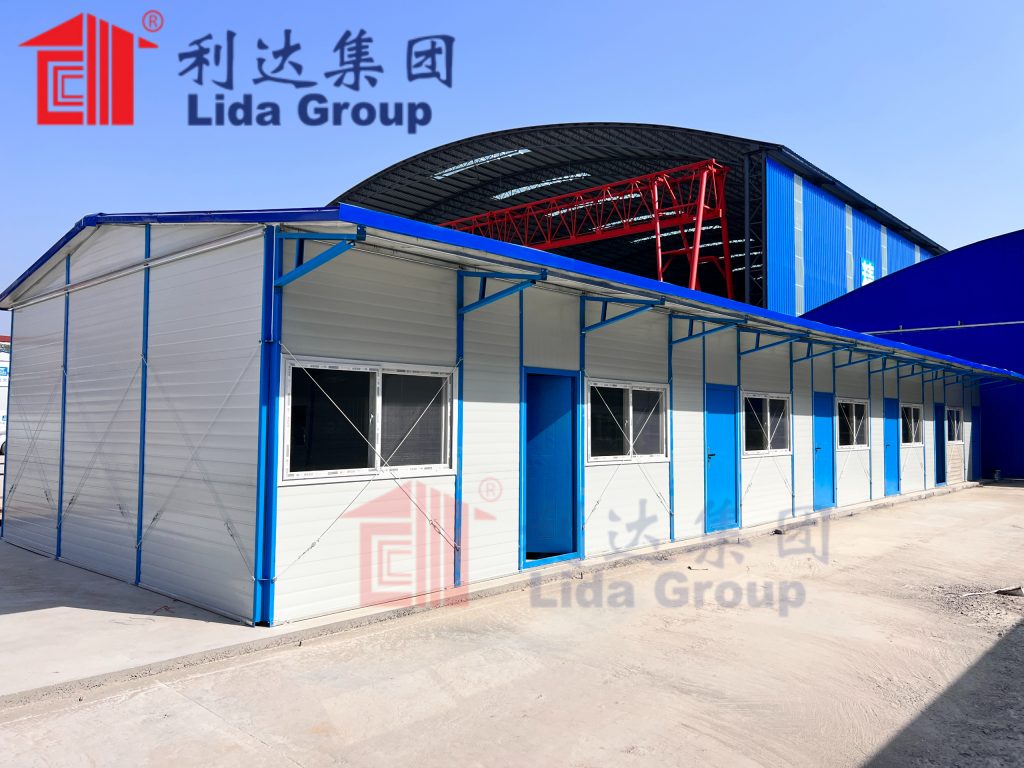
2. Unique Housing Dilemmas of Remote Oil Gas Field Camps
Remote oil and gas field camps have completely different operational environments and construction conditions from urban and suburban construction sites, forming a series of exclusive housing dilemmas that traditional temporary buildings cannot solve, which severely restrict the standardized construction and stable operation of energy projects.
First, harsh site conditions lead to difficult and slow camp construction. Most remote oilfields are located in road-inconvenient wilderness areas with rugged terrain, loose sandy soil, and lack of water and electricity supporting conditions. Traditional temporary buildings require foundation pouring, large-scale site leveling, and a large number of building material inputs and professional construction teams. However, remote oilfields have high material transportation costs, scarce local labor resources, and no complete construction supporting conditions, resulting in extremely low efficiency of traditional camp construction and often taking more than one month to complete simple dormitory layout.
Second, extreme climate causes rapid aging and damage of ordinary temporary buildings. Remote oil and gas producing areas feature typical extreme climates: desert oilfields suffer from year-round high temperature, intense ultraviolet radiation, and frequent sandstorms; coastal remote oil and gas bases are plagued by high humidity and salt spray corrosion; high-altitude oilfields face long-term ultra-low temperature freezing and strong wind weather. Traditional temporary houses with ordinary thermal insulation and enclosure materials are prone to wall cracking, water leakage, rust deformation, thermal insulation failure, and material aging after short-term use, requiring frequent maintenance and overall renovation, which greatly increases project operational costs.
Third, high-risk industrial environment brings severe safety hidden dangers. Oil and gas fields are typical flammable and explosive high-risk working areas, where any fire or electrical safety accident may cause huge personnel and property losses. Most traditional remote camp buildings adopt flammable thermal insulation core materials and irregular on-site wiring, failing to meet international oilfield fire protection and electrical safety standards. The simple structural stability also cannot resist extreme weather impacts, bringing long-term potential safety hazards to stationed workers.
Fourth, poor flexibility and high waste of resources. Remote oil and gas projects have strong mobility, and most exploration and drilling tasks are phased and regional. Traditional fixed temporary buildings cannot be disassembled and relocated, and can only be demolished and discarded after the completion of single-site projects, generating a large amount of construction waste and repeated construction investment. Meanwhile, the dynamic changes of oilfield workforce cannot be matched by fixed-scale traditional buildings, resulting in resource shortage in peak construction periods and idle waste in low peak periods.
Fifth, crude living conditions lead to unstable workforce. Frontline oilfield workers need long-term stationed work in remote and monotonous environments. Traditional temporary dormitories have poor sound insulation, unbalanced indoor temperature, damp air, and incomplete supporting facilities. The harsh living environment seriously affects workers’ rest quality and physical and mental health, leading to high personnel turnover rate and increasing recruitment and training costs for energy enterprises.
3. Core Structural Design of Lida Group’s Easy Assembly Sandwich Panel House
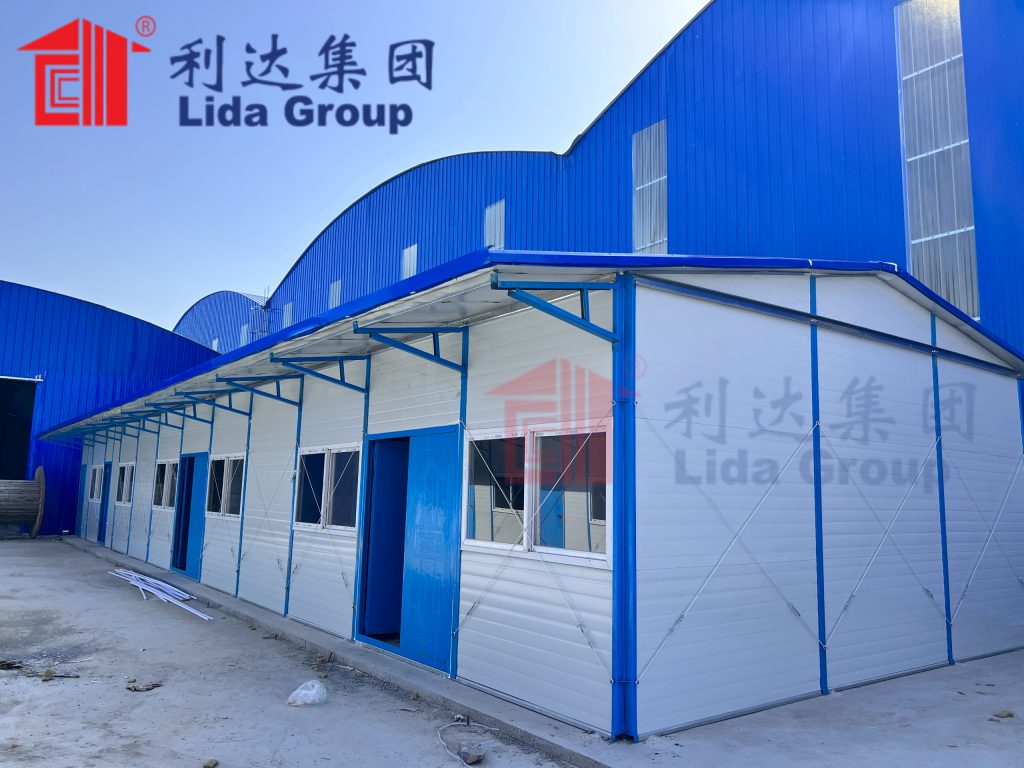
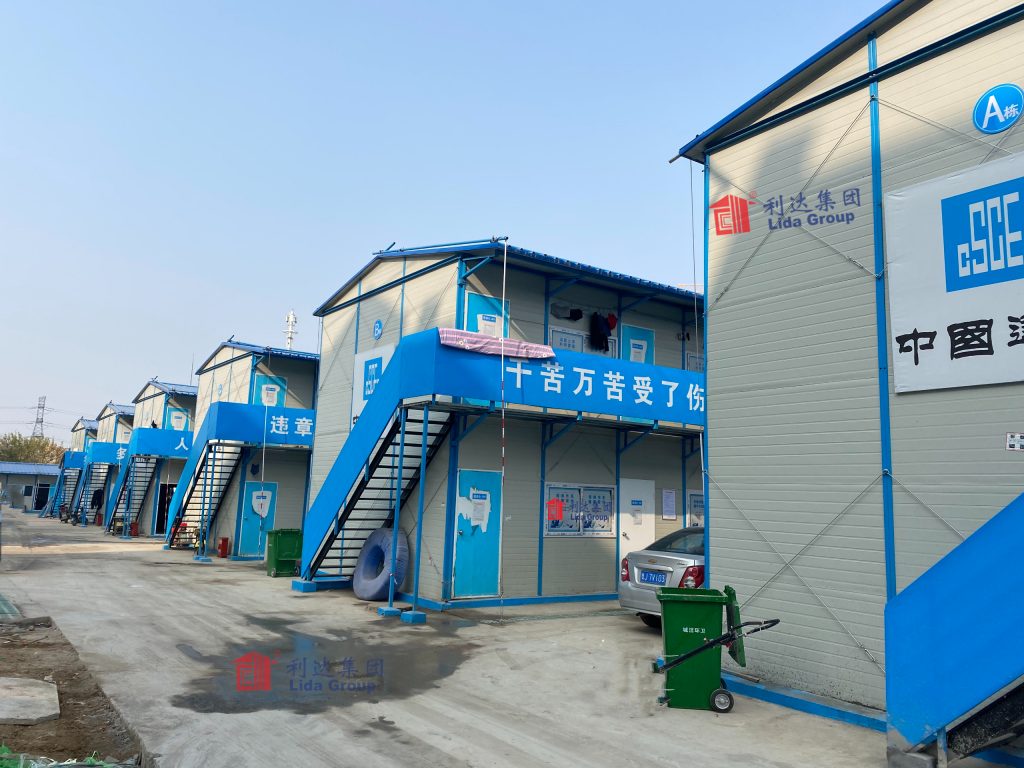
Aiming at the exclusive dilemmas of remote oil and gas field camps, Lida Group has carried out targeted structural innovation and performance optimization on the basis of traditional sandwich panel houses, launching an easy assembly modular building specially customized for remote energy scenarios. The product abandons the cumbersome on-site wet construction mode of traditional buildings, and realizes integrated factory prefabrication and ultra-fast dry assembly, perfectly matching the poor construction conditions and flexible operational needs of remote oilfields.
The house adopts an optimized lightweight high-strength steel frame + high-performance composite sandwich panel integrated structure. The main frame is made of hot-dip galvanized steel profiles with high structural toughness and anti-corrosion performance, which can maintain stable structural strength after multiple disassembly, transportation, and assembly. The wall, roof, and ceiling components adopt upgraded three-layer composite sandwich panels, with double-layer weather-resistant color steel plates on both sides and high-density A1-level flame-retardant core materials in the middle. The integrated pressing process makes the panel have excellent thermal insulation, sound insulation, fire resistance, and anti-aging performance, laying a solid foundation for long-term stable use in remote harsh environments.
The most innovative design of the product is the standardized quick splicing structure. All steel frames and sandwich panels are produced according to unified modular specifications, with reserved precise bolt fixing holes and docking interfaces. The whole house cancels complex welding, cutting, and concrete pouring processes, and adopts a fully bolted assembly mode. Ordinary workers can complete the assembly operation with conventional simple tools, without professional construction technology and large mechanical equipment, greatly reducing the construction threshold suitable for remote oilfield resource shortages.
4. Ultra-Easy Assembly Advantage Adapted to Remote Oilfield Construction Conditions
The core competitiveness of Lida Group’s sandwich panel house lies in its industry-leading easy assembly performance, which completely solves the problem of difficult and slow construction in remote oil and gas field camps and realizes rapid camp deployment in resource-scarce areas.
4.1 Tool-Free Rapid On-Site Assembly
Different from traditional temporary buildings that require multi-process professional construction, Lida Group’s customized sandwich panel house realizes tool-free simplified assembly for remote scenarios. All components are prefabricated and molded in the factory with accurate reserved interfaces, and the on-site construction process is simplified into simple alignment docking and bolt fixing. A team of two to three ordinary workers can complete the assembly, sealing treatment, and functional commissioning of a single standard dormitory unit within 3 hours, realizing same-day installation and same-day occupancy. For medium and large-scale remote oilfield camps accommodating 100 to 300 workers, the overall camp construction can be completed within 5 to 7 days, which is more than 80% higher than the construction efficiency of traditional buildings, perfectly solving the problem of slow camp construction in remote areas.
4.2 Foundation-Free Installation Adapts to Complex Terrain
Remote oilfields have complex and changeable terrain, including sandy land, gravel ground, uneven slopes, and wilderness flat land, which cannot meet the foundation pouring requirements of traditional buildings. Lida Group’s sandwich panel house adopts an optimized lightweight structural design with adjustable height support feet at the bottom, which can be directly installed on various complex unleveled terrains without concrete foundation pouring and large-scale site leveling. This innovative installation mode saves nearly 90% of site preparation time and completely adapts to the terrain limitations of remote oilfields, enabling rapid camp layout in any wilderness working area.
4.3 Low Resource Dependence Solves Remote Construction Shortages
Traditional remote camp construction requires a large amount of building materials, professional construction workers, and large hoisting equipment, which are extremely scarce in remote oilfield areas. Lida Group’s easy assembly sandwich panel house has extremely low dependence on on-site resources. All building components are prefabricated into finished products in the factory and transported to the site in a flat-pack integrated manner, requiring no additional auxiliary building materials. The assembly work does not need professional construction skills and large mechanical equipment, effectively solving the problems of labor shortage, material scarcity, and equipment insufficiency in remote oilfield construction, and ensuring stable and efficient camp construction progress.
4.4 Detachable Reusable Design for Mobile Oilfield Projects
In view of the mobile and phased characteristics of remote oil and gas exploration projects, Lida Group’s sandwich panel house adopts a fully detachable modular structure. After the completion of a single-site oilfield project, the house components can be disassembled without damage, flat-packed and transported to new remote working sites for secondary assembly and use. The high-strength steel frame and composite panels have stable physical properties, with no structural performance attenuation after multiple disassembly and relocation cycles. The reusable design avoids disposable construction waste and repeated investment, greatly reducing the long-term comprehensive construction cost of mobile remote oilfield projects.
5. Extreme Environment Adaptability for Harsh Remote Oilfield Scenarios
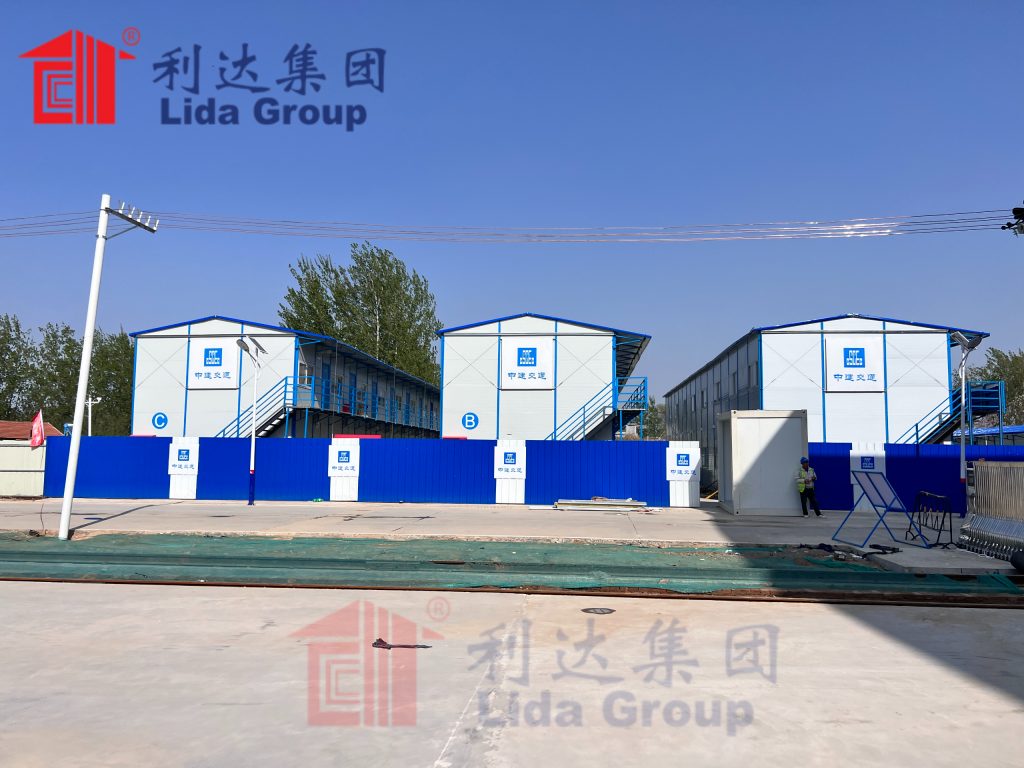
On the basis of easy assembly, Lida Group has carried out targeted weather resistance and durability upgrades for the extreme climatic conditions of remote oil and gas fields, ensuring that the sandwich panel house can operate stably for a long time in high-temperature deserts, humid coasts, and freezing plateaus.
5.1 All-Season Constant Temperature Thermal Insulation Performance
The high-density composite thermal insulation core material forms an efficient closed temperature control barrier, which can effectively isolate external extreme temperature changes. In remote desert oilfields with long-term high temperature above 50 degrees Celsius, the panel can block solar ultraviolet radiation and heat conduction, reducing indoor temperature by 8 to 10 degrees Celsius to avoid stuffy heat accumulation. In high-altitude remote oilfields with ultra-low temperature in winter, the thermal insulation structure locks indoor heat to prevent cold air penetration, ensuring indoor warmth and comfort. The all-season constant temperature effect solves the problem of extreme temperature discomfort in remote oilfield dormitories and reduces the energy consumption of heating and cooling equipment.
5.2 Professional Anti-Corrosion and Weather Resistance
Aiming at the diversified harsh environments of remote oilfields, the outer plate of the sandwich panel adopts multi-layer weather-resistant coating and hot-dip galvanizing anti-corrosion technology. It can effectively resist salt spray corrosion in remote coastal oilfields, wind and sand abrasion in desert oilfields, and low-temperature frost damage in plateau oilfields, avoiding panel fading, rusting, and aging. The fully sealed integral splicing structure eliminates air and water leakage gaps, providing excellent waterproof, dustproof, and windproof capabilities. The overall reinforced steel frame structure can resist level 12 strong winds and magnitude 8 earthquakes, adapting to extreme weather changes in remote oilfield areas all year round.
5.3 Long Service Life and Low Maintenance Performance
Benefiting from standardized factory integrated production and high-quality material selection, Lida Group’s remote oilfield-specific sandwich panel house has ultra-stable structural performance, with a comprehensive service life of more than 15 years. Compared with traditional temporary buildings that require annual maintenance and component replacement, this product has a low failure rate in long-term outdoor operation. The anti-aging and wear-resistant structure avoids frequent renovation and maintenance work, greatly reducing the daily operational and maintenance costs of remote oilfield camps with inconvenient transportation and difficult maintenance.
6. Oilfield-Grade Safety Performance for High-Risk Remote Working Environments
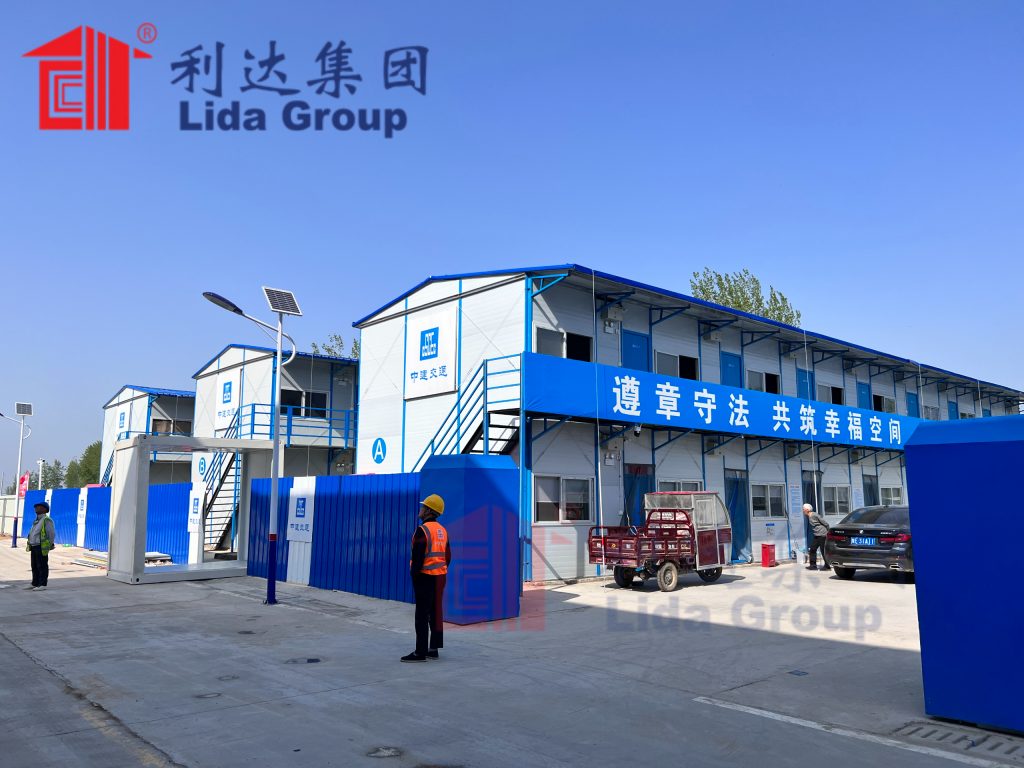
Remote oil and gas fields belong to high-risk flammable and explosive working areas, and the safety performance of dormitory buildings is related to the personal safety of frontline workers and project property security. Lida Group’s sandwich panel house fully meets oilfield industrial safety standards through targeted safety optimization design.
In terms of fire safety, all thermal insulation and enclosure materials reach A1-level non-combustible fire protection grade, which do not burn or produce toxic flue gas when encountering open fire or high temperature, effectively preventing fire spread in oilfield high-risk environments. The factory pre-buried explosion-proof circuit system is equipped with professional leakage protection, overload power-off, and short-circuit prevention devices, eliminating electrical spark safety hazards. Matched with standardized smoke alarm systems, fire extinguishing facilities, and unobstructed emergency evacuation passages, the whole house fully complies with international oilfield safety specifications and NFPA industrial standards.
In terms of structural safety, the integrated steel frame and sandwich panel structure have high overall rigidity and stability. The reinforced connection design avoids structural loosening and component falling off caused by strong wind vibration and terrain slight changes, ensuring long-term residential safety. The fully enclosed structural design also prevents external dust, sand, and harmful gases from entering the room, creating a safe and closed living space for workers in remote open oilfield environments.
7. Humanized Living Design Improves Remote Worker Welfare
To solve the problem of poor living conditions in remote oilfield camps, Lida Group integrates humanized living design into the prefabrication process of sandwich panel houses, creating residential-grade comfortable living conditions for long-term stationed frontline workers.
In terms of quiet rest environment, the multi-layer composite sandwich structure has excellent sound insulation and noise reduction performance, which can effectively isolate outdoor oilfield equipment operation noise, wind and sand noise, and construction noise. The tight door and window sealing design eliminates sound leakage, reducing indoor noise by more than 40 decibels and providing workers with a quiet rest space after high-intensity work.
In terms of indoor health and ventilation, the house is pre-designed with scientific cross-ventilation structures and large-size hollow glass windows, ensuring sufficient natural light and fresh air circulation indoors. It effectively eliminates indoor dampness, mildew, and peculiar smell caused by long-term closed residence in remote humid environments, creating a dry, bright, and healthy living space.
In terms of supporting facilities, the finished sandwich panel house is pre-installed with complete energy-saving lighting systems, independent safe power distribution systems, waterproof sanitary facilities, and standardized indoor partitions. It can be directly occupied after assembly without secondary decoration, meeting the daily rest, study, and living needs of workers. The reasonable space layout and complete supporting functions completely change the crude living state of traditional remote oilfield camps, improve workers’ sense of belonging and job satisfaction, and effectively reduce personnel turnover rate.
8. Comprehensive Application Value in Remote Oil Gas Field Projects
Lida Group’s easy assembly sandwich panel house has become the preferred temporary housing solution for remote oil and gas field camps due to its unique assembly advantages, extreme environmental adaptability, industrial safety, and humanized comfort, bringing multi-dimensional practical value for energy enterprises.
In terms of project efficiency value, the ultra-fast assembly mode solves the construction bottleneck of remote camps, greatly shortens the camp deployment cycle, realizes rapid worker settlement and early project startup, and effectively improves the overall operational efficiency of remote oil and gas engineering.
In terms of economic cost value, the reusable modular design avoids repeated construction investment of remote mobile projects, saving more than 60% of long-term camp construction costs. The low maintenance and long-life performance reduce daily operational expenses, realizing low-cost and high-efficiency full-cycle project operation.
In terms of safety management value, the oilfield-grade fire protection and electrical safety design eliminates potential safety hazards of remote camps, standardizes the construction of remote oilfield living areas, and helps enterprises pass industrial safety compliance assessments smoothly.
In terms of team management value, the comfortable and safe living environment stabilizes the on-site workforce, reduces personnel turnover and recruitment training costs, and provides solid talent guarantee for the continuous progress of remote oilfield projects.
In terms of green development value, the factory prefabrication mode produces no on-site construction waste and dust pollution. All steel and panel materials can be 100% recycled, conforming to the green low-carbon development and ESG assessment requirements of modern global energy projects.
9. Conclusion
Remote oil and gas field camp construction has always been a key and difficult point in energy engineering supporting construction, restricted by harsh terrain, extreme climate, scarce construction resources, and high industrial safety standards. Traditional temporary housing solutions are difficult to adapt to the special operational needs of remote oilfields due to slow assembly, poor durability, insufficient safety, and low reusability, which restrict the efficient development of remote energy exploration projects. Lida Group’s easy assembly sandwich panel house perfectly targets the core pain points of remote oilfield camp housing, realizing comprehensive breakthroughs in construction efficiency, environmental adaptability, industrial safety, and living comfort.
With the innovative modular quick assembly structure, the product completely adapts to the resource shortage and complex terrain of remote oilfields, realizing rapid and low-threshold camp deployment. The upgraded extreme weather resistance and oilfield-grade safety performance ensure long-term stable and safe operation of the dormitory in harsh high-risk remote environments. The humanized living design effectively improves the welfare level of frontline workers, stabilizes the on-site workforce, and solves the management problems caused by poor living conditions in remote camps. Meanwhile, the reusable and green low-carbon characteristics greatly optimize the full-cycle economic benefits of remote mobile oilfield projects.
As global oil and gas resource development continues to expand towards more remote and harsh regions, the demand for efficient, safe, and adaptable temporary housing solutions for remote camps will continue to grow. Lida Group’s easy assembly sandwich panel house has become the ideal standard configuration for remote oil and gas field camps with its superior comprehensive performance. In the future, Lida Group will continue to optimize product customization performance, further upgrade intelligent configuration and energy-saving technology, and provide more high-quality, efficient, and reliable temporary housing support for global remote oil and gas energy projects, empowering the safe, efficient, and sustainable development of the global energy industry.
Related news
-
Oil Gas Field Worker Dormitory Completed Quickly Using Temporary Building Technology
2026-06-11 16:25:58
-
Lida Group Launches Easy Assembly Sandwich Panel House for Oil Gas Field Housing
2026-06-11 16:19:09
-
Temporary Building Solutions by Lida Group for Rapid Oil Gas Field Worker Dormitory
2026-06-10 17:17:26
contact us
- Tel: +86-532-88966982
- Whatsapp: +86-13793209022
- E-mail: sales@lidajituan.com
