



Temporary Building Solutions by Lida Group for Rapid Oil Gas Field Worker Dormitory
2026-Jun-10 17:17:26
By Admin
1. Introduction
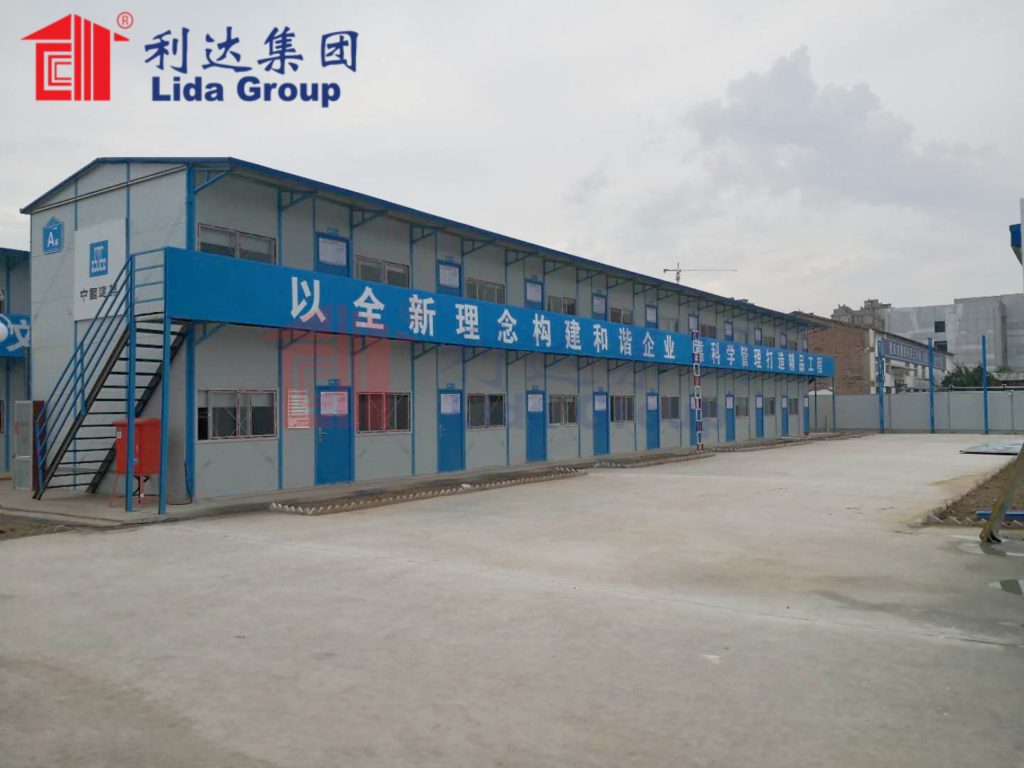
The global oil and gas industry is defined by dynamic project schedules, remote operational locations, and stringent on-site safety and accommodation requirements. Most petroleum exploration, drilling, pipeline construction, and field operation projects are deployed in isolated areas, including arid deserts, windy Gobi terrains, coastal offshore zones, and frigid high-altitude plateaus. These regions lack complete urban infrastructure, making temporary worker dormitories the most critical living and logistical support for frontline engineering teams. Unlike ordinary construction projects, oil and gas field operations feature sudden workforce expansion, tight construction timelines, and long-term stationed work, putting forward two core requirements for temporary accommodation facilities: ultra-rapid on-site deployment and stable, safe, and livable long-term performance.
Traditional temporary building modes for oilfield camps, including on-site welded color steel houses, masonry temporary rooms, and simple fabric tents, can no longer adapt to the fast-paced development of modern energy projects. These conventional solutions suffer from slow construction progress, inconsistent quality, poor safety performance, weak extreme weather adaptability, and low reusability, often delaying project commencement and increasing operational risks. As a global leading manufacturer and solution provider of customized modular temporary buildings, Lida Group has deeply explored the unique demands of the oil and gas industry and developed professional rapid temporary building solutions tailored exclusively for oilfield worker dormitories. Centering on rapid fabrication, fast assembly, industrial safety, and scenario customization, Lida’s solutions deliver standardized, high-quality dormitory facilities for global oil and gas projects, effectively solving the industry’s long-standing pain points of slow camp construction and substandard accommodation conditions. This article comprehensively discusses the industry demand background, traditional solution defects, core advantages of Lida’s temporary building systems, key technical designs, practical application values, and long-term industrial significance.
2. Unique and Urgent Accommodation Demands of Modern Oil and Gas Field Projects
Oil and gas engineering projects have distinct operational characteristics that differentiate their temporary accommodation needs from ordinary civil construction camps, forming strict and urgent requirements for temporary building solutions. These specialized demands constitute the core driving force for the iterative upgrading of oilfield dormitory construction modes.
First, extremely tight project schedules require zero-delay camp deployment. Oil and gas resource development projects are usually formulated according to national energy plans and market demand, with fixed delivery deadlines and no reserved buffer time for camp construction. Once the exploration and drilling permits are approved, engineering teams need to settle in and start construction immediately. Any delay in dormitory completion will directly postpone equipment entry, personnel deployment, and project commencement, causing substantial economic losses for energy enterprises.
Second, remote and harsh sites restrict traditional construction operations. Most oil and gas fields are located in road-inconvenient areas with scarce local construction resources, insufficient labor teams, and lack of commercial building materials. Traditional on-site pouring, welding, and masonry construction require massive material transportation and professional workers, which is difficult to implement in remote wilderness sites and further slows down camp construction progress.
Third, dynamic workforce changes require flexible scalable accommodation. Oilfield projects have obvious phased characteristics: the construction peak requires a large number of frontline workers, while the operation and maintenance stage only retains a small team. Fixed traditional buildings cannot adjust the accommodation scale dynamically, resulting in resource shortage in peak periods and idle waste in low peak periods.
Fourth, high-risk working environments demand ultra-high safety standards. Oil and gas fields are flammable, explosive, and corrosive high-risk sites, where temporary dormitories must meet strict fire prevention, explosion-proof, electrical safety, and wind resistance standards to eliminate potential safety hazards for on-site personnel and engineering assets.
3. Core Defects of Traditional Oilfield Temporary Dormitory Solutions
For a long time, global oil and gas projects have relied on traditional temporary buildings for worker accommodation, which have exposed prominent structural, functional, and economic defects in actual operation, restricting the efficient and safe development of energy projects.
The most prominent problem is low construction efficiency and long delivery cycle. Traditional color steel houses and masonry temporary buildings rely entirely on on-site manual construction, involving foundation excavation, concrete pouring, wall masonry, component welding, and secondary decoration. The whole construction cycle takes 20 to 40 days. In harsh weather such as desert sandstorms, plateau cold waves, and coastal rainy seasons, the construction progress will be further suspended, failing to meet the rapid settlement needs of oilfield teams.
Secondly, uneven construction quality and insufficient safety performance. On-site manual construction is greatly affected by worker experience and site environment, leading to inconsistent structural stability, poor sealing, and irregular circuit layout. Most traditional temporary buildings use flammable thermal insulation core materials that fail to meet A1-level fire protection standards, posing serious fire hazards in high-risk oilfield environments. Simple structures also struggle to resist strong winds, sandstorms, and slight geological vibrations, bringing hidden dangers to long-term residence.
Thirdly, poor environmental adaptability and short service life. Traditional temporary buildings lack professional anti-corrosion, thermal insulation, and weather-resistant treatment. In high-temperature desert oilfields, the interior is extremely stuffy and prone to material aging; in coastal salt spray areas, steel components rust rapidly; in alpine regions, the structure freezes and deforms easily. The average service life of traditional oilfield dormitories is only 2 to 4 years, requiring frequent maintenance and overall reconstruction.
Finally, poor reusability and high comprehensive costs. Most traditional oilfield temporary buildings adopt fixed welding and integrated pouring structures, which cannot be disassembled and relocated. After the completion of a single project, the facilities can only be demolished and discarded, generating massive construction waste and repeated investment. For energy enterprises with multi-region continuous project layout, the long-term comprehensive cost of traditional temporary buildings remains high.
4. Lida Group’s Systematic Rapid Temporary Building Solution Framework
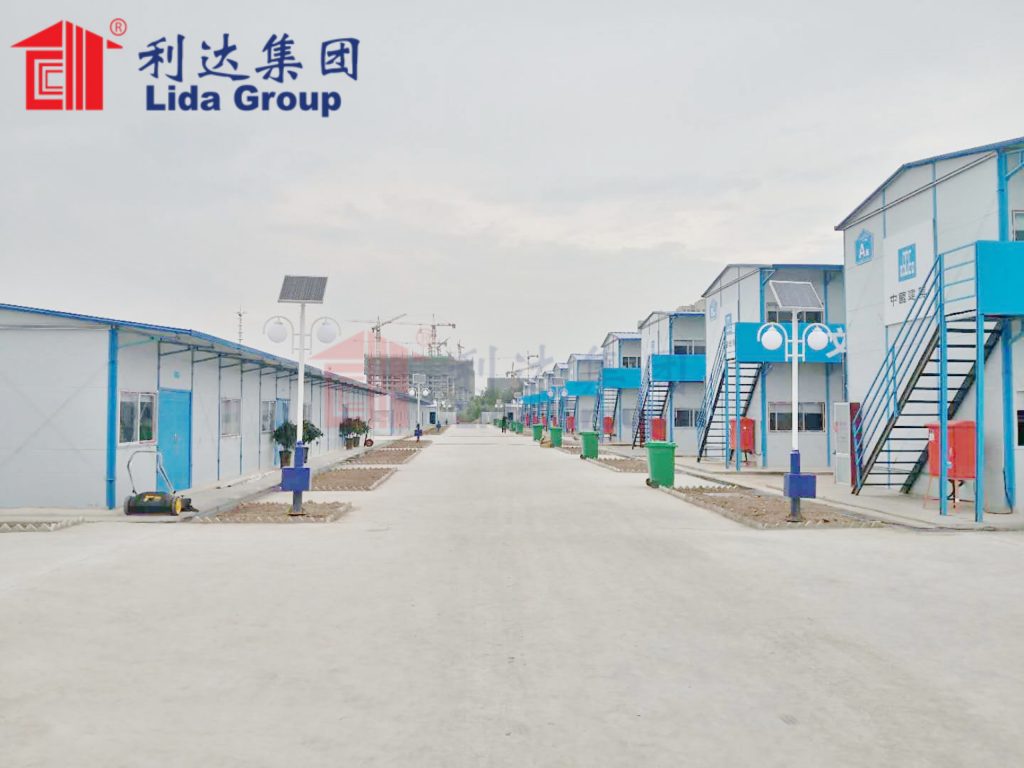
Targeting the personalized and urgent needs of oil and gas field projects, Lida Group has built a complete set of rapid temporary building systems exclusive to oilfield dormitories. Different from scattered single-product supply, Lida’s solution covers standardized product design, factory integrated prefabrication, ultra-fast on-site assembly, scenario-based customization, and full-life-cycle after-sales service, forming a one-stop rapid dormitory construction system that perfectly adapts to oilfield high-efficiency operation needs.
4.1 Standardized Modular Product System
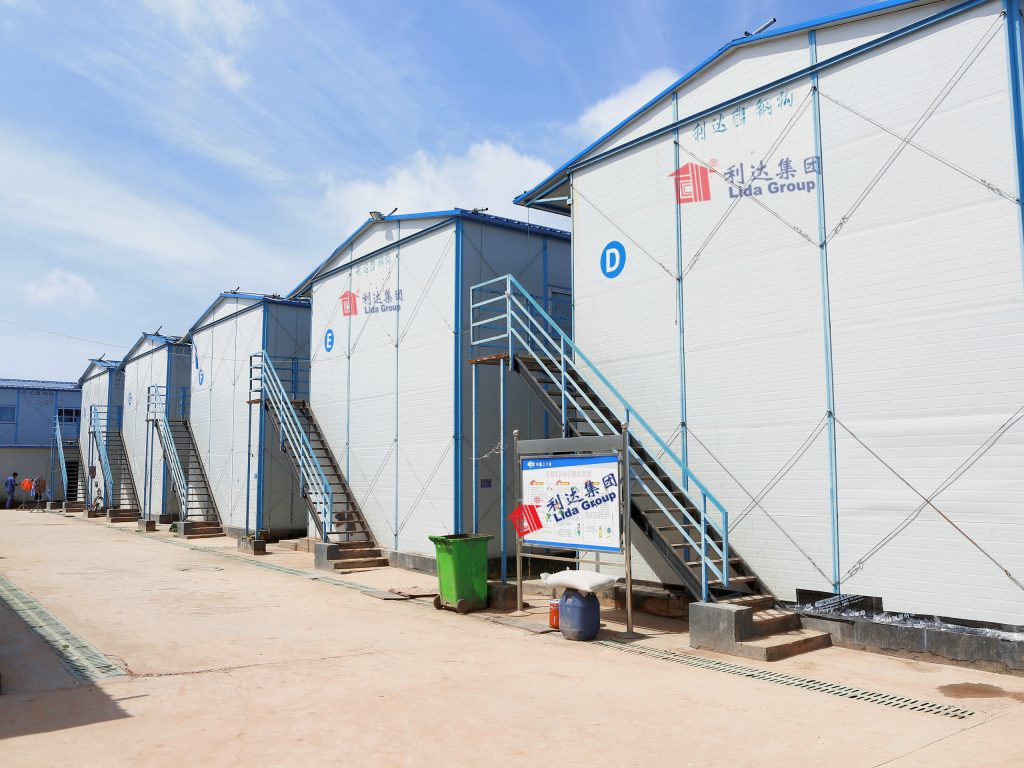
Lida Group’s oilfield temporary dormitory series adopts unified international modular standard design, with standardized specifications for steel frames, enclosure panels, doors and windows, and internal supporting components. The product lineup includes flat-pack container dormitories, quick-assembly sandwich panel houses, and multi-story combined temporary buildings, covering single-layer staff dormitories, double-layer team camps, and supporting office and living rooms. All products are highly universal and interchangeable, supporting free combination and flexible layout according to project scale and site terrain.
4.2 Full Factory Prefabrication Mode
To maximize construction efficiency, Lida Group realizes 98% factory prefabrication of oilfield temporary dormitories. All core procedures including steel frame cutting and welding, anti-corrosion treatment, wall panel pressing, thermal insulation laying, water and electricity pipeline embedding, and interior decoration are completed in intelligent standardized factories. After leaving the factory, each dormitory unit is a finished product with complete functions, requiring no secondary processing on site. This mode completely abandons extensive on-site construction and lays a solid foundation for ultra-rapid on-site deployment.
4.3 Scenario-Based Customized Adaptation
On the basis of standardized modules, Lida Group provides targeted customized upgrades for different global oilfield environments. For desert high-temperature oilfields, the solution is upgraded with heat reflection and enhanced thermal insulation configurations; for coastal offshore oilfields, salt spray anti-corrosion and waterproof structures are added; for alpine oilfields, low-temperature frost resistance and heating insulation systems are optimized. The customized design ensures that the temporary building system can adapt to extreme climates worldwide while maintaining rapid assembly efficiency.

5. Core Advantage: Ultra-Rapid On-Site Deployment Efficiency
The biggest competitive advantage of Lida Group’s oilfield temporary building solutions is industry-leading rapid deployment capability, which fundamentally solves the problem of slow camp construction in traditional oilfield projects and ensures zero-delay settlement of construction teams.
5.1 Tool-Free Fast Assembly Structure
All modules of Lida’s oilfield dormitories adopt bolted splicing structures with reserved unified interfaces, eliminating complex welding, cutting, and pouring processes. On-site assembly only requires conventional simple tools and a small team of ordinary workers without professional construction qualifications. A single standard dormitory unit can be fully assembled, commissioned, and put into use within 3 hours, realizing same-day installation and same-day occupancy.
5.2 Large-Scale Batch Rapid Construction
Lida’s modular system supports simultaneous assembly of multiple units. For medium and large-scale oilfield camps accommodating 100 to 500 workers, the entire camp including dormitories, offices, canteens, and storage rooms can be fully built and put into operation within 5 to 7 days. Compared with the 30-day construction cycle of traditional temporary buildings, the efficiency is increased by more than 80%, creating sufficient preconditions for the early start of oil and gas projects.
5.3 Foundation-Free Installation Adaptable to Remote Sites
The optimized lightweight high-strength structure enables Lida’s temporary buildings to adapt to various complex oilfield terrains such as sandy land, gravel ground, slopes, and uneven wilderness ground. No concrete foundation pouring or large-scale site leveling is required, saving 90% of site preparation time. This advantage is particularly prominent in remote oilfields with poor transportation and construction conditions, greatly simplifying the camp construction process and accelerating project progress.
5.4 Flexible Disassembly and Rapid Re-Dployment
The purely bolted assembly structure supports zero-damage disassembly and repeated relocation. After the completion of a phased oilfield project, the dormitory modules can be quickly disassembled, packed, and transported to new working sites for secondary assembly. The whole disassembly and packaging process can be completed within two days, realizing rapid resource turnover and flexible deployment of camp facilities across projects and regions.
6. Oilfield-Specific Safety and Durability Optimization Design
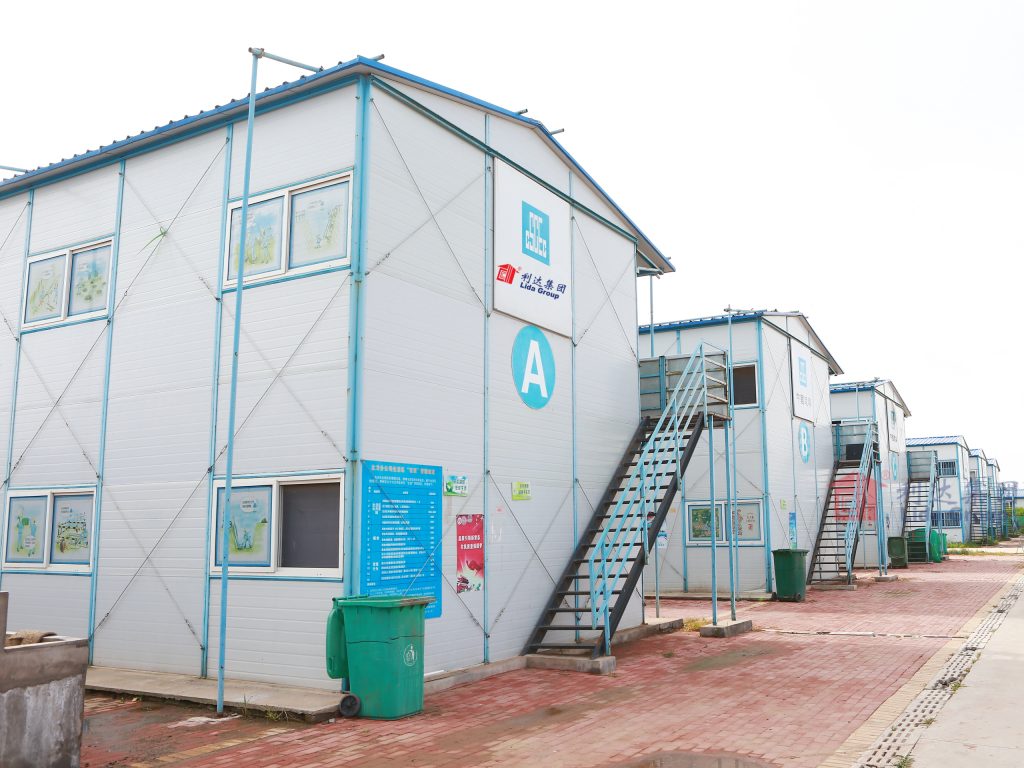
While ensuring rapid construction, Lida Group’s temporary building solutions fully consider the high-risk and harsh characteristics of oil and gas fields, carrying out professional upgrades in safety performance, weather resistance, and structural durability to meet long-term stable operation requirements.
6.1 A1-Level Fire Protection Meets Oilfield High-Risk Standards
All enclosure and thermal insulation materials of Lida’s oilfield dormitories adopt A1-level non-combustible flame-retardant materials, which do not burn or produce toxic smoke when exposed to open fire, completely complying with international oilfield fire safety specifications and NFPA standards. The built-in explosion-proof circuit system is equipped with leakage protection, overload power-off, and short-circuit prevention devices, avoiding electrical spark risks in flammable and explosive environments. Standardized emergency evacuation passages, smoke alarms, and fire extinguishing systems are configured to form a comprehensive safety protection system.
6.2 Full-Climate Extreme Weather Resistance
The outer enclosure of the dormitory adopts multi-layer weather-resistant anti-corrosion coating technology, which can effectively resist desert ultraviolet aging, coastal salt spray corrosion, plateau strong wind erosion, and alpine low-temperature frost damage. The fully sealed integral splicing structure eliminates water seepage and air leakage gaps, realizing excellent waterproof, windproof, and heat preservation performance. The overall reinforced steel frame structure can resist level 12 strong winds and magnitude 8 earthquakes, ensuring stable operation in extreme oilfield environments all year round.
6.3 Long Service Life and Low Maintenance Performance
The high-strength hot-dip galvanized steel frame has ultra-strong structural stability and anti-aging ability, with a comprehensive service life of more than 18 years. Compared with traditional oilfield temporary buildings that require annual maintenance and replacement, Lida’s dormitory system has a low failure rate in long-term outdoor operation, greatly reducing daily maintenance costs and downtime losses of oilfield camps.
7. Humanized Living Design for Long-Term Oilfield Staff Residence
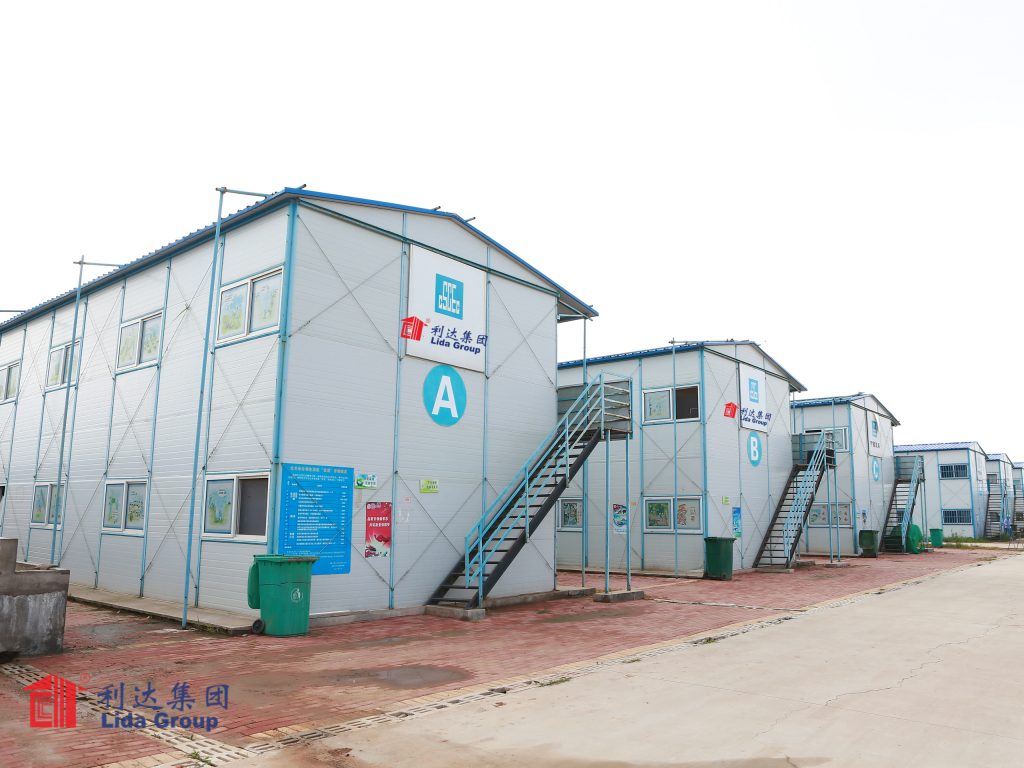
Lida Group’s rapid temporary building solutions not only pursue construction efficiency but also focus on improving worker living comfort, solving the problem of harsh living conditions in traditional oilfield camps and stabilizing the on-site workforce.
In terms of constant temperature comfort, the high-density composite thermal insulation structure forms an efficient closed temperature control system, isolating external extreme high and low temperatures and keeping the indoor temperature stable and comfortable throughout the year. In hot deserts, it reduces indoor temperature by 8 to 10 degrees Celsius; in cold plateaus, it effectively locks indoor heat and avoids freezing.
In terms of quiet living environment, the multi-layer composite wall panels have excellent sound insulation and noise reduction effects, isolating outdoor oilfield equipment operation noise, wind noise, and construction noise, providing workers with a quiet rest space and improving sleep quality.
In terms of supporting facilities, the finished dormitories are pre-installed with energy-saving lighting, independent power distribution systems, ventilated windows, and waterproof sanitary facilities. The reasonable indoor space layout meets international staff accommodation standards, with sufficient living space, smooth passages, and complete daily living functions, creating residential-grade living conditions for frontline oilfield workers.
8. Full-Lifecycle Economic and Project Operational Value
Lida Group’s rapid temporary building solutions bring multi-dimensional comprehensive value to oil and gas field projects in terms of time efficiency, economic cost, project management, and green development.
In terms of time value, the ultra-rapid deployment mode shortens the camp construction cycle by more than 80%, realizing early worker settlement and project startup, greatly improving the operational efficiency of oil and gas projects and creating more economic benefits for energy enterprises.
In terms of economic value, the reusable modular design eliminates repeated camp construction investment, saving more than 65% of long-term temporary construction costs for enterprises. The low maintenance and long-life performance reduce daily operational expenses, realizing low-cost full-cycle project operation.
In terms of management value, standardized and safe dormitory camps facilitate unified personnel management, safety inspection, and daily standardized operation of oilfield sites, effectively reducing personnel turnover rate and stabilizing the project workforce.
In terms of green value, the factory prefabrication mode produces no on-site construction waste and dust pollution. All steel and panel materials can be 100% recycled, conforming to the green low-carbon development and ESG assessment requirements of modern global energy projects.
9. Conclusion
Rapid and standardized temporary dormitory construction is an indispensable guarantee for the efficient development of modern global oil and gas projects. Traditional temporary building solutions are restricted by slow construction, poor safety, insufficient durability, and non-reusability, which can no longer meet the fast-paced, high-standard operational needs of energy industry camps. Lida Group’s professional temporary building solutions for rapid oil and gas field worker dormitories completely break through the industry’s traditional construction bottlenecks with systematic modular design, full factory prefabrication, ultra-fast on-site assembly, and oilfield-specific safety and durability optimization.
This innovative solution perfectly balances rapid deployment efficiency and long-term operational stability, realizing rapid camp completion in the shortest time while ensuring that the dormitory facilities fully meet the high safety standards and extreme environmental adaptation requirements of oil and gas high-risk scenarios. The humanized living design effectively improves the accommodation quality of frontline workers, stabilizes the on-site workforce, and provides solid logistical support for the smooth progress of oil and gas exploration and construction projects. Meanwhile, the reusable and green low-carbon features greatly optimize the full-cycle economic benefits of the project and conform to the sustainable development trend of the global energy industry.
As global oil and gas resource development continues to expand and industry construction standards become increasingly stringent, rapid customized modular temporary buildings will become the mainstream standard for oilfield camp construction. In the future, Lida Group will continue to upgrade modular building technology, optimize rapid deployment systems and oilfield-specific functional configurations, and provide more efficient, safer, and more cost-effective temporary building solutions for global oil and gas projects, empowering the high-quality, efficient, and green development of the global energy industry.
Related news
-
Easy Assembly Sandwich Panel House Creates Comfortable Oil Gas Field Worker Dormitory
2026-06-10 16:51:42
-
Lida Group Delivers Oil Gas Field Worker Dormitory with Temporary Building Systems
2026-06-10 16:09:07
-
Sustainable Prefabricated Container House and Prefab Dormitory Solutions from Lida Group
2026-06-10 15:41:17
contact us
- Tel: +86-532-88966982
- Whatsapp: +86-13793209022
- E-mail: sales@lidajituan.com
