



Temporary Building from Lida Group Transforms Oil Gas Field Worker Dormitory Projects
2026-Jun-11 16:48:27
By Admin
1. Introduction
The global oil and gas industry is undergoing continuous expansion of exploration, drilling, and infrastructure construction, with project sites widely distributed in remote deserts, coastal tidal zones, high-altitude plateaus, and other harsh and uninhabited areas. On-site worker dormitory projects serve as a fundamental supporting component of energy engineering, directly affecting workforce stability, project construction progress, and on-site safety management. For decades, oil and gas field dormitory construction has relied on traditional on-site pouring, welding, and simple masonry building modes. These conventional project models are plagued by long construction cycles, uncontrollable quality, poor safety performance, low livability, and severe resource waste, which have long restricted the standardized, efficient, and sustainable development of oilfield supporting facility projects.
With the rapid development of industrialized prefabricated construction technology, modular temporary buildings have gradually overturned the traditional construction logic of oilfield dormitories. As a leading global provider of customized modular construction solutions, Lida Group has deeply insight into the pain points and upgrading demands of oil and gas field dormitory projects. By integrating independent research and development of building materials, standardized modular design, factory integrated prefabrication, and scenario-based customized optimization, Lida Group’s professional temporary building system has achieved an all-round transformation of oil gas field worker dormitory projects. It has realized qualitative leaps in construction mode, project quality, safety standards, living experience, and full-cycle economic benefits, rewriting the construction standards of temporary supporting facilities for the global energy industry. This article systematically analyzes the limitations of traditional oilfield dormitory projects, the innovative advantages of Lida Group’s temporary building technology, and the comprehensive transformation value of the new building mode, providing professional references for the high-quality upgrading of global oil and gas field supporting construction projects.
2. Inherent Limitations of Traditional Oil Gas Field Dormitory Projects
Traditional oil and gas field worker dormitory projects adopt extensive on-site construction modes, which are formed based on conventional civil construction experience and lack targeted optimization for the harsh environment, high-risk attributes, and mobile characteristics of oilfield scenarios. Multiple inherent limitations have become important bottlenecks restricting project efficiency and quality improvement.
First, backward construction modes lead to low project efficiency and delayed progress. Traditional dormitory construction requires multiple complex on-site processes including site leveling, foundation pouring, steel structure welding, wall masonry, thermal insulation laying, and indoor decoration. The whole project cycle often lasts 30 to 45 days. Remote oilfields suffer from inconvenient transportation, scarce building materials, and insufficient professional construction teams, which further prolong the construction period. The slow progress of dormitory projects directly delays worker settlement and equipment deployment, resulting in the overall delay of oil and gas engineering projects and causing huge economic losses for energy enterprises.
Second, decentralized on-site construction results in unstable project quality. Traditional dormitory projects rely heavily on manual operation, and the construction quality is easily affected by worker experience, on-site environment, and weather conditions. Open-air construction in sandstorms, rainy days, and low-temperature environments will lead to unqualified bonding of building materials, unstable structural welding, and uneven thermal insulation laying. There is no unified standardized production and inspection system, resulting in common problems such as wall water leakage, poor thermal insulation effect, unstable circuit layout, and unsmooth ventilation in completed dormitories, which greatly reduces the service quality and service life of the project.
Third, single functional design fails to match oilfield operational needs. Traditional dormitory projects only meet the most basic shelter function, ignoring the high-risk industrial attributes and long-term stationed living characteristics of oil and gas fields. Most buildings use ordinary flammable thermal insulation materials without professional fire prevention and explosion-proof design, which cannot adapt to flammable and explosive oilfield environments. In addition, the lack of professional sound insulation, constant temperature ventilation, and humanized supporting facilities leads to harsh living conditions, seriously affecting workers’ physical and mental health and resulting in high personnel turnover.
Fourth, disposable construction causes high project costs and resource waste. Traditional oilfield dormitory projects adopt fixed integrated structures, which cannot be disassembled, transported, and reused. After the completion of a single oilfield project, the dormitory buildings can only be demolished and discarded, generating a large amount of construction waste. Energy enterprises need to repeatedly invest a lot of funds, materials, and manpower to build new dormitories for subsequent new projects, resulting in extremely high long-term comprehensive operation costs and poor project sustainability.
Fifth, poor environmental adaptability leads to high project maintenance pressure. Traditional dormitory buildings use ordinary weather-resistant materials, which cannot resist extreme climates such as desert high temperature, coastal salt spray corrosion, and plateau strong wind freezing. The buildings are prone to aging, deformation, rust, and mildew after short-term use, requiring frequent maintenance, component replacement, and partial renovation. The continuous maintenance investment further increases the operational burden of oilfield projects.
3. Innovative System of Lida Group’s Temporary Building for Dormitory Project Transformation
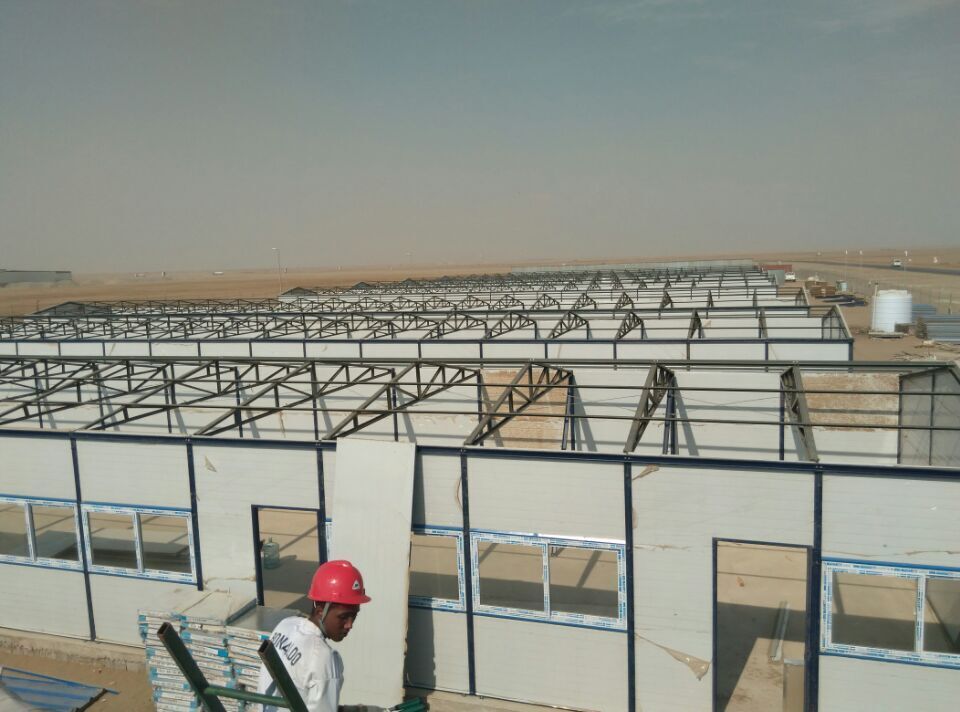
Aiming at the multiple pain points of traditional oilfield dormitory projects, Lida Group has built a set of full-process, standardized, and customized temporary building innovation system, covering product design, factory production, on-site construction, functional optimization, and post-project recycling. This systematic solution completely subverts the extensive construction mode of traditional projects and realizes the comprehensive transformation and upgrading of oil and gas field dormitory engineering.
In terms of design system, Lida Group abandons the single conventional building design and adopts oilfield-scenario-oriented modular standardized design. Combined with the environmental characteristics of deserts, coasts, and plateaus, as well as oilfield industrial safety specifications, the company formulates exclusive design standards for structural stability, fire safety, weather resistance, and living comfort. All dormitory units adopt unified modular sizes and interface specifications, supporting free combination and flexible layout according to project scale, personnel quantity, and site terrain, realizing personalized customization on the basis of standardized mass production.
In terms of production system, Lida Group realizes 98% factory integrated prefabrication of dormitory building components. Different from traditional on-site decentralized production, all core components including steel frames, composite sandwich panels, doors and windows, water and electricity pipelines, thermal insulation layers, and indoor supporting facilities are completed in intelligent standardized factories through automated cutting, welding, pressing, and assembly processes. Strict factory quality inspection ensures that each component has stable performance and unified quality, fundamentally solving the problem of uneven quality of traditional on-site construction projects.
In terms of construction system, Lida Group innovates the dry-type rapid assembly mode. All prefabricated components are transported to the oilfield site in flat-pack integrated packaging, and the on-site construction is simplified into simple bolt splicing and positioning installation. There is no need for concrete pouring, on-site welding, and secondary decoration, which greatly simplifies the construction process, reduces the dependence on on-site manpower and mechanical equipment, and realizes the efficient completion of dormitory projects in a short cycle.
In terms of full-cycle operation, Lida Group builds a reusable and recyclable project operation mode. The detachable modular structure supports zero-damage disassembly, cross-regional transportation, and secondary assembly of dormitory buildings. The recycled building components can be reused in new oilfield projects, forming a closed-loop resource utilization system and completely changing the disposable waste mode of traditional dormitory projects.
4. Construction Mode Transformation: Efficient and Low-Threshold Project Implementation
The most intuitive transformation of Lida Group’s temporary building technology to oilfield dormitory projects is the comprehensive upgrade of construction mode, which solves the problems of slow progress, difficult construction, and high threshold of traditional projects and realizes the efficient implementation of dormitory engineering in harsh remote environments.
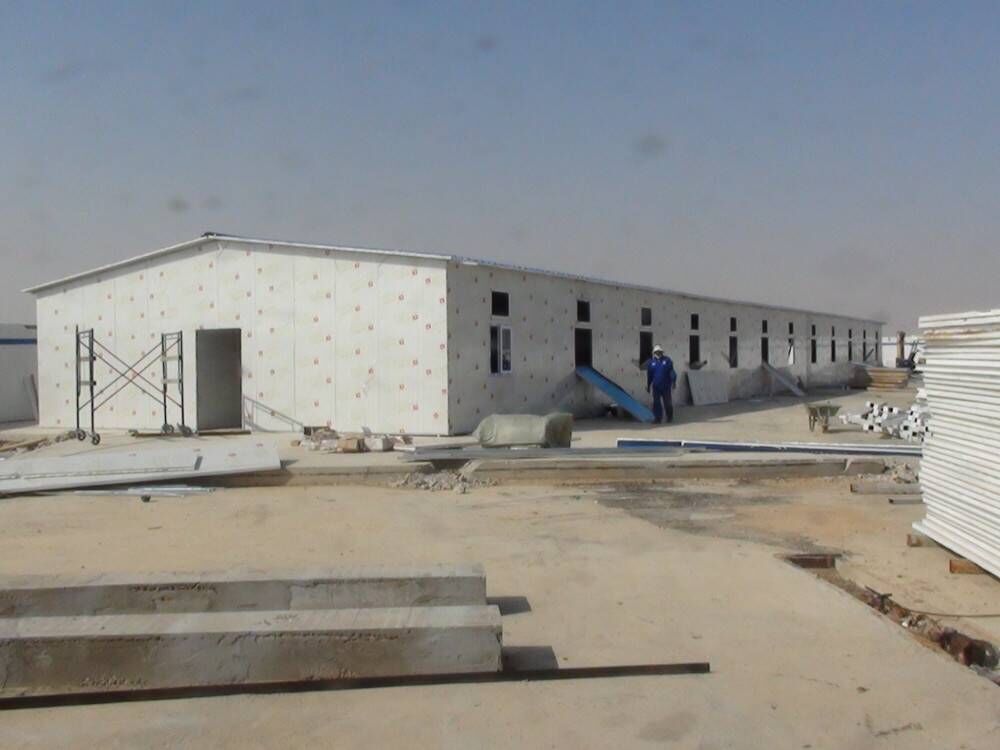
First, ultra-short project cycle improves engineering efficiency. Traditional oilfield dormitory projects take more than one month to complete, while Lida Group’s modular temporary building mode greatly compresses the project cycle through factory prefabrication. A single standard dormitory unit can be assembled and put into use within 3 hours, and a medium-scale oilfield camp with dozens of dormitory units can be fully completed and delivered within 5 to 7 days. The project efficiency is increased by more than 80%, realizing synchronous preparation of dormitory construction and oilfield engineering preparation, completely eliminating the schedule delay caused by slow dormitory construction.
Second, foundation-free construction adapts to complex site conditions. Traditional dormitory projects require strict foundation pouring and site leveling, which cannot adapt to uneven sandy land, gravel ground, and wilderness slopes in remote oilfields. Lida Group’s temporary buildings adopt lightweight high-strength steel frame structure with adjustable support feet, which can be directly installed on various complex terrains without foundation treatment. This innovative construction method saves nearly 90% of site preparation time, reduces auxiliary engineering investment, and enables dormitory projects to be quickly deployed in any remote oilfield working area.
Third, low resource dependence reduces project construction threshold. Traditional dormitory projects require a large number of professional construction workers, building materials, and large mechanical equipment, which are extremely scarce in remote oilfields. Lida Group’s temporary building assembly has low technical threshold, only requiring ordinary workers and conventional simple tools to complete the construction. The factory prefabricated finished components do not need additional auxiliary materials, effectively solving the problems of labor shortage, material scarcity, and equipment insufficiency in remote oilfield project construction, ensuring stable and efficient project progress.
5. Quality and Safety Transformation: Standardized Upgrade of Oilfield Dormitory Projects
Traditional oilfield dormitory projects have unstable quality and prominent safety hazards, which cannot meet the high-standard operational requirements of modern energy projects. Lida Group’s temporary building system realizes a comprehensive upgrade of project quality and safety through standardized production and targeted technical optimization, creating oilfield-grade safe and stable dormitory facilities.
In terms of structural quality, all steel frames of Lida’s temporary buildings adopt hot-dip galvanized high-strength profiles, with strong structural toughness and anti-deformation ability. The composite sandwich panels are formed by one-piece high-pressure pressing, with no delamination or cracking, and stable overall structural performance. All components are produced and inspected in accordance with unified industrial standards, avoiding quality fluctuations caused by manual operation in traditional projects. The overall structure can resist level 12 strong winds and magnitude 8 earthquakes, ensuring long-term stable operation in extreme oilfield environments.
In terms of fire safety, aiming at the flammable and explosive characteristics of oil and gas fields, all building materials of Lida’s temporary buildings reach A1-level non-combustible fire protection grade, which do not burn or produce toxic smoke at high temperatures. The factory pre-buried explosion-proof circuit system is equipped with leakage protection, overload power-off, and short-circuit prevention devices, eliminating electrical fire hazards. Matched with standardized smoke alarm systems and emergency evacuation passages, the dormitory projects fully comply with international oilfield safety specifications and NFPA industrial standards, solving the fire safety hidden dangers of traditional dormitories.
In terms of environmental durability, Lida’s temporary building components adopt multi-layer weather-resistant and anti-corrosion coating technology, which can effectively resist desert high-temperature aging, coastal salt spray corrosion, and plateau low-temperature frost damage. The fully sealed splicing structure eliminates water and air leakage gaps, realizing excellent waterproof, dustproof, and thermal insulation performance. The service life of the dormitory is extended to more than 15 years, which is 3 to 4 times that of traditional dormitory buildings, greatly improving the long-term stability of the project.
6. Living Experience Transformation: Humanized Upgrade of Dormitory Functional Quality
Traditional oilfield dormitory projects only focus on basic shelter functions and ignore workers’ living experience, resulting in low worker satisfaction and high turnover rate. Lida Group’s temporary building transformation focuses on humanized design, comprehensively optimizing the living environment and functional configuration of dormitories, realizing the upgrade from “simple shelter” to “comfortable residential space”.
First, constant temperature thermal insulation creates a comfortable all-season environment. The high-density composite thermal insulation core material forms an efficient closed temperature control barrier, which isolates external extreme temperature changes. It reduces indoor temperature by 8 to 10 degrees Celsius in hot deserts and locks indoor heat in cold plateaus, maintaining a stable and comfortable indoor temperature all year round. This completely solves the problems of stuffy heat in summer and freezing cold in winter in traditional dormitories, improving workers’ living comfort and reducing energy consumption.
Second, efficient sound insulation builds a quiet rest space. The multi-layer composite panel structure has excellent sound absorption and noise reduction performance, which can effectively isolate outdoor oilfield equipment operation noise, construction noise, and wind and sand noise. The tight door and window sealing design reduces indoor noise by more than 40 decibels, providing a quiet rest environment for workers after high-intensity operations, helping relieve physical fatigue and improve sleep quality.
Third, scientific ventilation and lighting ensure indoor health. The dormitory is pre-designed with cross-ventilation structures and large-size hollow glass windows, ensuring sufficient natural light and fresh air circulation indoors. It effectively eliminates indoor dampness, mildew, and peculiar smell caused by long-term closed residence, creating a dry, bright, and healthy living space and protecting workers’ physical health.
Fourth, complete supporting facilities realize residential-grade experience. Lida’s temporary dormitories are pre-installed with energy-saving lighting, independent safe power distribution systems, waterproof sanitary facilities, and standardized indoor storage and rest areas. No secondary decoration is required after on-site assembly, meeting workers’ daily rest, study, and living needs. The standardized and tidy indoor environment completely changes the crude living state of traditional oilfield dormitories, improves workers’ sense of belonging and job satisfaction, and effectively stabilizes the on-site workforce.
7. Economic and Sustainable Transformation: Full-Cycle Value Optimization of Projects
Lida Group’s temporary building technology not only realizes the qualitative upgrade of dormitory project quality and functions but also optimizes the full-cycle economic benefits and sustainable development capacity of oilfield dormitory projects, solving the high-cost and high-waste problems of traditional projects.
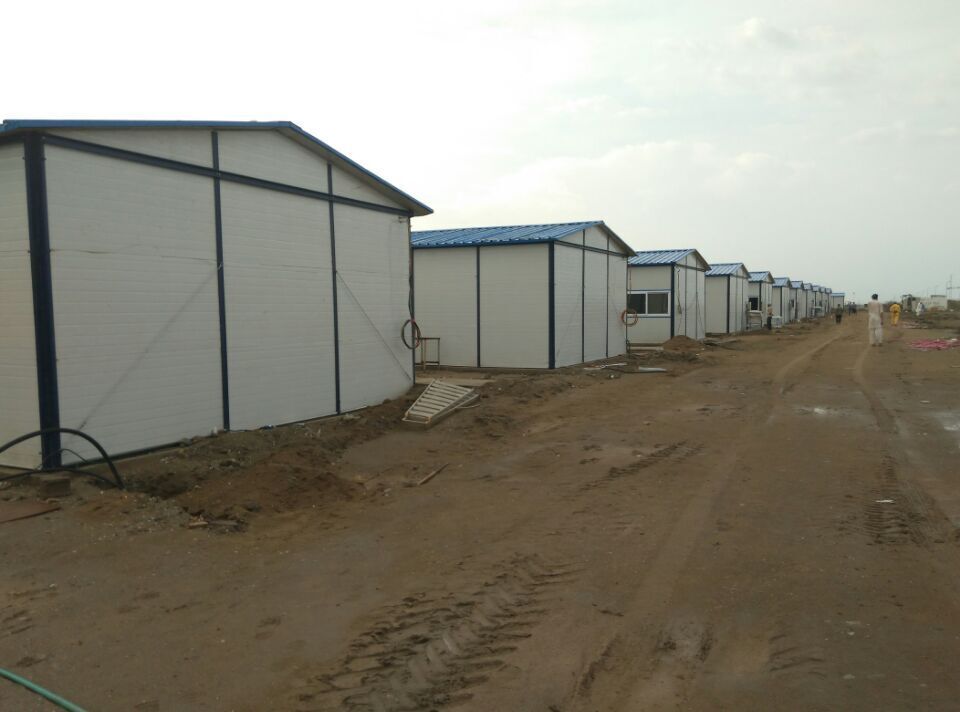
In terms of economic benefits, the reusable modular design completely changes the disposable construction mode of traditional dormitories. Lida’s temporary buildings can be disassembled, transported, and reassembled across multiple oilfield projects, with no attenuation of structural and functional performance after multiple cycles. It saves more than 60% of long-term repeated construction investment for energy enterprises. Meanwhile, the long service life and low failure rate reduce daily maintenance and renovation costs, realizing low-cost and high-efficiency full-cycle project operation.
In terms of time benefits, the ultra-fast construction mode shortens the project delivery cycle by more than 80%, realizing rapid worker settlement and early project startup. The advanced camp construction mode creates valuable time benefits for oil and gas exploration and development projects and improves the overall economic benefits of energy engineering.
In terms of green environmental protection, the factory prefabrication mode produces no on-site construction waste, dust pollution, and noise pollution, which is environmentally friendly and low-carbon. All steel and panel materials can be 100% recycled, conforming to the ESG assessment standards and green development strategy of modern global energy enterprises. It avoids a large amount of construction waste generated by the demolition of traditional disposable dormitories and realizes sustainable development of oilfield supporting projects.
In terms of management benefits, the standardized and unified temporary dormitory camp is convenient for enterprises to implement unified personnel management, safety inspection, and daily standardized operation. It reduces on-site management risks, improves the standardized management level of oilfield sites, and provides solid support for the safe and orderly progress of energy projects.
8. Conclusion
Oil and gas field worker dormitory projects are an indispensable basic guarantee for the stable development of the global energy industry. Traditional dormitory construction modes are restricted by backward construction technology, unstable quality, poor safety performance, low livability, and high comprehensive costs, which can no longer adapt to the high-efficiency, high-standard, and sustainable development needs of modern oil and gas engineering. Lida Group’s innovative temporary building system has achieved an all-round and in-depth transformation of traditional oilfield dormitory projects, completely breaking the industry’s long-standing development bottlenecks.
By virtue of factory modular prefabrication, ultra-fast dry assembly mode, oilfield-specific safety and durability optimization, and humanized functional design, Lida Group’s temporary buildings have realized comprehensive upgrades in project construction efficiency, engineering quality, safety standards, worker living experience, and full-cycle economic benefits. It solves multiple pain points of traditional dormitory projects such as slow construction, poor quality, hidden safety hazards, harsh living conditions, and serious resource waste, and provides a standardized, efficient, safe, and comfortable new solution for global oil and gas field supporting facility construction.
With the continuous expansion of global oil and gas resource development towards remote and harsh regions, the demand for high-quality, reusable, and green temporary dormitory projects will continue to grow. Lida Group’s transformative temporary building technology has become the new benchmark for modern oilfield dormitory construction. In the future, Lida Group will continue to innovate modular building technology, further optimize product customization performance and intelligent configuration, and empower the high-quality, efficient, green, and sustainable development of global oil and gas field worker dormitory projects and energy engineering industry.
Related news
-
Lida Group’s Easy Assembly Sandwich Panel House Ideal for Remote Oil Gas Field Camps
2026-06-11 16:39:41
-
Oil Gas Field Worker Dormitory Completed Quickly Using Temporary Building Technology
2026-06-11 16:25:58
-
Lida Group Launches Easy Assembly Sandwich Panel House for Oil Gas Field Housing
2026-06-11 16:19:09
contact us
- Tel: +86-532-88966982
- Whatsapp: +86-13793209022
- E-mail: sales@lidajituan.com
